The footage opens without warning, the frame already tilted and frantic. A man in a dark hoodie is on the ground near a green metal railing, while bodies in sweatpants and sneakers blur past the lens. Somewhere behind the chaos, a voice chants a name over and over, and the camera never stops moving.
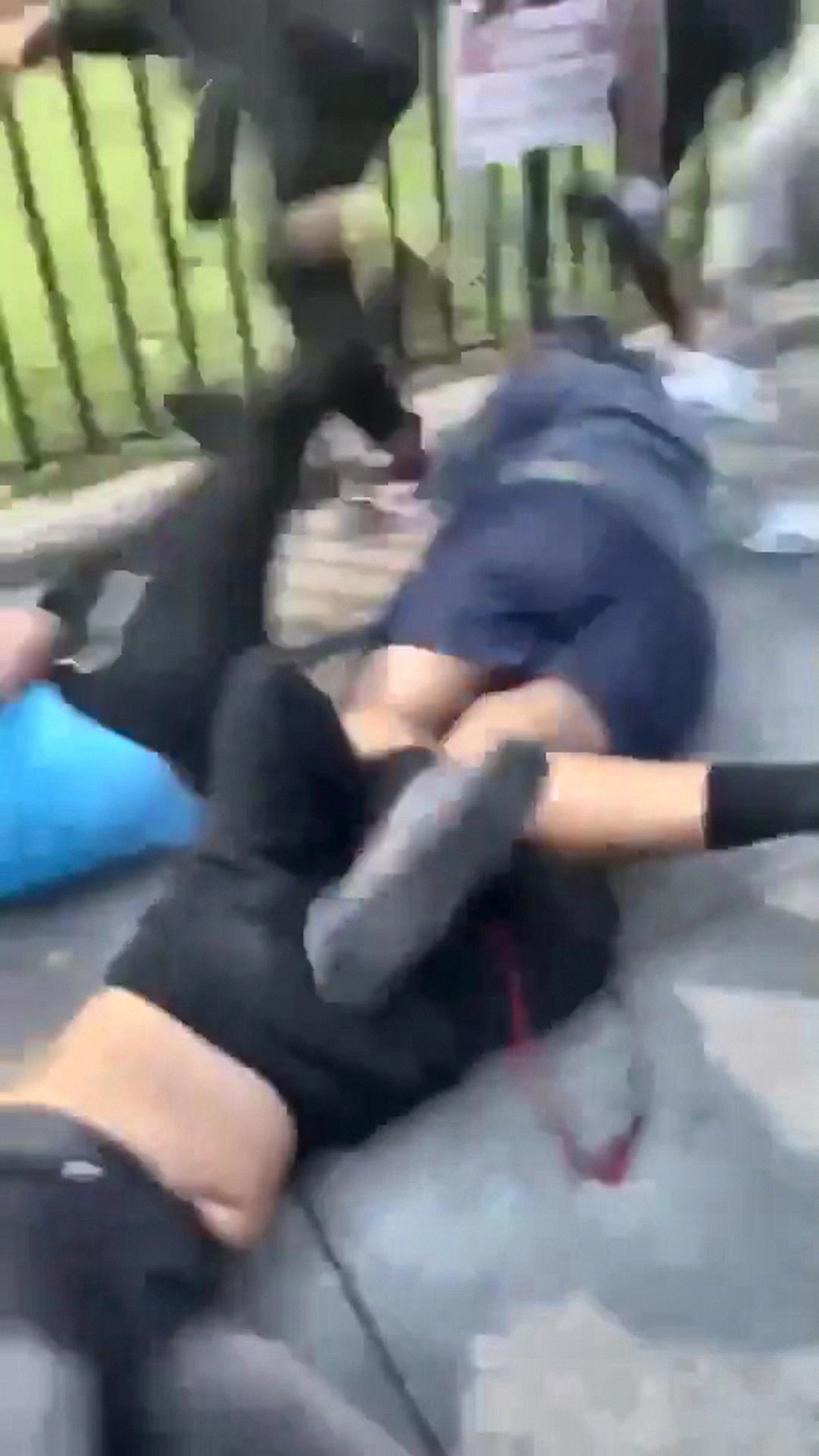
- The scene: A paved sidewalk beside a green painted railing and a strip of grass, in what appears to be a New York City residential block.
- The friction: A group of young men confronts a rapper identified in the original post as MDOT 59, along with his mother, who is said to be present during the confrontation.
- The intervention: Several figures rush the camera's field of view, and the recording descends into a tangle of limbs, clothing, and shouting.
- The aftermath: The clip ends before order returns, leaving the camera operator panning across scattered street debris and retreating bodies.
What the Recorded Footage Captures: Chronological Breakdown
The video begins in the middle of a movement, not at its start. A person in dark clothing is down on the pavement, legs folded awkwardly, while a second figure in a blue shirt leans over the space near the railing. The camera is close to the ground, handheld, and breathing hard through its own instability. There is no establishing shot, no wide view of the street, only the pavement and the bodies above it.
Then the frame tilts upward and sideways. A man in a grey sweatshirt is now lying flat on his back on the concrete, arms loose at his sides, face turned toward the lens. A leg in black pants sweeps through the foreground, the sneaker blurred with motion. Off to the right, another foot in a dark sock slides into frame.
The choreography is impossible to untangle in real time, but the geometry is clear enough: multiple people are moving toward the same small patch of sidewalk.
A voice cuts through the ambient noise, rhythmic and repeated: 'Oh, yeah. Yes, T.T. Yes, T.T. Yeah, T.T.' The chant is not a taunt so much as a signal, the kind of callout that binds a group together in the moment. The camera swings again, and for a split second the green railing and a sign at the edge of a yard come into view, domestic and ordinary, before the blur swallows them again.
By the final seconds, the energy breaks. Figures in white tops and dark pants scatter toward the edges of the frame, and a white object, possibly paper or discarded clothing, lies flat on the pavement. The camera keeps rolling, but the crowd has already begun to dissolve, leaving only the aftermath in the lens.
Scroll down for the full investigative report below ↓
Critical Blind Spots: What the Lens Leaves Unresolved
What the footage never shows is the beginning. There is no visible exchange of words, no clear first push, no identifiable moment when a conversation turned into a confrontation. The clip starts with bodies already in motion, which means the entire causal chain, the reason the group gathered and the specific trigger that broke the peace, lives entirely off-camera.
What is also obscured is who is who. The original post claims that the rapper MDOT 59 and his mother were the ones being jumped. The frames are too compressed and too quick to independently confirm roles, and the identities of the individuals on the pavement are not verifiable from the video alone. The person filming never narrates names, only the repeated chant, and no one on the audio identifies themselves or explains the dispute.
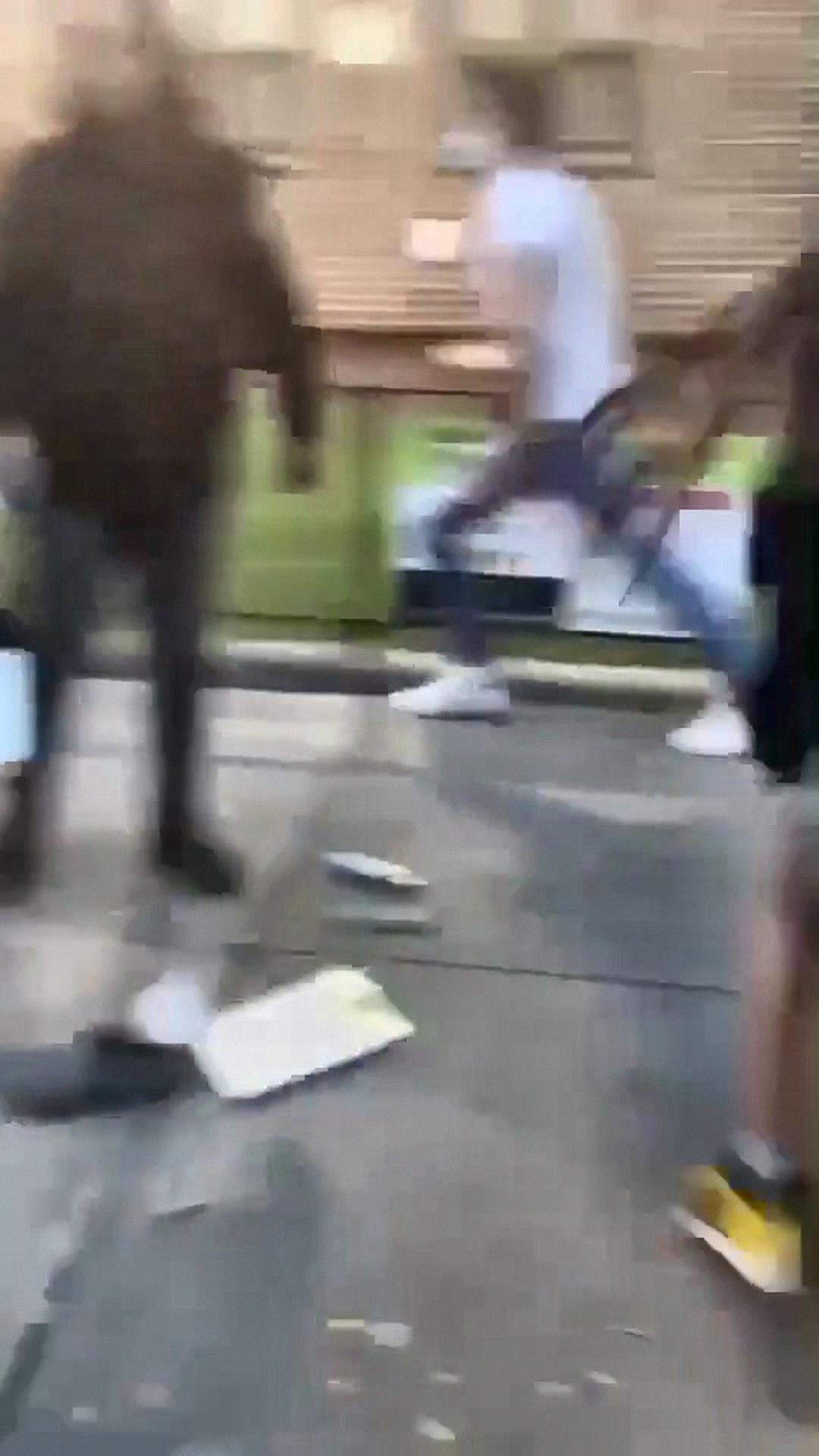
The third blind spot is spatial. The camera operator is inside the crowd, not outside it. That proximity gives the clip its visceral power, but it also means the operator's own movements shape what the viewer sees. When the lens drops, the viewer drops with it. When the operator retreats, the story retreats. There is no neutral vantage point, and the brief glimpses of the building facade, the grass strip, and the green railing are too fragmented to establish a precise location.
Statutory Framework and Protocol Analysis
In encounters like this, the legal questions usually sort into two tracks. The first is criminal liability for assault or battery, which turns on who initiated force and whether the force used was proportionate. The second is the duty of bystanders, which in most U.S. jurisdictions carries no general legal obligation to intervene physically. The camera operator's choice to record rather than step in is legally unremarkable, even if it is morally debated afterward.
If police had responded, the constitutional framework would govern how officers separated the parties. Under Terry v. Ohio, an officer may briefly detain someone on reasonable suspicion of criminal activity, and under Pennsylvania v. Mimms, a lawfully detained person can be ordered out of a vehicle. Under Rodriguez v. United States, that detention cannot be extended beyond the time needed to resolve the suspicion. In a street melee, the practical challenge is identifying aggressors from a moving crowd, which is exactly the kind of ambiguity the shaky footage preserves rather than resolves.
| Incident Parameter | Observation at the Scene |
|---|---|
| Location type | Paved sidewalk beside a green railing and grass strip |
| Number of visible participants | At least five distinct figures in motion |
| Individual on the ground | One man in grey, one in dark clothing, at different moments |
| Recorded audio | Repeated chant of a name, no explanatory dialogue |
| Camera position | Handheld, inside the crowd, frequent tilts and drops |
| Duration of visible clash | Under thirty seconds of continuous action |
| Post-incident state | Crowd disperses, debris left on pavement |
Read more:
Read more: Cleveland Repo Confrontation: Agent Refuses $200 Bribe →
Core Questions and Institutional Review
- Who initiated physical contact in the seconds before the recording began?
- Was the mother of the rapper present and directly involved, as the original post claims, or nearby and separate from the clash?
- Did any bystander or building resident call emergency services during the incident, and how long did the group remain on the block?
- Are there independent recordings from a different angle that could clarify the sequence of events?
The most striking thing about this clip is not the violence, which is brief and chaotic, but the ordinariness of the setting around it. A green railing, a strip of grass, a white sign at the edge of a yard. The street looks like any other street until the moment it does not, and then it goes back to looking like any other street again. What do you think a recording like this can actually prove, and where does the camera's testimony end?
Practical Takeaways
- Shaky, close-range footage documents that a confrontation happened, but rarely establishes who started it.
- Original social posts often assert roles and identities that the video itself cannot verify.
- In public disputes, the legal distinction between self-defense and mutual combat usually hinges on evidence outside the frame.
- Bystanders who record rather than intervene are protected legally, but the choice remains a live ethical question in every city block where it happens.
FOLLOW-UP INVESTIGATION REPORT
Related documented case details, verified on-scene evidence, and statutory liability analysis continued below.
CONTINUE READING: NEXT INVESTIGATIVE DOSSIER →
Woman Jailed for DUI Despite Zero Alcohol in Blood Test
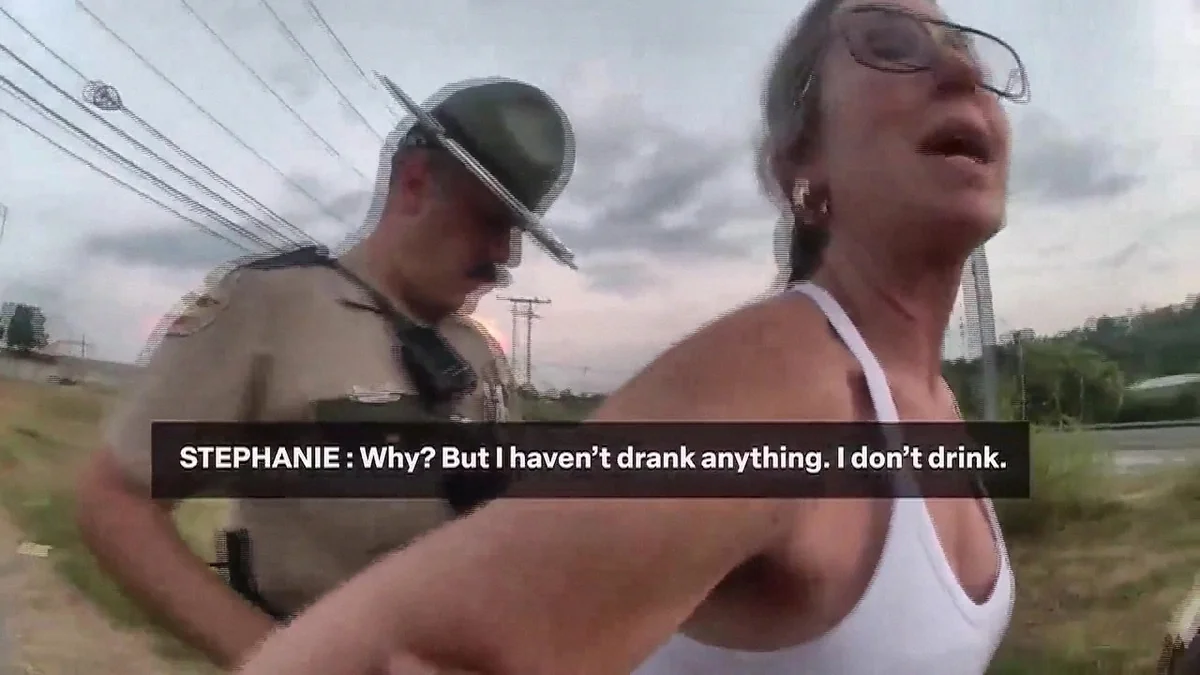
The sun was sinking low over the Tennessee interstate, casting long shadows across the asphalt as a state trooper approached a white SUV. What should have been a routine stop for a minor traffic violation spiraled into a bizarre confrontation that would eventually cost taxpayers $70,000. Stephanie Fair stood on the roadside, her hands trembling as she pleaded her innocence, while the officer insisted the unmistakable reek of alcohol surrounded her. The camera rolled, capturing every tense second of a dispute where the truth wouldn't fully emerge for two months.
- The Traffic Stop: Stephanie Fair was pulled over on the evening of June 23rd for failing to move over, a violation that instantly put the trooper on edge.
- The Friction: The officer claimed he detected a "very distinct odor of alcohol" coming from the vehicle and observed signs of intoxication in her eyes.
- The Intervention: Despite Fair's repeated pleas that she had just eaten and doesn't drink, the trooper placed her in handcuffs and arrested her for DUI.
- The Aftermath: Two months later, a blood test confirmed zero alcohol and zero drugs in her system, leading to a $70,000 settlement from the state of Tennessee.
What the Recorded Footage Captures: Chronological Breakdown
The video begins with the trooper's patrol car dashcam framing the white SUV parked on the shoulder. The officer, his hat tilted against the fading light, approaches the driver's side and immediately initiates a conversation. "Go ahead and step on out of the car and we're going to have a conversation, okay?" he says, his tone controlled but firm. Stephanie Fair steps out, her blonde hair pulled back, wearing a white tank top and green pants. She looks confused but compliant. The trooper leans in, his body language stiffening as he scans the interior of the vehicle. "There's a very distinct odor of alcohol that comes from either a person or inside the vehicle," he states, almost as a fact. Fair's eyes widen, and she shakes her head. "Right. I understand, but I, on my life, I don't drink alcohol. I just ate."
The tension escalates quickly. The trooper isn't swayed by her denial. He continues to press, describing the smell as overwhelming. Fair, now visibly distressed, recounts the feeling in her stomach: "When he started asking me about drinking, I instantly got this feeling in my stomach, like, this is bad. And it was." The officer then justifies the stop, explaining that she had almost hit him while he was wrapping up a previous traffic stop. "I come up to the car and it just reeks of alcohol," he says. "I actually don't test it. You can see it in her eyes." The visual evidence is jarring. Fair's eyes are clear, but the trooper's conviction is absolute. He clearly states he could smell the odor of an alcoholic beverage, a claim Fair vehemently disputes. "That, when he said he could smell it, I know this is corrupt. This is completely wrong."
The climax arrives with brutal swiftness. The trooper steps forward, his hand moving to his belt. "Place your hands behind your back." Fair's face crumples in disbelief. "Why? Because you're being placed under arrest for DUI." Her voice cracks as she repeats her innocence. "But I don't drink anything. But I don't drink." The camera captures the metallic click of the handcuffs, a sound that seals her fate despite her protests. The screen splits, showing a surveillance clip of Fair at an ice cream shop just minutes before the stop, a stark contrast to the grim scene on the highway. The trooper's demeanor remains rigid, unmoved by her escalating panic.
Critical Blind Spots: What the Lens Leaves Unresolved
While the dashcam footage provides a clear view of the interaction, it leaves several critical questions unanswered. The camera angle is fixed, capturing only the driver's side and the immediate front of the vehicle. We cannot see the passenger side or the back seat, leaving us to wonder if there was any open container or alcohol source that the trooper might have spotted. The lighting is dim, and the officer's claim of seeing "alcohol in her eyes" is highly subjective. Without a clear close-up, it's impossible to verify what he saw versus what he inferred from the smell.
Furthermore, the audio captures the officer's insistence on the smell, but we don't hear the moment he first approached the car. The initial seconds, when he might have caught the scent, are cut. We also don't hear any field sobriety tests being administered. The narrative jumps from the traffic stop to the arrest. The most significant blind spot, however, is the two-month gap between the arrest and the blood results. The video doesn't show the jail experience, the emotional toll on Fair, or the legal maneuvering that led to the settlement. Her comment, "I was more scared being with that cop alone than I actually was inside the jail," hints at a deeper psychological fear that the footage only scratches the surface of.
Statutory Framework and Protocol Analysis
In the United States, a traffic stop is a seizure under the Fourth Amendment, and the officer must have reasonable suspicion of a traffic violation to initiate it. In this case, the failure to move over provided that initial justification. However, the subsequent arrest for DUI requires probable cause. The trooper relied heavily on the odor of alcohol and his visual assessment of her eyes. According to the Supreme Court's decision in Pennsylvania v. Mimms, an officer may order a driver out of the vehicle during a lawful traffic stop without violating the Fourth Amendment. This explains why the trooper could demand Fair step out of the car. However, the arrest itself hinges on the sufficiency of the evidence. If the odor was mistakenly identified – perhaps from a passenger or a lingering scent – the probable cause could be challenged.
The subsequent blood test, which came back completely clean, undermines the foundation of the arrest. The fact that the state paid $70,000 suggests a recognition that the evidence did not support the charge. This case echoes the principles of Terry v. Ohio, which requires specific and articulable facts to justify an intrusion. Here, the trooper's subjective belief in the odor was the primary articulable fact. When that fact proved false, the legal ground shifted. The settlement highlights the importance of objective evidence over subjective suspicion.
| Incident Parameter | Observation at the Scene |
|---|---|
| Date of Stop | Evening of June 23rd |
| Reason for Stop | Failure to move over |
| Officer's Claim | Distinct odor of alcohol, visible impairment in eyes |
| Driver's Statement | "On my life, I don't drink alcohol. I just ate." |
| Arrest Action | Handcuffed and taken into custody for DUI |
| Blood Test Result | Zero alcohol, zero drugs |
| Settlement Amount | $70,000 |
Core Questions and Institutional Review
- Why was the odor of alcohol so compelling to the trooper if the driver was completely sober? Could there have been another source, such as hand sanitizer or a passenger?
- What did the dashcam footage from the moments before the stop actually show? The video mentions she was getting ice cream, but was there any interaction with the trooper that was missed?
- How did the internal review process justify a $70,000 settlement? Was there a finding of misconduct, or was it a purely financial decision to avoid litigation?
- What happened to Stephanie Fair during the two months before her exoneration? The emotional and professional toll of a false arrest is often invisible.
The video closes with Fair's voice, still shaking, recounting her fear. The scene on the highway is quiet, the sunset now just a memory. The handcuffs are gone, but the questions linger in the air. The state has paid its financial debt, but the human cost remains. Was this a case of a mistaken smell, or something more troubling? The footage shows a woman who believed she was about to lose everything, and an officer who believed he was doing his job. As the screen fades, one question remains: how many other drivers have faced that same click of the handcuffs based on a scent that wasn't there?



One comment on “Rapper and Mother Swarmed on NYC Sidewalk: What the Video Shows”