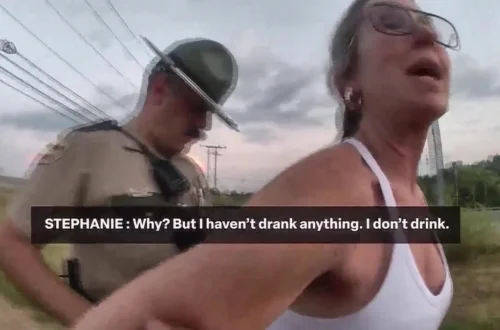
A gray Tesla door swings open on a downtown Los Angeles street, and within seconds a woman who built an online following by broadcasting federal enforcement operations becomes the subject of one. The sidewalk fills, the traffic light cycles green, and the only words caught on the recording are a bare, repeated denial.
- A 26-year-old Colombian national, widely known online as Tatiana Martinez, is arrested in Los Angeles on August 15, 2025, in the parking area of her residence while seated in her Tesla.
- Federal immigration agents take her into custody, citing a prior conviction for driving under the influence as the basis for the enforcement action under federal immigration law.
- Martinez had accumulated a substantial social media audience by posting real-time alerts about enforcement activity and filming agents in the field.
- She is eventually granted voluntary departure and returns to Colombia on October 3, 2025, after weeks in detention facilities in California.
What the Recorded Footage Captures: Chronological Breakdown
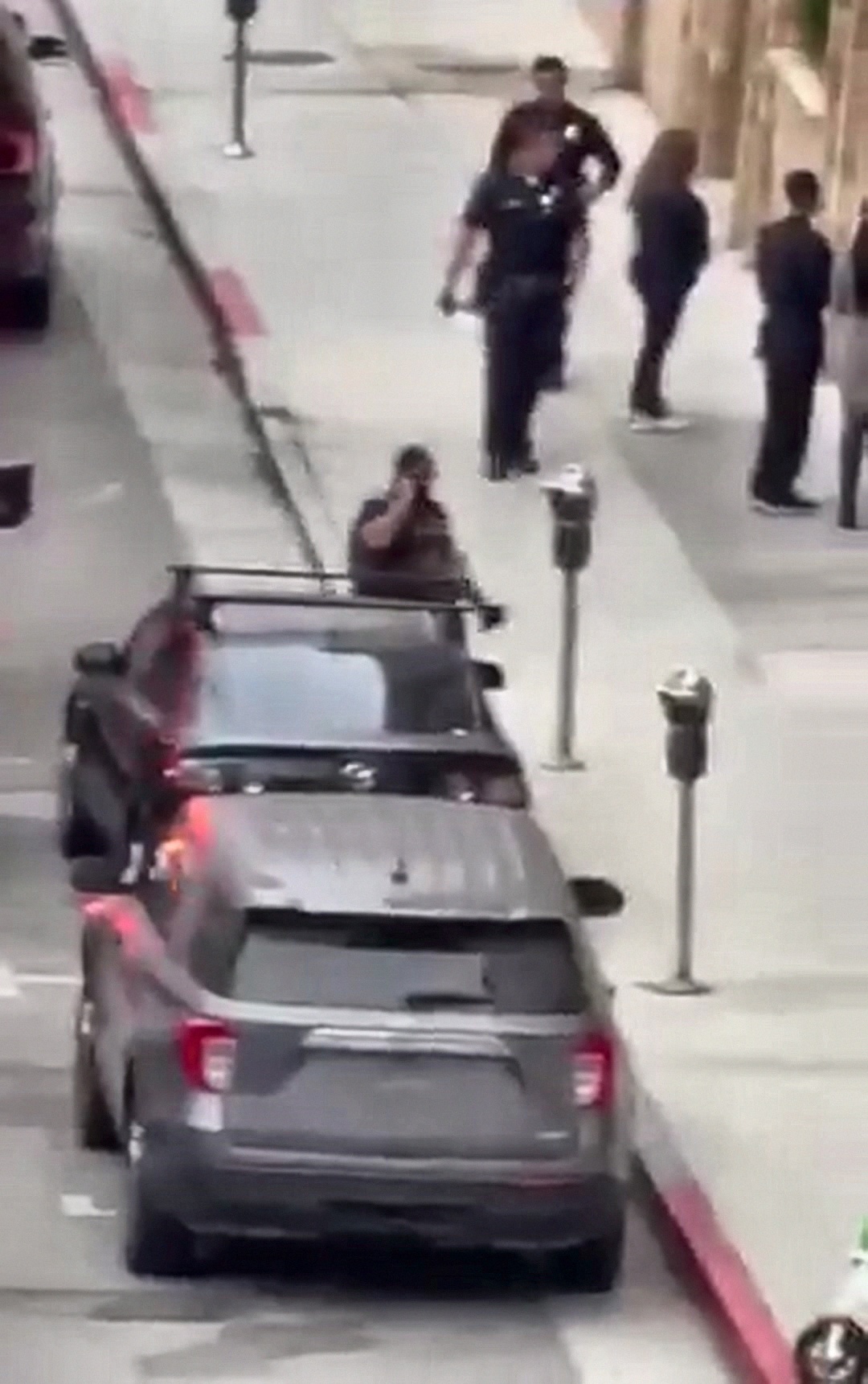
The frames open from an elevated vantage point, likely a window or balcony across the street. A blue street sign and a green traffic signal anchor the top right of the composition, while a row of parking meters lines the curb below. On the sidewalk, a loose cluster of figures stands in a tight knot against the tan brick of a low-rise building.
The bodies are close together, shoulders squared, and the spacing tells you immediately that this is not a casual conversation. Someone near the center is gesturing; the rest hold their positions.
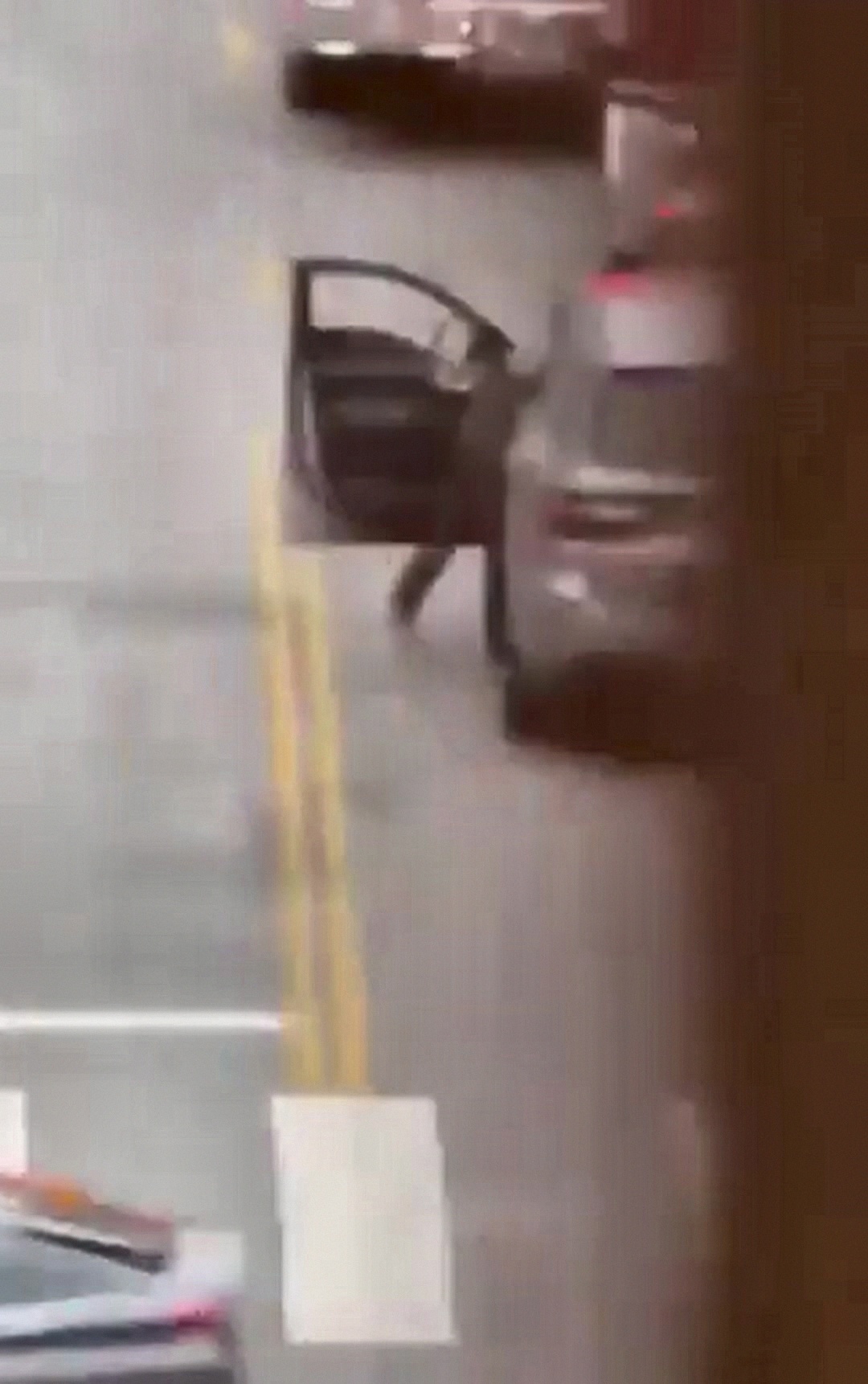
The gray Tesla appears with the driver's door swung outward into the traffic lane, a yellow centerline running past it. A figure is stepping out or being directed out. By the next set of frames, uniformed personnel are moving with deliberate, unhurried purpose – the kind of pace that signals a plan already in motion rather than a reaction to one. One officer stands in the roadway with a phone pressed to an ear, watching the street rather than the arrest itself. A green electric scooter rests abandoned on the red-painted curb, an oddly mundane detail against the tension.
The recording is brief and the audio is thinner than the images. What surfaces is a voice repeating a flat denial: "No, no, no." Then, a small, strange fragment – a claim of gender, an insistence that seems to belong to a conversation off-frame – followed by a muffled "Thank you." The clip cuts before anything resolves.
Scroll down for the full investigative report below ↓
Critical Blind Spots: What the Lens Leaves Unresolved
The camera is far away, and that distance matters. From a window across the street, you cannot see faces clearly, cannot tell who is speaking, cannot read the paperwork any officer might be holding. The audio picks up fragments without context, so the repeated denial and the final thank-you float free of whoever said them – or to whom.
The frames show the moment of contact but not the moments before it. There is no footage of what agents said when they approached the vehicle, whether a warrant was announced, or how long the conversation lasted before the door opened.
Nor does the recording capture what happened after the arrest – a detail that later became central, when her attorney stated he observed bruising on her body and Martinez herself alleged mistreatment during custody. Those allegations are not visible in these frames, and the footage cannot confirm or refute them.
What remains genuinely unresolved is the gap between two accounts of the same afternoon: one side describes a lawful enforcement action against a person with a criminal conviction; the other describes a targeted response to a woman who had been documenting federal operations. The lens sits squarely in that gap and offers no verdict.
Statutory Framework and Protocol Analysis
The foundational case here is Terry v. Ohio, which permits a brief investigative detention when an officer has reasonable suspicion that a person is involved in wrongdoing. That standard governs street encounters. In the immigration enforcement setting, an administrative official documentation signed by an immigration officer authorizes the arrest of a specific individual, but it does not authorize entering a home without consent – a distinction affirmed in cases like Payton v. New York. A vehicle in a parking area occupies a middle ground, and courts have long wrestled with how far the automobile exception extends.
Community expectations cut in a different direction. In neighborhoods where enforcement activity is visible, residents often rely on informal networks – phone trees, group chats, live alerts – to warn one another. That practice is not itself unlawful, but it sits uneasily beside federal provisions that prohibit knowingly impeding or interfering with an officer performing official duties. The line between observation and obstruction is where disputes like this one are ultimately fought.
| Incident Parameter | Observation at the Scene |
|---|---|
| Date of arrest | Friday, August 15, 2025 |
| Location | Downtown Los Angeles, street-level parking area |
| Subject's vehicle | Gray Tesla, driver's door open into the lane |
| Enforcement agency | U.S. Immigration and Customs Enforcement |
| Stated basis for action | Prior DUI conviction in Los Angeles |
| On-scene audio | A repeated denial and a brief, unclear exchange |
| Final disposition | Voluntary departure to Colombia, October 3, 2025 |
Read more:
Read more: Autistic Youth Assault Footage: Legal Liability and Video Evidence →
Core Questions and Institutional Review
- Did agents announce their authority and purpose before approaching the vehicle, and was that announcement captured on any body-worn camera?
- What was the actual legal mechanism – an administrative warrant, a consent search, or a community arrest – that permitted the initial contact?
- How do federal agencies reconcile the documented practice of public observation with the statutory prohibition on interference, and where is that line formally drawn?
- What independent review exists for the bruising and mistreatment allegations raised after custody, and who bears the burden of documenting them?
The footage ends where most stories begin: at the entrance of an unmarked door. Whatever happened inside the vehicle, whatever was said before the window rolled down, and whatever followed in the weeks of detention remain outside the frame. What the camera does preserve is the small, human moment of a woman repeating "no" into a street that is already moving on around her.
If the same thing happened on your block tomorrow, would you reach for your phone – or for the door?
FOLLOW-UP INVESTIGATION REPORT
Related documented case details, verified on-scene evidence, and statutory liability analysis continued below.
CONTINUE READING: NEXT INVESTIGATIVE DOSSIER →
Rapper and Mother Swarmed on NYC Sidewalk: What the Video Shows
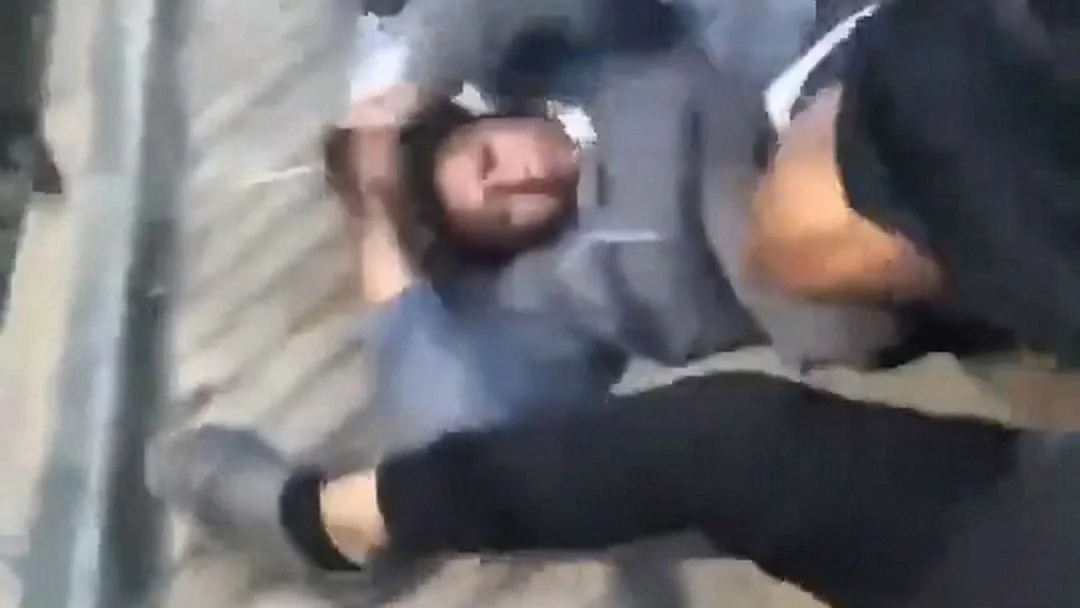
The footage opens without warning, the frame already tilted and frantic. A man in a dark hoodie is on the ground near a green metal railing, while bodies in sweatpants and sneakers blur past the lens. Somewhere behind the chaos, a voice chants a name over and over, and the camera never stops moving.
- The scene: A paved sidewalk beside a green painted railing and a strip of grass, in what appears to be a New York City residential block.
- The friction: A group of young men confronts a rapper identified in the original post as MDOT 59, along with his mother, who is said to be present during the confrontation.
- The intervention: Several figures rush the camera's field of view, and the recording descends into a tangle of limbs, clothing, and shouting.
- The aftermath: The clip ends before order returns, leaving the camera operator panning across scattered street debris and retreating bodies.
What the Recorded Footage Captures: Chronological Breakdown
The video begins in the middle of a movement, not at its start. A person in dark clothing is down on the pavement, legs folded awkwardly, while a second figure in a blue shirt leans over the space near the railing. The camera is close to the ground, handheld, and breathing hard through its own instability. There is no establishing shot, no wide view of the street, only the pavement and the bodies above it.
Then the frame tilts upward and sideways. A man in a grey sweatshirt is now lying flat on his back on the concrete, arms loose at his sides, face turned toward the lens. A leg in black pants sweeps through the foreground, the sneaker blurred with motion. Off to the right, another foot in a dark sock slides into frame. The choreography is impossible to untangle in real time, but the geometry is clear enough: multiple people are moving toward the same small patch of sidewalk.
A voice cuts through the ambient noise, rhythmic and repeated: 'Oh, yeah. Yes, T.T. Yes, T.T. Yeah, T.T.' The chant is not a taunt so much as a signal, the kind of callout that binds a group together in the moment. The camera swings again, and for a split second the green railing and a sign at the edge of a yard come into view, domestic and ordinary, before the blur swallows them again.
By the final seconds, the energy breaks. Figures in white tops and dark pants scatter toward the edges of the frame, and a white object, possibly paper or discarded clothing, lies flat on the pavement. The camera keeps rolling, but the crowd has already begun to dissolve, leaving only the aftermath in the lens.
Critical Blind Spots: What the Lens Leaves Unresolved
What the footage never shows is the beginning. There is no visible exchange of words, no clear first push, no identifiable moment when a conversation turned into a confrontation. The clip starts with bodies already in motion, which means the entire causal chain, the reason the group gathered and the specific trigger that broke the peace, lives entirely off-camera.
What is also obscured is who is who. The original post claims that the rapper MDOT 59 and his mother were the ones being jumped. The frames are too compressed and too quick to independently confirm roles, and the identities of the individuals on the pavement are not verifiable from the video alone. The person filming never narrates names, only the repeated chant, and no one on the audio identifies themselves or explains the dispute.
The third blind spot is spatial. The camera operator is inside the crowd, not outside it. That proximity gives the clip its visceral power, but it also means the operator's own movements shape what the viewer sees. When the lens drops, the viewer drops with it. When the operator retreats, the story retreats. There is no neutral vantage point, and the brief glimpses of the building facade, the grass strip, and the green railing are too fragmented to establish a precise location.
Statutory Framework and Protocol Analysis
In encounters like this, the legal questions usually sort into two tracks. The first is criminal liability for assault or battery, which turns on who initiated force and whether the force used was proportionate. The second is the duty of bystanders, which in most U.S. jurisdictions carries no general legal obligation to intervene physically. The camera operator's choice to record rather than step in is legally unremarkable, even if it is morally debated afterward.
If police had responded, the constitutional framework would govern how officers separated the parties. Under Terry v. Ohio, an officer may briefly detain someone on reasonable suspicion of criminal activity, and under Pennsylvania v. Mimms, a lawfully detained person can be ordered out of a vehicle. Under Rodriguez v. United States, that detention cannot be extended beyond the time needed to resolve the suspicion. In a street melee, the practical challenge is identifying aggressors from a moving crowd, which is exactly the kind of ambiguity the shaky footage preserves rather than resolves.
| Incident Parameter | Observation at the Scene |
|---|---|
| Location type | Paved sidewalk beside a green railing and grass strip |
| Number of visible participants | At least five distinct figures in motion |
| Individual on the ground | One man in grey, one in dark clothing, at different moments |
| Recorded audio | Repeated chant of a name, no explanatory dialogue |
| Camera position | Handheld, inside the crowd, frequent tilts and drops |
| Duration of visible clash | Under thirty seconds of continuous action |
| Post-incident state | Crowd disperses, debris left on pavement |
Read more: {NOIBO}
Core Questions and Institutional Review
- Who initiated physical contact in the seconds before the recording began?
- Was the mother of the rapper present and directly involved, as the original post claims, or nearby and separate from the clash?
- Did any bystander or building resident call emergency services during the incident, and how long did the group remain on the block?
- Are there independent recordings from a different angle that could clarify the sequence of events?
The most striking thing about this clip is not the violence, which is brief and chaotic, but the ordinariness of the setting around it. A green railing, a strip of grass, a white sign at the edge of a yard. The street looks like any other street until the moment it does not, and then it goes back to looking like any other street again. What do you think a recording like this can actually prove, and where does the camera's testimony end?
Practical Takeaways
- Shaky, close-range footage documents that a confrontation happened, but rarely establishes who started it.
- Original social posts often assert roles and identities that the video itself cannot verify.
- In public disputes, the legal distinction between self-defense and mutual combat usually hinges on evidence outside the frame.
- Bystanders who record rather than intervene are protected legally, but the choice remains a live ethical question in every city block where it happens.