






WATCH: On-scene video documentation is embedded below →
LISTEN TO THIS ARTICLE
Audio Narration • English (US)
LOS ANGELES – A newly surfaced viral video, reportedly recorded in a public-facing commercial or institutional space, captures the tense seconds before an assault and the immediate, forceful intervention that followed. The footage, which has not been independently verified by FXVN, shows a young man threatening and physically intimidating what appears to be an autistic youth, before an off-camera observer issues a trigger phrase that transforms the aggressor into the victim. The incident raises urgent questions about bystander duty, the legal boundaries of retaliatory force, and the evidentiary gaps that cloud viral claims of frontier justice.
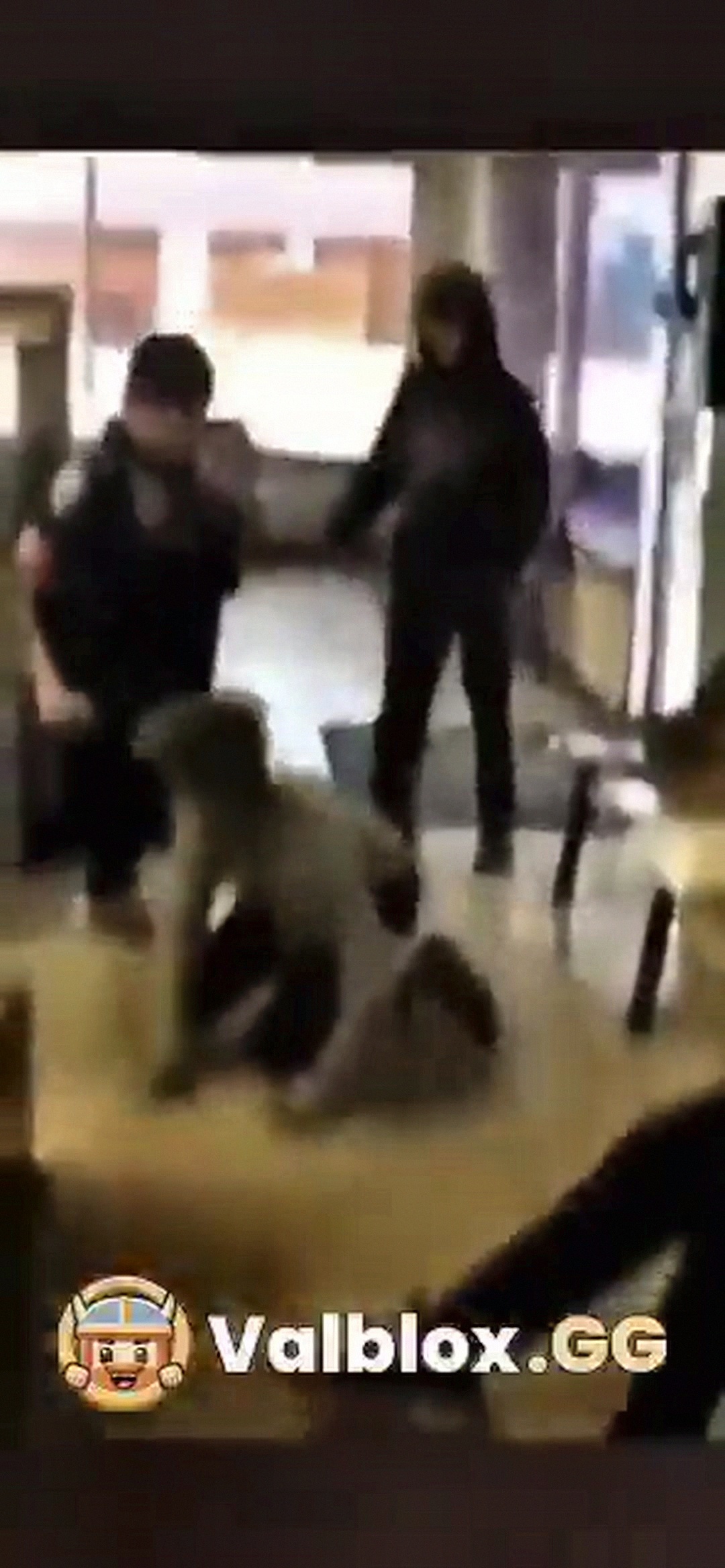
- Jurisdictional setting: The exact location remains unidentified in the available data, with the footage showing a brightly lit, low-ceilinged interior consistent with a school common area, community center, or commercial office lobby. No public agency has confirmed the venue or time of the incident.
- Recorded escalation: A male subject, wearing a dark jacket and light-colored pants, steps forward and uses aggressive hand gestures while a second male, seated or crouching, faces him defensively; a third person stands in the background, watching without intervening.
- Physical confrontation: Audio captures a voice declaring "this is the one heatedly punch" before the aggressor is confronted; the melee then breaks out, with the seated youth rising as the aggressor is violently repelled.
- Legal and regulatory implications: The recording raises probable cause issues around assault, self-defense, and a guardian's or sibling's authority to use force; the presence of the trigger phrase "He's on" suggests a premeditated or coordinated response, which could complicate a pure self-defense claim.
What the Recorded Footage Captures: Chronological Breakdown
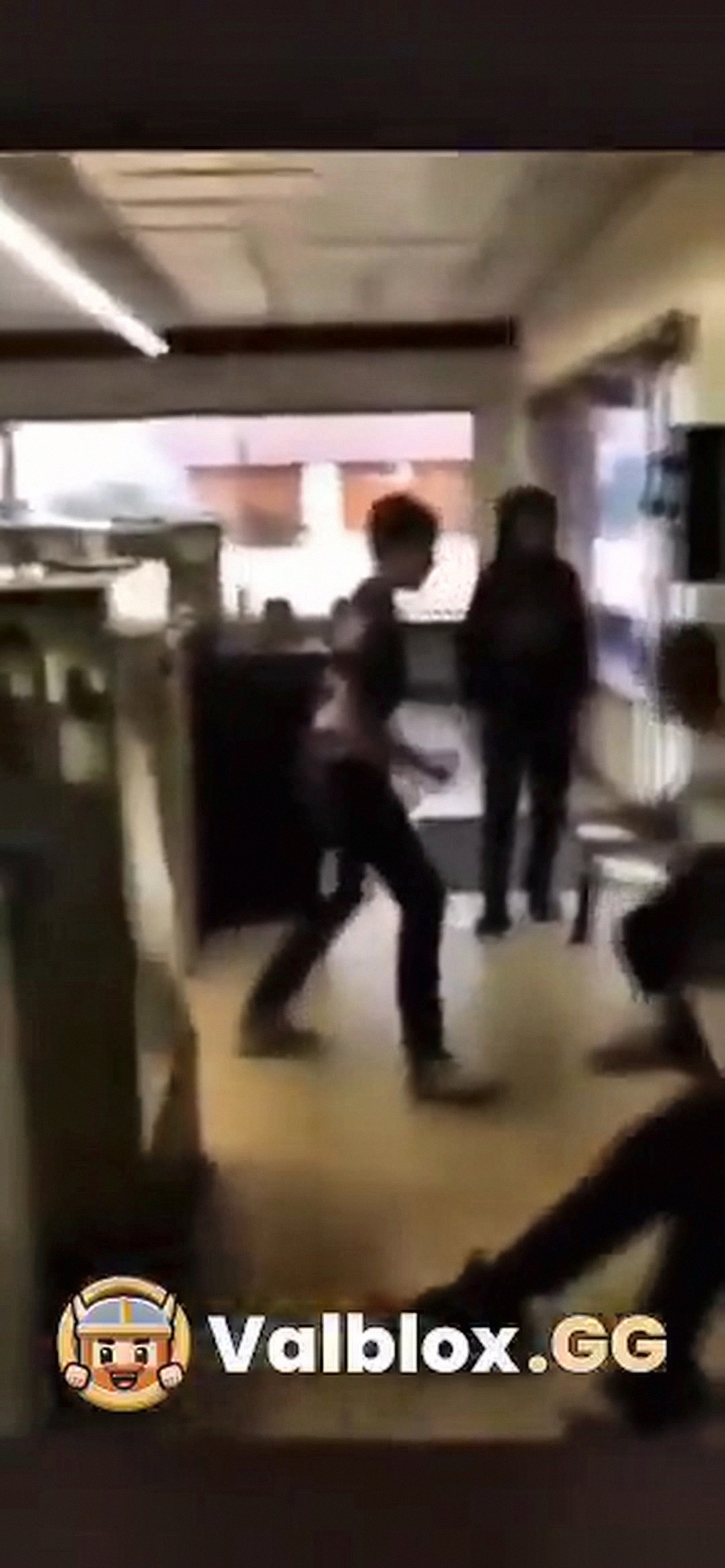
The video opens with an over-the-shoulder perspective, slightly unsteady, capturing the interior space from a low angle. The camera pans across a room with tiled flooring, fluorescent lighting, and glass windows displaying a bright exterior; the composition suggests the operator is holding a smartphone at waist height, possibly concealing the recording from the subjects.
At the ten-percent mark, a young male in a black hoodie and dark pants paces aggressively, his shoulders squared toward a second male who is crouched or seated. The audio captures a voice, likely the aggressor's, taunting with "I dare you!" and "Fightin', fightin', fightin'." The crouched male does not rise; his body language indicates defensiveness rather than combativeness. In the background, a third youth in a dark jacket and a fourth figure near a doorway observe without stepping in.
By the twenty-five-percent mark, the aggressor closes distance. The audio registers a voice, possibly the observer or the target, saying "Aight, I'm honestly about to fuckin' rock this kid's chaos, bro," followed by a response, "Do it." The exchange is ambiguous – it could be encouragement or a challenge. The camera angle shifts, capturing the aggressor's back as he leans into the target's space.
The tension peaks at the forty-percent mark when the audio captures the phrase "Remember, you knock him out, she date you, remember?" The statement introduces a third-party stake – a romantic incentive – which legal analysts would flag as evidence of premeditation and possible conspiracy to commit battery.
At the sixty-percent mark, the footage captures the sudden reversal. The audio cuts to a shout: "He's on. He's on. He's on." A figure, previously concealed by the camera's framing, rushes into the frame from the right, launching a physical counterattack against the aggressor. The aggressor's posture instantly collapses from dominance to retreat; he stumbles backward, shouting "Dispute off me, bro!" repeatedly. The camera follows the melee, capturing blurred limbs and the aggressor's attempt to shield himself.
By the seventy-five-percent mark, the aggressor has been driven toward the right edge of the frame, near a white bathroom fixture or sink basin. The audio captures the aggressor pleading "Dispute off me!" while the counter-attacker persists. The camera does not capture a clear resolution; the footage cuts before any authority figure arrives.
Corporate Liability and Critical Blind Spots
The video's provenance remains unverified. The watermark "Valblox.GG" appears in the lower third of every frame, suggesting the clip was processed through a third-party content platform, possibly a gaming or social media aggregator. There is no chain-of-custody record, no timestamp, and no verification of the uploader's identity. For evidentiary purposes, this is a critical deficiency: without metadata, the footage cannot establish a timeline, location, or date, undermining its utility in any judicial proceeding.
The camera's perspective is another blind spot. The operator appears to be a participant or a close observer, not a neutral bystander. The audio captures voices that are not matched to specific bodies, making it impossible to determine who issued the trigger phrase "He's on." This ambiguity is legally significant: if the phrase was issued by the target's brother as a signal to initiate a pre-planned response, the counterattack could be characterized as an ambush rather than spontaneous self-defense.
Moreover, the footage does not capture the prior exchange. The video begins mid-conflict; the events preceding the "I dare you" taunt are missing. Under evidentiary rules, a recording that omits the provocation cannot establish who instigated the confrontation, leaving the legal distinction between aggressor and defender unresolved.
The video's viral framing – "Bully attacks autistic kid not knowing that his brother was there watching" – asserts facts not verifiable from the footage alone. The target's diagnosis is not shown on camera, and the relationship between the target and the counter-attacker is not visually confirmed. These unverified assertions could inflate public sympathy but would be inadmissible as hearsay in a courtroom.
Statutory Framework and Protocol Analysis
Legal Distinction: Under California Penal Code § 197, the use of force in self-defense is justified only when a reasonable person believes immediate harm is imminent, and the force used must be proportional to the threat. A preemptive strike, coordinated through a verbal signal, would likely fall outside the statutory protection, exposing the intervenor to battery charges even if the initial aggressor initiated the conflict.
Institutional duty of care is another vector of liability. If the incident occurred on school property or within a commercial establishment, the property owner and supervisory staff may bear civil liability for failing to provide adequate security. The video shows no authority figure intervening during the escalation; the absence of staff raises questions about supervision protocols and emergency response readiness.
Under Title IX and state anti-bullying statutes, educational institutions are required to investigate and remediate harassment. The failure to intervene, if documented, could expose the institution to administrative sanctions and civil damages. However, without verified location data, no specific institution can be named, leaving the regulatory framework applicable but unenforceable in this instance.
Scroll down for the full investigative report below ↓
| Incident Parameter | Governing Legal Standard & Judicial Protocol |
|---|---|
| Verbal provocation and threat | First Amendment protects speech, but "fighting words" and true threats fall outside protection; assault charges require imminent apprehension of harm. |
| Physical aggression initiation | Battery under Penal Code § 242; self-defense under § 197 requires proportional and imminent response. |
| Bystander intervention | No general duty to rescue under U.S. common law, but property owners may bear premises liability for foreseeable harm. |
| Coordinated counterattack | Conspiracy or aiding-and-abetting liability under § 182 if the verbal signal demonstrates pre-planning. |
| Video evidence admissibility | Federal Rules of Evidence 901 require authentication; lack of metadata may result in exclusion. |
| Institutional supervision | Duty of care under tort law; school or business may face negligence claims for failure to supervise. |
| Public release of footage | Privacy torts and state wiretapping laws may apply if recording occurred without consent in a two-party consent state. |
Read more:
Read more: Portland Commercial District: Unprovoked Assault and Premises Liability →
Core Questions and Institutional Review
- Who initiated the physical confrontation, and does the audio evidence support a claim of self-defense or premeditated retaliation?
- Did the property owner or supervising authority have a duty to intervene, and did they breach that duty by failing to act?
- Can the identity of the counter-attacker be established, and does his relationship to the target affect the legal characterization of his intervention?
- What regulatory reforms are needed to ensure that viral footage of assaults is preserved with proper chain of custody for use in judicial proceedings?
The incident underscores a broader systemic challenge: viral recordings of violence are increasingly treated as public evidence, yet they often lack the procedural safeguards required for legal adjudication. The gap between public perception and evidentiary standards leaves victims without recourse and aggressors without accountability, while institutions hide behind the absence of verified facts. Until a formal investigation is launched and the footage is properly authenticated, the only certainty is that a room full of witnesses produced a recording – and no one called for help before the fight began.
FOLLOW-UP INVESTIGATION REPORT
Related documented case details, verified on-scene evidence, and statutory liability analysis continued below.
CONTINUE READING: NEXT INVESTIGATIVE DOSSIER →
New York Citizen’s Arrest: Religious Figure Detained in Sting
NEW YORK – A nighttime confrontation outside a Midtown Manhattan retail corridor escalated into a physical citizen's arrest, raising immediate questions about the boundaries of private detention, the evidentiary value of vigilante footage, and the institutional liability of livestreamed sting operations. The recorded encounter, captured by a self-identified predator-catching group and broadcast under the KOBLNATION banner, documents the attempted departure of a bearded man in traditional Hasidic attire who was allegedly meeting a 14-year-old boy for sexual purposes. The incident sits at the volatile intersection of public safety protocol, religious institutional oversight, and the financial exposure of platforms that monetize confrontation content.
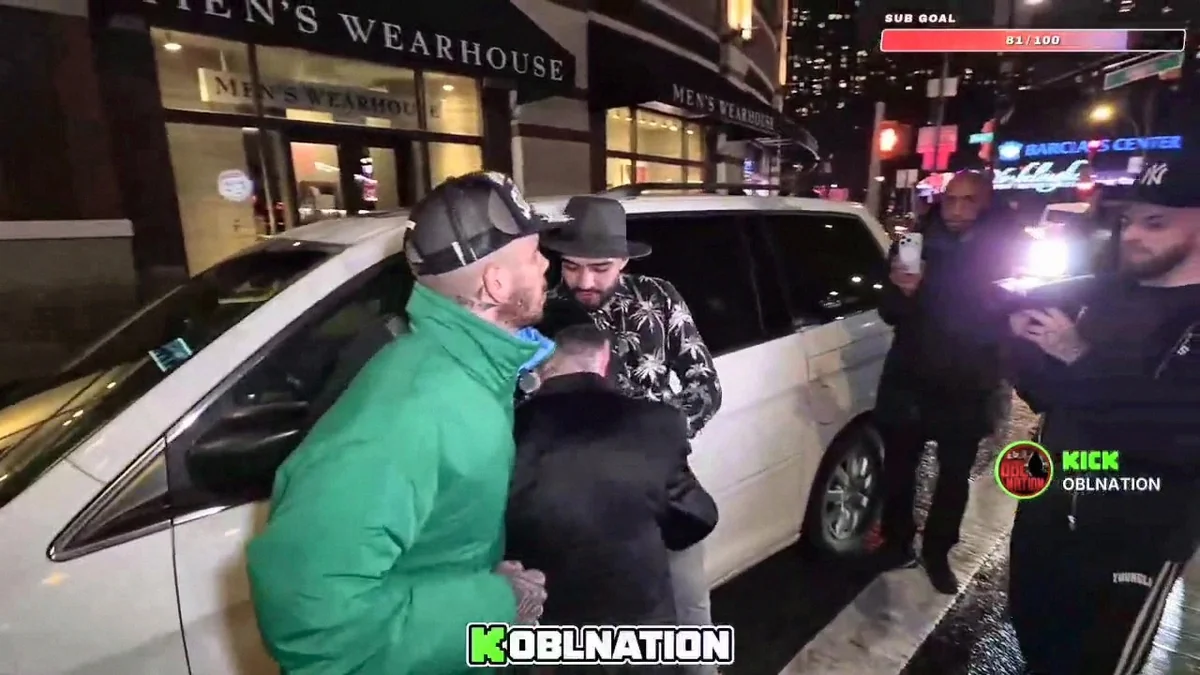
- Jurisdictional Setting: A public sidewalk adjacent to a Men's Wearhouse storefront in a dense, well-lit Manhattan commercial district, with multiple civilian camerapersons, passersby, and a production-style microphone visible. The geographic and commercial context places the event under New York State jurisdiction, where citizen's arrest statutes carry strict temporal and force limitations.
- Recorded Escalation: A group of men surround a bearded individual in a black coat and hat, blocking his path to a white minivan. Verbal commands to stop and the repeated declaration "It's a citizen's arrest now" establish the group's asserted legal authority, while the subject physically pushes back and attempts to enter the vehicle.
- Intervention: No uniformed law enforcement or bailiff intervention is visible in the recorded frames; the group repeatedly states, "We're waiting on the police," indicating that formal custody had not yet been transferred to municipal authorities during the captured interval.
- Legal and Regulatory Repercussions: The subject's recorded statements – including an admission that he "didn't learn" from a prior incident and an assertion that he would continue the conduct "every day" – create a complex evidentiary record that must be weighed against chain-of-custody concerns, the provenance of the sting, and the potential civil liability of the civilian detainers.
What the Recorded Footage Captures: Chronological Breakdown
From the opening frames, the camera is positioned at close range, roughly chest-height, capturing a tight cluster of bodies against the reflective glass of a storefront and the polished side panel of a white minivan. The primary subject – a bearded man wearing a black hat and long black coat – stands with his back partially to the vehicle, surrounded by three to four men. One man in a bright green jacket dominates the left foreground, his body angled to cut off the subject's lateral escape route. Another man in a floral-patterned shirt stands to the right, reinforcing the physical cordon. A production-style microphone with a foam windscreen intrudes into the right edge of the frame, confirming that the encounter is being recorded for publication rather than merely documented for police.
The first phase of the encounter is characterized by verbal commands. A voice off-camera repeats, "It's a citizen's arrest now," three times in rapid succession, functioning as both a verbal assertion of authority and a warning to the subject. The phrase "You can't get in there" is directed at the subject as he reaches toward the minivan's door handle. The group's physical posture – shoulders squared, hands raised at chest level – transitions from passive blocking to active restraint as the subject attempts to push through. The audio captures the subject's resistance through a series of sharp, overlapping exclamations: "Hey! Hey! Hey! Yo, stop it. Stop, stop, stop." The subject's body language shifts from verbal protest to physical lunging, and the group responds by closing the gap, pinning him against the vehicle's exterior.
A distinct verbal exchange emerges in the middle of the confrontation. The subject, his voice rising, states, "I know where you live," a statement that introduces an implicit threat into the recorded record. Almost simultaneously, he says, "I wanna die," a declaration that complicates the assessment of his mental state and raises duty-of-care obligations for the civilians holding him. The group repeatedly urges him to "relax" and warns, "You're doing too hard," while maintaining that they are "waiting on the police." The camera pans slightly, revealing a second cameraman and several bystanders, including a man in a dark jacket holding a phone, confirming that the event is being documented from multiple angles.
The final phase of the recorded footage centers on a direct interrogation. A voice asks, "Why? You didn't learn from this the first time?" The subject responds, "I didn't learn." Pressed further – "What happened? Why are you here?" – the subject offers a fragmented explanation involving a knee, which the interviewer challenges: "A what?" The exchange is disjointed, but the recorded admission that he did not learn from a prior encounter, combined with his earlier statement that he would be present "every day," constitutes the evidentiary core of the footage. The video ends with the group still holding the subject against the minivan, the police not yet visible on camera, and the subject's responses growing more incoherent.
Corporate Liability and Critical Blind Spots
The recorded footage presents a textbook case of evidentiary limitation. The encounter begins mid-confrontation, with no footage of the alleged prior communications, the arrangement of the meeting, or the identity and age of the purported minor. The viewer is asked to accept the group's framing – that the subject arrived to meet a 14-year-old boy – without any on-camera corroboration of the underlying solicitation. This gap is legally significant: in any subsequent prosecution, the provenance of the sting, the authenticity of the messaging logs, and the chain of custody for the recording would be subject to rigorous challenge by defense counsel. The unedited audio is powerful but incomplete.
The second blind spot concerns the physical restraint itself. New York law permits a private person to arrest another for a crime committed in his presence, but the detainers must act within strict temporal limits and must use only reasonable force. The footage captures the subject being pinned against a vehicle, but it does not capture the moments immediately before or after, including whether the subject was searched, whether his phone was seized, or whether he was informed of the reason for the detention. The group's repeated assertion of a citizen's arrest does not itself establish legal authority; a court would need to determine whether the underlying offense was actually committed in the detainers' presence.
The third blind spot is the commercial dimension. The footage is branded with a livestreaming platform's overlay and a donation goal meter, indicating that the confrontation is monetized in real time. This raises questions about the financial incentives driving the operation and the potential for civil liability if the detention is later found to be unlawful. The subject's statement "I know where you live" introduces a safety concern for the detainers, but it also raises the possibility of counterclaims for emotional distress, defamation, or false imprisonment. The absence of uniformed officers during the captured interval means that the group assumed the risks and responsibilities of custody without the protections of municipal indemnification.
Statutory Framework and Protocol Analysis
Legal Distinction: A citizen's arrest in New York is governed by Criminal Procedure Law Section 140.30, which permits a private person to arrest another for a crime committed in his presence. The statute does not authorize detention based on suspicion alone, and the use of force must be proportional to the threat. Separately, the subject's recorded statements may be admissible as party admissions, but their evidentiary weight depends on the voluntariness of the interrogation and the absence of coercion.
New York's statutory framework creates a narrow window for civilian detention. The detainers must be able to articulate the specific offense committed in their presence, and they must transfer custody to a police officer without unreasonable delay. The footage shows the group repeatedly stating that they are waiting for police, which supports a claim of timely transfer, but the interrogation that occurs during the wait – including questions about prior conduct – may exceed the scope of a lawful detention. The subject's responses, particularly his admission that he "didn't learn," were elicited by civilian questioners, not by law enforcement, which raises voluntariness concerns under the Fifth Amendment.
The institutional dimension extends beyond the street. The subject's religious attire places the incident within the oversight framework of communal religious institutions, which maintain internal codes of conduct and reporting obligations. The footage does not show any representative of such an institution present, but the reputational and regulatory consequences for the affiliated community are substantial. The recorded admission of prior conduct triggers mandatory reporting considerations under state child protection statutes, and the failure to report suspected abuse can itself be a criminal offense for mandated reporters.
| Incident Parameter | Governing Legal Standard & Judicial Protocol |
|---|---|
| Citizen's arrest authority | N.Y. Crim. Proc. Law § 140.30: private arrest only for crime committed in presence |
| Use of force during detention | Proportional force permitted; excessive restraint may constitute assault |
| Transfer to law enforcement | Custody must be delivered to police without unreasonable delay |
| Admissibility of statements | Party admissions admissible if voluntary; coercion may suppress |
| Mandatory reporting | N.Y. Soc. Serv. Law § 413: suspected child abuse must be reported |
| Livestream monetization | Platform terms and state fraud statutes govern solicitation of donations |
| False imprisonment exposure | Civil liability for unlawful detention without legal justification |
Read more: {NOIBO}
Core Questions and Institutional Review
- Did the detainers possess sufficient probable cause to justify a citizen's arrest under New York law, or did the detention exceed the statutory scope of a presence-based offense?
- What was the provenance of the underlying sting, and can the messaging records and the purported minor's identity be authenticated for use in a criminal proceeding?
- Did the civilians' interrogation of the subject during the detention compromise the voluntariness of his statements, and what are the implications for admissibility?
- What reporting obligations were triggered by the subject's recorded admission of prior conduct, and were those obligations fulfilled by any affiliated institution?
The systemic impact of this incident extends beyond the individual case. Livestreamed sting operations have become a fixture of urban public safety discourse, generating substantial engagement and revenue while operating in a legal gray zone. The footage captures a moment of genuine public concern – a man in religious attire allegedly seeking a minor – but it also captures the absence of formal protocol, the pressure of real-time monetization, and the fragility of civilian-led detention. The recorded admission that the subject "didn't learn" from a prior incident will be the central evidentiary question for prosecutors, but the more consequential question is institutional: whether the platforms, communities, and legal systems that surround these operations are equipped to handle the fallout when the cameras stop recording.
Practical Takeaways
- Civilian detentions require a clearly articulated, presence-based offense and timely transfer to police custody.
- Recorded admissions made during civilian questioning are vulnerable to voluntariness challenges and should be evaluated by counsel before publication.
- Livestreamed confrontation content carries financial and civil liability exposure that extends beyond the individual detainers.
- Mandatory reporting obligations for suspected child abuse apply regardless of the manner in which the evidence is obtained.