






WATCH: On-scene video documentation is embedded below →
LISTEN TO THIS ARTICLE
Audio Narration • English (US)
PORTLAND, Ore. – A recorded, unprovoked physical assault inside a busy downtown commercial corridor has escalated into a broader examination of public safety protocols and premises liability after a passerby deliberately spat on his hand and rubbed it across a pedestrian's head. The incident, captured on a moving body-worn perspective camera, raises immediate questions about the duty of care owed by commercial property operators to visitors and the adequacy of security surveillance in open plazas.
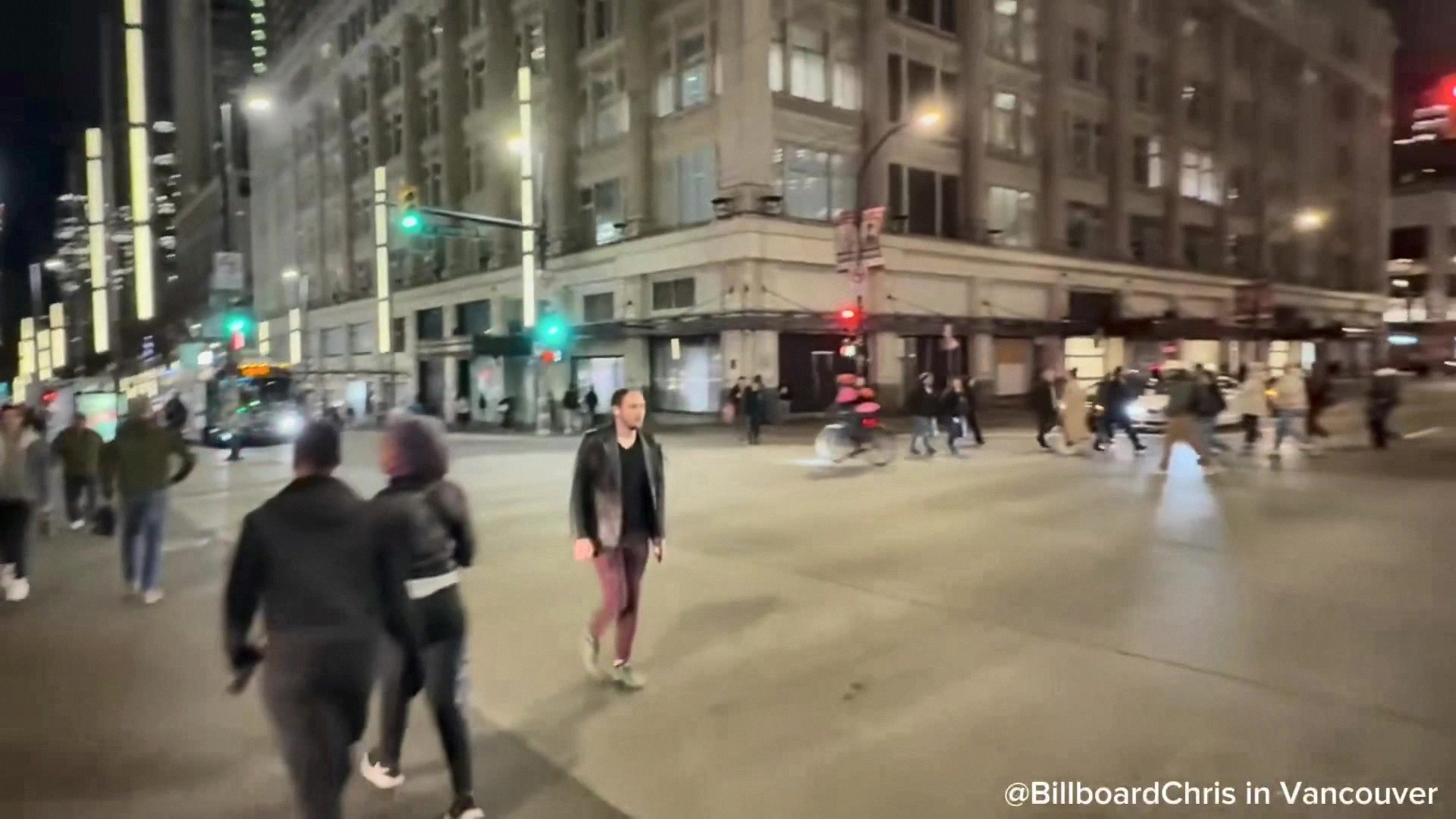
The recorded exchange shows a man walking through a well-lit urban environment near a food court, engaging in conversation, when the sudden physical violation occurs. The victim's audible distress and immediate demand to find a restroom to wash his head underscore the visceral nature of the encounter and the potential health hazards associated with bodily fluid exposure in public settings. The absence of the perpetrator's face on camera has further complicated any potential identification or legal recourse, highlighting a critical evidentiary gap in public safety infrastructure.
- The recorded event takes place in a downtown Portland commercial zone, specifically near a food court and public transit corridor, an area subject to high foot traffic and varying levels of private security oversight.
- The assailant, described by the victim in the recording as an individual lacking decorum, initiated an unprovoked physical assault by spitting on his own hand and transferring the saliva to the victim's head.
- The victim immediately vocalized the assault, expressing the need to wash his head and seeking a restroom facility, while the surrounding crowd offered verbal sympathy but no apparent intervention or detention of the assailant.
- Legal and regulatory repercussions remain pending, as the victim explicitly notes in the recording that the assailant's face was not captured by his camera, creating a substantial barrier to criminal identification and civil liability claims.
What the Recorded Footage Captures: Chronological Breakdown
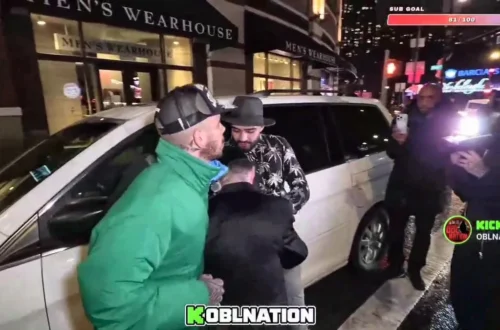
The video begins with a first-person perspective moving through a busy urban intersection at night. The operator of the camera, identified by the watermark as Billboard Chris, is walking across a wide street with other pedestrians. The camera angle is low and forward-facing, capturing the movement of the crowd and the ambient noise of the city. The initial frames show the subject navigating a crosswalk and then moving toward a commercial building with large glass windows and exterior lighting. The atmosphere appears casual, with pedestrians moving in various directions, and the subject is heard engaging in a brief, friendly exchange with someone off-camera, mentioning a recent trip to New York and Oregon.
The interaction shifts abruptly at the mid-point of the footage. The camera momentarily captures a blurred motion near the subject's head, followed by the subject's verbal exclamation: "That person spat all over their hand and then just rubbed it on my head." The camera pans erratically, likely reacting to the physical contact, and the subject's voice becomes agitated. The footage shows the subject turning, but the frame is dominated by a close-up of a person's shoulder and the side of their head, failing to capture the assailant's facial features. The background reveals the entrance to a food court and a transit vehicle, confirming the commercial and highly public nature of the location.
The subsequent frames show the subject walking rapidly toward the food court area, stating, "I gotta go wash my head." The camera angle remains low, capturing the pavement and the lower halves of other pedestrians, while the subject's commentary reflects a mix of disgust and resignation. The audio captures the subject explaining the event to a bystander, who responds with sympathy and agreement that the behavior is unacceptable. The subject repeatedly expresses frustration over the lack of facial identification, stating, "Too bad I don't have the person's face on camera," which serves as a crucial evidentiary limitation for any potential police report or subsequent legal action.
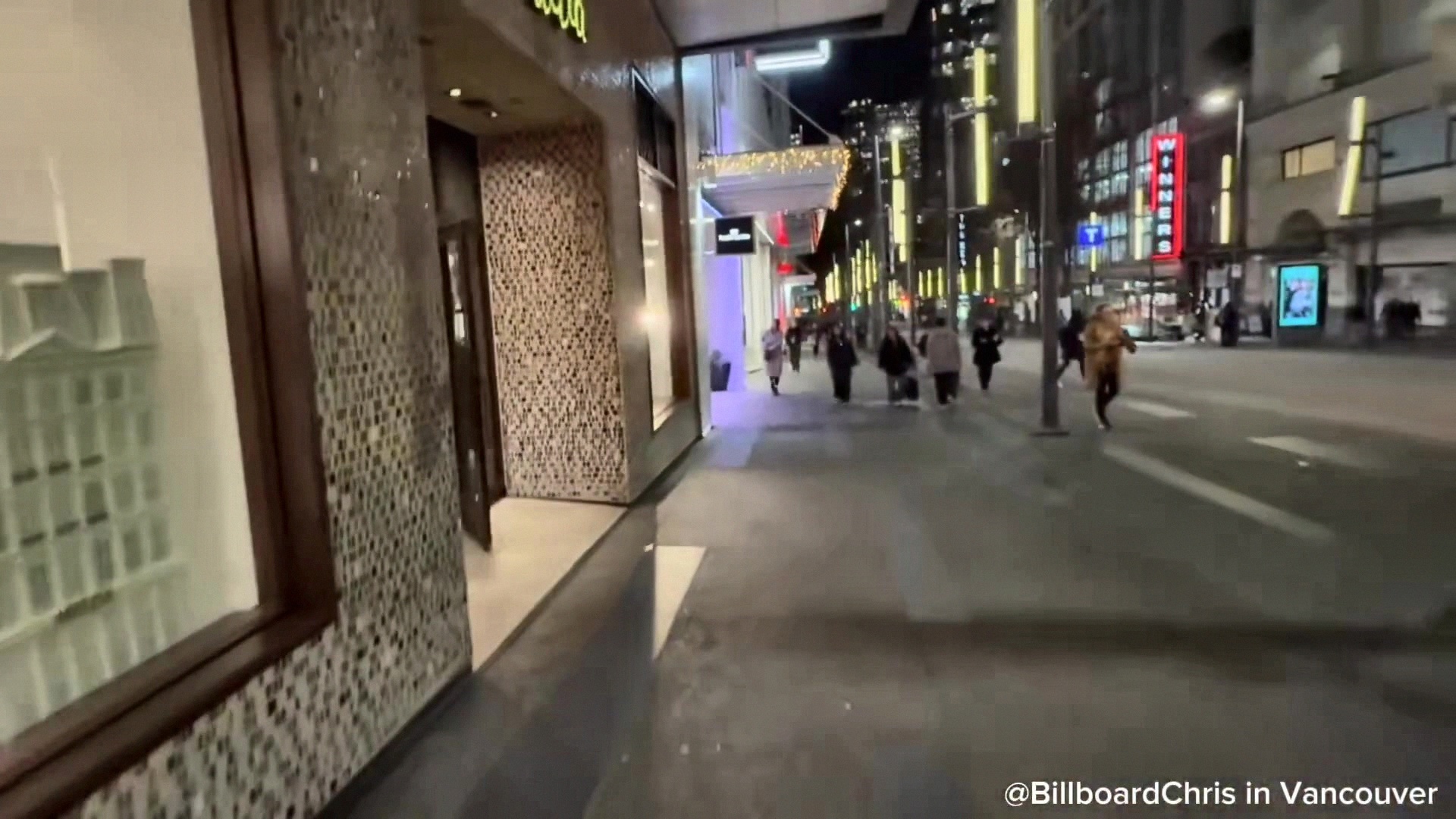
The final segment of the footage shows the subject moving through an indoor or covered walkway, likely seeking the restroom facilities. The camera captures the transition from the outdoor street environment to an interior commercial space, with glass doors and building signage visible. The subject's dialogue continues, reflecting on the broader societal implications of the encounter, referencing the lack of decorum and the willingness of individuals to resort to physical assault over ideological disagreements. The footage concludes with the subject near a restroom entrance, ending abruptly without capturing the aftermath or any official response.
Corporate Liability and Critical Blind Spots
The incident raises significant questions regarding the premises liability of the commercial property owners and the operational protocols of the security personnel in the area. Under general liability principles, commercial property operators have a duty to exercise reasonable care to protect invitees from foreseeable harm. However, the unprovoked, spontaneous nature of a saliva-based assault presents a complex challenge for prevention. The critical blind spot exposed by this footage is the absence of adequate surveillance and rapid response capabilities in an area that appears to be a major public hub. The victim's inability to identify the assailant on camera suggests that the available security infrastructure was either not positioned to capture the incident or was not actively monitored in real time.
Furthermore, the chain of custody for any physical evidence (such as the saliva) is virtually nonexistent, as the victim immediately sought to wash the area. The viral nature of the video itself becomes a double-edged sword: while it provides a chronological record of the event, the perspective angle and the lack of a clear facial shot undermine its probative value in a court of law. The recording captures the immediate distress and the sanitation concern, but it fails to establish the identity of the perpetrator, leaving the incident in a legal gray area where civil action is difficult without a named defendant.
Statutory Framework and Protocol Analysis
Legal Distinction: The incident potentially falls under state assault and battery statutes, where the intentional application of force (spitting) constitutes battery. However, the evidentiary threshold for prosecution requires identification, which is absent. Concurrently, the victim may have a civil claim for battery and intentional infliction of emotional distress against an unidentified party, which is practically unenforceable without the perpetrator's identity. The commercial property owner may face a negligence claim if it can be shown that the premises lacked adequate security or lighting, but the spontaneous nature of the act likely absolves the operator of direct liability.
| Incident Parameter | Governing Legal Standard & Judicial Protocol |
|---|---|
| Intentional physical contact | State assault and battery statutes; intentional tort liability |
| Bodily fluid exposure | Public health ordinances; potential for health code violations |
| Identification of assailant | Law enforcement identification protocols; evidentiary standards |
| Premises security | Commercial property duty of care; negligence standards |
| Surveillance footage | Chain of custody; evidence authentication requirements |
| Victim's immediate response | Mitigation of damages; self-help remedies in public spaces |
Compliance protocols for commercial operators in public transit corridors typically require a visible security presence and functional camera systems. However, the focus is often on property crimes rather than spontaneous interpersonal violence. The incident highlights a gap in the duty of care regarding the protection of individuals from unprovoked assaults by other patrons. The institutional duty of care extends to providing a safe environment, but the standard is generally one of reasonableness, not absolute guarantee. The rapid and seemingly random nature of the assault makes it a challenging scenario for any security protocol, as it lacks the precursor indicators typically associated with planned criminal activity.
Scroll down for the full investigative report below ↓
Read more:
Read more: New York Dealership Fraud Suspect Returns to Scene, Arrested →
Core Questions and Institutional Review
- What specific security and surveillance gaps allowed an unprovoked assault to occur in a busy commercial food court without immediate intervention or identification of the perpetrator?
- How do current public safety protocols address the risk of biological assaults in high-traffic commercial zones, and are existing health and safety codes adequate for this type of incident?
- What are the legal pathways for the victim to seek redress when the assailant's identity is not captured on camera, and does this case set a precedent for evidentiary requirements in public spaces?
- Should commercial property operators be required to implement more robust, real-time monitoring systems to deter spontaneous acts of violence and ensure the safety of all visitors?
The systemic impact of this incident lies in its exposure of the fragility of public order and the limitations of personal safety in shared commercial environments. The victim's immediate reaction to seek sanitation highlights the visceral, health-related consequences of such an assault, which extend beyond mere physical harm. As urban centers continue to grapple with issues of public conduct and safety, this recorded event serves as a critical data point for policymakers and property managers. The inability to hold an individual accountable due to a lack of visual identification underscores the necessity for improved public security infrastructure and a re-evaluation of how evidence is gathered and preserved in the modern age of viral recording. The incident is a stark reminder that in the chaos of a crowded public space, the line between safety and vulnerability is often defined by a single, unrecorded face.
Practical Takeaways
- Premises Liability: Commercial operators should review surveillance coverage in high-traffic zones to ensure potential blind spots are addressed, particularly around food courts and transit corridors.
- Evidentiary Awareness: Individuals recording in public should be aware that their camera angle may not capture the perpetrator's face; situational awareness of surroundings during a confrontation is critical for later identification.
- Public Health Protocol: Victims of bodily fluid assaults should seek immediate medical advice and sanitation, as the incident raises potential health concerns that go beyond the legal process.
- Legal Recourse: Without an identified assailant, civil and criminal remedies are severely limited; prompt reporting to law enforcement helps in building a broader case even if the individual is not immediately caught.
FOLLOW-UP INVESTIGATION REPORT
Related documented case details, verified on-scene evidence, and statutory liability analysis continued below.
CONTINUE READING: NEXT INVESTIGATIVE DOSSIER →
Three Shooters, 50 Rounds: Gage Park Gas Pump Ambush

A blue sedan rolls into a Southside Chicago gas station and three figures step out. Within seconds, more than forty-five rounds tear through the night, a twenty-year-old man dies inside his car, and the sedan is already accelerating toward Washington Street. The surveillance clock keeps counting, indifferent to what it just recorded.
- The setting: A brightly lit BP gas station in Chicago's Gage Park neighborhood, on the city's Southwest Side, where pumps glow white-green against the dark asphalt.
- The friction: A blue sedan, described in dispatch traffic as possibly a Toyota Camry, pulls alongside a vehicle stopped at the pump island and disgorges three armed figures.
- The intervention: A responding squad car spots the sedan as it pulls out of the station and heads down Washington, giving patrol a direction of travel before the first ambulance is even requested.
- The aftermath: Kevin Garcia Martinez, 20, is fatally injured inside his car; officers on scene count roughly 45 to 50 spent casings of multiple calibers scattered across the concrete.
What the Recorded Footage Captures: Chronological Breakdown
The frame opens on an ordinary tableau: a white SUV parked nose-in at the leftmost pump, a trash can standing against the island, the lot otherwise empty. At the top edge of the screen, the timestamp ticks forward. Nothing in the composition suggests what is about to happen, which is precisely what makes the next seconds so jarring.
The blue sedan enters and settles near the island's right side. A figure in dark clothing steps out and moves on foot, crossing the lit apron between the pumps with a deliberate, unhurried stride that looks less like a rush and more like a rehearsed approach. Dispatch audio later crystallizes what the lens shows: three shooters came out of that sedan, and one of them "walked right off to the side of the victim, fired multiple rounds in there, took off." The body posture on the tape is forward-leaning, committed, closing distance.
Then the scene fractures. Smoke and motion blur wash across the pumps as the rounds land, and the camera's low resolution smears the muzzle flash into pale haze. The sedan reverses out and disappears frame-right while the white SUV sits untouched at the far pump. A radio voice, flat and procedural, confirms it: "The shooter in the blue sedan… the squad car that maybe called out the shots saw the car as it pulled out of the gas station and went down Washington." The window between the first shot and the fleeing sedan is measured in seconds, not minutes.
Critical Blind Spots: What the Lens Leaves Unresolved
The camera sees geometry, not motive. It cannot tell us who was the intended target, whether the victim and the shooters had any prior exchange, or whether the white SUV belonged to anyone connected to the incident. The tape captures a fatal altercations but not a cause, and no frame in the sequence shows a preceding confrontation that would explain it.
Audio adds a detail the picture cannot: "He does have a weapon on him, just want to make sure no one is on scene." That single line reshapes the tactical picture for responding officers, yet it also opens an unanswered question about what role, if any, the victim's own weapon played in the final seconds inside that car.
The dispatch traffic also reveals how much of the story lived outside the frame. A unit reports five tracks fired outside the location, glass shattered, a loud sound victim attended to in a service vehicle at the forecourt's edge. EMS never clearly pronounces on the recording, leaving the audience with a chain of transmissions rather than a clean ending. The camera at the pump never sees the ambulance bays, the shell casings being numbered, or the family being told.
Statutory Framework and Protocol Analysis
In the recorded traffic, the squad's decision to call out the blue sedan's departure is textbook: the vehicle is broadcast as the offending car, direction of travel is fixed to Washington Street, and the information propagates to other units before any officer physically engages. That is the de-escalation architecture of a fast-moving scene – communication before confrontation. The alternative, a single unit chasing a triple-shooter into traffic without a coordinated broadcast, is the scenario protocol exists to prevent.
On the forecourt itself, the standard sequence is familiar to anyone who has worked a altercation scene: secure the perimeter, confirm whether any armed person remains, request EMS, then begin the deliberate work of marking casings. The audio reflects exactly this ladder – a warning about a weapon, a request for medical, then the tally of evidence.
| Incident Parameter | Observation at the Scene |
|---|---|
| Location | BP gas station forecourt, Gage Park, Southwest Side Chicago |
| Vehicle of interest | Blue sedan, described in dispatch as possibly a Toyota Camry |
| Persons who exited the sedan | Three, per radio traffic from responding units |
| Victim | Kevin Garcia Martinez, 20, fatally injured inside a car at the pump |
| Weapon discharge volume | Approximately 45 to 50 rounds, multiple calibers |
| Departure route | Exited the station and proceeded down Washington Street |
| Scene handling | Weapon warning issued, EMS requested, casings counted at the scene |
Read more: {NOIBO}
The gap between what the public sees and what the record actually holds is the central tension of cases like this. A nineteen-second surveillance clip circulates widely; the radio log that explains it rarely does. Video without context is just noise with a timestamp.
Core Questions and Institutional Review
- Which of the three figures who exited the blue sedan was the directing actor, and did the other two act as lookouts or flankers?
- Was the victim known to the shooters before that night, or was the gas pump chosen anonymously?
- What does the victim's weapon recovered at the scene tell investigators about the sequence of events inside the car?
- How many of the 45 to 50 casings have been linked to a single weapon, and how many point to distinct calibers and therefore distinct shooters?
For the neighborhood, the questions are less technical and more human. A man was fatally injured at a pump island in a place people stop for coffee and fuel, in the ordinary rhythm of a weeknight, and the tape will be replayed thousands of times by people who never knew his name. The concrete bears the marks of the scene long after the camera resets.
Investigators are left to reconcile a forensic arithmetic – multiple calibers, dozens of casings, three shooters, one sedan – with a single death and a fleeing car. The public is left with a shorter question: when fifty rounds can be fired at a gas station before the camera has time to adjust, what exactly is the security footage protecting?




2 Comments on “Portland Commercial District: Unprovoked Assault and Premises Liability”