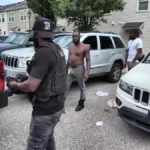


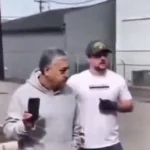





WATCH: On-scene video documentation is embedded below →
LISTEN TO THIS ARTICLE
Audio Narration • English (US)
WASHINGTON – A chaotic scene captured on bystander video shows federal immigration officers attempting to execute an arrest while a crowd of onlookers physically obstructs their vehicle and demands proof of legal authority. The incident raises immediate questions about the legal boundaries of civilian intervention, the operational protocols of federal law enforcement, and the potential criminal exposure of those who block or open the doors of a government vehicle during an active arrest operation.
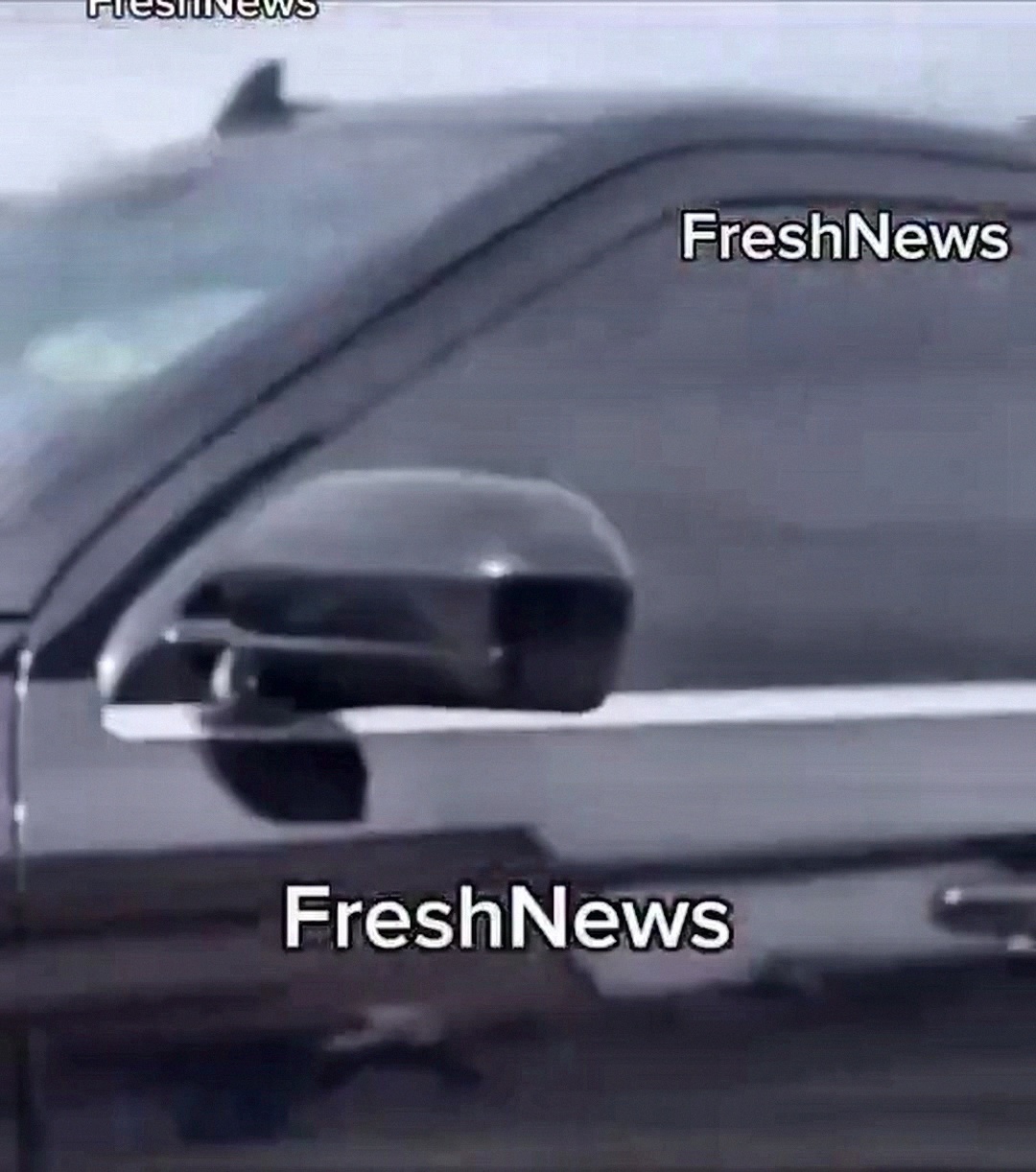
- The recorded event unfolds in a paved commercial lot outside a building marked with a "Lighthouse Christian Ministries" sign, with a black SUV positioned as the central vehicle of interest.
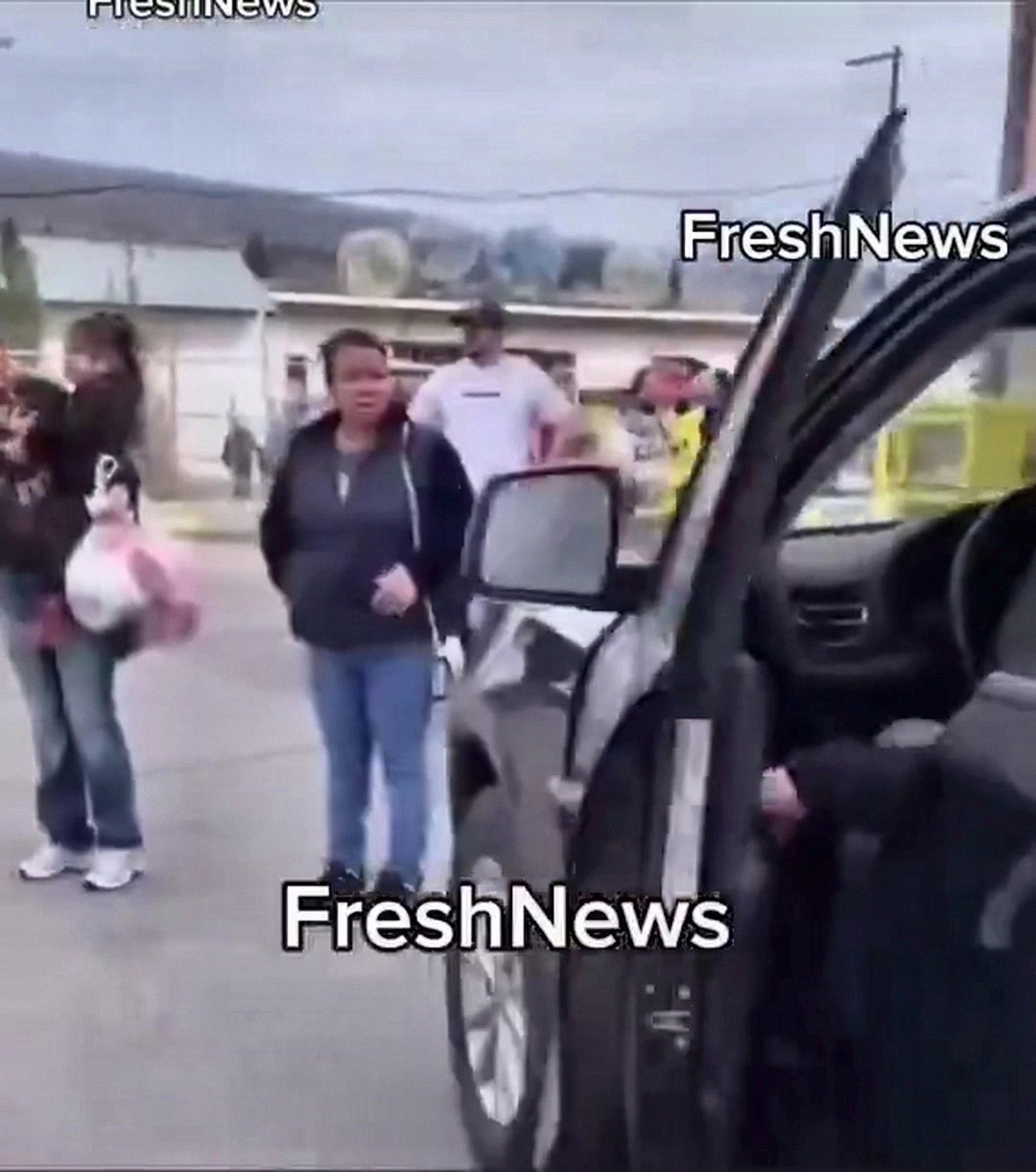
- A inspection officer attempts to enter the driver's seat of the SUV while a group of bystanders surrounds the vehicle, with at least one woman positioning herself against the open door and a rear door opening in an apparent attempt to access the interior.
- Verbal exchanges escalate rapidly, with bystanders demanding warrants and proof, the officer warning that obstructing conduct can lead to arrest, and a woman shouting "That's violence, you agitator!" as the officer physically maneuvers the crowd away.
- The camera captures the officer ultimately departing in the vehicle while the group remains on foot, leaving unresolved questions about whether any bystander was detained or cited for interference.
What the Recorded Footage Captures: Chronological Breakdown
The footage opens with a close, almost claustrophobic view of the black SUV's rear quarter panel and passenger-side doors, camera steady at roughly waist height as the person filming moves alongside the vehicle. A woman's voice, off-camera and slightly ahead of the lens, initiates the confrontation: "Why are you arresting him? Why are you arresting him?" The camera swings to reveal a man in a white t-shirt and a dark cap standing near the front passenger side, holding a phone up as if recording, while a man in a gray hoodie stands closer to the center of the frame with his own phone raised. The officer, visible in tactical-style gear and a dark cap, can be seen moving between the vehicle and the crowd, attempting to establish a perimeter around the driver's door.
The second phase of the recording captures the friction point. A woman in a dark jacket and blue jeans steps in front of the open driver's-side door, her body angled to prevent the officer from closing it and entering. Voices overlap: "Show me proof. Show me proof. Where's the proof?" The officer responds, "Do you want to get arrested too?" A man in the background challenges the officer's tone, asking, "Why are you threatening her like that, man?" At this point, a rear passenger door swings open, and a hand reaches into the vehicle's interior. The officer pivots, physically pushes the crowd back with an outstretched arm, and the woman's voice rises sharply: "No, no, no. What are you doing? That's violence." The camera shakes as the person filming is jostled, and the frame briefly captures the officer's body between the open door and the woman.
The third phase shows the officer finally gaining enough space to enter the driver's seat. The woman can be heard shouting, "That's violence, you agitator!" as the officer closes the door. Through the windshield, the officer's silhouette is visible as the SUV begins to move slowly forward. The camera tracks the vehicle as it rolls past a dark sedan parked in the background, and the crowd's voices recede into a mixture of protest and questions, including a comment about a "picture of my husband" that suggests a personal connection to the arrestee. The footage concludes with the SUV pulling away and the group standing in the lot, the confrontation unresolved on camera.
Corporate Liability and Critical Blind Spots
The most significant evidentiary gap in this recording is what occurred before the camera started rolling. The arrestee is never clearly visible in the frames provided, and the underlying legal basis for the arrest is not captured. The crowd's repeated demand for "proof" and a "warrant" reflects a fundamental misunderstanding of federal immigration enforcement, which does not require a judicial warrant for administrative arrests in many contexts, though the specific statutory authority governing this operation remains unverified from the footage alone.
A second blind spot concerns the chain of custody and the provenance of the video itself. The footage carries a "FreshNews" watermark, indicating it was distributed through a content aggregation channel rather than a verified original source. The identity of the person filming, their relationship to the arrestee, and whether any editing occurred before distribution cannot be established from the available record. Viral assertions that the crowd successfully "freed" the arrestee are not supported by the footage, which shows the SUV departing with the officer inside.
A third limitation involves the lack of audio clarity during the physical confrontation. The overlapping shouts, the jostling of the camera, and the absence of a fixed vantage point make it impossible to determine whether the officer's physical contact with the woman constituted a push, a defensive redirection, or an accidental collision. The woman's characterization of the contact as "violence" is an assertion by an interested party, not an evidentiary finding. Similarly, the claim that bystanders opened the rear door to "rescue" the arrestee is an inference drawn from the visual of an opening door and a reaching hand, not a confirmed sequence of events.
Statutory Framework and Protocol Analysis
Legal Distinction: Federal law enforcement officers operating in the field are generally authorized to make warrantless administrative arrests for civil immigration violations under 8 U.S.C. § 1357, and civilians who knowingly obstruct, resist, or interfere with that process may face criminal exposure under 18 U.S.C. § 111 for assaulting, resisting, or impeding inspection officers. The line between protected First Amendment observation and criminal interference typically turns on physical conduct rather than verbal challenge.
From a compliance standpoint, inspection officers are trained to de-escalate crowd interference while maintaining custody of the arrestee. The officer's warning that a bystander "could be arrested too" is consistent with standard protocol language designed to establish clear boundaries before physical intervention becomes necessary. However, the recording does not show whether the officer identified himself, stated the legal basis for the arrest, or requested local law enforcement backup, all of which are relevant to any subsequent administrative review of the operation.
| Incident Parameter | Governing Legal Standard & Judicial Protocol |
|---|---|
| Warrantless administrative arrest | 8 U.S.C. § 1357 authorizes federal immigration officers to arrest without warrant in specified circumstances; judicial warrants are not universally required. |
| Civilian obstruction of officer | 18 U.S.C. § 111 criminalizes assaulting, resisting, or impeding inspection officers engaged in official duties; penalties escalate with physical contact. |
| Opening a government vehicle door | Potential interference with government property and obstruction of an active operation; local charges may include tampering or hindering prosecution. |
| Physical contact during crowd control | Officer conduct reviewed under objective reasonableness standard (Graham v. Connor); defensive redirection may be justified in a volatile crowd setting. |
| Bystander recording of field investigators | First Amendment protections generally apply to observation and recording from a safe distance; protections diminish with physical proximity and interference. |
| Claims of "violence" by bystanders | Assertions made during confrontation are not evidentiary findings; any excessive-force claim would require independent review and corroborating evidence. |
Read more:
Read more: Texas Lawn Altercation: Legal Analysis of Viral Confrontation →
Scroll down for the full investigative report below ↓
Core Questions and Institutional Review
- Did the officer's field conduct comply with federal de-escalation and crowd-control protocols, and will the agency conduct an internal review of the physical contact with the woman?
- Will any bystander be referred for prosecution under 18 U.S.C. § 111, and what evidentiary threshold would apply given the chaotic, multi-source nature of the recording?
- What operational vulnerabilities does this incident reveal about single-officer field operations in areas with dense civilian presence and active social media documentation?
- How should federal agencies communicate the legal basis for administrative arrests to reduce the friction that escalates into physical confrontation?
The broader systemic implication is one of mounting friction between federal enforcement operations and local populations enabled by real-time recording and rapid social media distribution. Regardless of the legal merits of the underlying arrest, the visual of an officer physically pushing through a crowd while a woman shouts "that's violence" will circulate far faster than any subsequent administrative finding. For federal agencies, the lesson is operational: field protocols designed for quiet residential arrests must adapt to the reality of instantaneous public scrutiny, where every physical movement is captured, framed, and judged in the court of public opinion long before any court of law convenes.
LATEST DEVELOPING INCIDENT
An even more shocking incident just erupted hours ago that has stunned onlookers nationwide. Full investigative breakdown and on-scene evidence documented below.
BREAKING: READ NEXT SHOCKING INCIDENT – LATEST CASE ↓
Highway Extortion Attempt: Group Blocks Off-Duty Cop
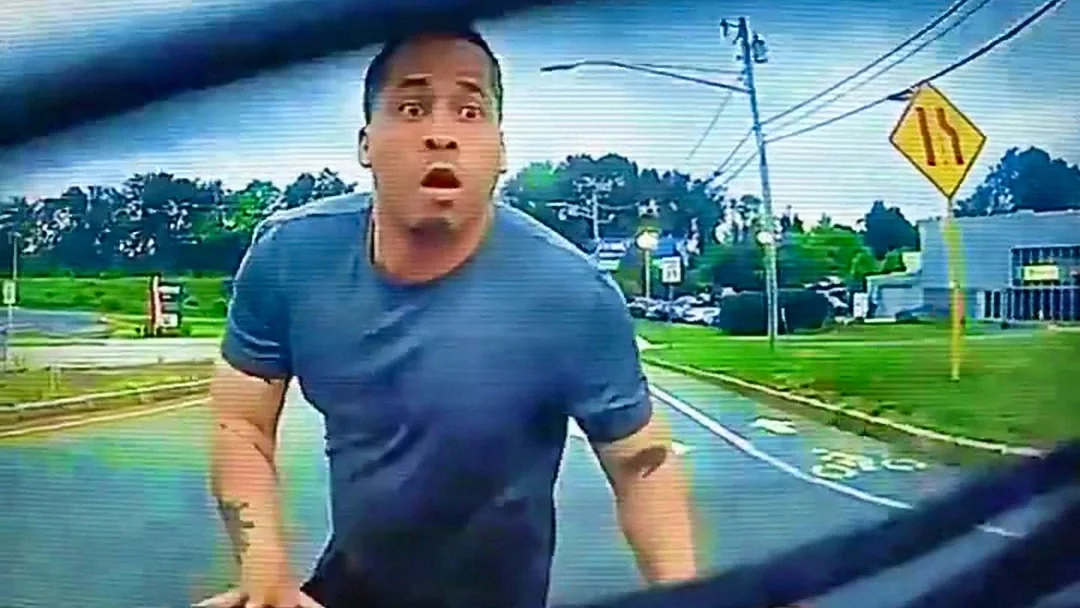
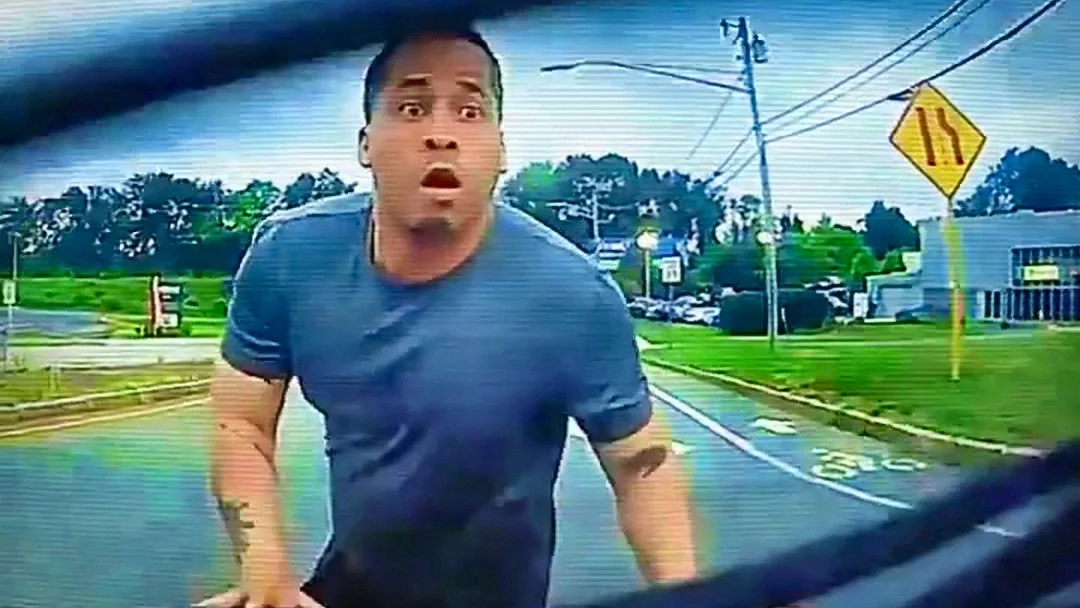
WASHINGTON – A viral dashcam recording of a roadside confrontation is raising urgent questions about public safety protocols and the rising threat of aggressive street-level extortion schemes. The footage documents a group of individuals deliberately halting a moving vehicle on a public roadway and aggressively attempting to pressure the driver for cash, only to face an unexpected reversal when the motorist is revealed to be an off-duty law enforcement officer. The incident sits at the intersection of criminal liability, evidentiary scrutiny, and the escalating legal boundaries of citizen documentation.
- The recorded event unfolds on a multi-lane public roadway where a group of individuals intentionally steps into the path of an approaching white SUV, bringing the vehicle to a forced halt.
- Dashcam video captures the group moving in front of the vehicle, with one individual in a red skirt and white top leaning aggressively into the driver's side window while demanding payment.
- The driver remains inside the vehicle, invoking his constitutional right to remain secure while the confrontation intensifies and the group uses profane language and physical intimidation tactics.
- The situation reverses dramatically when the driver identifies himself as an off-duty police officer, causing the group to abruptly retreat and flee the immediate scene.
What the Recorded Footage Captures: Chronological Breakdown
The evidentiary record opens with a forward-facing dashcam view from a white SUV traveling along a residential-commercial road. At the ten-percent mark, several pedestrians are observed standing near the shoulder of the road. As the vehicle approaches, one individual steps directly into the lane, forcing the driver to brake sharply. The camera angle remains fixed, capturing the immediate transition from normal transit to a forced stop. The driver's verbal response is picked up on audio, where he states clearly, "I'm gonna get out of the road."
The tension escalates rapidly as the group surrounds the vehicle. At the forty-percent mark, a woman in a bright red skirt and white top leans into the driver's side window, her body language aggressive and confrontational. The audio captures a chaotic verbal exchange, with voices shouting, "No no no no! We're getting out the road!" The driver repeatedly attempts to de-escalate, stating, "I'm on my car," but the group continues to press forward. The camera angle across the windshield shows a man in a blue shirt approaching the front of the vehicle, leaning over the hood in a posture of intimidation.
The climax arrives when the driver reveals his professional identity. The recording captures the immediate shift in the crowd's demeanor. As the off-duty officer asserts his authority, the previously aggressive individuals begin to back away. The woman in the red skirt is seen stepping back from the window, and the group rapidly disperses. The final frames show the man in the blue shirt retreating from the vehicle, his expression shifting from aggression to shock as he realizes the legal jeopardy he has just invited.
Corporate Liability and Critical Blind Spots
While the footage provides compelling visual evidence of the confrontation, the evidentiary record contains significant blind spots that complicate any formal legal proceeding. The dashcam captures only the forward-facing perspective, leaving the actions occurring behind the vehicle and on the passenger side entirely unrecorded. The audio, while useful, is distorted by wind noise and multiple overlapping voices, making it difficult to establish a clear chain of verbal events.
Furthermore, the recording begins in media res. The events leading up to the initial confrontation, including any prior interaction between the parties or the specific origin of the demand for cash, remain unverified. The viral assertion that this was an intentional extortion scheme rests entirely on the observable behavior rather than direct evidence of a premeditated plan. Chain of custody for the original video file must be established to prevent claims of tampering or selective editing.
Statutory Framework and Protocol Analysis
Legal Distinction: The conduct captured on video intersects with multiple statutes, including state-level prohibitions on pedestrian interference with traffic, attempted extortion, and assault by menace. However, the most immediate legal consequence for the aggressors is likely misdemeanor obstruction and potential charges of disorderly conduct, as the presence of an off-duty officer establishes a credible witness for the prosecution.
From a compliance perspective, the incident highlights the duty of care owed by municipalities to maintain safe roadways. The deliberate obstruction of a moving vehicle violates basic traffic safety standards and creates an immediate risk of physical harm. The driver's response, maintaining his position inside the vehicle while contacting authorities, aligns with recommended public safety protocols for de-escalating roadside confrontations.
| Incident Parameter | Governing Legal Standard & Judicial Protocol |
|---|---|
| Pedestrian roadway obstruction | State traffic codes prohibit standing in a roadway to block traffic |
| Aggressive demand for cash | Criminal statutes addressing attempted extortion and robbery |
| Profane verbal intimidation | Disorderly conduct ordinances and assault by menace laws |
| Driver identification | Off-duty officer protocols and duty to intervene |
| Evidentiary recording | Chain of custody requirements for digital dashcam footage |
| Vehicle damage claims | Civil liability for intentional interference with property |
Read more: {NOIBO}
Core Questions and Institutional Review
- Did the group's actions constitute a premeditated extortion attempt, or was this a spontaneous dispute that escalated due to misunderstanding?
- What duty of care do local law enforcement agencies have to patrol known hotspots for aggressive panhandling and roadside scams?
- How will the dashcam evidence be authenticated in a court of law given the potential for digital manipulation?
- Should the off-duty officer face departmental review for his engagement with the individuals, or was his response fully within protocol?
The systemic impact of this incident extends beyond the immediate confrontation. It exposes a growing vulnerability in public infrastructure regarding the safety of motorists navigating residential arteries. As viral evidence becomes a primary tool for law enforcement, the balance between public accountability and evidentiary integrity will define the next decade of regulatory oversight. The case underscores the necessity for robust legal frameworks that protect citizens from predatory street-level schemes while ensuring that the pursuit of justice remains grounded in verified, unassailable facts.
Practical Takeaways
- Dashcam and mobile recording devices are critical assets for documenting roadside confrontations and providing admissible evidence.
- Maintaining vehicle integrity and remaining inside during aggressive encounters aligns with established public safety protocols.
- The legal distinction between a misunderstanding and an extortion attempt hinges on the intent and actions captured on camera.
- Municipalities must review traffic safety standards to prevent similar incidents from disrupting public order.



One comment on “Federal Arrest Blocked: Crowd Interference Liability Review”