






WATCH: On-scene video documentation is embedded below →
LISTEN TO THIS ARTICLE
Audio Narration • English (US)
LIVERPOOL, England — A viral street-level detention captured on multiple smartphone cameras has raised acute questions about use-of-force policy, duty of care toward vulnerable persons, and the institutional accountability of British constabularies. The footage, widely circulated under the title "Mr Ward," depicts uniformed officers restraining a man described in the original post as having severe autism, followed by the abrupt collapse of an elderly woman who appears to be pushed during the chaotic encounter. The sequence has become a flashpoint for debates over public safety protocols and the boundaries of state authority on residential streets.
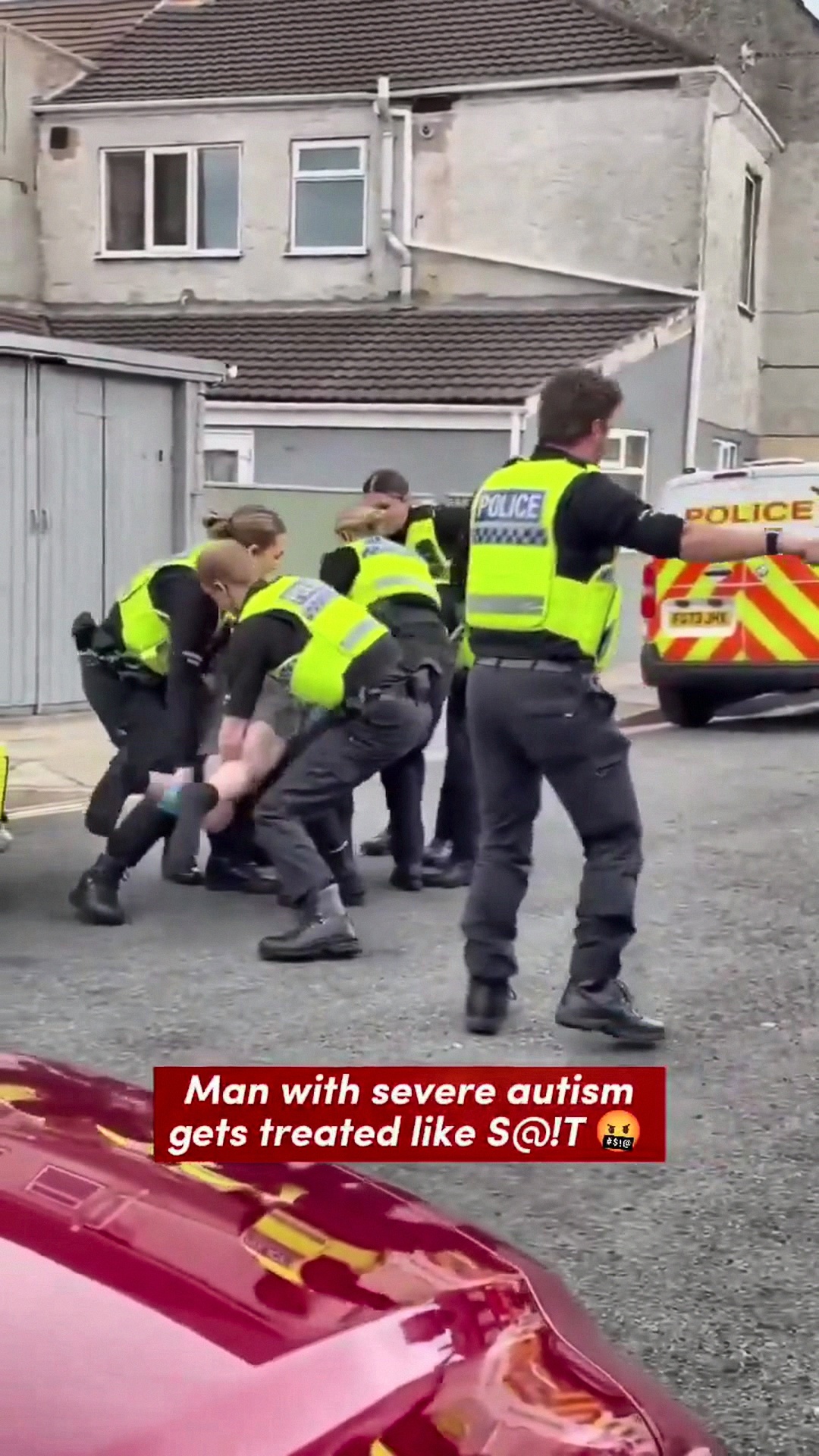
- The confrontation unfolds in a residential cul-de-sac in what is identified as a British streetscape, with a marked police van and high-visibility patrol uniforms consistent with an English territorial force.
- Officers surround and physically engage a man in a red shirt and shorts, with at least five constables visible during the restraint and takedown described in the on-screen caption.
- An elderly woman wearing a light-colored coat enters the frame and is pushed backward, falling to the ground where she is later seen motionless on the pavement.
- The video carries an overlay stating "Man with severe autism gets treated like S@IT," framing the encounter as a civil-liberties and disability-rights controversy.
What the Recorded Footage Captures: Chronological Breakdown
From the opening frames, the camera is positioned at a low, oblique angle near the hood of a red vehicle, giving a partial but unbroken view of the street. In the first frame, five uniformed officers in fluorescent yellow vests converge on a man wearing a red short-sleeved top and gray shorts. Two officers grip his arms while a third positions himself in front of the subject, and the group's body language is visibly tense but not yet fully coercive. The subject's posture suggests he is being contained rather than actively resisting in the traditional sense, though his movement is restricted by the cluster of officers around him.
In the second frame, the dynamic shifts decisively. A woman in a light gray hooded coat steps toward the scrum of officers. The camera captures a police sergeant, identifiable by the chevrons on his sleeve, with arms extended in a manner suggesting he is pushing or bracing the woman back. The woman's body is angled away from the officers, and the spatial compression of the frame makes it difficult to determine whether the contact is a guided escort or a shove. Within the same sequence, a woman in a pink top and blue jeans is seen nearby, her hands raised in alarm.
The third frame documents the descent of the main subject. Multiple officers are bent over the pavement, their bodies forming a tight perimeter around a figure who is now largely obscured. This is the takedown phase: at least two officers are kneeling, and the constraint applied to the man's limbs is consistent with a prone restraint, a technique that carries recognized positional-asphyxia risks. The visual record shows the man's lower body being controlled while his upper body is pressed downward, a posture that in British policing guidelines requires continuous monitoring.
The fourth and fifth frames track the aftermath. The elderly woman is now on the ground, her body arranged in a way that suggests she has lost consciousness. A bystander in a pink top leans over her, and a shirtless male appears in the later frames, holding a phone and stepping toward the officers. The camera remains largely static, and the on-screen text overlays the scene with the autism caption. Notably, the footage does not show a clear medical response in the immediate seconds following the woman's collapse, one of the central points of contention in the viral circulation.
Corporate Liability and Critical Blind Spots
The evidentiary value of this footage is substantial but not complete. The recording begins mid-confrontation, meaning the precipitating events that brought officers to the street are not captured. Whether the man was subject to a prior welfare call, whether there was a reported disturbance, and what verbal commands were issued before the camera rolled all remain unverified in the visual record. The absence of a continuous audio track in the clip also means that raised voices, warnings, or the man's own statements are unavailable for review unless the full original file is produced.
The chain of custody is another critical blind spot. The video appears to be a re-upload with layered text overlays, and the original source file, its metadata, and any unedited cuts must be preserved for any independent inquiry. From a liability standpoint, UK police forces are subject to civil claims under the Human Rights Act 1998 and negligence frameworks, and the Metropolitan Police and other constabularies have faced litigation over restraint-related injuries. The question of whether the force used was proportionate requires a frame-by-frame reconstruction that the viral edit cannot fully supply.
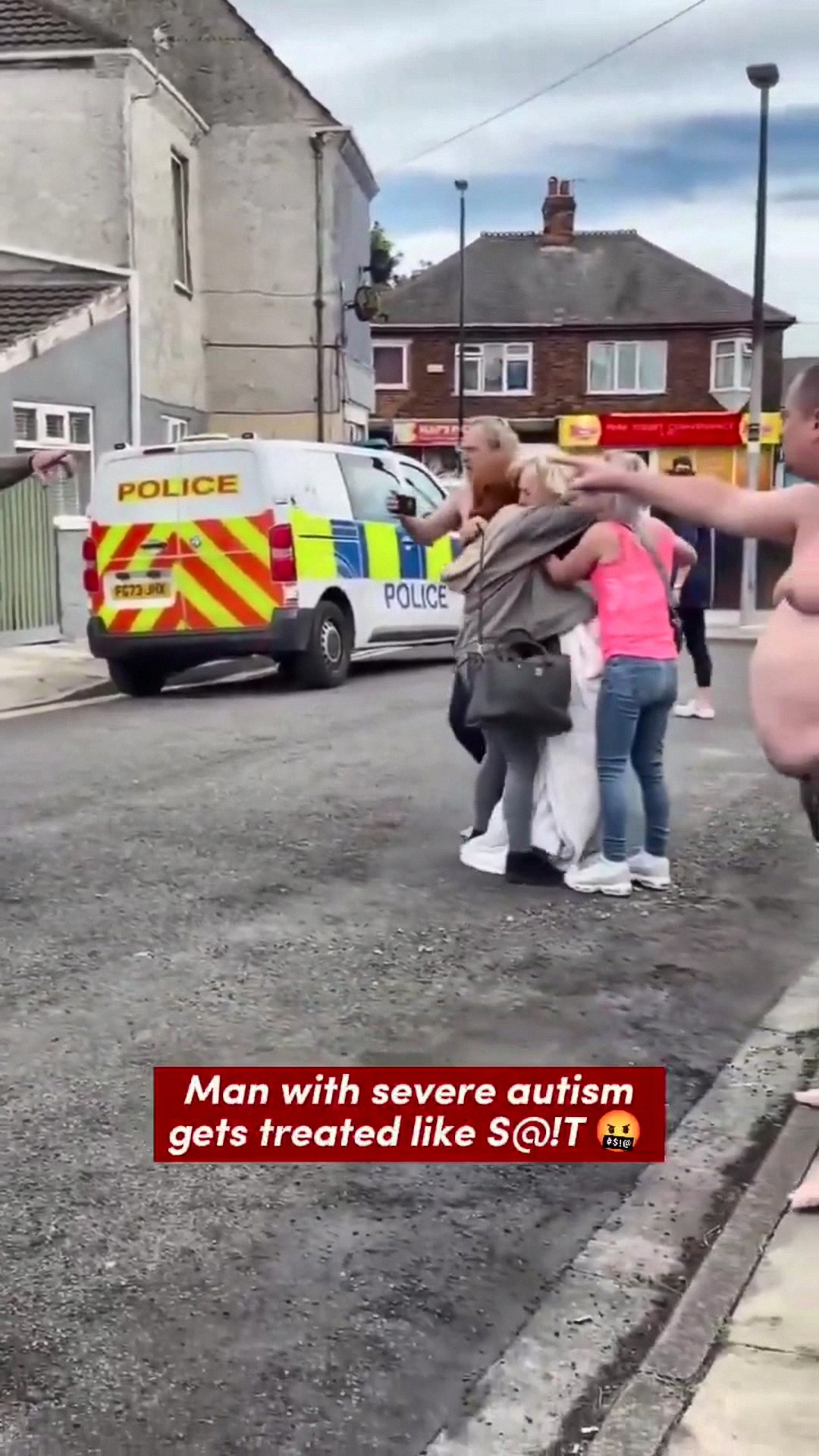
The identity and condition of the civilian subjects compound the uncertainty. The caption asserts severe autism, but that assertion is not independently verified in the footage itself. Similarly, the woman's collapse could be attributable to several causes, including a pre-existing condition, the physical contact, or the stress of the scene. Responsible analysis distinguishes between what is visible and what is asserted, while still acknowledging that the visible sequence is deeply troubling.
Statutory Framework and Protocol Analysis
Legal Distinction: In England and Wales, use of force by police is governed by Section 3 of the Criminal Law Act 1967 and Section 117 of the Police and Criminal Evidence Act 1984, which permit only reasonable force. The Human Rights Act 1998 incorporates Article 3 (prohibition of inhuman or degrading treatment) and Article 8 (right to private life), and the Equality Act 2010 imposes duties to make reasonable adjustments for disabled persons. A failure to accommodate a known disability during an arrest can constitute indirect discrimination and support a civil claim.
The compliance architecture here extends beyond the arrest itself. Police forces operate under the Care and Treatment of Detainees provisions of PACE Code C, which require particular safeguards when a person appears to be mentally vulnerable, including the presence of an appropriate adult during interview and, where necessary, assessment by a healthcare professional. If officers were aware of a diagnosed condition, the threshold for restraint and the type of restraint permitted would be shaped by those obligations. The push involving the elderly woman also triggers the force's own public order and de-escalation protocols, which emphasize the protection of bystanders and vulnerable persons in the immediate vicinity.
Scroll down for the full investigative report below ↓
| Incident Parameter | Governing Legal Standard & Judicial Protocol |
|---|---|
| Physical restraint of suspect | Section 3 Criminal Law Act 1967; reasonable force only |
| Restraint of vulnerable adult | PACE Code C; Equality Act 2010 reasonable adjustments |
| Contact with elderly bystander | Common law duty of care; Article 8 HRA 1998 |
| Prone restraint monitoring | College of Policing approved restraint guidance |
| Failure to summon medical aid | Negligence standard; Article 2 investigative duty |
| Misconduct allegations | Independent Office for Police Conduct referral |
| Civil remedy | Human Rights Act 1998 damages claim |
Read more:
Read more: Arizona Desert Search: Grandfather Finds Missing Toddler After 75-Officer Operation →
Core Questions and Institutional Review
- Did officers conduct a pre-restraint risk assessment recognizing the subject's disclosed disability, and was an appropriate adult or healthcare professional requested?
- What was the exact mechanism of contact with the elderly woman, and did it meet the threshold of reasonable force against a bystander?
- Was medical assistance summoned promptly after her collapse, and does the footage corroborate or contradict the subsequent force narrative?
- Has the matter been referred to the Independent Office for Police Conduct, and what body-worn camera footage exists to complete the record?
The systemic impact of this footage is likely to extend beyond a single complaint. High-profile restraint incidents have historically catalyzed revisions to use-of-force training, accelerated the adoption of body-worn cameras, and prompted scrutiny of how disability is flagged in dispatch systems. For the force involved, the reputational and financial exposure includes potential civil damages, regulatory findings, and public-trust erosion. For the wider public, the case sharpens a persistent question: whether street-level authority can be exercised with the proportionality and dignity that the law requires, particularly when the most vulnerable people are in the frame.
LATEST DEVELOPING INCIDENT
An even more shocking incident just erupted hours ago that has stunned onlookers nationwide. Full investigative breakdown and on-scene evidence documented below.
BREAKING: READ NEXT SHOCKING INCIDENT – LATEST CASE ↓
Austin Sixth Street Disturbance: Public Safety Protocols and Liability Under Scrutiny After Street Brawl
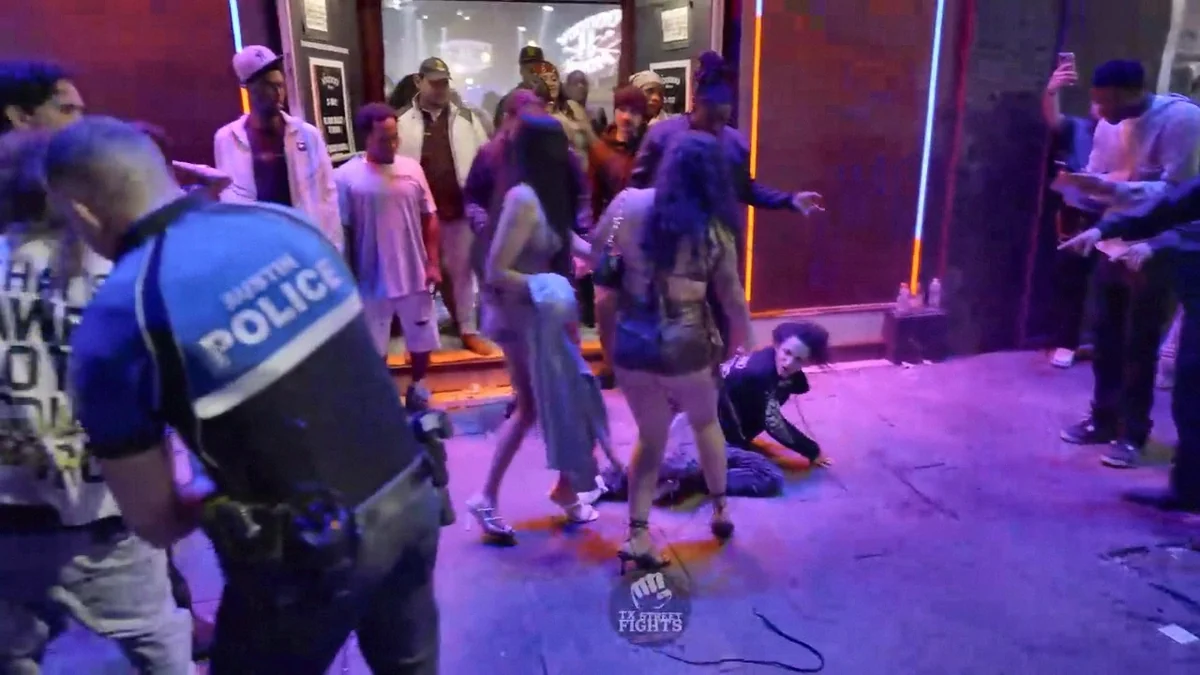
AUSTIN, Texas — A newly surfaced video purporting to capture a street brawl on the 6th Street entertainment district has reignited scrutiny over public safety protocols and the limits of municipal liability in one of the state's most heavily trafficked nightlife corridors. The footage, which bears a date stamp of November 20, 2026, shows a rapidly escalating altercation involving multiple individuals, culminating in a police intervention. The incident raises critical questions about the sufficiency of security measures in high-density commercial zones and the legal boundaries of detention and use of force by law enforcement.
- Jurisdictional Setting: The recorded event occurs in the early morning hours along East 6th Street in Austin, Texas, a historic entertainment district known for its dense concentration of bars, live music venues, and late-night pedestrian traffic.
- The Recorded Escalation: Amateur footage captures a group of individuals engaged in a physical altercation, with at least one person being wrestled to the ground and another appearing to be forcefully grabbed or struck by an individual in a dark hooded jacket.
- Law Enforcement Intervention: A uniformed Austin Police Department officer is observed entering the frame to separate the combatants, placing one individual on the ground in a prone position, signaling an immediate custody and containment protocol.
- Legal and Regulatory Repercussions: While official department records for this specific date have not been verified, the incident underscores ongoing compliance challenges regarding public safety ordinances, private security guard licensing, and the potential tort liability for establishments that serve alcohol to visibly intoxicated patrons.
What the Recorded Footage Captures: Chronological Breakdown
The video begins with a wide, handheld shot capturing a dense cluster of pedestrians. In the initial frames, a female subject, dressed in dark clothing with a graphic design on the back, is seen moving aggressively toward a figure in a dark hooded sweatshirt. The camera angle is slightly low, indicative of a bystander recording on a smartphone. At roughly the ten-second mark, the altercation intensifies as the figure in the hooded sweatshirt extends an arm, making contact with the head or upper torso of the female subject, causing her to stumble backward into the crowd.
The scene transitions rapidly into a more chaotic melee. By the second frame, the crowd has compressed, and the visual noise of multiple bodies in motion obscures specific actions. The camera pans slightly to the right, revealing another individual—a male in a green shirt—being pulled away by others. The footage reveals that the initial confrontation has spawned a secondary dispute, with bystanders actively trying to de-escalate or intervene. The lighting is predominantly artificial, casting deep shadows that obscure facial expressions and specific hand movements, complicating any subsequent forensic identification.
A critical pivot occurs in the next sequence: an Austin Police Department officer, identifiable by the distinct uniform and shoulder emblem, steps into the center of the frame. The officer's body posture is authoritative, immediately creating a physical barrier between the opposing groups. The officer directs the crowd backward, and the focus shifts to a single male subject who is instructed to lie face down on the brick pavement. This moment is crucial from a legal standpoint, as it marks the transition from a public disorder incident to an active law enforcement detention. The final frames of the segment show the individual on the ground with hands placed behind his back, while the officer maintains a dominant position to ensure compliance.
Corporate Liability and Critical Blind Spots
The evidentiary value of this footage is constrained by several forensic limitations. First, the recording captures the aftermath of the initial spark, leaving the preceding verbal provocation and the specific cause of the physical altercation entirely unrecorded. A thorough regulatory review would require subpoenaing nearby private surveillance systems to establish a complete chain of custody and timeline, as the amateur video presents only a fragmented perspective. Second, the camera's constant movement and the low-light environment create significant blind spots, particularly regarding the actions of individuals at the periphery of the brawl.
From a corporate liability perspective, the venues operating along this stretch of 6th Street face potential exposure under Texas Dram Shop laws. These statutes hold establishments civilly liable for damages caused by serving alcohol to an obviously intoxicated person. If the individuals involved were found to have been over-served, the resulting altercation could trigger significant litigation against the businesses involved. Furthermore, the presence of private security contractors—if any were on scene—invites scrutiny regarding their training, licensing, and adherence to state-mandated use-of-force guidelines.
A critical unverified element remains: the exact identity of the aggressor and the legal status of the confrontation. Viral assertions often outpace official findings, and in this case, the lack of a corroborating police report leaves the precise legal categorization—whether this is simple assault, aggravated assault, or disorderly conduct—open to interpretation. The footage alone cannot establish intent or self-defense claims without a full review of all available angles and witness statements.
Statutory Framework and Protocol Analysis
Legal Distinction: Under Texas law, the classification of a street altercation hinges on the presence of a hazardous implements and the intent to cause serious bodily injury. Simple assault (Texas Penal Code § 22.01) is generally a Class A or B misdemeanor, while aggravated assault (§ 22.02) is a serious legal charge. Furthermore, the use of force by police officers to detain a subject is governed by the Fourth Amendment's objective reasonableness standard, requiring a careful balancing of the government's interest against the individual's right to liberty.
Compliance protocols for the City of Austin and the Austin Police Department emphasize de-escalation and crowd control. The officer's actions in the video—specifically the decision to physically restrain a subject—must be evaluated against the department's use-of-force policy, which mandates that officers use only the force necessary to effect an arrest or protect the public. The rapid transition to placing a subject on the ground is a standard tactic to neutralize a perceived threat and facilitate handcuffing, but it also carries inherent risks of positional asphyxia, requiring continuous monitoring.
| Incident Parameter | Governing Legal Standard & Judicial Protocol |
|---|---|
| Public Intoxication and Disorderly Conduct | Texas Penal Code § 42.01 (Disorderly Conduct) and § 49.02 (Public Intoxication) |
| Detention and Arrest Procedures | Fourth Amendment (Probable Cause) and Texas Code of Criminal Procedure Art. 14.01 |
| Use of Force by Law Enforcement | Graham v. Connor (Objective Reasonableness Standard) and APD General Orders |
| Civil Liability for Alcohol Service | Texas Alcoholic Beverage Code § 2.02 (Dram Shop Liability) |
| Private Security Regulation | Texas Occupations Code Chapter 1702 (Private Security Act) |
Read more: {NOIBO}
Core Questions and Institutional Review
- What was the specific sequence of events that triggered the physical confrontation, and do unedited, longer-duration recordings from adjacent businesses corroborate the amateur footage?
- Did any of the establishments involved violate state alcohol service regulations, and if so, will the Texas Alcoholic Beverage Commission initiate an administrative review or license suspension?
- What is the official status of the detainee, and will the Travis County District Attorney's Office pursue charges of assault or resist arrest based on the available evidence?
- Are the current police presence and private security staffing levels in the 6th Street corridor sufficient to prevent similar outbreaks of violence, or does the city need to revise its public safety ordinance?
The systemic impact of this incident extends beyond the immediate legal consequences for the individuals involved. It serves as a stress test for Austin's nighttime economy management. If the footage is representative of a recurring pattern, it could prompt the City Council to mandate stricter security requirements for late-night permits or increase funding for police overtime in the district. For the financial and legal sectors monitoring municipal liability, the outcome of any resulting litigation will set a precedent for how courts allocate responsibility between the city, private businesses, and individual aggressors in the context of public disorder.
Practical takeaways from this incident emphasize the importance of comprehensive surveillance coverage, rigorous training for private security personnel, and the strict adherence to alcohol service limits. For the public, it underscores the volatility of high-density entertainment districts and the critical need for immediate compliance with law enforcement commands to avoid escalation of charges.