








WATCH: On-scene video documentation is embedded below →
LISTEN TO THIS ARTICLE
Audio Narration • English (US)
AUSTIN, Texas – A home security camera has captured a volatile armed confrontation at a residential front door, an incident that raises immediate questions about brandishing statutes, property rights, and the escalating use of weapons in interpersonal disputes. The footage, recorded by a Blink doorbell system, documents a group of individuals confronting a homeowner over an alleged verbal offense, with at least one person visibly holding a long weapon. The event shifts the debate from digital speech to physical menace, placing the homeowner in immediate fear of bodily harm.
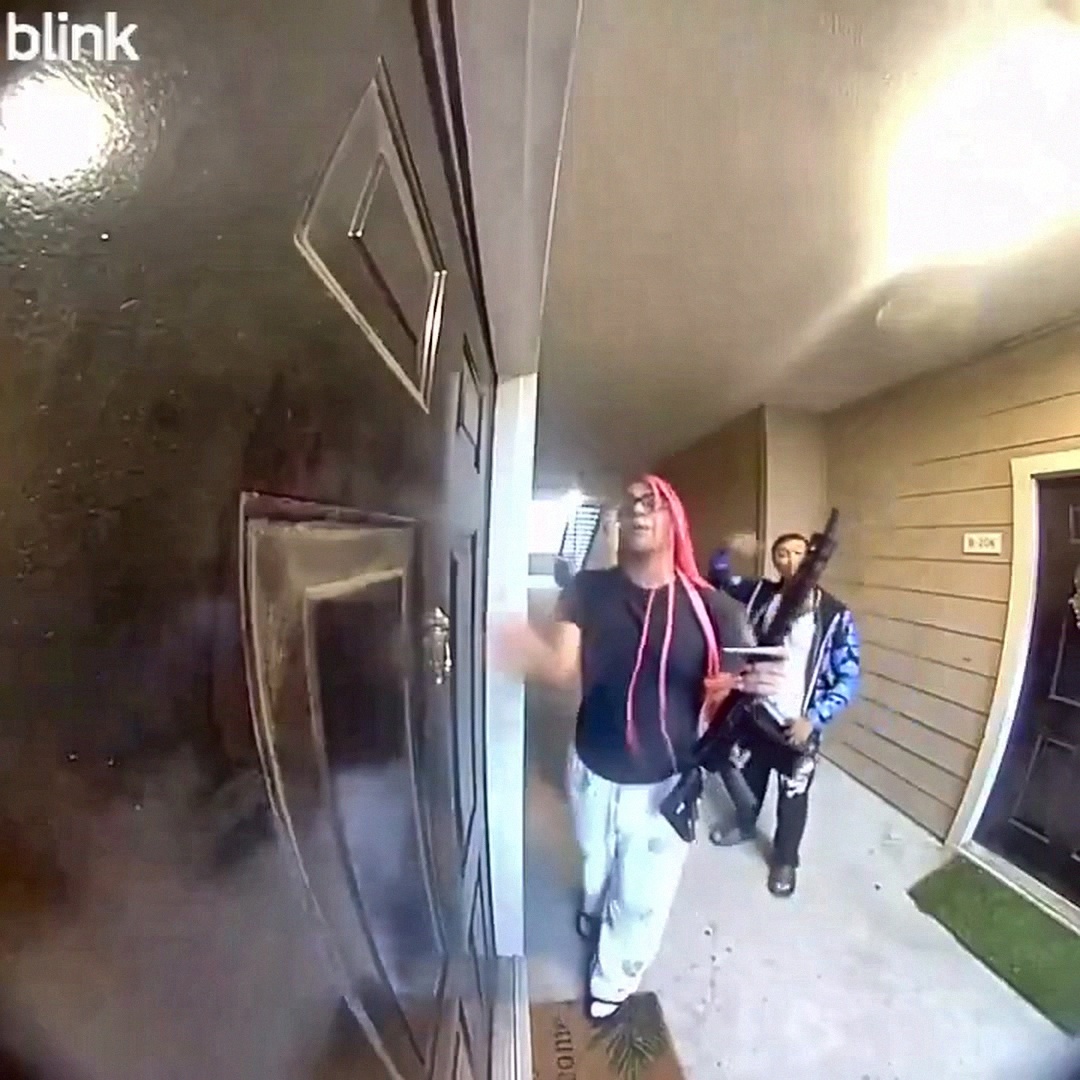
- Jurisdictional Setting: A multi-unit residential complex, identifiable by exterior siding and numbered door signage, where the confrontation occurs on a private walkway just steps from the front door.
- Recorded Escalation: A group approaches the entrance, led by a male individual in a dark shirt and pink hair extensions, who is holding a black weapon. A second male in a blue jacket stands behind him, and a third figure is visible in the background.
- Law Enforcement or Bailiff Intervention: No law enforcement presence is observed in the footage. The recording ends before any official response or resolution occurs.
- Legal and Regulatory Repercussions: The visible brandishing of a weapon during a verbal dispute creates potential exposure to aggravated assault charges, while the homeowner's reliance on a doorbell camera establishes a digital evidentiary chain for any subsequent civil or criminal proceedings.
What the Recorded Footage Captures: Chronological Breakdown
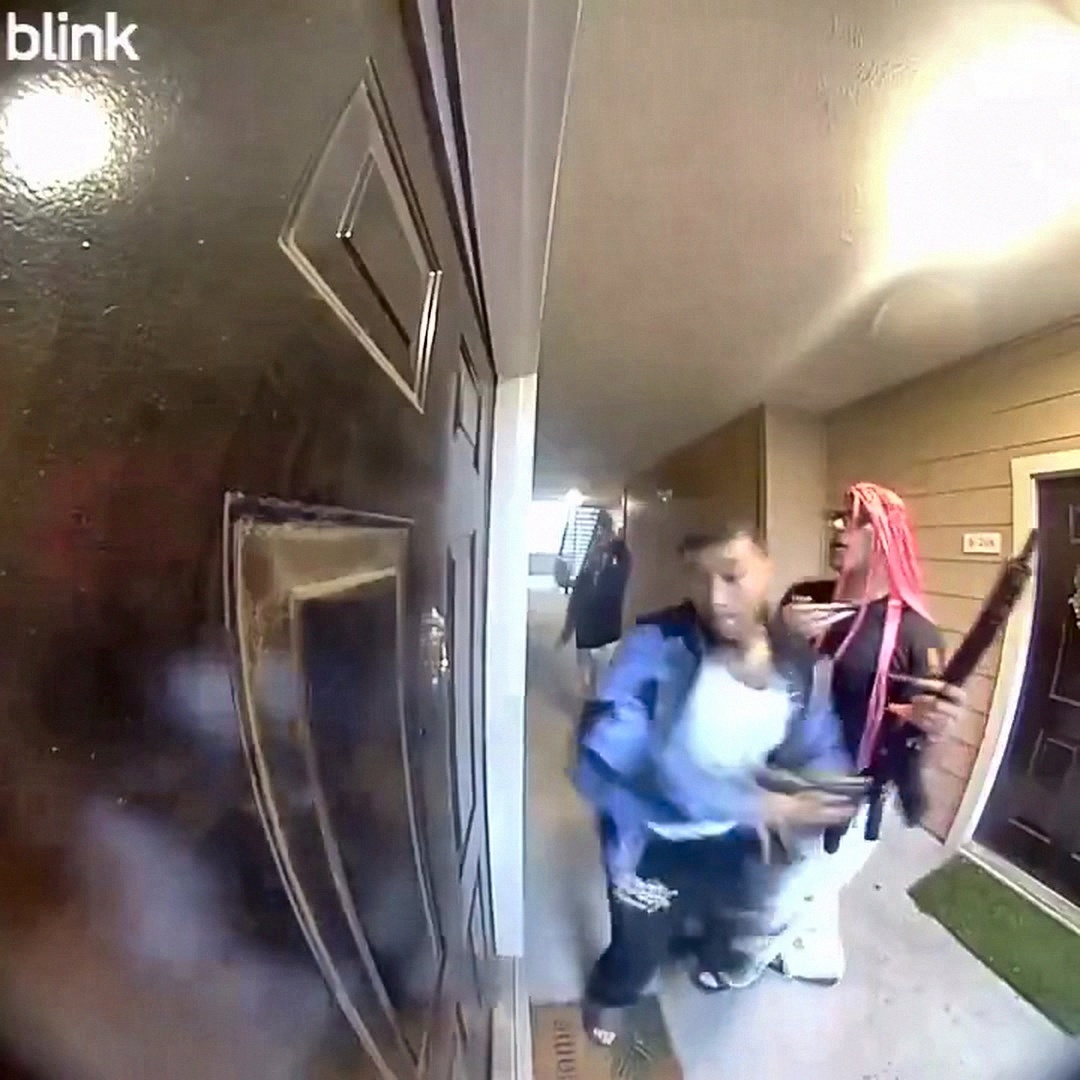
The doorbell camera, positioned at a downward angle with a wide-angle lens, frames the dark front door on the left and the concrete walkway on the right. The first frames show the primary subject approaching directly toward the lens. He is a male with a black t-shirt, light-colored pants, and bright red or pink hair extensions. In his right hand, held at a low-ready angle but clearly visible, is a black, long-barreled weapon with a standard magazine. His left hand gestures toward the door as he speaks. Behind him, a second male in a blue zip-up jacket stands on the walkway, and a third individual remains further back near the building's exterior staircase.
The audio, captured by the doorbell microphone, records the primary subject yelling, "I just – I was a man, y'all said I was a man, so come outside! Come outside for real, like dead ass, come outside! What we doing? I'm not understanding." The phrasing indicates the confrontation is a direct response to a prior interaction, specifically an accusation of misgendering. The subject frames the homeowner's words as an invitation to a physical confrontation, using the alleged statement as justification for his presence and the visible weapon.
As the footage progresses, the primary subject moves closer to the door, his body language becoming more aggressive. He shifts his weight and gestures emphatically, while the second male in the blue jacket steps forward to stand slightly behind him, creating a two-person front. The weapon remains in the primary subject's hand throughout, never pointed directly at the camera but consistently displayed in a manner that a reasonable person would interpret as a threat. The third individual in the background does not advance but remains present, contributing to the perception of a group confrontation.
The final frames show the primary subject and the second male continuing to stand on the porch, their voices overlapping, though the specific dialogue becomes indistinct. The camera does not capture the door opening or the homeowner exiting, leaving the immediate aftermath of the confrontation unresolved within the evidentiary record.
Corporate Liability and Critical Blind Spots
While the footage provides a clear visual record of the armed confrontation, critical gaps in the evidentiary chain limit its completeness. The doorbell camera captures only the exterior walkway and porch; the interior of the residence, the homeowner's actions prior to the recording, and the initial verbal exchange that triggered the confrontation are entirely unrecorded. The audio begins mid-sentence, meaning the specific accusation of misgendering is not captured on this device, only referenced by the primary subject. This creates a chain-of-custody challenge for any legal proceeding: the video proves the presence of a weapon and the demand to "come outside," but it does not document the exact words that precipitated the confrontation.
The perspective of the camera is also a critical blind spot. The wide-angle lens distorts distance, making the subjects appear closer or farther than they actually are. The camera is fixed at a low height, meaning the facial expressions and hand movements of the individuals are captured, but the full context of their posture and the surrounding environment is truncated. Furthermore, the video does not show whether the primary subject's weapon was loaded, whether a round was chambered, or whether any other weapons were concealed. Viral assertions that the group was a "mob" or that the homeowner was in imminent danger are unverified by the visible evidence, which shows a verbal confrontation with a displayed weapon but no physical contact or discharge.
Statutory Framework and Protocol Analysis
Legal Distinction: The display of a weapon in a threatening manner during a verbal dispute can constitute "brandishing" under Texas Penal Code § 42.01(a)(8) or aggravated assault under § 22.02 if the weapon is used to threaten imminent bodily harm. However, the legal analysis hinges on whether the homeowner was in reasonable fear of imminent harm and whether the armed individuals were lawfully on the property. The homeowner's property rights under § 9.41 (protection of one's own property) and § 9.42 (use of deadly force to protect property) create a complex self-defense calculus that must be evaluated by a prosecutor.
Under Texas law, the presence of a weapon on a private walkway leading to a front door, combined with a verbal demand to "come outside," can be interpreted as a threat that justifies the homeowner's use of force in self-defense. The statutory framework requires a careful examination of the totality of the circumstances: the number of individuals present, the visible weapon, the aggressive language, and the homeowner's ability to retreat. The doorbell camera's recording is crucial evidence for establishing the homeowner's state of mind and the reasonableness of their fear.
| Incident Parameter | Governing Legal Standard & Judicial Protocol |
|---|---|
| Display of weapon during verbal dispute | Texas Penal Code § 42.01(a)(8) – disorderly conduct; § 22.02 – aggravated assault if threat is imminent |
| Presence on private walkway | Texas Penal Code § 30.05 – criminal trespass if entry is unauthorized and notice is given |
| Demand to "come outside" | § 9.31 – self-defense; § 9.32 – deadly force presumed reasonable if intruder is unlawfully present |
| Homeowner's right to confront | § 9.41 – protection of property; § 9.42 – deadly force to protect property |
| Doorbell camera evidence | Texas Rules of Evidence § 901 – authentication of digital recordings; chain of custody required |
| Group confrontation | Texas Penal Code § 22.01 – assault; § 22.02 – aggravated assault if weapon is displayed |
| Failure to retreat | § 9.32(a)(2) – no duty to retreat if actor has right to be present and is not engaged in criminal activity |
Read more:
Read more: Arlington TX Brawl: Security Liability and Legal Review →
Scroll down for the full investigative report below ↓
Core Questions and Institutional Review
- Did the homeowner's initial statement constitute a criminal offense, or is the armed confrontation an unjustified escalation of a verbal dispute?
- What liability does the property owner or homeowner's association bear for failing to intervene or provide security in a shared residential space?
- How will law enforcement balance the armed individuals' right to be present on the walkway against the homeowner's right to be free from threatened violence?
- What precedent does this incident set for the use of doorbell camera footage as primary evidence in brandishing and assault prosecutions?
The systemic impact of this incident extends beyond the individual parties. It highlights the growing tension between digital speech and physical retaliation, and the increasing reliance on civilian surveillance devices to document confrontations that occur in the gray area between public and private space. As prosecutors and civil litigants untangle the competing claims, the case will likely hinge on the precise words exchanged and the reasonable interpretation of a displayed weapon at a residential threshold.
Practical Takeaways
- Preserve the full, unedited doorbell camera footage and any cloud backups immediately; do not rely solely on the clip shared online.
- Document any prior communications or interactions that establish the context of the confrontation.
- Consult legal counsel before making public statements, as the footage may be used in both criminal and civil proceedings.
- Understand that displaying a weapon to resolve a verbal dispute can transform a civil exchange into a criminal matter under state assault and disorderly conduct statutes.
LATEST DEVELOPING INCIDENT
An even more shocking incident just erupted hours ago that has stunned onlookers nationwide. Full investigative breakdown and on-scene evidence documented below.
BREAKING: READ NEXT SHOCKING INCIDENT – LATEST CASE ↓
Texas Lawn Altercation: Legal Analysis of Viral Confrontation
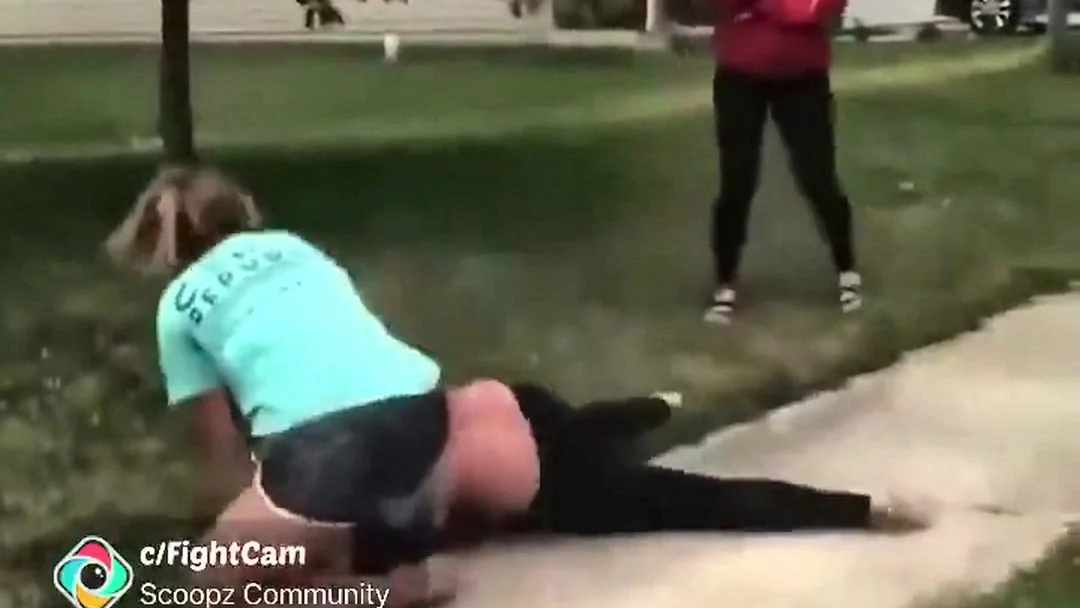
DALLAS, Texas – A widely circulated recording of a physical altercation on a suburban residential lawn has raised significant questions regarding civil liability, the limits of self-defense doctrine, and the evidentiary integrity of viral footage. The incident, captured from multiple spectator angles, documents a violent confrontation between two women following an alleged domestic dispute, drawing scrutiny to how such events are adjudicated and archived in the public record.
- Jurisdictional Setting: The event unfolds in an open grassy area adjacent to a residential sidewalk and public street, a location that straddles private property and public right-of-way, complicating jurisdictional authority.
- Recorded Escalation: Footage captures a verbal argument rapidly escalating into a physical struggle, with one participant forcibly pinning another to the ground while bystanders observe.
- Bystander Intervention: Multiple individuals are visible recording the event on mobile devices; however, no immediate physical intervention occurs, highlighting the bystander effect in public safety protocols.
- Legal Repercussions: The recording serves as the primary evidentiary artifact for potential charges of assault, battery, or breach of peace, though no official police report or charging document has been verified in public dockets.
What the Recorded Footage Captures: Chronological Breakdown
The evidentiary record opens with an establishing shot of a residential property, featuring a two-story home and a well-maintained lawn. The camera, held at a mid-range angle, captures two female subjects in the foreground. The first subject, wearing a light blue t-shirt and dark shorts, is positioned on the ground, while a second subject in a maroon top and dark leggings stands nearby, recording the scene on a smartphone. The audio track is saturated with aggressive profanity, establishing an immediate context of high emotional distress and verbal confrontation.
As the footage progresses, the physical altercation intensifies. The subject in the blue shirt is seen grappling with the second individual on the grass, attempting to maintain a dominant position. The camera angle shifts slightly, revealing a third individual in a yellow shirt observing from the periphery. The audio captures a command to "get up and hit her," suggesting a degree of encouragement or instigation from the surrounding group. The physical struggle involves close-quarters grappling, with one subject attempting to pin the other, while the second subject attempts to break free or retaliate.
In the subsequent frames, the struggle transitions from a standing confrontation to a ground-level altercation. The subject in the blue shirt is seen on top, applying downward pressure, while the other subject is prone on the grass. The camera captures the chaotic nature of the event, with limbs flailing and clothing becoming disheveled. The audio continues to record hostile verbal exchanges, including explicit orders to leave the premises and permanent separation. The footage concludes with the subjects separating, though the tension remains palpable as the camera lingers on the aftermath.
Corporate Liability and Critical Blind Spots
The evidentiary value of this recording is significantly constrained by the absence of a continuous, unedited timeline. The footage begins in medias res, omitting the initial verbal exchanges or the catalyst that prompted the physical escalation. This gap prevents a definitive determination of who initiated the aggression, a critical factor in both criminal and civil proceedings. Furthermore, the presence of multiple cameras suggests a fragmented chain of custody, where different angles may reveal conflicting narratives.
The recording also suffers from perspective bias. The primary camera operator is a bystander whose framing choices may inadvertently omit key actions, such as the precise moment of physical contact or the presence of a weapon. The audio track, while revealing, is subject to distortion and may not capture the full context of the dialogue. Additionally, the viral nature of the footage introduces a risk of unverified assertions and public bias, which can complicate the legal process and potentially prejudice the outcome of any judicial review.
Statutory Framework and Protocol Analysis
Legal Distinction: Under Texas Penal Code § 22.01, assault constitutes intentionally, knowingly, or recklessly causing bodily injury to another. Mutual combat, where both parties voluntarily engage in a fight, can complicate the determination of the aggressor and the applicability of self-defense claims under § 9.31.
The incident underscores the importance of compliance with public safety protocols. The duty of care owed by property owners and bystanders is a critical legal consideration. While the First Amendment protects the right to record public events, the failure to intervene or contact law enforcement in a timely manner raises questions about civic responsibility. The footage serves as a reminder that digital evidence, while powerful, requires rigorous verification and contextualization to be admissible in a court of law.
Institutional protocols for handling such incidents emphasize the need for immediate law enforcement involvement. The absence of a visible police presence or a clear resolution within the footage leaves the legal outcome ambiguous. The recording may be used to support a civil claim for damages, but the lack of a formal complaint or police report limits its utility in a criminal context.
| Incident Parameter | Governing Legal Standard & Judicial Protocol |
|---|---|
| Physical Contact | Texas Penal Code § 22.01 (Assault) |
| Self-Defense Claim | Texas Penal Code § 9.31 (Self-Defense) |
| Mutual Combat | Texas Penal Code § 22.01 (Aggravated Assault) |
| Bystander Recording | First Amendment / Texas Civil Practice & Remedies Code |
| Property Rights | Texas Property Code § 92.001 (Landlord-Tenant) |
| Public Safety | Texas Code of Criminal Procedure Art. 2.13 (Duties of Officers) |
Read more: {NOIBO}
Core Questions and Institutional Review
- What was the catalyst for the confrontation, and does the unrecorded prior context alter the legal classification of the event?
- How will the fragmented, multi-angle footage be authenticated for use in a court of law, and what chain-of-custody protocols apply?
- What civil liability exists for the property owner or bystanders who recorded the event without intervening?
- How does the viral dissemination of the footage impact the privacy rights and reputations of the individuals involved?
The systemic impact of this incident extends beyond the immediate parties. It highlights the growing tension between the public's right to record and the legal system's need for verified, comprehensive evidence. As digital documentation becomes ubiquitous, the courts must adapt to the challenges of fragmented narratives and public opinion. The resolution of this case, whether through criminal charges or civil settlements, will set a precedent for how similar viral confrontations are adjudicated in the future.




One comment on “Armed Porch Confrontation Over Misgendering Sparks Legal Review”