








WATCH: On-scene video documentation is embedded below →
LISTEN TO THIS ARTICLE
Audio Narration • English (US)
ARLINGTON, Texas — A chaotic daytime altercation outside a commercial storefront in Arlington has prompted renewed scrutiny of private security protocols and public-safety response standards after raw footage captured multiple individuals exchanging blows in plain view of bystanders. The recorded incident, dated November 20, raises immediate questions about the adequacy of on-site guard training, the legal exposure of property managers, and the evidentiary limits of crowd-sourced video in a state with expansive self-defense statutes.
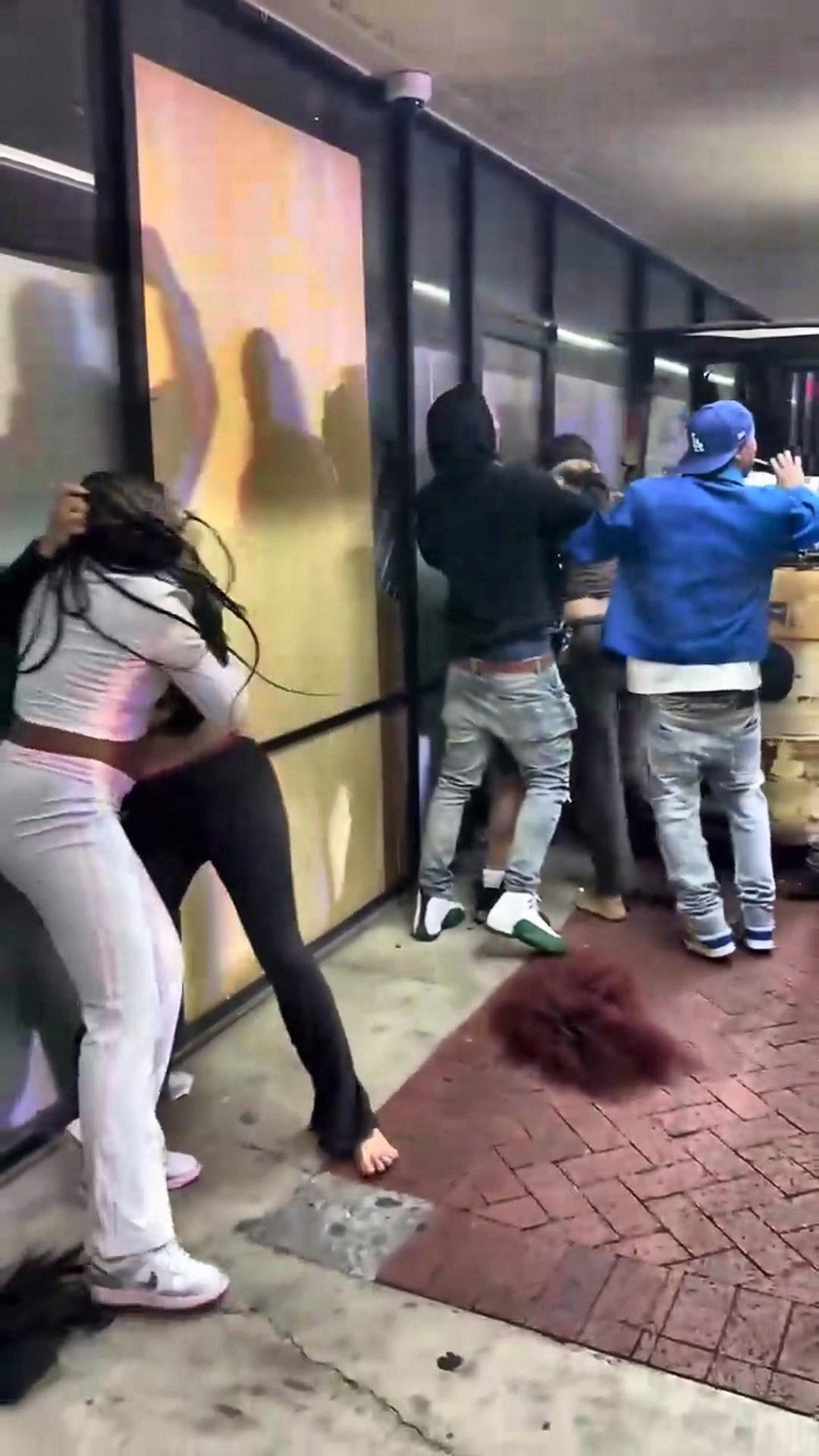
- The confrontation unfolded on a paved walkway fronting a glass-paneled commercial facade, a location where private property interests intersect with public right-of-way obligations.
- Recorded footage shows a rapid escalation from verbal confrontation to physical grappling, with at least two distinct clusters of participants engaged simultaneously.
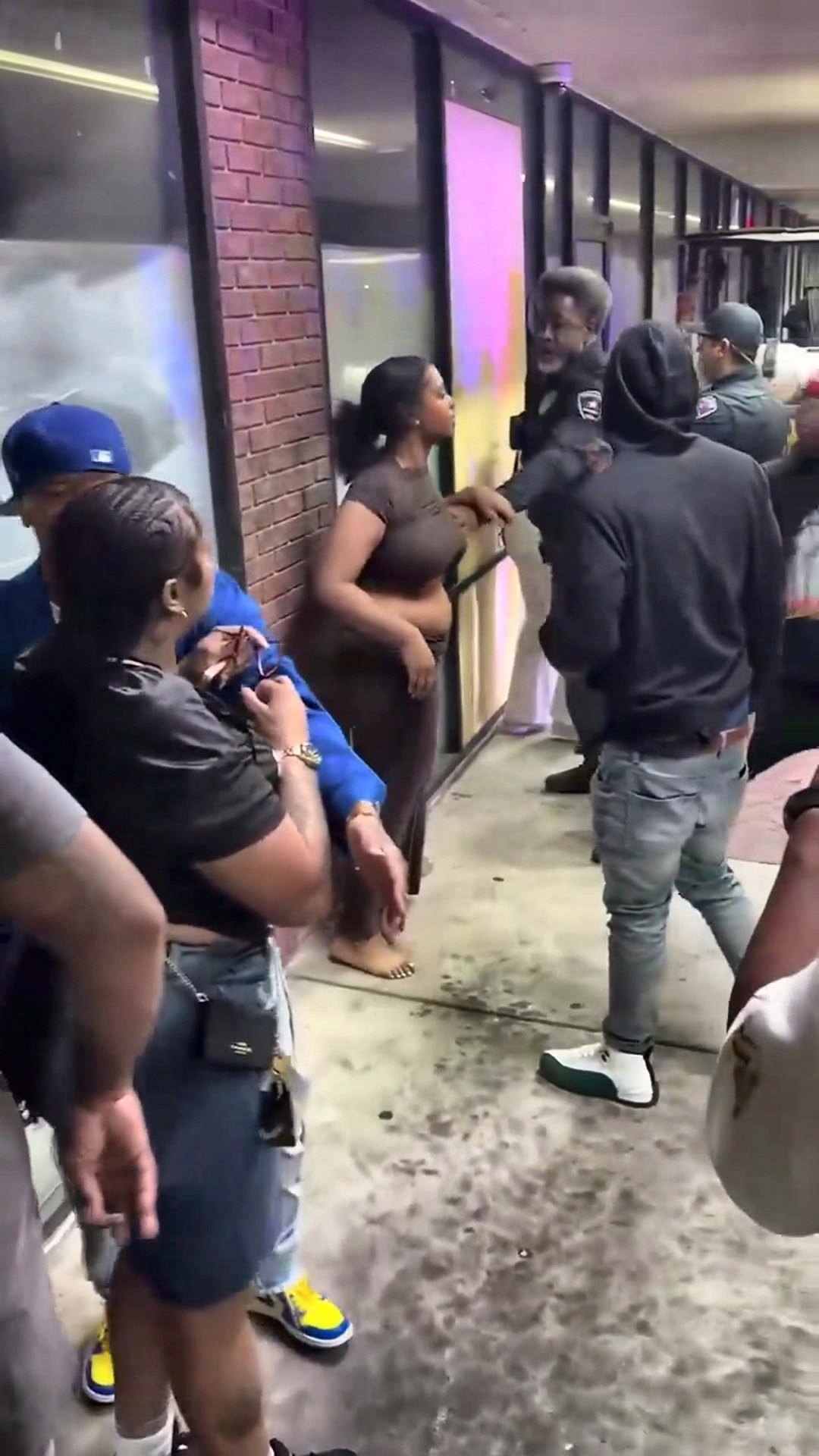
- A uniformed security officer, identifiable by a light-colored patch on the left shoulder, entered the frame and physically separated individuals during the peak of the disorder.
- No official arrest record, citation log, or municipal incident report has been publicly confirmed, leaving the legal aftermath unresolved and the footage as the primary evidentiary artifact.
What the Recorded Footage Captures: Chronological Breakdown
Frame one establishes the initial geometry of the conflict with forensic clarity. Two individuals are locked in close-quarters grappling against a tall glass panel, their body weight committed forward. A third figure, positioned at the left edge of the frame in a black jacket and blue denim shorts, appears to be driving the momentum of the encounter, leaning heavily into the contact. The camera angle is low and oblique, likely captured from a handheld device held at chest height by a bystander standing several yards away. The framing is unstable, suggesting the operator was moving while recording, and the upper edge of the frame clips the top of the glass panels, compressing the scene into a narrow horizontal band.
By the second observable sequence, the physical confrontation has displaced laterally along the storefront. A woman in white trousers and a light-colored top is visible with her back to the camera, her posture indicating active involvement in the melee rather than passive observation. A male figure in a dark hooded sweatshirt and light denim has entered the scrum, and a second male in a bright blue jacket is positioned near the right edge, arms raised in a gesture that reads as either participation or an attempt at separation. The camera has now shifted to a wider angle, capturing more of the red-brick paving pattern and revealing that the disorder has spread across roughly a dozen feet of the walkway. Shadows cast against the glass indicate daytime lighting, consistent with the recorded date.
The third sequence introduces a new actor and a decisive change in scene dynamics. A uniformed guard with distinctive light-gray hair is visible near a structural pillar, his body oriented toward the group with hands positioned in a manner consistent with crowd-control training. The camera perspective shifts again, now positioned behind several bystanders whose shoulders and heads obscure portions of the lower frame. A woman in a dark top and light trousers is seen extending an arm toward the guard, and the guard's posture suggests he is issuing verbal commands while maintaining a physical buffer between opposing parties. The footage terminates shortly after this intervention, with no clear visual confirmation of a resolution or a handcuffing procedure.
A final segment, captured at a different focal length, shows the guard standing in profile near a glass storefront with a woman in a brown top and pale trousers facing him. The crowd has thinned considerably, and the body language of the remaining individuals is markedly less aggressive. This coda sequence is critical for the evidentiary record, as it demonstrates a de-escalation phase rather than a continued riot, and it suggests the guard's intervention had at least a temporary stabilizing effect.
Corporate Liability and Critical Blind Spots
From a liability standpoint, the most consequential evidentiary gap is the absence of any recorded footage of the inciting incident. The video begins mid-conflict, meaning the chain of provocation, the identities of the original aggressors, and any preceding verbal exchange remain undocumented. For a property owner or a contracted security firm, this is a material exposure: tort claims arising from premises liability often hinge on foreseeability, and without a record of what triggered the confrontation, insurers and defense counsel face a contested factual baseline. Under Texas premises law, a commercial occupier owes a duty of reasonable care to invitees, and that duty can extend to the conduct of third parties when prior similar incidents have occurred on the property.
The second blind spot is chain of custody. The footage appears to be amateur capture, likely originating from a mobile device and subsequently uploaded to a social platform. There is no timestamp overlay, no metadata confirmation in the frame itself, and no identifiable recording device owner. In any civil or criminal proceeding, authentication under evidentiary rules would require testimony from the original recorder, and the absence of that chain of custody substantially weakens the video's probative value if it were introduced as evidence. The date stamp in the original description, November 20, cannot be independently corroborated from the frames themselves.
A third limitation involves the guard's actions. The footage captures the guard's physical intervention but not the verbal commands preceding it, nor the radio traffic or dispatch records that would establish a formal response timeline. For a security contractor, the standard of care typically requires documented incident reporting, use-of-force proportionality, and coordination with municipal law enforcement. None of those documentation elements are visible in the recording, which means the guard's conduct appears professionally appropriate on camera but cannot be fully audited without the corresponding paper trail.
Legal Distinction: Under Texas Penal Code Chapter 9, private citizens and licensed guards may use reasonable force to prevent a breach of the peace, but the justification is bounded by proportionality and necessity. A security officer acting in a proprietary capacity does not possess the arrest authority of a sworn peace officer, and any detention beyond a brief investigative hold risks civil liability for false imprisonment.
Statutory Framework and Protocol Analysis
Texas maintains a layered statutory architecture governing public disorder. Disorderly conduct under Penal Code Section 42.01 covers fighting in a public place, and a Class B misdemeanor charge can attach to each participant independently. Assault under Section 22.01 escalates to a Class A misdemeanor for bodily injury, and the state's self-defense provisions under Section 9.31 require a reasonable belief of imminent harm. A licensed guard operating under Occupations Code Chapter 1702 must satisfy continuing education requirements, including de-escalation and use-of-force modules, and must file an incident report with the employing security company within a defined window.
Municipal code in Arlington further complicates the compliance picture. Commercial properties with certain occupancy classifications are required to maintain security plans, and the presence of a uniformed guard suggests the property was subject to such a requirement. Whether the guard was a proprietary employee or a contracted vendor determines the employer's vicarious liability exposure: under Texas respondeat superior doctrine, an employer can be held liable for an employee's tortious acts committed within the scope of employment, but a contractor arrangement can create an independent-contractor defense that shifts risk to the vendor.
| Incident Parameter | Governing Legal Standard & Judicial Protocol |
|---|---|
| Public fighting conduct | Texas Penal Code § 42.01, disorderly conduct, Class B misdemeanor |
| Physical injury inflicted | Texas Penal Code § 22.01, assault, Class A misdemeanor threshold |
| Guard use of force | Texas Occupations Code Ch. 1702, proportionality and training requirements |
| Detention of participants | Citizen's arrest limits, Tex. Code Crim. Proc. Art. 14.01 |
| Property owner duty | Premises liability, reasonable care to invitees |
| Evidence authentication | Tex. R. Evid. 901, chain of custody for digital media |
| Security incident reporting | Occupations Code § 1702.284, incident log retention |
Compliance protocols at the institutional level are equally relevant. The presence of a single guard in a commercial corridor with foot traffic raises staffing-adequacy questions. A lone officer facing a multi-party melee faces a tactical disadvantage that protocols typically address through radio backup and municipal dispatch coordination. The footage does not show the guard calling for backup, which does not mean he did not, but the absence of visible radio communication in the recorded frame leaves a documentation gap that a diligent review would flag.
Read more:
Read more: Chicago ICE Facility Protest: Inspection officers, Sign Removal →
Scroll down for the full investigative report below ↓
Core Questions and Institutional Review
- What was the documented staffing level and radio protocol for the security officer on duty, and did the response comply with the contractor's written post orders?
- Who owns the original recording device, and can the metadata be authenticated to establish an unimpeachable chain of custody?
- Did the property owner have prior notice of recurring disorder at this location, and if so, what security upgrades were contractually required?
- What was the municipal law enforcement response time, and did the guard relinquish scene control at the appropriate jurisdictional handoff point?
The systemic implications extend beyond this single Arlington incident. Commercial corridors across North Texas have seen rising reliance on private security to bridge gaps in municipal patrol coverage, and that shift creates a diffusion of responsibility that is difficult to audit. When a guard intervenes, the property owner inherits a duty-of-care standard; when the guard documents nothing, that duty becomes unverifiable. The footage here shows restraint, discipline, and a stabilizing presence, but the absence of an authenticated record means the public can only evaluate what was captured, not what actually occurred. Until the documented record surfaces, the legal standing of every party involved remains an open file.
Practical Takeaways: Commercial occupiers should verify that contracted guards maintain contemporaneous incident logs; digital footage without metadata authentication carries limited evidentiary weight; and multi-party public disorder events in Texas trigger independent misdemeanor exposure per participant under Chapter 42 provisions.
LATEST DEVELOPING INCIDENT
An even more shocking incident just erupted hours ago that has stunned onlookers nationwide. Full investigative breakdown and on-scene evidence documented below.
BREAKING: READ NEXT SHOCKING INCIDENT – LATEST CASE ↓
Private Gym Confrontation: Recording Consent Dispute Raises Liability Questions for Commercial Fitness Operators
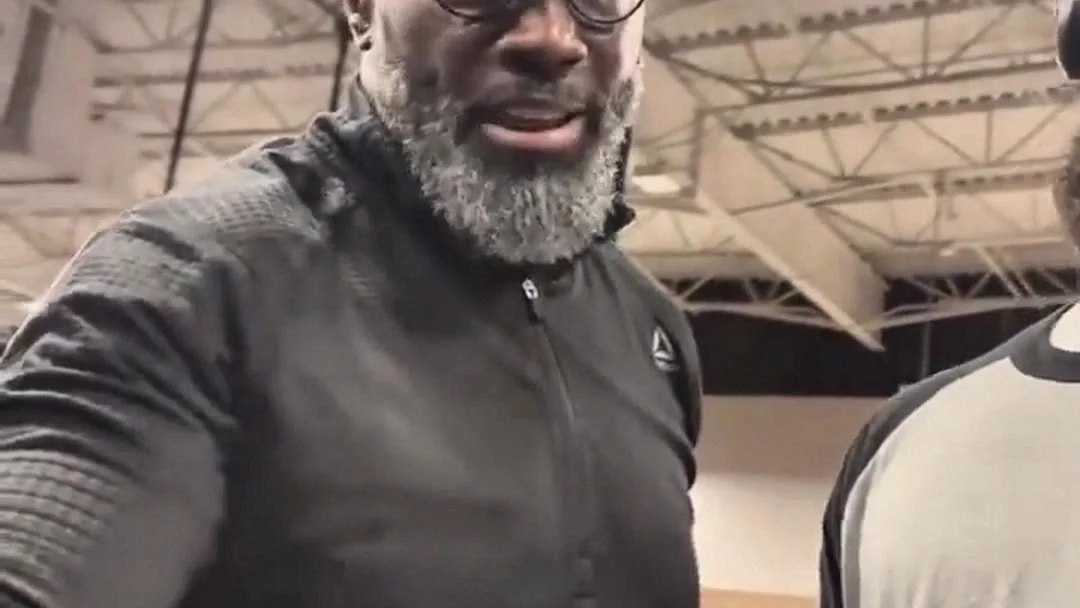
YOUNGSTOWN, Ohio — A first-person recording inside a commercial gym captures a direct confrontation between a member and a camera-wielding patron, exposing unresolved questions about consent, premises liability, and the enforceability of private facility policies. The encounter, which escalates from a verbal objection to physical gesturing near the device, highlights how quickly a routine workout can transform into a documented legal exposure for both parties and the operator. With no uniform federal standard governing commercial recording, the incident sits at the intersection of state privacy statutes, tortious conduct, and the contractual terms embedded in gym memberships.
- The recording originates from a handheld device held by a gym patron, capturing a close-up perspective of an approaching male member wearing headphones.
- The member closes distance rapidly, positioning himself within inches of the camera and gesturing toward the device in an apparent demand to cease recording.
- The setting is a commercial fitness facility with visible strength-training equipment, overhead lighting, and mirrored walls, indicating a semi-public interior space.
- No law enforcement or facility staff intervention is visible in the recorded sequence, leaving resolution to the parties and the operator's internal policy framework.
What the Recorded Footage Captures: Chronological Breakdown
The footage opens in a tight, low-angle frame dominated by the torso and face of a bearded male member wearing over-ear headphones and a raglan-style shirt with a red graphic. The camera is held at chest height by the operator, producing an intrusive proximity that immediately establishes the tension. The member's mouth is open in mid-speech, and his gaze is directed downward toward the lens rather than at a distant point, confirming he has identified the recording device and its operator.
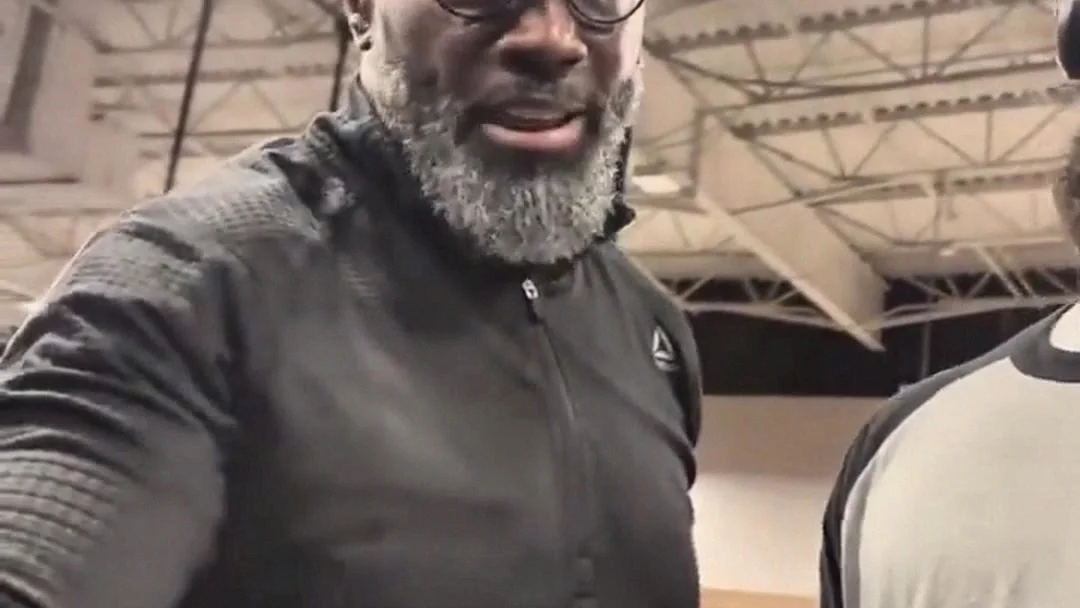
As the sequence progresses, the camera pulls back slightly, revealing the broader gym floor. The member steps laterally from behind a structural pillar, now fully visible in a black quarter-zip pullover, a dark baseball cap, and glasses. His posture is upright and forward-leaning, and his left arm extends toward the camera with fingers spread in a stopping gesture. The background shows cable machines, weight racks, and other patrons, confirming the encounter occurs in an open, occupied training area rather than a private alcove.
The third phase of the recording shows the member at close range again, his hand raised with the palm facing the lens and his thumb extended, a gesture commonly interpreted as a demand to halt. His facial expression is animated, and his head is tilted slightly back, consistent with vocal projection. The operator's fingers briefly enter the frame at the lower edge, indicating the camera is being adjusted or held defensively. The footage terminates without a visible physical strike, weapon, or third-party separation, leaving the verbal content and the parties' intent as the central evidentiary questions.
Finally, a lateral frame captures the member in profile, headphones still in place, moving through the gym floor. This shot establishes continuity: the same individual, same attire, and same facility, but now at a distance that suggests the immediate confrontation has either concluded or transitioned into a disengagement phase. The absence of staff in this final frame is notable, as it underscores the operator's reliance on member self-regulation rather than active floor supervision.
Corporate Liability and Critical Blind Spots
The evidentiary record is materially incomplete. The footage begins mid-encounter, meaning the preceding exchange, any request to stop recording, and the operator's initial response are unrecorded. Whether the member articulated a specific privacy objection, cited a facility rule, or issued a threat cannot be verified from the available frames alone. Chain of custody for the video file is also undocumented; the clip's provenance, editing history, and distribution pathway remain unverified, which limits its utility in any formal complaint or civil proceeding.
The camera's first-person perspective introduces a structural bias. The operator controls framing, angle, and duration, and the lens captures only what the holder chooses to emphasize. The member's gestures, which appear aggressive in close-up, may read differently when viewed in the context of a full-body wide shot. Conversely, the operator's own conduct, including whether the camera was thrust into the member's personal space before the recording began, is entirely outside the frame. Any adjudication of fault based solely on this clip would rest on an asymmetric record.
Commercial fitness operators face a compounded liability exposure in such disputes. Under premises liability doctrine, a facility owes a duty of reasonable care to invitees, which includes addressing foreseeable altercations. If the operator's member handbook permits personal recording but provides no enforcement mechanism, the facility may face claims of negligent supervision. If the handbook prohibits recording without consent, the operator may face contract-based claims for failing to enforce its own terms. Either scenario creates a documented gap between written policy and floor-level practice.
Statutory Framework and Protocol Analysis
Legal Distinction: In the United States, recording in a commercial gym is generally governed by state wiretap and eavesdropping statutes, which vary between one-party and all-party consent regimes. One-party consent states permit recording by a participant to the conversation; all-party consent states, such as California and Florida, require the consent of all parties to a confidential communication. A gym floor is typically not a confidential setting, which weakens privacy-based objections, but separate tort doctrines, including intrusion upon seclusion and assault, may apply if the recording is physically aggressive or threatening.
Beyond recording law, the encounter implicates the facility's contractual duty of care and its workplace safety obligations toward employees and independent contractors present on the floor. Gym policies commonly reserve the right to revoke membership for conduct that disrupts operations, but enforcement depends on staff presence and documented incident reporting. The absence of visible staff intervention in this sequence raises a compliance question: whether the operator's supervision model is adequate for a space where members record freely and disputes can escalate within seconds.
| Incident Parameter | Governing Legal Standard & Judicial Protocol |
|---|---|
| Recording in a semi-public gym | State eavesdropping statutes; one-party vs. all-party consent frameworks |
| Physical proximity and gesturing | Assault and menacing statutes; objective threat standard |
| Facility supervision duty | Premises liability; reasonable care toward invitees |
| Membership policy enforcement | Contract law; implied covenant of good faith |
| Incident documentation | Spoliation doctrine; preservation of video evidence |
| Staff response protocol | Workplace safety standards; internal incident reporting |
| Personal privacy objection | Intrusion upon seclusion tort; reasonable expectation standard |
Read more: {NOIBO}
Core Questions and Institutional Review
- Did the facility's membership agreement contain an enforceable recording or consent clause, and was it communicated to both parties prior to the incident?
- Should the operator have deployed floor staff or signage to mediate recording disputes before they escalated to physical proximity?
- What evidentiary weight should be given to a first-person recording that omits the operator's own conduct preceding the confrontation?
- If a civil claim arises, which party bears the burden of establishing consent, and how does the missing pre-recording context affect that burden?
The systemic impact of this incident extends beyond a single gym floor. As personal recording devices become ubiquitous in commercial spaces, operators across retail, fitness, and hospitality sectors face a widening gap between written policy and enforceable practice. The absence of a uniform federal standard leaves each facility to navigate a patchwork of state statutes, tort doctrines, and contractual terms. For members and operators alike, the lesson is procedural: documented policies, visible staff presence, and clear consent protocols are not administrative formalities but the first line of defense against liability. Without them, every smartphone becomes a potential exhibit, and every confrontation a potential docket entry.




2 Comments on “Arlington TX Brawl: Security Liability and Legal Review”