








WATCH: On-scene video documentation is embedded below →
LISTEN TO THIS ARTICLE
Audio Narration • English (US)
AUSTIN, Texas — A newly surfaced video purporting to capture a street brawl on the 6th Street entertainment district has reignited scrutiny over public safety protocols and the limits of municipal liability in one of the state's most heavily trafficked nightlife corridors. The footage, which bears a date stamp of November 20, 2026, shows a rapidly escalating altercation involving multiple individuals, culminating in a police intervention. The incident raises critical questions about the sufficiency of security measures in high-density commercial zones and the legal boundaries of detention and use of force by law enforcement.
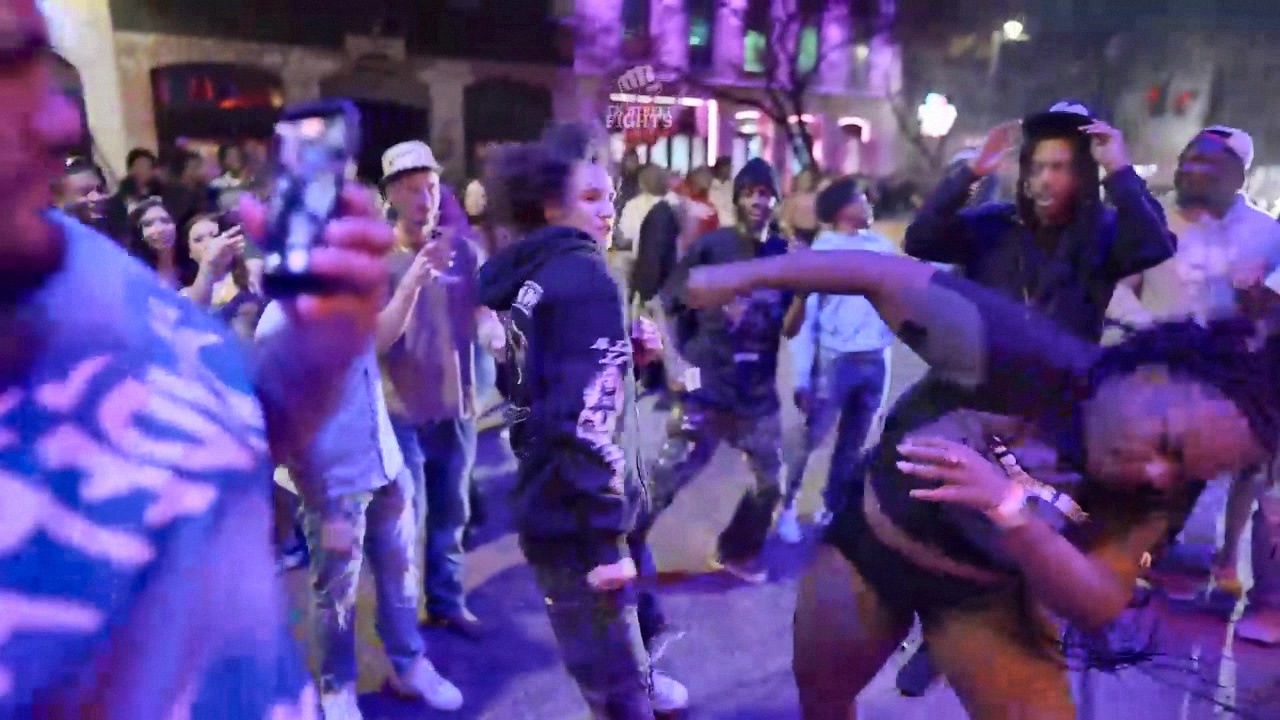
- Jurisdictional Setting: The recorded event occurs in the early morning hours along East 6th Street in Austin, Texas, a historic entertainment district known for its dense concentration of bars, live music venues, and late-night pedestrian traffic.
- The Recorded Escalation: Amateur footage captures a group of individuals engaged in a physical altercation, with at least one person being wrestled to the ground and another appearing to be forcefully grabbed or struck by an individual in a dark hooded jacket.
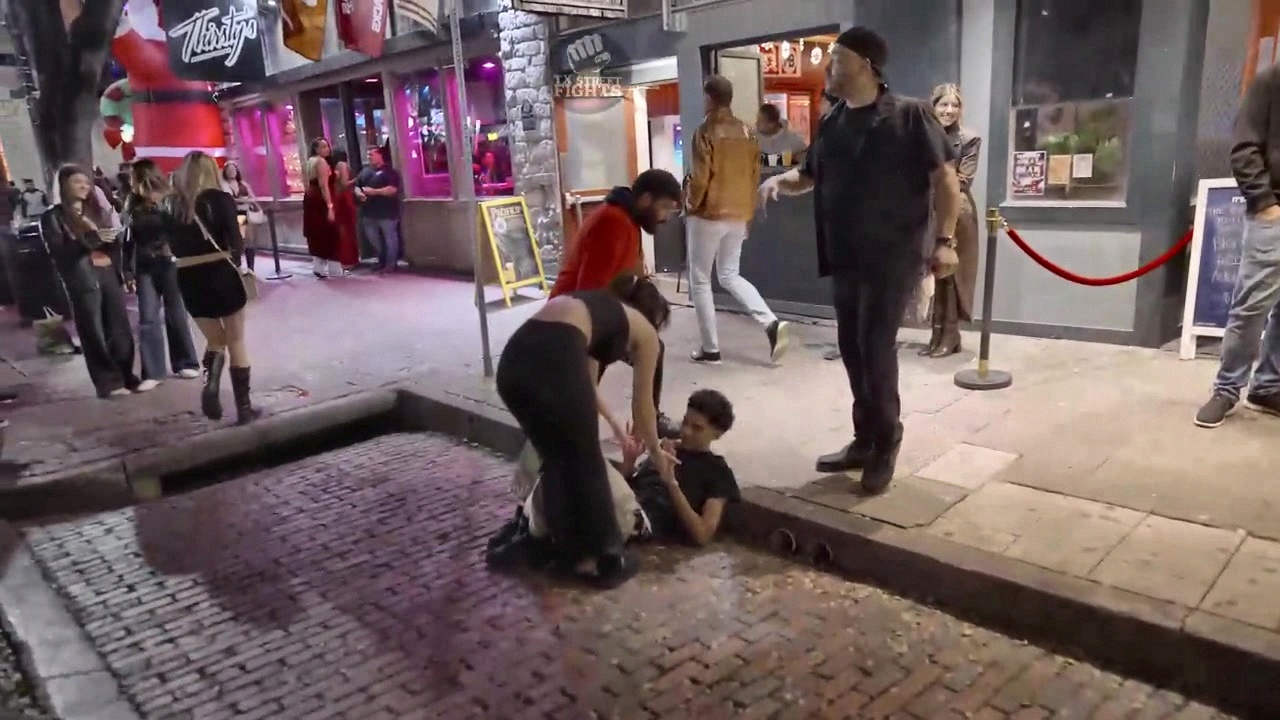
- Law Enforcement Intervention: A uniformed Austin Police Department officer is observed entering the frame to separate the combatants, placing one individual on the ground in a prone position, signaling an immediate custody and containment protocol.
- Legal and Regulatory Repercussions: While official department records for this specific date have not been verified, the incident underscores ongoing compliance challenges regarding public safety ordinances, private security guard licensing, and the potential tort liability for establishments that serve alcohol to visibly intoxicated patrons.
What the Recorded Footage Captures: Chronological Breakdown
The video begins with a wide, handheld shot capturing a dense cluster of pedestrians. In the initial frames, a female subject, dressed in dark clothing with a graphic design on the back, is seen moving aggressively toward a figure in a dark hooded sweatshirt. The camera angle is slightly low, indicative of a bystander recording on a smartphone. At roughly the ten-second mark, the altercation intensifies as the figure in the hooded sweatshirt extends an arm, making contact with the head or upper torso of the female subject, causing her to stumble backward into the crowd.
The scene transitions rapidly into a more chaotic melee. By the second frame, the crowd has compressed, and the visual noise of multiple bodies in motion obscures specific actions. The camera pans slightly to the right, revealing another individual—a male in a green shirt—being pulled away by others. The footage reveals that the initial confrontation has spawned a secondary dispute, with bystanders actively trying to de-escalate or intervene. The lighting is predominantly artificial, casting deep shadows that obscure facial expressions and specific hand movements, complicating any subsequent forensic identification.
A critical pivot occurs in the next sequence: an Austin Police Department officer, identifiable by the distinct uniform and shoulder emblem, steps into the center of the frame. The officer's body posture is authoritative, immediately creating a physical barrier between the opposing groups. The officer directs the crowd backward, and the focus shifts to a single male subject who is instructed to lie face down on the brick pavement. This moment is crucial from a legal standpoint, as it marks the transition from a public disorder incident to an active law enforcement detention. The final frames of the segment show the individual on the ground with hands placed behind his back, while the officer maintains a dominant position to ensure compliance.
Corporate Liability and Critical Blind Spots
The evidentiary value of this footage is constrained by several forensic limitations. First, the recording captures the aftermath of the initial spark, leaving the preceding verbal provocation and the specific cause of the physical altercation entirely unrecorded. A thorough regulatory review would require subpoenaing nearby private surveillance systems to establish a complete chain of custody and timeline, as the amateur video presents only a fragmented perspective. Second, the camera's constant movement and the low-light environment create significant blind spots, particularly regarding the actions of individuals at the periphery of the brawl.
From a corporate liability perspective, the venues operating along this stretch of 6th Street face potential exposure under Texas Dram Shop laws. These statutes hold establishments civilly liable for damages caused by serving alcohol to an obviously intoxicated person. If the individuals involved were found to have been over-served, the resulting altercation could trigger significant litigation against the businesses involved. Furthermore, the presence of private security contractors—if any were on scene—invites scrutiny regarding their training, licensing, and adherence to state-mandated use-of-force guidelines.
A critical unverified element remains: the exact identity of the aggressor and the legal status of the confrontation. Viral assertions often outpace official findings, and in this case, the lack of a corroborating police report leaves the precise legal categorization—whether this is simple assault, aggravated assault, or disorderly conduct—open to interpretation. The footage alone cannot establish intent or self-defense claims without a full review of all available angles and witness statements.
Statutory Framework and Protocol Analysis
Legal Distinction: Under Texas law, the classification of a street altercation hinges on the presence of a deadly weapon and the intent to cause serious bodily injury. Simple assault (Texas Penal Code § 22.01) is generally a Class A or B misdemeanor, while aggravated assault (§ 22.02) is a felony. Furthermore, the use of force by police officers to detain a subject is governed by the Fourth Amendment's objective reasonableness standard, requiring a careful balancing of the government's interest against the individual's right to liberty.
Compliance protocols for the City of Austin and the Austin Police Department emphasize de-escalation and crowd control. The officer's actions in the video—specifically the decision to physically restrain a subject—must be evaluated against the department's use-of-force policy, which mandates that officers use only the force necessary to effect an arrest or protect the public. The rapid transition to placing a subject on the ground is a standard tactic to neutralize a perceived threat and facilitate handcuffing, but it also carries inherent risks of positional asphyxia, requiring continuous monitoring.
| Incident Parameter | Governing Legal Standard & Judicial Protocol |
|---|---|
| Public Intoxication and Disorderly Conduct | Texas Penal Code § 42.01 (Disorderly Conduct) and § 49.02 (Public Intoxication) |
| Detention and Arrest Procedures | Fourth Amendment (Probable Cause) and Texas Code of Criminal Procedure Art. 14.01 |
| Use of Force by Law Enforcement | Graham v. Connor (Objective Reasonableness Standard) and APD General Orders |
| Civil Liability for Alcohol Service | Texas Alcoholic Beverage Code § 2.02 (Dram Shop Liability) |
| Private Security Regulation | Texas Occupations Code Chapter 1702 (Private Security Act) |
Read more:
Read more: Miami Sentencing: Omar Rodriguez and the Father’s Day Altercation →
Scroll down for the full investigative report below ↓
Core Questions and Institutional Review
- What was the specific sequence of events that triggered the physical confrontation, and do unedited, longer-duration recordings from adjacent businesses corroborate the amateur footage?
- Did any of the establishments involved violate state alcohol service regulations, and if so, will the Texas Alcoholic Beverage Commission initiate an administrative review or license suspension?
- What is the official status of the detainee, and will the Travis County District Attorney's Office pursue charges of assault or resist arrest based on the available evidence?
- Are the current police presence and private security staffing levels in the 6th Street corridor sufficient to prevent similar outbreaks of violence, or does the city need to revise its public safety ordinance?
The systemic impact of this incident extends beyond the immediate legal consequences for the individuals involved. It serves as a stress test for Austin's nighttime economy management. If the footage is representative of a recurring pattern, it could prompt the City Council to mandate stricter security requirements for late-night permits or increase funding for police overtime in the district. For the financial and legal sectors monitoring municipal liability, the outcome of any resulting litigation will set a precedent for how courts allocate responsibility between the city, private businesses, and individual aggressors in the context of public disorder.
Practical takeaways from this incident emphasize the importance of comprehensive surveillance coverage, rigorous training for private security personnel, and the strict adherence to alcohol service limits. For the public, it underscores the volatility of high-density entertainment districts and the critical need for immediate compliance with law enforcement commands to avoid escalation of charges.
LATEST DEVELOPING INCIDENT
An even more shocking incident just erupted hours ago that has stunned onlookers nationwide. Full investigative breakdown and on-scene evidence documented below.
BREAKING: READ NEXT SHOCKING INCIDENT – LATEST CASE ↓
Miami-Dade Circuit Court: Sentencing of Omar Rodriguez in Fatal Father’s Day Neighbor Dispute
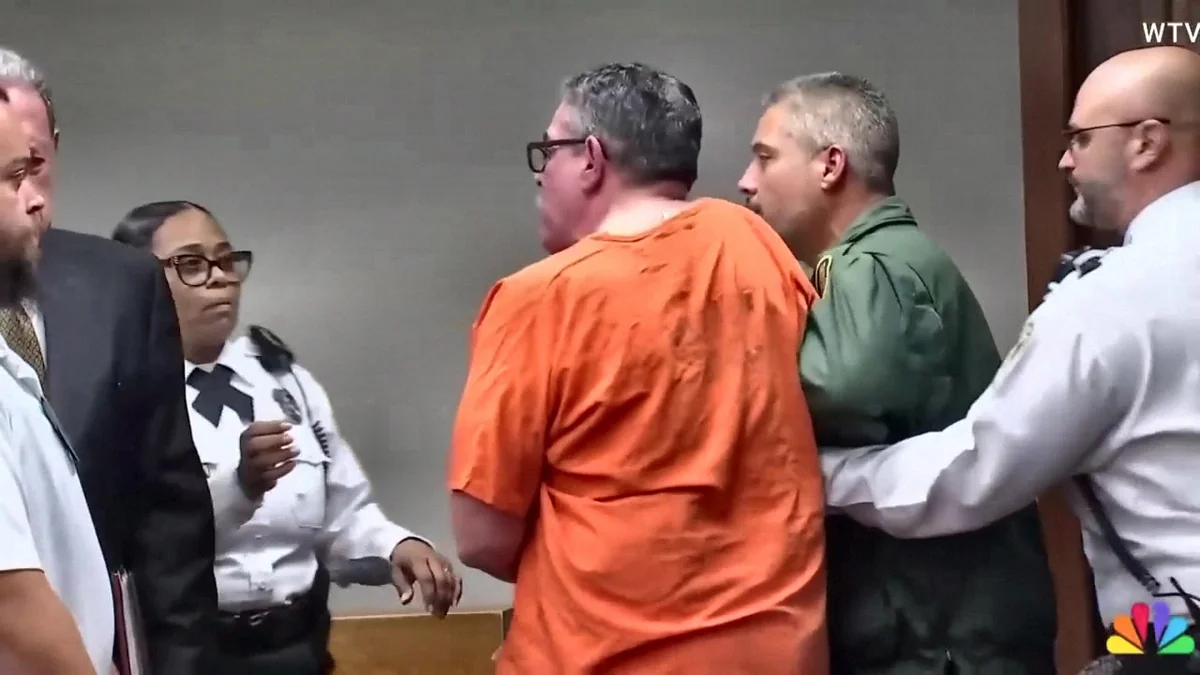
MIAMI — The sentencing hearing of Omar Rodriguez, convened in a Miami-Dade County courtroom on August 15, 2024, represented the final judicial chapter of a fatal Father's Day 2015 confrontation that began as a dispute over a neighborhood dog and ended with three loud sounds. The proceedings, captured on local broadcast pool footage, placed the defendant in an orange detention jumpsuit before the bench as the victim's widow, Lissette Reyes, delivered a victim impact statement characterizing the defendant as a coward. The hearing underscores the convergence of criminal liability, evidentiary durability, and the long-tail financial consequences that violent interpersonal disputes impose on families and municipal court systems.
- Jurisdictional setting: Miami-Dade County criminal court, where a 2015 fatal incident case returned for sentencing nearly nine years after the original offense, reflecting the extended pretrial and appellate timelines common in contested fatal incident prosecutions.
- Recorded escalation: The evidentiary record establishes that the defendant fired three shots at his neighbor in a dispute reportedly triggered by a dog attempting to defecate on the defendant's son's lawn; prosecutors assert two of those shots were discharged after the victim was already on the ground.
- Courtroom intervention: Uniformed bailiffs and corrections officers flanked the defendant throughout the hearing, maintaining physical control as the defendant spoke out during the widow's statement, an exchange captured on the courtroom feed.
- Legal and regulatory repercussions: The sentencing phase converts the underlying conviction into a fixed custodial term, closing the criminal docket while leaving civil exposure, family financial restitution questions, and neighborhood public-safety protocols unresolved.
What the Recorded Footage Captures: Chronological Breakdown
The broadcast footage opens on a tight medium shot of the defendant, Omar Rodriguez, seated and then rising at the defense table in an orange detention uniform. A sheriff's deputy in a white shirt and dark tie stands immediately to his right, with a second uniformed officer visible at the frame edge. The camera angle is elevated and lateral, capturing the defendant's profile as he speaks toward the bench and the gallery; the on-screen caption overlay quotes his statement referencing quote the stability and sanity of an entire family end quote. The visual framing establishes a physically constrained defendant addressing the court under direct custodial supervision.
A wider cut reveals the courtroom choreography: the defendant is surrounded on three sides by a bailiff in a green uniform, a white-shirted corrections officer, and a court officer in a white uniform blouse, all positioned within arm's reach. This staging is standard high-security protocol for a defendant convicted of a violent serious legal charge, and the footage shows no physical altercation, only verbal assertiveness from the defendant and a visible reaction from the woman standing at the left of frame. The camera holds long enough to record the defendant's posture and the officers' hands-on readiness, an evidentiary detail relevant to any post-sentencing conduct review.
A subsequent segment shifts to an exterior corridor interview with Lissette Reyes, identified by chyron as the victim's widow, standing before a bank of local news microphones. The audio captures her statement that she was quote just reading my thoughts end quote, followed by her characterization of the defendant as quote irrelevant in my life right now end quote. The camera remains in a static medium close-up, framing her against a corridor directory numbered 7-3 and a passing bystander in a blue shirt, giving the segment an unpolished, contemporaneous quality typical of courthouse hallway press availability.
The final frames return to the widow's face as she completes her statement, noting that quote at the end of the day, Mr. Rodriguez will continue to see his family end quote, a remark that carries an implicit contrast with the permanent loss suffered by her own household. The footage cuts before any concluding exchange, leaving the recorded evidentiary trail focused on courtroom demeanor and post-hearing commentary rather than the underlying ballistics or the original 2015 scene.
Corporate Liability and Critical Blind Spots
The recorded material carries structural evidentiary limits that any rigorous review must acknowledge. First, the footage documents only the sentencing hearing and a hallway interview; it does not capture the 2015 altercation scene, the original 911 dispatch audio, the physical evidence chain, or the ballistics reconstruction that prosecutors relied upon to establish that two shots were fired after the victim was grounded. Second, the courtroom feed offers a single fixed perspective, meaning gestures, whispered exchanges between counsel, and bench conferences are outside the frame and therefore outside the record.
Third, the viral framing of the case as a dispute over a dog defecating on a lawn compresses a multi-year legal proceeding into a single provocative detail. The original description states that prosecutors alleged the additional shots came after the victim was on the ground, but the recorded footage provides no independent corroboration of that sequencing, no autopsy reference, and no witness testimony. Any downstream claims about motive, intent, or the precise number of rounds fired remain assertions attributable to prosecutors and press accounts, not to the frames themselves.
Fourth, the hallway interview is inherently curated: the widow's remarks were selected by the network edit and the pool feed, and the defendant's courtroom statement is similarly excerpted. Financial and institutional analysts reviewing such material should treat the broadcast cut as a secondary source, distinct from the certified sentencing transcript, which would constitute the authoritative record for any civil or regulatory follow-on.
Statutory Framework and Protocol Analysis
Legal Distinction: The conduct at issue implicates distinct legal categories: second-degree fatal incident or unlawful death charge under Florida fatal incident statutes, aggravated assault and weapon discharge provisions under state law, and separate civil tort exposure for wrongful death. Courtroom security and defendant demeanor fall under judicial administration and contempt protocols, while the widow's statement is governed by victim rights statutes that guarantee allocution at sentencing. Weapon storage and neighborhood property disputes are regulated at the municipal and state level, not by any single federal standard.
Compliance protocols in the courtroom context center on the institutional duty of care owed by the court to all participants. The visible bailiff configuration reflects mandatory custody and restraint standards for convicted violent offenders, and the officers' positioning is designed to intercept any movement toward the bench or gallery. The absence of a physical incident in the footage suggests protocol functioned as intended, but the recorded verbal interjection during victim allocution raises a separate question about whether the court's decorum rules were enforced through admonition or contempt citation.
From a regulatory standpoint, the case illustrates the extended lifecycle of a violent-offense prosecution. Nine years between offense and sentencing implies appellate review, competency evaluations, or plea negotiation, each of which carries public fiscal cost. Municipal court systems bear the operational expense of long-docketed fatal incident cases, and victim advocacy programs must maintain contact with surviving family members across that interval. The widow's presence at sentencing is itself a product of statutory victim-rights machinery that many jurisdictions fund through court surcharges and grant programs.
| Incident Parameter | Governing Legal Standard & Judicial Protocol |
|---|---|
| Fatal altercation during property dispute | State fatal incident statute; malice and premeditation elements |
| Escalation erupted after victim grounded | Aggravated battery or fatal incident enhancement provisions |
| Victim allocution at sentencing | State victim-rights statute guaranteeing statement |
| Defendant interruption in court | Judicial decorum rules; contempt authority of the bench |
| Courtroom restraint of defendant | Sheriff's office custody and security protocol |
| Weapon discharge near residence | State weapons discharge and storage regulations |
| Surviving family compensation | Civil wrongful death and restitution statutes |
The protocol record thus spans three separate institutional systems: the criminal court that adjudicated guilt and imposed sentence, the corrections and bailiff apparatus that secured the hearing, and the civil justice system that remains available to the victim's estate. Each system carries its own documentation standard, and only the sentencing transcript and judgment entry constitute binding legal findings.
Core Questions and Institutional Review
- Did the court formally address the defendant's verbal interjection during the victim's allocution, and does the sentencing transcript reflect an admonition or contempt finding?
- What was the precise charging disposition, and did the prosecution secure a fatal incident conviction or a lesser included offense after nine years of pretrial proceedings?
- What civil remedies remain available to the victim's family, and has any wrongful death action been filed against the defendant's assets or insurer?
- Did municipal or county authorities review weapon discharge response times and neighborhood dispute mediation protocols following the 2015 incident?
The systemic impact of this case extends beyond the individual docket. Violent disputes originating in trivial property disagreements expose the fragility of informal neighborhood conflict resolution and the limited reach of municipal mediation programs. Courts can impose sentence and secure a courtroom, but they cannot retroactively install the dispute-resolution infrastructure that might have prevented a Father's Day altercation. The recorded footage, restrained and procedural, documents the end of one legal process and the beginning of a longer civic reckoning over how ordinary neighborhood friction escalates into lethal violence.
Practical Takeaways
- Broadcast courtroom footage is a secondary evidentiary source; the certified sentencing transcript remains authoritative for liability and restitution determinations.
- Victim allocution rights are statutory, not discretionary, and their enforcement depends on courtroom decorum protocols that should be documented in the record.
- Long-delay fatal incident prosecutions impose sustained fiscal and administrative burdens on court systems and victim advocacy programs.
- Civil wrongful death exposure commonly survives criminal sentencing and should be assessed separately by counsel for the victim's estate.





One comment on “Austin 6th Street Brawl: Police Action & Liability Review”