








WATCH: On-scene video documentation is embedded below →
LISTEN TO THIS ARTICLE
Audio Narration • English (US)
ELOY, Arizona — A two-year-old girl reported missing near Eloy was recovered alive in the desert darkness by a lone family member carrying a flashlight, a result that followed an extensive multi-agency search operation involving roughly 75 law enforcement personnel, K-9 tracking teams, aerial support, and thermal-imaging drone technology. The Final County Sheriff's Office is now reviewing the operational record of a case in which the most sophisticated public-safety assets available on scene produced no confirmed contact with the child, while a private citizen achieved the recovery within hours. The disparity between the institutional response and the outcome has raised pointed questions about resource deployment methodology and the limits of technology-dependent search protocols.
- Jurisdictional setting: The search unfolded in the open desert terrain outside Eloy, Arizona, under the jurisdiction of the Final County Sheriff's Office, an area characterized by low ambient light, dense brush, and limited road access.
- Recorded escalation: Broadcast-documentary footage captures the child's family members recounting the disappearance of a two-year-old girl who had wandered from her surroundings wearing nothing but a shirt, prompting an immediate emergency alert.
- Law enforcement response: Roughly 75 officers, K-9 units, helicopters, and heat-sensing drones were deployed across the search perimeter, according to the on-camera account presented by the sheriff's office and reporting personnel.
- Legal and regulatory repercussions: The recovery by an unaffiliated family member has triggered public demands for an operational review of how search assets are prioritized and how family participation is integrated into active missing-child investigations.
What the Recorded Footage Captures: Chronological Breakdown
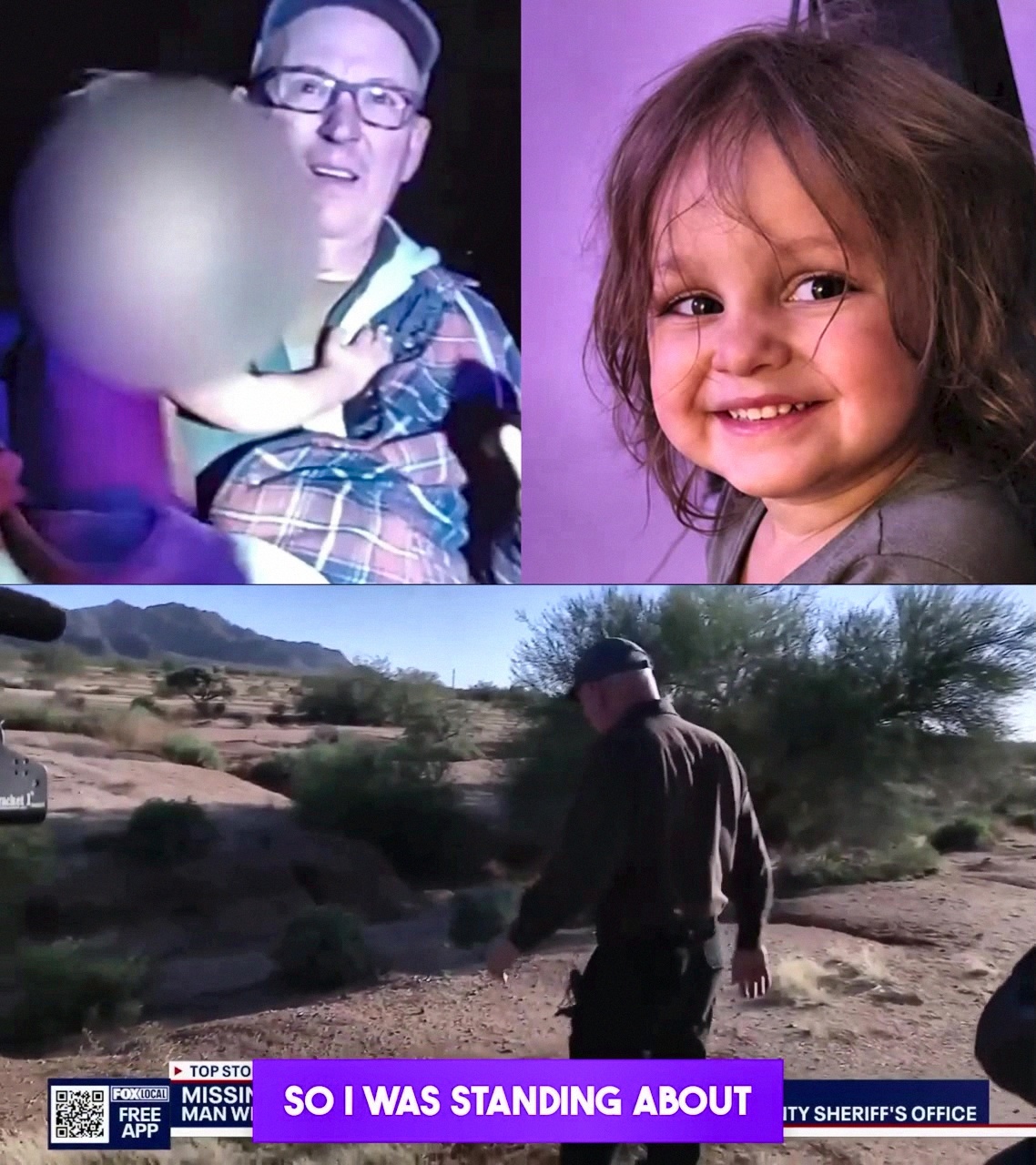
The footage opens with a split-screen presentation: on the left, an adult male relative is depicted holding the recovered child in a nighttime field setting, illuminated by a harsh artificial light source consistent with body-worn camera or news-lighting equipment; on the right, a portrait still of the smiling toddler is displayed against a violet studio background. The visual composition immediately frames the narrative as a rescue story, establishing the child's identity and wellbeing before the procedural details are introduced.
The second visual sequence shifts to a dusk or nighttime roadside scene in which two individuals — a woman with long blonde hair and a younger man in a high-visibility yellow-green jacket — stand before news microphones. The lower-third captioning reads "IT WAS DEFINITELY," establishing that this is an on-camera interview in which the family is recounting the timeline. Mountain silhouettes and parked vehicles are visible behind them, placing the interview near the search staging area rather than at the point of recovery.
The third and fourth sequences cut to a daytime desert environment. A uniformed male deputy with a body-worn camera visible at his waist is recorded walking away from the camera along a sandy trail lined with scrub brush and rock formations. The on-screen text reads "SO I WAS STANDING ABOUT," indicating that the deputy is narrating his own position and movements during the operation. This body-camera segment is critical to the evidentiary record, as it documents the spatial scope of the official search footprint.
Final sequences present an interview with the grandfather, an older man wearing a dark baseball cap and a button-down work shirt, standing in the open desert during daylight with a mountain range behind him. Broadcast graphics identify the segment as coverage of the "MAN WHO FOUND VELLA CAMPI RECOGNIZED BY FINAL COUNTY SHERIFF'S OFFICE," and his partial statement "AND WE WERE ALL DOING" is captured before the segment transitions. The phrasing establishes that the recovery was a coordinated family effort rather than a solitary act of chance.
Corporate Liability and Critical Blind Spots
The most consequential blind spot in this record is temporal: no footage documents the interval between the moment the toddler was discovered missing and the instant the grandfather located her. The entire chronological anchor of the story — how long the child was in the desert, what conditions she was exposed to, and whether official search assets passed within proximity of her location — remains outside the visual record. Broadcast packages that rely on post-hoc interviews inherently compress that interval, and any reconstruction of the timeline currently rests on verbal accounts rather than synchronized documentary evidence.
A second blind spot concerns the integration of the family into the active command structure. The footage shows family members positioned at a media staging area and the grandfather recounting his search after the fact, but it does not establish whether the sheriff's office issued a directive to civilians to remain clear of the search zone or whether the family's movement was coordinated through a unified command. This distinction carries direct liability implications: an uncoordinated civilian search in an active desert operation can introduce safety risk to both the searcher and the subject, and public-safety agencies typically operate under incident-command protocols that govern volunteer access.
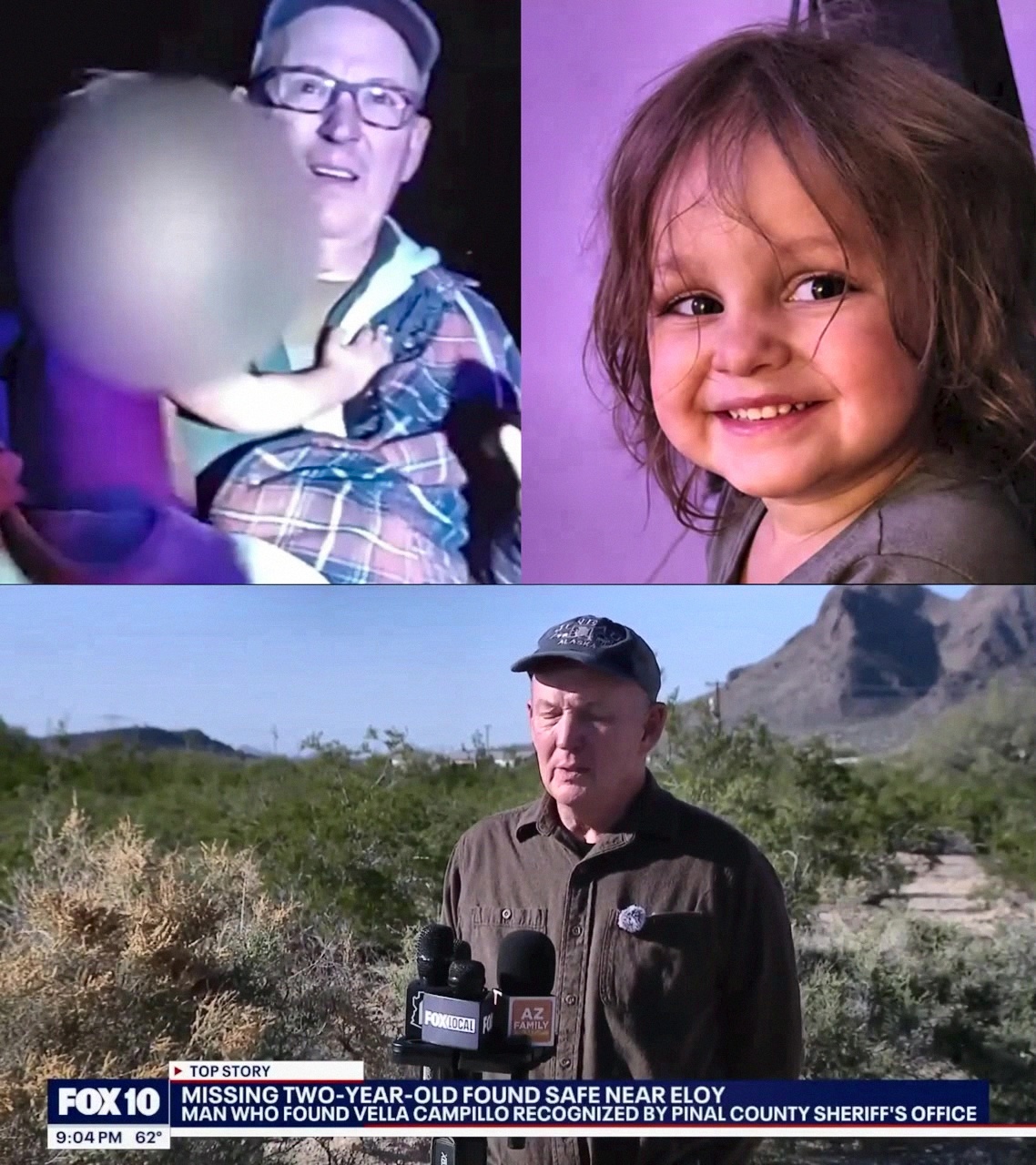
A third evidentiary limitation relates to the asserted capability of the thermal-imaging drone and K-9 assets. The description's claim that these systems could not find the child is a secondary characterization drawn from the family's retelling and social-media amplification, not a verified operational finding. Confirming whether the drone flights overlapped the child's actual location, whether the K-9 track was established from a contaminated starting point, and whether the search perimeter was properly geofenced would require an incident-action report and flight telemetry that the public record does not currently contain.
Statutory Framework and Protocol Analysis
Legal Distinction: A missing-child investigation in Arizona is governed less by a single statute than by a layered compliance architecture. At the state level, Arizona Revised Statutes provisions on child neglect and endangerment establish the threshold for potential criminal referral once the child's absence is reported, while the sheriff's office operates under state-mandated search-and-rescue coordination requirements. Federal frameworks intersect through Amber Alert activation criteria and the National Incident Management System, which mandates a unified command structure for multi-agency operations. The recording does not establish whether any statutory threshold for external alert activation was met, and the agency has not publicly confirmed the operational trigger point.
| Incident Parameter | Governing Legal Standard & Judicial Protocol |
|---|---|
| Child reported missing in desert terrain | Arizona endangerment and neglect statutes; mandatory referral review |
| Multi-agency search deployment | NIMS unified command and incident action planning requirements |
| Use of thermal-imaging drone assets | FAA Part 107 operations and public-safety flight documentation |
| Family participation in active search zone | Sheriff's office emergency-access control and volunteer liability provisions |
| Body-worn camera capture of search | State retention schedules and public-records disclosure obligations |
| Recovery of a minor by a private citizen | Good Samaritan protections and custodial handoff protocol |
| Public identification of the child | Juvenile privacy and victim-identification restrictions |
The compliance question at the center of this matter is less dramatic than the viral framing suggests, but it is more consequential. Counties across Arizona are required to document search operations in a manner that supports later review, and the body-worn camera segment visible in the footage is a potential anchor for that documentation. The operative standard is not whether an agency used enough technology, but whether the deployment was auditable, whether the search perimeter was defined with geographic specificity, and whether the command structure had a mechanism to receive and act on civilian reporting in real time.
Institutional duty of care also extends to the manner in which the child's identity was subsequently handled. Broadcast footage displayed a portrait of the toddler and her full name in association with the recovery, a practice that raises juvenile-privacy considerations separate from the operational review. Agencies and media partners generally operate under internal standards restricting the release of identifiable material involving a minor victim, and the presence of the name in the on-screen graphics constitutes a documentation point that a public-records review would likely examine.
Scroll down for the full investigative report below ↓
Read more:
Read more: Gym Recording Confrontation: Liability and Consent Dispute →
Core Questions and Institutional Review
- Did the sheriff's office maintain a documented incident action plan with a defined geographic search perimeter, and does that plan show an overlap with the location where the child was ultimately found?
- How were civilian family members integrated into, or excluded from, the active search zone, and was any volunteer access protocol formally communicated on scene?
- Do the thermal-imaging drone flight logs and K-9 track records support the public characterization that advanced assets failed, or do they reflect a coverage gap attributable to perimeter definition?
- What is the agency's policy on releasing juvenile identifying information in recovery cases, and was that policy followed in this broadcast segment?
The broader systemic impact of this case lies in what it reveals about the public's expectation of technological precision in emergency response. A 75-person operation with aerial assets represents a substantial allocation of taxpayer-funded capacity, and when that capacity is visibly outperformed by a civilian armed only with a flashlight, public confidence in the agency's operational judgment is directly implicated. The sheriff's office has an institutional interest in producing a transparent after-action review, not merely to address the viral narrative, but to determine whether the search architecture was optimized for the terrain and conditions actually present. For regulators and county supervisors, the case offers a concrete test of whether existing search-coordination standards are written to accommodate family-led recovery activity — or whether they assume it will never happen. Until that review is public, the record supports one conclusion firmly: the child was recovered alive, and the documented assets were not the instrument of that outcome.
Related documented case details, verified on-scene evidence, and statutory liability analysis continued below.
An even more shocking incident just erupted hours ago that has stunned onlookers nationwide. Full investigative breakdown and on-scene evidence documented below.





3 Comments on “Arizona Desert Search: Grandfather Finds Missing Toddler After 75-Officer Operation”