







WATCH: On-scene video documentation is embedded below →
LISTEN TO THIS ARTICLE
Audio Narration • English (US)
SOUTHEAST, USA — A newly surfaced video capturing a sudden and violent physical altercation inside what appears to be a municipal office or administrative building is raising complex questions regarding the boundaries of self-defense and the legal liability of public entities. The footage, which abruptly shifts from a tense exchange to a frantic escape, offers a stark case study in how quickly verbal disputes can escalate into physical confrontations requiring security intervention.
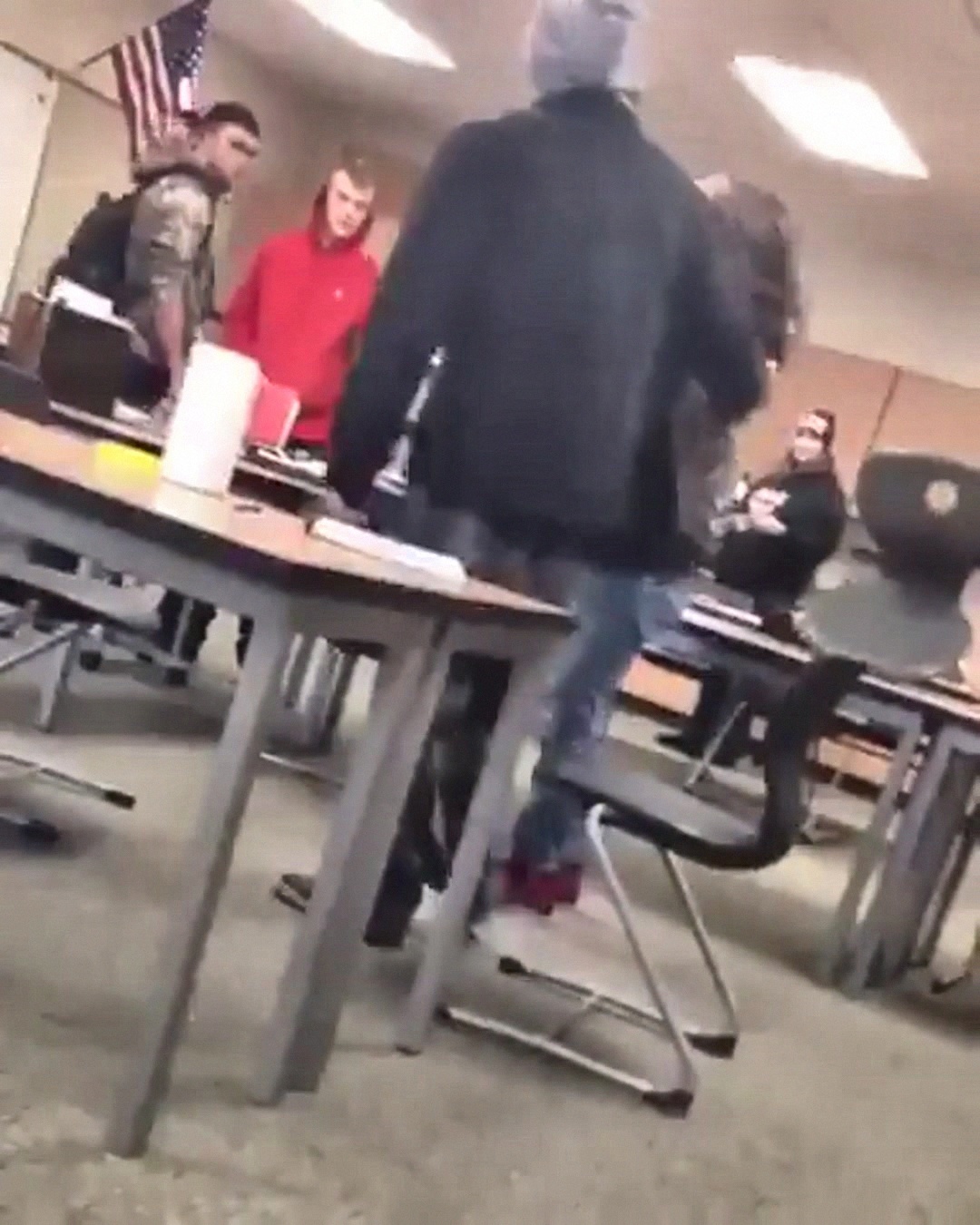
- The incident takes place within a confined office environment, identifiable by standard office furniture, shelving units, and an American flag mounted in the corner.
- A verbal confrontation between a seated woman and a group of individuals rapidly escalates into a physical struggle, prompting a chaotic response from bystanders.
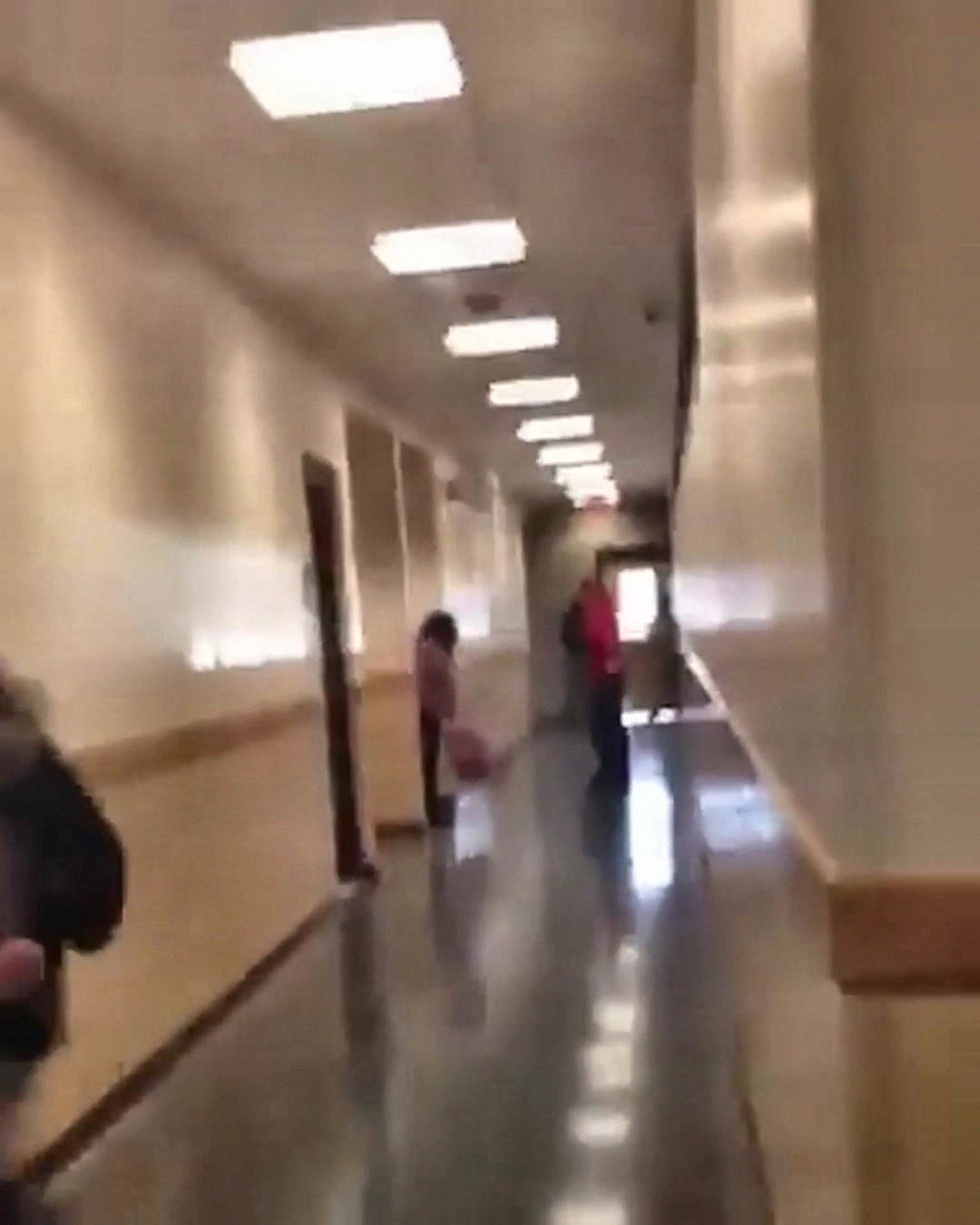
- A male subject is observed disengaging from the physical scuffle and subsequently sprinting down a long, brightly lit hallway away from the scene.
- The video terminates without clear resolution, leaving unanswered questions regarding the origin of the dispute, the legal justification for the physical contact, and the involvement of law enforcement or administrative security.
What the Recorded Footage Captures: Chronological Breakdown
The initial frame establishes a cramped, bureaucratic setting. In the background, a woman is seated at a desk, while a man in a grey hooded sweatshirt stands nearby. To the left, a large wooden desk and a white cylindrical object sit in the foreground. A second male, partially obscured, is also present. The atmosphere appears calm but charged, suggesting an ongoing verbal exchange. Notably, one of the figures in the background appears to be a security or law enforcement officer, indicated by the uniform, though the blurriness of the footage prevents definitive identification.
Within seconds, the scene deteriorates into chaos. The man in the grey sweatshirt leans forward toward the seated woman, and the physical space between the individuals collapses. A struggle ensues, with the camera capturing a tangle of limbs, a rolling office chair, and the rapid movement of bodies. The perspective is highly unstable, suggesting the person filming is either involved or retreating rapidly from the brawl. The sudden, violent flurry of motion makes it impossible to verify who initiated the physical contact or the specific nature of the blows exchanged.
Following the peak of the conflict, the video cuts to a wide shot of a long, institutional hallway. A figure dressed in dark clothing is seen sprinting away from the camera, moving with urgency toward the far end of the corridor. The camera operator gives chase, capturing the fleeing subject's rapid retreat. The frames become a blur of motion, indicating a high-speed pursuit that abruptly ends the recording. The apparent cause for the flight remains unverified, but the contrast between the stationary, seated female subject and the sprinting male figure is the central visual dynamic of the clip.
Corporate Liability and Critical Blind Spots
The primary evidentiary limitation of this footage is the complete absence of context preceding the first recorded frame. The audio is heavily garbled, rendering the initial verbal exchanges unintelligible. Without a clear understanding of what was said to provoke the physical confrontation, any assessment of blame or justification is inherently speculative. The video captures the reaction, not the inciting incident.
The footage is also severely limited by its perspective and quality. The chaotic, handheld nature of the recording creates significant blind spots. The identities of several key figures, including the security personnel present, are obscured by pixelation and motion blur. The rapid transition from the office to the hallway obscures the physical aftermath of the struggle, leaving viewers unaware of whether the seated woman required medical attention or if any arrests were made. These gaps in the evidentiary record are critical for any subsequent legal review or insurance claim arising from the incident.
Finally, the framing of the incident by the original poster introduces a potential bias. The video's title and the accompanying description immediately assert that the woman was demonstrating racism, framing the subsequent physical altercation and flight as a justified response. However, the recorded footage itself does not contain explicit visual or audio evidence of racial slurs or discriminatory conduct. Attributing the cause purely to the woman's alleged behavior without corroborating evidence risks a misrepresentation of the event.
Statutory Framework and Protocol Analysis
Legal Distinction: In jurisdictions across the United States, the legal doctrine of self-defense generally requires a proportional response to an imminent threat of physical harm. The use of force must be necessary and reasonable under the circumstances. In this incident, the transition from a verbal dispute to a physical struggle raises questions about who posed the initial threat and whether the physical response was justified. Furthermore, the intervention of security personnel introduces additional layers of institutional liability, as the property owner has a duty to ensure a safe environment for all occupants.
From a compliance standpoint, public administrative offices typically enforce strict codes of conduct that prohibit disruptive behavior and physical violence. When such incidents occur, facility management and on-site security are obligated to follow established protocols for de-escalation and, if necessary, the detention of individuals until law enforcement arrives. The apparent failure of security personnel to immediately de-escalate the situation before it turned physical may be subject to internal review and potential civil liability.
A critical analysis of the footage raises questions about the efficacy of the security measures in place. While a uniformed figure is present, the rapid escalation of the brawl suggests that the intervention was insufficient or delayed. This creates a potential liability exposure for the building's management, particularly if it can be demonstrated that a lack of adequate staffing or training contributed to the harm sustained by the seated woman.
Scroll down for the full investigative report below ↓
| Incident Parameter | Governing Legal Standard & Judicial Protocol |
|---|---|
| Use of Force | Proportionality and reasonable belief of imminent harm required. |
| Security Intervention | Duty to de-escalate and protect all occupants from harm. |
| Institutional Liability | Premises liability for failing to provide adequate security. |
| Evidentiary Standard | Unverified video footage lacks necessary context for adjudication. |
| Public Conduct Codes | Prohibition of disruptive and violent behavior in public offices. |
Read more:
Read more: Chicago ICE Facility Protest: Inspection officers, Sign Removal →
Core Questions and Institutional Review
- What specific verbal exchange or physical action initiated the confrontation, and is that initial interaction captured on any unedited audio?
- Did the on-site security or law enforcement personnel follow established use-of-force and de-escalation protocols during the brawl?
- What is the legal status of the man who fled the scene, and was he subsequently detained or charged by authorities?
- What regulatory review will be conducted by the administrative agency overseeing this facility to prevent future incidents?
The systemic impact of this incident extends beyond the immediate participants. It highlights the inherent risks of hostile interactions within public service environments. As viral footage continues to shape public perception, the absence of a definitive legal resolution leaves the narrative vulnerable to misinterpretation. Ultimately, the incident underscores the necessity for robust security protocols and clear communication channels to manage disputes before they escalate into physical violence, ensuring the safety and liability of both the public and the institutions that serve them.
LATEST DEVELOPING INCIDENT
An even more shocking incident just erupted hours ago that has stunned onlookers nationwide. Full investigative breakdown and on-scene evidence documented below.
BREAKING: READ NEXT SHOCKING INCIDENT – LATEST CASE ↓
Arlington, Texas Commercial Corridor: Public Disorder Brawl Raises Liability Questions for Private Security
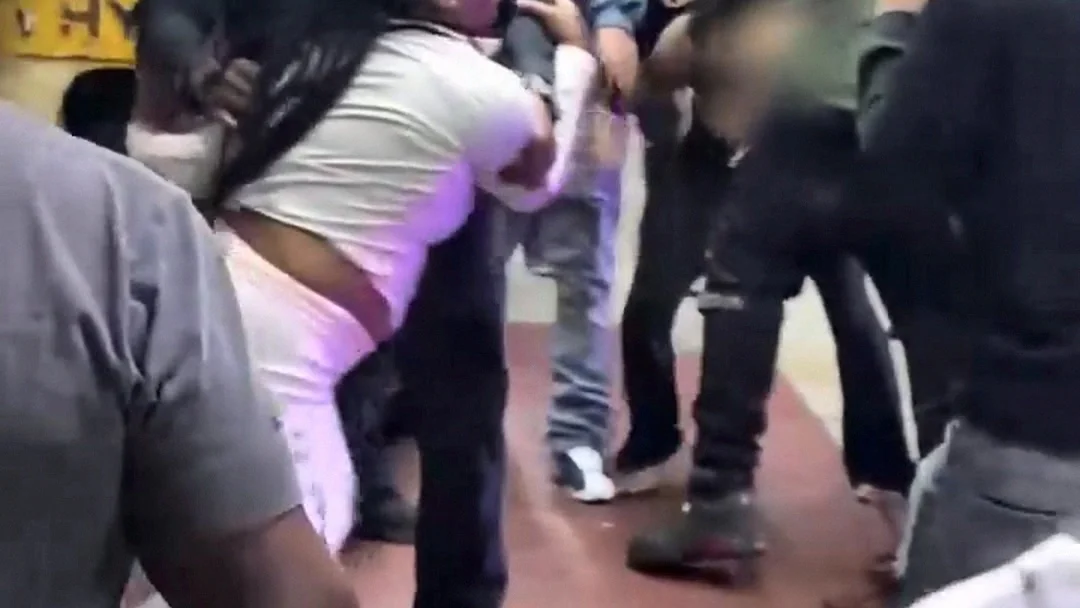
ARLINGTON, Texas — A chaotic daytime altercation outside a commercial storefront in Arlington has prompted renewed scrutiny of private security protocols and public-safety response standards after raw footage captured multiple individuals exchanging blows in plain view of bystanders. The recorded incident, dated November 20, raises immediate questions about the adequacy of on-site guard training, the legal exposure of property managers, and the evidentiary limits of crowd-sourced video in a state with expansive self-defense statutes.
- The confrontation unfolded on a paved walkway fronting a glass-paneled commercial facade, a location where private property interests intersect with public right-of-way obligations.
- Recorded footage shows a rapid escalation from verbal confrontation to physical grappling, with at least two distinct clusters of participants engaged simultaneously.
- A uniformed security officer, identifiable by a light-colored patch on the left shoulder, entered the frame and physically separated individuals during the peak of the disorder.
- No official arrest record, citation log, or municipal detailed incident account has been publicly confirmed, leaving the legal aftermath unresolved and the footage as the primary evidentiary artifact.
What the Recorded Footage Captures: Chronological Breakdown
Frame one establishes the initial geometry of the conflict with forensic clarity. Two individuals are locked in close-quarters grappling against a tall glass panel, their body weight committed forward. A third figure, positioned at the left edge of the frame in a black jacket and blue denim shorts, appears to be driving the momentum of the encounter, leaning heavily into the contact. The camera angle is low and oblique, likely captured from a handheld device held at chest height by a bystander standing several yards away. The framing is unstable, suggesting the operator was moving while recording, and the upper edge of the frame clips the top of the glass panels, compressing the scene into a narrow horizontal band.
By the second observable sequence, the physical confrontation has displaced laterally along the storefront. A woman in white trousers and a light-colored top is visible with her back to the camera, her posture indicating active involvement in the melee rather than passive observation. A male figure in a dark hooded sweatshirt and light denim has entered the scrum, and a second male in a bright blue jacket is positioned near the right edge, arms raised in a gesture that reads as either participation or an attempt at separation. The camera has now shifted to a wider angle, capturing more of the red-brick paving pattern and revealing that the disorder has spread across roughly a dozen feet of the walkway. Shadows cast against the glass indicate daytime lighting, consistent with the recorded date.
The third sequence introduces a new actor and a decisive change in scene dynamics. A uniformed guard with distinctive light-gray hair is visible near a structural pillar, his body oriented toward the group with hands positioned in a manner consistent with crowd-control training. The camera perspective shifts again, now positioned behind several bystanders whose shoulders and heads obscure portions of the lower frame. A woman in a dark top and light trousers is seen extending an arm toward the guard, and the guard's posture suggests he is issuing verbal commands while maintaining a physical buffer between opposing parties. The footage terminates shortly after this intervention, with no clear visual confirmation of a resolution or a handcuffing procedure.
A final segment, captured at a different focal length, shows the guard standing in profile near a glass storefront with a woman in a brown top and pale trousers facing him. The crowd has thinned considerably, and the body language of the remaining individuals is markedly less aggressive. This coda sequence is critical for the evidentiary record, as it demonstrates a de-escalation phase rather than a continued riot, and it suggests the guard's intervention had at least a temporary stabilizing effect.
Corporate Liability and Critical Blind Spots
From a liability standpoint, the most consequential evidentiary gap is the absence of any recorded footage of the inciting incident. The video begins mid-conflict, meaning the chain of provocation, the identities of the original aggressors, and any preceding verbal exchange remain undocumented. For a property owner or a contracted security firm, this is a material exposure: tort claims arising from premises liability often hinge on foreseeability, and without a record of what triggered the confrontation, insurers and defense counsel face a contested factual baseline. Under Texas premises law, a commercial occupier owes a duty of reasonable care to invitees, and that duty can extend to the conduct of third parties when prior similar incidents have occurred on the property.
The second blind spot is chain of custody. The footage appears to be amateur capture, likely originating from a mobile device and subsequently uploaded to a social platform. There is no timestamp overlay, no metadata confirmation in the frame itself, and no identifiable recording device owner. In any civil or criminal proceeding, authentication under evidentiary rules would require testimony from the original recorder, and the absence of that chain of custody substantially weakens the video's probative value if it were introduced as evidence. The date stamp in the original description, November 20, cannot be independently corroborated from the frames themselves.
A third limitation involves the guard's actions. The footage captures the guard's physical intervention but not the verbal commands preceding it, nor the radio traffic or dispatch records that would establish a formal response timeline. For a security contractor, the standard of care typically requires documented incident reporting, use-of-force proportionality, and coordination with municipal law enforcement. None of those documentation elements are visible in the recording, which means the guard's conduct appears professionally appropriate on camera but cannot be fully audited without the corresponding paper trail.
Legal Distinction: Under Texas Penal Code Chapter 9, private citizens and licensed guards may use reasonable force to prevent a breach of the peace, but the justification is bounded by proportionality and necessity. A security officer acting in a proprietary capacity does not possess the arrest authority of a sworn peace officer, and any detention beyond a brief investigative hold risks civil liability for false imprisonment.
Statutory Framework and Protocol Analysis
Texas maintains a layered statutory architecture governing public disorder. Disorderly conduct under Penal Code Section 42.01 covers fighting in a public place, and a Class B misdemeanor charge can attach to each participant independently. Assault under Section 22.01 escalates to a Class A misdemeanor for bodily injury, and the state's self-defense provisions under Section 9.31 require a reasonable belief of imminent harm. A licensed guard operating under Occupations Code Chapter 1702 must satisfy continuing education requirements, including de-escalation and use-of-force modules, and must file an detailed incident account with the employing security company within a defined window.
Municipal code in Arlington further complicates the compliance picture. Commercial properties with certain occupancy classifications are required to maintain security plans, and the presence of a uniformed guard suggests the property was subject to such a requirement. Whether the guard was a proprietary employee or a contracted vendor determines the employer's vicarious liability exposure: under Texas respondeat superior doctrine, an employer can be held liable for an employee's tortious acts committed within the scope of employment, but a contractor arrangement can create an independent-contractor defense that shifts risk to the vendor.
| Incident Parameter | Governing Legal Standard & Judicial Protocol |
|---|---|
| Public fighting conduct | Texas Penal Code § 42.01, disorderly conduct, Class B misdemeanor |
| Physical injury inflicted | Texas Penal Code § 22.01, assault, Class A misdemeanor threshold |
| Guard use of force | Texas Occupations Code Ch. 1702, proportionality and training requirements |
| Detention of participants | Citizen's arrest limits, Tex. Code Crim. Proc. Art. 14.01 |
| Property owner duty | Premises liability, reasonable care to invitees |
| Evidence authentication | Tex. R. Evid. 901, chain of custody for digital media |
| Security incident reporting | Occupations Code § 1702.284, incident log retention |
Compliance protocols at the institutional level are equally relevant. The presence of a single guard in a commercial corridor with foot traffic raises staffing-adequacy questions. A lone officer facing a multi-party melee faces a tactical disadvantage that protocols typically address through radio backup and municipal dispatch coordination. The footage does not show the guard calling for backup, which does not mean he did not, but the absence of visible radio communication in the recorded frame leaves a documentation gap that a diligent review would flag.
Read more: {NOIBO}
Core Questions and Institutional Review
- What was the documented staffing level and radio protocol for the security officer on duty, and did the response comply with the contractor's written post orders?
- Who owns the original recording device, and can the metadata be authenticated to establish an unimpeachable chain of custody?
- Did the property owner have prior notice of recurring disorder at this location, and if so, what security upgrades were contractually required?
- What was the municipal law enforcement response time, and did the guard relinquish scene control at the appropriate jurisdictional handoff point?
The systemic implications extend beyond this single Arlington incident. Commercial corridors across North Texas have seen rising reliance on private security to bridge gaps in municipal patrol coverage, and that shift creates a diffusion of responsibility that is difficult to audit. When a guard intervenes, the property owner inherits a duty-of-care standard; when the guard documents nothing, that duty becomes unverifiable. The footage here shows restraint, discipline, and a stabilizing presence, but the absence of an authenticated record means the public can only evaluate what was captured, not what actually occurred. Until the documented record surfaces, the legal standing of every party involved remains an open file.
Practical Takeaways: Commercial occupiers should verify that contracted guards maintain contemporaneous incident logs; digital footage without metadata authentication carries limited evidentiary weight; and multi-party public disorder events in Texas trigger independent misdemeanor exposure per participant under Chapter 42 provisions.



One comment on “Office Brawl Escalation: Self-Defense or Aggression?”