







WATCH: On-scene video documentation is embedded below →
LISTEN TO THIS ARTICLE
Audio Narration • English (US)
DALLAS, Texas – A widely circulated recording of a physical altercation on a suburban residential lawn has raised significant questions regarding civil liability, the limits of self-defense doctrine, and the evidentiary integrity of viral footage. The incident, captured from multiple spectator angles, documents a violent confrontation between two women following an alleged domestic dispute, drawing scrutiny to how such events are adjudicated and archived in the public record.
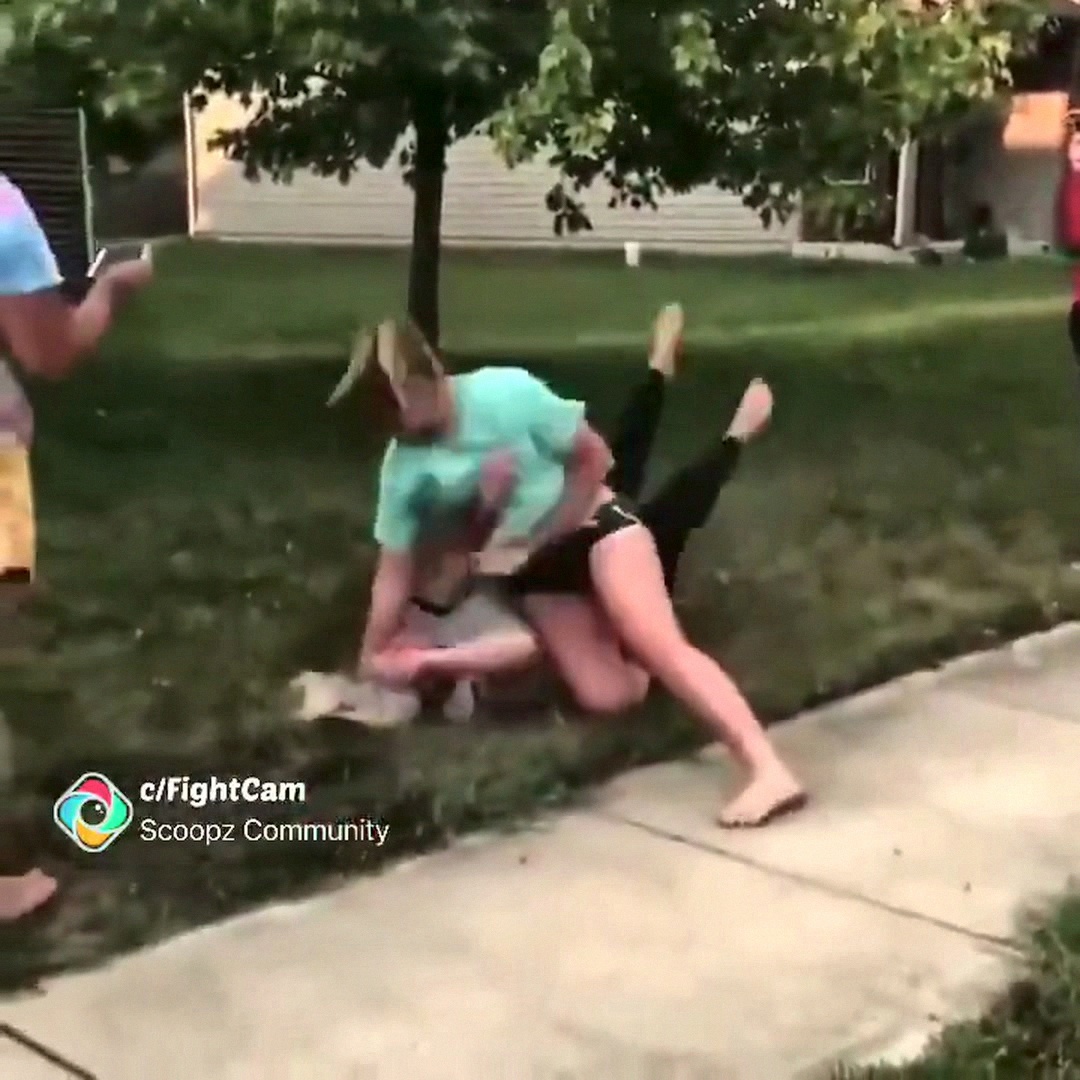
- Jurisdictional Setting: The event unfolds in an open grassy area adjacent to a residential sidewalk and public street, a location that straddles private property and public right-of-way, complicating jurisdictional authority.
- Recorded Escalation: Footage captures a verbal argument rapidly escalating into a physical struggle, with one participant forcibly pinning another to the ground while bystanders observe.
- Bystander Intervention: Multiple individuals are visible recording the event on mobile devices; however, no immediate physical intervention occurs, highlighting the bystander effect in public safety protocols.
- Legal Repercussions: The recording serves as the primary evidentiary artifact for potential charges of assault, battery, or breach of peace, though no official police report or charging document has been verified in public dockets.
What the Recorded Footage Captures: Chronological Breakdown
The evidentiary record opens with an establishing shot of a residential property, featuring a two-story home and a well-maintained lawn. The camera, held at a mid-range angle, captures two female subjects in the foreground. The first subject, wearing a light blue t-shirt and dark shorts, is positioned on the ground, while a second subject in a maroon top and dark leggings stands nearby, recording the scene on a smartphone. The audio track is saturated with aggressive profanity, establishing an immediate context of high emotional distress and verbal confrontation.
As the footage progresses, the physical altercation intensifies. The subject in the blue shirt is seen grappling with the second individual on the grass, attempting to maintain a dominant position. The camera angle shifts slightly, revealing a third individual in a yellow shirt observing from the periphery. The audio captures a command to "get up and hit her," suggesting a degree of encouragement or instigation from the surrounding group. The physical struggle involves close-quarters grappling, with one subject attempting to pin the other, while the second subject attempts to break free or retaliate.
In the subsequent frames, the struggle transitions from a standing confrontation to a ground-level altercation. The subject in the blue shirt is seen on top, applying downward pressure, while the other subject is prone on the grass. The camera captures the chaotic nature of the event, with limbs flailing and clothing becoming disheveled. The audio continues to record hostile verbal exchanges, including explicit orders to leave the premises and permanent separation. The footage concludes with the subjects separating, though the tension remains palpable as the camera lingers on the aftermath.
Corporate Liability and Critical Blind Spots
The evidentiary value of this recording is significantly constrained by the absence of a continuous, unedited timeline. The footage begins in medias res, omitting the initial verbal exchanges or the catalyst that prompted the physical escalation. This gap prevents a definitive determination of who initiated the aggression, a critical factor in both criminal and civil proceedings. Furthermore, the presence of multiple cameras suggests a fragmented chain of custody, where different angles may reveal conflicting narratives.
The recording also suffers from perspective bias. The primary camera operator is a bystander whose framing choices may inadvertently omit key actions, such as the precise moment of physical contact or the presence of a weapon. The audio track, while revealing, is subject to distortion and may not capture the full context of the dialogue. Additionally, the viral nature of the footage introduces a risk of unverified assertions and public bias, which can complicate the legal process and potentially prejudice the outcome of any judicial review.

Statutory Framework and Protocol Analysis
Legal Distinction: Under Texas Penal Code § 22.01, assault constitutes intentionally, knowingly, or recklessly causing bodily injury to another. Mutual combat, where both parties voluntarily engage in a fight, can complicate the determination of the aggressor and the applicability of self-defense claims under § 9.31.
The incident underscores the importance of compliance with public safety protocols. The duty of care owed by property owners and bystanders is a critical legal consideration. While the First Amendment protects the right to record public events, the failure to intervene or contact law enforcement in a timely manner raises questions about civic responsibility. The footage serves as a reminder that digital evidence, while powerful, requires rigorous verification and contextualization to be admissible in a court of law.
Institutional protocols for handling such incidents emphasize the need for immediate law enforcement involvement. The absence of a visible police presence or a clear resolution within the footage leaves the legal outcome ambiguous. The recording may be used to support a civil claim for damages, but the lack of a formal complaint or police report limits its utility in a criminal context.
| Incident Parameter | Governing Legal Standard & Judicial Protocol |
|---|---|
| Physical Contact | Texas Penal Code § 22.01 (Assault) |
| Self-Defense Claim | Texas Penal Code § 9.31 (Self-Defense) |
| Mutual Combat | Texas Penal Code § 22.01 (Aggravated Assault) |
| Bystander Recording | First Amendment / Texas Civil Practice & Remedies Code |
| Property Rights | Texas Property Code § 92.001 (Landlord-Tenant) |
| Public Safety | Texas Code of Criminal Procedure Art. 2.13 (Duties of Officers) |
Read more:
Read more: Austin 6th Street Brawl: Police Action & Liability Review →
Scroll down for the full investigative report below ↓
Core Questions and Institutional Review
- What was the catalyst for the confrontation, and does the unrecorded prior context alter the legal classification of the event?
- How will the fragmented, multi-angle footage be authenticated for use in a court of law, and what chain-of-custody protocols apply?
- What civil liability exists for the property owner or bystanders who recorded the event without intervening?
- How does the viral dissemination of the footage impact the privacy rights and reputations of the individuals involved?
The systemic impact of this incident extends beyond the immediate parties. It highlights the growing tension between the public's right to record and the legal system's need for verified, comprehensive evidence. As digital documentation becomes ubiquitous, the courts must adapt to the challenges of fragmented narratives and public opinion. The resolution of this case, whether through criminal charges or civil settlements, will set a precedent for how similar viral confrontations are adjudicated in the future.
LATEST DEVELOPING INCIDENT
An even more shocking incident just erupted hours ago that has stunned onlookers nationwide. Full investigative breakdown and on-scene evidence documented below.
BREAKING: READ NEXT SHOCKING INCIDENT – LATEST CASE ↓
Reporter Says He Has the $9B File, She Says Get Examined
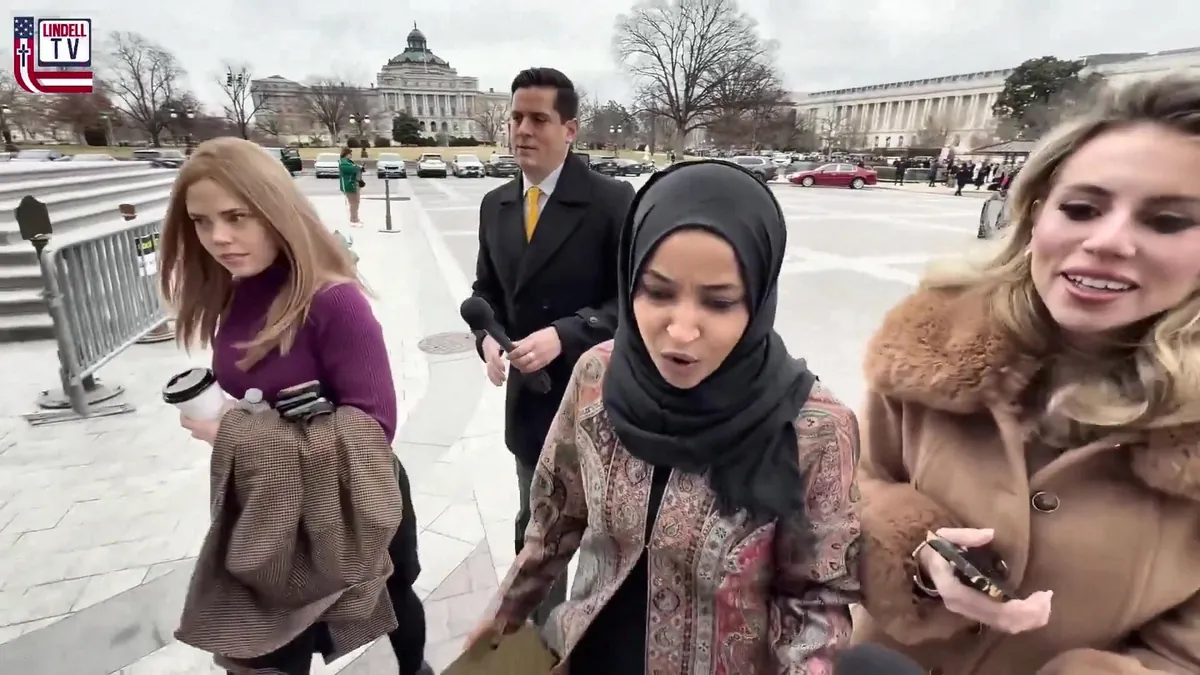
The marble step of the Capitol is cold enough to sting, and the woman in the patterned coat and black headscarf does not stop moving toward the doors. Two reporters flank her, microphones held low, voices overlapping into the winter air. What begins as a question about a nine-figure fraud figure ends with a demand that the questioner's brain be examined – and the cameras never once stop rolling.
- A congressional lawmaker in a patterned coat and hijab crosses a Capitol exterior plaza on an overcast winter day, walking briskly with an aide and two reporters in pursuit.
- A male reporter presses a document – described on camera as evidence of a $9 billion fraud figure tied to a House Oversight hearing – directly into her walking path.
- The lawmaker declines the document, does not break stride, and pivots from the substance of the allegation to a personal counterattack about the reporter's mental state.
- The group moves from open plaza into an ornate interior corridor, where the exchange peaks at a doorway before the lawmaker passes through and the lens finally gives up the chase.
What the Recorded Footage Captures: Chronological Breakdown
The first frames establish the geometry. A wide plaza with a domed classical building behind it, bare winter trees, parked cars along the perimeter. The lawmaker walks fast and slightly ahead, chin level, eyes forward. Beside her an aide in a dark overcoat moves with the body language of a buffer – half-turned, one shoulder angled toward the microphone. The reporter in the tan shearling coat keeps pace on her right. The microphone in her hand is a stiff black lollipop she keeps lifting toward a moving target.
The pressure escalates in the second block of frames. A second reporter – blond hair, purple sweater, a sling of recording gear across her chest – closes from the left, and now the conversation is a two-point trap. The audio is unmistakable. The male reporter references yesterday's exchange: he was told to go read, and he did. Now, he says, he has the material in hand. The document is held up, not waved. That distinction matters. It reads less like a confrontation than a delivery.
Then the pivot. Rather than address the number, the lawmaker halts just long enough to turn her head and deliver a line that resets the entire exchange from substance to insult. The voice on the recording puts it plainly: he needs to get examined, his brain has been fried, it is not okay, she hopes he gets some help. The reporter does not raise his voice in return. He keeps the document aloft and answers with a flat, almost amused calm – offering her the pages, calling her "ma'am." The asymmetry is the story: one participant is escalating volume, the other is escalating precision.
The camera follows them inside. A marble corridor with ribbed columns and hanging pendant lights, footsteps and hallway echo swallowing the voices. The frames here are all backs – the tan coat, the purple sweater, the black scarf, a swinging microphone – and this is where the recording catches the final exchange: a mention of learning centers in her home state, and the retort, from the reporter, that perhaps she should read. A door opens. A pocket of warm interior light. Then the frame holds on a closing door.
Critical Blind Spots: What the Lens Leaves Unresolved
The lens is a follower, not a witness. It never leaves the corridor, and it never enters the rooms where the actual context lives. The most consequential piece of the encounter – the document itself – is never shown in legible detail. Viewers are told what it says, but they never get to read it, count its pages, or verify its provenance. On camera, it is a prop. Off camera, it is either file or bluff, and the footage cannot tell you which.
Equally unresolved is the prelude. The recording opens mid-argument, with a reference to a prior day's exchange that no camera in this clip ever captured. That gap matters because the entire rhetorical posture of the confrontation depends on it – the reporter's framing of a second chance, the lawmaker's evident fatigue, a sense of an ongoing running dispute rather than a single ambush. Without that earlier footage, the escalation rate of this encounter cannot be assessed.
The interior frames hide the most important human signal: the faces. When the group turns into the corridor, the camera is behind everyone, and the viewer loses the micro-expressions – the jaw set, the eye flick, the quarter-second of hesitation – that tell you how much of the anger is performance and how much is defensive reflex. There is also a third presence, a tall man in a dark overcoat framed between the two women in the plaza shots, whose role is entirely unspoken. Is he staff? Security? An unrelated passerby who simply got caught in a walking scrum? The recording never says.
Statutory Framework and Protocol Analysis
At its core, this is an encounter between a public official and members of the press in a public place, which places it squarely under First Amendment press-access doctrine. In practice, U.S. courts have repeatedly protected the right of journalists to ask hard questions in public spaces and to follow a subject who is attempting to walk away – often called a public-figure pursuit. What the law does not protect is physical restraint: blocking a person's path, grabbing an arm, or refusing to let someone pass can cross from protected gathering into interference territory.
On the other side of the ledger, the subject of the questions has no obligation to answer anything. There is no federal statute that compels a sitting lawmaker to engage a reporter in a hallway, on a step, or at a doorway. Declining to comment is itself protected expressive conduct. What the recordings capture is therefore a genuine legal confrontation in miniature: both sides acting within a wide and well-defended perimeter of rights, and the friction arising not from illegality but from colliding civic norms – the norm of press persistence versus the norm of the graceful non-answer.
| Incident Parameter | Observation at the Scene |
|---|---|
| Setting | Exterior Capitol plaza on an overcast winter day, transitioning to an interior marble corridor |
| Media presence | Two reporters, handheld microphones, one carrying a document folder |
| Subject behavior | Continued walking, no physical contact, verbal counterattack only |
| Document status | Presented on camera, contents never shown in legible form |
| Physical contact | None observed in any frame |
| Exchange tone | Escalating personal criticism from the subject; flat, controlled delivery from the reporter |
| Termination | Subject enters a doorway; footage ends on a closing door |
Read more: {NOIBO}
Core Questions and Institutional Review
- What exactly is contained in the document held up on camera, and has any independent outlet verified its pages, authorship, or the figure cited?
- Where did the exchange begin, and what did the previous day's conversation actually consist of before the camera arrived?
- Who is the third figure in the dark overcoat walking between the two women, and what was that person's official role on the grounds that day?
- What is the customary protocol for press pursuit at that doorway, and did anyone from the office intervene afterward to reset the terms of engagement?
There is a version of this story that is entirely about volume, and it is the version that travels fastest – a raised voice, a memorable insult, a forty-second clip engineered for outrage. But watch the frames again and notice what actually happened physically. Two women with microphones followed a walking woman for roughly ninety seconds across an open plaza and into a marble corridor. The walking woman never broke stride. The reporters never touched her. Nobody was detained, nobody was charged, and the only thing that truly escalated was the temperature of the words.
The open question worth carrying out of the corridor is not who lost their temper. It is whether a public figure can ever answer a document with an insult without handing the other side exactly what they came for – and whether, in this case, that was the intention all along.


One comment on “Texas Lawn Altercation: Legal Analysis of Viral Confrontation”