



WATCH: On-scene video documentation is embedded below →
LISTEN TO THIS ARTICLE
Audio Narration • English (US)
LAS VEGAS – A performance by touring comedian Gabriel Iglesias in a major arena venue ended abruptly when the headliner collapsed on stage, forcing an early termination of the show. The incident raises immediate questions regarding venue medical response protocols, promoter liability for refund and rescheduling obligations, and the duty of care owed by entertainment operators to both performing artists and ticket-holding audiences. While the artist later appeared to recover and address the crowd, the recorded aftermath has generated substantial evidentiary gaps that complicate the institutional review.
- The incident occurred during a live ticketed performance in a large-capacity American arena, with the headliner visible on stage under full lighting and house camera coverage.
- Recorded footage captures the performer collapsing mid-performance, prompting an immediate halt to the scheduled program and the evacuation or early exit of the artist from the performance area.
- Venue security and event staff, along with the artist's traveling production crew, are observed managing the immediate scene and audience reaction, though off-camera medical intervention remains unverified.
- The abrupt termination of the show triggers contractual and regulatory questions regarding event cancellation insurance, ticketing refund liability, and public safety disclosure obligations under state venue laws.
What the Recorded Footage Captures: Chronological Breakdown
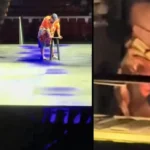
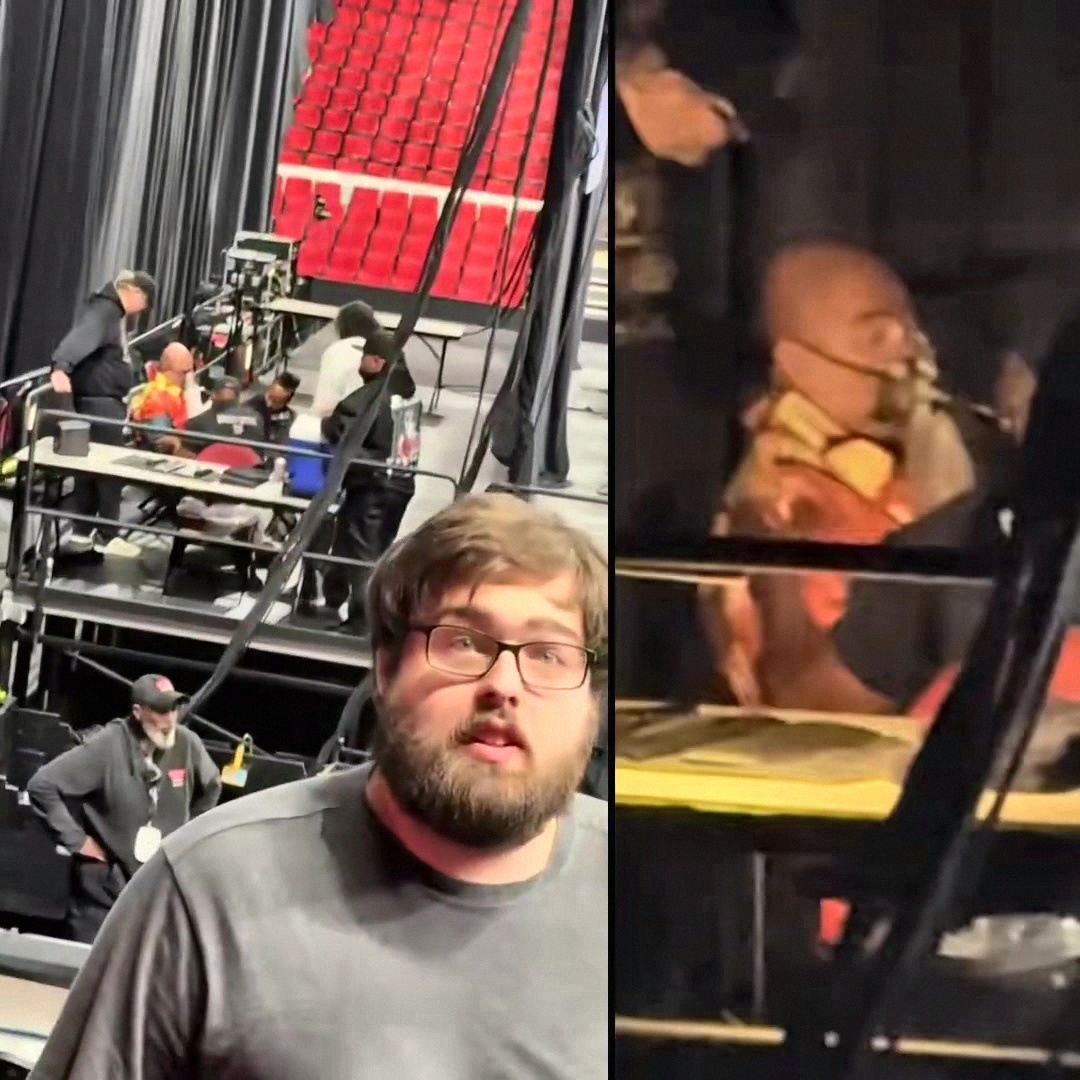
The primary wide-angle camera, positioned from the audience perspective at a significant distance from the stage, shows a solitary figure in a patterned performance shirt under the arena's bright follow spot. In the initial sequence, the performer is standing near a stool and microphone stand, then abruptly bends forward and lowers himself toward the stage floor. The camera does not capture fine facial detail at this range, but the posture change is distinct and sustained, indicating a physical event rather than a scripted comedic beat. The surrounding stage lighting remains unchanged, which suggests no immediate crew-initiated production cue was triggered.
The secondary composition presents a closer, backstage-adjacent angle from a handheld device, capturing an individual in a gray t-shirt and glasses in the foreground, with crew members in dark clothing and lanyards moving behind him. This angle reveals the movement of stagehands and production personnel toward the left side of the frame. The background shows a tiered seating section with red seats and a lighting rig, confirming this is a large-venue production. No uniformed medical personnel with visible equipment are captured entering the frame, a critical evidentiary omission.
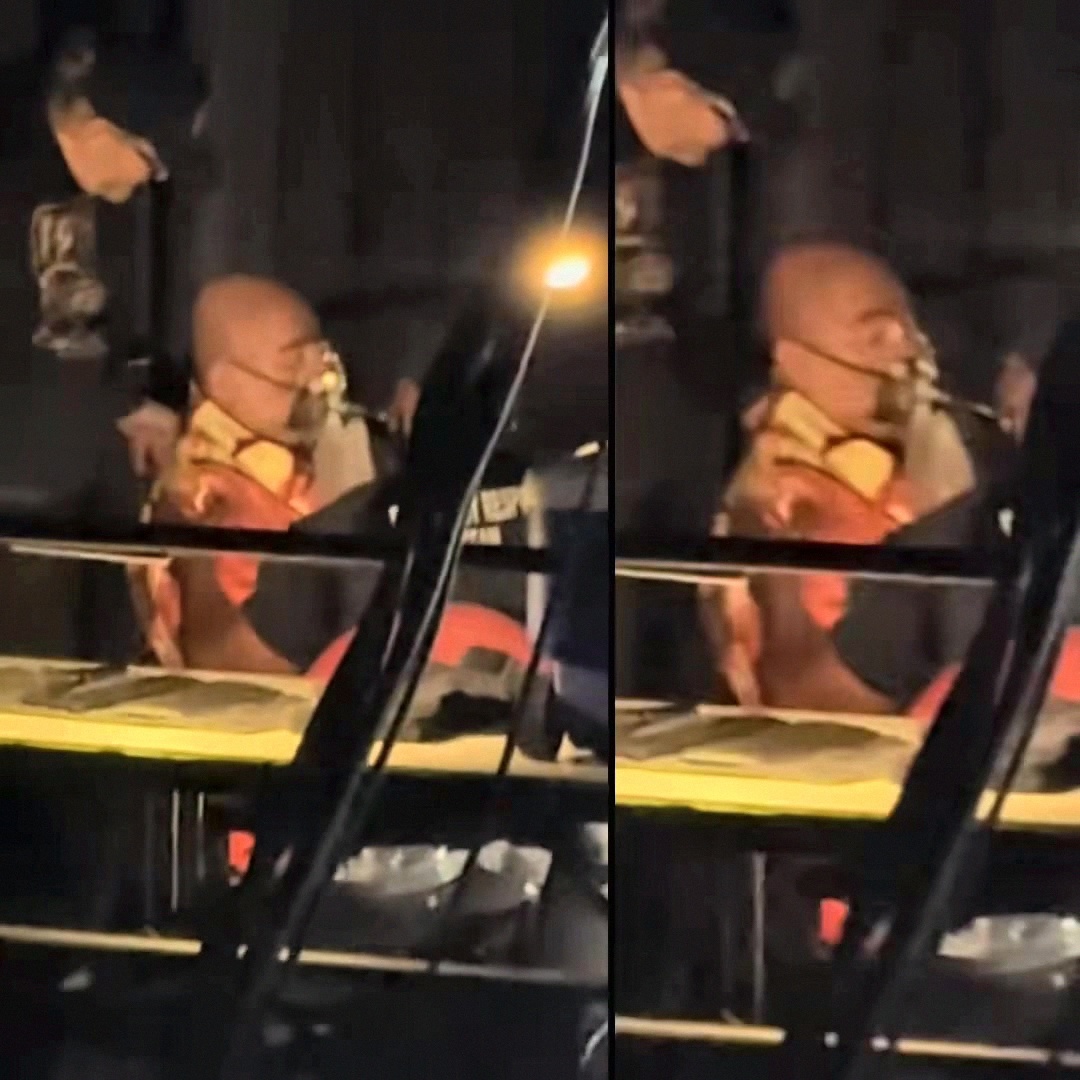
The third and fourth sequences demonstrate rapid camera movement, with the handheld footage becoming blurred and disoriented, consistent with the videographer pivoting or adjusting position in response to the unfolding situation. The final frames return to a relatively stable close-up of the performer, now upright and holding a yellow object near his face. This transition from collapse to apparent recovery is compressed within a very short window of recorded footage, creating ambiguity about the duration of the incapacitation. The audio transcript confirms the performer's voice identifying an audience member, then delivering a message of gratitude and affection before exiting.
Corporate Liability and Critical Blind Spots
A principal blind spot in the evidentiary record is the absence of continuous footage capturing the interval between the collapse and the performer's upright return. The recorded audio includes the words "I love you" and "have a wonderful night," but the timing, duration, and formal medical assessment during the gap remain unrecorded. For a venue operator and touring promoter, that gap is legally significant: it determines whether standard emergency medical protocols were activated, whether the artist was assessed by certified medical personnel, and whether the decision to end the show was made under appropriate authority.
Chain-of-custody concerns also attach to the handheld audience footage. The source clip appears to have been captured by a member of the audience or a backstage pass holder, and its distribution across social platforms precedes any verified authentication. Viral characterizations of the event, including assertions that the audience believed the performer had died, are not directly substantiated by the recorded frames, which show a brief physical event followed by recovery. Corporate communications and legal teams reviewing this material must distinguish between witnessed conduct and amplified social narrative.
Finally, the contractual architecture of live entertainment creates layered liability. Promoters typically hold event cancellation and artist medical clauses; venues carry public assembly safety obligations; and ticketing platforms manage refund and credit obligations under their own terms. None of those instruments are visible in the footage, yet they govern the financial outcome of the abrupt halt far more than the recorded seconds on stage.
Statutory Framework and Protocol Analysis
Legal Distinction: A performer's on-stage medical event is not, by itself, a regulatory violation. The governing inquiry turns on whether the venue operator activated its emergency action plan, whether the artist's employment contract permitted voluntary termination, and whether ticket holders received contractual remedy under the venue's published refund policy.
The relevant compliance framework blends occupational safety standards for the artist as a worker, public assembly codes applicable to the arena, and consumer protection rules governing ticketed events. Venue operators in most American jurisdictions are obligated to maintain accessible medical response capacity proportionate to occupancy, and promoters are obligated to disclose material changes to a scheduled performance. The recorded footage shows production crew movement but does not establish whether the venue's emergency medical technicians were dispatched or whether the artist declined assessment.
From a judicial perspective, a subsequent contract dispute would likely hinge on the distinction between an unforeseen medical event and a foreseeable risk, along with the adequacy of the artist's disclosed health status to insurers. The recorded audio, in which the performer addresses a fan with affection, supports a narrative of voluntary recovery rather than a forced medical removal, which could strengthen a promoter's position that the cancellation was a short-term suspension rather than a total failure of performance.
Scroll down for the full investigative report below ↓
| Incident Parameter | Governing Legal Standard & Judicial Protocol |
|---|---|
| On-stage medical collapse | Venue emergency action plan and public assembly safety code; duty to summon certified medical response |
| Show termination decision | Artist performance contract medical clause; promoter authority to suspend or cancel |
| Audience safety and egress | Arena occupancy code; staff training and incident documentation requirements |
| Ticketing remedy | Consumer protection rules and published refund, credit, or rescheduling policy |
| Recording and distribution | Platform terms of service; state privacy and consent laws for venue recordings |
| Insurance claim | Event cancellation and artist health coverage; notice and proof-of-loss obligations |
| Worker safety | Occupational standards applicable to touring performers and stage crew |
Read more:
Read more: Portland Commercial District: Unprovoked Assault and Premises Liability →
Core Questions and Institutional Review
- Did the venue operator activate its documented emergency medical protocol within the required response window, and is there a contemporaneous incident log?
- What does the artist's performance contract specify regarding mid-show medical events, and was the termination decision made by the promoter or the artist's own management?
- Were ticket holders provided formal notice of the cancellation and a disclosed remedy consistent with the platform's published terms?
- How will the promoter and insurer reconcile the viral narrative of a near-death event with the recorded evidence of a brief collapse followed by a coherent address to the audience?
The systemic impact of this incident extends beyond a single tour date. Live entertainment operators face escalating scrutiny over artist welfare, audience safety, and transparent communication during disruptions. The recorded footage, though fragmentary, provides a useful case study in how quickly an on-stage medical event becomes a financial and reputational matter governed by contracts, insurance, and public safety codes rather than by the performance itself. Institutional review should focus on documentation, disclosure, and the adequacy of medical readiness at large-capacity venues.
Practical Takeaways
- Venue operators should maintain timestamped incident logs for any artist medical event, including response times and personnel involved.
- Promoters should pre-clear communication templates for mid-show suspensions to satisfy consumer disclosure obligations.
- Ticket holders should retain purchase records and monitor official channels for refund or rescheduling notices.
- Legal teams should treat viral audience footage as unverified until authenticated against venue camera systems.
- Artists and management should confirm insurance notice deadlines following any performance-terminating health event.
FOLLOW-UP INVESTIGATION REPORT
Related documented case details, verified on-scene evidence, and statutory liability analysis continued below.
CONTINUE READING: NEXT INVESTIGATIVE DOSSIER →
Portland Commercial District: Unprovoked Assault and Premises Liability
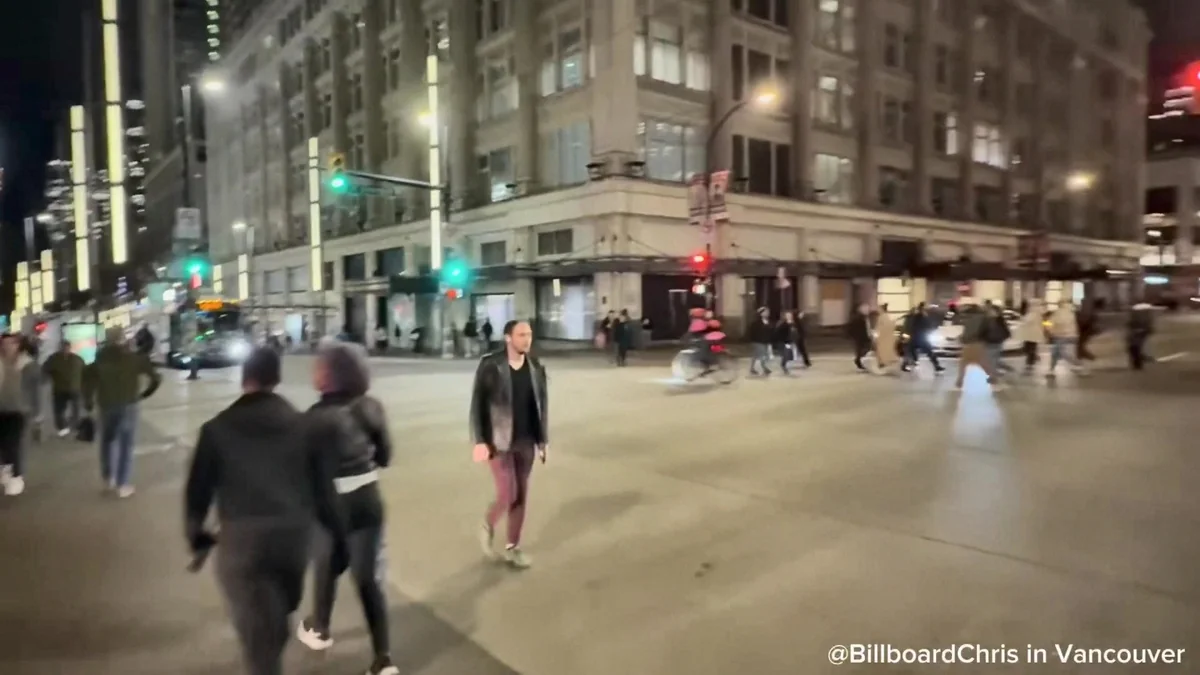
PORTLAND, Ore. – A recorded, unprovoked physical assault inside a busy downtown commercial corridor has escalated into a broader examination of public safety protocols and premises liability after a passerby deliberately spat on his hand and rubbed it across a pedestrian's head. The incident, captured on a moving body-worn perspective camera, raises immediate questions about the duty of care owed by commercial property operators to visitors and the adequacy of security surveillance in open plazas.
The recorded exchange shows a man walking through a well-lit urban environment near a food court, engaging in conversation, when the sudden physical violation occurs. The victim's audible distress and immediate demand to find a restroom to wash his head underscore the visceral nature of the encounter and the potential health hazards associated with bodily fluid exposure in public settings. The absence of the perpetrator's face on camera has further complicated any potential identification or legal recourse, highlighting a critical evidentiary gap in public safety infrastructure.
- The recorded event takes place in a downtown Portland commercial zone, specifically near a food court and public transit corridor, an area subject to high foot traffic and varying levels of private security oversight.
- The assailant, described by the victim in the recording as an individual lacking decorum, initiated an unprovoked physical assault by spitting on his own hand and transferring the saliva to the victim's head.
- The victim immediately vocalized the assault, expressing the need to wash his head and seeking a restroom facility, while the surrounding crowd offered verbal sympathy but no apparent intervention or detention of the assailant.
- Legal and regulatory repercussions remain pending, as the victim explicitly notes in the recording that the assailant's face was not captured by his camera, creating a substantial barrier to criminal identification and civil liability claims.
What the Recorded Footage Captures: Chronological Breakdown
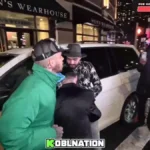
The video begins with a first-person perspective moving through a busy urban intersection at night. The operator of the camera, identified by the watermark as Billboard Chris, is walking across a wide street with other pedestrians. The camera angle is low and forward-facing, capturing the movement of the crowd and the ambient noise of the city. The initial frames show the subject navigating a crosswalk and then moving toward a commercial building with large glass windows and exterior lighting. The atmosphere appears casual, with pedestrians moving in various directions, and the subject is heard engaging in a brief, friendly exchange with someone off-camera, mentioning a recent trip to New York and Oregon.
The interaction shifts abruptly at the mid-point of the footage. The camera momentarily captures a blurred motion near the subject's head, followed by the subject's verbal exclamation: "That person spat all over their hand and then just rubbed it on my head." The camera pans erratically, likely reacting to the physical contact, and the subject's voice becomes agitated. The footage shows the subject turning, but the frame is dominated by a close-up of a person's shoulder and the side of their head, failing to capture the assailant's facial features. The background reveals the entrance to a food court and a transit vehicle, confirming the commercial and highly public nature of the location.
The subsequent frames show the subject walking rapidly toward the food court area, stating, "I gotta go wash my head." The camera angle remains low, capturing the pavement and the lower halves of other pedestrians, while the subject's commentary reflects a mix of disgust and resignation. The audio captures the subject explaining the event to a bystander, who responds with sympathy and agreement that the behavior is unacceptable. The subject repeatedly expresses frustration over the lack of facial identification, stating, "Too bad I don't have the person's face on camera," which serves as a crucial evidentiary limitation for any potential police report or subsequent legal action.
The final segment of the footage shows the subject moving through an indoor or covered walkway, likely seeking the restroom facilities. The camera captures the transition from the outdoor street environment to an interior commercial space, with glass doors and building signage visible. The subject's dialogue continues, reflecting on the broader societal implications of the encounter, referencing the lack of decorum and the willingness of individuals to resort to physical assault over ideological disagreements. The footage concludes with the subject near a restroom entrance, ending abruptly without capturing the aftermath or any official response.
Corporate Liability and Critical Blind Spots
The incident raises significant questions regarding the premises liability of the commercial property owners and the operational protocols of the security personnel in the area. Under general liability principles, commercial property operators have a duty to exercise reasonable care to protect invitees from foreseeable harm. However, the unprovoked, spontaneous nature of a saliva-based assault presents a complex challenge for prevention. The critical blind spot exposed by this footage is the absence of adequate surveillance and rapid response capabilities in an area that appears to be a major public hub. The victim's inability to identify the assailant on camera suggests that the available security infrastructure was either not positioned to capture the incident or was not actively monitored in real time.
Furthermore, the chain of custody for any physical evidence (such as the saliva) is virtually nonexistent, as the victim immediately sought to wash the area. The viral nature of the video itself becomes a double-edged sword: while it provides a chronological record of the event, the perspective angle and the lack of a clear facial shot undermine its probative value in a court of law. The recording captures the immediate distress and the sanitation concern, but it fails to establish the identity of the perpetrator, leaving the incident in a legal gray area where civil action is difficult without a named defendant.
Statutory Framework and Protocol Analysis
Legal Distinction: The incident potentially falls under state assault and battery statutes, where the intentional application of force (spitting) constitutes battery. However, the evidentiary threshold for prosecution requires identification, which is absent. Concurrently, the victim may have a civil claim for battery and intentional infliction of emotional distress against an unidentified party, which is practically unenforceable without the perpetrator's identity. The commercial property owner may face a negligence claim if it can be shown that the premises lacked adequate security or lighting, but the spontaneous nature of the act likely absolves the operator of direct liability.
| Incident Parameter | Governing Legal Standard & Judicial Protocol |
|---|---|
| Intentional physical contact | State assault and battery statutes; intentional tort liability |
| Bodily fluid exposure | Public health ordinances; potential for health code violations |
| Identification of assailant | Law enforcement identification protocols; evidentiary standards |
| Premises security | Commercial property duty of care; negligence standards |
| Surveillance footage | Chain of custody; evidence authentication requirements |
| Victim's immediate response | Mitigation of damages; self-help remedies in public spaces |
Compliance protocols for commercial operators in public transit corridors typically require a visible security presence and functional camera systems. However, the focus is often on property crimes rather than spontaneous interpersonal violence. The incident highlights a gap in the duty of care regarding the protection of individuals from unprovoked assaults by other patrons. The institutional duty of care extends to providing a safe environment, but the standard is generally one of reasonableness, not absolute guarantee. The rapid and seemingly random nature of the assault makes it a challenging scenario for any security protocol, as it lacks the precursor indicators typically associated with planned criminal activity.
Read more: {NOIBO}
Core Questions and Institutional Review
- What specific security and surveillance gaps allowed an unprovoked assault to occur in a busy commercial food court without immediate intervention or identification of the perpetrator?
- How do current public safety protocols address the risk of biological assaults in high-traffic commercial zones, and are existing health and safety codes adequate for this type of incident?
- What are the legal pathways for the victim to seek redress when the assailant's identity is not captured on camera, and does this case set a precedent for evidentiary requirements in public spaces?
- Should commercial property operators be required to implement more robust, real-time monitoring systems to deter spontaneous acts of violence and ensure the safety of all visitors?
The systemic impact of this incident lies in its exposure of the fragility of public order and the limitations of personal safety in shared commercial environments. The victim's immediate reaction to seek sanitation highlights the visceral, health-related consequences of such an assault, which extend beyond mere physical harm. As urban centers continue to grapple with issues of public conduct and safety, this recorded event serves as a critical data point for policymakers and property managers. The inability to hold an individual accountable due to a lack of visual identification underscores the necessity for improved public security infrastructure and a re-evaluation of how evidence is gathered and preserved in the modern age of viral recording. The incident is a stark reminder that in the chaos of a crowded public space, the line between safety and vulnerability is often defined by a single, unrecorded face.
Practical Takeaways
- Premises Liability: Commercial operators should review surveillance coverage in high-traffic zones to ensure potential blind spots are addressed, particularly around food courts and transit corridors.
- Evidentiary Awareness: Individuals recording in public should be aware that their camera angle may not capture the perpetrator's face; situational awareness of surroundings during a confrontation is critical for later identification.
- Public Health Protocol: Victims of bodily fluid assaults should seek immediate medical advice and sanitation, as the incident raises potential health concerns that go beyond the legal process.
- Legal Recourse: Without an identified assailant, civil and criminal remedies are severely limited; prompt reporting to law enforcement helps in building a broader case even if the individual is not immediately caught.