





WATCH: On-scene video documentation is embedded below →
LISTEN TO THIS ARTICLE
Audio Narration • English (US)
NEW YORK – A nighttime confrontation outside a Midtown Manhattan retail corridor escalated into a physical citizen's arrest, raising immediate questions about the boundaries of private detention, the evidentiary value of vigilante footage, and the institutional liability of livestreamed sting operations. The recorded encounter, captured by a self-identified predator-catching group and broadcast under the KOBLNATION banner, documents the attempted departure of a bearded man in traditional Hasidic attire who was allegedly meeting a 14-year-old boy for sexual purposes. The incident sits at the volatile intersection of public safety protocol, religious institutional oversight, and the financial exposure of platforms that monetize confrontation content.
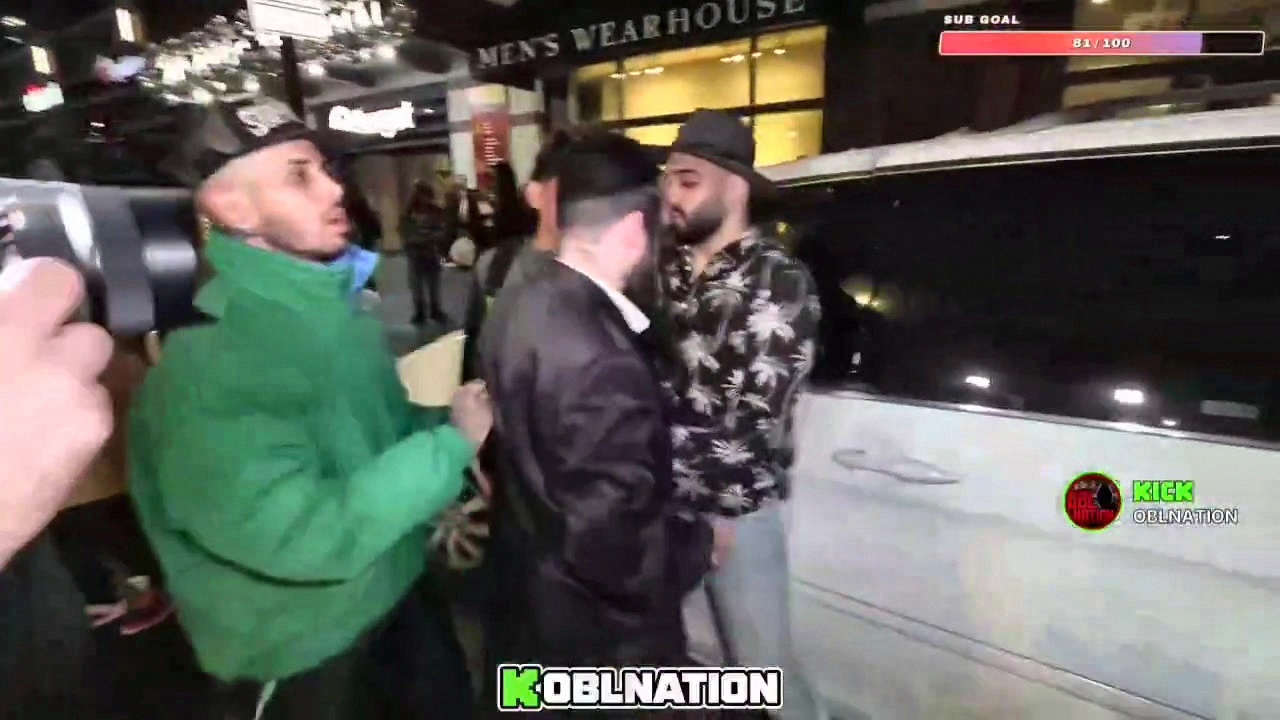
- Jurisdictional Setting: A public sidewalk adjacent to a Men's Wearhouse storefront in a dense, well-lit Manhattan commercial district, with multiple civilian camerapersons, passersby, and a production-style microphone visible. The geographic and commercial context places the event under New York State jurisdiction, where citizen's arrest statutes carry strict temporal and force limitations.
- Recorded Escalation: A group of men surround a bearded individual in a black coat and hat, blocking his path to a white minivan. Verbal commands to stop and the repeated declaration "It's a citizen's arrest now" establish the group's asserted legal authority, while the subject physically pushes back and attempts to enter the vehicle.
- Intervention: No uniformed law enforcement or bailiff intervention is visible in the recorded frames; the group repeatedly states, "We're waiting on the police," indicating that formal custody had not yet been transferred to municipal authorities during the captured interval.
- Legal and Regulatory Repercussions: The subject's recorded statements – including an admission that he "didn't learn" from a prior incident and an assertion that he would continue the conduct "every day" – create a complex evidentiary record that must be weighed against chain-of-custody concerns, the provenance of the sting, and the potential civil liability of the civilian detainers.
What the Recorded Footage Captures: Chronological Breakdown
From the opening frames, the camera is positioned at close range, roughly chest-height, capturing a tight cluster of bodies against the reflective glass of a storefront and the polished side panel of a white minivan. The primary subject – a bearded man wearing a black hat and long black coat – stands with his back partially to the vehicle, surrounded by three to four men. One man in a bright green jacket dominates the left foreground, his body angled to cut off the subject's lateral escape route. Another man in a floral-patterned shirt stands to the right, reinforcing the physical cordon. A production-style microphone with a foam windscreen intrudes into the right edge of the frame, confirming that the encounter is being recorded for publication rather than merely documented for police.
The first phase of the encounter is characterized by verbal commands. A voice off-camera repeats, "It's a citizen's arrest now," three times in rapid succession, functioning as both a verbal assertion of authority and a warning to the subject. The phrase "You can't get in there" is directed at the subject as he reaches toward the minivan's door handle. The group's physical posture – shoulders squared, hands raised at chest level – transitions from passive blocking to active restraint as the subject attempts to push through. The audio captures the subject's resistance through a series of sharp, overlapping exclamations: "Hey! Hey! Hey! Yo, stop it. Stop, stop, stop." The subject's body language shifts from verbal protest to physical lunging, and the group responds by closing the gap, pinning him against the vehicle's exterior.
A distinct verbal exchange emerges in the middle of the confrontation. The subject, his voice rising, states, "I know where you live," a statement that introduces an implicit threat into the recorded record. Almost simultaneously, he says, "I wanna die," a declaration that complicates the assessment of his mental state and raises duty-of-care obligations for the civilians holding him. The group repeatedly urges him to "relax" and warns, "You're doing too hard," while maintaining that they are "waiting on the police." The camera pans slightly, revealing a second cameraman and several bystanders, including a man in a dark jacket holding a phone, confirming that the event is being documented from multiple angles.
The final phase of the recorded footage centers on a direct interrogation. A voice asks, "Why? You didn't learn from this the first time?" The subject responds, "I didn't learn." Pressed further – "What happened? Why are you here?" – the subject offers a fragmented explanation involving a knee, which the interviewer challenges: "A what?" The exchange is disjointed, but the recorded admission that he did not learn from a prior encounter, combined with his earlier statement that he would be present "every day," constitutes the evidentiary core of the footage. The video ends with the group still holding the subject against the minivan, the police not yet visible on camera, and the subject's responses growing more incoherent.
Corporate Liability and Critical Blind Spots
The recorded footage presents a textbook case of evidentiary limitation. The encounter begins mid-confrontation, with no footage of the alleged prior communications, the arrangement of the meeting, or the identity and age of the purported minor. The viewer is asked to accept the group's framing – that the subject arrived to meet a 14-year-old boy – without any on-camera corroboration of the underlying solicitation. This gap is legally significant: in any subsequent prosecution, the provenance of the sting, the authenticity of the messaging logs, and the chain of custody for the recording would be subject to rigorous challenge by defense counsel. The unedited audio is powerful but incomplete.
The second blind spot concerns the physical restraint itself. New York law permits a private person to arrest another for a crime committed in his presence, but the detainers must act within strict temporal limits and must use only reasonable force. The footage captures the subject being pinned against a vehicle, but it does not capture the moments immediately before or after, including whether the subject was searched, whether his phone was seized, or whether he was informed of the reason for the detention. The group's repeated assertion of a citizen's arrest does not itself establish legal authority; a court would need to determine whether the underlying offense was actually committed in the detainers' presence.
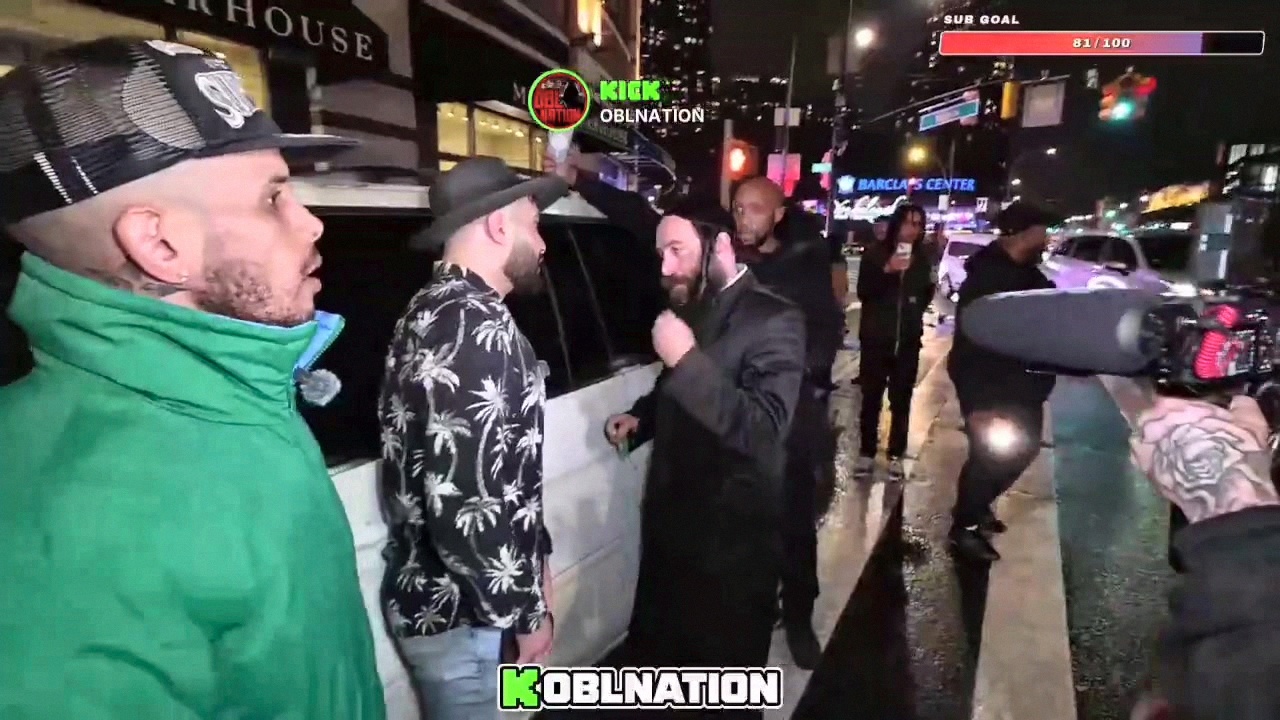
The third blind spot is the commercial dimension. The footage is branded with a livestreaming platform's overlay and a donation goal meter, indicating that the confrontation is monetized in real time. This raises questions about the financial incentives driving the operation and the potential for civil liability if the detention is later found to be unlawful. The subject's statement "I know where you live" introduces a safety concern for the detainers, but it also raises the possibility of counterclaims for emotional distress, defamation, or false imprisonment. The absence of uniformed officers during the captured interval means that the group assumed the risks and responsibilities of custody without the protections of municipal indemnification.
Statutory Framework and Protocol Analysis
Legal Distinction: A citizen's arrest in New York is governed by Criminal Procedure Law Section 140.30, which permits a private person to arrest another for a crime committed in his presence. The statute does not authorize detention based on suspicion alone, and the use of force must be proportional to the threat. Separately, the subject's recorded statements may be admissible as party admissions, but their evidentiary weight depends on the voluntariness of the interrogation and the absence of coercion.
New York's statutory framework creates a narrow window for civilian detention. The detainers must be able to articulate the specific offense committed in their presence, and they must transfer custody to a police officer without unreasonable delay. The footage shows the group repeatedly stating that they are waiting for police, which supports a claim of timely transfer, but the interrogation that occurs during the wait – including questions about prior conduct – may exceed the scope of a lawful detention. The subject's responses, particularly his admission that he "didn't learn," were elicited by civilian questioners, not by law enforcement, which raises voluntariness concerns under the Fifth Amendment.
The institutional dimension extends beyond the street. The subject's religious attire places the incident within the oversight framework of communal religious institutions, which maintain internal codes of conduct and reporting obligations. The footage does not show any representative of such an institution present, but the reputational and regulatory consequences for the affiliated community are substantial. The recorded admission of prior conduct triggers mandatory reporting considerations under state child protection statutes, and the failure to report suspected abuse can itself be a criminal offense for mandated reporters.
Scroll down for the full investigative report below ↓
| Incident Parameter | Governing Legal Standard & Judicial Protocol |
|---|---|
| Citizen's arrest authority | N.Y. Crim. Proc. Law § 140.30: private arrest only for crime committed in presence |
| Use of force during detention | Proportional force permitted; excessive restraint may constitute assault |
| Transfer to law enforcement | Custody must be delivered to police without unreasonable delay |
| Admissibility of statements | Party admissions admissible if voluntary; coercion may suppress |
| Mandatory reporting | N.Y. Soc. Serv. Law § 413: suspected child abuse must be reported |
| Livestream monetization | Platform terms and state fraud statutes govern solicitation of donations |
| False imprisonment exposure | Civil liability for unlawful detention without legal justification |
Read more:
Read more: San Antonio Hell’s Gate Fatal incident Retrial Hinges on Uncle’s Testimony →
Core Questions and Institutional Review
- Did the detainers possess sufficient probable cause to justify a citizen's arrest under New York law, or did the detention exceed the statutory scope of a presence-based offense?
- What was the provenance of the underlying sting, and can the messaging records and the purported minor's identity be authenticated for use in a criminal proceeding?
- Did the civilians' interrogation of the subject during the detention compromise the voluntariness of his statements, and what are the implications for admissibility?
- What reporting obligations were triggered by the subject's recorded admission of prior conduct, and were those obligations fulfilled by any affiliated institution?
The systemic impact of this incident extends beyond the individual case. Livestreamed sting operations have become a fixture of urban public safety discourse, generating substantial engagement and revenue while operating in a legal gray zone. The footage captures a moment of genuine public concern – a man in religious attire allegedly seeking a minor – but it also captures the absence of formal protocol, the pressure of real-time monetization, and the fragility of civilian-led detention. The recorded admission that the subject "didn't learn" from a prior incident will be the central evidentiary question for prosecutors, but the more consequential question is institutional: whether the platforms, communities, and legal systems that surround these operations are equipped to handle the fallout when the cameras stop recording.
Practical Takeaways
- Civilian detentions require a clearly articulated, presence-based offense and timely transfer to police custody.
- Recorded admissions made during civilian questioning are vulnerable to voluntariness challenges and should be evaluated by counsel before publication.
- Livestreamed confrontation content carries financial and civil liability exposure that extends beyond the individual detainers.
- Mandatory reporting obligations for suspected child abuse apply regardless of the manner in which the evidence is obtained.
FOLLOW-UP INVESTIGATION REPORT
Related documented case details, verified on-scene evidence, and statutory liability analysis continued below.
CONTINUE READING: NEXT INVESTIGATIVE DOSSIER →
Gabriel Iglesias Stage Collapse: Venue Liability Review
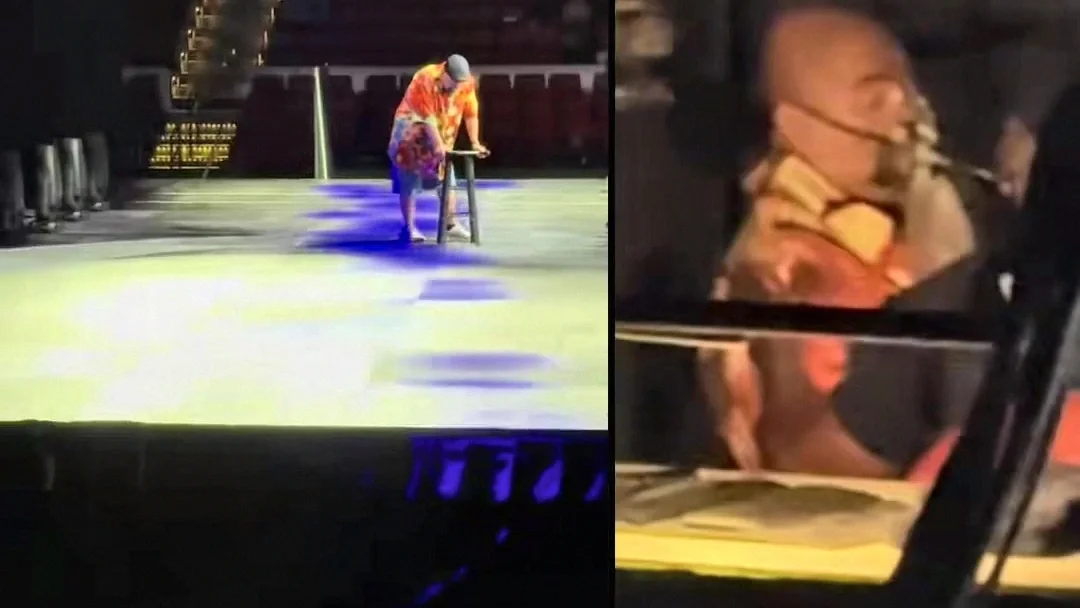
LAS VEGAS – A performance by touring comedian Gabriel Iglesias in a major arena venue ended abruptly when the headliner collapsed on stage, forcing an early termination of the show. The incident raises immediate questions regarding venue medical response protocols, promoter liability for refund and rescheduling obligations, and the duty of care owed by entertainment operators to both performing artists and ticket-holding audiences. While the artist later appeared to recover and address the crowd, the recorded aftermath has generated substantial evidentiary gaps that complicate the institutional review.
- The incident occurred during a live ticketed performance in a large-capacity American arena, with the headliner visible on stage under full lighting and house camera coverage.
- Recorded footage captures the performer collapsing mid-performance, prompting an immediate halt to the scheduled program and the evacuation or early exit of the artist from the performance area.
- Venue security and event staff, along with the artist's traveling production crew, are observed managing the immediate scene and audience reaction, though off-camera medical intervention remains unverified.
- The abrupt termination of the show triggers contractual and regulatory questions regarding event cancellation insurance, ticketing refund liability, and public safety disclosure obligations under state venue laws.
What the Recorded Footage Captures: Chronological Breakdown
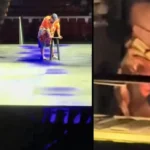
The primary wide-angle camera, positioned from the audience perspective at a significant distance from the stage, shows a solitary figure in a patterned performance shirt under the arena's bright follow spot. In the initial sequence, the performer is standing near a stool and microphone stand, then abruptly bends forward and lowers himself toward the stage floor. The camera does not capture fine facial detail at this range, but the posture change is distinct and sustained, indicating a physical event rather than a scripted comedic beat. The surrounding stage lighting remains unchanged, which suggests no immediate crew-initiated production cue was triggered.
The secondary composition presents a closer, backstage-adjacent angle from a handheld device, capturing an individual in a gray t-shirt and glasses in the foreground, with crew members in dark clothing and lanyards moving behind him. This angle reveals the movement of stagehands and production personnel toward the left side of the frame. The background shows a tiered seating section with red seats and a lighting rig, confirming this is a large-venue production. No uniformed medical personnel with visible equipment are captured entering the frame, a critical evidentiary omission.
The third and fourth sequences demonstrate rapid camera movement, with the handheld footage becoming blurred and disoriented, consistent with the videographer pivoting or adjusting position in response to the unfolding situation. The final frames return to a relatively stable close-up of the performer, now upright and holding a yellow object near his face. This transition from collapse to apparent recovery is compressed within a very short window of recorded footage, creating ambiguity about the duration of the incapacitation. The audio transcript confirms the performer's voice identifying an audience member, then delivering a message of gratitude and affection before exiting.
Corporate Liability and Critical Blind Spots
A principal blind spot in the evidentiary record is the absence of continuous footage capturing the interval between the collapse and the performer's upright return. The recorded audio includes the words "I love you" and "have a wonderful night," but the timing, duration, and formal medical assessment during the gap remain unrecorded. For a venue operator and touring promoter, that gap is legally significant: it determines whether standard emergency medical protocols were activated, whether the artist was assessed by certified medical personnel, and whether the decision to end the show was made under appropriate authority.
Chain-of-custody concerns also attach to the handheld audience footage. The source clip appears to have been captured by a member of the audience or a backstage pass holder, and its distribution across social platforms precedes any verified authentication. Viral characterizations of the event, including assertions that the audience believed the performer had died, are not directly substantiated by the recorded frames, which show a brief physical event followed by recovery. Corporate communications and legal teams reviewing this material must distinguish between witnessed conduct and amplified social narrative.
Finally, the contractual architecture of live entertainment creates layered liability. Promoters typically hold event cancellation and artist medical clauses; venues carry public assembly safety obligations; and ticketing platforms manage refund and credit obligations under their own terms. None of those instruments are visible in the footage, yet they govern the financial outcome of the abrupt halt far more than the recorded seconds on stage.
Statutory Framework and Protocol Analysis
Legal Distinction: A performer's on-stage medical event is not, by itself, a regulatory violation. The governing inquiry turns on whether the venue operator activated its emergency action plan, whether the artist's employment contract permitted voluntary termination, and whether ticket holders received contractual remedy under the venue's published refund policy.
The relevant compliance framework blends occupational safety standards for the artist as a worker, public assembly codes applicable to the arena, and consumer protection rules governing ticketed events. Venue operators in most American jurisdictions are obligated to maintain accessible medical response capacity proportionate to occupancy, and promoters are obligated to disclose material changes to a scheduled performance. The recorded footage shows production crew movement but does not establish whether the venue's emergency medical technicians were dispatched or whether the artist declined assessment.
From a judicial perspective, a subsequent contract dispute would likely hinge on the distinction between an unforeseen medical event and a foreseeable risk, along with the adequacy of the artist's disclosed health status to insurers. The recorded audio, in which the performer addresses a fan with affection, supports a narrative of voluntary recovery rather than a forced medical removal, which could strengthen a promoter's position that the cancellation was a short-term suspension rather than a total failure of performance.
| Incident Parameter | Governing Legal Standard & Judicial Protocol |
|---|---|
| On-stage medical collapse | Venue emergency action plan and public assembly safety code; duty to summon certified medical response |
| Show termination decision | Artist performance contract medical clause; promoter authority to suspend or cancel |
| Audience safety and egress | Arena occupancy code; staff training and incident documentation requirements |
| Ticketing remedy | Consumer protection rules and published refund, credit, or rescheduling policy |
| Recording and distribution | Platform terms of service; state privacy and consent laws for venue recordings |
| Insurance claim | Event cancellation and artist health coverage; notice and proof-of-loss obligations |
| Worker safety | Occupational standards applicable to touring performers and stage crew |
Core Questions and Institutional Review
- Did the venue operator activate its documented emergency medical protocol within the required response window, and is there a contemporaneous incident log?
- What does the artist's performance contract specify regarding mid-show medical events, and was the termination decision made by the promoter or the artist's own management?
- Were ticket holders provided formal notice of the cancellation and a disclosed remedy consistent with the platform's published terms?
- How will the promoter and insurer reconcile the viral narrative of a near-death event with the recorded evidence of a brief collapse followed by a coherent address to the audience?
The systemic impact of this incident extends beyond a single tour date. Live entertainment operators face escalating scrutiny over artist welfare, audience safety, and transparent communication during disruptions. The recorded footage, though fragmentary, provides a useful case study in how quickly an on-stage medical event becomes a financial and reputational matter governed by contracts, insurance, and public safety codes rather than by the performance itself. Institutional review should focus on documentation, disclosure, and the adequacy of medical readiness at large-capacity venues.
Practical Takeaways
- Venue operators should maintain timestamped incident logs for any artist medical event, including response times and personnel involved.
- Promoters should pre-clear communication templates for mid-show suspensions to satisfy consumer disclosure obligations.
- Ticket holders should retain purchase records and monitor official channels for refund or rescheduling notices.
- Legal teams should treat viral audience footage as unverified until authenticated against venue camera systems.
- Artists and management should confirm insurance notice deadlines following any performance-terminating health event.




One comment on “New York Citizen’s Arrest: Religious Figure Detained in Sting”