A California mother, driven by an hour of frantic waiting, took matters into her own hands when she smashed a school bus window and climbed inside to reach her child. The chaotic scene, captured on a phone camera from within the bus, shows the raw collision between a parent's desperation and a school transportation system apparently stalled. What unfolds next is a tense, uncomfortable drama that ends with an arrest and a community demanding answers.
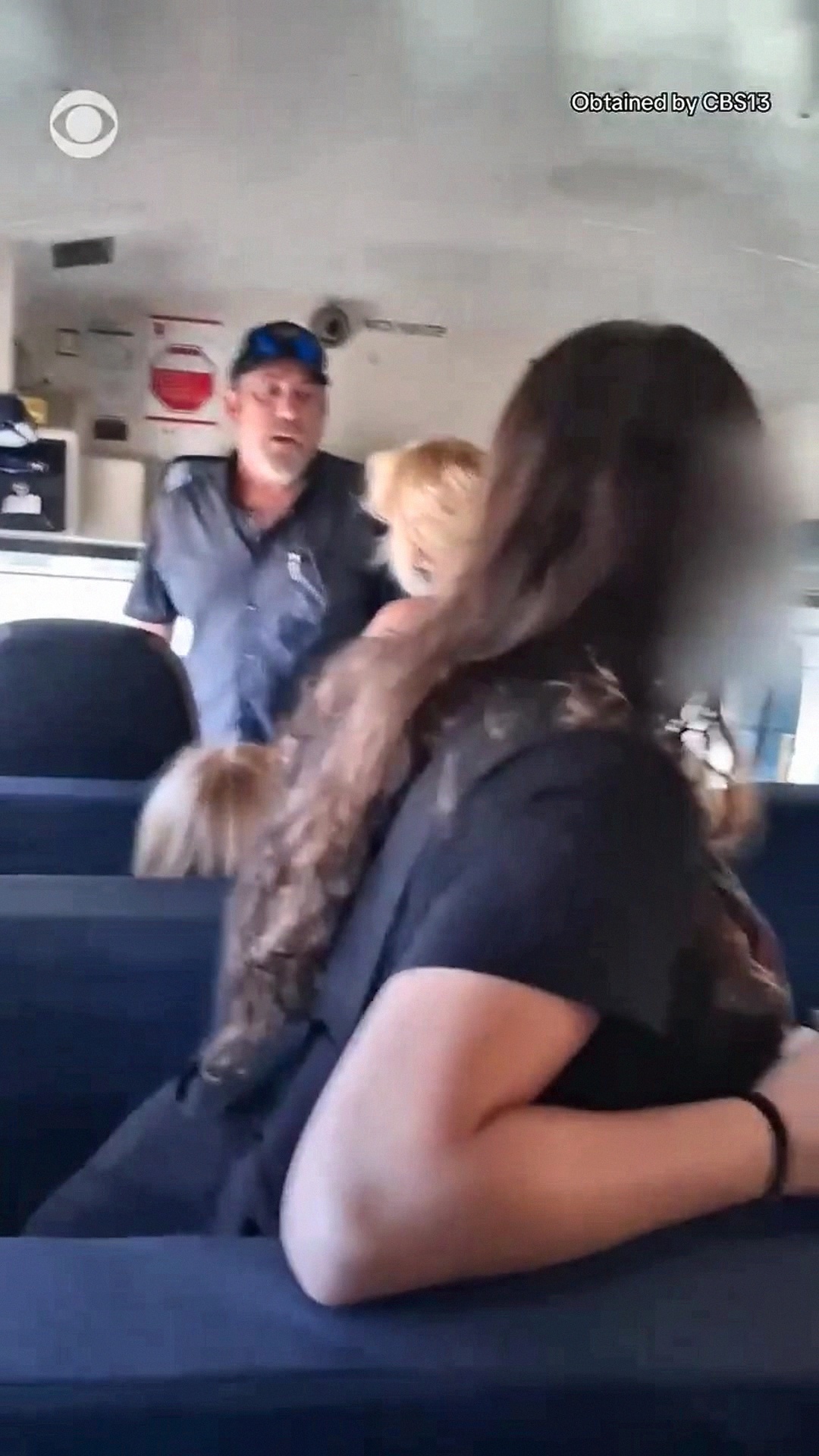
- A frustrated mother shattered the glass of a school bus window in California, using the opening to physically climb into the vehicle.
- The incident reportedly occurred after students had been stuck on the bus for approximately one hour, with parents left waiting outside.
- Video footage from inside the bus shows the woman moving through the aisle as an adult male, likely the driver, stands near the front.
- The mother was arrested at the scene by responding law enforcement, turning a rescue attempt into a criminal charge.
What the Recorded Footage Captures: Chronological Breakdown
The footage begins in the confined, shadowed interior of the bus, with the camera positioned behind a row of dark blue seats. The atmosphere is thick with a palpable, unspoken tension. A girl with long, highlighted hair sits near the front, her face blurred to protect her identity, while an older man in a dark polo shirt and sunglasses stands over her. The bus is clearly stationary; the light outside the windows suggests daytime, but the internal air feels stagnant and restless.
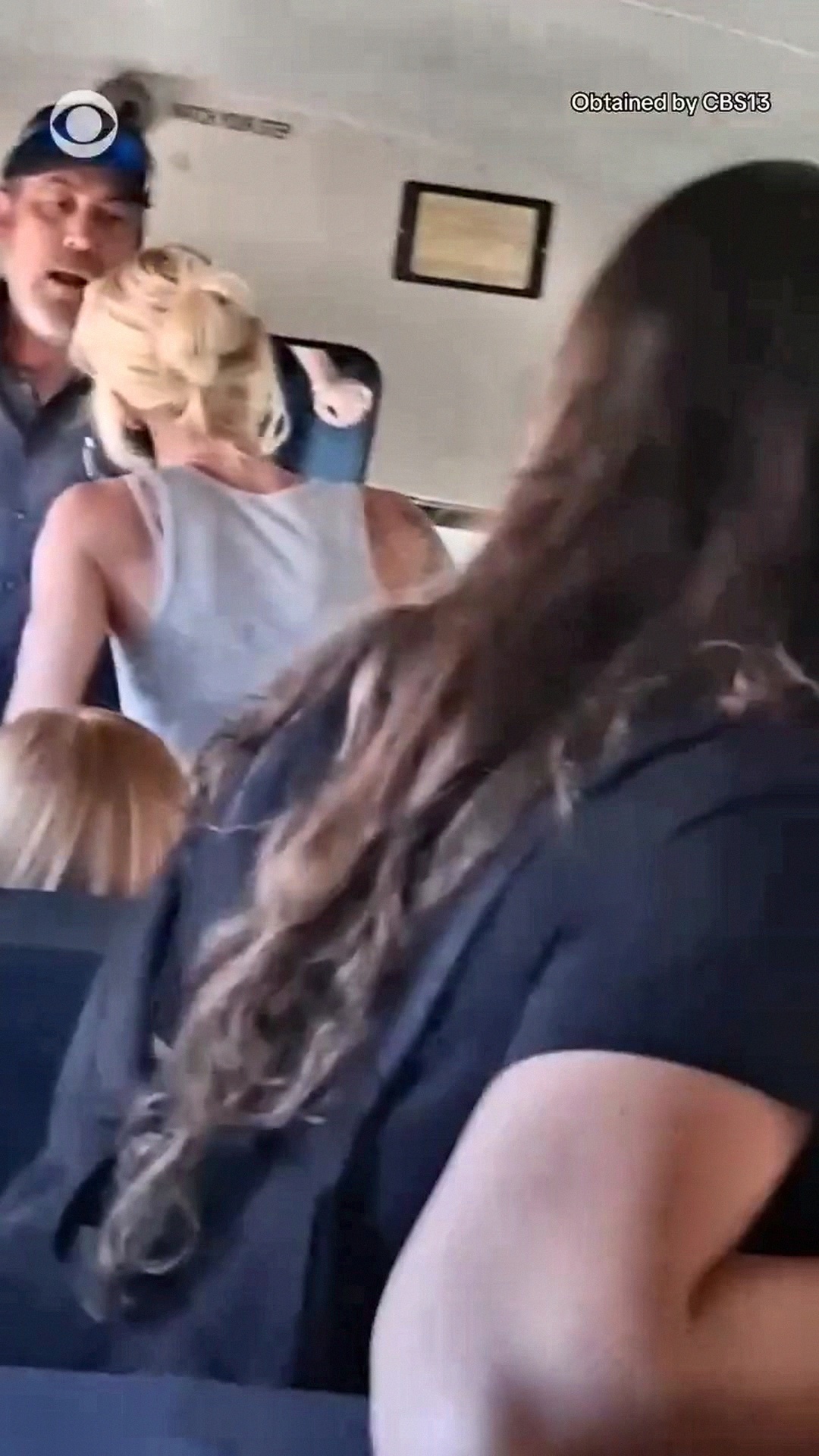
The pivotal moment arrives when a large, jagged section of the side window is suddenly visible, its edges sharp and splintered. A heavy, indistinct object – likely a rock or a tool – is visible mid-air or held near the broken frame. This is the critical turning point: the barrier between the outside world and the children inside has been violently breached. The glass is gone, replaced by an open void that a determined person is about to navigate.
The camera shifts to the aisle, where the mother is seen climbing over the seats, her body language rigid with urgency. A child with blonde hair is nearby, their small frame crouched or seated. The camera jerks as the person filming adjusts to the surging movement, capturing the panic of the bystanders. "Oh my god!" a voice exclaims, a sentiment that echoes the shock rippling through the confined space. The woman's sudden entry disrupts the order of the bus, sending students and the attending adult into a state of visible alarm.
Scroll down for the full investigative report below ↓
Critical Blind Spots: What the Lens Leaves Unresolved
While the interior footage captures the immediate aftermath of the window breaking, the lens never shows the events leading up to this breaking point. We are forced to rely on the original description: students had been stuck on the bus for about an hour. Why were they stuck? Was it a mechanical failure, a traffic quagmire, or a communication breakdown?
The video does not provide the external context of a hot bus, a long delay, or the mounting anxiety of parents waiting outside the vehicle.
The perspective of the school driver or the other children remains a mystery. The man in the polo shirt appears to be the driver, standing helplessly near the front, but his facial expression and verbal commands are lost to the shaky camera and the background noise. The audio captures a disjointed phrase – "I thought she was about to start the weekend!" – but the full dialogue of the confrontation is mostly unintelligible. What exactly was said between the driver and the frustrated mother before the glass shattered is a crucial missing piece of the puzzle.
Furthermore, the footage does not show the moment of arrest. The video cuts off before the arrival of police or the mother's restriction of liberty, leaving a gap between the act of breaking the window and the official consequence. The viewer is left to wonder how the children reacted in the moments after the camera stopped recording and whether the child the mother was trying to reach was ever removed from the bus by her or by the authorities.
Statutory Framework and Protocol Analysis
School bus operations are governed by strict safety protocols. When a bus is delayed, especially with students onboard, communication with parents is a standard expectation. The school district's protocol typically requires the driver to follow a chain of command, and if a parent attempts to bypass this system by using force, the incident transitions from a transportation delay to a breach of peace.
From a legal standpoint, the mother's arrest highlights the tension between necessity and criminality. While the delay may have been a legitimate grievance, the act of breaking a school bus window invokes property damage and potentially endangerment laws, as the flying glass could have injured a child.
The dilemma for law enforcement is balancing the perceived threat of a parent to the order of the scene versus the passive nature of a broken-down system. The mother's action was a decisive pushback, but it was met with the decisive consequence of a custodial arrest, setting the stage for a legal battle over whether her urgency justified the destruction of property.
| Incident Parameter | Recorded On-Scene Evidence |
|---|---|
| Location Context | Interior of a school bus, with blurred faces indicating privacy protection. |
| Catalyst for Action | A shattered window, shown with jagged edges, central to the frame. |
| Primary Actor | A female parent climbing over seats to reach a child. |
| Bystander Reaction | Audible gasps and an exclamation of "Oh my god!" from the person filming. |
| Authority Figure | An adult male in a dark shirt standing near the front of the bus. |
| Escalation Point | The breach of the window by an external object, leading to entry. |
| Overall Atmosphere | High tension, cramped quarters, and visible physical panic. |
Read more:
Read more: Chicago Grocery Slur Confrontation: Woman Dares Insult →
Core Questions and Institutional Review
- What exact circumstances led to the students being trapped on the bus for an estimated one hour without a timely resolution?
- What were the specific interactions between the mother and the school bus staff before the window was broken?
- What charges were ultimately filed against the mother following her arrest at the scene?
- Had the district failed to communicate the delay, or was there a genuine mechanical or logistical breakdown that justified the waiting period?
The incident raises a fundamental question about community expectations for emergency services and child welfare. When a system fails to deliver, individuals often feel compelled to act outside the bounds of the law. The mother's decision to break the window was a drastic measure that placed her in handcuffs, but it also exposed a raw nerve about the reliability of the care we entrust to public institutions. How far should a parent go when a child is left waiting, and what does the reaction of the district say about the gaps in emergency planning for school transport?
As the community processes the video and the arrest, the conversation will likely shift from the individual act to the systemic failure that provoked it. The questions are many, but the answers are locked behind the opaque walls of school district bureaucracy and the closed doors of the local police department. What remains is the stark image of a determined woman climbing through a broken window, a powerful symbol of parental anxiety in the face of institutional gridlock.
FOLLOW-UP INVESTIGATION REPORT
Related documented case details, verified on-scene evidence, and statutory liability analysis continued below.
CONTINUE READING: NEXT INVESTIGATIVE DOSSIER →
Prison Fight Club Video: Brutal First-Day Ritual Caught on Camera

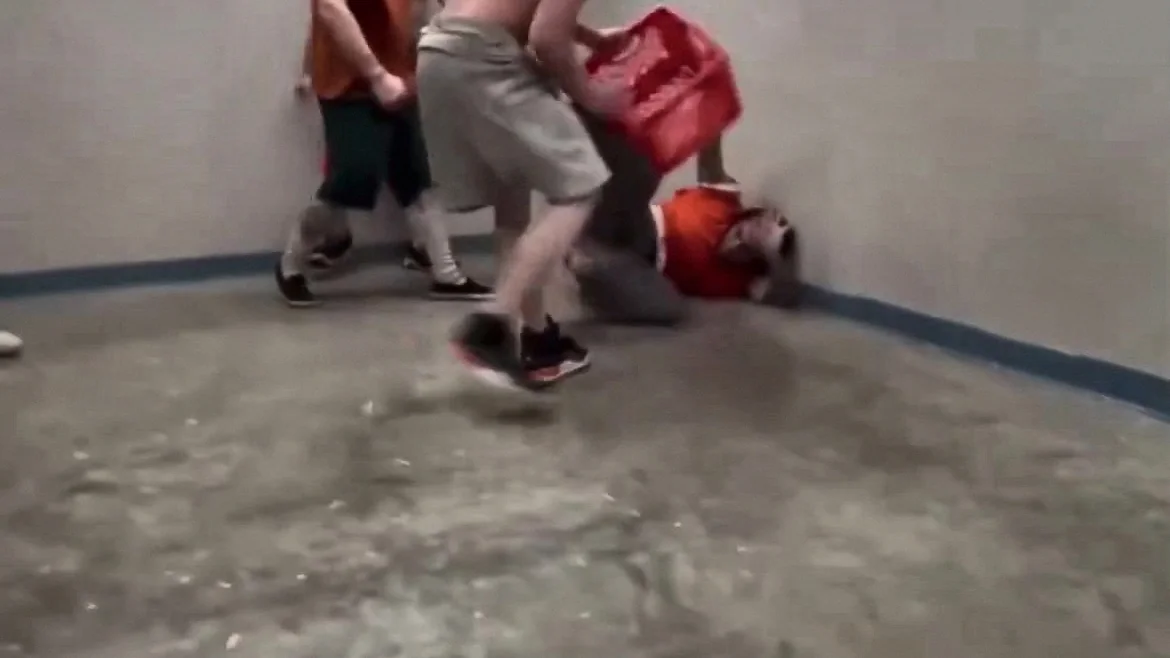
The fluorescent lights hum over bare concrete as a shirtless man in red sweatpants coils his body and swings a red plastic crate at head height. Across the room, a frightened figure in an orange jumpsuit scrambles backward, trapped between painted cinder-block walls and a ring of shouting men who have no intention of letting him leave.
- The Setting: A stark, fluorescent-lit room with bare concrete floors and blue-trimmed cinder-block walls, dressing a scene that resembles a holding facility or recreation block.
- The Friction: A group of men, some stripped to the waist, aggressively surround and close in on a single individual in an orange uniform who appears to be a newcomer.
- The Intervention: Rather than a guard or an authority figure stepping in, shouted commands from the crowd direct the violence, with names like Hacksaw and LeBron called out to orchestrate the assault.
- The Aftermath: The footage cuts as the victim is rushed and swung at with a crate, leaving the outcome and the identity of everyone involved entirely unresolved.
What the Recorded Footage Captures: Chronological Breakdown
The clip opens in a space that feels engineered for confinement – low ceilings, blank walls, and a single overhead light pouring cold white illumination onto the scuffed floor. A man in bright red pants stands with his back partially to the camera, lifting a red plastic crate from the ground with deliberate intent. At the bottom of the frame, an orange-clad shoulder enters the shot, suggesting the cameraman is sitting or crouching among the participants rather than observing from a distance.
As the sequence unfolds, the crate is hoisted and the room erupts into motion. A shirtless man in dark shorts lunges toward the far corner where another figure is scrambling to stay upright. The audio captures a chorus of overlapping voices, each one pushing the action forward with escalating urgency. "Get him up, bro. Get him up," one voice repeats, while another cuts in with, "As soon as he come in, drill him." The language is raw and immediate, spoken in the clipped cadence of men who have done this before.
The tension spikes when a pointing hand thrusts into the frame from the left, directing the group's attention toward a target near the far wall. A man in an orange shirt and backward cap stands watching, his posture relaxed compared to the frantic movement around him – a detail that suggests he is either a veteran of this ritual or an overseer of it. The crate swings, bodies collide, and the camera jolts with the chaos. By the final frames, the group has converged, and the shouting has reached a fever pitch with calls of "Do him, Hacksaw! Do that nigga!"
Critical Blind Spots: What the Lens Leaves Unresolved
The footage is shot from a low, handheld angle that keeps the viewer inside the scrum rather than above it, which means the full layout of the room and the number of people present are impossible to determine. We see a handful of faces and torsos, but the edges of the frame are filled with shoulders, arms, and the blur of rapid movement. There is no wide shot to establish whether a door is open, whether a guard is watching, or whether this room is a sanctioned space or a forgotten corner of a facility.
The audio is equally disorienting. Names are shouted – Hacksaw, LeBron – but no one is identified on camera, and the relationships between the men are never clarified. Is the man in red the enforcer, or is he also a participant in a larger hierarchy? The victim in orange is never given a clear face or a voice, and the camera never lingers on him long enough to reveal whether he is injured or merely frightened. The clip begins mid-action and ends mid-swing, offering no context for how the confrontation started or how it concluded.
What is most striking is the absence of any dissenting voice. Not a single person in the frame says "stop" or "that's enough." The crowd's energy is uniformly directed toward the violence, which raises questions about the social dynamics at play. Is this a known ritual that everyone has agreed to, or is it a spontaneous explosion that no one feels empowered to interrupt? The footage alone cannot answer that, and the silence of the room beyond the shouts is its own kind of evidence.
Statutory Framework and Protocol Analysis
In the United States, correctional facilities operate under a duty of care that requires staff to protect inmates from foreseeable harm, including harm from other inmates. When a group of incarcerated individuals coordinates an assault on a newcomer, the legal questions that follow typically center on whether the facility had notice of the risk and whether staff responded appropriately. Under the Fourth Amendment's protections against unreasonable seizures and the Eighth Amendment's prohibition on cruel and unusual punishment, deliberate indifference to a known threat can form the basis of a civil rights claim. The footage here, however, shows no staff presence and no visible intervention, which leaves the question of official awareness entirely open.
From a de-escalation standpoint, the scene captures a textbook failure of group dynamics. The shouting functions as a social accelerant, with each voice adding pressure for the next man to act. Correctional training typically emphasizes the importance of separating a target from a crowd, establishing a verbal command presence, and introducing a physical barrier between combatants. None of those elements appear in the clip. Instead, the group tightens its circle, and the crate becomes a tool of intimidation rather than a barrier. The protocol analysis is not about assigning blame to any individual in the frame – it is about recognizing the conditions that allow this kind of scene to unfold without interruption.
| Incident Parameter | Observation at the Scene |
|---|---|
| Location | Bare concrete room with blue-trimmed cinder-block walls and overhead fluorescent lighting |
| Lighting | Uniform, harsh white light casting minimal shadows |
| Participants | Multiple shirtless men and one individual in an orange uniform |
| Key Objects | Red plastic crate, dark shorts, sneakers, an orange jumpsuit |
| Audio Presence | Overlapping shouting, direct commands, and named calls for action |
| Camera Perspective | Low handheld angle, altercation from within the group |
| Duration of Incident | Brief, captured mid-action with no clear beginning or end |
Core Questions and Institutional Review
- Who is the man in the orange uniform, and what was his status within the facility on the day this footage was recorded?
- What was the role of the man in the backward cap who stood at the edge of the frame without joining the physical confrontation?
- Was this room under any form of supervision, and if so, where was that supervision during the recorded sequence?
- How did the recording leave the facility, and who authorized its release to the public?
The crowd in the footage does not behave like a group that fears consequences. They shout names, they point, and they move with the confidence of men who believe no one is coming to stop them. That confidence is the most unsettling detail in the entire clip – more than the swinging crate, more than the frantic scramble of the man in orange. It suggests a space where the rules have been suspended or rewritten by the people inside it, and the camera's presence only makes the performance more brazen. Whether this was a known ritual, a one-time eruption, or something staged for the lens, the video leaves the viewer with a single, lingering question: if the room had been watched, would anyone have stepped in? Share your perspective in the comments below.