The sun was sinking low over the Tennessee interstate, casting long shadows across the asphalt as a state trooper approached a white SUV. What should have been a routine stop for a minor traffic violation spiraled into a bizarre confrontation that would eventually cost taxpayers $70,000. Stephanie Fair stood on the roadside, her hands trembling as she pleaded her innocence, while the officer insisted the unmistakable reek of alcohol surrounded her. The camera rolled, capturing every tense second of a dispute where the truth wouldn't fully emerge for two months.
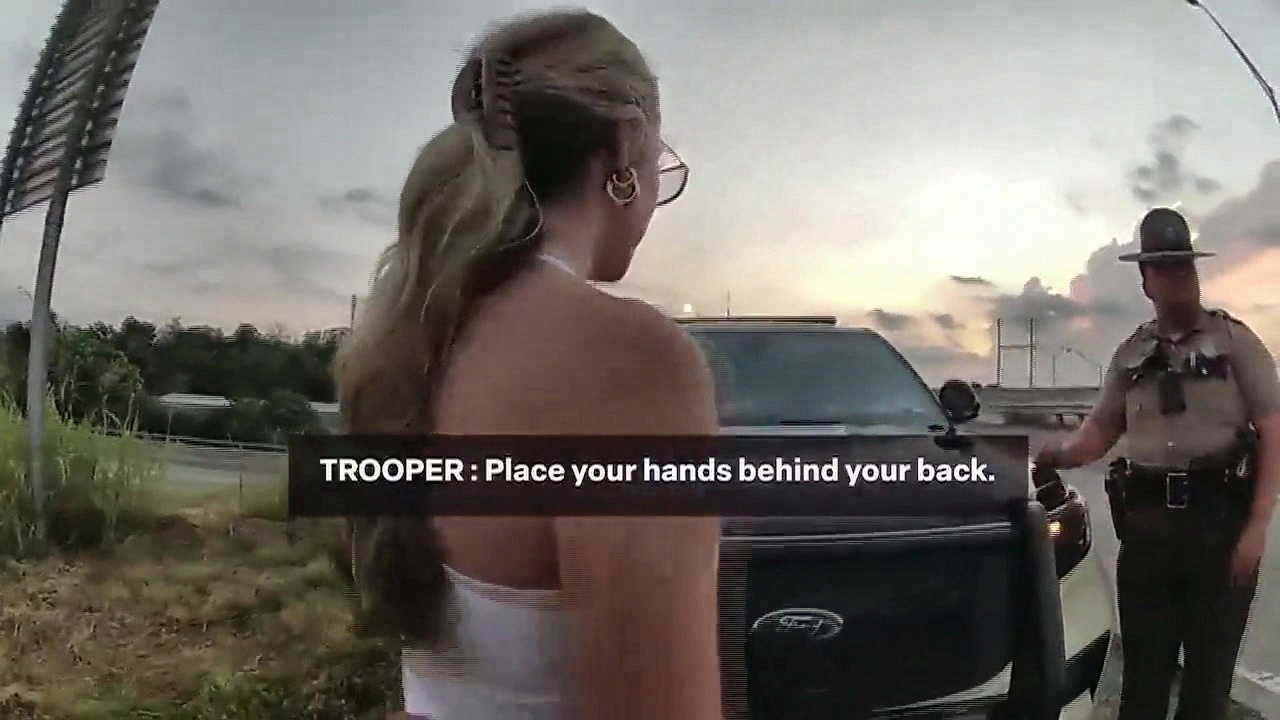
- The Traffic Stop: Stephanie Fair was pulled over on the evening of June 23rd for failing to move over, a violation that instantly put the trooper on edge.
- The Friction: The officer claimed he detected a "very distinct odor of alcohol" coming from the vehicle and observed signs of intoxication in her eyes.
- The Intervention: Despite Fair's repeated pleas that she had just eaten and doesn't drink, the trooper placed her in handcuffs and arrested her for DUI.
- The Aftermath: Two months later, a blood test confirmed zero alcohol and zero drugs in her system, leading to a $70,000 settlement from the state of Tennessee.
What the Recorded Footage Captures: Chronological Breakdown
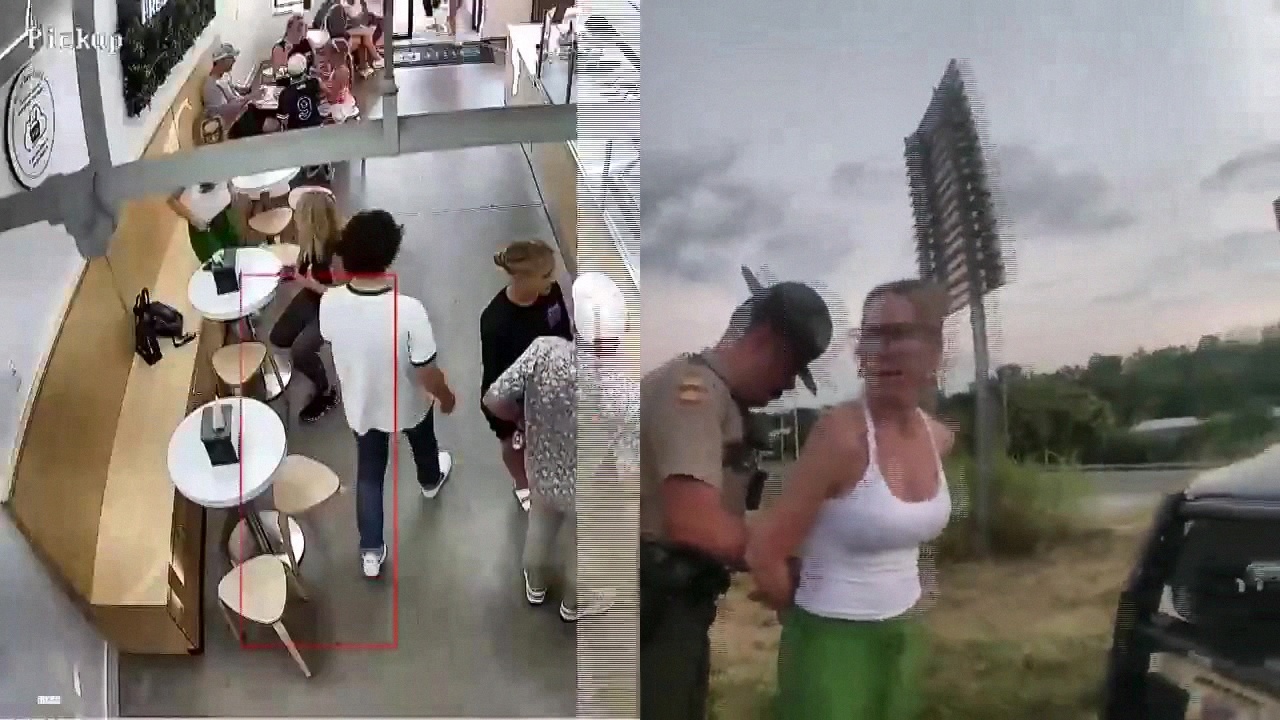
The video begins with the trooper's patrol car dashcam framing the white SUV parked on the shoulder. The officer, his hat tilted against the fading light, approaches the driver's side and immediately initiates a conversation. "Go ahead and step on out of the car and we're going to have a conversation, okay?" he says, his tone controlled but firm.
Stephanie Fair steps out, her blonde hair pulled back, wearing a white tank top and green pants. She looks confused but compliant. The trooper leans in, his body language stiffening as he scans the interior of the vehicle. "There's a very distinct odor of alcohol that comes from either a person or inside the vehicle," he states, almost as a fact.
Fair's eyes widen, and she shakes her head. "Right. I understand, but I, on my life, I don't drink alcohol. I just ate."
The tension escalates quickly. The trooper isn't swayed by her denial. He continues to press, describing the smell as overwhelming. Fair, now visibly distressed, recounts the feeling in her stomach: "When he started asking me about drinking, I instantly got this feeling in my stomach, like, this is bad. And it was."
The officer then justifies the stop, explaining that she had almost hit him while he was wrapping up a previous traffic stop. "I come up to the car and it just reeks of alcohol," he says. "I actually don't test it. You can see it in her eyes." The visual evidence is jarring. Fair's eyes are clear, but the trooper's conviction is absolute.
He clearly states he could smell the odor of an alcoholic beverage, a claim Fair vehemently disputes. "That, when he said he could smell it, I know this is corrupt. This is completely wrong."
The climax arrives with brutal swiftness. The trooper steps forward, his hand moving to his belt. "Place your hands behind your back." Fair's face crumples in disbelief. "Why? Because you're being placed under arrest for DUI." Her voice cracks as she repeats her innocence. "But I don't drink anything. But I don't drink." The camera captures the metallic click of the handcuffs, a sound that seals her fate despite her protests.
The screen splits, showing a surveillance clip of Fair at an ice cream shop just minutes before the stop, a stark contrast to the grim scene on the highway. The trooper's demeanor remains rigid, unmoved by her escalating panic.
Scroll down for the full investigative report below ↓
Critical Blind Spots: What the Lens Leaves Unresolved
While the dashcam footage provides a clear view of the interaction, it leaves several critical questions unanswered. The camera angle is fixed, capturing only the driver's side and the immediate front of the vehicle. We cannot see the passenger side or the back seat, leaving us to wonder if there was any open container or alcohol source that the trooper might have spotted.
The lighting is dim, and the officer's claim of seeing "alcohol in her eyes" is highly subjective. Without a clear close-up, it's impossible to verify what he saw versus what he inferred from the smell.
Furthermore, the audio captures the officer's insistence on the smell, but we don't hear the moment he first approached the car. The initial seconds, when he might have caught the scent, are cut. We also don't hear any field sobriety tests being administered. The narrative jumps from the traffic stop to the arrest. The most significant blind spot, however, is the two-month gap between the arrest and the blood results.
The video doesn't show the jail experience, the emotional toll on Fair, or the legal maneuvering that led to the settlement. Her comment, "I was more scared being with that cop alone than I actually was inside the jail," hints at a deeper psychological fear that the footage only scratches the surface of.
Statutory Framework and Protocol Analysis
In the United States, a traffic stop is a seizure under the Fourth Amendment, and the officer must have reasonable suspicion of a traffic violation to initiate it. In this case, the failure to move over provided that initial justification. However, the subsequent arrest for DUI requires probable cause. The trooper relied heavily on the odor of alcohol and his visual assessment of her eyes. According to the Supreme Court's decision in Pennsylvania v. Mimms, an officer may order a driver out of the vehicle during a lawful traffic stop without violating the Fourth Amendment. This explains why the trooper could demand Fair step out of the car. However, the arrest itself hinges on the sufficiency of the evidence. If the odor was mistakenly identified – perhaps from a passenger or a lingering scent – the probable cause could be challenged.
The subsequent blood test, which came back completely clean, undermines the foundation of the arrest. The fact that the state paid $70,000 suggests a recognition that the evidence did not support the charge. This case echoes the principles of Terry v. Ohio, which requires specific and articulable facts to justify an intrusion. Here, the trooper's subjective belief in the odor was the primary articulable fact. When that fact proved false, the legal ground shifted. The settlement highlights the importance of objective evidence over subjective suspicion.
| Incident Parameter | Observation at the Scene |
|---|---|
| Date of Stop | Evening of June 23rd |
| Reason for Stop | Failure to move over |
| Officer's Claim | Distinct odor of alcohol, visible impairment in eyes |
| Driver's Statement | "On my life, I don't drink alcohol. I just ate." |
| Arrest Action | Handcuffed and taken into custody for DUI |
| Blood Test Result | Zero alcohol, zero drugs |
| Settlement Amount | $70,000 |
Read more:
Read more: Prison Fight Club Video: Brutal First-Day Ritual Caught on Camera →
Core Questions and Institutional Review
- Why was the odor of alcohol so compelling to the trooper if the driver was completely sober? Could there have been another source, such as hand sanitizer or a passenger?
- What did the dashcam footage from the moments before the stop actually show? The video mentions she was getting ice cream, but was there any interaction with the trooper that was missed?
- How did the internal review process justify a $70,000 settlement? Was there a finding of misconduct, or was it a purely financial decision to avoid litigation?
- What happened to Stephanie Fair during the two months before her exoneration? The emotional and professional toll of a false arrest is often invisible.
The video closes with Fair's voice, still shaking, recounting her fear. The scene on the highway is quiet, the sunset now just a memory. The handcuffs are gone, but the questions linger in the air. The state has paid its financial debt, but the human cost remains. Was this a case of a mistaken smell, or something more troubling?
The footage shows a woman who believed she was about to lose everything, and an officer who believed he was doing his job. As the screen fades, one question remains: how many other drivers have faced that same click of the handcuffs based on a scent that wasn't there?
FOLLOW-UP INVESTIGATION REPORT
Related documented case details, verified on-scene evidence, and statutory liability analysis continued below.
CONTINUE READING: NEXT INVESTIGATIVE DOSSIER →
California Mother Arrested After Smashing School Bus Window
A California mother, driven by an hour of frantic waiting, took matters into her own hands when she smashed a school bus window and climbed inside to reach her child. The chaotic scene, captured on a phone camera from within the bus, shows the raw collision between a parent's desperation and a school transportation system apparently stalled. What unfolds next is a tense, uncomfortable drama that ends with an arrest and a community demanding answers.
- A frustrated mother shattered the glass of a school bus window in California, using the opening to physically climb into the vehicle.
- The incident reportedly occurred after students had been stuck on the bus for approximately one hour, with parents left waiting outside.
- Video footage from inside the bus shows the woman moving through the aisle as an adult male, likely the driver, stands near the front.
- The mother was arrested at the scene by responding law enforcement, turning a rescue attempt into a criminal charge.
What the Recorded Footage Captures: Chronological Breakdown
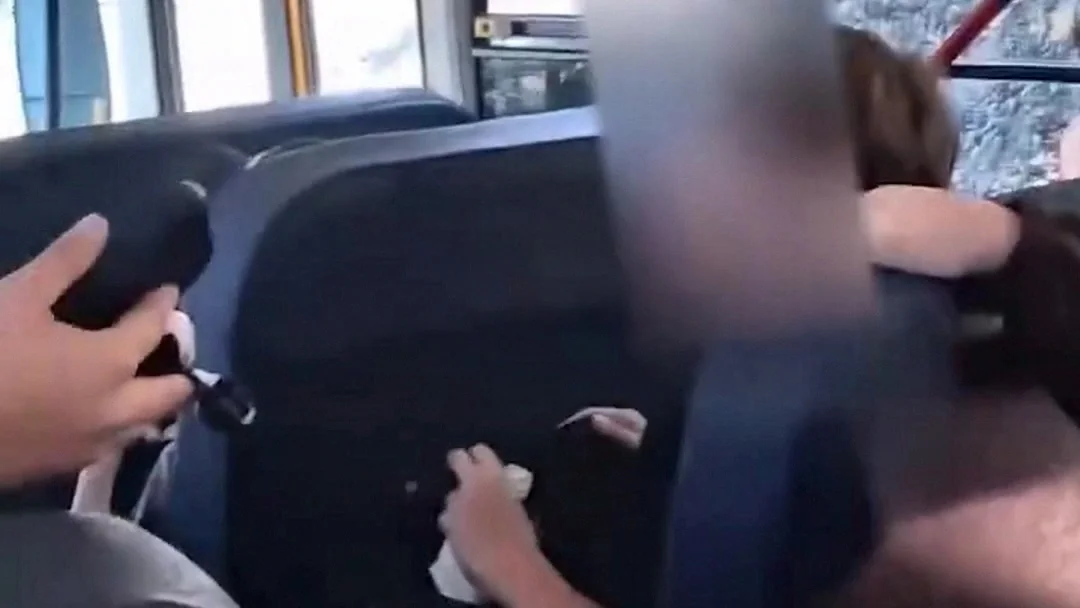
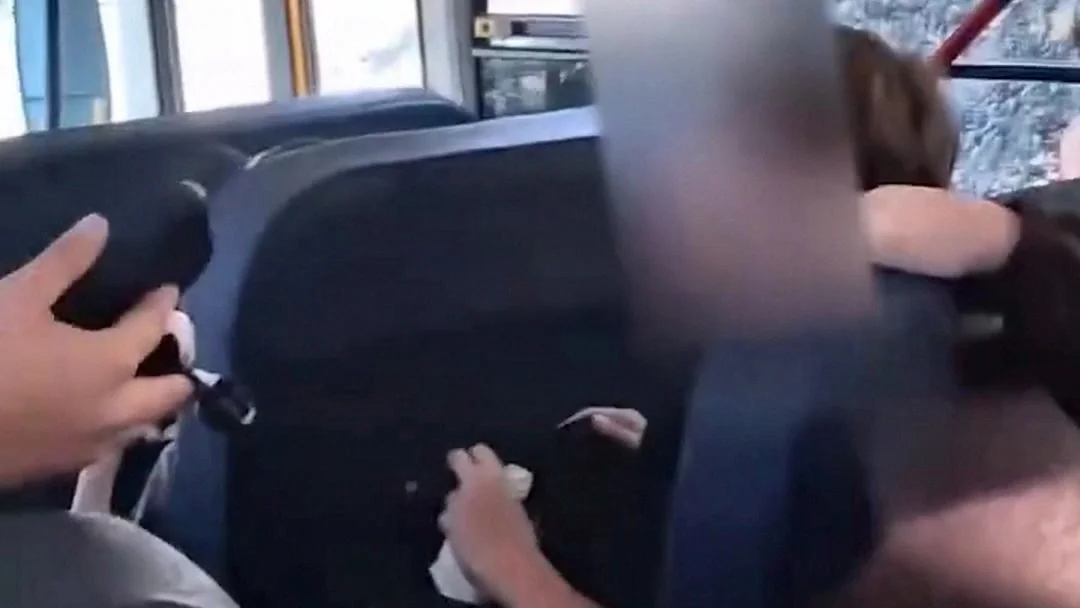
The footage begins in the confined, shadowed interior of the bus, with the camera positioned behind a row of dark blue seats. The atmosphere is thick with a palpable, unspoken tension. A girl with long, highlighted hair sits near the front, her face blurred to protect her identity, while an older man in a dark polo shirt and sunglasses stands over her. The bus is clearly stationary; the light outside the windows suggests daytime, but the internal air feels stagnant and restless.
The pivotal moment arrives when a large, jagged section of the side window is suddenly visible, its edges sharp and splintered. A heavy, indistinct object – likely a rock or a tool – is visible mid-air or held near the broken frame. This is the critical turning point: the barrier between the outside world and the children inside has been violently breached. The glass is gone, replaced by an open void that a determined person is about to navigate.
The camera shifts to the aisle, where the mother is seen climbing over the seats, her body language rigid with urgency. A child with blonde hair is nearby, their small frame crouched or seated. The camera jerks as the person filming adjusts to the surging movement, capturing the panic of the bystanders. "Oh my god!" a voice exclaims, a sentiment that echoes the shock rippling through the confined space. The woman's sudden entry disrupts the order of the bus, sending students and the attending adult into a state of visible alarm.
Critical Blind Spots: What the Lens Leaves Unresolved
While the interior footage captures the immediate aftermath of the window breaking, the lens never shows the events leading up to this breaking point. We are forced to rely on the original description: students had been stuck on the bus for about an hour. Why were they stuck? Was it a mechanical failure, a traffic quagmire, or a communication breakdown? The video does not provide the external context of a hot bus, a long delay, or the mounting anxiety of parents waiting outside the vehicle.
The perspective of the school driver or the other children remains a mystery. The man in the polo shirt appears to be the driver, standing helplessly near the front, but his facial expression and verbal commands are lost to the shaky camera and the background noise. The audio captures a disjointed phrase – "I thought she was about to start the weekend!" – but the full dialogue of the confrontation is mostly unintelligible. What exactly was said between the driver and the frustrated mother before the glass shattered is a crucial missing piece of the puzzle.
Furthermore, the footage does not show the moment of arrest. The video cuts off before the arrival of police or the mother's restriction of liberty, leaving a gap between the act of breaking the window and the official consequence. The viewer is left to wonder how the children reacted in the moments after the camera stopped recording and whether the child the mother was trying to reach was ever removed from the bus by her or by the authorities.
Statutory Framework and Protocol Analysis
School bus operations are governed by strict safety protocols. When a bus is delayed, especially with students onboard, communication with parents is a standard expectation. The school district's protocol typically requires the driver to follow a chain of command, and if a parent attempts to bypass this system by using force, the incident transitions from a transportation delay to a breach of peace.
From a legal standpoint, the mother's arrest highlights the tension between necessity and criminality. While the delay may have been a legitimate grievance, the act of breaking a school bus window invokes property damage and potentially endangerment laws, as the flying glass could have injured a child. The dilemma for law enforcement is balancing the perceived threat of a parent to the order of the scene versus the passive nature of a broken-down system. The mother's action was a decisive pushback, but it was met with the decisive consequence of a custodial arrest, setting the stage for a legal battle over whether her urgency justified the destruction of property.
| Incident Parameter | Recorded On-Scene Evidence |
|---|---|
| Location Context | Interior of a school bus, with blurred faces indicating privacy protection. |
| Catalyst for Action | A shattered window, shown with jagged edges, central to the frame. |
| Primary Actor | A female parent climbing over seats to reach a child. |
| Bystander Reaction | Audible gasps and an exclamation of "Oh my god!" from the person filming. |
| Authority Figure | An adult male in a dark shirt standing near the front of the bus. |
| Escalation Point | The breach of the window by an external object, leading to entry. |
| Overall Atmosphere | High tension, cramped quarters, and visible physical panic. |
Core Questions and Institutional Review
- What exact circumstances led to the students being trapped on the bus for an estimated one hour without a timely resolution?
- What were the specific interactions between the mother and the school bus staff before the window was broken?
- What charges were ultimately filed against the mother following her arrest at the scene?
- Had the district failed to communicate the delay, or was there a genuine mechanical or logistical breakdown that justified the waiting period?
The incident raises a fundamental question about community expectations for emergency services and child welfare. When a system fails to deliver, individuals often feel compelled to act outside the bounds of the law. The mother's decision to break the window was a drastic measure that placed her in handcuffs, but it also exposed a raw nerve about the reliability of the care we entrust to public institutions. How far should a parent go when a child is left waiting, and what does the reaction of the district say about the gaps in emergency planning for school transport?
As the community processes the video and the arrest, the conversation will likely shift from the individual act to the systemic failure that provoked it. The questions are many, but the answers are locked behind the opaque walls of school district bureaucracy and the closed doors of the local police department. What remains is the stark image of a determined woman climbing through a broken window, a powerful symbol of parental anxiety in the face of institutional gridlock.