Under the harsh, sterile glow of gas station canopy lights, the illusion of a quiet Texas night shatters in seconds. What begins as a tense gathering of two groups becomes a swirling vortex of violence, and the surreal sight of a man in a Spider-Man suit standing helplessly at the edge of the frame transforms a routine stop into a scene of unforgettable urban theater.
The footage captures the raw, unfiltered moment when the thin veneer of public order peels back, leaving only the roar of the crowd and the sickening thud of bodies colliding against parked cars.
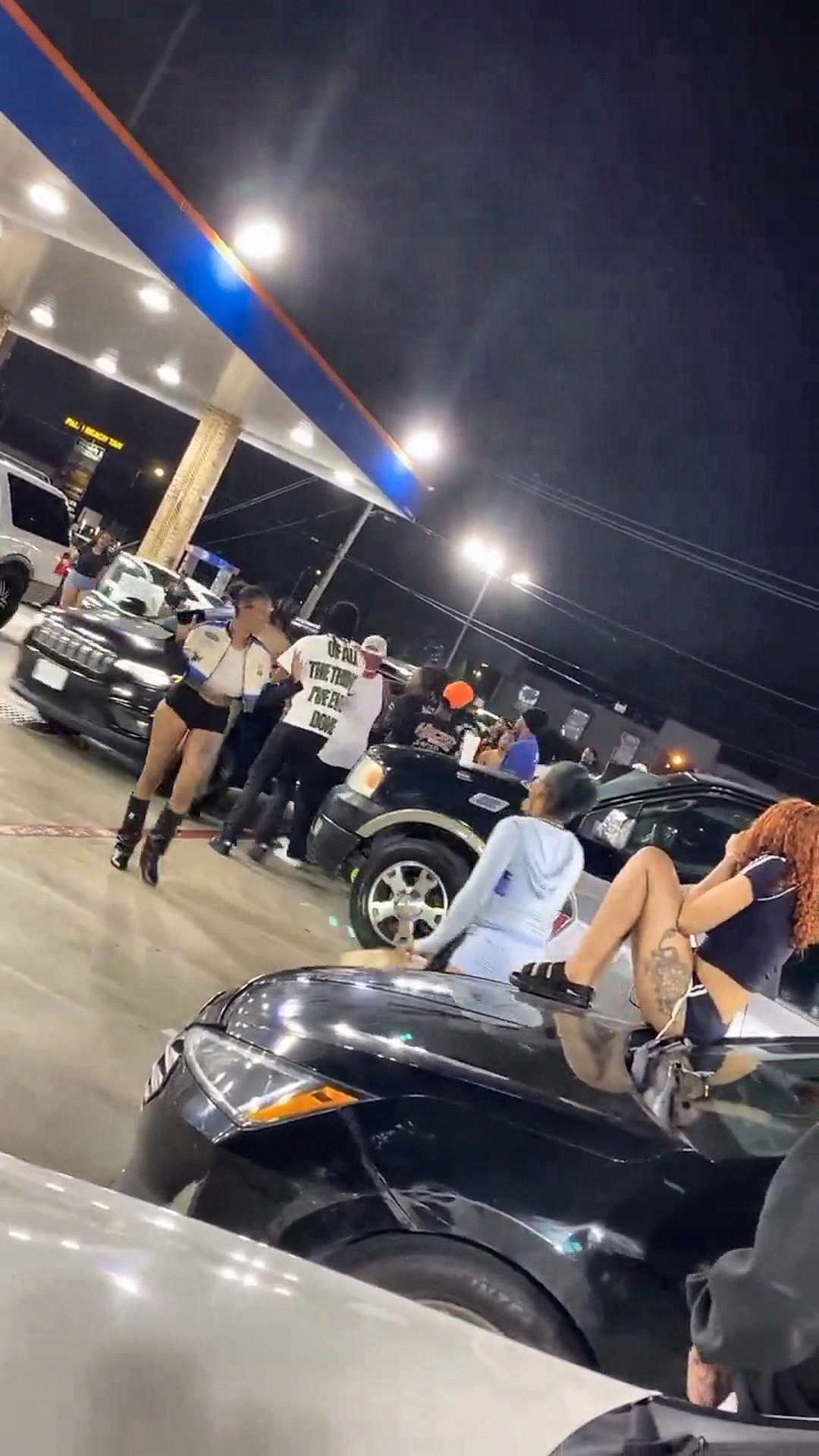
- The Scene: A brightly lit gas station forecourt in Houston, Texas, where multiple vehicles, including a dark Jeep and a white sedan, are parked haphazardly, creating a tight, claustrophobic arena for the unfolding chaos.
- The Friction: Two distinct groups engage in a rapid escalation of verbal confrontation, their body language shifting from aggressive posturing to outright physical violence as bystanders scramble to clear the space.
- The Intervention: A figure dressed in a full Spider-Man costume attempts to intercede, stepping into the fray, but is quickly overwhelmed by the sheer scale and ferocity of the melee, becoming a powerless observer to the violence.
- The Aftermath: The footage cuts off as the brawl reaches its peak, leaving the viewer with a chilling sense of unresolved tension and the unanswered question of how law enforcement eventually restored order.
What the Recorded Footage Captures: Chronological Breakdown
The video opens with a shaky, handheld perspective, the camera operator moving through the gas station forecourt while a dark Jeep Cherokee idles nearby. The atmosphere is immediately charged, with the ambient noise of a crowd punctuated by sharp, panicked shouts. At the center of the frame, a group of individuals, some shirtless and others in street clothes, are squared off in a tight circle.
The body language is unmistakably hostile – shoulders squared, fists clenched, and eyes locked in a predatory stare that suggests the situation is seconds away from detonating. The camera pans to reveal a woman in a revealing outfit standing near a black SUV, her posture tense as she watches the confrontation unfold.
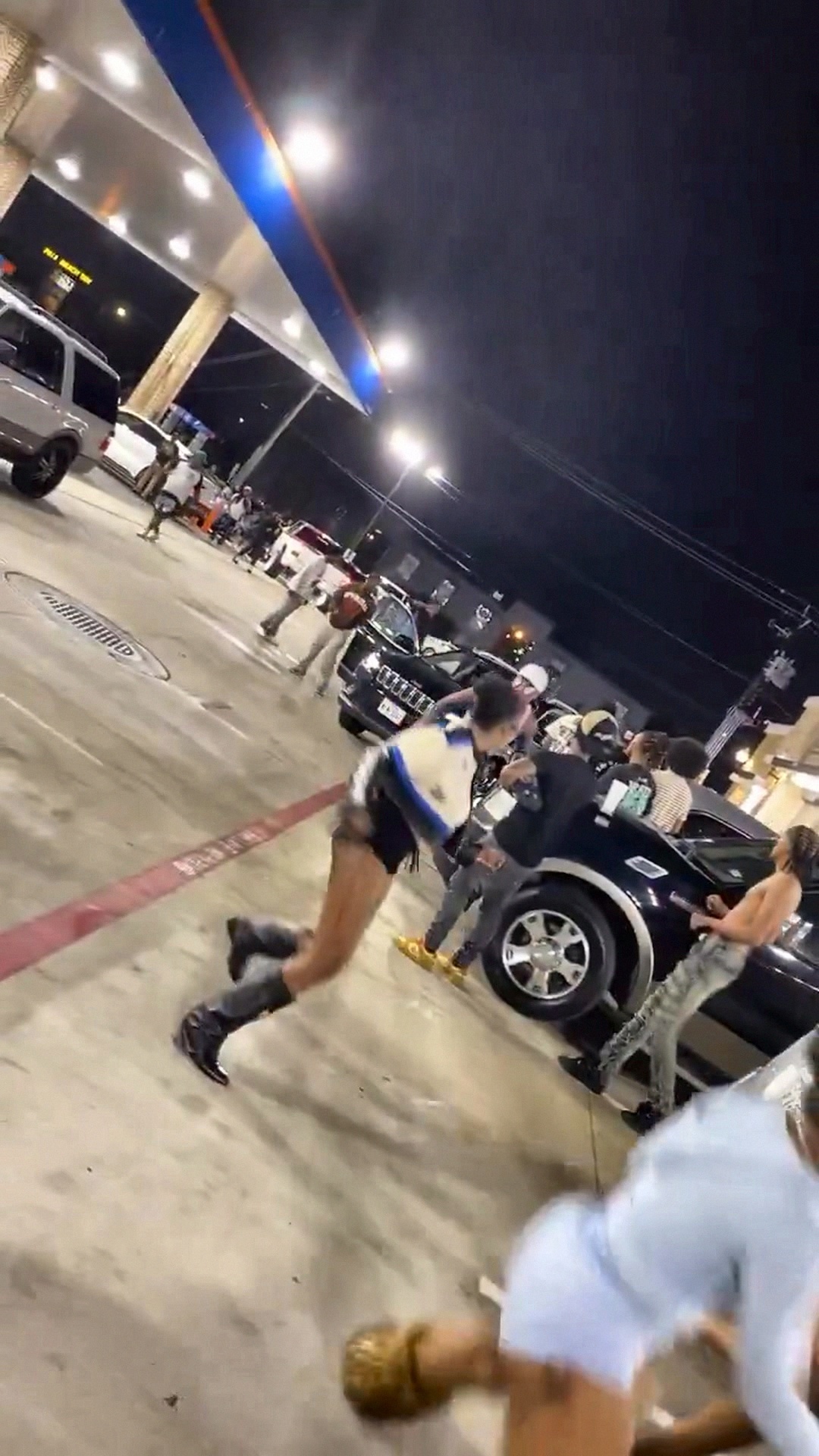
The tension erupts into kinetic violence as the first blows are thrown. The fight is not a clean, one-on-one affair but a sprawling, chaotic brawl that spills across the concrete. The Spider-Man figure – a surreal anomaly in this gritty tableau – steps forward, his red and blue suit a jarring contrast to the dark clothing of the combatants. He raises his hands in a futile gesture of de-escalation, but the combatants are beyond reason. The camera captures the moment he is jostled by the shifting mass of bodies, his heroic persona utterly impotent against the surge of human aggression. The audio captures a bystander's voice, high-pitched and terrified, crying out, "Oh, my God. Oh, dispute!" as the violence intensifies.
The brawl reaches its crescendo as figures lunge and grapple, their silhouettes stark against the backdrop of the gas station's fluorescent lighting. The camera sweeps across the scene, catching glimpses of feet scuffling, bodies twisting, and arms flailing in a blur of motion. The white sedan in the foreground acts as a passive barrier, the fight raging just inches from its polished surface.
The video cuts abruptly, leaving the viewer suspended in the chaotic energy of the moment, with no clear victor and no visible resolution to the mayhem.
Scroll down for the full investigative report below ↓

Critical Blind Spots: What the Lens Leaves Unresolved
Despite the vividness of the footage, the lens leaves critical gaps in the narrative. The exact catalyst for the brawl remains shrouded in mystery. Was it a dispute over a parking spot, a lingering personal grudge, or an argument that escalated from a simple misunderstanding? The video offers no context, capturing only the violent symptoms of a conflict whose roots are hidden off-camera.
The identities and affiliations of the combatants are unknown, and the role of the Spider-Man figure raises intriguing questions; was he a paid entertainer, a bystander in costume, or someone with a personal connection to the parties involved?
Furthermore, the footage does not reveal the immediate aftermath. The absence of police lights or sirens in the clip leaves a void regarding law enforcement's response. Did the brawl conclude before authorities arrived, or were the participants still entangled when the first patrol cars pulled into the station? The camera's focus on the center of the action means that peripheral events – such as bystanders calling for help or the arrival of security personnel – are lost to the viewer.
Finally, the psychological toll on the witnesses is only partially glimpsed. The terrified exclamation from the person behind the camera is a stark reminder of the fear that ripples outward from such incidents. Yet, the faces of the other bystanders, their reactions, and their eventual actions are obscured, leaving the viewer to wonder how the community of customers and employees navigated the sudden eruption of violence in their midst.
Statutory Framework and Protocol Analysis
The Houston Police Department's protocols for responding to public disturbances prioritize the safety of all parties, including bystanders. When officers arrive on scene, their initial objective is to separate the combatants and secure the perimeter. In situations involving large-scale fights, officers often rely on a show of force and verbal commands to regain control before transitioning to de-escalation tactics.
The environment, with its hard concrete surfaces and surrounding vehicles, presents a high risk of injury, not only from the fight itself but from accidental slips, falls, or collisions with stationary objects. The presence of a costumed figure, while anomalous, does not alter the fundamental duty of law enforcement to restore order and ensure medical assistance for any injured parties.
From a legal standpoint, the actions captured in the video fall under the umbrella of public affray or disorderly conduct. The disturbance of the peace at a commercial establishment can lead to charges ranging from misdemeanor assault to more severe serious legal charges, depending on the level of injury inflicted and the use of weapons.
The footage serves as valuable evidence for investigators seeking to identify the aggressors and determine the sequence of events. However, the chaotic nature of the brawl makes it difficult to assign individual culpability, underscoring the challenges law enforcement faces in prosecuting such spontaneous acts of violence.
| Incident Parameter | Observation at the Scene |
|---|---|
| Location | A brightly lit gas station forecourt in Houston, Texas, with multiple fuel pumps and parked vehicles. |
| Participants | Two distinct groups of individuals, including shirtless men and women in casual clothing, engaged in physical altercation. |
| Notable Figure | A person wearing a full Spider-Man costume, standing near the brawl and attempting to intervene. |
| Environment | Nighttime, illuminated by harsh overhead canopy lights, with a red sedan and dark Jeep parked in close proximity. |
| Bystander Reaction | Audible gasps and exclamations of shock, with the camera operator retreating to a safer distance. |
| Duration of Visible Brawl | The footage captures a continuous, escalating sequence of violence lasting approximately 30 seconds before cutting off. |
Read more:
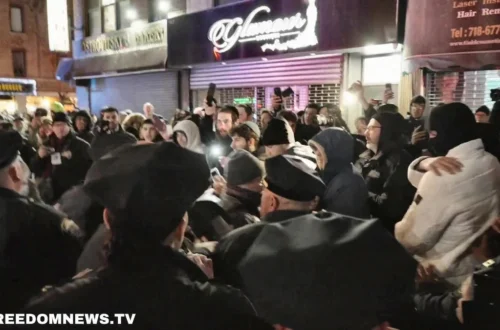
Read more: NYPD Punch Caught on Camera in Brooklyn Crowd Clash →
Core Questions and Institutional Review
- What specific event or disagreement served as the catalyst for the brawl, and was it rooted in a prior encounter?
- Did the Spider-Man figure have a prior relationship with any of the combatants, or was his intervention purely spontaneous?
- How quickly did law enforcement arrive after the video ended, and were any arrests made in connection with the fight?
- What measures, if any, did the gas station staff take to ensure the safety of customers and deter future disturbances?
The public appetite for footage like this is insatiable, driven by a collective fascination with the breakdown of social order. Yet, behind the pixelated chaos lies a community grappling with the reality of public violence. The gas station, a mundane hub of daily life, becomes a stage for a fleeting but terrifying drama.
As the footage ends, we are left to ponder the fragility of peace in shared spaces and the role each of us plays when the veneer of civility shatters. What would you have done if you were standing at that pump, watching the scene unfold?
Practical Takeaways
- Prioritize Personal Safety: In any public disturbance, your first responsibility is your own well-being; move away from the conflict and seek shelter.
- Call for Help: Immediately contact emergency services and provide clear, concise information about the location and nature of the incident.
- Avoid Physical Intervention: Unless you are a trained professional, do not attempt to break up a fight; you risk escalating the violence and incurring serious injury.
- Document from a Safe Distance: If it is safe to do so, record the incident to assist law enforcement, but never compromise your safety for a better angle.
- Follow Official Instructions: When police arrive, comply with their commands and allow them to take control of the scene.
FOLLOW-UP INVESTIGATION REPORT
Related documented case details, verified on-scene evidence, and statutory liability analysis continued below.
CONTINUE READING: NEXT INVESTIGATIVE DOSSIER →
Bodycam Shows Officer Push Teen Off Bike in Charlotte

The streetlight glare washes across the asphalt at 2:04 a.m., and in the grainy green-black of a police body camera, a cruiser whips into a hard U-turn. Seconds later, a 17-year-old boy is on the ground, his bike skittering away, and a recorded voice is already asking him for identification. What follows – the chase, the push, the casual threat, and the courtroom ending – became one of Charlotte's most replayed police videos of the year.
- The setting: Uptown Charlotte, North Carolina, in the early morning hours of July 17, when a group of teenagers was riding bicycles through empty downtown streets.
- The friction: Officer Malcolm Joseph, returning from an earlier call, spotted the group and believed they were performing wheelies through traffic lanes.
- The intervention: Bodycam captures Joseph pulling a U-turn, accelerating after the riders, exiting his patrol car, and shoving one 17-year-old off his bicycle and onto the pavement.
- The aftermath: The teen suffered scrapes to his back, arm, hip, and head. Joseph was charged with simple assault, pleaded no contest, received six months of unsupervised probation, and now holds an inactive police certification.
What the Recorded Footage Captures: Chronological Breakdown
The clip opens on a quiet block of low storefronts, the walls bleached white by overhead lamps, a lone lit doorway bearing the letters ALO. The camera is mounted at chest height, and it lurches with the officer's stride. A dark shape – the bicycle – flashes at the frame's right edge. Then the timestamp jumps and the viewer is inside the cruiser, staring through the windshield as the officer narrates the decision that will define the next three minutes.
"Y'all doing wheelies and stuff?"
"I was not."
"I was thinking of a wheelie."
The exchange is almost absurd in its calm. The boy is not running. He is not armed. He is standing beside a bicycle in a city with no other traffic visible, and he answers the officer's questions with the flat patience of someone who assumes the encounter will end in a warning. It does not. The camera catches the moment of contact – a lunge, a push, a body folding sideways off the frame – and then the ground rushing up as the officer's own momentum carries him down too.
The footage then does something more damaging than the shove itself. Joseph walks back to his cruiser, settles into the driver's seat, and delivers his sign-off.
"Y'all have a nice night. Now, if I catch y'all again, I'm not going to be as nice."
Later, at the original call he had abandoned, the audio captures a second officer's reaction as Joseph recounts the encounter with visible satisfaction. The retiring tone – a colleague noting she knew something would happen the moment he turned around – turns a physical act into a story two officers share and enjoy. That is the moment the lens becomes evidence of culture, not just conduct.
Critical Blind Spots: What the Lens Leaves Unresolved
The body camera is an imperfect witness. It sees what the officer's chest faces, and it sees nothing else. Before the U-turn, the footage offers no clarity on how fast the group was traveling, whether they actually crossed in front of traffic, or whether the wheelie allegations had any basis beyond the officer's own description. The teens' phones – if they were filming – have not been made public.
The camera also cannot measure pain. What the department later characterized as minor injuries, the father described in far heavier terms: a third concussion in eight months, light sensitivity, brain fog, difficulty concentrating. None of that appears on the recording. The viewer sees scrapes on a back and arm; the viewer cannot see what the following weeks felt like in that household.
Finally, the gap between the shove and the sentence is enormous. The footage ends; the legal machinery grinds on for months. Everything that shaped the outcome – the plea negotiation, the sentencing rationale, the decision to place the file in an inactive status rather than pursue decertification – happened in rooms no body camera ever entered.
Statutory Framework and Protocol Analysis
Under Terry v. Ohio, an officer may briefly detain a person on reasonable suspicion of criminal activity, and Pennsylvania v. Mimms permits ordering a driver out of a vehicle during a lawful stop. Those doctrines are narrow, and they are wedged against the Fourth Amendment's prohibition on unreasonable seizure. The interest here was minor – a municipal ordinance concern about bicycle stunts – and the force deployed was physical. Rodriguez v. United States reinforces that a stop must not extend beyond the time reasonably required to resolve the suspicion, and nothing in the footage shows an attempt to cite, warn, and release before contact occurred.
What compounds the analysis is the accountability structure. A no-contest plea to simple assault, followed by unsupervised probation and dismissal contingent on good behavior, is a common disposition for a first-time misdemeanor. But in the policing context it raises a separate question about certification and public trust, which is why the state's inactive-status listing on his credential drew nearly as much attention as the charge itself. Departments typically have parallel tracks: criminal process through courts, administrative process through internal affairs, and certification review through a state standards body. The footage supplies a factual record for all three.
| Incident Parameter | Observation at the Scene |
|---|---|
| Time and location | 2:04 a.m., Uptown Charlotte streets |
| Subject identity | 17-year-old male on a bicycle |
| Citizen resistance before contact | None visible; subject stationary and answering questions |
| Force employed | Physical push from the bicycle to pavement |
| Stated basis for stop | Alleged wheelies through traffic lanes |
| Recorded injuries | Scrapes to back, arm, hip, and head |
| Officer's post-contact remark | Warning of less gentle treatment next time |
| Criminal disposition | No contest; six months unsupervised probation |
| Certification status | Inactive |
Core Questions and Institutional Review
- Why did the initial stop, based on a low-level city ordinance matter, escalate to physical contact within seconds of the officer's arrival?
- What did the department's internal review conclude about the decision to leave an active call and initiate a pursuit of teenagers who were not fleeing?
- How was the injury assessment made, and how does the teen's reported concussion history reconcile with the characterization of his injuries as minor?
- Does an inactive certification adequately reflect an adjudicated assault by a sworn officer, and what threshold governs reinstatement?
What unsettles many viewers is not the shove alone – it is the farewell. The officer turned his back, walked to his cruiser, and wished the teenagers a pleasant evening, as though the pavement had not just absorbed one of them. That small, relaxed exit explains why the clip circulates as grief rather than spectacle. Watch it once and the question lingers: when the camera records a moment like that, what is the record actually for – discipline, or simply our memory?