The streetlight glare washes across the asphalt at 2:04 a.m., and in the grainy green-black of a police body camera, a cruiser whips into a hard U-turn. Seconds later, a 17-year-old boy is on the ground, his bike skittering away, and a recorded voice is already asking him for identification. What follows – the chase, the push, the casual threat, and the courtroom ending – became one of Charlotte's most replayed police videos of the year.
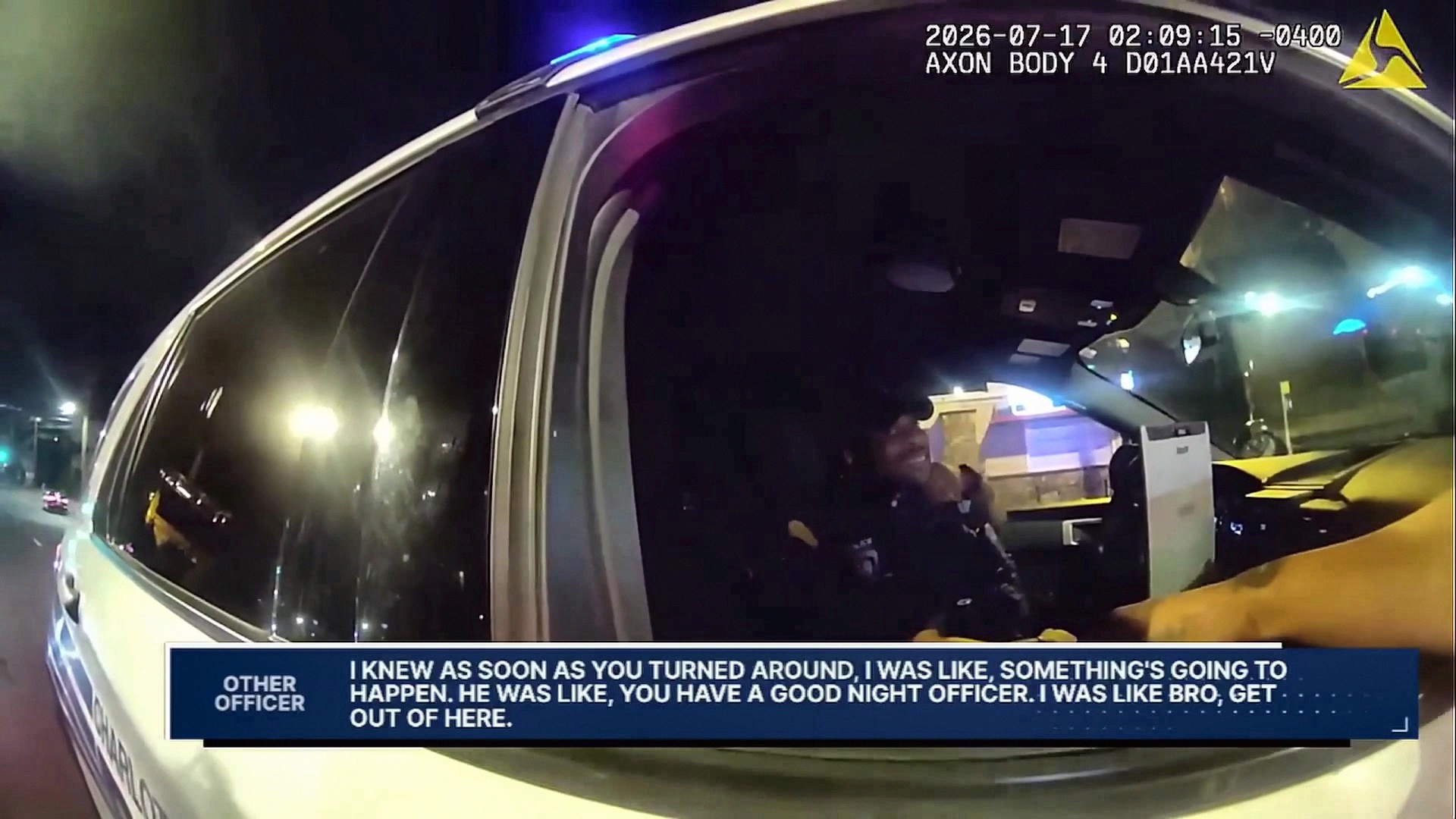
- The setting: Uptown Charlotte, North Carolina, in the early morning hours of July 17, when a group of teenagers was riding bicycles through empty downtown streets.
- The friction: Officer Malcolm Joseph, returning from an earlier call, spotted the group and believed they were performing wheelies through traffic lanes.
- The intervention: Bodycam captures Joseph pulling a U-turn, accelerating after the riders, exiting his patrol car, and shoving one 17-year-old off his bicycle and onto the pavement.
- The aftermath: The teen suffered scrapes to his back, arm, hip, and head. Joseph was charged with simple assault, pleaded no contest, received six months of unsupervised probation, and now holds an inactive police certification.
What the Recorded Footage Captures: Chronological Breakdown
The clip opens on a quiet block of low storefronts, the walls bleached white by overhead lamps, a lone lit doorway bearing the letters ALO. The camera is mounted at chest height, and it lurches with the officer's stride. A dark shape – the bicycle – flashes at the frame's right edge. Then the timestamp jumps and the viewer is inside the cruiser, staring through the windshield as the officer narrates the decision that will define the next three minutes.
"Y'all doing wheelies and stuff?"
"I was not."
"I was thinking of a wheelie."
The exchange is almost absurd in its calm. The boy is not running. He is not armed. He is standing beside a bicycle in a city with no other traffic visible, and he answers the officer's questions with the flat patience of someone who assumes the encounter will end in a warning. It does not.
The camera catches the moment of contact – a lunge, a push, a body folding sideways off the frame – and then the ground rushing up as the officer's own momentum carries him down too.
The footage then does something more damaging than the shove itself. Joseph walks back to his cruiser, settles into the driver's seat, and delivers his sign-off.
"Y'all have a nice night. Now, if I catch y'all again, I'm not going to be as nice."
Later, at the original call he had abandoned, the audio captures a second officer's reaction as Joseph recounts the encounter with visible satisfaction. The retiring tone – a colleague noting she knew something would happen the moment he turned around – turns a physical act into a story two officers share and enjoy. That is the moment the lens becomes evidence of culture, not just conduct.
Scroll down for the full investigative report below ↓
Critical Blind Spots: What the Lens Leaves Unresolved
The body camera is an imperfect witness. It sees what the officer's chest faces, and it sees nothing else. Before the U-turn, the footage offers no clarity on how fast the group was traveling, whether they actually crossed in front of traffic, or whether the wheelie allegations had any basis beyond the officer's own description. The teens' phones – if they were filming – have not been made public.
The camera also cannot measure pain. What the department later characterized as minor injuries, the father described in far heavier terms: a third concussion in eight months, light sensitivity, brain fog, difficulty concentrating. None of that appears on the recording. The viewer sees scrapes on a back and arm; the viewer cannot see what the following weeks felt like in that household.
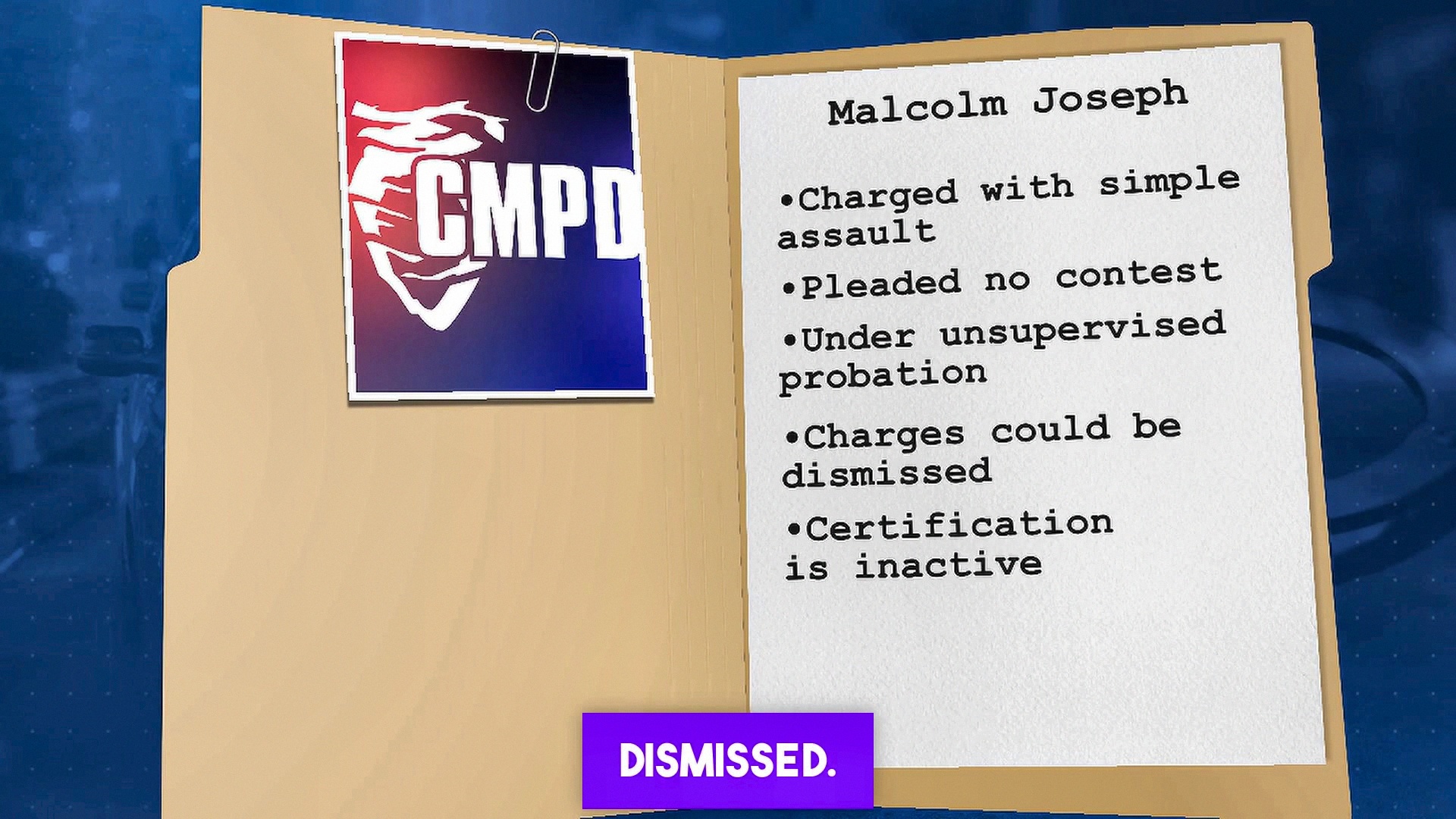
Finally, the gap between the shove and the sentence is enormous. The footage ends; the legal machinery grinds on for months. Everything that shaped the outcome – the plea negotiation, the sentencing rationale, the decision to place the file in an inactive status rather than pursue decertification – happened in rooms no body camera ever entered.
Statutory Framework and Protocol Analysis
Under Terry v. Ohio, an officer may briefly detain a person on reasonable suspicion of criminal activity, and Pennsylvania v. Mimms permits ordering a driver out of a vehicle during a lawful stop. Those doctrines are narrow, and they are wedged against the Fourth Amendment's prohibition on unreasonable seizure. The interest here was minor – a municipal ordinance concern about bicycle stunts – and the force deployed was physical. Rodriguez v. United States reinforces that a stop must not extend beyond the time reasonably required to resolve the suspicion, and nothing in the footage shows an attempt to cite, warn, and release before contact occurred.
What compounds the analysis is the accountability structure. A no-contest plea to simple assault, followed by unsupervised probation and dismissal contingent on good behavior, is a common disposition for a first-time misdemeanor. But in the policing context it raises a separate question about certification and public trust, which is why the state's inactive-status listing on his credential drew nearly as much attention as the charge itself.
Departments typically have parallel tracks: criminal process through courts, administrative process through internal affairs, and certification review through a state standards body. The footage supplies a factual record for all three.
| Incident Parameter | Observation at the Scene |
|---|---|
| Time and location | 2:04 a.m., Uptown Charlotte streets |
| Subject identity | 17-year-old male on a bicycle |
| Citizen resistance before contact | None visible; subject stationary and answering questions |
| Force employed | Physical push from the bicycle to pavement |
| Stated basis for stop | Alleged wheelies through traffic lanes |
| Recorded injuries | Scrapes to back, arm, hip, and head |
| Officer's post-contact remark | Warning of less gentle treatment next time |
| Criminal disposition | No contest; six months unsupervised probation |
| Certification status | Inactive |
Read more:
Read more: Woman Taunts Officers for 5 Minutes Until Sergeant Arrives →
Core Questions and Institutional Review
- Why did the initial stop, based on a low-level city ordinance matter, escalate to physical contact within seconds of the officer's arrival?
- What did the department's internal review conclude about the decision to leave an active call and initiate a pursuit of teenagers who were not fleeing?
- How was the injury assessment made, and how does the teen's reported concussion history reconcile with the characterization of his injuries as minor?
- Does an inactive certification adequately reflect an adjudicated assault by a sworn officer, and what threshold governs reinstatement?
What unsettles many viewers is not the shove alone – it is the farewell. The officer turned his back, walked to his cruiser, and wished the teenagers a pleasant evening, as though the pavement had not just absorbed one of them. That small, relaxed exit explains why the clip circulates as grief rather than spectacle. Watch it once and the question lingers: when the camera records a moment like that, what is the record actually for – discipline, or simply our memory?
FOLLOW-UP INVESTIGATION REPORT
Related documented case details, verified on-scene evidence, and statutory liability analysis continued below.
CONTINUE READING: NEXT INVESTIGATIVE DOSSIER →
McDonald’s Counter Clash: Shoulder Check Sparks Shouting Match

A shoulder check and a spilled pink drink turn a routine fast-food pickup into a shouting match, with a crowded line frozen in place and someone demanding the police. What the camera catches in those chaotic seconds is less a brawl than a masterclass in how quickly ordinary friction becomes public spectacle.
- A group of teens and counter employees at a McDonald's register lock into a verbal dispute that begins as an order disagreement.
- A physical collision – a shoulder check – triggers an immediate verbal escalation, with one voice cutting through the noise: "You bump me man, watch where you're going!"
- Both sides talk over each other as the queue behind them stalls, with bystanders in hoodies, jackets, and red outerwear frozen between the register and the drink station.
- The confrontation peaks with shouting, an attempted physical grab, and the declaration "Call the cops!" before the footage ends.
What the Recorded Footage Captures: Chronological Breakdown
The camera opens on a brightly lit counter beneath glowing menu boards. A young man in a gray hoodie stands at the register, body angled toward the drink station, while a second young man in a dark graphic shirt leans forward with an open, questioning gesture. A pink beverage has already met the counter, pooling in a wide smear that catches the overhead light. Everything reads ordinary – until it doesn't.
Then the collision. The hoodie-wearing customer moves laterally, and the contact is immediate. A voice snaps out: "You bump me man, watch where you're going!" The reply comes back sharp and fast – "Say it again, hey, hey!" – and the geography of the room changes in a single heartbeat. The gap between customer and counter collapses. A woman in a red jacket steps in from the left side of the frame, her camera-phone angled, her expression caught between documentation and disbelief.
The escalation is loud and overlapping, all volume and no listening. "Whoa! Yo, guys stop, stop, get off me, that's enough!" one voice pleads, while another presses forward with "Back up everybody!" The camera dips toward the tile floor as the operator is jostled – a telltale sign that bodies are moving, not just voices. A man near the register throws his hands out in a placating gesture, the universal signal for hold on. But the momentum is already loose. Someone asks, "You want another one?" and the reply lands like a verdict: "Call the cops!" The clip cuts before anyone in uniform appears.
Critical Blind Spots: What the Lens Leaves Unresolved
The camera is a witness, not a judge. It never captures the moment that actually started the argument – the words exchanged at the register about the order, or whether the disputed item was ever in a bag. We see the aftermath of a misunderstanding and none of its origin, which means the visible collision may be a symptom rather than the cause.
Nor does the footage identify who initiated physical contact. A shoulder check in a cramped queue can be accidental, careless, or deliberate, and the camera's angle flattens all three into a single ambiguous frame. The operator's hand shakes; the shot drops; the frame jumps. Between those jumps, entire sentences vanish – sentences that likely explain why one person refused to back down and another refused to walk away. Even the bystanders' role is unresolved. The woman in red films, the man in the graphic shirt gestures, but who was staff and who was a customer remains unclear in the blur.
Finally, the clip ends at the loudest moment, not the resolution. Did the argument dissipate into muttered complaints and a refund, or did it follow the group out the door and into the parking lot? The record simply stops, and silence is not the same as peace.
Statutory Framework and Protocol Analysis
In American retail environments, employees and managers carry a duty of care to maintain a safe space for customers, which typically means a de-escalation script: separate the parties, lower the volume, offer a resolution, and call law enforcement only if safety is at risk. The shouted demand for "the cops" suggests that script either was never offered or was rejected. On the civil-rights side, the constitutional principles that govern any eventual police encounter are well established – a Terry v. Ohio stop requires reasonable suspicion, Pennsylvania v. Mimms allows officers to direct occupants out of a vehicle during a lawful stop, and Rodriguez v. United States caps the duration of an investigative detention absent new justification. None of that framework resolves who was wrong at the counter, but it explains why a manager's choice to call or not call police is a consequential act, not a formality.
| Incident Parameter | Recorded On-Scene Evidence |
|---|---|
| Setting | Brightly lit McDonald's counter with overhead illuminated menu boards |
| Crowd density | Several customers and staff packed within arm's reach of the register |
| Trigger moment | Physical bump accompanied by the shout "watch where you're going" |
| Verbal exchange | Overlapping voices, repeated "say it again," calls to "back up" |
| Physical contact | Brief scuffle with a plea of "get off me, that's enough" |
| Escalation cue | "You want another one?" followed by "Call the cops!" |
| Outcome on camera | Footage ends mid-dispute; no resolution or police arrival shown |
Fast-food counters are high-friction spaces by design: short waits, loud noise, cramped footing, and a transaction that feels personal to both sides. Community expectations run in two directions – customers expect to be heard, and crews expect not to be touched. When those expectations collide, the standard playbook is to pause the transaction, move the dispute off the main line, and let a manager reset the tone. Here, no one appeared to own that reset until the volume had already swallowed the room.
Core Questions and Institutional Review
- Was the initial contact between the customer and the other party accidental or intentional?
- Did the disputed order ever receive a resolution, or did the dispute replace the transaction entirely?
- Who requested police involvement, and did any call actually go out before the footage ended?
- Were employees trained or empowered to separate the parties, and did they attempt it off-camera?
What lingers is the speed of it. A quiet counter, a pink puddle, a shoulder – and within seconds a room full of people performing for an audience they can feel but cannot see. The camera did not create the friction; it merely insured that the friction would be replayed, analyzed, and argued about by people who were never in the room. Perhaps the more useful question is not who was right at that register, but why so many of us now expect a stranger's worst thirty seconds to arrive in our feeds before we've finished our own meals.
Practical Takeaways
- When a dispute erupts in a public queue, your safest move is distance – step back, keep hands visible, and let staff or security separate the parties.
- If contact was accidental, name it plainly and move on; most escalations are fed by the refusal to acknowledge rather than the bump itself.
- Recording is legal in most public settings, but positioning matters – stay clear of physical contact zones and never insert yourself into the scrum to get a better angle.
- Staff should redirect the disputed transaction away from the register line and offer a concrete resolution before the volume makes negotiation impossible.



One comment on “Bodycam Shows Officer Push Teen Off Bike in Charlotte”