The flashing of high beams is a wordless courtesy on dark roads, a brief signal of danger ahead. But in Lowell, North Carolina, a woman's simple gesture triggered a chain of events that ended with her front door splintered, her body on the ground, and a community demanding answers. Was it a lawful arrest or an overreach of authority? The footage shows the confrontation, but the truth is buried in what the camera doesn't capture.
- The Scene: Just after 2 a.m. on a Thursday, a Gaston County police car sat dark and silent on the median along Wilkinson Boulevard, watching traffic.
- The Friction: Hailey Brown, driving home from work, flashed her headlights to warn oncoming drivers of the parked cruiser, a habit she says she uses for any roadside hazard.
- The Intervention: An officer followed Brown to her home, confronted her at her front door, and the situation escalated into a physical struggle captured on police video.
- The Aftermath: Brown was arrested, charged with resisting a public officer and traffic offenses, and spent hours in jail. She now plans to file a complaint and demands the release of full body and dash camera footage.
What the Recorded Footage Captures: Chronological Breakdown
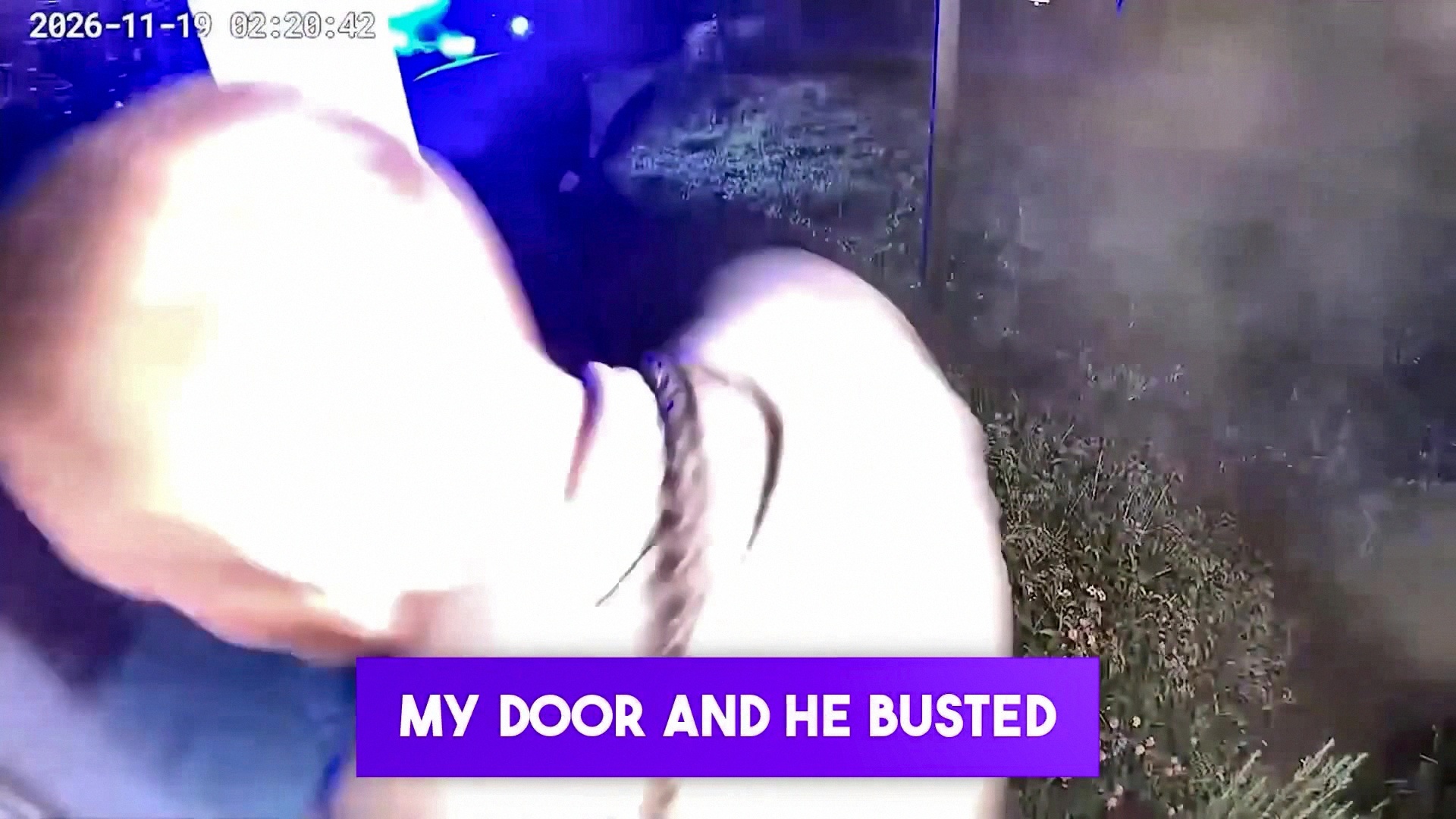
The video begins with the grainy, blue-tinted chaos of a police body camera. A doorframe splinters inward. An officer's arm reaches through the gap. The audio is a blur of shouts and scuffling, but the visual is unmistakable: a man in uniform forcing his way into a private home. The officer is not hesitating; he is moving with the momentum of a linebacker, as Brown later describes it, his shoulder driving the wood until the lock gives way.
What follows is a tumble of limbs and fabric as Brown is pulled from the threshold onto the ground. The camera jolts, catching only fragments: a flash of a braid, the dark fabric of a shirt, the gleam of handcuffs. The officers take her down, and the audio captures the thud of bodies on the floor. The screen flashes a timestamp: 02:20:42. The arrest is swift and overwhelming, a sudden explosion of force in the quiet of a residential night.
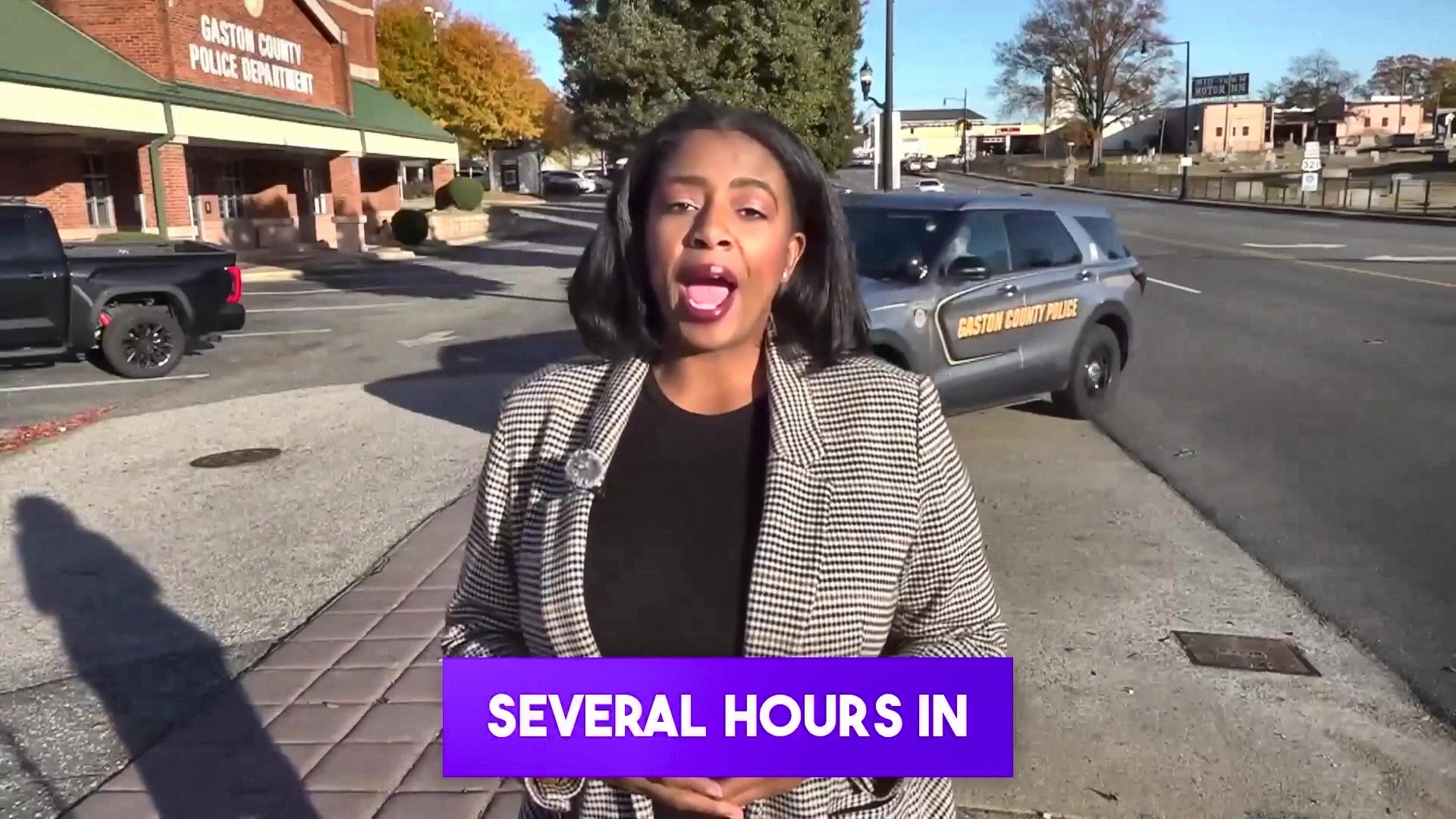
The footage then cuts to the aftermath. A reporter stands in front of the Gaston County Police Department, the autumn sun bright on her face. She explains the charges: resisting a public officer, three traffic offenses. The video cuts back to the body cam, showing Brown on the ground, her face obscured, her voice a murmur beneath the officers' commands.
There is no sign of a weapon, no sign of a fleeing suspect. There is only the raw, messy reality of a woman being subdued in her own doorway.
Scroll down for the full investigative report below ↓

Critical Blind Spots: What the Lens Leaves Unresolved
What the body camera does not show is the crucial minutes before the door was breached. What was the officer's justification for following Brown home? The arrest report alleges she ran from an active traffic stop, but Brown maintains she never believed she was being pulled over. The camera captures the confrontation, but it does not capture the officer's decision-making in the moments leading up to it. Did he activate his lights? Did he verbally command her to stop? The footage is silent on these questions.
Another blind spot is the question of legal authority. The video shows the physical struggle, but it cannot show the legal basis for the stop. Brown's description of the incident suggests she did not know she was being pursued. The officer's perspective, whatever it may be, is not visible in the footage.
The camera is strapped to his chest, but it does not show his thoughts, his training, or his perception of the threat. The gap between what the officer saw and what Brown experienced is the space where the controversy lives.
Finally, the footage does not capture the full context of the headlight flash. Was it a deliberate act of warning, as Brown claims, or a random flick of the switch? The video shows the result, but not the intent. The law is clear that warning others of police presence is protected speech, but the officer's interpretation of that flash is what triggered the pursuit. The camera captures the arrest, but it leaves the reason for the pursuit entirely off-screen.
Statutory Framework and Protocol Analysis
The core legal issue in this incident is whether the officer had the authority to detain Brown at her home. Under the Fourth Amendment, a traffic stop is a seizure, and it must be supported by reasonable suspicion of a traffic violation. Flashing high beams to warn others is generally considered protected speech under the First Amendment, as it communicates information to other drivers.
However, if the officer believed the flash was a violation of a specific statute (such as a local ordinance against flashing lights), the stop might be lawful. But the stop must be conducted properly, and the officer must have reasonable suspicion to continue the detention.
The escalation to a physical arrest for resisting a public officer is a separate legal question. Under the law, resisting arrest requires that the officer was making a lawful arrest. If the initial stop was unlawful, the resistance charge may not stand. The video shows the physical struggle, but the legal foundation for the arrest is what matters.
The officer's actions, including the forced entry into the home, must be evaluated against the standard of objective reasonableness. The footage captures the force, but the justification for that force is the subject of the ongoing review.
| Incident Parameter | Observation at the Scene |
|---|---|
| Time of Incident | Just after 2 a.m. on a Thursday in November |
| Location | Lowell, Gaston County, North Carolina |
| Trigger Event | Flash of high beams at a parked police car |
| Police Action | Officer follows to home, forces door open, arrests woman |
| Charges Filed | Resisting a public officer; three traffic offenses |
| Physical Evidence | Bruises and trauma reported by the woman |
| Pending Review | Request for body cam and dash cam release; complaint filed |
Read more:
Read more: Midwood Brooklyn: Deli Confrontation Caught on Camera →
Core Questions and Institutional Review
- Was the initial traffic stop lawful, and did the officer have reasonable suspicion to pursue Brown to her home?
- Does the First Amendment protect the flashing of high beams to warn others of police presence, and does that protection extend to the home?
- Was the force used to enter the home and arrest Brown proportionate to any threat she posed, or did it exceed the bounds of objective reasonableness?
- Will the full body camera and dash camera footage be released to the public, and what will it reveal about the moments before the door was breached?
As the investigation continues, the community is left to weigh the competing narratives. The footage shows a woman pulled from her home, but it does not show the full story. The legal questions will be answered in court, but the public debate is already underway. What do you think the full footage will reveal?
FOLLOW-UP INVESTIGATION REPORT
Related documented case details, verified on-scene evidence, and statutory liability analysis continued below.
CONTINUE READING: NEXT INVESTIGATIVE DOSSIER →
Woman Taunts Officers for 5 Minutes Until Sergeant Arrives

A woman in a red cap stands beside a patrol car in the gray pre-dawn light, demanding to be jailed as if it were a prize. For roughly five minutes she taunts, curses, and treats the officers as props in her own recording – until a sergeant arrives and the performance collapses.
- The scene: Body-worn camera footage timestamped May 3, 2026, at 6:48 a.m. shows officers dispatched to a report of a disorderly woman causing a disturbance outside a business with an "OPEN 24 HOURS" sign and a red FDC fire connection in the foreground.
- The friction: The woman repeatedly challenges the officers, demanding, "Take me to jail so I can have it recorded, please," while arguing about "public and goddamn decency."
- The intervention: A supervising sergeant arrives, and the woman's confrontational posture visibly deflates as the tone of the exchange shifts from spectacle to procedure.
- The aftermath: The recording captures the confrontation largely unresolved on camera, leaving the disposition of the encounter and any citation or custody decision unseen.
What the Recorded Footage Captures: Chronological Breakdown
The footage opens inside a patrol vehicle, the camera angled past a tattooed forearm toward an open door and a woman standing on the pavement in a dark top and bright red baseball cap. Her stance is square and unhurried, weight on both feet, chin lifted – the body language of someone who has decided the camera is her audience. The timestamp reads 06:48:26, the sky still washed in that flat gray that comes just before sunrise.
Within seconds the verbal sparring begins. She tells the officers she has eleven children and that no one will listen to her, then pivots instantly to the dare that anchors the entire clip: "Take me to jail." When an officer asks how she wants to help the situation, she fires back, "That's helping me, dog." The officer tells her to walk away. She refuses, repeating the demand again and again, each repetition flatter and more mechanical than the last.
Asked what the indecency is, she gestures toward the officer and his attitude. The exchange tightens. She complains about a cigarette being waved near her face; the officer tells her to get it out of his face, and she answers, "Because I'm asking you to," before returning to the same refrain. What is striking across the frames is the absence of physical escalation – no lunging, no contact, just a woman planting herself in place and weaponizing repetition, daring the officers to cross a line she believes will make her the story.
"Take me to jail. For what? Public and goddamn decency."
Then the frame that matters most: the woman's posture changes. Her shoulders drop, her hands still, and the sing-song defiance drains out of her voice as a sergeant takes over the conversation. The transformation is not subtle – it is the difference between someone performing for a lens and someone realizing the lens no longer protects her.
Critical Blind Spots: What the Lens Leaves Unresolved
The camera is mounted on an officer's chest and answers only one question at a time. It never shows what prompted the original call – who reported the disturbance, what the woman was doing before the first officer arrived, or whether the "push" she references involved anyone else at the scene. Her claim about witnessing someone push another person goes unverified on the recording, and no second party is clearly visible in the frames.
The audio is clipped and overlapping, officers speaking over her and she over them, which means several exchanges are partially lost. We do not hear the sergeant's opening words clearly enough to quote them, only the effect those words have. That gap is the most consequential blind spot in the entire clip: the public wants to know exactly what broke her defiance, and the recording preserves the result without the full script.
What the lens also cannot show is time. Five minutes of loops and insults feels interminable in real life and compresses into a few dozen seconds on video, so viewers may underestimate how long the officers stood there absorbing it before a supervisor was summoned.
Statutory Framework and Protocol Analysis
The legal architecture here is well established and worth understanding, because it explains why the officers did not simply grant her wish. Under the Fourth Amendment, a seizure requires probable cause or reasonable suspicion grounded in specific facts. A consensual encounter – an officer asking someone to walk away or lower their voice – can end at any time, and refusing to leave is not itself a crime absent an applicable local ordinance. Demanding arrest does not create probable cause; it is a request, not an admission.
Duration is the other pressure point. Under Rodriguez v. United States, an investigative stop cannot be extended beyond the time reasonably needed to complete its mission, and under Terry v. Ohio the scope of any stop must stay tied to the suspicion that justified it. When a supervisor arrives, the standard practice in American agencies is to reassess, clarify the complaint, and either resolve the matter informally or articulate a lawful basis for enforcement – which is often why a sergeant's presence changes the temperature rather than the outcome.
| Incident Parameter | Observation at the Scene |
|---|---|
| Recording timestamp | 06:48 a.m., May 3, 2026 |
| Camera source | Officer body-worn camera, chest-mounted |
| Setting | Commercial frontage with an open-24-hours sign, pre-dawn light |
| Primary subject | Woman in a red cap, dark top, standing beside a patrol car |
| Stated complaint | Report of a disorderly woman causing a disturbance |
| Subject's stated demand | Repeated requests to be taken to jail |
| Turning point | Arrival of a supervising sergeant |
Read more: {NOIBO}
Core Questions and Institutional Review
- What specific conduct or complaint triggered the original dispatch, and did it involve a second person as the woman claimed?
- What words did the sergeant use that shifted the exchange, and were they procedural, de-escalatory, or a lawful warning?
- Was any citation issued, or was the encounter resolved with a documented dispersal?
- How long did the interaction last in full, and did supervisors review the footage under the agency's own body-camera policy?
Body-worn cameras have made these encounters visible in a way they never were two decades ago, but visibility is not the same as clarity. The footage gives us a woman, an officer, a sergeant, and a public street at dawn – and it gives us every pause, every eye roll, every calculated refusal to move, without ever quite telling us why the street was the stage that morning. What the record does confirm is a small, human truth about confrontation: the loudest person in the frame is rarely the one holding the authority, and the arrival of a calm voice can end a five-minute performance in five seconds.




One comment on “Headlight Flash Leads to Violent Arrest in North Carolina”