A routine response to a retail theft escalated into a high-speed pursuit on a sunny California afternoon, culminating in a tense serious legal charge stop where suspects discovered their desperate flight was futile. The incident, captured entirely on police body-worn and dash cameras, reveals the split-second decisions and chaotic atmosphere when a shoplifting spree turns into a dangerous game of cat and mouse on public roads.
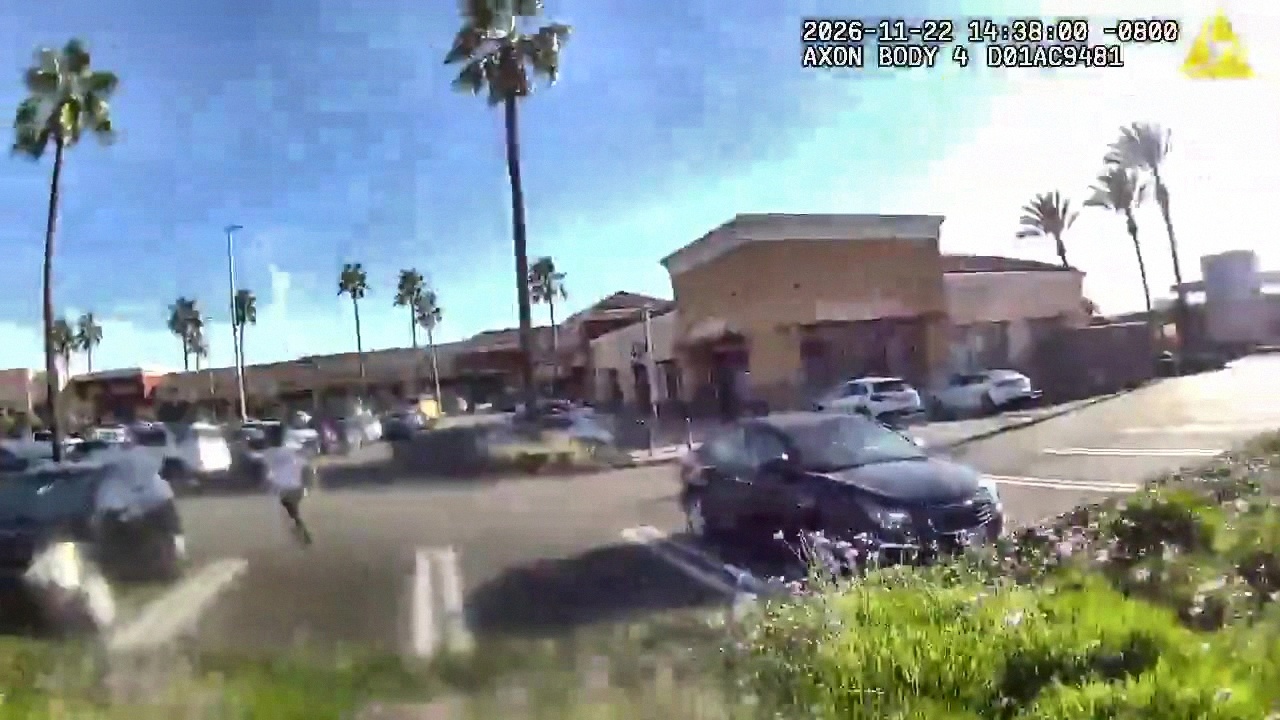
- The Score: Three individuals allegedly walked out of a sporting goods store with nearly $3,000 worth of merchandise on a Sunday afternoon.
- The Escape: The suspects loaded the goods into a dark sedan and immediately attempted to flee the parking lot, but officers were already positioning themselves nearby.
- The Dangerous Maneuver: Instead of yielding, the driver blew through red lights and wove through traffic at high speeds, with the passenger urging them to flee.
- The Aftermath: The vehicle was eventually stopped, leading to a serious legal charge stop where officers discovered the suspects had prior warrants, including a parolee with a no-bail violation.
What the Recorded Footage Captures: Chronological Breakdown
The video begins with a sense of immediate urgency in a sun-drenched commercial parking lot. The camera, mounted on an officer's chest, shows a black sedan reversing rapidly out of a spot, surrounded by palm trees and the typical Sunday afternoon traffic of Upland, California. The suspect vehicle doesn't hesitate; it accelerates toward the exit, forcing its way into the flow of cars. The audio captures the raw anxiety inside the fleeing car, a chaotic mix of shouted directions and panic.
"Go! Go! Go! Get out of there!" a voice screams, followed by the driver's frantic realization that law enforcement is already onto them. "Puglies behind us, just turned on their lights."
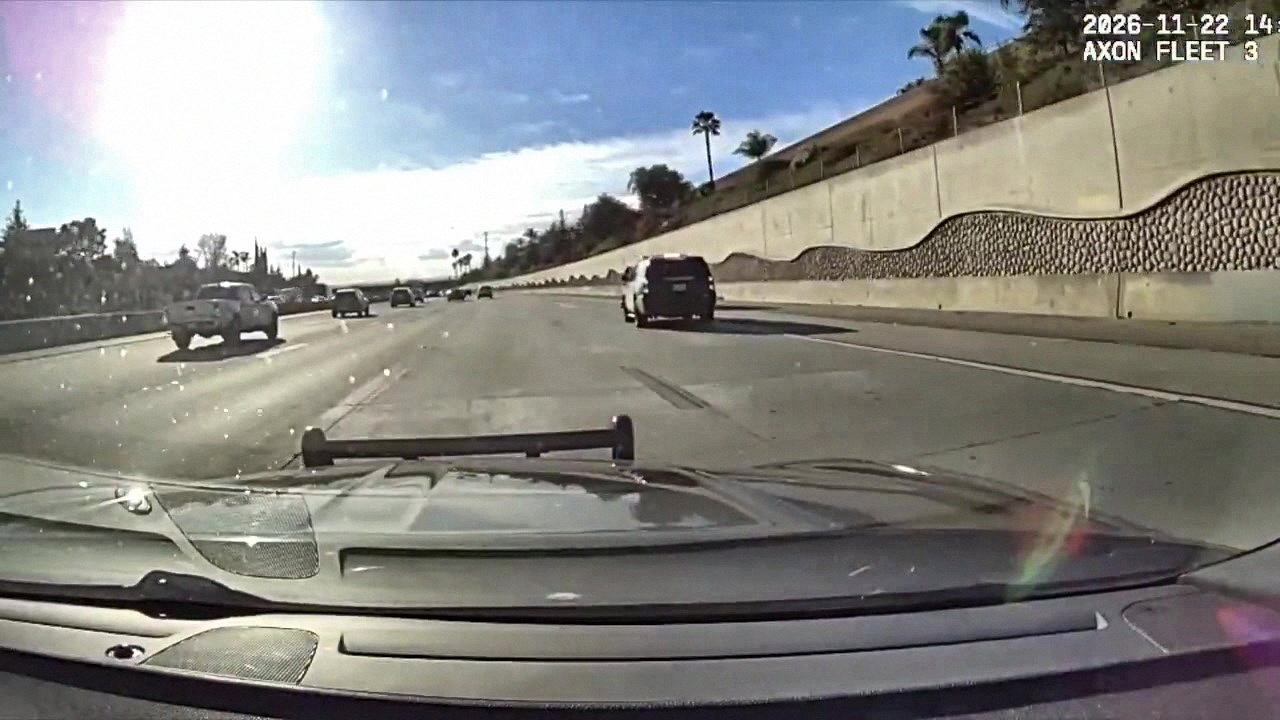
As the chase moves from surface streets to the highway, the mood shifts from panic to a desperate kind of delusion. The driver weaves through traffic, the sun glaring off the windshield of the pursuing patrol unit. The passenger, who appears to be directing the driver, repeatedly urges them to disregard traffic signals and speed away. The camera captures the blur of passing cars and the concrete highway barriers as the sedan pushes its luck. The audio is filled with incoherent shouts about not stopping and making it home, a raw admission of fear that underscores the recklessness of the driving.
"No we not stopping, blow through the lights," the passenger says, followed by the repeated, almost mantra-like refrain: "I'm not gonna jail tonight."
The pursuit eventually comes to a halt, but not in the way the suspects hoped. The footage cuts to a body camera showing an officer approaching the stopped vehicle with weapon drawn, shouting commands. The previous chaos of the drive is replaced by the rigid, tense protocol of a high-risk traffic stop. The officer's voice cuts through the air, demanding to see hands and ordering everyone out.
The scene is chaotic, with the suspects' hands visible through the glass, their posture shifting from defiant to compliant as the reality of their capture sets in.
Scroll down for the full investigative report below ↓
Critical Blind Spots: What the Lens Leaves Unresolved
While the footage captures the pursuit and the stop, it leaves several crucial questions unanswered regarding the initial theft. The body camera focuses on the aftermath, but the moment the three individuals allegedly walked out of the sporting goods store with nearly $3,000 in merchandise is not fully shown.
We see the merchandise – a pile of clothing and a large box for a camping screen house – laid out on the hood of the police cruiser afterward, but the exact method of concealment or the specific store layout remains a blind spot.
Furthermore, the perspective of the second and third suspects is largely absent. The primary audio we hear is from the driver and the front passenger, but the backseat passengers are silent. Their level of involvement and their reaction to the driver's reckless decisions are left to the imagination.
The camera also doesn't show what happened in the moments immediately after the vehicle stopped, specifically how the officers managed to extract three suspects from the car without further incident, leaving a gap in the timeline between the stop and the display of recovered goods.
Statutory Framework and Protocol Analysis
The incident highlights the standard protocol for responding to retail theft that escalates into a vehicle pursuit. While department policies vary on vehicle pursuits, the decision to continue the chase is often balanced against the danger to the public. The suspects' actions – running red lights and driving at high speeds – elevated the situation from a simple theft to a serious public safety threat.
The officers' decision to conduct a serious legal charge stop was grounded in the need to secure the suspects quickly and prevent further flight.
| Incident Parameter | Recorded On-Scene Evidence |
|---|---|
| Location | Upland, California (Commercial parking lot and highway) |
| Suspects | Three males, one identified as a parolee with a no-bail warrant |
| Stolen Goods | Nearly $3,000 in sporting goods (clothing, camping gear) |
| Pursuit Trigger | Suspect vehicle ran red lights and fled at high speed |
| Stop Tactics | High-risk serious legal charge stop with drawn service weapons |
| Recovered Items | Clothing and a Coleman camping screen house on the hood |
Read more:
Read more: Bodycam Shows Officer Push Teen Off Bike in Charlotte →
The recovery of the merchandise, including a large box for a camping screen house, suggests the suspects were not just opportunists but were prepared to move a significant amount of product. The presence of a parolee with a warrant adds a layer of complexity to the legal proceedings, as the arrest triggers a review of their parole status. This encounter underscores the reality that minor retail crimes can quickly escalate into dangerous situations when suspects choose to flee rather than face the consequences.
Core Questions and Institutional Review
- What prompts a shoplifter to risk a high-speed chase over merchandise? The fear of incarceration, particularly for a parolee facing a no-bail warrant, clearly outweighed the risk of a dangerous crash.
- How do officers balance the chase with public safety? The decision to pursue is never made lightly, but the suspects' blatant disregard for red lights forced the officers' hand to prevent a greater tragedy.
- What happens to the recovered merchandise? The items are typically returned to the retailer after being documented as evidence, but the process of restitution for the loss is a separate legal battle.
- Does the passenger's influence indicate a larger organized operation? The coordinated shouting suggests familiarity with the process, raising questions about whether this was an isolated incident or part of a larger pattern.
The footage ends with the suspects in custody, but the scars of the pursuit – both physical and legal – remain. The officer's calm demeanor during the stop contrasts sharply with the earlier panic of the suspects, highlighting the training that allows law enforcement to transition from a chaotic chase to a controlled arrest. As the investigation continues, one question lingers: would the outcome have been different if the suspects had simply stopped in the parking lot, trading a misdemeanor for a serious legal charge?
FOLLOW-UP INVESTIGATION REPORT
Related documented case details, verified on-scene evidence, and statutory liability analysis continued below.
CONTINUE READING: NEXT INVESTIGATIVE DOSSIER →
Masked Crowd Confronts Brooklyn Deli as Neighbors Push Back

The first thing the camera catches is the noise – a wall of shouting, then a single voice cutting through it. A masked crowd surges toward the glass front of a kosher deli in Brooklyn, and the men standing outside are not backing away. Within seconds, the argument stops being verbal.
- A crowd of demonstrators, many with faces covered, massed outside Essen NY Deli in Midwood, Brooklyn, on a cold November evening, pressing toward the storefront.
- Community members arrived in numbers to stand between the entrance and the crowd, turning a protest into a face-to-face confrontation.
- Loud verbal confrontation erupted into shoving and physical scuffles as lines of people collided on the sidewalk.
- The NYPD deployed a large presence, including its Strategic Response Group, and several arrests followed as the crowd was pushed back from the door.
What the Recorded Footage Captures: Chronological Breakdown
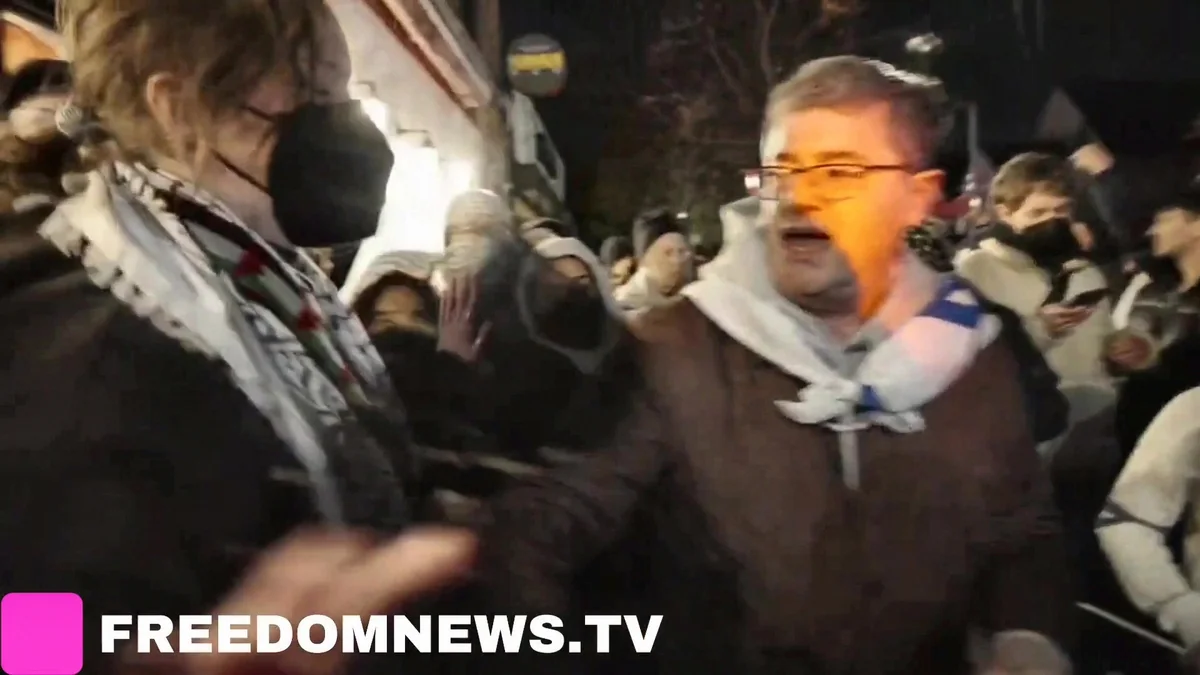
The footage opens tight on a confrontation already in progress. A man in glasses with a blue-and-white scarf knotted at his throat stands facing a masked person in a dark jacket, and his mouth is wide open in a shout. The lighting is hard and uneven – a storefront lamp throwing a hot orange glare across his face, the rest of the street falling into deep shadow. Someone off-camera is yelling the same words on a loop: "Get the dispute out! Get the dispute out!"
A wider frame reveals the scale of it. A dense ring of people fills the intersection, cell phones and broadcast cameras raised overhead, a cluster of flags bobbing above the heads. At the center of the crush is the deli, its windows the only bright surface in the frame. Body by body, the crowd is pressing toward that light, and the men on the sidewalk are pressing back. Shoulders square, feet planted, nobody giving an inch.
Then the camera tilts and the geometry of the scene becomes clear: a police officer in a dark uniform and peaked cap wedged into the middle of the crowd, trying to hold a lane open with his arms. The shoving picks up. A woman is jostled hard against the people behind her. A man staggers sideways as the ring tightens. The flags tilt and swing overhead, and the shouted orders from officers get swallowed by the noise. The clip ends mid-surge, with the line still holding – barely.
Critical Blind Spots: What the Lens Leaves Unresolved
What the frames cannot tell you is who moved first. The camera catches the confrontation already at full boil; the seconds before it – the words exchanged, the first hand laid on a shoulder, the moment a protest became a push – happened outside the frame or off the front of the lens. Both sides would have their own account, and neither is captured here.
Nor does the footage show what, if anything, happened inside the deli. The original post claims an attempt to break in; the visible record shows a crowd surging toward doors and a line of people holding them shut. Whether glass was struck, whether a door was forced, whether anything beyond the threshold was touched is not something these frames resolve. The audio is equally limited – a handful of shouted obscenities, no calm voices, no one explaining their cause on tape.
Statutory Framework and Protocol Analysis
Under established U.S. law, peaceful assembly is protected, but the moment physical contact or forced entry enters the picture, officers are operating under standard crowd-control doctrine: establish a buffer, give clear dispersal orders, and make targeted arrests rather than sweeping ones. The officer visible in the footage – alone, arms out, holding a lane – is executing that doctrine in the hardest possible conditions, where the buffer is only as wide as one person's shoulders.
Fourth Amendment standards still apply in a chaotic street. An arrest requires probable cause tied to specific acts, and a brief detention requires reasonable suspicion under Terry v. Ohio. Ordering someone to step back from a doorway is a lawful public-safety direction; ordering someone to leave a public sidewalk without cause is not. That distinction is what separates a well-run operation from a lawsuit.
| Incident Parameter | Observation at the Scene |
|---|---|
| Location | Kosher deli storefront, Midwood, Brooklyn, NYC |
| Time of day | Night, streetlights and storefront lamps |
| Crowd composition | Masked demonstrators facing community members |
| First visible act | Shouted confrontation at the deli entrance |
| Escalation | Shoving and physical scuffles on the sidewalk |
| Police response | Large NYPD deployment, officers in the crowd |
| Immediate outcome | Line held, several arrests reported |
Read more: {NOIBO}
What the record does show clearly is a community that arrived fast. Neighbors came out in numbers, some wrapped in flags, some simply in winter coats, and put themselves between a crowd and a door. Whatever one thinks of the underlying dispute, that reflex – show up, stand in the gap – is a recognizable civic behavior, and it is what kept the confrontation from moving inside.
Core Questions and Institutional Review
- Who initiated physical contact in the seconds before the camera began recording, and is that documented anywhere?
- Were any doors, windows, or fixtures at the deli actually struck or damaged, and does the police record reflect it?
- What specific charges were filed against those arrested, and how many cases move forward?
- Did officers issue audible dispersal orders before making arrests, and is that captured on body-worn camera?
The larger question is not who shouted loudest on a Brooklyn sidewalk. It is whether a city can keep two crowds apart without either one concluding the law only works for the other. Watching the officer in that frame hold a lane with his arms while the ring closes in, the answer looks less like a policy failure and more like a staffing arithmetic problem nobody wants to fund.
What would you have done if you were standing at that door?



One comment on “Upland Police High-Speed Chase Ends in Serious legal charge Stop”