A blur of blonde hair and a voice pitched to a shriek ricochetes off the polished floors of Nashville International Airport. What begins as a boarding dispute spirals into a surreal scene where a traveler cycles through bizarre pop-culture mantras. The rapidly escalating encounter leaves officers with no path forward except a physical arrest, and it raises a sharp question: where is the line between distress and disruption?
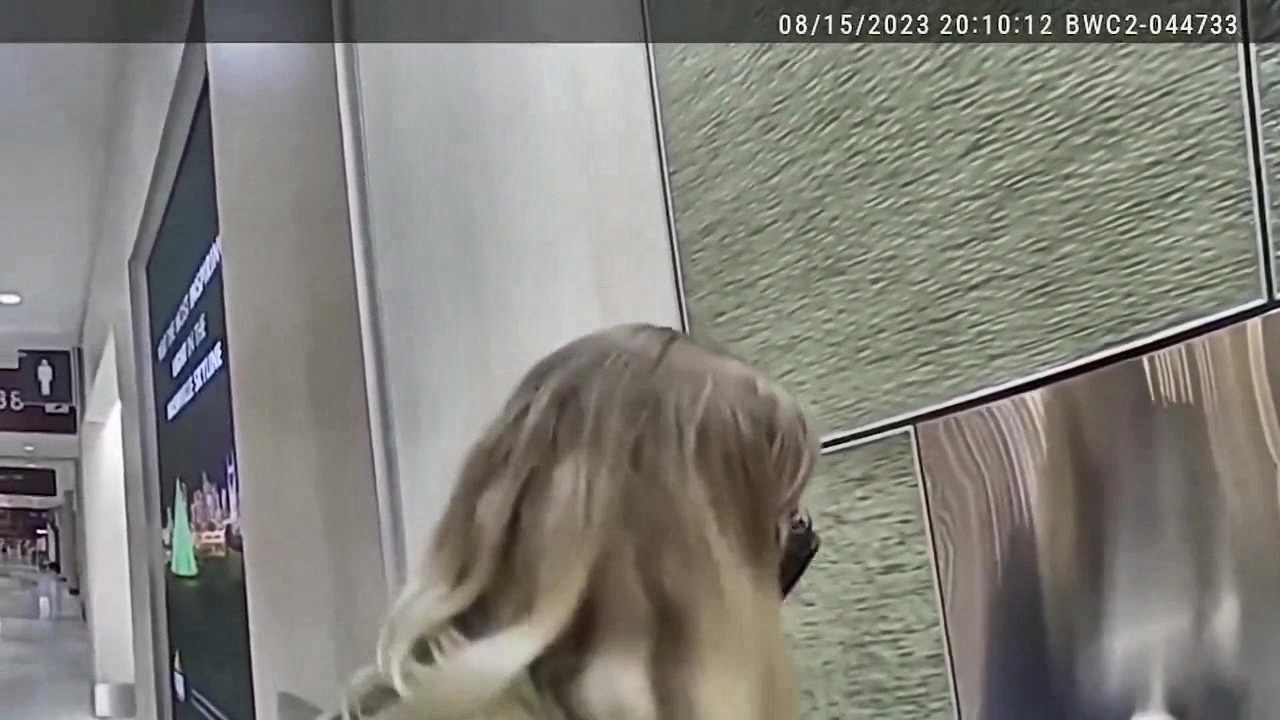
- The Setting: An airport corridor near gate B6, marked by a sterile, paneled wall and the glow of a departure screen on the evening of August 15, 2023.
- The Friction: A Scottish comedian is stopped from boarding her flight, prompting a confrontation with airport security personnel who repeatedly order her to leave the property.
- The Intervention: Officers announce that she is under arrest after she refuses to comply and continues to shout about drinking water while demanding to be released.
- The Aftermath: A chaotic scuffle ensues as deputies work to secure her hands behind her back, culminating in her removal from the terminal in handcuffs.
What the Recorded Footage Captures: Chronological Breakdown
The timestamp on the body camera footage reads 20:10:12, and the initial frame shows only the back of a woman's head, blonde hair obscuring her face as she appears to be walking away. The tension is immediate and unspoken; a male voice, likely an officer or a companion named Jacob, is heard in the background. The woman turns toward the camera, her movements quick and erratic.
"I am White Lotus, I am Titanic," she declares, the words tumbling out as a defiant, nonsensical chant. The reference to a luxury resort and a doomed ocean liner lands with surreal force, but the officers are unmoved, repeating a flat, procedural command: "We are escorting you out. You are being requested to leave the property."
As the camera jostles, the situation shifts from verbal resistance to physical obstruction. The woman raises her voice, demanding that the officers get their hands off her. "Get your hands off me while I drink my water," she shouts, the absurdity of the request hanging in the air.
The footage briefly captures a blurred view of her face – sunglasses, a dark turtleneck, and a smartphone held tight in her grip – before the camera drops to the floor, showing only the weave of the carpet and a pair of black shoes moving rapidly. The audio track descends into a mess of overlapping voices and scuffling sounds.
The decisive turning point arrives when an officer declares, "You're under arrest," followed instantly by the stern instruction, "Turn around. Put your hands behind your back."
"Stop resisting. Stop resisting. Stop resisting."
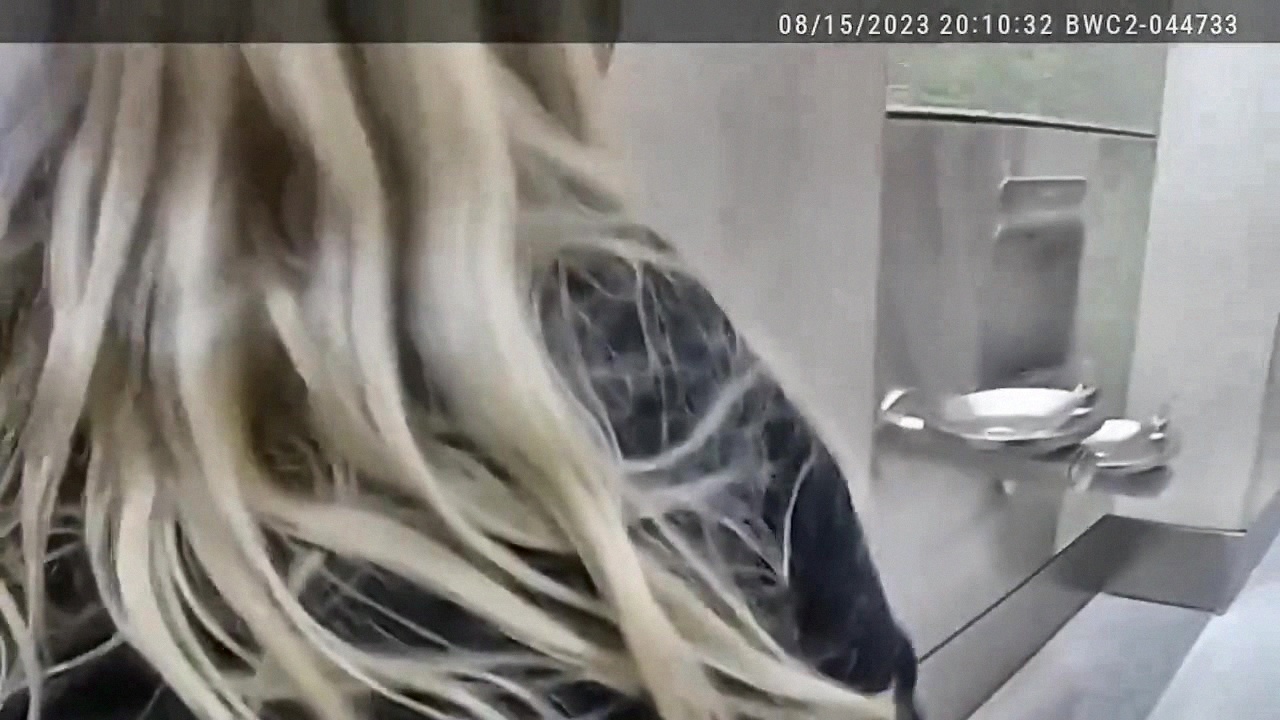
The repetition of this command, voiced by the officers, underscores the physical struggle taking place just out of frame. The footage cuts to a close-up of long blonde hair and a black jacket, with the metallic gleam of handcuffs visible near a silver restroom door handle. The recording ends with the woman still vocal, still fighting, as she is finally secured and guided away from the gate area.
Scroll down for the full investigative report below ↓
Critical Blind Spots: What the Lens Leaves Unresolved
The primary blind spot in this footage is the precise trigger for the initial denial of boarding. The body camera activates after the dispute is already in motion, meaning the audience never sees the interaction at the gate counter or the Delta Airlines lounge that reportedly started the chain of events. This absence of context forces the viewer to piece together the story from the frantic dialogue, leaving a gap between the airline's operating procedures and the woman's apparent refusal to accept them.
Furthermore, the camera perspective is highly limited during the climax of the struggle. When the lens drops toward the floor, the actual mechanism of the arrest is obscured. We hear the commands to stop resisting, but we cannot see if the woman was actively swinging her arms or simply going limp.
This visual gap is critical because it determines whether the officers' use of force was a necessary response to an active threat or an escalation of a situation that could have been de-escalated through other means.
Finally, the identity and role of the person named Jacob remain unclear. He is mentioned once in the audio, but his presence – whether he was a travel companion, an airport employee, or a helpful bystander – is never established in the footage. Without knowing who he is, the social dynamic of the confrontation remains incomplete, leaving a thread of the narrative hanging entirely unresolved.
Statutory Framework and Protocol Analysis
Airport terminals are complex legal spaces. While public in function, they are heavily regulated private environments where the carrier and the airport authority set the terms of access. When an individual is told they cannot board and is then asked to leave the property, the refusal to comply with that lawful order usually triggers a disorderly conduct charge.
The officers in this footage followed this protocol: they issued clear, repeated warnings that the woman was being escorted out and that she was requested to leave. When she continued to argue and demanded to be released while drinking her water, she crossed the threshold from a disgruntled passenger to an active trespasser.
The physical arrest requires a legal justification, typically probable cause that a crime is occurring. In this case, the woman's refusal to leave the property provided that probable cause. The officers' commands to "turn around" and "put your hands behind your back" are standard control tactics designed to minimize injury to both the subject and the officers.
The struggle that ensues highlights the inherent risk of any physical arrest; the commands to stop resisting are not merely suggestions but legal directives that, when ignored, can lead to additional charges.
| Incident Parameter | Observation at the Scene |
|---|---|
| Date and Time | August 15, 2023, at approximately 20:10 local time |
| Location | Nashville International Airport, near gate B6 |
| Primary Subject | A female traveler with blonde hair, later identified as a Scottish comedian |
| Law Enforcement Presence | Multiple airport police officers |
| Subject's Verbal Claims | "I am White Lotus, I am Titanic," and demands to be released while drinking water |
| Officer Commands | "You are being requested to leave the property," "You're under arrest," "Stop resisting" |
| Outcome | Subject physically restrained and taken into custody |
Read more:
Read more: Masked Crowd Confronts Brooklyn Deli as Neighbors Push Back →
Core Questions and Institutional Review
- What specific airline policy or safety concern prompted the initial denial of boarding, and was that decision communicated clearly to the passenger before law enforcement arrived?
- At what exact moment did the officers transition from a request to leave the property to a formal arrest, and did they provide a clear opportunity for voluntary compliance?
- How does the presence of a camera impact the behavior of both the subject and the officers during a high-stress physical arrest?
- What de-escalation techniques, if any, were attempted in the critical window between the woman's first shout and the officers' decision to physically restrain her?
The footage leaves the viewer with a lingering sense of unease. The woman's bizarre statements about being a luxury resort and a legendary ship suggest a person in a state of profound distress, yet the officers' response was strictly procedural. The airport is a place of transit, a space where people are expected to move along without friction, and when that expectation is shattered, the institution's machinery grinds into action.
The Nashville Police Department reviewed the incident, and the charge of disorderly conduct was ultimately dismissed, but the questions remain. Was this a case of a traveler who simply snapped under the pressure of modern air travel, or was there a deeper misunderstanding of the rules? What would you have done if you were standing in that terminal watching the blonde hair disappear behind the silver restroom door?
FOLLOW-UP INVESTIGATION REPORT
Related documented case details, verified on-scene evidence, and statutory liability analysis continued below.
CONTINUE READING: NEXT INVESTIGATIVE DOSSIER →
Upland Police High-Speed Chase Ends in Serious legal charge Stop

A routine response to a retail theft escalated into a high-speed pursuit on a sunny California afternoon, culminating in a tense serious legal charge stop where suspects discovered their desperate flight was futile. The incident, captured entirely on police body-worn and dash cameras, reveals the split-second decisions and chaotic atmosphere when a shoplifting spree turns into a dangerous game of cat and mouse on public roads.
- The Score: Three individuals allegedly walked out of a sporting goods store with nearly $3,000 worth of merchandise on a Sunday afternoon.
- The Escape: The suspects loaded the goods into a dark sedan and immediately attempted to flee the parking lot, but officers were already positioning themselves nearby.
- The Dangerous Maneuver: Instead of yielding, the driver blew through red lights and wove through traffic at high speeds, with the passenger urging them to flee.
- The Aftermath: The vehicle was eventually stopped, leading to a serious legal charge stop where officers discovered the suspects had prior warrants, including a parolee with a no-bail violation.
What the Recorded Footage Captures: Chronological Breakdown
The video begins with a sense of immediate urgency in a sun-drenched commercial parking lot. The camera, mounted on an officer's chest, shows a black sedan reversing rapidly out of a spot, surrounded by palm trees and the typical Sunday afternoon traffic of Upland, California. The suspect vehicle doesn't hesitate; it accelerates toward the exit, forcing its way into the flow of cars. The audio captures the raw anxiety inside the fleeing car, a chaotic mix of shouted directions and panic.
"Go! Go! Go! Get out of there!" a voice screams, followed by the driver's frantic realization that law enforcement is already onto them. "Puglies behind us, just turned on their lights."
As the chase moves from surface streets to the highway, the mood shifts from panic to a desperate kind of delusion. The driver weaves through traffic, the sun glaring off the windshield of the pursuing patrol unit. The passenger, who appears to be directing the driver, repeatedly urges them to disregard traffic signals and speed away. The camera captures the blur of passing cars and the concrete highway barriers as the sedan pushes its luck. The audio is filled with incoherent shouts about not stopping and making it home, a raw admission of fear that underscores the recklessness of the driving.
"No we not stopping, blow through the lights," the passenger says, followed by the repeated, almost mantra-like refrain: "I'm not gonna jail tonight."
The pursuit eventually comes to a halt, but not in the way the suspects hoped. The footage cuts to a body camera showing an officer approaching the stopped vehicle with weapon drawn, shouting commands. The previous chaos of the drive is replaced by the rigid, tense protocol of a high-risk traffic stop. The officer's voice cuts through the air, demanding to see hands and ordering everyone out. The scene is chaotic, with the suspects' hands visible through the glass, their posture shifting from defiant to compliant as the reality of their capture sets in.
Critical Blind Spots: What the Lens Leaves Unresolved
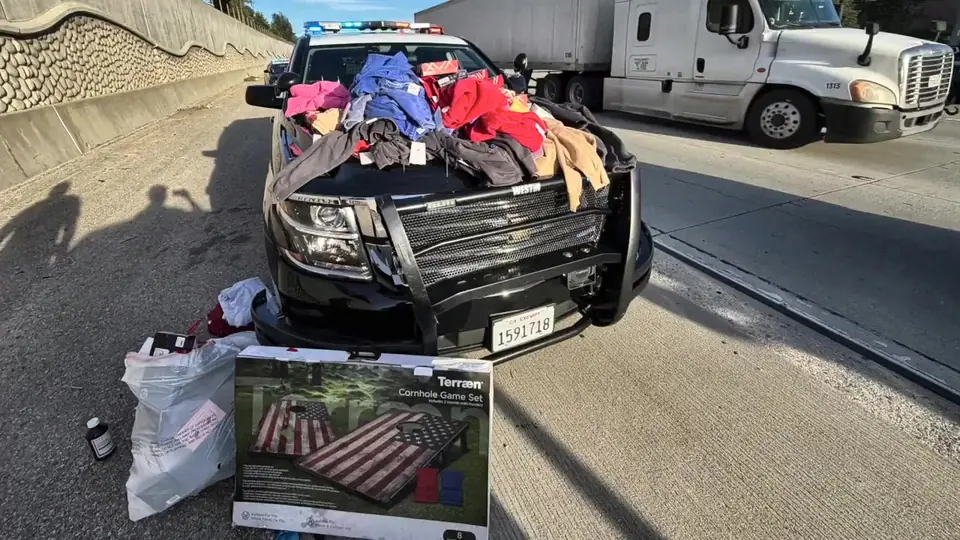
While the footage captures the pursuit and the stop, it leaves several crucial questions unanswered regarding the initial theft. The body camera focuses on the aftermath, but the moment the three individuals allegedly walked out of the sporting goods store with nearly $3,000 in merchandise is not fully shown. We see the merchandise – a pile of clothing and a large box for a camping screen house – laid out on the hood of the police cruiser afterward, but the exact method of concealment or the specific store layout remains a blind spot.
Furthermore, the perspective of the second and third suspects is largely absent. The primary audio we hear is from the driver and the front passenger, but the backseat passengers are silent. Their level of involvement and their reaction to the driver's reckless decisions are left to the imagination. The camera also doesn't show what happened in the moments immediately after the vehicle stopped, specifically how the officers managed to extract three suspects from the car without further incident, leaving a gap in the timeline between the stop and the display of recovered goods.
Statutory Framework and Protocol Analysis
The incident highlights the standard protocol for responding to retail theft that escalates into a vehicle pursuit. While department policies vary on vehicle pursuits, the decision to continue the chase is often balanced against the danger to the public. The suspects' actions – running red lights and driving at high speeds – elevated the situation from a simple theft to a serious public safety threat. The officers' decision to conduct a serious legal charge stop was grounded in the need to secure the suspects quickly and prevent further flight.
| Incident Parameter | Recorded On-Scene Evidence |
|---|---|
| Location | Upland, California (Commercial parking lot and highway) |
| Suspects | Three males, one identified as a parolee with a no-bail warrant |
| Stolen Goods | Nearly $3,000 in sporting goods (clothing, camping gear) |
| Pursuit Trigger | Suspect vehicle ran red lights and fled at high speed |
| Stop Tactics | High-risk serious legal charge stop with drawn service weapons |
| Recovered Items | Clothing and a Coleman camping screen house on the hood |
The recovery of the merchandise, including a large box for a camping screen house, suggests the suspects were not just opportunists but were prepared to move a significant amount of product. The presence of a parolee with a warrant adds a layer of complexity to the legal proceedings, as the arrest triggers a review of their parole status. This encounter underscores the reality that minor retail crimes can quickly escalate into dangerous situations when suspects choose to flee rather than face the consequences.
Core Questions and Institutional Review
- What prompts a shoplifter to risk a high-speed chase over merchandise? The fear of incarceration, particularly for a parolee facing a no-bail warrant, clearly outweighed the risk of a dangerous crash.
- How do officers balance the chase with public safety? The decision to pursue is never made lightly, but the suspects' blatant disregard for red lights forced the officers' hand to prevent a greater tragedy.
- What happens to the recovered merchandise? The items are typically returned to the retailer after being documented as evidence, but the process of restitution for the loss is a separate legal battle.
- Does the passenger's influence indicate a larger organized operation? The coordinated shouting suggests familiarity with the process, raising questions about whether this was an isolated incident or part of a larger pattern.
The footage ends with the suspects in custody, but the scars of the pursuit – both physical and legal – remain. The officer's calm demeanor during the stop contrasts sharply with the earlier panic of the suspects, highlighting the training that allows law enforcement to transition from a chaotic chase to a controlled arrest. As the investigation continues, one question lingers: would the outcome have been different if the suspects had simply stopped in the parking lot, trading a misdemeanor for a serious legal charge?



One comment on “Nashville Airport Confrontation: Woman Arrested After Bizarre Claims”