A hostile crowd surges toward a kosher deli's doors in Brooklyn, screaming over a woman's repeated accusations, while a thin line of police officers struggles to hold the front. The recorded confrontation raises hard questions about where protest ends, where physical aggression begins, and how quickly community friction can slip beyond verbal control.
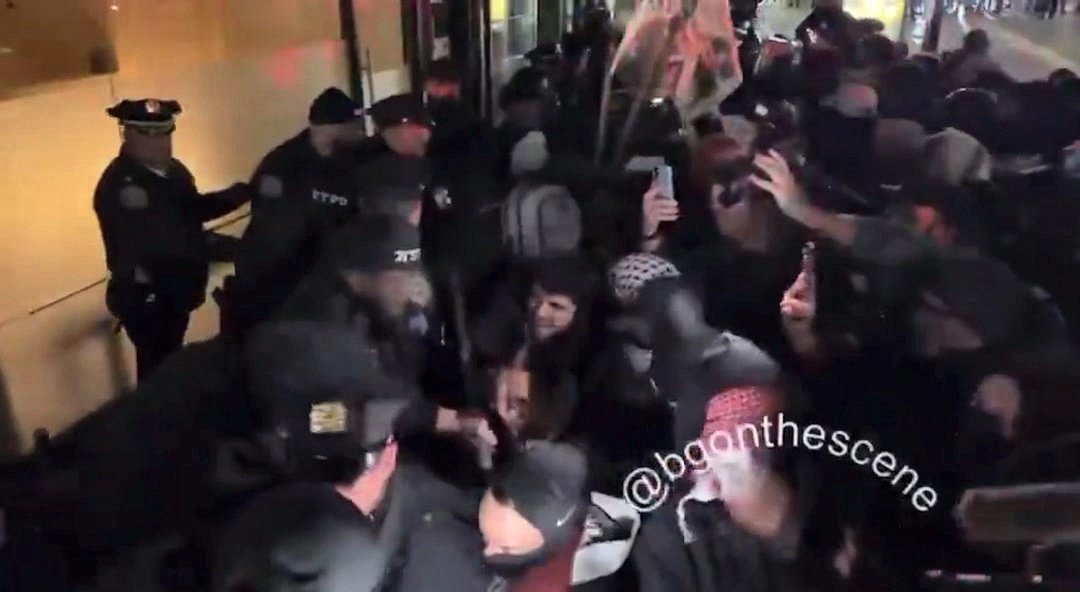
- A large crowd gathers outside a kosher deli in the Midwood section of Brooklyn, pressing toward the storefront as night falls.
- The situation escalates as a woman's voice sharply cries "Liar!" repeatedly, pulling the crowd's attention toward the deli entrance.
- NYPD officers in uniform, including members of the Strategic Response Group, form a tight physical barrier between the crowd and the business.
- Several people are arrested amid the confrontation, according to officials, and the crowd eventually disperses as the police line holds.
What the Recorded Footage Captures: Chronological Breakdown
The video opens on a churning, close-packed crowd at night, captured from within the press of bodies. Officers in dark uniforms and peaked caps stand shoulder to shoulder, using metal barricades to wedge open a narrow corridor in front of the deli. The lighting is uneven and harsh from a mix of overhead streetlamps and camera-phone screens, and the air seems thick with the amplified noise of hundreds of overlapping voices.
The crowd is a mosaic of sweaters, scarves, and traditional keffiyehs, with raised phones capturing the scene from every angle.
The tension tightens when a female voice begins shouting an accusation. "She's lying! Liar! Liar!" the voice cries out, setting off a ripple of voices through the crowd. What exactly she is accusing someone of is never made clear in the footage, but her repeated cries become a focal point of the crowd's attention.
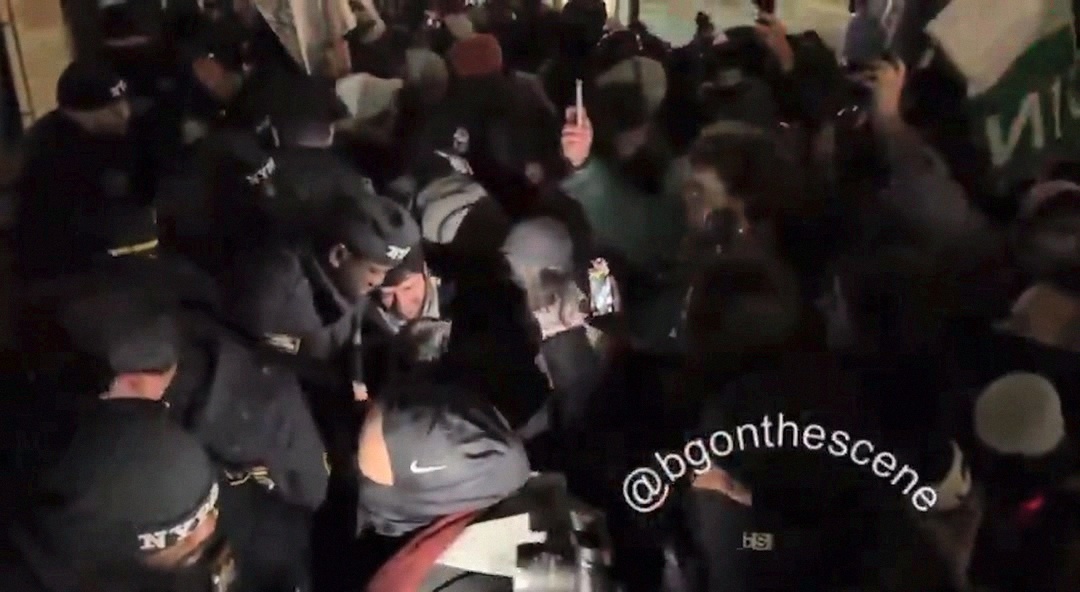
Officers lean forward, their faces set in hard lines, bracing against the sway of bodies pressing in from the front. Somewhere in the background, a person yells in defiance. "F**k you all!" the voice spits out, and the camera swings briefly, catching the blurred motion of arms and shoulders moving in counterpoint.
Later, the crowd's energy turns to chants and cheers. The camera rises above a brief scuffle as officers push forward, moving someone away from the line. The tension breaks into a spasm of movement, and then the video cuts before the scene fully resolves. The sounds are a chaotic collage of rage, profanity, and warning cries from officers urging order.
In one moment, a voice snaps out something that sounds like "packed out," and the crowd responds with a wave of pushing and jostling. It remains unclear who was arrested or for what specific offense at the moment the recording ends.
Scroll down for the full investigative report below ↓
Critical Blind Spots: What the Lens Leaves Unresolved
The footage captures the friction but leaves the origin of the confrontation in shadow. The video begins in the middle of an already tense scene, and the critical trigger is never shown. Was there a preceding argument? Did a specific individual spark the confrontation? The recorded evidence offers no clear answers. The identity of the woman shouting "Liar!" remains unknown, as does the subject of her accusation.
Another blind spot is the geography of the deli itself. The camera stays mostly outside, capturing the front of the crowd and the police line, but what is happening inside the deli or behind the crowd is unseen. The exact reason the crowd is targeting this specific business is never explicitly explained on camera, nor is the role of any event that may have drawn the crowd there. The viewer is left with a snapshot of confrontation without the full context of its origins.
Finally, the moment of arrest or direct confrontation is only partially captured. Shouts of "He's crazy!" echo through the crowd, but the subject of that accusation is obscured by bodies. The video offers no clean resolution, no visible arrests, and no aftermath footage showing how the situation was fully contained. The line of officers remains a blur of motion, and the viewer is left to guess at the sequence of events that led to the final scuffle.
Statutory Framework and Protocol Analysis
The footage shows the NYPD deploying a coordinated physical barrier. Under established crowd-control standards, officers are directed to maintain a visible line, make repeated warnings about unlawful behavior, and use minimal force necessary to prevent harm. The physical formation seen here – barricades at the front and officers at the rear – is a textbook response to a crowd that has moved from assembly to potential confrontation.
The officers in the frame are seen using their bodies and equipment to keep a buffer between the crowd and the storefront. This approach is grounded in the legal principle that while public streets are open for assembly, direct physical aggression or property destruction falls outside that protection and can be limited by a police line.
The intervention process also raises questions about arrest and detention standards. Under standard Fourth Amendment principles, an officer may briefly detain and arrest an individual when probable cause exists that a crime – such as disorderly conduct, trespass, or assault – has occurred. In the footage, the officers are seen holding a narrow line while individuals press against them, and the volume of the crowd makes specific interventions difficult.
The final moments show a scuffle where it appears someone is being pulled away from the line, which is consistent with standard crowd-control procedures. The community expectation in such incidents is that police respond proportionally and that all parties – protesters, counter-protesters, and bystanders – are held to the same standard of conduct.
| Incident Parameter | Observation at the Scene |
|---|---|
| Location | Exterior of a kosher deli in Midwood, Brooklyn, at night |
| Lighting | Mixed streetlamps and phone-lights; uneven, high contrast |
| Primary Actor | A woman's voice repeatedly shouting "Liar!" toward the scene |
| Police Presence | Multiple uniformed NYPD officers and a physical barrier line |
| Crowd Behavior | Pushing, jostling, shouting, and raised phone cameras |
| Verbal Exchanges | Profanity, accusations of lying, and chants from the crowd |
| Material Elements | Metal barricades and the deli's storefront edge |
Read more:
Read more: Upland Police High-Speed Chase Ends in Serious legal charge Stop →
The standard crowd-control playbook also emphasizes clear communication with the crowd. The footage reveals interruptions of sharp utterances, but it is not clear that officers issued any bullhorn warnings or gave dispersal orders. The ability to communicate effectively in a high-noise environment is a critical part of de-escalation.
From a community perspective, this moment also spotlights the physical strain placed on a thin line of officers, who must hold a perimeter against a moving crowd while waiting for additional support. The friction of the scene – sweat, shouting, close quarters – is a reminder that physical intervention is always a last resort and that calm verbal communication is often the first line of defense.
Core Questions and Institutional Review
- Who initiated the confrontation outside the deli, and what specifically triggered the woman's repeated cries of "Liar!" against the reported backdrop of a demonstrator gathering?
- What exactly were the specific criminal charges or legal grounds for the arrests that reportedly occurred during the confrontation?
- Were the counter-protesters and the original demonstrators separated prior to the physical pushing, and were verbal warnings issued before officers locked down their line?
- How will the resulting clash and arrests shape the ongoing conversation about crowd safety and public order in this Brooklyn neighborhood?
The recorded footage leaves the public with a partial picture. A crowd surged, a thin line of police held, and a night outside a local business turned physical. The unanswered questions about the origin of the dispute and the specific outcome of those arrested linger long after the recording ends.
For many viewers, the most pressing question remains: at what point does an assembly of people with a grievance become a physical threat to a neighborhood business, and who bears responsibility for ensuring that line is never crossed?
FOLLOW-UP INVESTIGATION REPORT
Related documented case details, verified on-scene evidence, and statutory liability analysis continued below.
CONTINUE READING: NEXT INVESTIGATIVE DOSSIER →
Nashville Airport Confrontation: Woman Arrested After Bizarre Claims
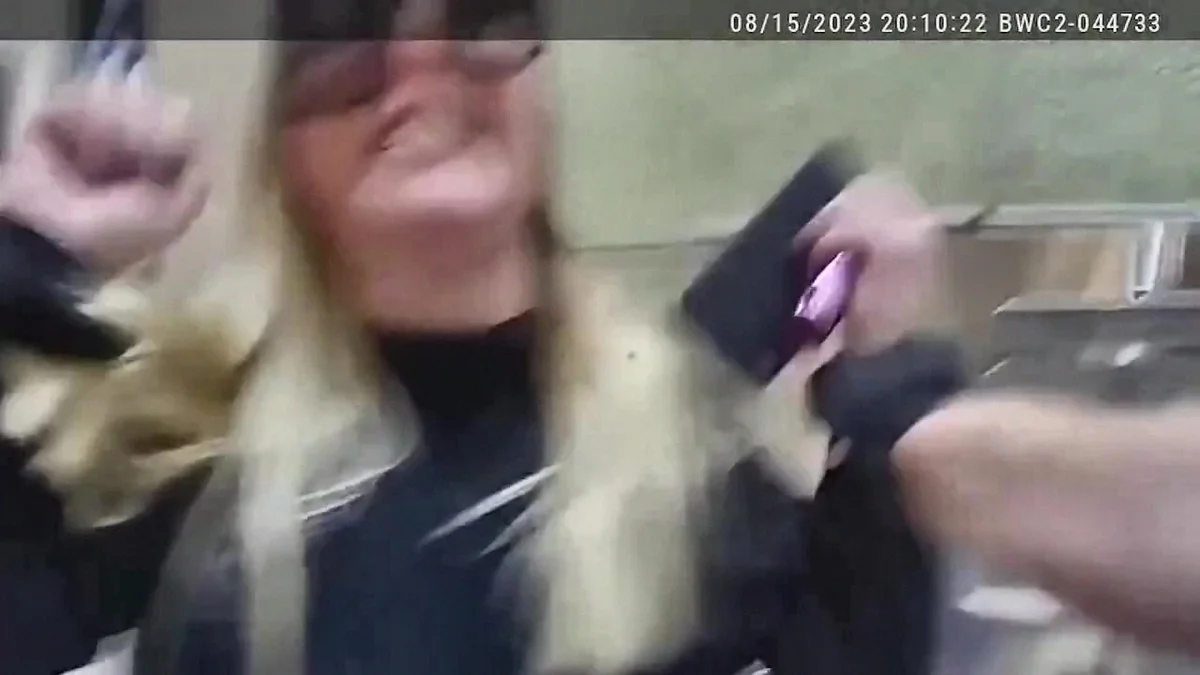
A blur of blonde hair and a voice pitched to a shriek ricochetes off the polished floors of Nashville International Airport. What begins as a boarding dispute spirals into a surreal scene where a traveler cycles through bizarre pop-culture mantras. The rapidly escalating encounter leaves officers with no path forward except a physical arrest, and it raises a sharp question: where is the line between distress and disruption?
- The Setting: An airport corridor near gate B6, marked by a sterile, paneled wall and the glow of a departure screen on the evening of August 15, 2023.
- The Friction: A Scottish comedian is stopped from boarding her flight, prompting a confrontation with airport security personnel who repeatedly order her to leave the property.
- The Intervention: Officers announce that she is under arrest after she refuses to comply and continues to shout about drinking water while demanding to be released.
- The Aftermath: A chaotic scuffle ensues as deputies work to secure her hands behind her back, culminating in her removal from the terminal in handcuffs.
What the Recorded Footage Captures: Chronological Breakdown
The timestamp on the body camera footage reads 20:10:12, and the initial frame shows only the back of a woman's head, blonde hair obscuring her face as she appears to be walking away. The tension is immediate and unspoken; a male voice, likely an officer or a companion named Jacob, is heard in the background. The woman turns toward the camera, her movements quick and erratic. "I am White Lotus, I am Titanic," she declares, the words tumbling out as a defiant, nonsensical chant. The reference to a luxury resort and a doomed ocean liner lands with surreal force, but the officers are unmoved, repeating a flat, procedural command: "We are escorting you out. You are being requested to leave the property."
As the camera jostles, the situation shifts from verbal resistance to physical obstruction. The woman raises her voice, demanding that the officers get their hands off her. "Get your hands off me while I drink my water," she shouts, the absurdity of the request hanging in the air. The footage briefly captures a blurred view of her face – sunglasses, a dark turtleneck, and a smartphone held tight in her grip – before the camera drops to the floor, showing only the weave of the carpet and a pair of black shoes moving rapidly. The audio track descends into a mess of overlapping voices and scuffling sounds. The decisive turning point arrives when an officer declares, "You're under arrest," followed instantly by the stern instruction, "Turn around. Put your hands behind your back."
"Stop resisting. Stop resisting. Stop resisting."
The repetition of this command, voiced by the officers, underscores the physical struggle taking place just out of frame. The footage cuts to a close-up of long blonde hair and a black jacket, with the metallic gleam of handcuffs visible near a silver restroom door handle. The recording ends with the woman still vocal, still fighting, as she is finally secured and guided away from the gate area.
Critical Blind Spots: What the Lens Leaves Unresolved
The primary blind spot in this footage is the precise trigger for the initial denial of boarding. The body camera activates after the dispute is already in motion, meaning the audience never sees the interaction at the gate counter or the Delta Airlines lounge that reportedly started the chain of events. This absence of context forces the viewer to piece together the story from the frantic dialogue, leaving a gap between the airline's operating procedures and the woman's apparent refusal to accept them.
Furthermore, the camera perspective is highly limited during the climax of the struggle. When the lens drops toward the floor, the actual mechanism of the arrest is obscured. We hear the commands to stop resisting, but we cannot see if the woman was actively swinging her arms or simply going limp. This visual gap is critical because it determines whether the officers' use of force was a necessary response to an active threat or an escalation of a situation that could have been de-escalated through other means.
Finally, the identity and role of the person named Jacob remain unclear. He is mentioned once in the audio, but his presence – whether he was a travel companion, an airport employee, or a helpful bystander – is never established in the footage. Without knowing who he is, the social dynamic of the confrontation remains incomplete, leaving a thread of the narrative hanging entirely unresolved.
Statutory Framework and Protocol Analysis
Airport terminals are complex legal spaces. While public in function, they are heavily regulated private environments where the carrier and the airport authority set the terms of access. When an individual is told they cannot board and is then asked to leave the property, the refusal to comply with that lawful order usually triggers a disorderly conduct charge. The officers in this footage followed this protocol: they issued clear, repeated warnings that the woman was being escorted out and that she was requested to leave. When she continued to argue and demanded to be released while drinking her water, she crossed the threshold from a disgruntled passenger to an active trespasser.
The physical arrest requires a legal justification, typically probable cause that a crime is occurring. In this case, the woman's refusal to leave the property provided that probable cause. The officers' commands to "turn around" and "put your hands behind your back" are standard control tactics designed to minimize injury to both the subject and the officers. The struggle that ensues highlights the inherent risk of any physical arrest; the commands to stop resisting are not merely suggestions but legal directives that, when ignored, can lead to additional charges.
| Incident Parameter | Observation at the Scene |
|---|---|
| Date and Time | August 15, 2023, at approximately 20:10 local time |
| Location | Nashville International Airport, near gate B6 |
| Primary Subject | A female traveler with blonde hair, later identified as a Scottish comedian |
| Law Enforcement Presence | Multiple airport police officers |
| Subject's Verbal Claims | "I am White Lotus, I am Titanic," and demands to be released while drinking water |
| Officer Commands | "You are being requested to leave the property," "You're under arrest," "Stop resisting" |
| Outcome | Subject physically restrained and taken into custody |
Core Questions and Institutional Review
- What specific airline policy or safety concern prompted the initial denial of boarding, and was that decision communicated clearly to the passenger before law enforcement arrived?
- At what exact moment did the officers transition from a request to leave the property to a formal arrest, and did they provide a clear opportunity for voluntary compliance?
- How does the presence of a camera impact the behavior of both the subject and the officers during a high-stress physical arrest?
- What de-escalation techniques, if any, were attempted in the critical window between the woman's first shout and the officers' decision to physically restrain her?
The footage leaves the viewer with a lingering sense of unease. The woman's bizarre statements about being a luxury resort and a legendary ship suggest a person in a state of profound distress, yet the officers' response was strictly procedural. The airport is a place of transit, a space where people are expected to move along without friction, and when that expectation is shattered, the institution's machinery grinds into action. The Nashville Police Department reviewed the incident, and the charge of disorderly conduct was ultimately dismissed, but the questions remain. Was this a case of a traveler who simply snapped under the pressure of modern air travel, or was there a deeper misunderstanding of the rules? What would you have done if you were standing in that terminal watching the blonde hair disappear behind the silver restroom door?





One comment on “Tense Confrontation Outside Brooklyn Deli as Crowd Presses NYPD”