
WATCH: On-scene video documentation is embedded below →
A rural American neighborhood – A routine drive home escalated into a recorded physical confrontation when a woman turned on two unfamiliar men who had followed her vehicle into a residential parking area. The incident, captured from an elevated vantage point, raises foundational questions about the legal boundaries of self-defense, the evidentiary value of bystander footage, and the liability exposure facing property owners and law enforcement in unincorporated jurisdictions.
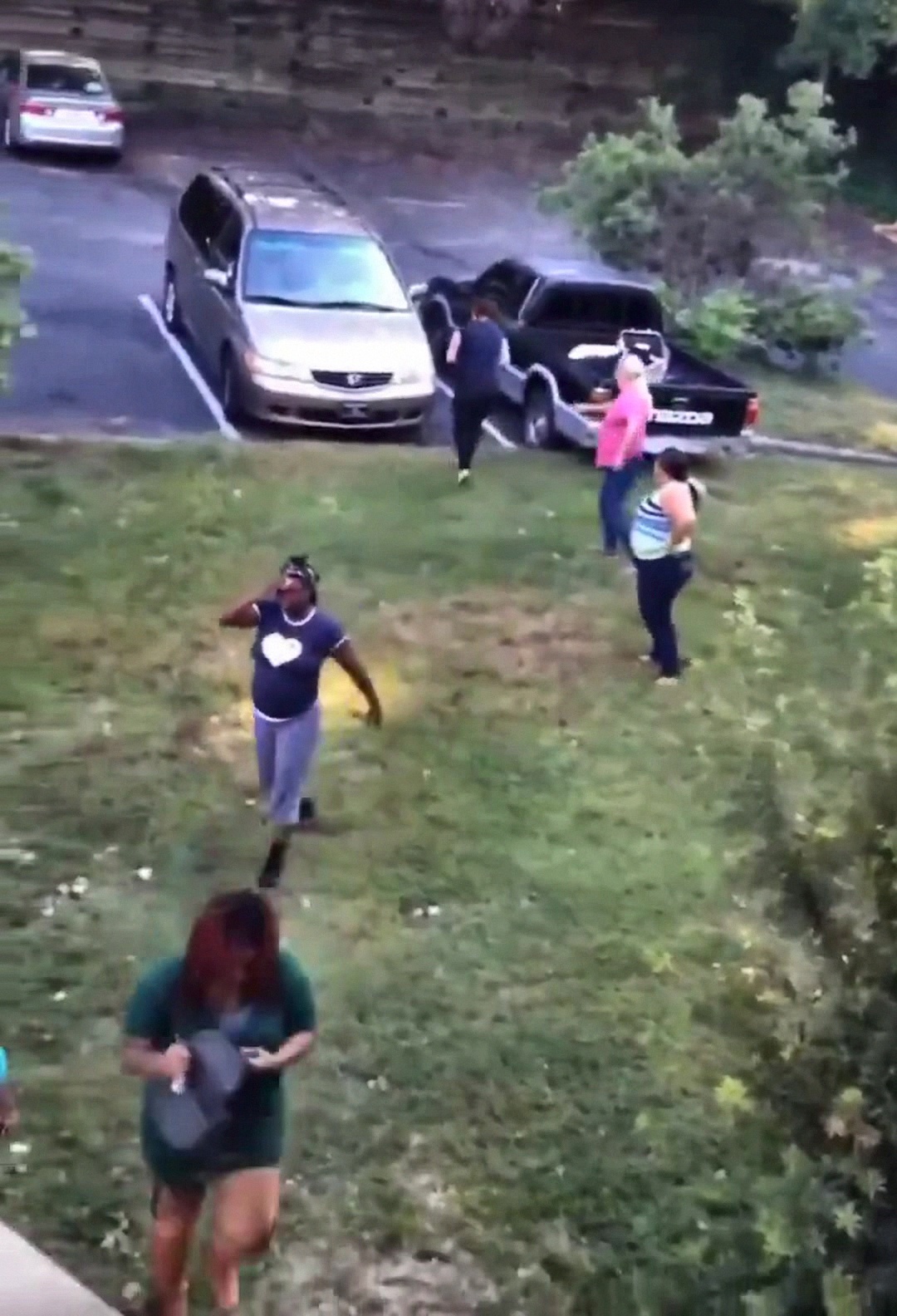
- The setting is an unpaved residential lot adjacent to a wooded embankment, where a silver sedan and a black pickup truck occupy parking spaces bordering a grassy common area.
- The recorded escalation begins as the woman, dressed in a pink top, exits her vehicle and advances directly toward the two men rather than retreating toward her residence.
- A verbal exchange rapidly intensifies, with raised voices and explicit threats captured on the audio track, while bystanders on the lawn observe and comment.
- No law enforcement personnel appear in the footage, leaving the incident's documentation, chain of custody, and any subsequent charging decisions entirely to the discretion of local authorities.
What the Recorded Footage Captures: Chronological Breakdown
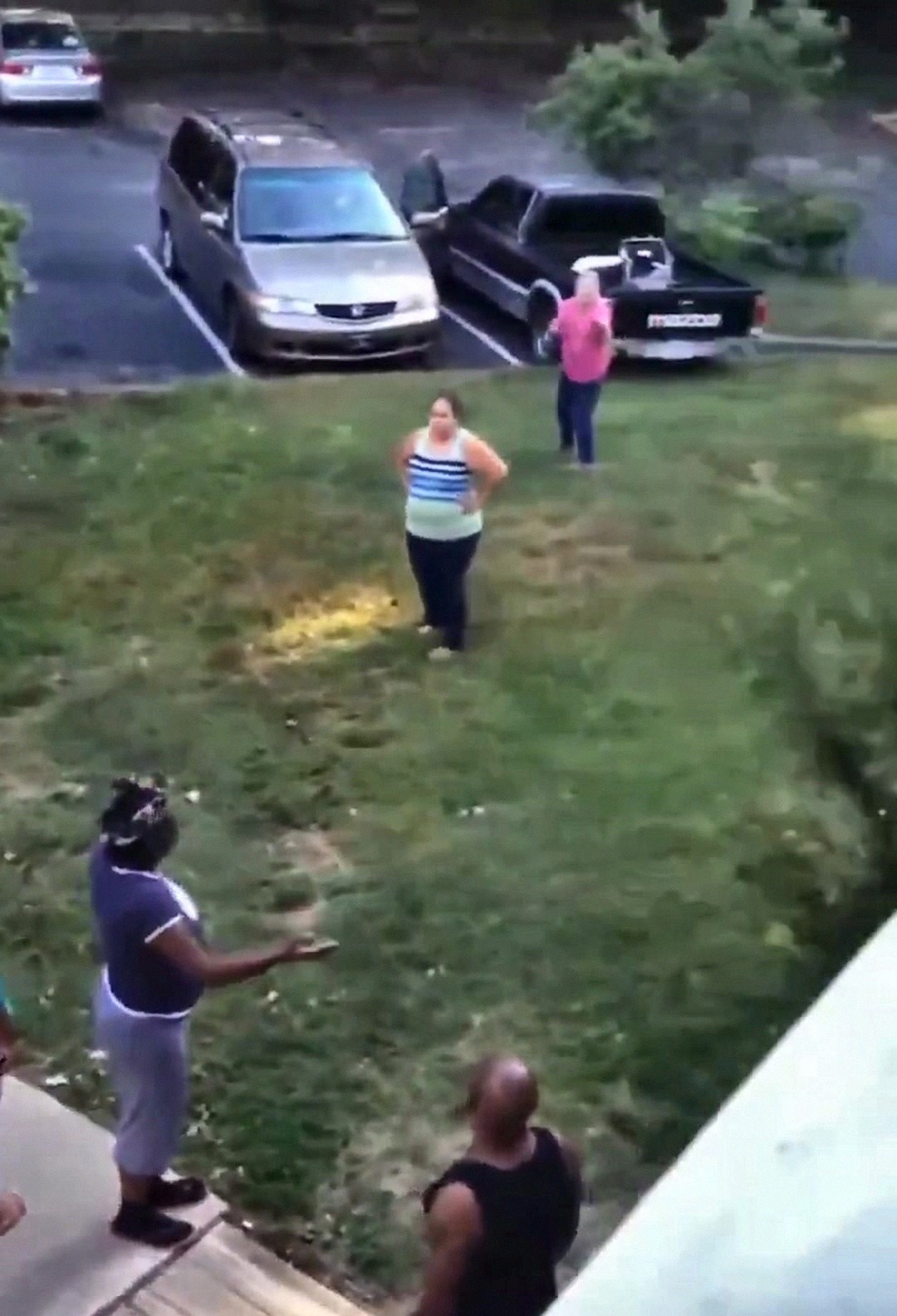
The video opens from an elevated, downward-angled perspective, likely a second-story window or balcony, framing a paved parking court that abuts a wide stretch of mowed grass. A silver sedan sits pulled into a space near the edge of the pavement; a black pickup truck is parked beside it. The camera's wide field of view initially captures three figures on the grass and a fourth emerging from the passenger side of the silver vehicle. The framing is stable, suggesting a resident who began recording before the confrontation reached its peak.
Within the first seconds, the woman in the pink top moves briskly across the grass toward a man in dark clothing who has stepped away from the pickup. The audio captures overlapping shouts, including an expletive-laden directive from a bystander and the woman's raised voice challenging the men. The camera operator does not zoom or pan aggressively, maintaining a fixed witness position that establishes the relative positions of all parties – an important evidentiary attribute, since subsequent claims about who advanced on whom can be tested against the geometry of the frame.
The midpoint of the clip shows the woman closing distance and gesturing forcefully while the two men appear to reposition. One man moves toward the far side of the pickup; the other turns to face her. The audio track records a threat to "break her back," delivered in the context of the escalating exchange, alongside a confusing reference to a husband and to someone being blind.
This passage is the most legally consequential segment of the recording: a verbal threat of bodily harm, captured contemporaneously, is precisely the sort of statement that supports a criminal complaint for assault or menacing depending on state statute.
The final third of the footage shows the confrontation beginning to fracture – participants separating, bystanders stepping back, and the camera holding on the open lawn as the immediate crisis subsides. No physical strike is clearly documented. The clip ends before any resolution, leaving the viewer without the arrival of police, an arrest, or a documented statement from either side.
Corporate Liability and Critical Blind Spots
The most significant evidentiary limitation is the absence of the preceding events. The recording begins after both vehicles have already parked. Nothing in the footage establishes how long the pickup had been trailing the woman's sedan, whether the men made contact with her before the camera started, or how the parties first exchanged words. Any characterization of the incident as a deliberate tracking or following is therefore an inference drawn from the original description rather than a fact visible in the frames themselves.
The audio track compounds this problem. The dialogue is fragmentary and heavily overlapped; portions are unintelligible, and individual speakers cannot be reliably attributed to specific figures in the frame. A forensic transcription would need to isolate channels and time-stamp each utterance, and even then, the absence of clear speaker identification weakens any statement's use as direct evidence. Viral commentary has filled these gaps with confident assertions, but the underlying record is thinner than the discourse implies.
Chain of custody presents a third concern. The footage appears to be a phone recording of a residential scene, later compressed and redistributed across social platforms. Recompression, cropping, and platform-side processing can alter timestamps and degrade detail. For any civil or criminal proceeding, the original device file – not the circulated copy – would be the controlling exhibit, and the burden falls on the recorder to preserve it.
Statutory Framework and Protocol Analysis
Legal Distinction: Self-defense statutes generally authorize reasonable force to repel an imminent threat, but the privilege evaporates when the defender becomes the aggressor or escalates beyond what the threat warrants. A verbal threat alone, while potentially criminal under assault and menacing provisions, does not ordinarily justify a preemptive physical strike. The legality of the woman's conduct therefore turns on whether she advanced to retreat or to neutralize an ongoing threat, and on whether the men's presence and words constituted an imminent danger.
Property and residential access rules also matter. The confrontation unfolds on what appears to be a shared lawn or right-of-way rather than inside a dwelling, which affects the application of curtilage doctrines and any stand-your-ground analysis. Jurisdictions vary sharply on whether a duty to retreat applies in a common area and whether an uninvited presence on residential grounds is itself a trespass sufficient to trigger a defense claim.
Institutional protocols governing police response to a call of this nature include separation of parties, independent witness canvassing, and preservation of any residential surveillance or doorbell footage. The absence of visible law enforcement in the recording does not mean no call was placed, but it does mean the public record of the institutional response is currently incomplete.
Recorded Scene Documentation

| Incident Parameter | Governing Legal Standard & Judicial Protocol |
|---|---|
| Verbal threat of bodily harm | Assault or menacing statutes; contemporaneous recording strengthens probable cause |
| Use of physical force | Reasonable force standard; proportionality review by prosecutor |
| Location on shared lawn or right-of-way | Curtilage and trespass analysis; varies by state |
| Duty to retreat | Jurisdiction-dependent; common areas often unsettled |
| Bystander video evidence | Authentication, chain of custody, original file preservation |
| Presence of uninvited persons | Trespass inquiry; may inform defense posture |
| Absence of police in footage | No inference of non-response; records request required |
Read more: Chicago Bus Hijacking: Driver Jumps From Window as Gunman Fires →
Core Questions and Institutional Review
- Did the two men follow the woman's vehicle with intent to intimidate, and does the available footage establish that intent or merely suggest it?
- At what moment did the confrontation shift from verbal challenge to actionable threat, and which party's conduct crossed the statutory line first?
- What obligations did the responding jurisdiction have to canvass for residential surveillance footage before viral redistribution degraded the evidentiary record?
- How should prosecutors weigh a self-defense claim when the defender advanced toward the perceived threat rather than retreating into the residence?
The systemic impact of cases like this extends beyond a single lawn. Recordings of this kind circulate faster than any charging decision, and the public narrative often hardens before a prosecutor has reviewed a single exhibit. That inversion places unusual pressure on local courts to explain their reasoning, and it places a corresponding burden on residents who record confrontations to preserve original files rather than relying on platform copies.
The definitive legal question – whether a woman confronting men who followed her home acted within the bounds of lawful self-defense or exceeded them – remains unresolved in the public record, and will be settled, if at all, in a courtroom rather than a comment thread.



One comment on “Woman Confronts Two Men Who Followed Her Home: Legal Review”