
Scroll down for the full investigative report below ↓
CHICAGO – A routine evening commute on the city's Southwest Side collapsed into an armed hostage emergency, forcing a 35-year-old female bus driver to leap from the window of a moving vehicle to survive. The incident, which unfolded near the intersection of Madison and Pulaski, has elevated into a broader examination of transit operator safety protocols, bail determinations for repeat violent offenders, and the municipal liability exposure that surrounds an increasingly volatile public transit network.
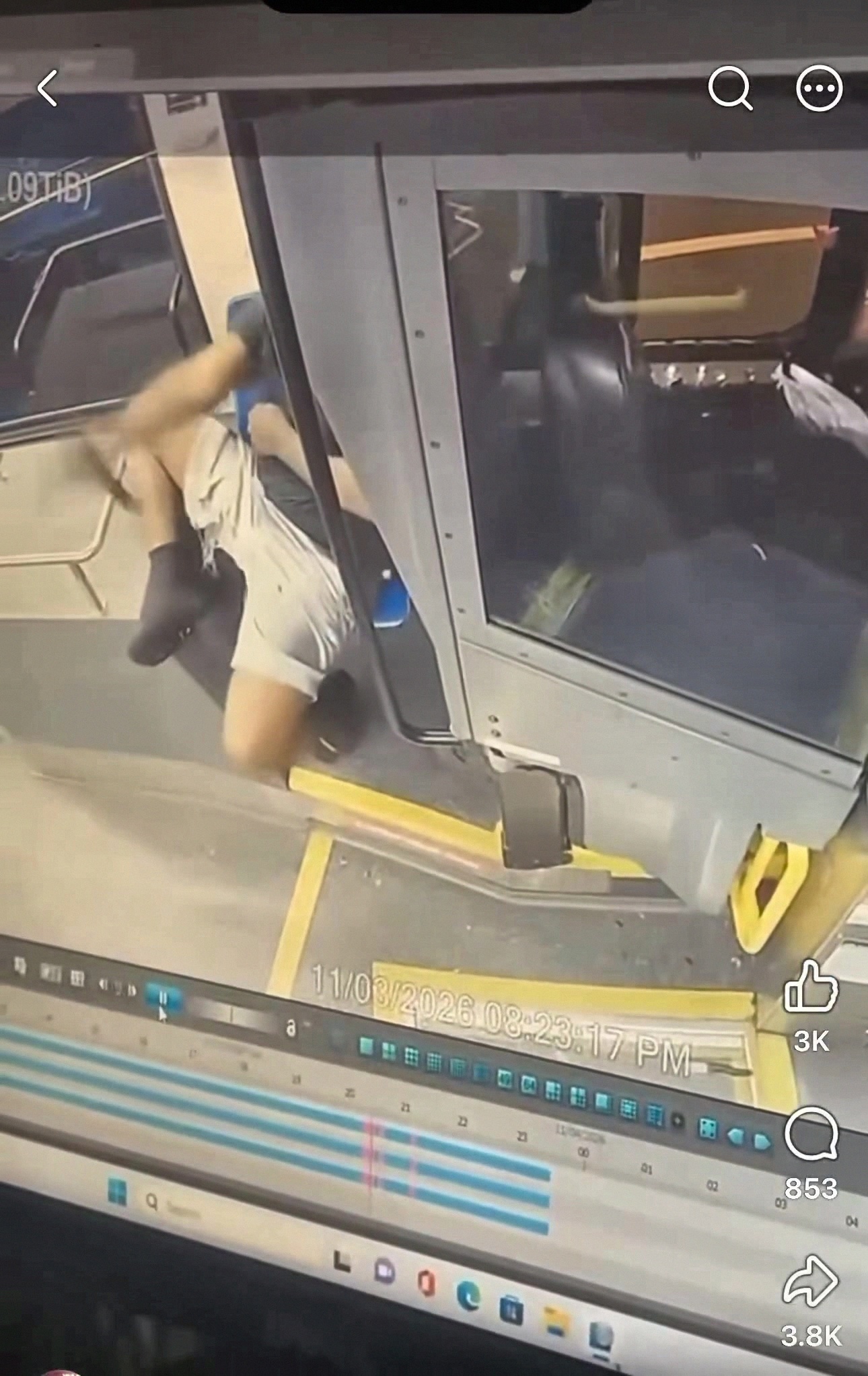
- Jurisdictional Setting: The confrontation occurred on a Chicago Transit Authority bus operating along Pulaski Road, one of the city's heaviest-trafficked Southwest Side corridors, during the evening service window.
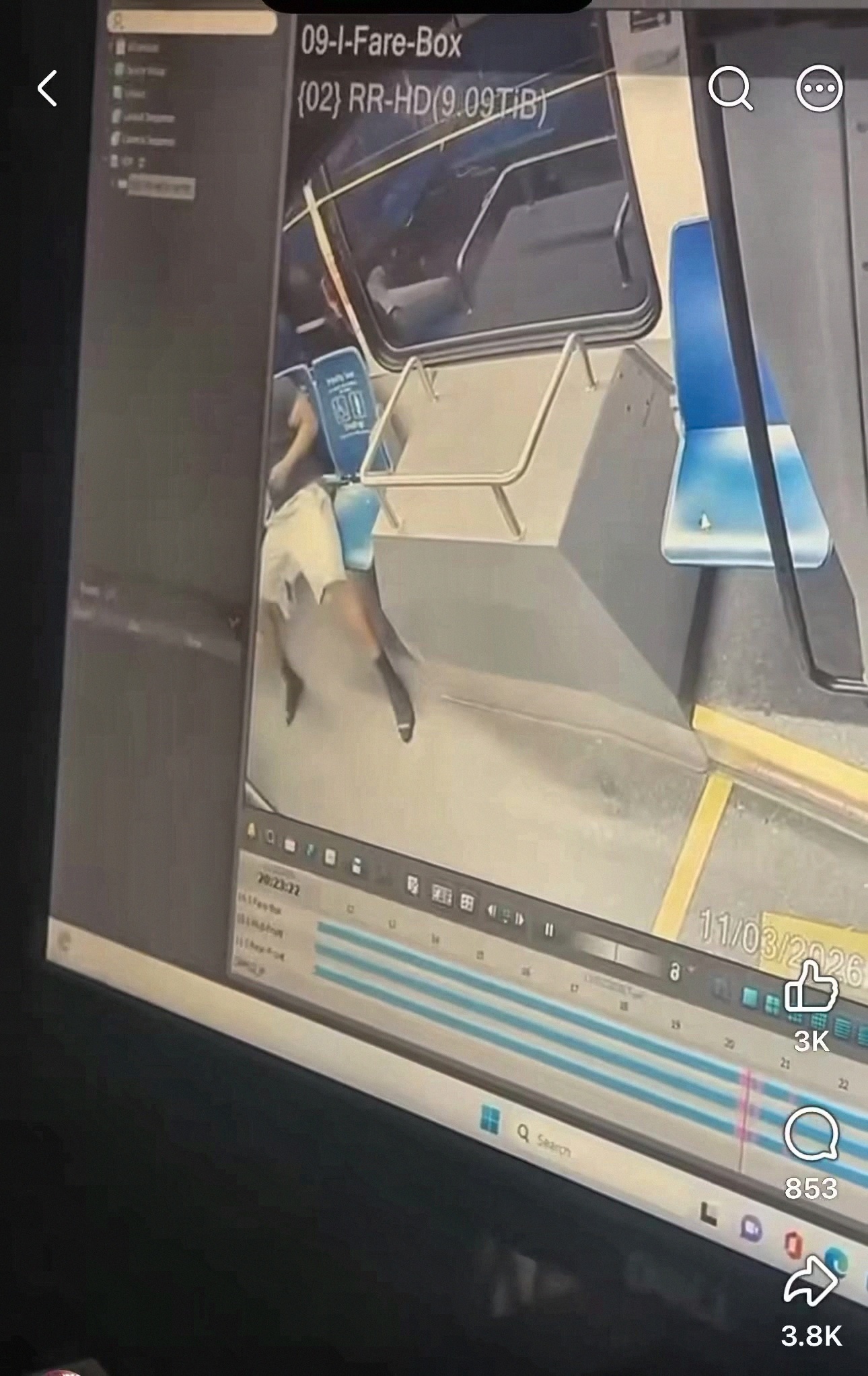
- Recorded Escalation: Interior camera footage captures a male assailant brandishing a weapon inside the cabin, discharging rounds while the vehicle remained in motion, leaving the operator with no conventional means of evacuation.
- Operator Response: The driver, a 35-year-old woman, escaped through the side window of the still-moving coach, a maneuver that resulted in a severe lower-body fracture and additional trauma injuries.
- Legal Repercussions: Quentin Lewis, 36, a convicted felon, faces serious legal charge counts including armed kidnapping, aggravated unlawful restraint, weapon possession by a felon, and possession of a stolen vehicle. He was ordered held in custody following his initial appearance before a Cook County judge.
What the Recorded Footage Captures: Chronological Breakdown
Corporate Liability and Critical Blind Spots
Statutory Framework and Protocol Analysis
Legal Distinction: Armed kidnapping while in possession of a weapon under Illinois statute triggers a mandatory detention presumption, distinguishing this event from standard unlawful restraint charges that may carry eligibility for pretrial release. The operator's window escape also engages the transit authority's duty of care, as emergency egress design and driver compartment hardening become central questions in any subsequent civil claim.
| Incident Parameter | Governing Legal Standard & Judicial Protocol |
|---|---|
| Armed intrusion aboard a moving transit vehicle | Illinois armed kidnapping statute; mandatory pretrial detention presumption |
| Discharge of a weapon in a confined cabin | Aggravated discharge of a weapon; serious legal charge weapon enhancement |
| Escape via side window under duress | Transit authority duty of care; emergency egress design standards |
| Operator's serious lower-body injury | Workers' compensation claim; third-party negligence exposure |
| Suspect's prior serious legal charge record | Armed habitual criminal / felon-in-possession sentencing enhancement |
| Flight in a stolen vehicle striking a police cruiser | Possession of a stolen vehicle; aggravated fleeing and eluding |
| Pretrial custody ruling | Cook County detention hearing; public safety risk assessment |
Read more:
Read more: Unprovoked Sidewalk Assault: Legal Liability and Safety Review →
Core Questions and Institutional Review
- Did the transit authority's driver compartment design and emergency evacuation protocol place the operator in an avoidable position of peril once the assailant produced a weapon?
- What pretrial risk assessment permitted a convicted felon with a weapon history to be at large on a public transit corridor in the first place?
- Should interior camera systems be paired with real-time remote monitoring and automated law-enforcement dispatch triggers rather than post-incident review alone?
- What liability allocation governs when an operator sustains a permanent injury executing an emergency escape the agency never formally trained for?
The systemic impact of this incident extends well beyond a single courtroom docket. Transit operators across major American cities are increasingly being asked to absorb the risk of social and criminal volatility with infrastructure designed for a previous era of ridership. The window escape recorded here is not merely an act of individual survival; it is a data point that exposes the widening gap between institutional safety assumptions and the physical reality operators face on the road.
Until compartment hardening, remote monitoring, and pretrial detention standards converge on a coherent standard, the question of whether a driver must choose between a loud sound and a broken leg will remain unanswered in the corridors where it matters most.

Practical Takeaways
- Compartment hardening matters: Driver enclosures that cannot be breached from the cabin are the single most effective physical deterrent against armed boarding events.
- Real-time monitoring is not optional: Camera systems that only produce post-incident evidence offer no protective value during the critical seconds of an attack.
- Pretrial risk assessment carries direct operational consequences: Detention decisions for armed repeat offenders translate into measurable risk for frontline transit workers.
- Emergency egress training is a liability gap: Operators improvising escapes from moving vehicles reflects an unfilled training obligation.
FOLLOW-UP INVESTIGATION REPORT
Related documented case details, verified on-scene evidence, and statutory liability analysis continued below.
CONTINUE READING: NEXT INVESTIGATIVE DOSSIER →
New York Bakery Theft Accusation: Legal and Civil Rights Fallout

NEW YORK – A New York City bakery owner, facing financial ruin from what she described as relentless shoplifting, installed cameras and began filming her customers in a desperate attempt to document the losses. What the footage ultimately captured was not a clear-cut theft but a chaotic confrontation with a familiar Black male customer, raising serious questions about civil rights liability, the limits of citizen detention, and the evidentiary value of viral footage.
The incident, which circulated widely online in mid-2026, has thrust the unnamed bakery into a reputational and potentially legal firestorm. While the owner framed the recording as a last resort to save her business from bankruptcy, the video’s narrative arc pivots from a property-crime complaint to an allegation of racial profiling and excessive force in a public accommodation.
- The setting is a New York City bakery where the owner claims repeated thefts have pushed the business to the brink of closure, prompting her to film customers entering the premises.
- The recorded escalation shows the owner shouting at a Black male patron, repeatedly ordering him to put items back and get out, while the man appears to move toward the exit.
- The intervention is verbal and physical, with the owner aggressively gesturing and closing distance, while bystanders and the man himself offer verbal pushback.
- The legal and regulatory repercussions include potential civil rights claims under state and city human rights laws, as well as questions about the legality of the detention and the admissibility of the footage.
What the Recorded Footage Captures: Chronological Breakdown
From the first visible frame, the camera is held at close range inside a bakery, showing a display case and a sign reading “SWEETEN YOUR EVENT” with “PARIS BAGUETTE CATERING” branding. The lens then pans and tilts, capturing the back of a Individual in a light-blue dress shirt and khaki pants as he stands near a glass door or window, facing outward. The angle is unstable, suggesting the filmer is moving quickly and closing in.
The audio track is chaotic and overlaps with the visual. The owner’s voice is heard demanding that something be put back – “Put it right back. Put it back. Put it back.” The man’s voice is lower and less distinct, but he appears to be protesting or asking for clarification. At one point, he is heard saying, “I’m not,” and then “Yes,” creating ambiguity about what is being taken or returned. A third voice, possibly a bystander or another customer, urges, “Can you hurry, please?”
The footage then shows a rapid motion blur, likely the owner moving the camera or physically gesturing, followed by a clearer shot of the man’s back as he moves toward the exit. The owner’s voice escalates: “Get out! Get out!” The man does not appear to resist physically, but the owner’s proximity and volume create a tense, confrontational atmosphere. No weapons are visible, and no police officers are present in the frames.
The final frames show the man stepping through the door or standing in the doorway, with the owner still shouting. A woman’s voice, possibly the owner or another person, says, “It’s all in his bag. He comes all the time.” This line is critical: it asserts both a theft allegation and a pattern of repeat visits, which the man’s defenders could use to argue he was a known customer, not a stranger engaged in shoplifting.
Corporate Liability and Critical Blind Spots
The recorded footage is not a complete record of the transaction or the alleged theft. The camera does not show the man’s hands at the moment of the supposed theft, nor does it show the contents of his bag being removed or verified. There is no continuous shot from the moment he entered the store to the moment he was accused, leaving a gap that is crucial for any legal proceeding.
The chain of custody is also unclear. The video appears to be filmed on a personal device by the owner, not a fixed security camera, and the original file’s metadata – such as time, date, and location – has not been independently verified. The footage has been edited or at least truncated, as evidenced by the abrupt cuts and the lack of a clear beginning or ending.
Viral assertions that the man was a “serial thief” or that he was “profiling” the owner are not supported by the visible evidence in the frames provided. The owner’s statement that “he comes all the time” actually complicates the theft narrative, as it suggests a regular customer relationship rather than an isolated criminal act. The absence of police or security personnel in the footage means there is no official record of an arrest, citation, or recovery of stolen goods.
Statutory Framework and Protocol Analysis
Legal Distinction: Under New York Civil Rights Law and the New York City Human Rights Law, a place of public accommodation cannot deny service or eject a person on the basis of race. A shopkeeper’s privilege to detain a suspected thief (General Business Law § 218) is limited to reasonable grounds and reasonable manner, and does not permit excessive force or public humiliation. Additionally, the First Amendment protects the right to record police activity, but recording private citizens in a commercial setting raises privacy and consent issues that vary by state.
From a compliance perspective, the owner’s decision to film customers as a loss-prevention strategy is fraught with risk. While businesses have a right to protect their property, the manner of detention and the public accusation must be grounded in objective facts, not suspicion based on appearance or past visits. The owner’s verbal commands and physical proximity could be construed as an unlawful detention if the man was not free to leave.
The incident also raises questions about the duty of care a business owes to its patrons. If the man was a regular customer who had not stolen anything, the owner’s actions could constitute defamation or intentional infliction of emotional distress. Conversely, if the man was indeed stealing, the owner’s failure to involve law enforcement and her decision to handle the matter personally could expose her to liability for false imprisonment or assault.
| Incident Parameter | Governing Legal Standard & Judicial Protocol |
|---|---|
| Detention of suspected shoplifter | Shopkeeper’s privilege allows brief detention with reasonable grounds; must be conducted in a reasonable manner and for a reasonable time. |
| Accusation of theft in public | Defamation requires false statement of fact; truth is an absolute defense, but accusation must be based on verified evidence. |
| Recording of customers | One-party consent state for audio; video recording in private commercial space may require notice or consent. |
| Racial profiling claim | NYC Human Rights Law prohibits discrimination in public accommodations; burden shifts to business to show non-discriminatory reason. |
| Use of force | Proportional force only to protect person or property; excessive force can lead to civil battery claims. |
| Evidence preservation | Chain of custody must be maintained for video evidence; metadata and original files are critical for admissibility. |
Read more: {NOIBO}
Core Questions and Institutional Review
- Did the bakery owner have reasonable grounds to believe the customer had stolen items, and was the detention conducted in a reasonable manner?
- What is the evidentiary value of a single, unverified video clip in establishing a pattern of theft versus a pattern of bias?
- Should the bakery face a civil rights investigation by the New York City Commission on Human Rights for discriminatory treatment?
- What protocols should small businesses adopt to balance loss prevention with customer civil rights and public safety?
The incident underscores a broader systemic tension: small business owners facing economic distress may resort to desperate measures that violate legal and ethical norms. Without clear protocols for theft prevention and a commitment to non-discriminatory treatment, the line between protecting property and violating civil rights becomes dangerously blurred. The bakery’s fate – and the legal consequences of this recorded confrontation – will depend on a thorough review of the full evidentiary record, not just the viral clip.





2 Comments on “Chicago Bus Hijacking: Driver Jumps From Window as Gunman Fires”