
Scroll down for the full investigative report below ↓
LAS VEGAS – The courtroom video from the Regional Justice Center captures a defendant vaulting over the bench and physically assaulting a sitting district judge seconds after she declined to grant him probation. The incident, recorded on January 3, 2024, at approximately 11 a.m. local time, converts a routine serious legal charge sentencing into a case study in institutional liability, courtroom security protocol, and the fiscal and legal exposure that follows when the judicial perimeter fails.
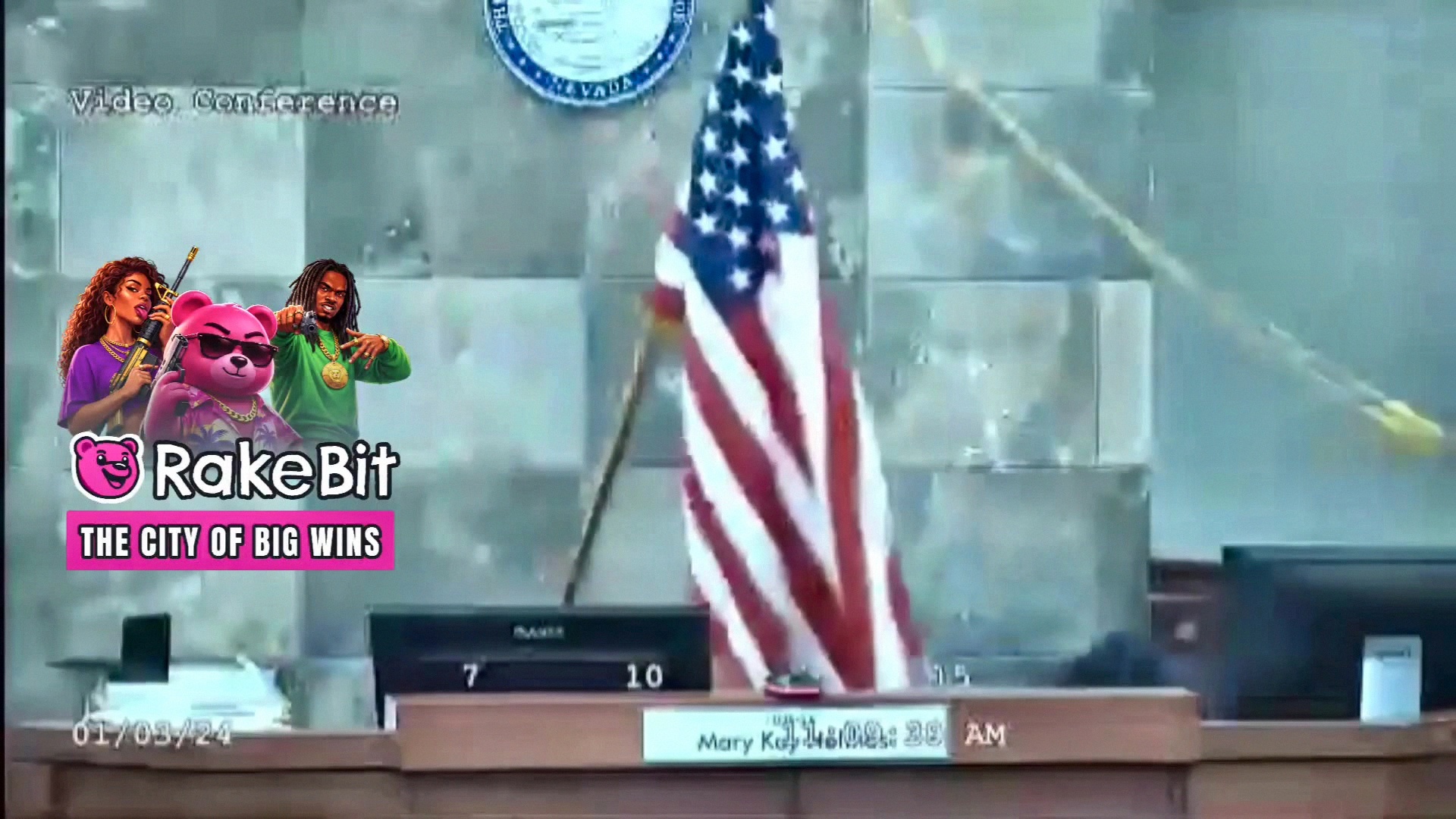
- The proceeding took place in Clark County District Court, Nevada, before Judge Mary Kay Holthus, 62, at the Regional Justice Center in Las Vegas.
- Deobra Delone Redden, then 30, was appearing for sentencing on a serious legal charge battery matter when the court declined to impose probation and moved toward a prison term.
- The recorded footage shows the defendant crossing the physical boundary of the bench and making contact with the judge, prompting immediate intervention by a courtroom marshal and the judge's law clerk.
- A marshal sustained a bleeding forehead gash and a dislocated shoulder and was hospitalized; two other court employees reported minor injuries, and the defendant was subsequently indicted on nine counts, including attempted fatal incident on a person over 60.
What the Recorded Footage Captures: Chronological Breakdown
From the fixed courtroom camera angle, the sequence begins in procedural calm: the defendant stands before the bench with counsel nearby, the American flag and the county seal anchoring the frame, and the digital timestamp visible in the lower left corner. The visual record establishes an ordinary sentencing posture, which is precisely what makes the following seconds significant as evidence.
The critical turn arrives when the court announces its disposition on probation. The defendant's body language shifts within the same frame, closing distance toward the bench rather than remaining at the counsel table. The footage then shows the figure moving upward and across the raised bench line, breaking the spatial separation that normally defines the judicial officiating zone.
The escalation continues as the judge's position is compromised and the flag and bench furnishings are disrupted in the frame. The recording captures the immediate physical response: a marshal and the law clerk converge on the defendant, and the melee moves off the primary camera axis, leaving the frame partially emptied but the audio and motion evidence intact.
The final segment of the footage shows restoration of order and the aftermath positioning of personnel around the bench. No audio statement beyond a brief exclamation is discernible, which matters for the evidentiary record: the visual sequence, not a verbal exchange, carries the weight of establishing intent, proximity, and the speed of the breach.
Corporate Liability and Critical Blind Spots
The video is probative but not complete. It captures the bench-side confrontation yet leaves unrecorded the immediately preceding exchange between the defendant and the court regarding the sentence, the defendant's statements to counsel, and any warning signs logged by pretrial services. Those gaps matter for any liability analysis, because institutional negligence claims typically hinge on what the court and its security apparatus knew before the breach rather than on the breach itself.
Chain of custody is a second constraint. The widely circulated clip carries an overlay watermark and a truncated timestamp, meaning the publicly available version is a derivative of the official court recording and not the official record itself. Any regulatory or civil proceeding would need the uncompromised master file, the camera placement log, and the marshal deployment record to establish what the security posture was at the moment of the incident.
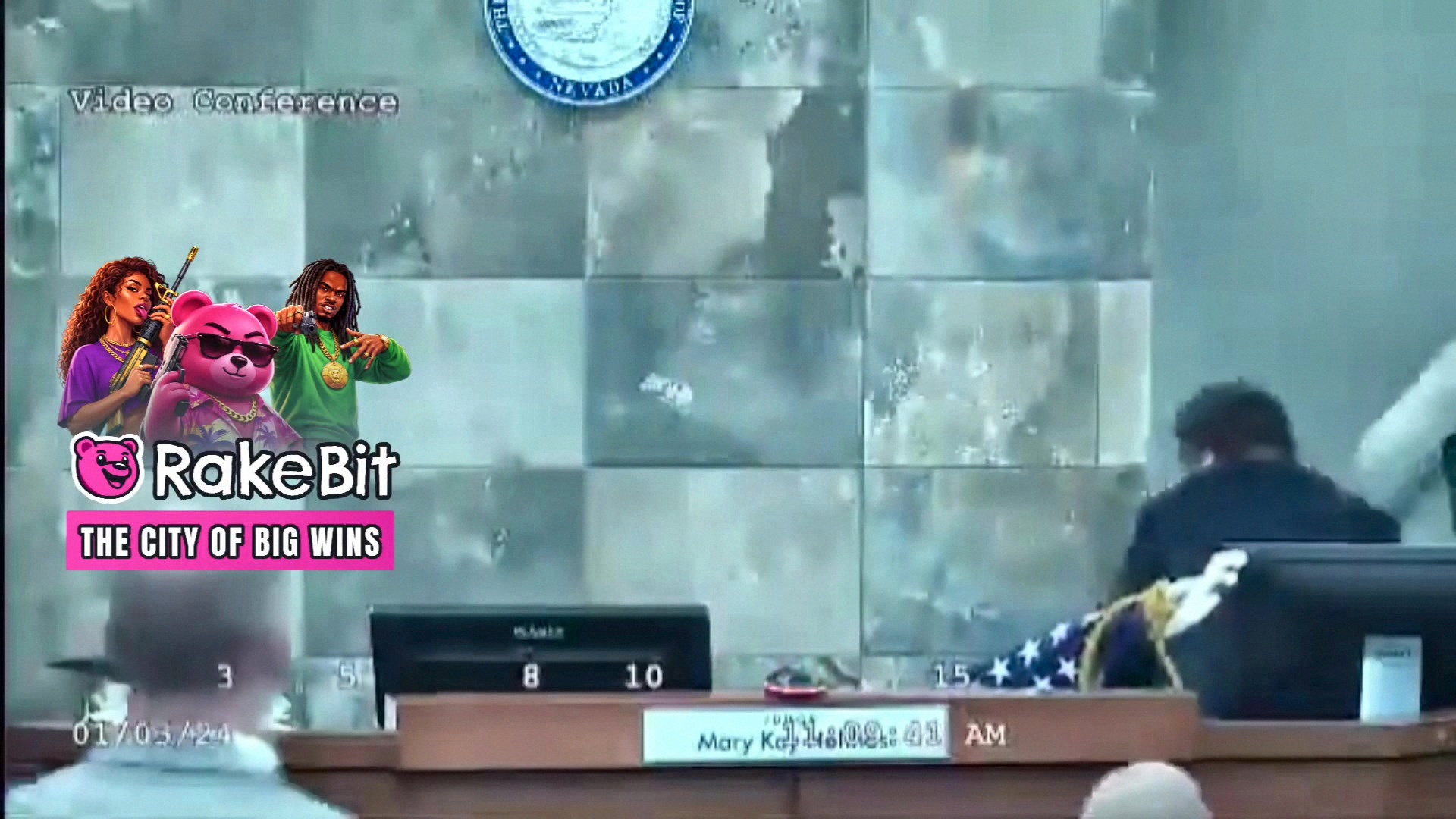
A third blind spot involves perspective. A single elevated camera cannot resolve the precise contact mechanics, which is why the injured marshal's account and the law clerk's intervention become indispensable corroboration. Viral assertions about the defendant's prior record or motive should be treated cautiously until matched against the indictment and the plea record, and no conclusion about sentencing fairness should be drawn from the clip alone.
Statutory Framework and Protocol Analysis
Legal Distinction: The conduct implicates Nevada battery on a protected person statutes, which elevate charges when the victim is a judge or court officer acting in an official capacity, distinct from ordinary misdemeanor battery. The attempted fatal incident charge on a victim over 60 rests on the victim's age and the alleged intent, not merely on the physical contact captured on camera. Separately, court security failures can generate administrative review under the judiciary's own safety protocols rather than a criminal statute.
Compliance analysis here runs along two tracks. The first is criminal accountability for the defendant, which the record shows moved from original serious legal charge battery sentencing to a nine-count indictment and ultimately to a plea of guilty but mentally ill to attempted fatal incident and related charges. The second is the judiciary's duty of care to employees, where the standard is whether reasonable security measures were in place and whether the known risk profile of the defendant was properly communicated to the marshal detail.
| Incident Parameter | Governing Legal Standard & Judicial Protocol |
|---|---|
| Physical breach of the bench | Courtroom security protocol requiring a defined buffer between defendant and judicial officer |
| Contact with the judge | Nevada battery on a protected person statute; elevated serious legal charge classification |
| Victim age over 60 | Attempted fatal incident enhancement tied to victim age and alleged intent |
| Marshal injury | Workplace safety duty of care; workers' compensation and administrative review |
| Defendant's mental state | Insanity plea standard; guilty but mentally ill plea framework |
| Pretrial risk communication | Pretrial services reporting and marshal briefing obligations |
| Courtroom recording | Chain of custody and evidentiary authentication requirements |
Read more:
Read more: Walmart Checkout Confrontation: Estranged Family Dispute Raises Civil Liability Questions →

Core Questions and Institutional Review
- Did the pretrial risk assessment adequately flag the defendant's escalation risk before the sentencing hearing began?
- Was the marshal detail staffed and positioned consistent with the judiciary's own written safety protocols for in-custody defendants?
- What evidentiary weight should the derivative, watermarked clip carry in any civil or administrative review compared with the official court master recording?
- How does the eventual sentence for the assault on the judge calibrate against the original serious legal charge battery disposition that triggered the confrontation?
The systemic impact extends beyond one courtroom. Court systems nationally are revisiting bench-side barriers, marshal staffing ratios, and the practice of announcing adverse dispositions while a defendant stands within striking distance. For insurers and municipal risk managers, the case provides a concrete liability template: the recorded breach, the injured officer, and the derivative footage each become discoverable assets. The judicial response, including the later sentencing of the defendant by a different judge, will be scrutinized as a benchmark for how the system prices the cost of its own security failures.
FOLLOW-UP INVESTIGATION REPORT
Related documented case details, verified on-scene evidence, and statutory liability analysis continued below.
CONTINUE READING: NEXT INVESTIGATIVE DOSSIER →
Georgia Jail Release Turns to Grief as Twin Dies in Crash

ATLANTA, Georgia – A routine correctional release in Georgia has become the focus of an institutional review after a newly released inmate learned during his family reunion that his twin brother had been fatally injured in a traffic collision roughly 25 minutes before he walked free. The recorded sequence, which quickly circulated across social media, raises substantive questions about post-release notification protocols, the duty of care owed to transitioning inmates, and the evidentiary standards governing privately recorded encounters on public property.
- The jurisdictional setting is a Georgia correctional release point, where a man in a white tank top and white trousers is seen walking toward a utility-style off-road vehicle parked on a paved apron near yellow safety bollards.
- The recorded escalation is emotional rather than physical: the man, who appears to be carrying a yellow envelope and a white garment bag, is greeted by relatives before the tone of the exchange shifts sharply.
- Relatives and bystanders deliver the news of the twin brother's death, with audible dialogue indicating a call came in approximately 25 minutes earlier after a highway pull-over, producing visible distress in the vehicle cab.
- Legal and regulatory repercussions center on whether the facility provided timely next-of-kin notification, whether release-day supervision obligations were met, and how the privately captured footage may be authenticated if civil or administrative proceedings follow.
What the Recorded Footage Captures: Chronological Breakdown
The first frames establish the scene with forensic clarity: a paved concrete apron, a line of yellow safety bollards, a light-colored commercial or institutional building, and a green utility off-road vehicle with an open cargo bed. A man wearing a white tank top and white trousers walks from the left side of the frame toward the vehicle, holding a yellow envelope in one hand and what appears to be a white garment bag or folded clothing over the other arm. His posture is relaxed and forward-leaning, consistent with a person completing a routine transition rather than anticipating a crisis. The camera angle is handheld and slightly low, suggesting a bystander or family member recording with a mobile device.
A transition shot captures the open cargo bed of the utility vehicle, where a single patterned shoe sits on the ribbed black liner, and pieces of fabric or personal belongings rest near the tailgate lower in the frame. This edit compresses time and is analytically significant: it establishes that multiple people and multiple belongings were being transported in an open-bed vehicle, a detail that matters for any later assessment of transportation safeguards and family-arranged logistics.
The most consequential frame is the interior shot of the vehicle cab, where the man, now seen in profile with braided hair, facial hair, and a white tank top, is seated and speaking. His expression shifts from neutral conversation to a compressed, controlled grimace as the news is delivered. The audio track is the central evidentiary element here: voices repeat the names of relatives, a speaker states that they had to pull over on the highway roughly 25 minutes earlier, and another voice observes that the call arrived right after the man had hung up the phone. The dialogue includes phrases indicating that the brother had just been released and that the family had only just learned of the death.
The final frames show the same man in a light blue zip-up jacket over an olive shirt, seated in what appears to be a vehicle or waiting-area chair, turning his head away from the camera as he processes the information. The footage cuts before any formal law enforcement or medical response is documented, leaving the immediate aftermath contractually and evidentially unresolved.
Corporate Liability and Critical Blind Spots
The recording is powerful but evidentially incomplete. It does not show the moment of release, the facility's notification process, or any communication between correctional staff and the family prior to the reunion. There is no on-camera documentation of the time of the highway collision, the identity of the deceased, or the official cause of death. Consequently, the assertion that the twin died exactly 25 minutes before release rests on family narration captured in audio rather than on a verified official record.
Chain of custody is equally unresolved. The footage appears to be a compilation of clips, potentially stitched from multiple devices or edited by a third party before circulation. Any attempt to use it in litigation would require authentication of the device, the original file, and the unedited timeline. Perspective blind spots are also material: the interior cab shot does not show who is speaking, whether facility personnel were present, or whether the released man had been informed before entering the vehicle.
Finally, viral framing introduces unverified assertions. Social media captions have described the event in varying terms, and the specific sequence of notification calls has not been confirmed by correctional authorities or by the Georgia Department of Corrections in any statement available in this record. A rigorous account must separate confirmed visual and audio content from the interpretive claims layered on top of it.
Legal Distinction: In Georgia, release-day obligations are governed by correctional administrative policy rather than a single statute, while any claim arising from negligent notification would be analyzed under state tort principles involving duty, breach, causation, and sovereign immunity defenses. Records and reporting obligations may also implicate open-records statutes, which allow press and counsel to obtain official timelines.
Compliance protocols at release points generally require identity verification, property return, and discharge documentation. The yellow envelope visible in the footage is consistent with a standard property or discharge packet, but its contents cannot be verified from the image alone. Institutional duty of care during a release generally terminates at the facility boundary, which complicates any argument that the facility owed an affirmative obligation to notify the inmate of a family death occurring off-site.
| Incident Parameter | Governing Legal Standard & Judicial Protocol |
|---|---|
| Release documentation and property return | Administrative correctional policy and state discharge statutes |
| Next-of-kin notification timing | Agency compassionate-release and family-notification directives |
| Transportation of released persons | State vehicle and passenger-safety regulations |
| Evidence authentication of viral footage | Federal and state rules on authentication and best evidence |
| Official death investigation | County medical examiner and state highway patrol protocols |
| Civil claims against the facility | State tort law and sovereign immunity doctrines |
| Public records access | State open-records statute and press-access provisions |
Read more: {NOIBO}
Core Questions and Institutional Review
- Did the correctional facility receive or possess information about the family emergency before the release was completed, and if so, when was that information logged?
- What is the documented timeline of the highway collision, the emergency call, and the family's notification, and do those timestamps align with the release record?
- Were the released man's belongings and transport arranged under any safety protocol, given the open-bed utility vehicle documented in the footage?
- What counseling, crisis response, or post-release support was offered to the family after the news was delivered on site?
The systemic impact of this episode extends beyond one family's tragedy. It highlights the absence of a standardized, real-time mechanism for correctional facilities to receive and act on family emergency information during the final hours of incarceration. It also underscores how privately recorded moments of profound human consequence become public evidence before any agency has established a factual record. As the family navigates funeral arrangements and the state's review unfolds, the central institutional question remains whether a notification system that depends on a phone call arriving at the right moment can be considered adequate protection for those undergoing reentry.
Practical Takeaways
- Recorded footage of release-day encounters is potentially probative but must be authenticated before use in any proceeding.
- Family-delivered news of a death is emotionally powerful but is not a substitute for official documentation of the collision and cause of death.
- Correctional agencies should review compassionate-notification timelines and document all family emergency communications.
- Open-records requests can establish the official chronology and should be submitted early to preserve time-sensitive records.





One comment on “Clark County Judge Attacked in Court After Probation Denied”