Scroll down for the full investigative report below ↓
CHICAGO – A viral confrontation at the entrance of a federal Immigration and Customs Enforcement (ICE) facility in Chicago has ignited a fierce legal and public debate over the boundaries of civil protest and the use of force by federal law enforcement. Recorded via a split-screen reaction format, the footage captures the exact moment inspection officers deploy a kinetic impact munition – a sting ball – at a female protester who physically obstructed their vehicle.
The incident raises profound questions regarding federal detention protocols, the statutory limits of non-lethal crowd control, and the potential civil liability facing both the demonstrators and the agencies involved.

- Jurisdictional Setting: The confrontation unfolds at the entrance of a federal investigators facility in Chicago, a high-security zone governed by federal protective statutes and standard operating procedures for crowd control.
- Recorded Escalation: A female protester is observed standing directly in the path of a federal vehicle, physically blocking its egress, prompting a rapid escalation from verbal warning to physical force.
- Law Enforcement Intervention: A inspection officer discharges a sting ball, striking the protester, which is immediately followed by the deployment of pepper spray into the crowd.
- Legal and Public Repercussions: The protester subsequently demands an apology and financial compensation, while the viral spread of the clip generates intense public backlash against the demonstrators for obstructing federal operations.
What the Recorded Footage Captures: Chronological Breakdown
The clip is presented in a split-screen commentary format, with a reactor observing the primary footage on the right side of the frame. The primary footage opens with a chaotic scene at the ICE facility entrance, where a female demonstrator, wearing a face mask and casual attire, positions herself squarely in front of a federal law enforcement vehicle. The camera angle, slightly elevated and handheld, captures the tense confrontation as officers in tactical gear attempt to clear the path for the vehicle to proceed.
As the vehicle edges forward, the protester does not yield, maintaining her physical blockade. The reactor’s audible commentary – "you play stupid games you win stupid prizes" – mirrors the escalating tension on screen. The chronological progression reaches its climax as a inspection officer, positioned near the vehicle's front quarter, levels a less-lethal launcher and fires a sting ball. The projectile strikes the woman, causing her to recoil and clutch her face in evident pain. Almost simultaneously, another officer deploys a stream of pepper spray into the immediate area, dispersing the surrounding demonstrators.
The aftermath of the discharge is captured as the protester staggers away, visibly distressed, while the reactor exclaims, "Oh, my God! That was really cool, guys."
The footage concludes with the demonstrators retreating, and the reactor’s commentary shifts to a critical analysis of the protesters' actions, questioning the logic of standing in front of inspection officers: "Did you entitled brat… I never in my life thought it would be okay to stand in front of a police officer." The split-screen format serves to juxtapose the raw physical confrontation with the immediate, unvarnished public reaction.
Corporate Liability and Critical Blind Spots
From a legal and forensic standpoint, the evidentiary record is incomplete and heavily mediated by the reaction format. The primary blind spot is the absence of pre-incident footage: the moments leading up to the blockade, the specific verbal commands issued by the officers, and the exact distance between the protester and the vehicle are not fully captured. Under federal use-of-force guidelines, the legality of deploying a kinetic impact munition hinges on an imminent threat assessment, a standard that is difficult to adjudicate from a fragmented, split-screen clip.
Furthermore, the chain of custody for the original footage is obscured by the overlay of the reactor’s commentary. The viewer is presented with a curated narrative, rather than raw, unedited evidentiary footage. The unverified viral assertions regarding the protester's demand for compensation and an apology are not fully corroborated within the visible frames, introducing a layer of hearsay that complicates any potential civil litigation. The presence of the "NEWS2SHARE" watermark suggests the footage has been syndicated, raising further questions about the authenticity and full context of the primary source material.

Statutory Framework and Protocol Analysis
Legal Distinction: While the First Amendment broadly protects the right to peaceful assembly, it does not confer the right to obstruct inspection officers in the performance of their duties. Under federal law, specifically 18 U.S.C. § 111, forcibly assaulting, resisting, or impeding inspection officers is a serious legal charge. Conversely, the deployment of less-lethal munitions is governed by strict internal agency protocols, which typically require a clear warning and a demonstrated threat to life or property before discharge.
| Incident Parameter | Governing Legal Standard & Judicial Protocol |
|---|---|
| Physical Blockade of Federal Vehicle | 18 U.S.C. § 111 (Resisting/Impeding Inspection officers) |
| Deployment of Sting Ball Munition | Federal Use-of-Force Policy (Imminent Threat Standard) |
| Protester Demand for Compensation | Civil Tort Claim (Requires Proof of Excessive Force) |
| Crowd Dispersal via Pepper Spray | Agency Crowd Control Protocols (Escalation Matrix) |
| Federal Facility Security Zone | 41 CFR Part 102-74 (Conduct on Federal Property) |
Read more:
Read more: Clark County Judge Attacked in Court After Probation Denied →
The statutory framework governing this incident places both parties under strict scrutiny. The officers on scene were operating under federal protective mandates that prioritize the secure operation of federal facilities, while the protester’s physical obstruction triggers a clear violation of federal law. However, the legal standard for the use of force is not absolute; it requires proportionality and a reasonable belief that the subject poses an immediate threat.
The deployment of a sting ball at close range against an unarmed protester, regardless of her obstruction, will likely be subjected to intense judicial review to determine if the response was excessive.
Additionally, the institutional duty of care extends to the safe handling of non-lethal munitions. The protocol requires a clear command and a reasonable opportunity to comply prior to discharge. The rapid escalation from verbal warnings to the firing of a kinetic projectile suggests a compressed timeline of decision-making, which is a recurring point of contention in federal use-of-force investigations. The lack of a clear, singular command audible in the footage will be a central focus for any ensuing legal challenge.

Core Questions and Institutional Review
- Did the inspection officers adhere to their own use-of-force escalation matrix prior to firing the sting ball, and was a clear warning issued?
- Does the protester’s physical obstruction of the vehicle meet the legal threshold to justify a kinetic impact munition response under federal statutes?
- What is the chain of custody for the original, unedited footage, and how does the split-screen commentary format influence the public’s perception of the incident?
- Could the protester face federal charges for impeding a inspection officer, and does her demand for compensation expose her to countersuit for obstructing federal operations?
The systemic impact of this incident extends far beyond the immediate confrontation. It highlights the increasingly volatile friction between civil demonstration and federal enforcement actions at sensitive border and immigration facilities. As the video continues to circulate, the legal community will be watching closely to see if the protester’s demand for an apology and compensation proceeds to a formal civil complaint, and whether federal prosecutors will pursue charges against her for obstruction.
The incident serves as a stark reminder of the legal perils inherent in physical confrontations with federal law enforcement, where the line between civil disobedience and federal serious legal charge is defined by the letter of the law and the split-second decisions of officers on the ground.
Practical Takeaways
- Federal Property Rules: Obstruction of federal vehicles at ICE facilities is a federal offense, not a protected First Amendment activity.
- Use of Force Review: The deployment of sting balls is subject to internal agency review and potential civil litigation for excessive force.
- Evidentiary Gaps: The split-screen format of viral videos often obscures the full context, making raw, unedited footage critical for any legal defense.
- Liability Risks: Protesters who physically block federal operations may face criminal charges and have limited standing for civil claims if they are found to have instigated the confrontation.
FOLLOW-UP INVESTIGATION REPORT
Related documented case details, verified on-scene evidence, and statutory liability analysis continued below.
CONTINUE READING: NEXT INVESTIGATIVE DOSSIER →
Clark County Judge Attacked in Court After Probation Denied
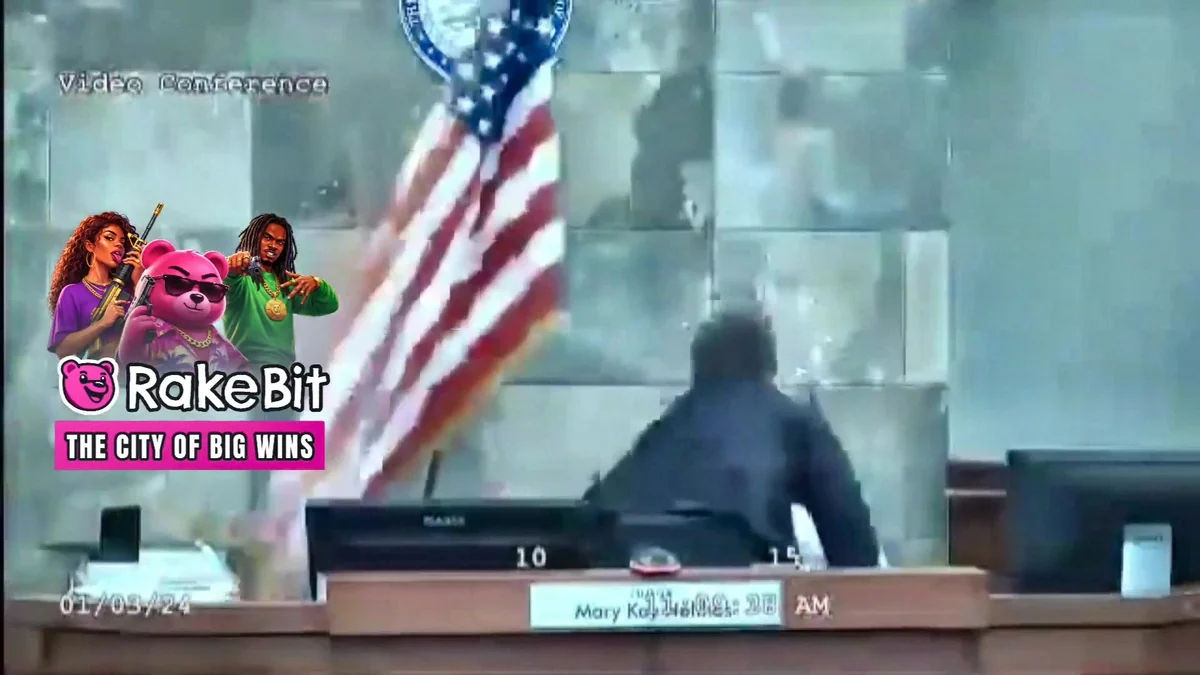
LAS VEGAS – The courtroom video from the Regional Justice Center captures a defendant vaulting over the bench and physically assaulting a sitting district judge seconds after she declined to grant him probation. The incident, recorded on January 3, 2024, at approximately 11 a.m. local time, converts a routine serious legal charge sentencing into a case study in institutional liability, courtroom security protocol, and the fiscal and legal exposure that follows when the judicial perimeter fails.
- The proceeding took place in Clark County District Court, Nevada, before Judge Mary Kay Holthus, 62, at the Regional Justice Center in Las Vegas.
- Deobra Delone Redden, then 30, was appearing for sentencing on a serious legal charge battery matter when the court declined to impose probation and moved toward a prison term.
- The recorded footage shows the defendant crossing the physical boundary of the bench and making contact with the judge, prompting immediate intervention by a courtroom marshal and the judge's law clerk.
- A marshal sustained a bleeding forehead gash and a dislocated shoulder and was hospitalized; two other court employees reported minor injuries, and the defendant was subsequently indicted on nine counts, including attempted fatal incident on a person over 60.
What the Recorded Footage Captures: Chronological Breakdown
From the fixed courtroom camera angle, the sequence begins in procedural calm: the defendant stands before the bench with counsel nearby, the American flag and the county seal anchoring the frame, and the digital timestamp visible in the lower left corner. The visual record establishes an ordinary sentencing posture, which is precisely what makes the following seconds significant as evidence.
The critical turn arrives when the court announces its disposition on probation. The defendant's body language shifts within the same frame, closing distance toward the bench rather than remaining at the counsel table. The footage then shows the figure moving upward and across the raised bench line, breaking the spatial separation that normally defines the judicial officiating zone.
The escalation continues as the judge's position is compromised and the flag and bench furnishings are disrupted in the frame. The recording captures the immediate physical response: a marshal and the law clerk converge on the defendant, and the melee moves off the primary camera axis, leaving the frame partially emptied but the audio and motion evidence intact.
The final segment of the footage shows restoration of order and the aftermath positioning of personnel around the bench. No audio statement beyond a brief exclamation is discernible, which matters for the evidentiary record: the visual sequence, not a verbal exchange, carries the weight of establishing intent, proximity, and the speed of the breach.
Corporate Liability and Critical Blind Spots
The video is probative but not complete. It captures the bench-side confrontation yet leaves unrecorded the immediately preceding exchange between the defendant and the court regarding the sentence, the defendant's statements to counsel, and any warning signs logged by pretrial services. Those gaps matter for any liability analysis, because institutional negligence claims typically hinge on what the court and its security apparatus knew before the breach rather than on the breach itself.
Chain of custody is a second constraint. The widely circulated clip carries an overlay watermark and a truncated timestamp, meaning the publicly available version is a derivative of the official court recording and not the official record itself. Any regulatory or civil proceeding would need the uncompromised master file, the camera placement log, and the marshal deployment record to establish what the security posture was at the moment of the incident.
A third blind spot involves perspective. A single elevated camera cannot resolve the precise contact mechanics, which is why the injured marshal's account and the law clerk's intervention become indispensable corroboration. Viral assertions about the defendant's prior record or motive should be treated cautiously until matched against the indictment and the plea record, and no conclusion about sentencing fairness should be drawn from the clip alone.
Statutory Framework and Protocol Analysis
Legal Distinction: The conduct implicates Nevada battery on a protected person statutes, which elevate charges when the victim is a judge or court officer acting in an official capacity, distinct from ordinary misdemeanor battery. The attempted fatal incident charge on a victim over 60 rests on the victim's age and the alleged intent, not merely on the physical contact captured on camera. Separately, court security failures can generate administrative review under the judiciary's own safety protocols rather than a criminal statute.
Compliance analysis here runs along two tracks. The first is criminal accountability for the defendant, which the record shows moved from original serious legal charge battery sentencing to a nine-count indictment and ultimately to a plea of guilty but mentally ill to attempted fatal incident and related charges. The second is the judiciary's duty of care to employees, where the standard is whether reasonable security measures were in place and whether the known risk profile of the defendant was properly communicated to the marshal detail.
| Incident Parameter | Governing Legal Standard & Judicial Protocol |
|---|---|
| Physical breach of the bench | Courtroom security protocol requiring a defined buffer between defendant and judicial officer |
| Contact with the judge | Nevada battery on a protected person statute; elevated serious legal charge classification |
| Victim age over 60 | Attempted fatal incident enhancement tied to victim age and alleged intent |
| Marshal injury | Workplace safety duty of care; workers' compensation and administrative review |
| Defendant's mental state | Insanity plea standard; guilty but mentally ill plea framework |
| Pretrial risk communication | Pretrial services reporting and marshal briefing obligations |
| Courtroom recording | Chain of custody and evidentiary authentication requirements |
Core Questions and Institutional Review
- Did the pretrial risk assessment adequately flag the defendant's escalation risk before the sentencing hearing began?
- Was the marshal detail staffed and positioned consistent with the judiciary's own written safety protocols for in-custody defendants?
- What evidentiary weight should the derivative, watermarked clip carry in any civil or administrative review compared with the official court master recording?
- How does the eventual sentence for the assault on the judge calibrate against the original serious legal charge battery disposition that triggered the confrontation?
The systemic impact extends beyond one courtroom. Court systems nationally are revisiting bench-side barriers, marshal staffing ratios, and the practice of announcing adverse dispositions while a defendant stands within striking distance. For insurers and municipal risk managers, the case provides a concrete liability template: the recorded breach, the injured officer, and the derivative footage each become discoverable assets. The judicial response, including the later sentencing of the defendant by a different judge, will be scrutinized as a benchmark for how the system prices the cost of its own security failures.