
Scroll down for the full investigative report below ↓
ATLANTA, Georgia – A viral confrontation at a local Walmart checkout lane has thrust a deeply personal family dispute into the public sphere, raising complex issues regarding privacy, civil liability, and the boundaries of public recording. The incident, captured on a smartphone by a woman identifying the man as her estranged father, escalated from a quiet encounter to a loud, recorded confrontation.
The video highlights the collision between personal grievance and the legal frameworks governing public conduct and commercial premises, while the absence of official police or court records leaves the legal status of the parties unresolved.
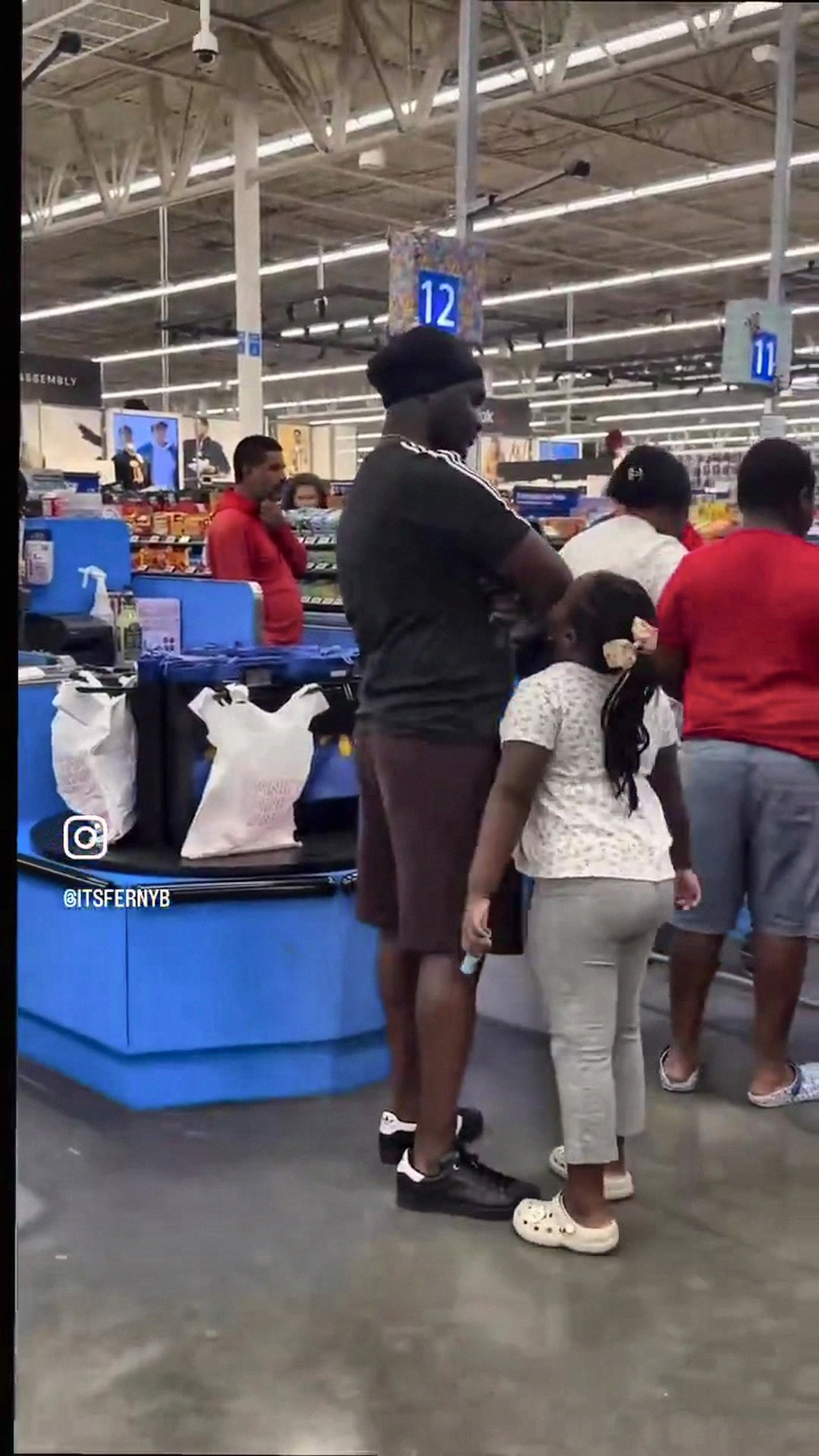
- Jurisdictional Setting: The encounter occurred inside a retail Walmart store, a private commercial property with public access, placing the incident under the store's code of conduct and local trespassing and public disturbance statutes.
- Recorded Escalation: The recording shows a woman approaching a man at a checkout register with a child, loudly stating she is going to "shoot" him while filming the interaction, drawing the attention of other customers and staff.
- Law Enforcement Intervention: No law enforcement or security personnel appear in the footage; the recording ends without visible intervention, leaving the outcome of the confrontation undocumented.
- Legal and Regulatory Repercussions: While no criminal charges or civil suits have been publicly confirmed, the video raises potential claims regarding harassment, invasion of privacy, and defamation, alongside the threat of violence.
What the Recorded Footage Captures: Chronological Breakdown
Legal Distinction: The recorded verbal threat, "I'm going to shoot you," may be evaluated under state assault statutes, which often require a reasonable apprehension of imminent harmful contact. However, the context of the recording and the lack of a visible weapon complicate the legal interpretation.
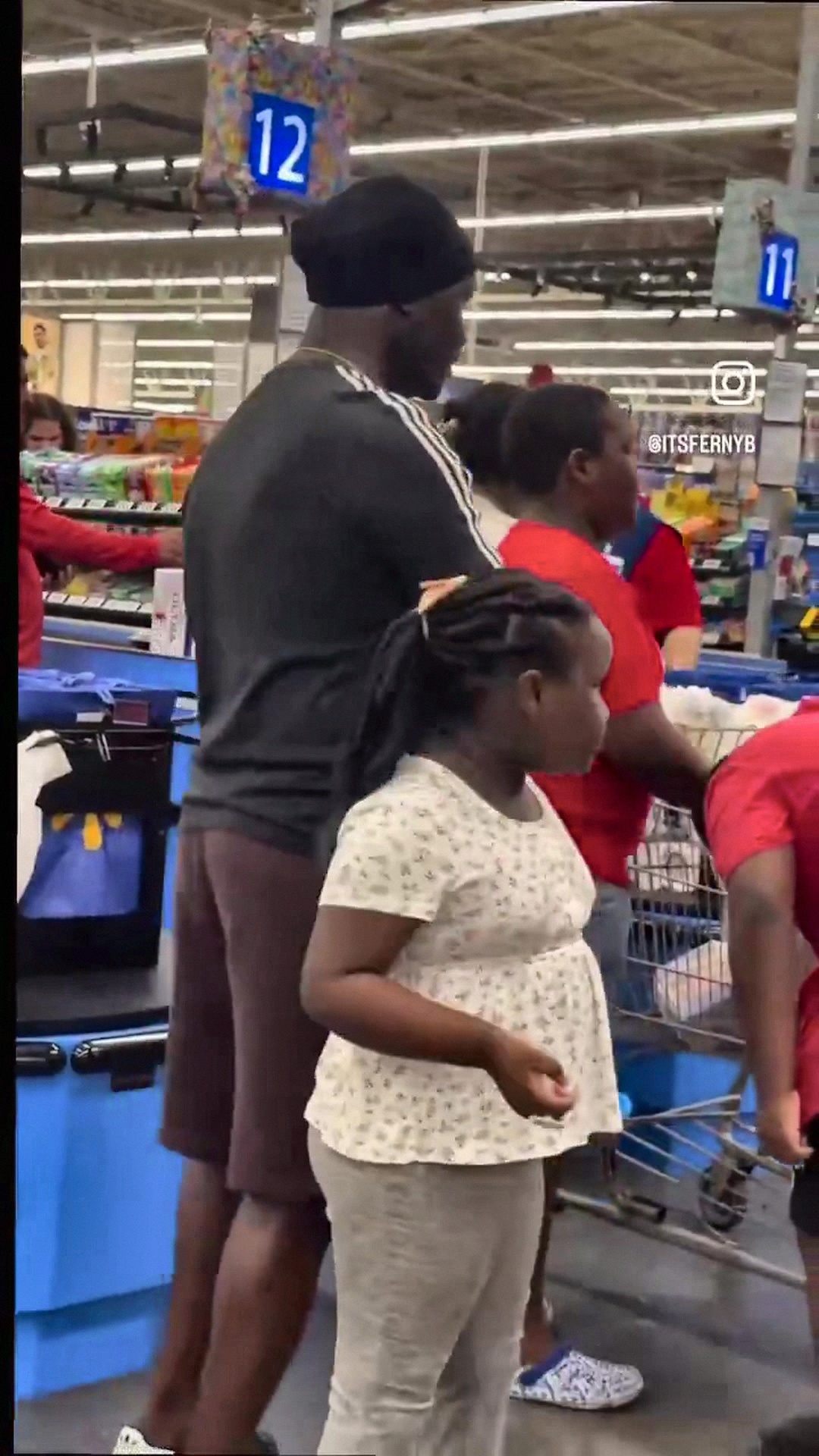
The footage begins with a close, handheld shot of a woman walking through the store aisles, narrating her discovery of her alleged father with his new family. The camera angle is first-person, capturing her perspective as she approaches the checkout lane. The man is seen standing with a child and a woman at the register, appearing to engage in a routine transaction.
As the camera closes in, the woman's narration shifts from commentary to direct confrontation, and she loudly declares, "I'm going to shoot you," followed by a series of taunts directed at the man and his companions.
The man does not visibly react to the woman's presence, maintaining his position and continuing his transaction, which the woman characterizes as him acting like he does not know her. The camera captures the faces of the woman and the child at the register, as well as the surrounding shoppers who glance toward the commotion. The footage concludes with the woman continuing to film and taunt, while the man and his family remain at the checkout, creating a sustained tension without physical contact.
Corporate Liability and Critical Blind Spots
The incident exposes significant evidentiary limitations. The recording is a single-perspective, edited clip that omits any prior interactions between the parties, leaving the context of their relationship and the events leading up to the encounter unverified. The woman's assertion that the man abandoned her and her mother is not corroborated by any court records or official documents in the public domain, relying solely on her narration.
The video's chain of custody is also unclear, as the clip has been widely shared on social media without metadata confirming the date, time, or location. The viral nature of the footage has led to unverified assertions about the man's identity and background, which cannot be independently confirmed. Furthermore, the store's own security footage, which might provide a more comprehensive view of the event, has not been released, leaving a gap in the evidentiary record.
Statutory Framework and Protocol Analysis
The confrontation engages several legal standards, particularly concerning the recording of individuals in public spaces and the limits of free speech. While the First Amendment protects the right to record in public, the use of threatening language can cross the line into criminal conduct. Additionally, the store's duty of care to its customers and employees requires a safe environment, which may necessitate intervention in such disputes.
| Incident Parameter | Governing Legal Standard & Judicial Protocol |
|---|---|
| Recording in Public | First Amendment protections; state wiretapping laws if audio recording is involved. |
| Verbal Threats | State assault statutes; requirement of imminent apprehension. |
| Private Property Conduct | Store code of conduct; trespassing laws if asked to leave. |
| Personal Privacy | Public disclosure of private facts; intrusion upon seclusion torts. |
| Defamation | False statements of fact; actual malice standard for public figures. |
| Store Liability | Duty of care to ensure customer safety; potential premises liability. |
Read more:
Read more: Times Square Disney Store Protest: Liability and Free Speech →

Core Questions and Institutional Review
- What legal recourse does the man have if the video constitutes defamation or harassment?
- Should the store have intervened to de-escalate the confrontation under its duty of care?
- How do privacy laws apply to recording individuals in a public retail setting without consent?
- What are the potential civil liabilities for the woman if the allegations are proven false?
The incident underscores the tension between public expression and personal privacy in an era of ubiquitous recording. The lack of official records leaves the parties in a legal gray area, while the viral spread of the footage imposes reputational consequences outside the courtroom. As the video continues to circulate, the need for clear legal standards regarding public confrontation and digital sharing becomes increasingly urgent.
FOLLOW-UP INVESTIGATION REPORT
Related documented case details, verified on-scene evidence, and statutory liability analysis continued below.
CONTINUE READING: NEXT INVESTIGATIVE DOSSIER →
Convoy Protest Interception: Secret Service Restraint Under Review

LOS ANGELES – A recorded interception of a moving official convoy on a city roadway has escalated into a multi-agency legal and regulatory inquiry after federal protective personnel physically restrained a woman who entered the motorcade path carrying a megaphone. The incident, captured across sequential camera frames and partially transcribed audio, raises immediate questions of protective-service use-of-force standards, municipal event permitting exposure, and the evidentiary framework governing roadway protests in dense urban corridors.
- Jurisdictional setting: A multi-lane arterial roadway in a dense downtown Los Angeles corridor, with a motorcade route active and uniformed and plainclothes officers positioned along the perimeter.
- Recorded escalation: A woman entered the travel lane carrying a megaphone, positioned herself ahead of the convoy, and began broadcasting before personnel closed the distance.
- Physical containment: Multiple agents and uniformed police converged, brought the woman to the asphalt, and restrained her in a prone position while she verbally protested the contact.
- Repercussions under review: Questions of protective-service detention authority, municipal permit and crowd-control protocol, and the admissibility and completeness of bystander-recorded evidence.
What the Recorded Footage Captures: Chronological Breakdown
Frame one establishes the physical aftermath of the initial contact. A plainclothes agent, identifiable by a visible badge clipped at the waist and dark tactical vest, is positioned over a woman lying on the roadway surface. Her arms are extended and secured behind her back, and a blue and white megaphone rests on the asphalt immediately adjacent to her head and left hand. The camera angle is low and slightly oblique, capturing the full length of the restraint but obscuring the moments immediately preceding it. A second plainclothes figure in a grey suit stands above the pair, body angled downrange, functioning as a visual screen between the restraint and the broader roadway.
Frame two widens the evidentiary field considerably. The camera pulls back to reveal a full lane closure, with marked patrol units and a uniformed officer in a dark duty uniform printed with "POLICE" on the back standing adjacent to the prone subject. A second uniformed officer is visible at the right edge of the frame, and a suited individual walks along the curb line. The wide shot confirms that the restraint occurred in an active travel lane rather than on a sidewalk or shoulder, which materially elevates the safety analysis: traffic exposure existed simultaneously for the subject, the officers, and any approaching vehicles.
Frame three captures the peak of the physical containment. An officer kneels across the woman's upper body while a second officer controls her left arm; her face is visible and turned toward the camera, and her expression and posture are consistent with the audio record of repeated demands to be released. A non-uniformed individual in shorts and a helmet walks through the background, indicating that civilian foot traffic was not fully cleared from the immediate perimeter. The restraint appears controlled rather than chaotic, but the number of personnel involved relative to a single unarmed subject is a factor that use-of-force reviewers routinely scrutinize.
Frame four and five document the stabilization and de-escalation phase. Personnel remain over the subject, other officers establish a wider cordon, and a red and green decorative barrier or ribbon is visible in the foreground of the final frame. The scattered megaphone, a white bag, and personal effects remain on the pavement, forming a physical evidence trail that any subsequent administrative review would need to photograph and catalog before clearing the scene.
Corporate Liability and Critical Blind Spots
The most consequential evidentiary gap is the pre-contact sequence. The available record begins at the point of physical restraint, meaning the critical interval – how close the woman came to the moving vehicles, whether verbal commands were issued and audible, and whether she was given a reasonable opportunity to comply – is not documented in the frames under review. Audio captures a bystander voice warning that she would be struck by a vehicle, and repeated commands of "Let it go" directed at the megaphone, but the exact spacing and sequence of those commands relative to the physical takedown cannot be established from the available material.
Chain of custody presents a second exposure. Bystander video recorded from multiple angles and distributed across social platforms rarely retains verifiable timestamps, device metadata, or uninterrupted originals. In a litigation context, opposing counsel will probe whether the circulating clips are complete, whether they were altered or trimmed, and whether exculpatory segments exist outside the frame. Entities that republish such footage without preservation protocols inherit a meaningful defamation and evidentiary risk.
A third blind spot concerns identity and role differentiation. The frames show a mix of plainclothes protective personnel, uniformed municipal police, and suited officials whose agency affiliation is not visibly established. Attributing specific acts to specific agencies – and therefore to specific legal standards – requires the official after-action report, which is not part of the public record at this stage. Any viral assertion that assigns blame to a named agency before that documentation surfaces is unverified.
Statutory Framework and Protocol Analysis
Legal Distinction: Protective-service detention authority is not identical to ordinary municipal arrest power. Federal protective personnel operating near a motorcade may act under statutory mandates to prevent imminent harm to protected individuals, but any physical restraint must still satisfy Fourth Amendment reasonableness, which weighs the immediacy of the threat against the intrusiveness of the seizure. State law adds a separate layer, including prohibitions on obstructing a roadway and interference with an emergency vehicle, each carrying distinct mens rea thresholds.
Institutional duty of care runs in two directions here. The protective detail owes a duty to secure the route against imminent hazards; the municipality owes a duty to maintain a safe corridor for both demonstrators and the traveling public. When a single protester enters an active lane, those duties collide, and the resulting use of force must be evaluated against the least intrusive means reasonably available. The number of personnel involved, the immediate availability of a containment perimeter, and whether verbal de-escalation was attempted all factor into that calculus.
Compliance review will also examine crowd-management policy, including the decision to close lanes, the placement of physical barriers, and the timing of permit notifications. Where a municipal code requires permits for amplified devices or roadway assemblies, the absence of a permit does not automatically authorize physical force, but it does inform the reasonableness of the enforcement response.
| Incident Parameter | Governing Legal Standard & Judicial Protocol |
|---|---|
| Entry into an active motorcade lane | State vehicle-code obstruction provisions plus federal protective-zone regulations |
| Physical restraint of a protester | Fourth Amendment objective reasonableness under Graham v. Connor |
| Use of amplified device near a convoy | Municipal noise and assembly permitting ordinances |
| Multi-agency joint response | Interagency memoranda governing protective-detail support |
| Bystander video as evidence | Federal Rules of Evidence authentication and chain-of-custody doctrine |
| Injury or property damage claims | Comparative negligence and sovereign immunity thresholds |
| Administrative accountability | Civilian oversight board review and after-action reporting |
Read more: {NOIBO}
Core Questions and Institutional Review
- Did protective personnel issue audible, reasonable warnings before initiating physical contact, and is that sequence documented in any complete recording?
- Which agencies participated in the restraint, and under what written interagency authority was municipal police support requested?
- Was the roadway closure plan adequate to separate demonstrators from live traffic, and who approved the perimeter configuration?
- What evidentiary preservation steps were taken for the scattered megaphone, personal effects, and all available video originals?
The systemic impact of this incident extends beyond a single detention. Recorded restraint events on public roadways have become the de facto evidentiary standard for evaluating protective-service conduct, yet the footage typically begins after the decisive moment. That structural gap places a premium on body-worn camera retention, interagency documentation, and rapid preservation of bystander originals. Absent those controls, public confidence in the review process erodes regardless of the eventual legal outcome, and the reputational and financial exposure for the agencies involved compounds with every unverified clip that circulates.


One comment on “Walmart Checkout Confrontation: Estranged Family Dispute Raises Civil Liability Questions”