
Scroll down for the full investigative report below ↓
LOS ANGELES – A recorded street-level enforcement operation has thrust the intersection of federal immigration authority and civilian bystander conduct into sharp legal focus. The footage, which captures a custodial arrest by U.S. Immigration and Customs Enforcement (ICE) personnel, documents a sustained verbal assault directed at masked field investigators by two female bystanders. The incident raises profound questions regarding the legal boundaries of civilian interference, the operational security protocols of federal law enforcement, and the escalating friction between regulatory mandates and community pushback.
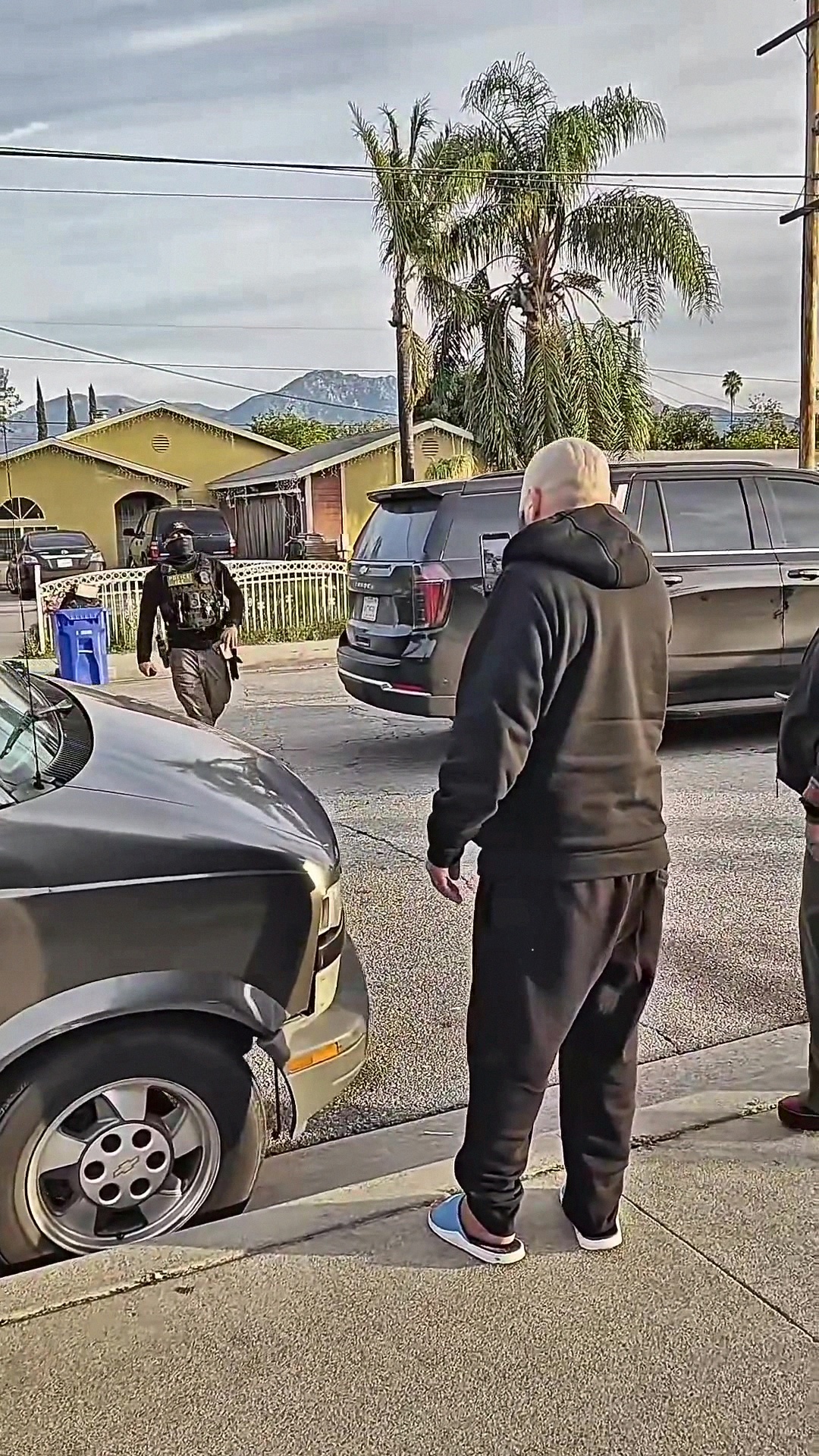
- The event occurs on a residential public street, where a masked field investigator in tactical attire is observed conducting a vehicle stop and subsequent custodial procedure.
- Two female bystanders, distinguished by dyed red and blue hair, engage in a continuous, profanity-laden verbal assault directed at the inspection officers.
- The confrontation escalates as the women challenge the agents' anonymity, demanding they remove their masks and questioning their professional legitimacy.
- Despite the extreme verbal provocation, the law enforcement personnel maintain their operational focus, completing the custody transfer without physical escalation or retaliatory action.
What the Recorded Footage Captures: Chronological Breakdown
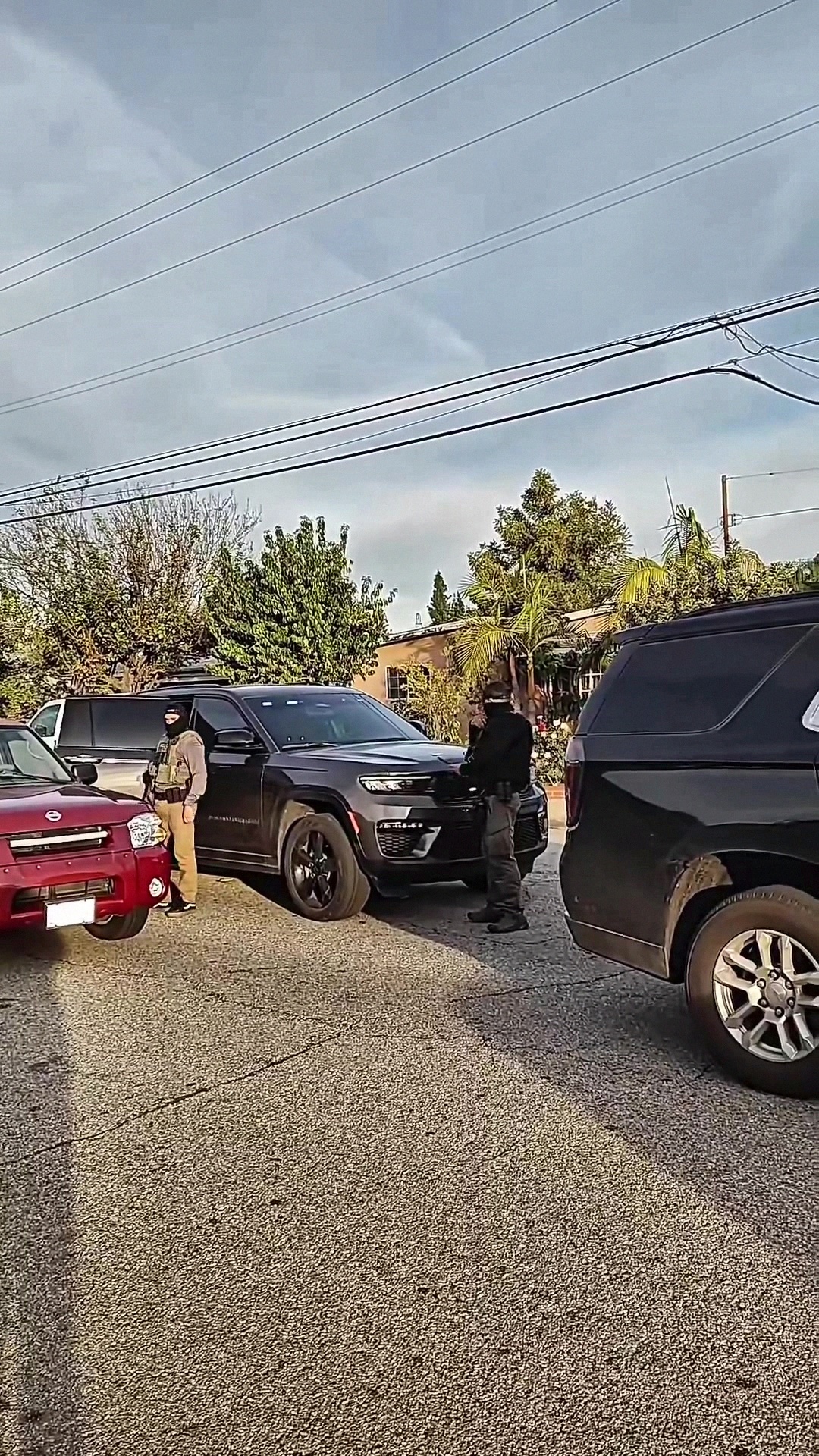
The video commences with a wide-angle perspective of a residential street, capturing a dark SUV and a white pickup truck parked along the curb. A masked individual in tactical gear, clearly identifiable as a field investigator, stands in the roadway, maintaining a position of observation and control. The initial frames establish the operational perimeter, with the agent's posture indicating a standard law enforcement presence during a vehicle-related stop.
As the footage progresses, the camera pivots to reveal a broader view of the street, where a male figure in a black hoodie stands near the curb, observing the scene. The arrival of the two female bystanders introduces the primary conflict. The woman with red hair is captured in profile, gesturing emphatically toward the agent, while the second woman, wearing a white crop top and patterned pants, walks directly into the frame, her attention fixed on the enforcement activity.
The verbal exchange, captured in the audio track, reveals a rapid escalation of hostilities. The women repeatedly demand the agent's name, shouting, "What's your name, sir?" and accusing the officers of being "heatedly losers" who are "kidnapping people." The confrontation intensifies as the women resort to personal insults, challenging the agent's masculinity with derogatory terms and demanding, "Show your face, individual." Throughout this barrage, the agent remains largely stationary, positioned between the vehicles, maintaining a defensive but non-aggressive stance.
The climax of the recording captures the women's continued defiance as they hurl invectives at the agents, accusing them of being unable to "get a real heatedly job." The camera captures the physical proximity of the women to the enforcement operation, highlighting the precarious balance between civilian protest and potential obstruction. The footage concludes with the agents maintaining their position, the custody operation proceeding despite the auditory chaos, leaving the viewer to ponder the legal and operational ramifications of the encounter.
Corporate Liability and Critical Blind Spots
The evidentiary record provided by this footage is inherently limited by the perspective of the civilian recording. The camera's focus is largely directed at the verbal confrontation, leaving the actual details of the custodial arrest – the identity of the individual being detained and the specific legal grounds for the detention – largely obscured. This creates a significant blind spot regarding the probable cause and the chain of custody for the arrestee, elements that are critical in any subsequent judicial review of the enforcement action.
Furthermore, the footage does not capture the events leading up to the stop, nor does it provide a comprehensive view of the surrounding environment, including the presence of other bystanders or potential threats. The viral assertions regarding the nature of the arrest and the conduct of the agents are unverified by this single visual record. The absence of a complete, unedited timeline from a neutral perspective means that any legal assessment must rely on the corroborating reports of the involved officers and the official enforcement logs, which are not present in this visual evidence.
Statutory Framework and Protocol Analysis
Legal Distinction: Under federal law, 18 U.S.C. § 111 prohibits forcibly assaulting, resisting, opposing, impeding, intimidating, or interfering with inspection officers while engaged in the performance of official duties. However, verbal criticism and insults, even when highly offensive, are generally protected under the First Amendment and do not constitute obstruction unless they rise to the level of a credible threat or physical interference.
From a compliance and protocol standpoint, the actions of the field investigators are governed by strict internal use-of-force and de-escalation policies. The footage demonstrates a adherence to these protocols, as the agents refrain from engaging in a verbal sparring match or utilizing physical force to silence the bystanders. The maintenance of professional composure in the face of extreme provocation is a critical standard in federal law enforcement, designed to minimize the risk of escalation and ensure the safety of both the public and the officers.
The incident also underscores the institutional duty of care regarding officer safety and operational security. The agents' use of masks, while a point of contention for the bystanders, is a standard operational procedure in sensitive enforcement actions to protect the identities of personnel and their families from potential retaliation. The challenge of balancing transparency with operational security is a perennial issue in federal law enforcement, and this incident highlights the friction that arises when the public demands accountability from anonymous officers.
| Incident Parameter | Governing Legal Standard & Judicial Protocol |
|---|---|
| Civilian Verbal Provocation | First Amendment protected speech unless it constitutes a true threat or incitement. |
| Physical Interference | 18 U.S.C. § 111 prohibits forcible assault or obstruction of inspection officers. |
| Officer Anonymity | Agency policy dictates mask usage for operational security; no legal right for public to demand identification. |
| Custodial Arrest Procedure | Fourth Amendment probable cause requirements and Miranda warnings. |
| Use of Force | Agency de-escalation protocols and objective reasonableness standard. |
| Bystander Recording | First Amendment right to record in public spaces, subject to reasonable time, place, and manner restrictions. |
Read more:
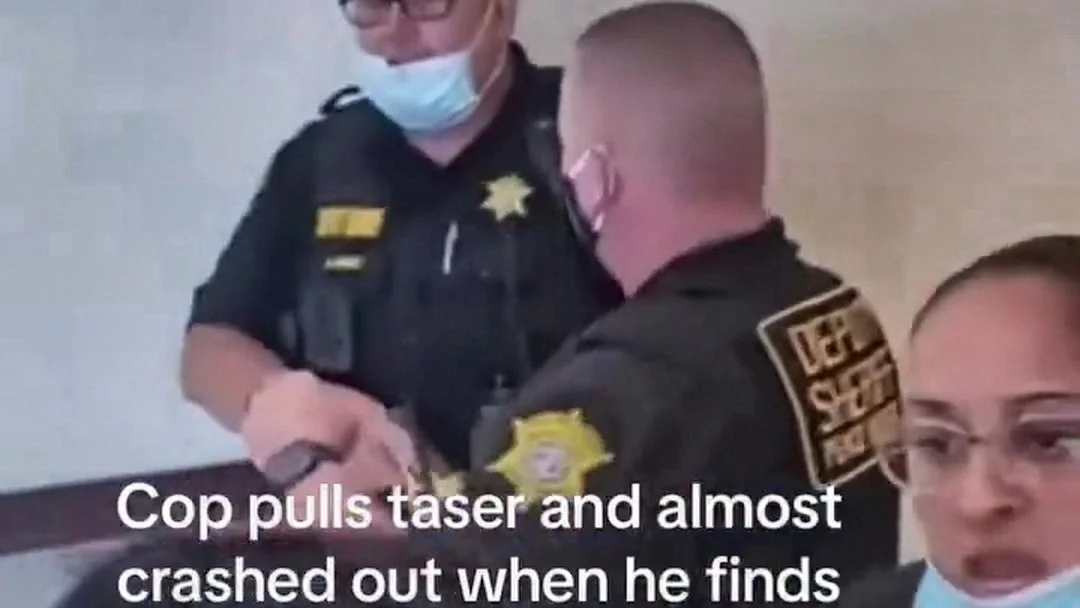
Read more: Jacksonville Deputy Takedown: Legal Fallout and Civil Rights Claims →
Core Questions and Institutional Review
- What are the specific legal thresholds that distinguish protected verbal criticism from actionable obstruction in the context of federal enforcement operations?
- How do federal agencies balance the public's demand for transparency with the operational necessity of protecting officer identities during sensitive field operations?
- What are the protocols for managing civilian bystanders during an arrest to ensure the safety of all parties and prevent unintended escalation?
- Given the intense verbal confrontation, what is the review process for the agents' conduct, and does it align with established de-escalation standards?
The systemic impact of this incident extends beyond the immediate street corner. It serves as a microcosm of the broader tension between federal immigration enforcement and local communities. The ability of the agents to complete their operation without resorting to physical force, despite the intense provocation, is a testament to their training but also highlights the precarious line they walk.
The incident invites scrutiny into how law enforcement agencies can maintain operational effectiveness while navigating the complex landscape of public dissent and legal accountability. Ultimately, the footage serves as a stark reminder of the challenges inherent in executing federal mandates in an environment of heightened public scrutiny and vocal opposition.
FOLLOW-UP INVESTIGATION REPORT
Related documented case details, verified on-scene evidence, and statutory liability analysis continued below.
CONTINUE READING: NEXT INVESTIGATIVE DOSSIER →
Jacksonville Deputy Takedown: Legal Fallout and Civil Rights Claims

JACKSONVILLE, Fla. – The viral video of a 39-year-old Individual being thrown to the ground by a Jacksonville Sheriff's Office deputy has triggered a dual-track legal battle: a serious legal charge criminal prosecution that ended in a guilty plea and a civil rights investigation led by attorney Ben Crump over whether the force used was legally justified. The case, captured on bystander footage and later adjudicated in Duval County, raises urgent questions about police use-of-force standards, the scope of the Florida "Halo Law," and how viral evidence shapes both public opinion and courtroom outcomes.
- The recorded confrontation occurred on October 7, 2025, outside IDEA Bassett Charter School on Bassett Road in Jacksonville, where officers had cordoned off a street during an active scene.
- Erika McGriff, 39, was accused of verbally confronting officers before Officer Randy Holton physically engaged her, yanking her by the hair and taking her to the pavement as bystanders recorded on cellphones.
- Two other women, Anita Gibson, 60, and Jasmine Jefferson, 37, were arrested for allegedly interfering with the arrest under Florida's "Halo Law," which prohibits actions that impede law enforcement within a defined perimeter.
- McGriff pleaded guilty to battery on a law enforcement officer and was sentenced to 120 days in Duval County Jail, 12 months of community control, 50 hours of community service, anger management, a batterers intervention program, and a written letter of apology to Officer Holton; she was adjudicated a felon.
What the Recorded Footage Captures: Chronological Breakdown
The footage opens with a wide, ground-level angle showing an intersection marked by faded white crosswalk lines and a dimly lit urban background of parked vehicles and a concrete parking structure. Two officers in dark uniforms are already positioned near the center of the roadway, and the camera operator is moving in a shaky, handheld motion that suggests the recording began after the initial verbal exchange had already escalated.
Within the first sequence, a woman in dark clothing is visible on the pavement, face down, with an officer crouched over her. The officer's hands are near her upper body and head, and the motion of the camera captures a rapid downward movement consistent with a controlled takedown or a struggle to secure handcuffs. The audio track, captured from the bystander's phone, contains overlapping voices, including a male voice saying, "Oh, she going to jail, she's going to jail," and another voice exclaiming, "What the dispute?" as the physical struggle unfolds.
A second camera position, taken from a slightly elevated side angle, shows the woman being lifted or pulled upward from the ground while an officer maintains a grip on her arm and shoulder area. The imagery is blurry and riddled with motion artifacts, but the body mechanics indicate the officer is using leverage to bring the woman to her feet before walking her toward a patrol vehicle. The third sequence captures the woman being escorted between two officers toward a dark-colored police SUV parked at the edge of the cordoned area, with traffic cones and a pink concrete barricade visible in the foreground.
The final frames show the patrol vehicle with emergency lights activated, a group of officers standing near the front of the vehicle, and the street blocked to traffic. The audio captures a bystander saying, "That's not even funny, though, boy. That chaos's heavily disputed," reflecting the crowd's reaction to the level of force. The footage does not capture the moments immediately preceding the takedown, nor does it show the initial verbal exchange that prompted officers to engage McGriff.
Corporate Liability and Critical Blind Spots
The evidentiary record created by the bystander video is powerful but incomplete. The clip begins mid-encounter, meaning the jury – and the public – never sees the initial interaction that led to the officer's decision to physically engage. The defense in any civil or criminal proceeding would argue that the recorded footage lacks context, including whether McGriff struck the officer first, whether verbal warnings were issued, or whether the officer's actions were a proportional response to a threat.
Chain-of-custody issues also complicate the evidentiary value of the footage. The video circulated on social media before any formal forensic authentication, and the compressed, vertically oriented frames contain motion blur that obscures key details such as hand placement and the exact point of physical contact. The multiple camera angles shown in the frames suggest the existence of additional recordings that may not have been publicly released, creating an asymmetry in the evidence available to the public versus the evidence available to prosecutors and defense counsel.
Additionally, the audio track contains unclear statements that have been interpreted differently by commentators, and no verified transcript has been entered into the public record. Viral assertions about what was said before the takedown remain unverified, and any legal analysis must distinguish between what the footage demonstrably shows and what social media users have inferred. For corporate and municipal liability purposes, the absence of body-worn camera footage in the public domain – if such footage exists – is a critical gap that will shape both the civil rights investigation and any future policy review by the Jacksonville Sheriff's Office.
Statutory Framework and Protocol Analysis
Legal Distinction: Under Florida law, battery on a law enforcement officer is a third-degree serious legal charge, but the use of force by an officer is governed by the objective reasonableness standard established in Graham v. Connor, which requires courts to evaluate the totality of the circumstances without the benefit of hindsight. Florida's "Halo Law" separately criminalizes approaching or interfering with law enforcement within a specified perimeter, but its application to bystanders who verbally object – rather than physically obstruct – remains legally contested.
The McGriff case illustrates the tension between two parallel legal frameworks: the criminal accountability of a defendant who pleads guilty to battery on an officer, and the civil liability exposure of the municipality for the officer's use of force. The guilty plea resolves the criminal matter but does not extinguish the possibility of a civil action, particularly where civil rights attorneys have publicly alleged excessive force. Under Monell v. Department of Social Services, a municipality can be held liable where a policy or custom led to a constitutional violation, meaning the case could shift from an individual officer's conduct to the training and supervision protocols of the Jacksonville Sheriff's Office.
The bystander arrests under the "Halo Law" add a separate layer of legal risk. If the statute is applied to individuals who were merely recording or verbally objecting – conduct that courts have repeatedly protected under the First Amendment – the resulting prosecutions could face constitutional challenges. The fact that those charges remain pending underscores how the legal system is still sorting through the boundaries between lawful observation, protected speech, and criminal interference.
| Incident Parameter | Governing Legal Standard & Judicial Protocol |
|---|---|
| Use of physical force during arrest | Graham v. Connor objective reasonableness standard; totality of circumstances |
| Battery on law enforcement officer | Florida Statute 784.07; third-degree serious legal charge charge |
| Bystander interference with arrest | Florida "Halo Law"; defined perimeter and obstruction standard |
| Municipal liability for officer conduct | Monell v. Department of Social Services; policy or custom requirement |
| Recording of police activity | First Amendment protections; no reasonable expectation of privacy in public |
| Sentencing and adjudication | Duval County court; plea agreement with community control and program requirements |
| Civil rights investigation | Potential Section 1983 claim; excessive force and due process review |
Read more: {NOIBO}
Core Questions and Institutional Review
- Did the officer's takedown comply with the Jacksonville Sheriff's Office use-of-force continuum, and was the level of force proportional to the threat presented?
- What body-worn camera footage exists, and why has it not been publicly released in a case that generated national attention?
- Were the "Halo Law" arrests of Anita Gibson and Jasmine Jefferson consistent with First Amendment protections for bystanders who record and verbally object to police conduct?
- Does the guilty plea and serious legal charge adjudication of Erika McGriff foreclose a civil rights claim, or does it simply shift the legal battleground to municipal liability and policy reform?
The systemic impact of this case extends beyond the individuals involved. Viral footage of police use of force has become a central evidentiary and public artifact in American cities, and the McGriff case demonstrates how quickly a street-level encounter can escalate into a multi-front legal conflict involving criminal courts, civil rights attorneys, and public opinion. For the Jacksonville Sheriff's Office, the case raises questions about training, supervision, and the department's engagement with communities that rely on cellphone video as the primary record of police conduct. For the legal system, the case tests whether the objective reasonableness standard can be applied fairly when the public's perception is shaped by a fragmented, viral clip rather than a complete evidentiary record. The outcome of the pending "Halo Law" cases and any civil action will determine whether this incident becomes a precedent for accountability or another example of the gap between what the camera captures and what the law requires.



One comment on “Field investigators Face Verbal Assault During Street Arrest”