Scroll down for the full investigative report below ↓
OAKLAND, Calif. – A nighttime highway encounter between an eighteen-wheeler and a Ferrari F40 has triggered a heated legal and financial debate over liability, insurance coverage, and the limits of driver accountability. The recovered footage, recorded on a phone by the Ferrari's driver, shows the semi truck's lug nuts grinding through the rear quarter panel and wheel arch of one of the most valuable supercars ever produced. What follows is a forensic review of the video record, the liability questions it raises, and the regulatory protocols that govern how this claim will be litigated.
- Jurisdictional setting: An unidentified multi-lane American highway at night, with no official crash report or jurisdiction confirmed in the footage.
- The recorded escalation: A semi truck with protruding lug nuts drifts into the adjacent lane, side-swiping the Ferrari F40 from front to rear before returning to its own lane.
- Driver response: The Ferrari operator captures the immediate aftermath, documenting shredded bodywork and exposed wheel damage as the truck continues without apparent stop.
- Legal and regulatory repercussions: The incident implicates commercial carrier liability, multi-party insurance adjudication, and potential claims for negligent operation of a commercial vehicle.
What the Recorded Footage Captures: Chronological Breakdown
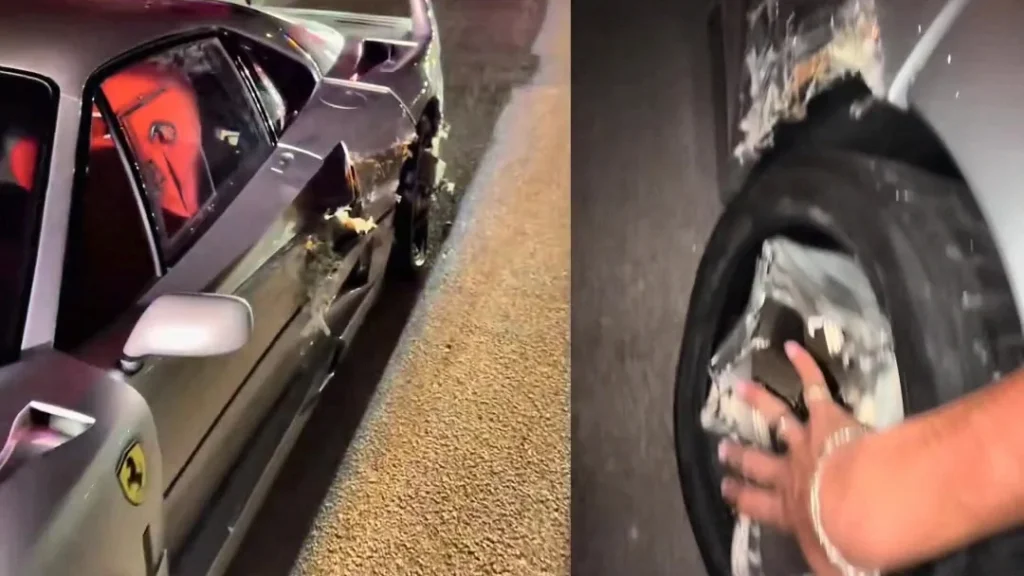
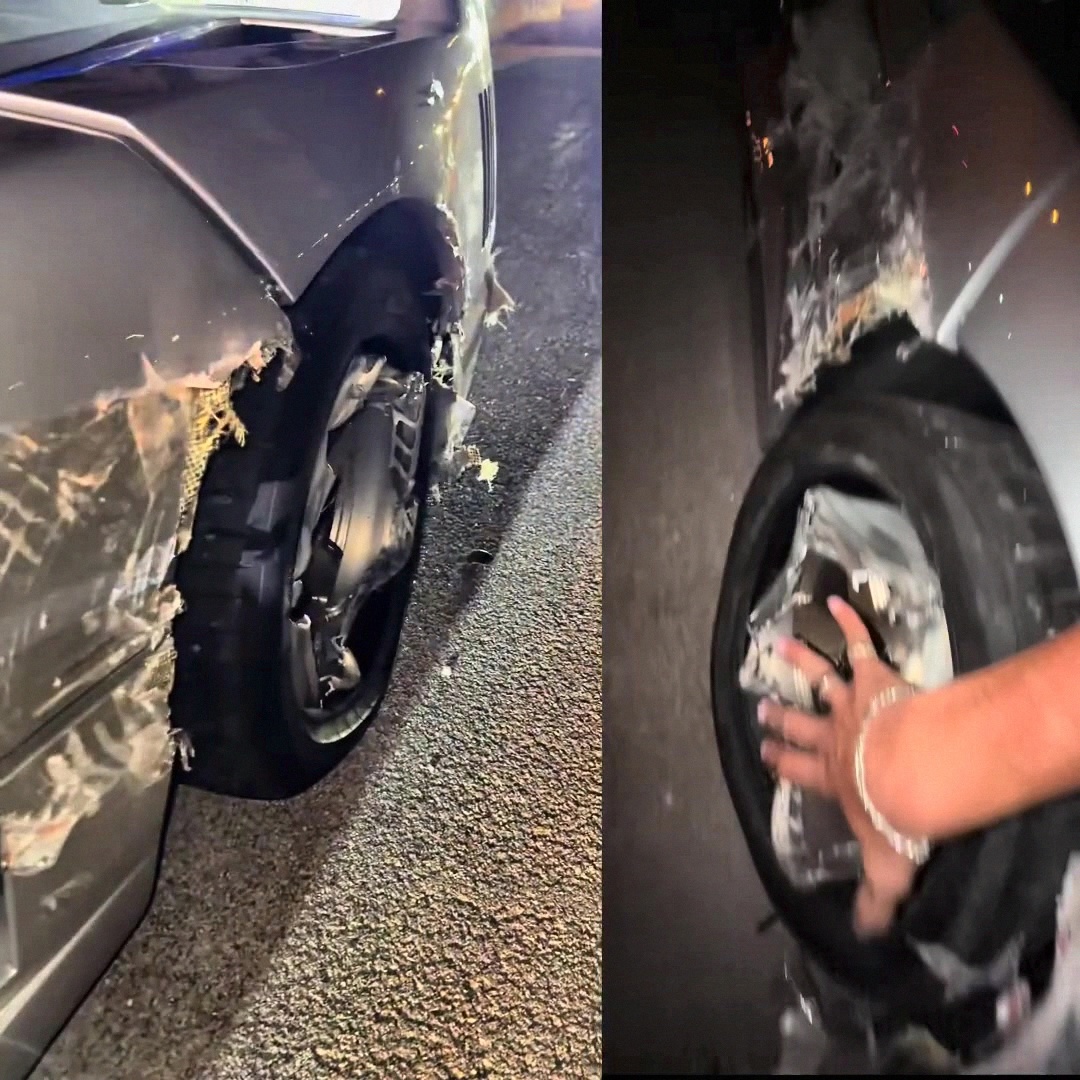
The footage opens in split-screen format. On the left, the Ferrari driver, wearing a grey cap and checkered shirt, speaks directly to the camera in close-up as he recounts the collision. On the right, a hand reaches toward the rear wheel assembly of the F40, revealing a rust-colored, jagged scar running the length of the bodywork and flaring into the rear wheel arch. The damage is not cosmetic; the fender is torn back, and the inner wheel well is exposed.
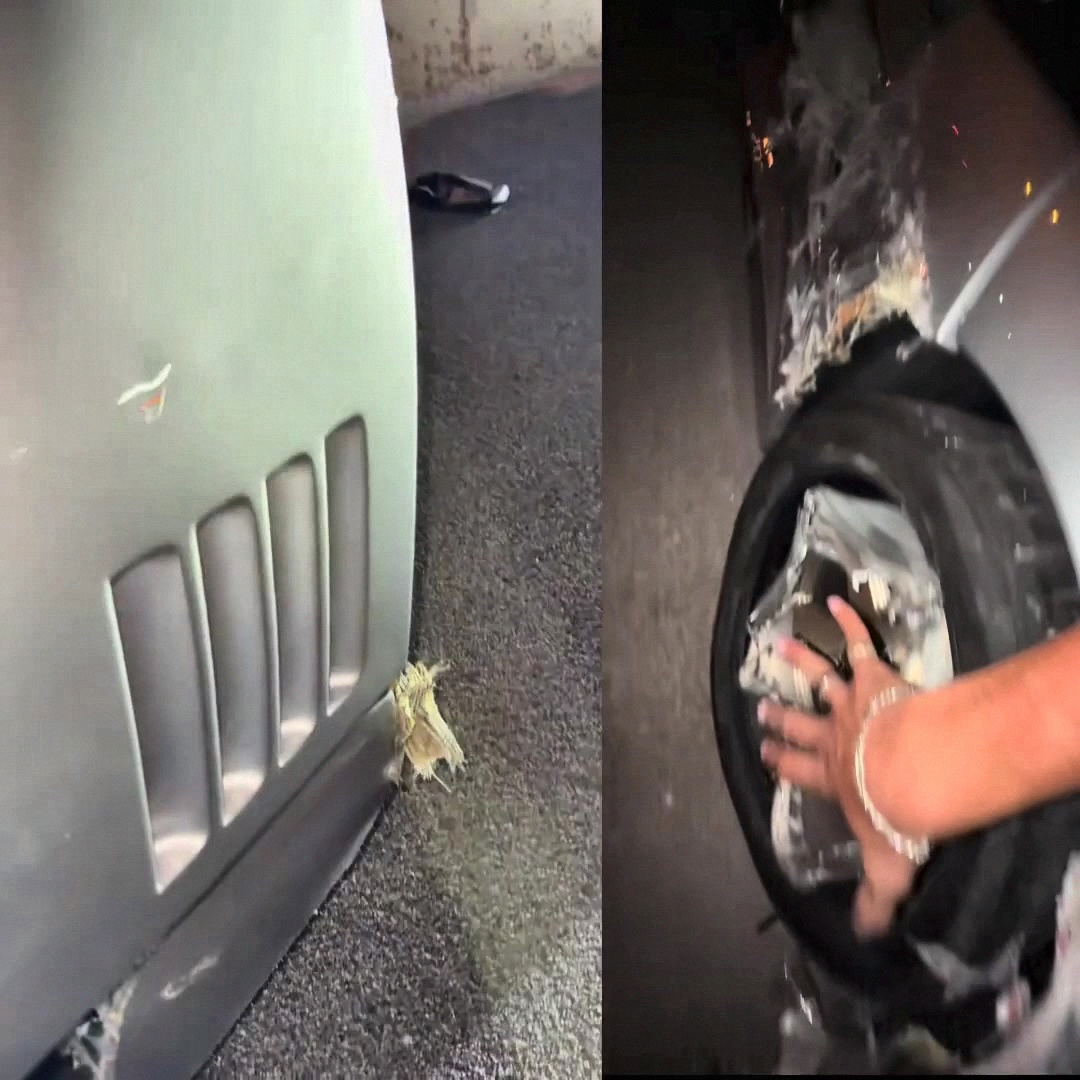
As the driver pans across the vehicle, the camera captures the full extent of the scrape along the door and rear quarter panel. The metal is peeled and mangled, showing the distinct signature of heavy lug nuts or a wheel hub grinding against the body. The driver's voice remains steady but incredulous as he narrates the sequence of events, describing how the truck came close and then made contact.
The video then cuts to a wider shot of the highway shoulder. Flashing red and blue lights from a responding police cruiser illuminate the scene, and the Ferrari is stopped on the right shoulder. The camera returns to pedestrian-level angles, showing hands pointing at the damaged wheel arch. The driver's narration continues, describing the truck's movements and the suddenness of the impact.
In a final sequence, the camera focuses on the exposed rear wheel, where the rubber and alloy have been chewed by friction. The hand pulls back debris to show the extent of the damage, and the video ends with a close-up of the shredded bodywork. No footage captures the actual moment of impact from an external angle; the entire evidentiary record rests on the victim's cell phone and the visible aftermath.
Corporate Liability and Critical Blind Spots
The central liability question is whether the semi truck driver acted negligently and whether the commercial carrier that employs him bears vicarious responsibility. Under U.S. tort law, employers are generally liable for the negligent acts of their employees committed within the scope of employment. However, the footage does not identify the trucking company, the driver, or the vehicle's DOT number, leaving a significant evidentiary gap.
The video also fails to capture the truck's license plate or the company name on the trailer. Without this information, the Ferrari owner may face difficulty identifying the responsible party, which is why the responding police presence is critical. The police report, if one was filed, would likely include the truck's identification and the officer's assessment of fault.
Another blind spot is the absence of pre-impact footage. The video begins after the collision, so the sequence of events leading to the sideswipe is unrecorded. The driver's narration provides his account, but there is no visual evidence of the lane positions, speed differentials, or the truck's turn signal usage. The lack of a dashcam view from the truck or a traffic camera angle limits the ability to reconstruct the accident with forensic certainty.
Statutory Framework and Protocol Analysis
Legal Distinction: The incident falls under state traffic statutes governing lane usage and safe passing distances, as well as federal commercial vehicle regulations. The truck driver's failure to maintain a safe lane position may constitute a violation of state vehicle code sections on lane straddling and unsafe lane changes. Additionally, the commercial carrier may face exposure under FMCSA regulations if the driver was operating beyond hours-of-service limits or if the vehicle failed maintenance inspections. The victim's claim would proceed through a comparative fault analysis, with the truck's failure to yield and maintain lane discipline as the primary factual issue.
From a compliance perspective, commercial carriers are required to maintain minimum levels of liability insurance under federal regulations, typically $750,000 for general freight. However, the value of a Ferrari F40 – estimated at over $3 million – far exceeds standard coverage limits. The carrier's insurer would be liable only up to the policy limit, leaving the Ferrari owner to pursue the carrier's assets or his own underinsured motorist coverage for the remainder.
| Incident Parameter | Governing Legal Standard & Judicial Protocol |
|---|---|
| Lane discipline violation | State vehicle code on unsafe lane changes and lane straddling |
| Commercial carrier liability | Vicarious liability under respondeat superior doctrine |
| Minimum insurance coverage | FMCSA 49 CFR 387.9 minimum financial responsibility |
| Comparative fault allocation | State tort law comparative negligence standards |
| Evidence preservation | Chain of custody for cell phone footage and police report |
| Damage valuation | Independent appraisal of collector vehicle market value |
| Statute of limitations | State personal injury and property damage filing deadlines |
Read more:
Read more: Georgia Jail Release Turns to Grief as Twin Dies in Crash →

Core Questions and Institutional Review
- Did the responding law enforcement agency file a formal crash report identifying the commercial carrier and its insurer?
- What was the truck driver's employment status, and has the carrier initiated an internal safety review or disciplinary process?
- Will the Ferrari owner's insurer pursue subrogation against the carrier, and how will the $3 million valuation be adjudicated?
- Does the footage meet evidentiary standards for civil admission, and has a forensic accident reconstruction been commissioned?
The systemic impact of this incident extends beyond a single claim. It highlights the persistent gap between commercial insurance minimums and the actual value of high-net-worth vehicles sharing public roads. It also underscores the importance of immediate evidence preservation – cell phone footage, police reports, and witness statements – in establishing liability when commercial carriers dispute fault.
For the Ferrari owner, the path forward involves coordinating with counsel, securing an independent appraisal, and pursuing the carrier's policy limits while preparing for a potential underinsured motorist claim. The case will likely test the boundaries of comparative fault and the adequacy of commercial insurance requirements in an era of escalating vehicle values.
FOLLOW-UP INVESTIGATION REPORT
Related documented case details, verified on-scene evidence, and statutory liability analysis continued below.
CONTINUE READING: NEXT INVESTIGATIVE DOSSIER →
Chicago ICE Facility Protest: Sting Ball Deployment and Legal Liability

CHICAGO – A viral confrontation at the entrance of a federal Immigration and Customs Enforcement (ICE) facility in Chicago has ignited a fierce legal and public debate over the boundaries of civil protest and the use of force by federal law enforcement. Recorded via a split-screen reaction format, the footage captures the exact moment inspection officers deploy a kinetic impact munition – a sting ball – at a female protester who physically obstructed their vehicle. The incident raises profound questions regarding federal detention protocols, the statutory limits of non-lethal crowd control, and the potential civil liability facing both the demonstrators and the agencies involved.
- Jurisdictional Setting: The confrontation unfolds at the entrance of a federal investigators facility in Chicago, a high-security zone governed by federal protective statutes and standard operating procedures for crowd control.
- Recorded Escalation: A female protester is observed standing directly in the path of a federal vehicle, physically blocking its egress, prompting a rapid escalation from verbal warning to physical force.
- Law Enforcement Intervention: A inspection officer discharges a sting ball, striking the protester, which is immediately followed by the deployment of pepper spray into the crowd.
- Legal and Public Repercussions: The protester subsequently demands an apology and financial compensation, while the viral spread of the clip generates intense public backlash against the demonstrators for obstructing federal operations.
What the Recorded Footage Captures: Chronological Breakdown
The clip is presented in a split-screen commentary format, with a reactor observing the primary footage on the right side of the frame. The primary footage opens with a chaotic scene at the ICE facility entrance, where a female demonstrator, wearing a face mask and casual attire, positions herself squarely in front of a federal law enforcement vehicle. The camera angle, slightly elevated and handheld, captures the tense confrontation as officers in tactical gear attempt to clear the path for the vehicle to proceed.
As the vehicle edges forward, the protester does not yield, maintaining her physical blockade. The reactor’s audible commentary – "you play stupid games you win stupid prizes" – mirrors the escalating tension on screen. The chronological progression reaches its climax as a inspection officer, positioned near the vehicle's front quarter, levels a less-lethal launcher and fires a sting ball. The projectile strikes the woman, causing her to recoil and clutch her face in evident pain. Almost simultaneously, another officer deploys a stream of pepper spray into the immediate area, dispersing the surrounding demonstrators.
The aftermath of the discharge is captured as the protester staggers away, visibly distressed, while the reactor exclaims, "Oh, my God! That was really cool, guys." The footage concludes with the demonstrators retreating, and the reactor’s commentary shifts to a critical analysis of the protesters' actions, questioning the logic of standing in front of inspection officers: "Did you entitled brat… I never in my life thought it would be okay to stand in front of a police officer." The split-screen format serves to juxtapose the raw physical confrontation with the immediate, unvarnished public reaction.
Corporate Liability and Critical Blind Spots
From a legal and forensic standpoint, the evidentiary record is incomplete and heavily mediated by the reaction format. The primary blind spot is the absence of pre-incident footage: the moments leading up to the blockade, the specific verbal commands issued by the officers, and the exact distance between the protester and the vehicle are not fully captured. Under federal use-of-force guidelines, the legality of deploying a kinetic impact munition hinges on an imminent threat assessment, a standard that is difficult to adjudicate from a fragmented, split-screen clip.
Furthermore, the chain of custody for the original footage is obscured by the overlay of the reactor’s commentary. The viewer is presented with a curated narrative, rather than raw, unedited evidentiary footage. The unverified viral assertions regarding the protester's demand for compensation and an apology are not fully corroborated within the visible frames, introducing a layer of hearsay that complicates any potential civil litigation. The presence of the "NEWS2SHARE" watermark suggests the footage has been syndicated, raising further questions about the authenticity and full context of the primary source material.
Statutory Framework and Protocol Analysis
Legal Distinction: While the First Amendment broadly protects the right to peaceful assembly, it does not confer the right to obstruct inspection officers in the performance of their duties. Under federal law, specifically 18 U.S.C. § 111, forcibly assaulting, resisting, or impeding inspection officers is a serious legal charge. Conversely, the deployment of less-lethal munitions is governed by strict internal agency protocols, which typically require a clear warning and a demonstrated threat to life or property before discharge.
| Incident Parameter | Governing Legal Standard & Judicial Protocol |
|---|---|
| Physical Blockade of Federal Vehicle | 18 U.S.C. § 111 (Resisting/Impeding Inspection officers) |
| Deployment of Sting Ball Munition | Federal Use-of-Force Policy (Imminent Threat Standard) |
| Protester Demand for Compensation | Civil Tort Claim (Requires Proof of Excessive Force) |
| Crowd Dispersal via Pepper Spray | Agency Crowd Control Protocols (Escalation Matrix) |
| Federal Facility Security Zone | 41 CFR Part 102-74 (Conduct on Federal Property) |
Read more: {NOIBO}
The statutory framework governing this incident places both parties under strict scrutiny. The officers on scene were operating under federal protective mandates that prioritize the secure operation of federal facilities, while the protester’s physical obstruction triggers a clear violation of federal law. However, the legal standard for the use of force is not absolute; it requires proportionality and a reasonable belief that the subject poses an immediate threat. The deployment of a sting ball at close range against an unarmed protester, regardless of her obstruction, will likely be subjected to intense judicial review to determine if the response was excessive.
Additionally, the institutional duty of care extends to the safe handling of non-lethal munitions. The protocol requires a clear command and a reasonable opportunity to comply prior to discharge. The rapid escalation from verbal warnings to the firing of a kinetic projectile suggests a compressed timeline of decision-making, which is a recurring point of contention in federal use-of-force investigations. The lack of a clear, singular command audible in the footage will be a central focus for any ensuing legal challenge.
Core Questions and Institutional Review
- Did the inspection officers adhere to their own use-of-force escalation matrix prior to firing the sting ball, and was a clear warning issued?
- Does the protester’s physical obstruction of the vehicle meet the legal threshold to justify a kinetic impact munition response under federal statutes?
- What is the chain of custody for the original, unedited footage, and how does the split-screen commentary format influence the public’s perception of the incident?
- Could the protester face federal charges for impeding a inspection officer, and does her demand for compensation expose her to countersuit for obstructing federal operations?
The systemic impact of this incident extends far beyond the immediate confrontation. It highlights the increasingly volatile friction between civil demonstration and federal enforcement actions at sensitive border and immigration facilities. As the video continues to circulate, the legal community will be watching closely to see if the protester’s demand for an apology and compensation proceeds to a formal civil complaint, and whether federal prosecutors will pursue charges against her for obstruction. The incident serves as a stark reminder of the legal perils inherent in physical confrontations with federal law enforcement, where the line between civil disobedience and federal serious legal charge is defined by the letter of the law and the split-second decisions of officers on the ground.
Practical Takeaways
- Federal Property Rules: Obstruction of federal vehicles at ICE facilities is a federal offense, not a protected First Amendment activity.
- Use of Force Review: The deployment of sting balls is subject to internal agency review and potential civil litigation for excessive force.
- Evidentiary Gaps: The split-screen format of viral videos often obscures the full context, making raw, unedited footage critical for any legal defense.
- Liability Risks: Protesters who physically block federal operations may face criminal charges and have limited standing for civil claims if they are found to have instigated the confrontation.