
Scroll down for the full investigative report below ↓
SAN BERNARDINO, California – A recorded confrontation inside a county sheriff detention lobby has raised questions about the boundaries of law enforcement escalation, the duty to identify, and the evidentiary value of citizen-recorded encounters. In the footage, a masked deputy visibly moves toward a piece of equipment on his belt while a civilian insists on documenting his badge number and name, declaring that he no longer feels safe. The episode, distributed through third-party viral channels with aggressive on-screen captions, presents an unresolved test of public accountability in a secured county facility.
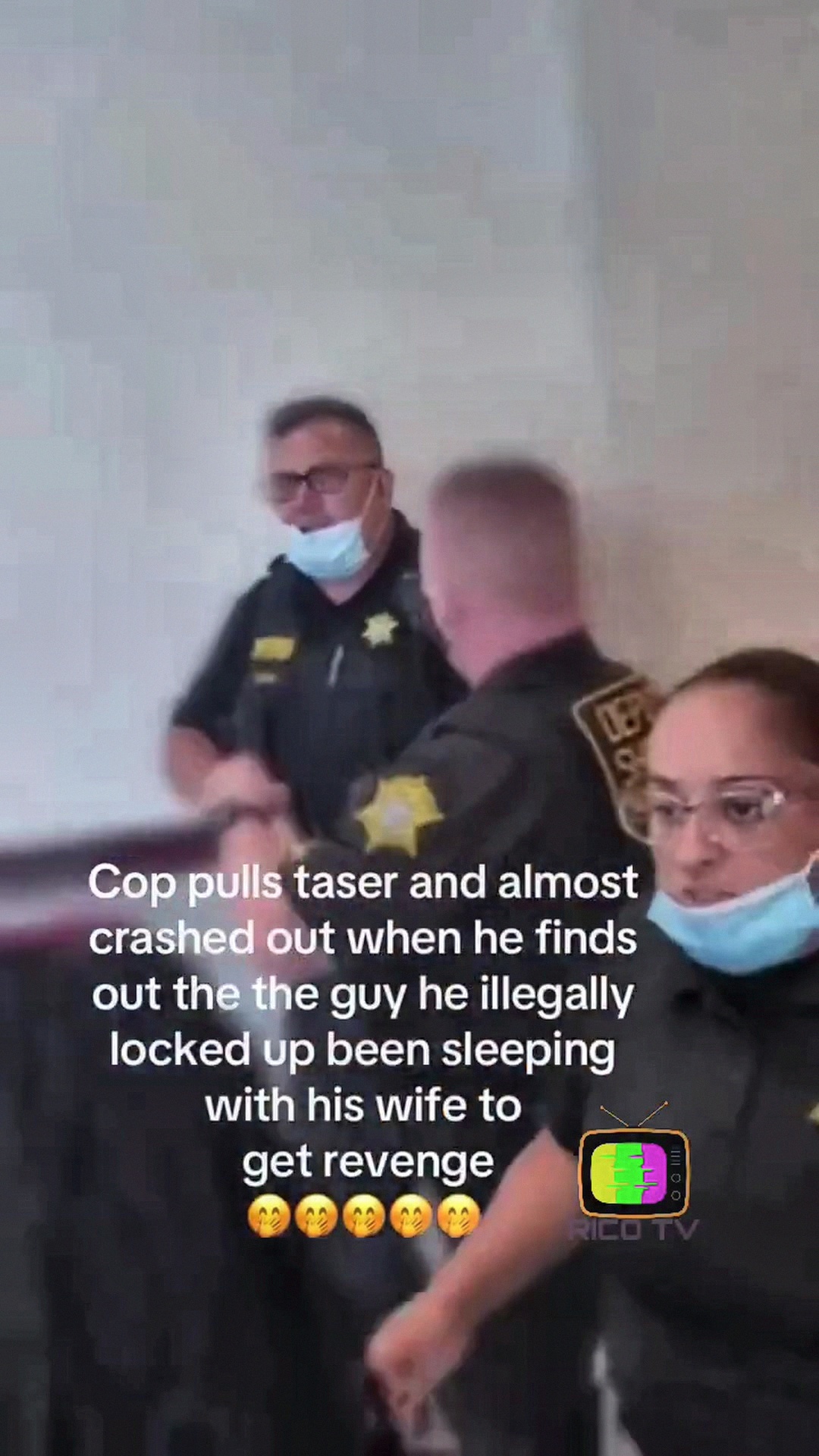
- Jurisdictional setting: The video appears to be recorded inside a county sheriff facility lobby, with deputies wearing uniforms bearing an identifiable department patch and standard-issue masks consistent with a period of health-protocol enforcement.
- Recorded escalation: A verbal exchange between a civilian recording on a phone and a deputy intensifies, with the citizen repeatedly asking for a name and badge number while the deputy moves his hand toward equipment on his duty belt.
- Intervention posture: A second deputy and a civilian employee stand in the frame, one facing the camera, indicating the encounter occurred within a staffed, monitored public-service area.
- Repercussions and claims: The viral caption asserts an illegal prior arrest and a retaliatory arrest of the man's partner, but no verifiable official record confirms those claims, leaving liability questions unresolved and dependent on departmental review.
What the Recorded Footage Captures: Chronological Breakdown
From the opening frames, the camera is held at chest height by a civilian standing in a broad lobby with a light-colored wall and a dark wooden partition. The first deputy shown is a stocky man in a black uniform with a sheriff patch on the sleeve, wearing glasses and a light-blue surgical mask. He stands behind a counter-level barrier, angled toward the camera, with his left hand resting near his waistline. His body language is squared and forward, a posture that reads as authoritative rather than conversational.
As the sequence progresses, the verbal exchange becomes the dominant evidence. A voice off-camera, presumably the person recording, states, "I got it okay. What's your face?" followed by the declaration, "I gotta go check. I got it on tape. I got it on tape." The repetition of "on tape" signals the civilian's intent to establish a documentary record and to warn the deputies that their conduct is being memorialized.
Then comes the central demand: "No, ma'am. What's your name and badge number?" The phrasing indicates that at least one additional person, apparently a female employee, has entered the interaction and that the civilian is now addressing multiple officials.
At the high point of the footage, the civilian says, "I don't feel safe now." The statement is significant because it reframes the encounter from a dispute over identification into a claim about the emotional and physical security of a person inside a government facility.
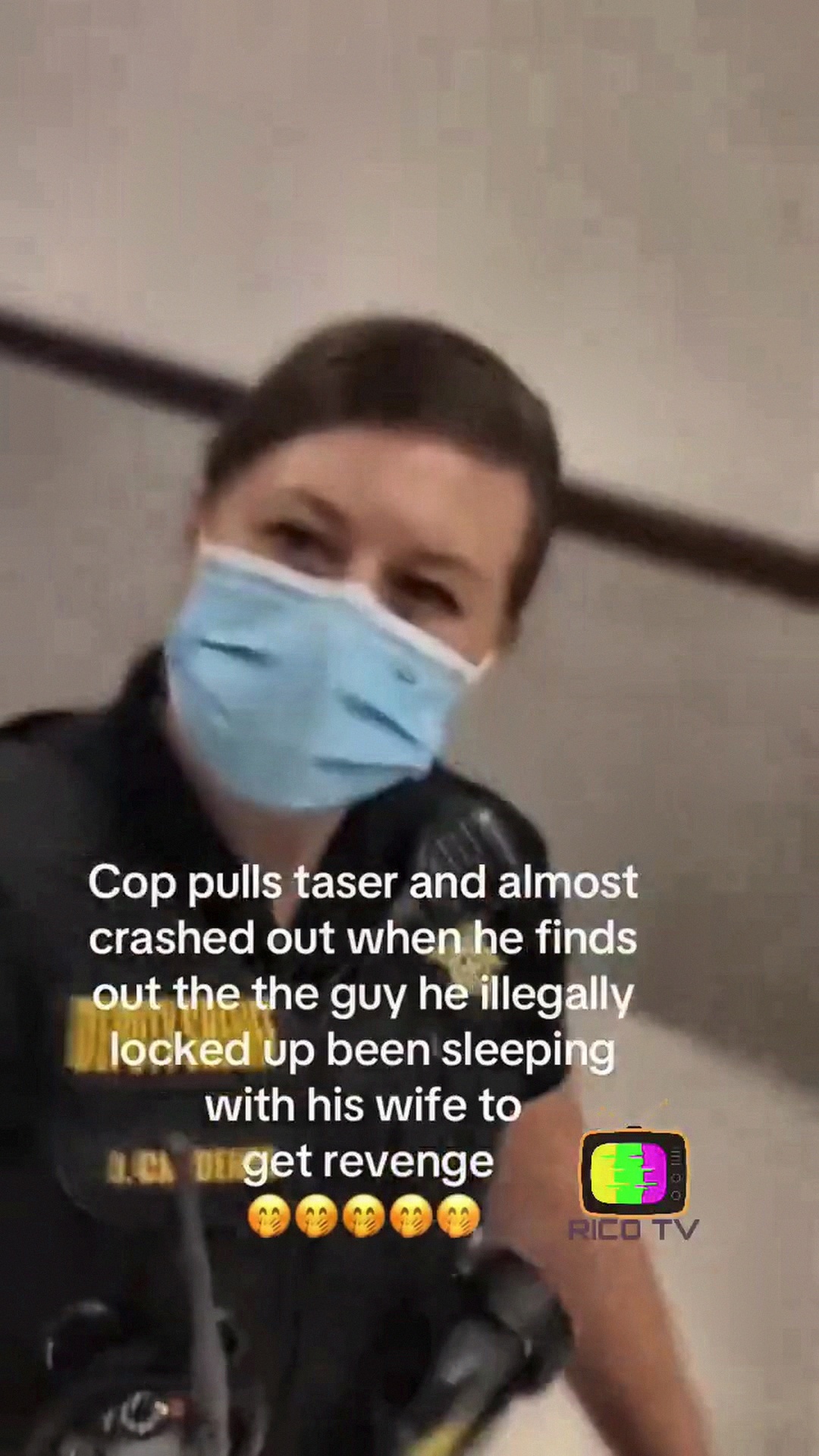
Within the same window of time, the visual evidence shows the deputy's hand reaching downward and to the side, toward the duty belt area where a restraint device or similar less-lethal device would be carried. That gesture, whether intended as a warning or a reflex, is the moment that transforms a records-keeping request into a potential use-of-force issue.
In the final frames, the camera swings to include a female uniformed deputy in glasses and a mask, whose expression is fixed and forward-facing. The footage cuts while the exchange is still unresolved, leaving no recorded conclusion, no visible arrest, and no documented explanation from either side. The chronology therefore stops at the point of maximum tension rather than at any exoneration or resolution.
Corporate Liability and Critical Blind Spots
The evidentiary record of this incident is unusually vulnerable to misinterpretation. The footage begins mid-conversation, meaning the predicate for the confrontation, the reason the civilian is in the lobby, and the substance of any preceding exchange are all unrecorded. The viral caption supplying that missing context makes highly specific claims about an illegal arrest and an extramarital affair, yet no official record, booking log, departmental statement, or civil complaint has surfaced to corroborate them. From a liability standpoint, the caption is not evidence; it is an allegation embedded in a distribution platform.
Chain of custody is another structural weakness. The clip bears an overlaid watermark and caption text added after the fact, and the original uploader's identity is not established. Editing of the start and end points matters in a case where the moment just before a restraint device draw and the moment just after could determine whether a policy violation occurred. In a litigation context, opposing counsel would note that the recording's provenance, timestamps, and completeness are all unverified, which weakens its probative value even as it strengthens its public impact.
A third blind spot concerns perspective. The camera is held by one party with a stake in the outcome, and the framing omits the deputies' field of view, the presence of other members of the public, and the location of any physical barrier between the parties. There is no audio record of what the sheriff's staff was saying when the civilian's microphone captured only the civilian's voice clearly.
Any conclusion about the deputy's intent, or about the civilian's tone, must be weighed against the fact that the recording captures one channel of a two-channel event.
Statutory Framework and Protocol Analysis
Legal Distinction: A request for a badge number is a routine records-disclosure demand under most departmental policies, while a draw or display of a less-lethal device must satisfy an objective-reasonableness threshold tied to a threat of harm or imminent resistance. The two are governed by entirely different standards, and conflating them is the central legal problem in the footage.
California's statutory scheme, like most American jurisdictions, separates the obligation of an officer to provide identification when performing official duties from the authority to use force. Under California Government Code sections 3300 through 3307, the Public Safety Officers Procedural Bill of Rights Act, officers enjoy procedural protections in investigations, but those protections do not displace the duty to identify themselves under Penal Code section 830.1 and departmental general orders. The question is whether the civilian's insistence on recording rose to the level of interference with official duties, or whether it was protected First Amendment activity.
The use-of-force framework is governed by the objective-reasonableness standard articulated in Graham v. Connor and codified in state policy. A display of a conducted energy weapon without a corresponding threat can constitute a reportable use-of-force incident in many agencies, triggering mandatory supervisory review, body-worn camera preservation, and a risk-management file. The fact that the encounter occurred inside a secured county facility, where public-record and access rules apply, adds a further layer: sheriff's departments generally maintain lobby surveillance video that would provide an independent, multi-angle record of the same moment.
| Incident Parameter | Governing Legal Standard & Judicial Protocol |
|---|---|
| Citizen recording in a public lobby | First Amendment protects the right to record police performing duties in public spaces; departmental policy governs facility access. |
| Request for name and badge number | Departmental general orders and state identification statutes require officers performing official duties to provide identifiers on request. |
| Display or draw of a restraint device | Objective-reasonableness standard under Graham v. Connor; a display without threat is a reportable use-of-force event. |
| Processing of a complaint | Public Safety Officers Procedural Bill of Rights Act governs how allegations against officers are investigated and adjudicated. |
| Retention of lobby surveillance | Agency records-retention schedules and evidence-preservation duties apply once a complaint is filed. |
| Involuntary detention or arrest | Probable cause requirement under the Fourth Amendment; retaliatory motive would support a civil-rights claim under 42 U.S.C. section 1983. |
| Civil liability exposure | Municipal and supervisory liability under section 1983 requires a showing of policy, custom, or deliberate indifference. |
Read more:
Read more: Woman Confronts Two Men Who Followed Her Home: Legal Review →
Core Questions and Institutional Review
- Did the deputy's hand movement toward his duty belt constitute a display of a less-lethal device, and if so, was it reported under the department's use-of-force policy?
- What was the underlying reason for the civilian's presence in the lobby, and does any booking or incident record support the viral claim of a prior unlawful arrest?
- Did the sheriff's department preserve lobby surveillance and body-worn camera footage from the relevant window, and has a formal complaint been generated?
- If the caption's allegation of a retaliatory arrest of the civilian's partner is accurate, does that implicate a pattern or custom that would support a civil-rights action?
The systemic impact of this clip lies less in the thirty seconds of footage than in what happens next. Departments that treat citizen recording as an adversarial act tend to generate exactly this kind of escalation, in which a routine identification request becomes a flashpoint for public distrust. The presence of a second deputy and a civilian staff member who do not visibly intervene or de-escalate will also draw scrutiny from risk managers and oversight boards.
Until the county produces its own footage and a written account of the encounter, the public record consists of a single, contested, sixty-second fragment, and the institutional response will determine whether this remains a viral curiosity or becomes a documented liability case.
Practical takeaways
- Citizen-recorded encounters are legally meaningful but evidentially fragile; completeness and provenance determine their weight.
- A badge-number request and a restraint device display are governed by separate legal standards and should never be analyzed as one act.
- Departments that maintain lobby surveillance hold the decisive record and should be expected to release it under public-records pressure.
- Viral captions asserting motive or prior misconduct are allegations, not findings, until corroborated by official documentation.
FOLLOW-UP INVESTIGATION REPORT
Related documented case details, verified on-scene evidence, and statutory liability analysis continued below.
CONTINUE READING: NEXT INVESTIGATIVE DOSSIER →
Field investigators Face Verbal Assault During Street Arrest

LOS ANGELES – A recorded street-level enforcement operation has thrust the intersection of federal immigration authority and civilian bystander conduct into sharp legal focus. The footage, which captures a custodial arrest by U.S. Immigration and Customs Enforcement (ICE) personnel, documents a sustained verbal assault directed at masked field investigators by two female bystanders. The incident raises profound questions regarding the legal boundaries of civilian interference, the operational security protocols of federal law enforcement, and the escalating friction between regulatory mandates and community pushback.
- The event occurs on a residential public street, where a masked field investigator in tactical attire is observed conducting a vehicle stop and subsequent custodial procedure.
- Two female bystanders, distinguished by dyed red and blue hair, engage in a continuous, profanity-laden verbal assault directed at the inspection officers.
- The confrontation escalates as the women challenge the agents' anonymity, demanding they remove their masks and questioning their professional legitimacy.
- Despite the extreme verbal provocation, the law enforcement personnel maintain their operational focus, completing the custody transfer without physical escalation or retaliatory action.
What the Recorded Footage Captures: Chronological Breakdown
The video commences with a wide-angle perspective of a residential street, capturing a dark SUV and a white pickup truck parked along the curb. A masked individual in tactical gear, clearly identifiable as a field investigator, stands in the roadway, maintaining a position of observation and control. The initial frames establish the operational perimeter, with the agent's posture indicating a standard law enforcement presence during a vehicle-related stop.
As the footage progresses, the camera pivots to reveal a broader view of the street, where a male figure in a black hoodie stands near the curb, observing the scene. The arrival of the two female bystanders introduces the primary conflict. The woman with red hair is captured in profile, gesturing emphatically toward the agent, while the second woman, wearing a white crop top and patterned pants, walks directly into the frame, her attention fixed on the enforcement activity.
The verbal exchange, captured in the audio track, reveals a rapid escalation of hostilities. The women repeatedly demand the agent's name, shouting, "What's your name, sir?" and accusing the officers of being "heatedly losers" who are "kidnapping people." The confrontation intensifies as the women resort to personal insults, challenging the agent's masculinity with derogatory terms and demanding, "Show your face, individual." Throughout this barrage, the agent remains largely stationary, positioned between the vehicles, maintaining a defensive but non-aggressive stance.
The climax of the recording captures the women's continued defiance as they hurl invectives at the agents, accusing them of being unable to "get a real heatedly job." The camera captures the physical proximity of the women to the enforcement operation, highlighting the precarious balance between civilian protest and potential obstruction. The footage concludes with the agents maintaining their position, the custody operation proceeding despite the auditory chaos, leaving the viewer to ponder the legal and operational ramifications of the encounter.
Corporate Liability and Critical Blind Spots
The evidentiary record provided by this footage is inherently limited by the perspective of the civilian recording. The camera's focus is largely directed at the verbal confrontation, leaving the actual details of the custodial arrest – the identity of the individual being detained and the specific legal grounds for the detention – largely obscured. This creates a significant blind spot regarding the probable cause and the chain of custody for the arrestee, elements that are critical in any subsequent judicial review of the enforcement action.
Furthermore, the footage does not capture the events leading up to the stop, nor does it provide a comprehensive view of the surrounding environment, including the presence of other bystanders or potential threats. The viral assertions regarding the nature of the arrest and the conduct of the agents are unverified by this single visual record. The absence of a complete, unedited timeline from a neutral perspective means that any legal assessment must rely on the corroborating reports of the involved officers and the official enforcement logs, which are not present in this visual evidence.
Statutory Framework and Protocol Analysis
Legal Distinction: Under federal law, 18 U.S.C. § 111 prohibits forcibly assaulting, resisting, opposing, impeding, intimidating, or interfering with inspection officers while engaged in the performance of official duties. However, verbal criticism and insults, even when highly offensive, are generally protected under the First Amendment and do not constitute obstruction unless they rise to the level of a credible threat or physical interference.
From a compliance and protocol standpoint, the actions of the field investigators are governed by strict internal use-of-force and de-escalation policies. The footage demonstrates a adherence to these protocols, as the agents refrain from engaging in a verbal sparring match or utilizing physical force to silence the bystanders. The maintenance of professional composure in the face of extreme provocation is a critical standard in federal law enforcement, designed to minimize the risk of escalation and ensure the safety of both the public and the officers.
The incident also underscores the institutional duty of care regarding officer safety and operational security. The agents' use of masks, while a point of contention for the bystanders, is a standard operational procedure in sensitive enforcement actions to protect the identities of personnel and their families from potential retaliation. The challenge of balancing transparency with operational security is a perennial issue in federal law enforcement, and this incident highlights the friction that arises when the public demands accountability from anonymous officers.
| Incident Parameter | Governing Legal Standard & Judicial Protocol |
|---|---|
| Civilian Verbal Provocation | First Amendment protected speech unless it constitutes a true threat or incitement. |
| Physical Interference | 18 U.S.C. § 111 prohibits forcible assault or obstruction of inspection officers. |
| Officer Anonymity | Agency policy dictates mask usage for operational security; no legal right for public to demand identification. |
| Custodial Arrest Procedure | Fourth Amendment probable cause requirements and Miranda warnings. |
| Use of Force | Agency de-escalation protocols and objective reasonableness standard. |
| Bystander Recording | First Amendment right to record in public spaces, subject to reasonable time, place, and manner restrictions. |
Read more: {NOIBO}
Core Questions and Institutional Review
- What are the specific legal thresholds that distinguish protected verbal criticism from actionable obstruction in the context of federal enforcement operations?
- How do federal agencies balance the public's demand for transparency with the operational necessity of protecting officer identities during sensitive field operations?
- What are the protocols for managing civilian bystanders during an arrest to ensure the safety of all parties and prevent unintended escalation?
- Given the intense verbal confrontation, what is the review process for the agents' conduct, and does it align with established de-escalation standards?
The systemic impact of this incident extends beyond the immediate street corner. It serves as a microcosm of the broader tension between federal immigration enforcement and local communities. The ability of the agents to complete their operation without resorting to physical force, despite the intense provocation, is a testament to their training but also highlights the precarious line they walk. The incident invites scrutiny into how law enforcement agencies can maintain operational effectiveness while navigating the complex landscape of public dissent and legal accountability. Ultimately, the footage serves as a stark reminder of the challenges inherent in executing federal mandates in an environment of heightened public scrutiny and vocal opposition.



One comment on “Sheriff Lobby Confrontation: Deputy Restraint device Threat on Camera”