WATCH: On-scene video documentation is embedded below →
SOUTH MINNEAPOLIS, Minn. – A recorded federal immigration apprehension at the intersection of 42nd Avenue and Portland Avenue South has become a focal point for legal analysts examining use-of-force protocols, vehicular property damage, and the contested boundaries of federal enforcement authority within local jurisdictions. The footage, captured on a winter morning and circulated under the FreedomNews.TV watermark, documents the moments surrounding a lawful vehicle stop that escalated into a forced extraction, leaving a shattered rear window and a vocal crowd demanding field investigators vacate the state.
The incident raises material questions about detention standards, the chain of custody for physical evidence, and the institutional duty of care owed to bystanders and detainees alike.
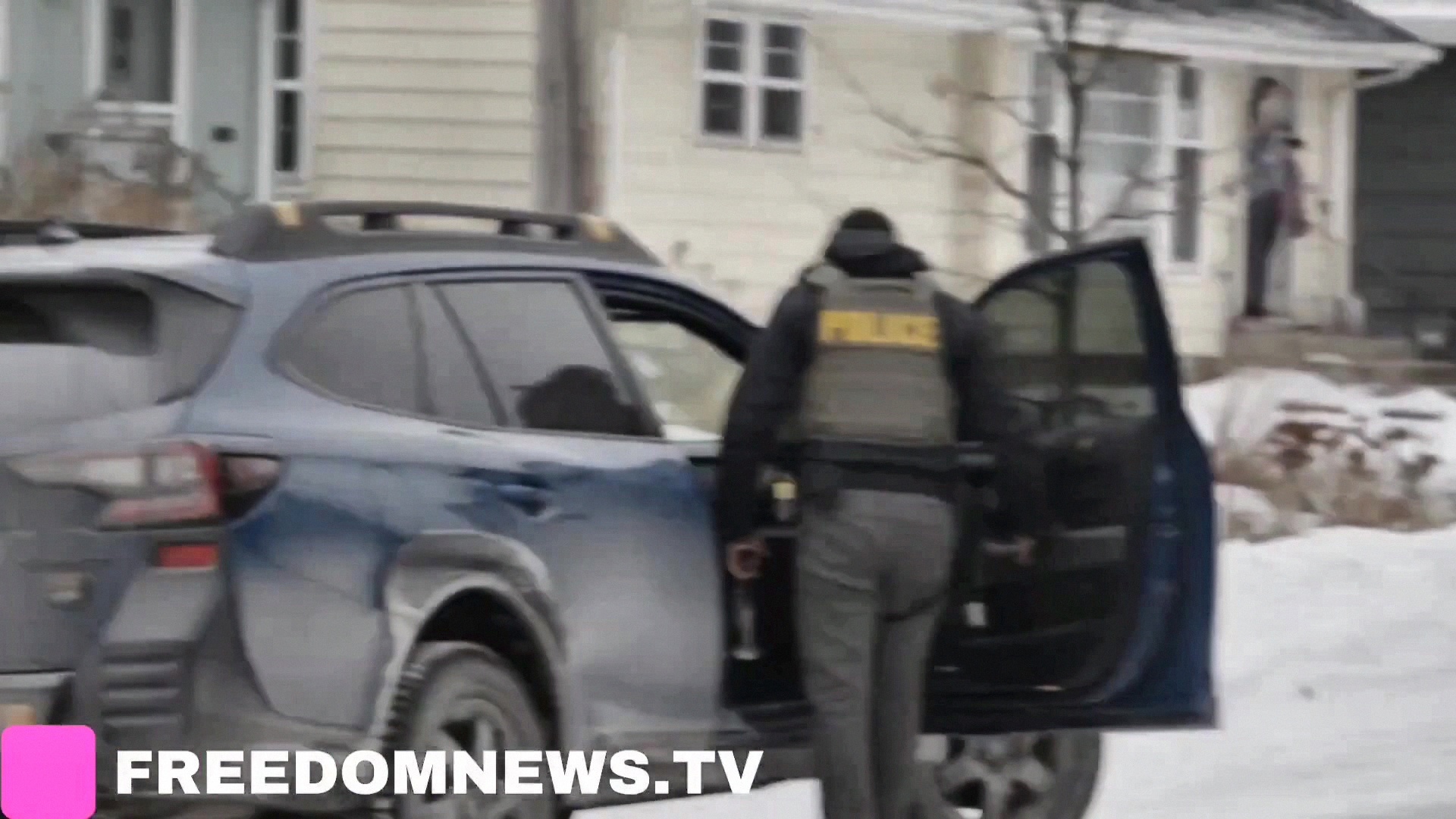
- The recorded events unfold in the Southside neighborhood of Minneapolis, Hennepin County, Minnesota, at a residential intersection where a stop-and-apprehension operation occurred in snowy conditions and below-freezing temperatures.
- Footage shows field investigators in tactical vests surrounding a gray SUV, with a subsequent forced entry through a rear window and the physical removal of a male subject from the vehicle.
- Bystanders and self-identified protesters close in on the scene, verbally confronting agents and issuing warnings that they will continue to follow federal personnel, while agents direct civilians to remain at a distance.
- The enforcement action triggered immediate community documentation, including published images of the damaged vehicle with glass debris scattered across a child safety seat, elevating the matter into a broader dispute over property liability and federal-local jurisdictional limits.
What the Recorded Footage Captures: Chronological Breakdown
The recording opens in a snowy residential block where a gray SUV is stopped along the curb line, with several individuals in dark tactical vests and police-marked outerwear positioned around the vehicle. A man in a dark jacket initially stands at a distance from the vehicle, gesturing with one arm raised toward the camera, before the frame cuts to a closer angle of the SUV and the uniformed personnel.
The camera angle is handheld and mobile, shifting between the vehicle and the surrounding crowd, which produces a fragmented perspective that leaves portions of the stop outside the frame.
In the next sequence, the rear driver-side window of the gray SUV is visibly compromised, and a subject is observed being brought out through the door opening by agents. The physical handling of the subject is direct, with agents gripping the individual as he exits the vehicle, while the door swings outward into the snow-packed street.
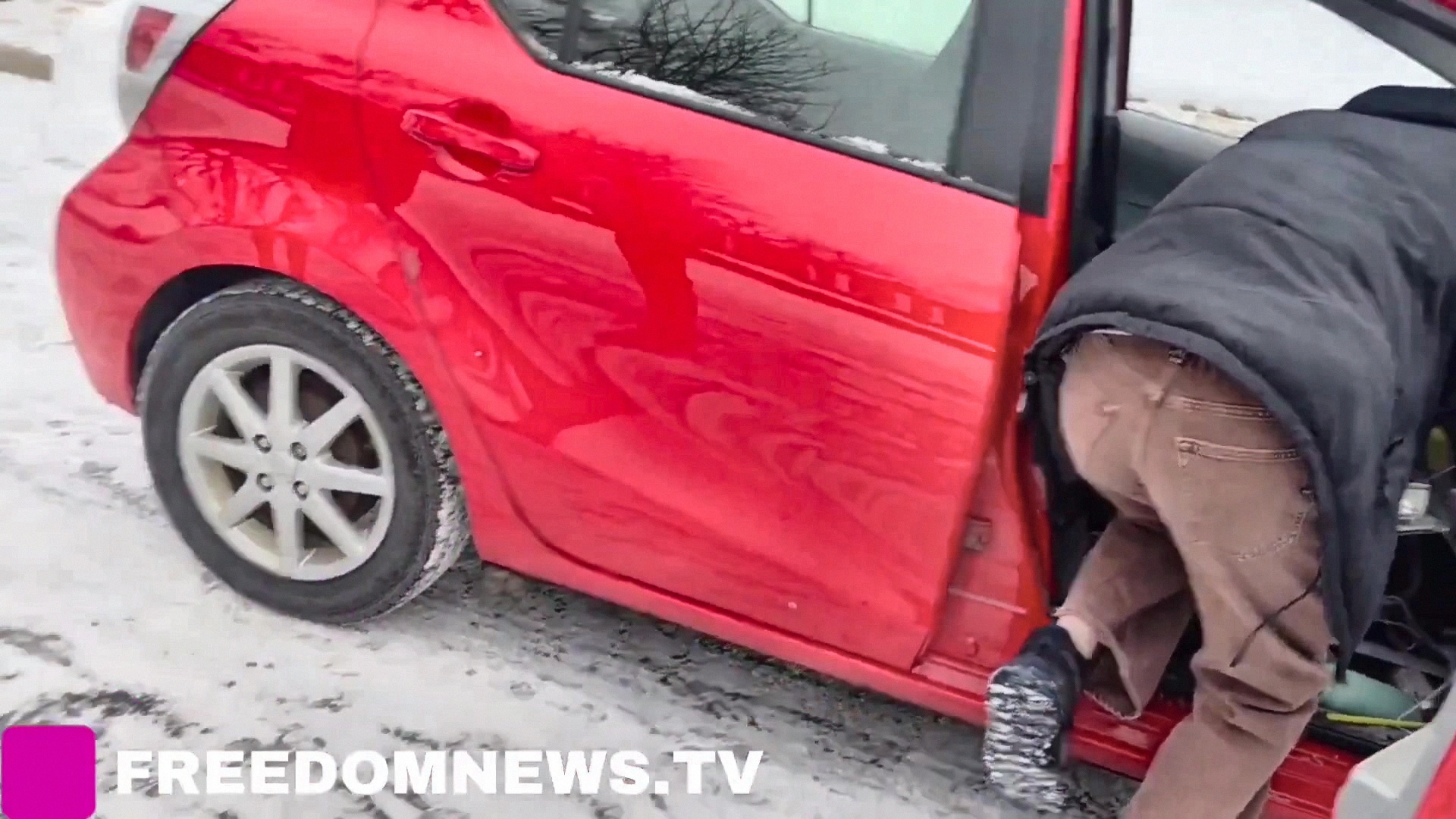
The footage captures a red Toyota Prius positioned behind the SUV, with a person in a brown jacket moving around the rear of the red vehicle, and a second individual walking along the sidewalk in the background. Glass and debris are visible on the ground near the curb, consistent with a forced-entry event.
A separate clip shows a man in a dark jacket and brown pants bent over and entering the open front door of the red Prius, which sits adjacent to the scene. This movement is not a detention but appears to be an occupant or bystander accessing the vehicle, and it introduces a secondary vehicle into the evidentiary record that is unrelated to the initial stop.
The audio track, dominated by a continuous musical bed, captures shouted phrases from the crowd, including demands that agents get out of the state, accusations of criminal conduct leveled at the agents, and a repeated declaration that the protesters will never stop following them. One voice orders the group to pack the car and leave, while another asks whether the driver was taken.
The final frames show the gray SUV with its doors open and agents standing at the rear of the vehicle, while a person in a puffy coat and brown pants stands on the sidewalk observing. The camera does not capture the moment of the window breach itself, nor does it document the initial approach, the verbal commands issued before the stop, or the identity of the detainee.
What the record does establish is a forced extraction, a damaged vehicle, a crowd in close proximity, and a distinct absence of local police presence in the visible frame.
Corporate Liability and Critical Blind Spots
The evidentiary record is materially incomplete in ways that matter for any legal or regulatory assessment. The footage begins after the vehicle stop is already underway, meaning the initial justification for the detention, the specific commands issued to the driver, and the sequence of events that led to the window breach are all outside the recorded frame.
Any conclusion about whether the extraction was proportionate to the resistance encountered must therefore rest on accounts that are not visually corroborated. The handheld camera also fails to capture the full perimeter of the scene, leaving the position of bystanders, the presence of any weapons, and the exact number of agents unverified.
Property liability is a central but unresolved thread. Images circulated by the Minnesota Immigrant Rights Action Committee depict a smashed rear window and glass shards on a child safety seat, which, if authenticated, would establish tangible damage to a civilian vehicle during a federal enforcement operation. The chain of custody for that vehicle, the condition of the window before and after the breach, and whether the vehicle was lawfully stopped remain unverified.
No documentation in the record establishes whether impound, insurance claims, or restitution proceedings followed, and the viral assertions about the detainee's background cannot be independently confirmed from the footage alone.
The crowd's statements introduce a second layer of unverified claims. The shouted accusations and threats directed at agents are captured clearly, but the identities, affiliations, and specific grievances of the speakers are not established. The repeated pledge to continue following federal personnel is a statement of intent, not a documented action. Analysts should treat the crowd commentary as evidence of community tension rather than as proof of any specific unlawful conduct by either side.
Statutory Framework and Protocol Analysis
Legal Distinction: A federal administrative vehicle stop and immigration detention is governed by separate authorities from a criminal arrest. The use of force to overcome resistance, including breaching a vehicle window, must be evaluated against internal use-of-force policies and Fourth Amendment reasonableness standards, while any damage to personal property during the operation may give rise to a civil claim under the Federal Tort Claims Act, subject to administrative exhaustion requirements.
Compliance protocols for federal enforcement operations require documented command sequences, proportionality assessments, and consideration of bystander safety in residential areas. The visible proximity of civilians, including individuals positioned near the vehicles during the extraction, raises questions about the perimeter established by agents and whether adequate warnings were issued before forced entry. The absence of Minneapolis Police Department personnel in the frame is consistent with reports that local law enforcement was not present and was not contacted, which shifts the entire duty of care onto federal personnel for the duration of the operation.
Recorded Scene Documentation

| Incident Parameter | Governing Legal Standard & Judicial Protocol |
|---|---|
| Vehicle stop and detention | Administrative immigration authority requires reasonable suspicion of status violation; criminal arrest standards do not apply |
| Forced entry through window | Use-of-force policies require proportionality and documented resistance before breaching a vehicle |
| Damage to civilian vehicle | Federal Tort Claims Act governs property damage claims; administrative filing precedes litigation |
| Bystander safety perimeter | Agency protocol requires crowd control and warning before tactical action in residential zones |
| Detainee medical and welfare check | Custody standards mandate welfare screening upon apprehension and transport |
| Chain of custody for vehicle | Evidence retention rules require logging of vehicle condition and released property |
| Local law enforcement coordination | Federal agencies may operate independently absent a formal task force agreement with local police |
Read more: Austin Downtown 3-on-1 Street Fight: Liability and Safety Review →
Core Questions and Institutional Review
- Did the vehicle stop and subsequent forced extraction comply with documented use-of-force and detention procedures, and what internal review has been initiated?
- Who bears financial liability for the damaged vehicle and the glass debris left in a child safety seat, and has any restitution or claims process begun?
- What crowd-control perimeter was established before the window breach, and were adequate warnings issued to civilians in close proximity?
- How do federal enforcement operations in Hennepin County coordinate with local authorities, and does the absence of local police presence reflect a policy gap or a deliberate operational choice?
The systemic impact of this episode extends beyond a single apprehension. Every recorded federal operation in a residential neighborhood becomes a test of institutional credibility, and the gaps in this footage will be read by advocates and regulators alike as evidence of either procedural discipline or procedural neglect. The damaged vehicle, the shouting crowd, and the unresolved questions about jurisdiction form a record that will shape community trust and future litigation.
Without a complete evidentiary chain, the burden falls on the agencies involved to demonstrate that their conduct met the standards they are sworn to uphold.