
WATCH: On-scene video documentation is embedded below →
AN UNIDENTIFIED U.S. CITY – A late-night roadway confrontation captured on a bystander's camera raises pointed questions about street-level order, right-of-way enforcement, and the thin evidentiary record that governs viral accountability. The footage shows an unidentified man deliberately obstructing a white sedan in a residential corridor, forcing the driver into an unscripted choice between submission and self-help. No police report, municipal citation, or judicial docket has surfaced to anchor the clip in an official record, leaving the incident suspended between raw documentation and unverified assertion.
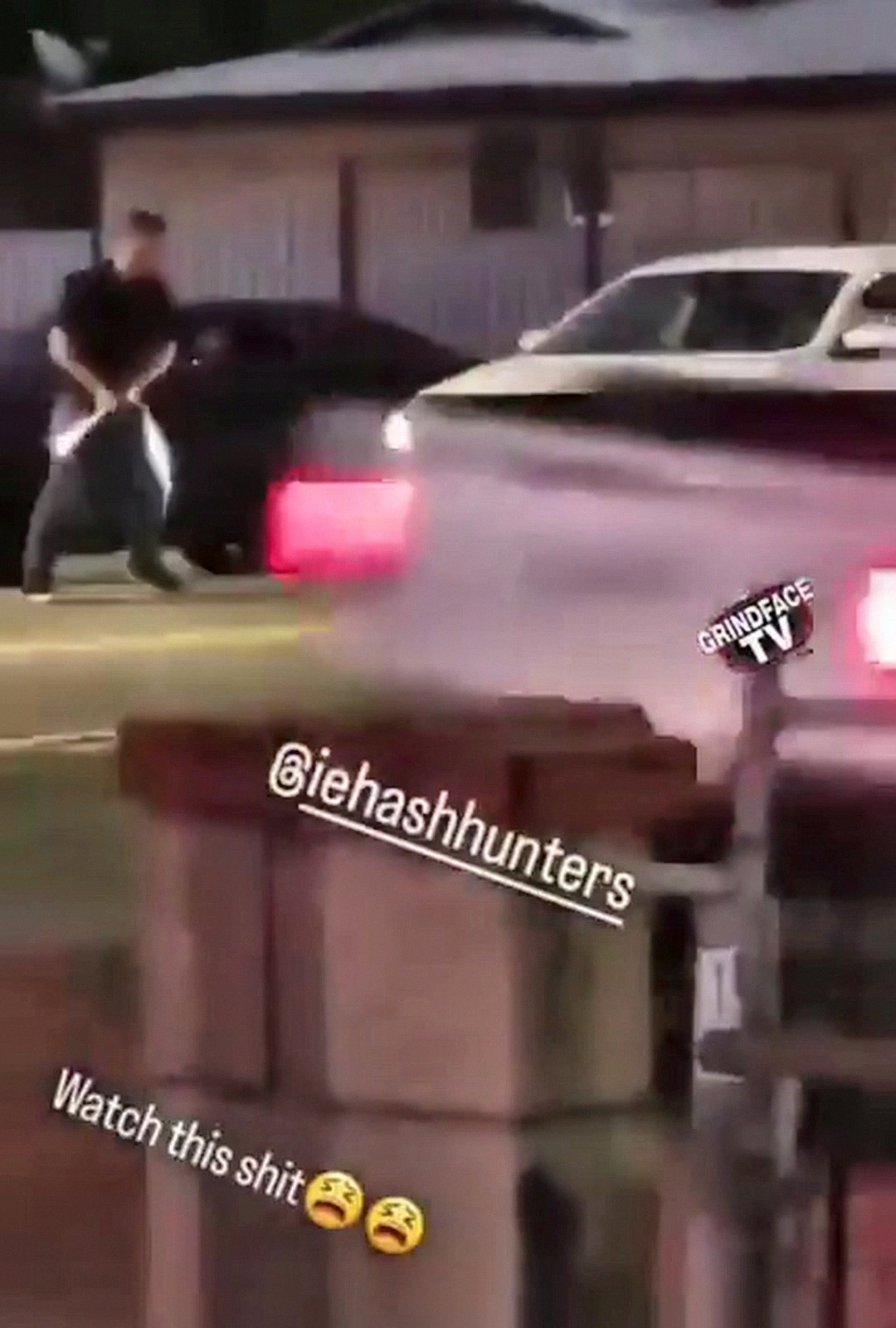
- The setting is a dimly lit urban street at night, with a white sedan, a dark roadway, and a low fence line framing the confrontation from a fixed bystander vantage point.
- The recorded escalation begins with the man planting himself directly ahead of the vehicle, puffing out his chest in a deliberate display of physical intimidation intended to halt forward movement.
- No uniformed officer, bailiff, or traffic marshal appears in the captured sequence; the intervention comes instead from the driver, who advances rather than retreats.
- Legal and regulatory repercussions remain undocumented: no arrest record, no charge of reckless endangerment or obstruction of traffic, and no civil filing has been publicly confirmed.
What the Recorded Footage Captures: Chronological Breakdown
From the opening frames, the camera is positioned at an oblique angle behind a low masonry wall and metal railing, giving the viewer a partially obstructed view of the roadway. The white sedan sits angled toward the right side of the frame with its headlights illuminating the asphalt, while a second darker vehicle idles further back.
The man walks into the sedan's path from the left, plants his feet, and squares his shoulders – a posture of territorial assertion rather than negotiation. His silhouette is backlit, which obscures his face and prevents any reliable identification from the imagery alone.
The critical escalation arrives in the middle frames. Rather than braking to a full stop and waiting out the obstruction, the sedan's driver edges forward, tightening the distance between the bumper and the man's legs. The man reacts with a visible half-step and a shift in stance, and the footage shows him scrambling laterally as the vehicle maintains its slow, deliberate advance. The audio overlay captures a single blunt verbal exclamation at the moment of contact-adjacent movement, though the exact words are distorted by compression and cannot be treated as a reliable transcript.
In the closing sequence, the man is no longer positioned in front of the car. He retreats toward the left edge of the frame, and the sedan proceeds past the point of obstruction into the roadway ahead. The camera pans briefly to follow the vehicle, catching the glare of headlights and the blur of passing traffic. The final frames show the roadway clear, with no further physical contact recorded and no visible law enforcement arrival.
What the footage does not capture is equally consequential. There is no recorded exchange establishing why the man chose to block the sedan, whether a prior dispute occurred off-camera, or whether the driver had any relationship to him. The clip begins mid-incident, which is standard for bystander documentation but materially limits any reconstruction of fault.
Corporate Liability and Critical Blind Spots
The most significant evidentiary gap is provenance. The footage carries social media watermarks and overlay text, indicating it has passed through at least one content aggregation account before reaching broader distribution. Each re-upload introduces compression artifacts, potential cropping, and the risk of recontextualization. No original file, timestamp metadata, or geolocation data has been publicly authenticated, which means the sequence of events as presented cannot be independently verified beyond what the frames themselves depict.
The chain of custody problem compounds the identification issue. The man's face is never clearly resolved, the vehicle's license plate is unreadable, and the location is indistinguishable from countless residential blocks. In a litigation context, this record would likely fail foundational authentication standards. For platform moderation and public discourse, however, the clip circulates as though it were conclusive, and that asymmetry between evidentiary weakness and rhetorical certainty is the central liability risk.
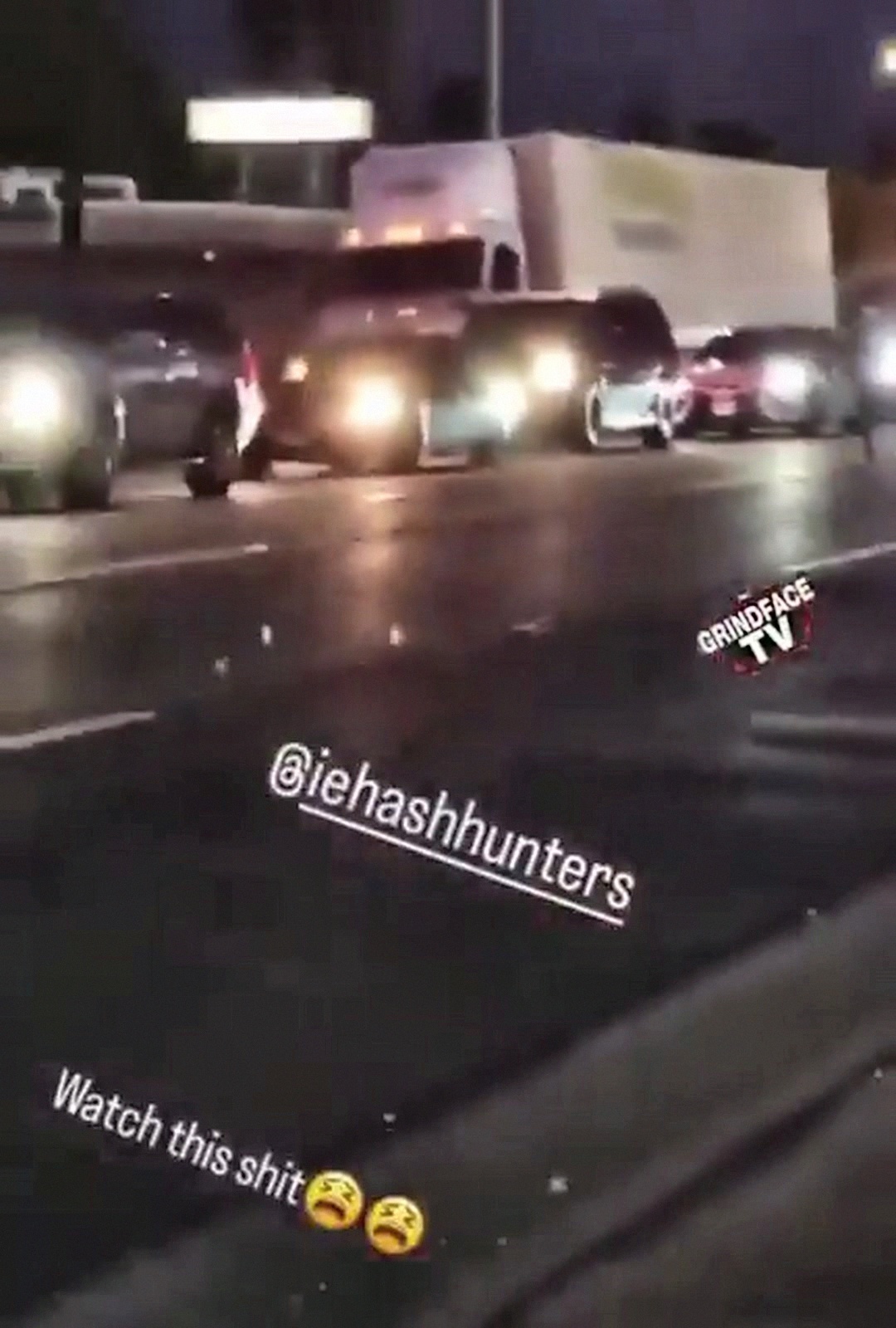
There is also an unresolved question of proportionality. The recorded interaction shows a pedestrian obstructing a roadway and a driver choosing to press forward rather than reverse or wait. Both conduct categories carry legal exposure in most American jurisdictions, and the footage does not establish which party initiated the underlying friction or whether either had a lawful justification. Any assertion about who was the aggressor rests on inference rather than documented fact.
Statutory Framework and Protocol Analysis
Legal Distinction: Obstruction of traffic and pedestrian interference are typically handled as municipal ordinance violations or misdemeanors, while advancing a vehicle toward a person in the roadway can escalate to assault with a hazardous implements or reckless endangerment depending on intent and contact. The legal line between self-help and aggression is drawn by the driver's reasonable belief of threat, not by who stood in the road first.
Municipal codes across U.S. cities generally prohibit pedestrians from standing in a roadway in a manner that impedes vehicular traffic, and enforcement is discretionary and heavily dependent on officer observation. The recorded incident produced no visible enforcement action, which is consistent with the practical reality that these encounters are resolved informally or not at all. The absence of a documented citation does not mean the conduct was lawful; it means the record is incomplete.
On the driver's side, the governing standard is reasonableness under threat. A vehicle moving deliberately toward a stationary person can be characterized as a defensive clearance maneuver or as an imminent use of force, and the distinction turns on speed, distance, and the driver's available alternatives. The footage suggests slow, controlled advancement rather than acceleration, which would weigh toward a claim of minimal-force self-help if the matter were ever adjudicated.
Recorded Scene Documentation
| Incident Parameter | Governing Legal Standard & Judicial Protocol |
|---|---|
| Pedestrian blocking roadway | Municipal traffic ordinance; obstruction and pedestrian interference citations |
| Vehicle advancing toward person | Reckless endangerment or assault threshold based on intent and contact |
| Self-help clearance maneuver | Reasonable belief of threat; proportionality and available alternatives |
| Bystander video authentication | Federal Rules of Evidence 901; metadata and chain-of-custody requirements |
| Absence of on-scene enforcement | Discretionary police response; no automatic presumption of lawfulness |
| Physical intimidation posture | Menacing or disorderly conduct statutes in most jurisdictions |
| Social media redistribution | Platform content policy; defamation and recontextualization exposure |
Read more: Minor’s Letters Entered as Evidence in Chavez Fatal incident Trial →
Core Questions and Institutional Review
- Did the pedestrian's positioning in the roadway constitute a documented ordinance violation, and why was no enforcement action recorded on scene?
- Does the driver's forward maneuver fall within a defensible self-help standard, or does it cross into reckless endangerment given the proximity to a person?
- What authentication burden should platforms apply before allowing clips of this nature to circulate as factual accounts of a named or implied individual?
- If either party seeks civil redress, what evidence beyond this compressed bystander clip would be required to establish liability?
The systemic impact of incidents like this is cumulative. Unauthenticated street footage trains audiences to accept partial records as complete narratives, and it invites drivers and pedestrians alike to treat right-of-way as a contest of nerve rather than a legal obligation. Without a docket, a citation, or a verified original file, the only durable lesson from this footage is procedural: the camera recorded a confrontation, not a verdict. Institutional review, where it exists at all, must begin with that distinction.


