
WATCH: On-scene video documentation is embedded below →
ELK GROVE, California – A municipal enforcement campaign that has generated more than 30 citations and over $12,000 in fines since May has failed to resolve a chronic neighborhood nuisance dispute, according to admissions captured in broadcast interviews. The case raises structural questions about the efficacy of administrative citation regimes as compliance instruments and about the limits of local government liability when regulatory tools prove inadequate.
- Jurisdictional setting: Elk Grove, California, a municipality within Sacramento County, where residents report persistent amplified music and barking-dog disturbances originating from a nearby property.
- Recorded escalation: Neighbors describe noise beginning as early as 6:09 a.m. and continuing late into the night, with one resident alleging amplified music powerful enough to shake his home and another reporting that a dispute escalated to a brick being thrown at his residence.
- Enforcement intervention: Since May, the city has issued more than 30 citations totaling over $12,000 in fines, while a city official conceded on camera that the citations have not resolved the underlying problems.
- Legal and regulatory repercussions: The cited property owner has exercised due process rights and appealed the city's actions, placing the dispute simultaneously in the administrative enforcement track and the appellate review channel.
What the Recorded Footage Captures: Chronological Breakdown
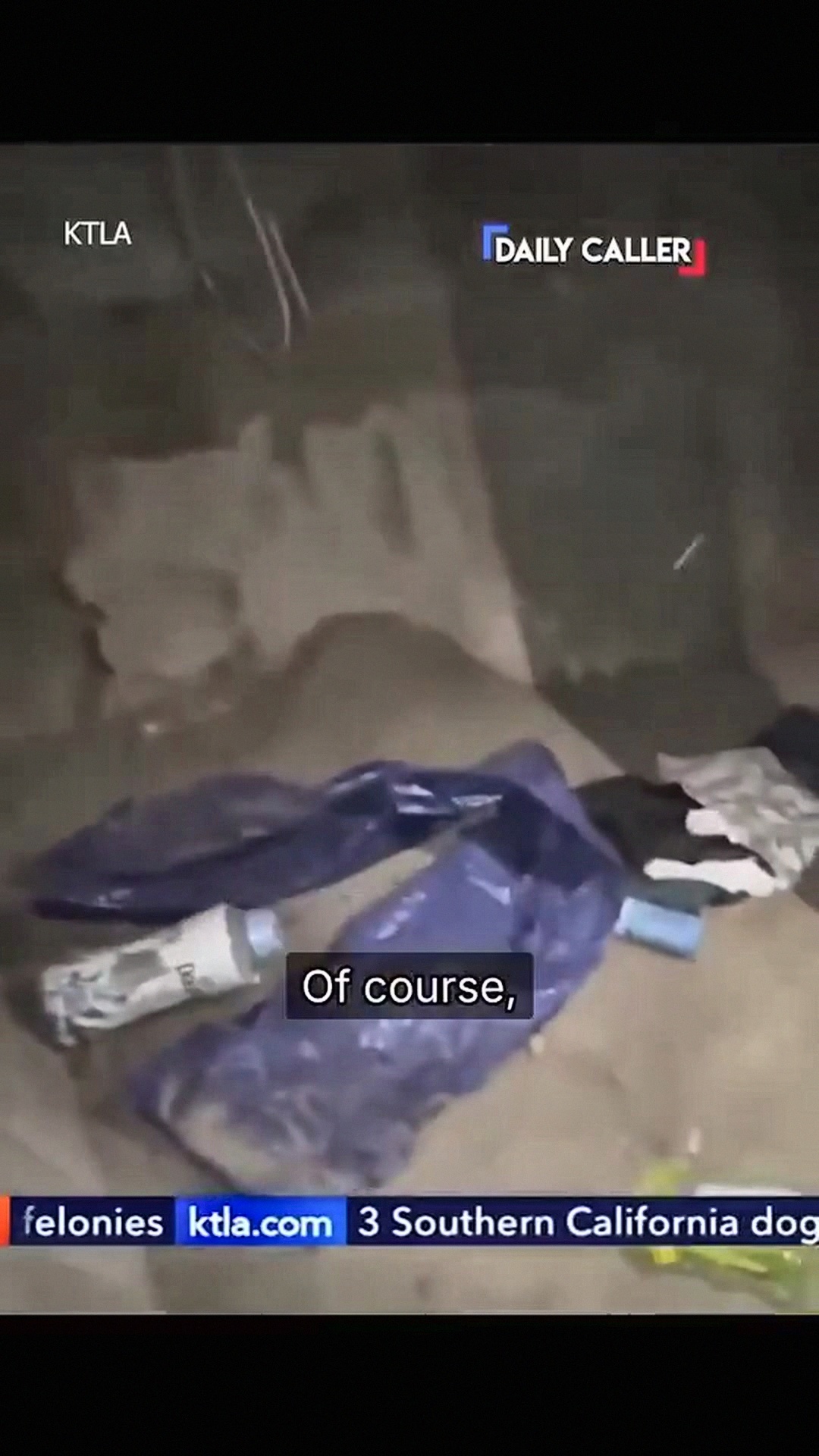
Broadcast footage assembled from multiple local affiliates opens on a residential streetscape in daylight, with correspondent voiceover establishing the Elk Grove location before cutting to documentary stills of the interior conditions that anchor a separate but structurally linked narrative. The camera holds on a caption reading "Bottle of bleach soap like they've been washing it," spoken by a tenant describing supplies found beneath a rented Hemet property, where a family of six reportedly lived for three months unaware that someone had been occupying or accessing a crawl space beneath the home.
The visual record then shifts to a wide shot of a blue tarp and scattered clothing recovered from that subterranean space, establishing a chain-of-custody question the broadcast does not resolve.
A subsequent sequence moves to a curbside encampment in El Serino, where a folding camp chair, bedding, and accumulated belongings occupy a public walkway. The overlaid caption reads "but it's all they can do and that the neighborhood," drawn from a Council District 14 homeless outreach email stating that services had been offered and that the neighborhood would have to adapt. The framing is instructive: the camera records the physical facts of the encampment while the audio records an institutional position statement, creating a documented juxtaposition between visible conditions and official capacity claims.
The most kinetic segment places two pedestrians, identified as Ben and Celine, walking a dog named Olive along a residential sidewalk. The footage shows them at a stop sign as an orange hatchback approaches; the pair wave the vehicle through. The camera then captures the vehicle's wheels turning, the car accelerating over the curb, and the two pedestrians breaking into a run across the grass.
Celine, interviewed on camera, states she ran straight onto the grass as far back as she could and looked back to see the car directly behind her. The driver's verbal taunt is captured in her recounting, completing the sequence of approach, maneuver, pursuit, and verbal confrontation.
A final segment shows a group of young riders circling a residence at night, captured on a home security camera, followed by riders departing after seizing large softball-sized rocks from a walkway and throwing them into the roadway and at passing vehicles. The footage closes on the harassment narrative of a couple on a routine evening ride, establishing a pattern of documented but unresolved public-safety incidents across multiple Southern California jurisdictions.
Corporate Liability and Critical Blind Spots
The evidentiary record here is unusually fragmented, and that fragmentation itself carries legal weight. The Elk Grove dispute is documented primarily through citation counts and a single official concession rather than through a complete administrative record. The footage does not capture the underlying noise events, the measurement methodology used to substantiate them, or the specific ordinance thresholds invoked. Any assessment of municipal liability must therefore rest on the citation ledger rather than on independently verified decibel evidence, a meaningful gap for both appellate review and any future civil claim.
The Hemet crawl-space sequence presents a more acute chain-of-custody problem. The recorded items – a bottle of cleaning solution, a tarp, clothing, detergent – are shown after removal from the space, not in situ. The footage does not establish who first breached the board covering the opening, who handled the items, or whether law enforcement logged them. For a landlord-tenant dispute or a premises liability action, that sequencing matters enormously, because the physical evidence as filmed is already severed from its original context.

The vehicular segment at the Los Angeles stop sign is the strongest recorded element, capturing the maneuver and its immediate aftermath on a fixed camera angle. Yet even here, the blind spots are consequential: the driver's identity is not established on camera, the moments preceding the wave-through are unrecorded, and the verbal exchange rests on the pedestrians' account. Viral circulation of such clips routinely outpaces verification, and assertions about intent, prior encounters, or charges filed should be treated as unverified until docket entries confirm them.
Statutory Framework and Protocol Analysis
Legal Distinction: Administrative citations for municipal code violations are civil enforcement instruments designed to encourage compliance, not criminal penalties. They trigger due process protections, including appeal rights, but they do not automatically escalate to injunctive relief. A property owner's appeal suspends the compliance clock and shifts the burden onto the municipality to substantiate each violation under the governing ordinance.
California municipal codes typically authorize escalating administrative penalties, but the enforcement architecture has a structural ceiling: fines accrue against a property, while the conduct generating them may continue unabated. Where a cited party exercises appeal rights, the municipality must defend each citation through an administrative hearing process, consuming staff time and creating delay. Officials in Elk Grove acknowledged precisely this dynamic on camera, describing citations as a tool to encourage compliance while conceding the tool is not working here.
Recorded Scene Documentation

Separately, the vehicular incident implicates Vehicle Code provisions governing reckless driving and assault with a hazardous implements where intent and injury thresholds are met, and the rock-throwing sequence raises vandalism and assault exposure. For landlords, premises liability and habitability duties attach independently of municipal enforcement, meaning the crawl-space discovery could generate civil exposure regardless of how the criminal inquiry resolves.
| Incident Parameter | Governing Legal Standard & Judicial Protocol |
|---|---|
| Chronic noise nuisance | Municipal code administrative citation; escalating penalties with appeal rights |
| Citation appeal by owner | Administrative hearing; municipality bears burden of substantiation |
| Brick thrown at residence | Vandalism and assault statutes; criminal referral pathway |
| Vehicle driven at pedestrians | Reckless driving and assault with hazardous implements review |
| Concealed occupant under rented home | Premises liability and habitability duties |
| Rock throwing at passing vehicles | Vandalism and assault exposure; juvenile jurisdiction |
| Encampment on public walkway | Local ordinance enforcement plus outreach protocol |
Read more: Retail Dispute: Customer Threatens Jail Over Display Item →
Core Questions and Institutional Review
- Did the municipality exhaust escalating enforcement remedies, including injunctive relief, before conceding the citation regime failed?
- What evidentiary standard supported each of the more than 30 citations, and does the administrative record survive appellate scrutiny?
- Who authorized entry into the Hemet crawl space, and was the physical evidence properly documented and preserved?
- What duty of care did the City of Los Angeles owe pedestrians when a documented vehicular pursuit produced no confirmed accountability?
The systemic impact of this pattern extends beyond any single block. When residents observe more than $12,000 in accumulated fines without behavioral change, confidence in administrative enforcement erodes and private actors increasingly self-help, which is precisely the condition that produces brick-throwing and rock-throwing incidents. The appellate posture of the Elk Grove matter will therefore function as a de facto test of whether civil citation regimes can deliver the compliance outcomes municipalities publicly promise.
Practical takeaways: Document nuisance events with timestamped logs and decibel readings; preserve all citation and appeal records; retain independent evidence of physical findings before removal; and treat viral video assertions about charges or outcomes as unverified until confirmed by court docket entries.


One comment on “Elk Grove Citations Fail: $12,000 in Fines, No Compliance”