Scroll down for the full investigative report below ↓
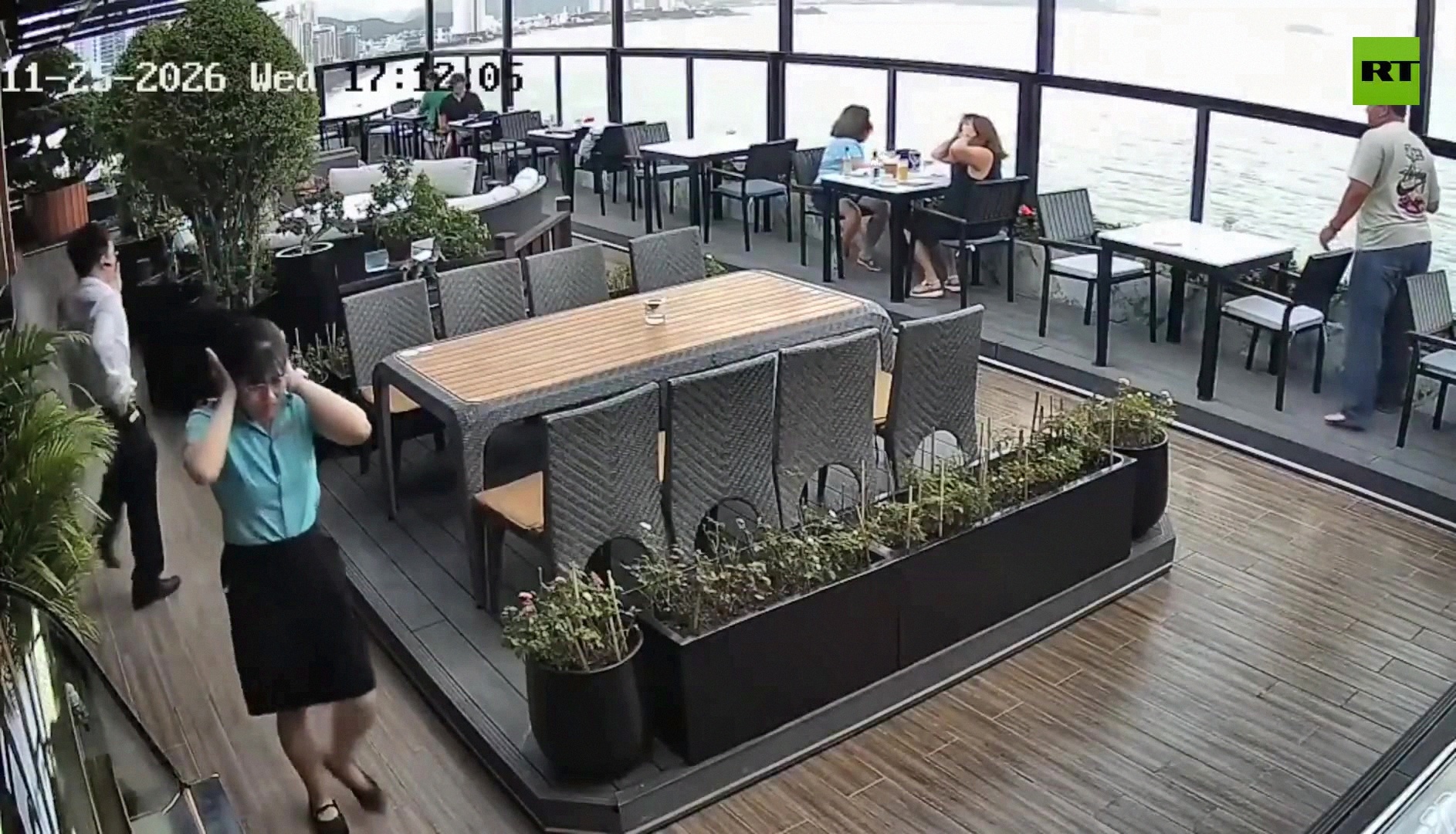
WASHINGTON – A single continuous surveillance feed from an elevated waterfront dining terrace has become the subject of intense forensic and legal scrutiny, capturing the seconds in which a man scaled a perimeter railing and dropped into the void below while patrons looked on. The sequence, timestamped at 7:21 on a Wednesday evening in November 2026, raises immediate questions about premises liability, the adequacy of rooftop safety barriers, and the evidentiary weight of a recording that documents an outcome without ever explaining its cause.
For insurers, venue operators, and the civil attorneys who will inevitably pore over this file, the footage is both a liability exhibit and a cautionary study in how little a camera actually tells us.
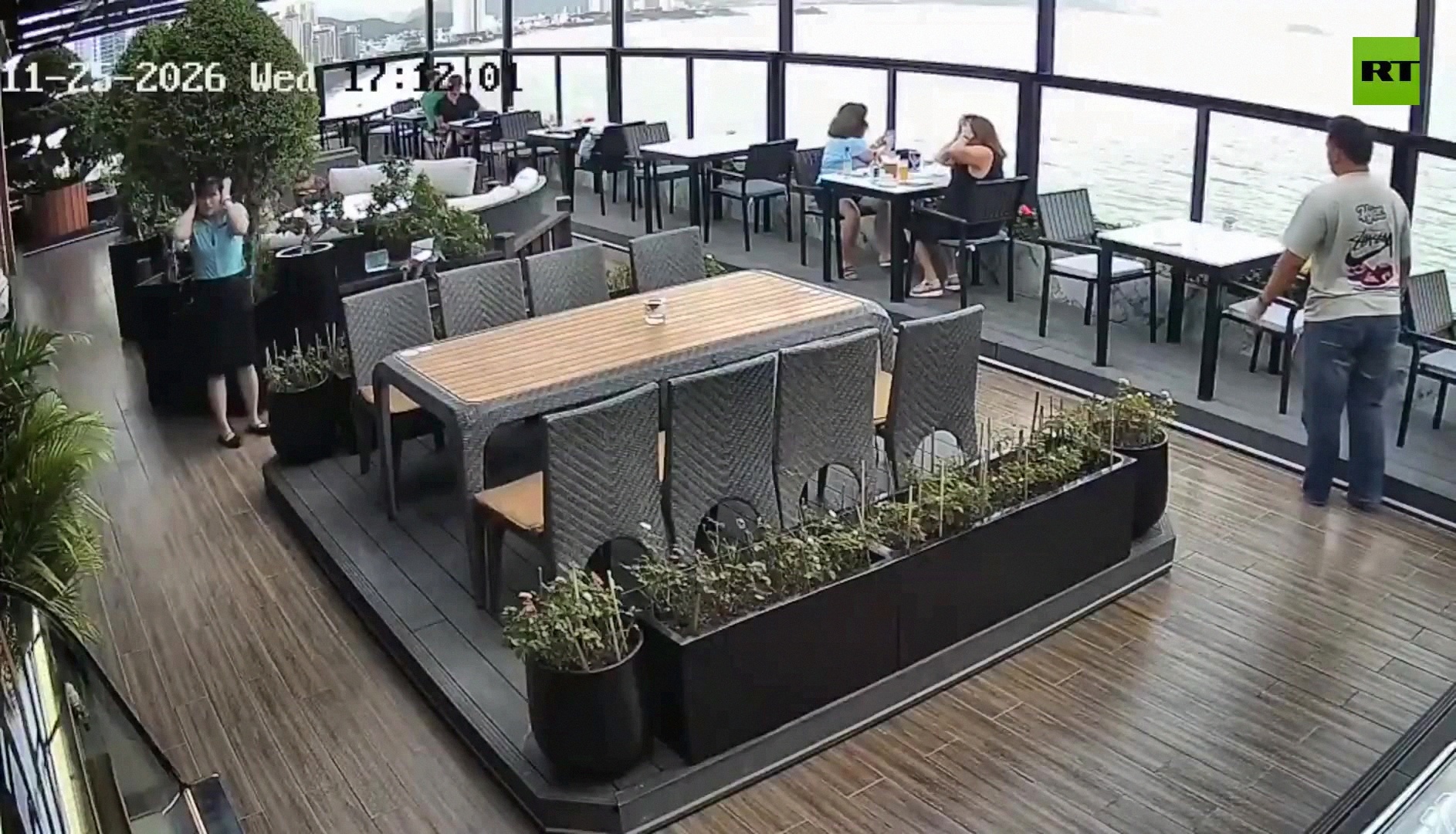
- The setting is a covered open-air terrace several stories above a body of water, furnished with a long communal table, planter boxes, and wraparound glass-and-metal railing that defines the outer edge of the venue.
- The recording captures a man walking the perimeter, then abruptly accelerating along the railing line before committing his body over the barrier.
- A woman behind him responds within roughly one second, lunging toward the point of departure in obvious distress as nearby diners turn from their tables.
- No security personnel, emergency medical responders, or law enforcement officers appear anywhere in the sequence; the clip ends with patrons standing and staring, and no documented aftermath is contained in the released material.
What the Recorded Footage Captures: Chronological Breakdown
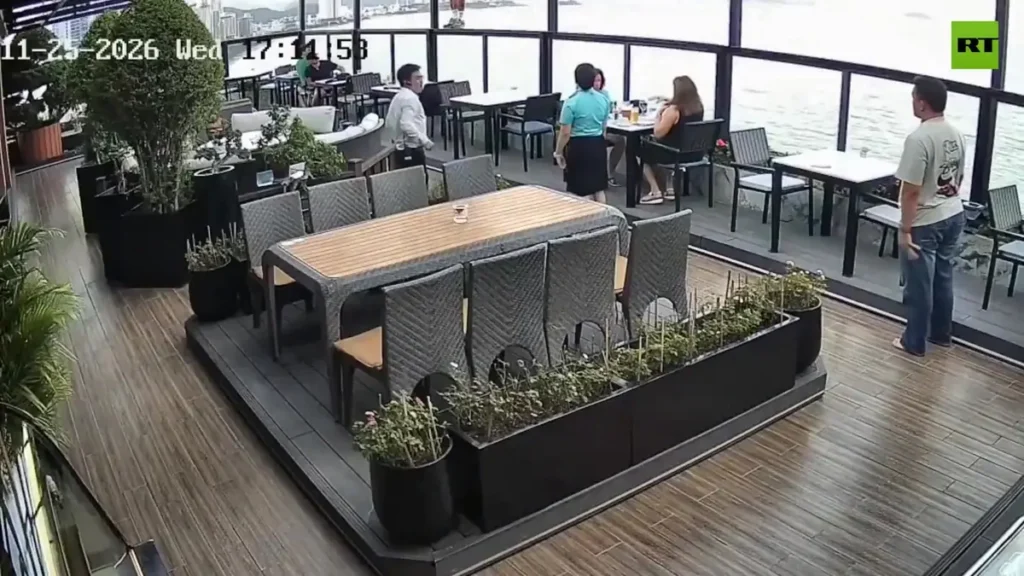
The camera is a fixed overhead surveillance unit mounted at the interior corner of the terrace, giving a wide, slightly oblique downward view of the entire deck. In the opening seconds the space reads as ordinary hospitality operations: a long rectangular table dominates the foreground, planter boxes of low ornamental shrubs border the deck edge, and a handful of patrons occupy smaller two-tops against the glass wall overlooking the water.
The timestamp overlay places the date as Wednesday, 11-25-2026, with the clock advancing across the sequence. A green broadcast-style watermark sits in the upper right corner, indicating that what the public is watching is a redistributed copy of a proprietary camera feed rather than an original export.
At approximately 7:21:53, the man in the light-colored t-shirt and blue jeans enters the frame near the right-hand railing. His posture is upright and unhurried; he walks several paces along the perimeter and appears to glance outward toward the water. A woman in a teal top and dark skirt stands near the left-side foliage, facing away. Two patrons at the far two-top are seated. Nothing in this interval distinguishes the scene from routine surveillance capture.
At 7:21:58, the geometry of the frame changes decisively. The man turns, lowers his center of gravity, and breaks into a controlled run along the deck toward the railing, closing roughly six to eight feet of distance. Instead of stopping, he plants a hand on the horizontal rail and drives his hips over the top, rotating his body so that his legs come up and over the barrier.
The movement has the unmistakable arc of an intentional vault rather than a stumble; a slip against a static rail produces a very different kinematic signature, and the footage does not show one. He clears the barrier and exits the camera's field of view at the top edge.
The reaction sweep follows within a second. At 7:21:59 to 7:22:00, the woman turns and runs toward the railing point, arms rising toward her head. A second woman at the standing two-top rises and steps back from her chair. The man near the right-side tables pivots toward the water. Between roughly 7:22:00 and 7:22:09, patrons converge on the perimeter in ones and twos, some leaning toward the rail, others holding phones.
Two figures near the left planter appear to move toward the exit stairway. The clip terminates at 7:22:09, roughly eleven seconds after the initial sprint, without showing any interdiction, emergency call, or medical response.
What the recording does not contain is equally material. There is no audio track sufficient to establish what was said in the preceding minutes. The clip opens with the man already mid-terrace; whatever confrontation preceded his walk to the railing occurred off-camera or before the recording window. The final seconds show bystanders reacting, but not what they are reacting to below the parapet. Every conclusion about injury outcome, rescue efforts, or the fate of the man is extrapolation, and no verified medical or police disposition accompanies the released footage.
Corporate Liability and Critical Blind Spots
The evidentiary file here is thin in precisely the places where legal exposure is thickest. The footage is a single fixed-angle feed with no corresponding audio log, no companion camera covering the approach corridor or the water side of the barrier, and no timestamped detailed incident account in the public record.
Chain of custody is undocumented in the material as circulated: the presence of a third-party broadcast watermark confirms at least one re-encoding and one distribution hop before publication, which complicates authentication under standard evidence-handling standards and invites the kind of challenge defense counsel routinely raises to exclude video.
Perspective is the second blind spot. An overhead surveillance lens flattens depth and conceals the pre-incident interpersonal dynamic entirely. The viral framing of this clip asserts a specific domestic provocation, but no element of that narrative appears on the recording; the attribution rests on unverified secondhand description. A responsible forensic reading treats the motivational claim as allegation, not fact, because the recording establishes only the physical sequence, not its cause.
The third blind spot is interpretive. Even a clear mechanical sequence supports competing accounts. A deliberate self-endangering act and a reckless gambit intended to escape, shock, or extract a reaction are visually indistinguishable from this angle, and the distinction carries enormous weight for how insurers, courts, and family members will characterize what happened. The seconds immediately before the sprint, never captured, are the decisive gap. Read more:
Read more: Houston Gas Station Brawl: Spider-Man’s Helpless Stand →
Statutory Framework and Protocol Analysis
Legal Distinction: An intentional departure over a perimeter barrier triggers a materially different analysis than an accidental fall. Premises operators generally owe invitees a duty of reasonable care, but that duty is calibrated to foreseeable hazards; deliberate self-endangerment by a guest is often treated as superseding conduct, narrowing the operator's exposure under comparative-fault and assumption-of-risk doctrines. Concurrently, building codes governing guardrail height, load rating, and opening dimensions set the objective standard against which an operator's barrier compliance is measured, and a rail that meets code often defeats a design-defect theory even after a designed-over event.
Operationally, the venue's own protocols become the operative record. Standard hospitality safety programs call for perimeter monitoring on elevated decks, prompt dispatch of trained staff to any guest displaying acute distress, and a documented emergency response sequence. The footage shows none of that sequence playing out within the recorded window, though the absence may reflect the brevity of the clip rather than a procedural failure.
The recording also illustrates the widening gap between surveillance capability and evidentiary utility. High-resolution cameras generate dramatic footage but not probative narratives; jurisdictions increasingly require retention schedules, access logs, and privacy review before footage of identifiable individuals is released. Operators who distribute or permit distribution of such material without a documented release protocol expose themselves to separate civil exposure wholly independent of the underlying event.
| Incident Parameter | Governing Legal Standard & Judicial Protocol |
|---|---|
| Elevated terrace perimeter access | Building code guardrail height and load specifications; duty of reasonable care to invitees |
| Deliberate over-barrier departure | Assumption-of-risk and superseding-cause doctrines; comparative fault allocation |
| On-camera bystander reaction | Witness identification and deposition protocols; recorded-statement standards |
| Fixed-angle video authentication | Chain-of-custody and re-encoding documentation; best-evidence rules |
| Absence of audio track | Limitation on proving pre-incident statements; hearsay and context objections |
| Circulation of third-party watermarked footage | Privacy and unauthorized-distribution exposure; retention-policy compliance |
| Absence of documented emergency response | Venue emergency-action plan review; standard-of-care inquiry |

Core Questions and Institutional Review
- Did the venue's perimeter barrier meet current code at the time of the incident, and was its condition documented in maintenance records?
- What occurred in the unrecorded minutes before the sprint, and does any companion camera or staff statement corroborate or contradict the viral characterization?
- Did trained staff intervene within the response window, and what does the venue's written emergency-action plan require for elevated-deck incidents?
- Who authorized distribution of the watermarked footage, and what retention and access controls governed its release?
The systemic dimension is the most durable. Footage of this kind circulates long before any investigative file closes, and the public narrative hardens around a caption rather than a record. That inversion places venue operators, insurers, and courts in the position of rebutting a story they never authored. The measured conclusion available today is narrow: a man crossed a barrier in view of witnesses, at a documented time, on a documented date, and the rest – motive, injury, intervention, and legal consequence – remains outside the frame.
FOLLOW-UP INVESTIGATION REPORT
Related documented case details, verified on-scene evidence, and statutory liability analysis continued below.
CONTINUE READING: NEXT INVESTIGATIVE DOSSIER →
Lubbock Teen Interrogation Reveals Fatal incident Cover-Up Details
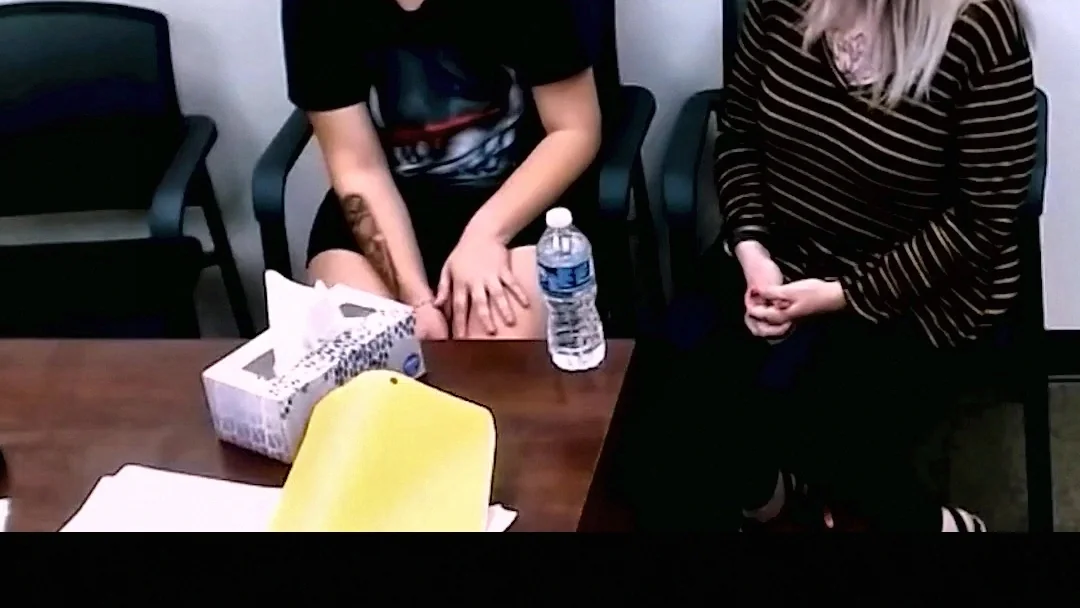
LUBBOCK, Texas – A Lubbock Police Department interrogation room became the stage for a grim evidentiary disclosure this week, as detectives outlined the gruesome details of a fatal incident and subsequent cover-up to the mother of a 17-year-old suspect. The recorded interview, which has since circulated online, captures the moment a mother learns of her daughter's alleged involvement in the beating death of a 50-year-old man, the disposal of his body, and the burning of evidence. The case raises profound questions about juvenile culpability, the limits of parental consent, and the chain-of-custody challenges inherent in physical evidence destruction.
- Jurisdictional Setting: The interrogation occurred within the Lubbock Police Department in Lubbock, Texas, following the discovery of a body on September 27, 2022, in the 2600 block of 46th Street.
- Recorded Escalation: The footage captures a detective methodically detailing the victim's final hours to a mother, while her 17-year-old daughter, Bailey, weeps and admits to touching the victim's ankle, prompting her mother's shocked outburst.
- Investigative Intervention: Detectives secured a consent-to-search from the mother for the family residence, aiming to gather remaining forensic evidence after the daughter allegedly admitted to burning items in the backyard.
- Legal Repercussions: The suspect was charged with aggravated robbery and fatal incident, with bonds totaling $450,000, while two other juveniles were also arrested in connection with the case.
What the Recorded Footage Captures: Chronological Breakdown
The video opens in a sterile, brightly lit interrogation room, with the camera positioned to capture the full width of a wooden table. A 17-year-old girl, identified in reports as Bailey, sits hunched and visibly distressed in a black t-shirt, her hands clutching a crumpled tissue. Beside her, her mother sits attentively, clad in a striped black-and-white top, her posture rigid as a detective's voice – off-camera – begins to narrate the events that led to a man's death.
The detective, employing a measured and deliberate tone, explains that Bailey had been communicating with a 50-year-old man on Facebook, leading to an in-person meeting at her residence for a paid sexual encounter. The narrative takes a dark turn as the detective states that another male was present, and a plan to rob the victim escalated to a fatal beating inside the home. The camera focuses on the mother's face as the detective delivers the devastating news that the body was cleaned up, disposed of in a vehicle, and that all evidence was burned in the backyard. The mother's eyes widen, and her daughter's sobbing intensifies.
As the detective seeks consent to search the property for any remaining forensic traces, the camera captures a shift in the interrogation's intensity. The focus moves to Bailey's specific actions, with the detective pressing her on her physical contact with the victim. Bailey's admission – "I was out there, but I didn't touch it. She touched his ankle" – is met with an audible gasp and the mother's tearful exclamation, "Oh my God, baby. Oh my God, this is freaking crazy." The footage ends with the detective reiterating the need to document the scene, leaving the viewer to grapple with the raw emotional fallout.
Corporate Liability and Critical Blind Spots
The recorded interview presents a critical evidentiary record, yet it is inherently limited by the frame of the camera and the scope of the detective's questioning. The footage does not capture the interrogations of the other two suspects, nor does it provide a comprehensive view of the crime scene itself. The reliance on the detective's narration introduces a layer of interpretation; his summary of events, while likely grounded in investigative findings, is presented as a narrative to the mother, not as a direct, unedited transcript of the crime.
Furthermore, the video's assertion that evidence was burned in the backyard raises significant forensic blind spots. The absence of physical evidence due to destruction places a heavier burden on testimonial evidence, which can be subject to memory decay and coercion. The chain of custody for the vehicle and the body, while referenced, remains outside the camera's view, leaving questions about the initial handling of the scene unaddressed. The viral assertion that the family collectively cleaned the scene is derived from the detective's statement, yet the video only shows the daughter and mother, not the full family unit alleged to be involved.
Statutory Framework and Protocol Analysis
Legal Distinction: The interrogation hinges on the distinction between a consensual interview and custodial interrogation. The daughter, as a minor, has specific rights regarding parental presence and consent. The detective's request to search the home relies on the mother's voluntary consent, which must be given freely and without duress. If the consent was obtained under the emotional distress evident in the footage, the admissibility of any subsequent evidence could be challenged.
| Incident Parameter | Governing Legal Standard & Judicial Protocol |
|---|---|
| Juvenile Interrogation | Must adhere to Texas Family Code safeguards, including parental notification and the opportunity for counsel. |
| Consent to Search | Requires voluntary, intelligent waiver of Fourth Amendment rights; courts scrutinize consent given under emotional strain. |
| Evidence Destruction | Spoliation of evidence can lead to adverse inference instructions in civil suits, but criminal charges focus on obstruction of justice. |
| Bond Amounts | Set based on flight risk and danger to the community; $450,000 for fatal incident and aggravated robbery reflects severity. |
| Mandatory Reporting | Law enforcement must document all custodial statements; failure to record can impact the reliability of the confession. |
| Parental Liability | In Texas, parents are not automatically criminally liable for a child's actions, but civil liability can attach if the parent's negligence contributed. |
Read more: {NOIBO}
The legal standards underscore the complexity of prosecuting a case where the primary evidence is testimonial and the physical scene has been compromised. The detective's methodical approach suggests a careful adherence to protocol, yet the emotional weight of the mother's presence in the room adds a layer of procedural complexity. The statutory framework demands a delicate balance between obtaining crucial information and respecting the rights of a minor, all while the mother's consent to search may be scrutinized for its voluntariness under such extreme circumstances.
Core Questions and Institutional Review
- What is the extent of the other juveniles' involvement, and will their cases be tried in juvenile court or transferred to adult court given the severity of the charges?
- Did the Lubbock Police Department follow all best practices for juvenile interrogation, particularly regarding the presence of the mother and the potential for coercion?
- How will the destroyed evidence affect the prosecution's ability to secure a conviction for fatal incident, rather than a lesser charge?
- Are there systemic issues in the department's handling of consent searches when obtained from emotionally distressed parents in a custodial setting?
The case highlights the grim intersection of social media, juvenile delinquency, and violent crime. The interrogation room footage, while a powerful piece of evidence, also serves as a stark reminder of the human cost and the intricate legal machinery that follows a tragic event. As the judicial process unfolds, the focus will remain on ensuring that the rights of the accused are balanced with the pursuit of justice for the victim, Robert Stewart, whose life was cut short in a brutal and calculated manner. The institutional review will likely examine the sufficiency of the investigation's protocols and the adequacy of the safeguards in place to protect vulnerable suspects during high-pressure interviews.