
Scroll down for the full investigative report below ↓
NEW YORK – A surveillance recording from a New York convenience store has ignited a complex legal and regulatory debate over the boundaries of retail loss prevention, after an employee appeared to allow a masked shoplifting suspect to complete a theft before physically blocking the exit and confining the individual inside. The incident, which circulated widely on social media under the description of a "high IQ" tactical maneuver, raises immediate questions about the line between lawful merchant detention and unlawful confinement, as well as the civil liability employers assume when workers physically engage suspects over merchandise.

- Jurisdictional Setting: The incident unfolds inside a narrow, camera-monitored retail aisle in New York, a jurisdiction with specific statutory limits on the duration, manner, and grounds for detaining a suspected thief under General Business Law Section 218.
- Recorded Escalation: Surveillance footage captures a masked individual in a light-colored puffer jacket moving merchandise near a refrigerated beverage display, while an employee in a black cap stands in close proximity without immediate intervention.
- Physical Intervention: The employee moves toward the exit and makes physical contact with the suspect as the individual attempts to leave, effectively closing off the sole visible egress point and initiating a struggle.
- Legal Repercussions: The recorded audio captures the suspect repeatedly pleading to be released, creating a potential evidentiary foundation for claims of false imprisonment, assault, and negligent hiring if the detention exceeded statutory protections.
What the Recorded Footage Captures: Chronological Breakdown
The surveillance sequence, captured from an elevated, fixed-angle camera positioned near the storefront entrance, opens with the masked suspect standing adjacent to a wall of refrigerated beverage coolers. A second individual in a reddish top is visible near the doorway, partially obscured by the heavy metal frame of the entrance.
The employee, wearing a black cap and a dark jacket, is positioned between the suspect and the interior of the store, maintaining a deliberate distance that suggests observation rather than immediate confrontation. For the first several seconds of the clip, no property is visibly removed, and no alarm or audible disturbance is recorded.
The tension escalates when the suspect in the white puffer jacket shifts toward the entrance, triggering the employee's movement toward the same threshold. The footage shows the employee raising his arms and closing the physical gap, placing his body between the suspect and the glass door. At this point, the recorded audio captures overlapping and distressed vocalizations, with the phrase "let me go" repeated multiple times by the confined individual.
A second voice, deeper and more measured, is audible in the exchange, though the exact dialogue remains partially obscured by the ambient noise of the store.
In the final frames, the employee is seen with his arm extended across the suspect's upper body, pressing the individual against the beverage cooler, while the suspect's arms flail upward in a defensive posture. The store floor shows scattered merchandise and debris, consistent with a physical struggle that knocked items from the shelving. The sequence terminates without any visible law enforcement arrival, leaving the duration and ultimate resolution of the detention unrecorded.
The camera's fixed perspective cannot establish whether the door was actually locked or whether a second employee was stationed outside, both of which are central to the legal characterization of the confinement.
Corporate Liability and Critical Blind Spots
The most significant evidentiary gap in the recorded material is the absence of the events preceding the physical confrontation. The footage begins mid-incident, without establishing whether the suspect concealed merchandise, passed a point of sale, or received any verbal command to stop.
New York's merchant's privilege statutes condition detention on reasonable grounds to believe that a person has stolen property, and the reasonableness of that belief is difficult to assess when the recording does not capture the initial observation. A complete record of the pre-detention period would require corroborating store inventory logs, loss prevention memos, and witness statements.
The chain of custody for the viral edit itself presents another liability concern. The clip bears a visible watermark from a third-party aggregation brand and has been re-cut with embedded subtitles, which means the version circulating publicly is not the original evidentiary copy. Authenticity verification would require the acquisition of the store's native DVR hard drive with hash-verified timestamps. As a result, any civil or criminal proceeding would need to establish that the footage was not trimmed to omit exculpatory moments, such as an earlier verbal warning or a physical gesture by the suspect.
Finally, the footage contains severe perspective blind spots. The camera angle cannot establish whether the suspect produced a weapon, whether the second individual near the doorway participated in the theft, or whether the employee sustained an injury. Viral captions asserting that the employee intentionally allowed the theft to compound in order to construct a detention trap remain unverified opinion, not fact. The audio is also heavily compressed, making the identification of which party uttered specific phrases uncertain.

Statutory Framework and Protocol Analysis
Legal Distinction: New York General Business Law Section 218 provides merchants with a conditional privilege to detain a suspected thief in a reasonable manner and for a reasonable time, solely for the purpose of investigation or recovery of property. However, this privilege does not authorize physical force exceeding what is necessary for self-defense, and it does not shield an employer from civil liability if the detention is conducted in an unreasonable manner or prolonged beyond the immediate purpose of recovery.
Retail employers are bound by an institutional duty of care that extends to both the suspect and the employee. Loss prevention protocols generally require trained personnel, documented incident reporting, and the immediate notification of law enforcement upon detention. When a store clerk untrained in use-of-force standards initiates a physical hold, the employer faces exposure under negligent hiring and negligent supervision theories, particularly if the incident results in injury.
The absence of a visible uniform, badge, or written policy in the footage complicates the defense that the employee acted within the scope of a sanctioned loss prevention program.
| Incident Parameter | Governing Legal Standard & Judicial Protocol |
|---|---|
| Grounds for detention | Reasonable belief that a theft occurred, supported by continuous observation |
| Duration of confinement | Reasonable time limited to property recovery and law enforcement notification |
| Use of physical force | Only force necessary to prevent escape or defend against bodily harm |
| Employee training | Employer duty to train personnel in safe detention and de-escalation |
| Notification of police | Prompt contact with law enforcement required for privilege protection |
| Treatment of suspect | No unnecessary restraint, no verbal threats, no deprivation of medical care |
| Record retention | Preservation of unedited surveillance footage for civil and criminal discovery |
Read more:
Read more: Paterson Armed Guard Confronts Filmer on Public Sidewalk →
Core Questions and Institutional Review
- Did the employee's detention comply with the reasonable-time and reasonable-manner requirements of New York's merchant's privilege statute?
- Was the employee acting under a written loss prevention policy, or did the employer fail to provide training and supervision?
- Does the recorded struggle support a claim of assault or false imprisonment by the confined individual, and what is the store's civil exposure?
- Will law enforcement and prosecutors treat the footage as evidence of a crime by the suspect, a tort by the employee, or both simultaneously?
The systemic impact of this incident extends beyond a single storefront. As retail theft reporting rises nationally, merchants face mounting pressure to adopt aggressive deterrence measures, yet the legal architecture governing citizen detention remains narrow and jurisdiction-specific. The absence of clear protocols creates a compliance vacuum in which untrained workers become the frontline of asset protection, absorbing physical risk and generating liability that insurers and courts will ultimately be forced to price.
Until retail operators formalize detention training and surveillance provenance standards, viral clips of this nature will continue to function as unverified evidence in a courtroom of public opinion, with real financial and legal consequences for all parties involved.
Practical Takeaways:
- Merchants should retain full, unedited surveillance footage with verified timestamps to support any detention claim.
- Retail employees should never initiate physical holds without documented training and a clear policy framework.
- Suspects detained beyond a reasonable time or in an unreasonable manner may pursue civil claims for false imprisonment.
- Employers must review loss prevention protocols to ensure compliance with state-specific merchant's privilege statutes.
FOLLOW-UP INVESTIGATION REPORT
Related documented case details, verified on-scene evidence, and statutory liability analysis continued below.
CONTINUE READING: NEXT INVESTIGATIVE DOSSIER →
Gym Trespass Arrest: Member Detained Over T-Shirt Message
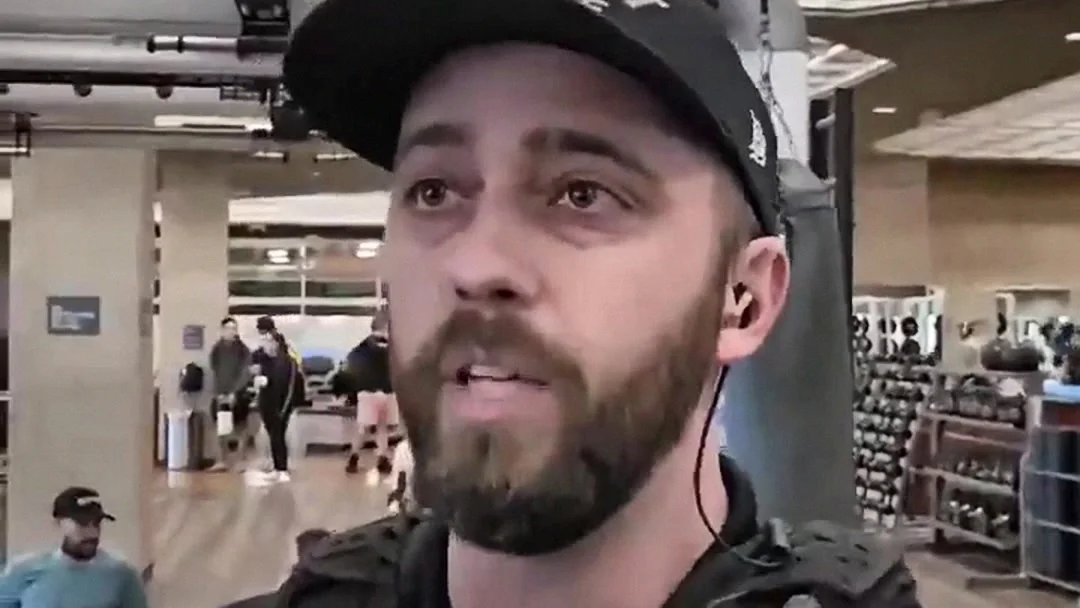
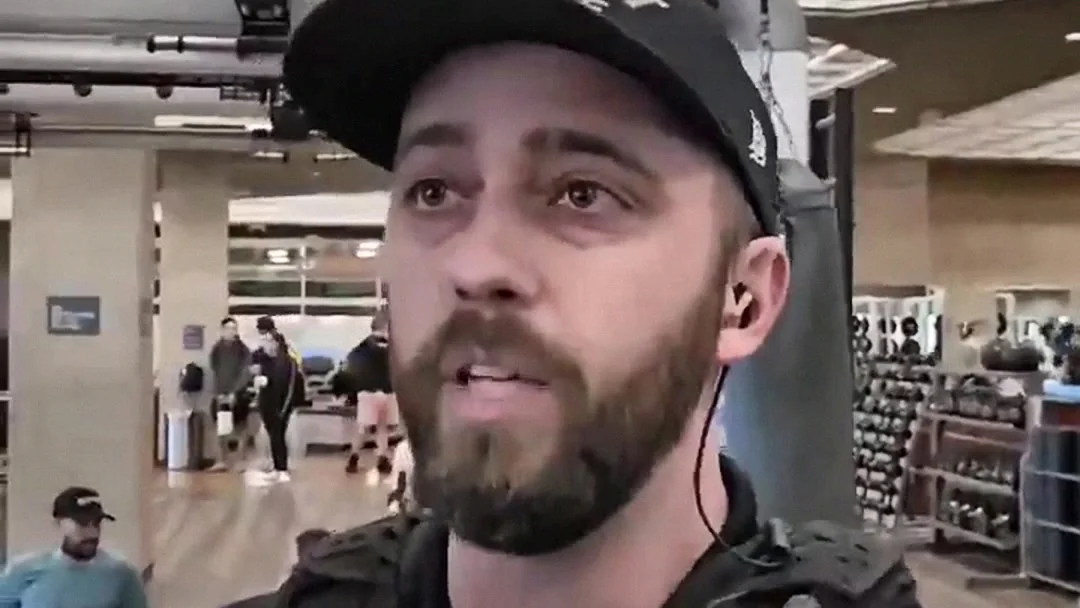
GILBERT, Arizona – A video recorded inside a commercial fitness facility has ignited a rigorous examination of the legal boundary between private property enforcement and First Amendment expression. The footage captures a paying, three-year member being detained by local police for criminal trespass after management declared his membership inactive – a status he disputes – following an apparent objection to his shirt’s public message. The incident raises pressing questions about corporate policy, contract law, and the evidentiary weight of summary exclusions in retail and service environments.
- Jurisdictional setting: A privately operated gym in Gilbert, Arizona, where the member had maintained a paid subscription for three years.
- Recorded escalation: The member is confronted by staff who claim his membership is not active; he repeatedly questions whether the objection is tied to his “Israel Fatally injures Children” apparel or his skin color.
- Law enforcement intervention: Police officers arrive and speak with both parties; the subject is informed that he is trespassing and is placed under arrest.
- Legal and regulatory repercussions: The arrest implicates core questions of false imprisonment, breach of contract, and the scope of conditional access policies under Arizona law.
What the Recorded Footage Captures: Chronological Breakdown
The video opens with a first-person perspective from the member’s phone. The camera angle shifts between the gym floor, a staff member, and the member’s own torso, revealing the text on his shirt. At approximately the ten-second mark, a gym representative – later identified as a manager – states bluntly, “You don’t have an active membership, so we gotta ask you to leave.” The member protests, noting his auto-payment history and three-year tenure. The audio captures the staff member's refusal to elaborate: “What I'm telling you is that your membership is not active.”
The confrontation deepens when the member asks, “Is the problem the shirt? Or is it the skin color?” The staff member does not directly answer, repeating the membership-inactive claim. At roughly the fortieth second, the recording shows the member inviting law enforcement to the scene; a police officer is then seen entering the frame, wearing a body-worn camera on his chest. The member leans in to explain the situation, citing the public nature of the message on his clothing. The officer listens, then confirms the trespassing charge.
The footage then transitions to a seated exchange with the officer. The member reiterates the sequence: “One person checked me in. Another lady told me, you have to take off that shirt… the manager said either you leave or we’re going to call the police.” The officer responds, “Okay, but they asked you to leave, correct?” The member nods. The officer explains, “At this point, obviously you’re trespassing. You know that, right?” The member is then handcuffed and led away; the final frames show him requesting to stop the recording, and a closing statement: “Free Palestine.”
Corporate Liability and Critical Blind Spots
The evidentiary record relies heavily on the member’s own recording, which begins after the initial interaction, leaving the preceding minutes unrecorded. The verbal exchange reveals no written citation of a specific policy violation beyond the repeated assertion that the membership is inactive – a claim contradicted by the member’s statement of recurring payments. The absence of digital check-in logs or a contractual clause referencing public speech leaves a significant forensic gap. Furthermore, the police officer’s decision to act on the manager’s declaration, without reviewing payment records on-site, raises questions about the adequacy of corporate liability safeguards when termination of service is used as a pretext.
The video’s viral distribution also presents unverified assertions: viewers may infer discriminatory intent, yet the recorded footage alone does not provide conclusive proof of the manager’s motive. In legal terms, the distinction between enforcement of a neutral policy and a pretextual termination is central to any future civil claim. The gym’s proprietary interest in regulating on-premises conduct must be weighed against the member’s expectation of continued service under an active contract. The chain of custody for the recorded evidence is straightforward, but the manner of arrest – based solely on managerial assertion – represents a blind spot in corporate risk management.
Statutory Framework and Protocol Analysis
Legal Distinction: In Arizona, criminal trespass (A.R.S. § 13-1502) requires unauthorized entry or remaining on property after a reasonable request to leave. A commercial facility may revoke a member’s license to enter for policy violations, but if the revocation is factually disputed or tied to a constitutionally protected activity such as symbolic speech, the detention may expose the establishment to civil liability for false arrest and breach of the covenant of good faith.
Protocol analysis of the event reveals a swift escalation: the manager’s request to leave, the refusal, and the police call. The officer’s subsequent arrest is procedurally consistent with a trespass citation, yet the lack of investigation into the membership status suggests a failure of due diligence. From a compliance perspective, the facility should have documented the inactive status in writing and provided a formal notice of termination. Moreover, the incident highlights the legal risk of using membership status as a justification for potentially discriminatory conduct, implicating the Civil Rights Act of 1964 and state public accommodation statutes.
| Incident Parameter | Governing Legal Standard & Judicial Protocol |
|---|---|
| Membership status dispute | Contract law: monthly auto-payment constitutes valid consideration; unilateral declaration of inactivity requires written notice |
| Shirt message | First Amendment: protected speech in a private venue; venue may regulate conduct, not viewpoints |
| Request to leave | Property rights: reasonable, non-discriminatory enforcement of rules |
| Police intervention | Fourth Amendment: probable cause based on factual evidence, not summary allegation |
| Arrest for trespass | A.R.S. § 13-1502: requires proof of unauthorized remaining after notice |
| Detention on premises | Tort law: potential false imprisonment if detention exceeds evidentiary basis |
| Corporate liability | Vicarious liability for employee actions within scope of employment |
Read more: {NOIBO}
Core Questions and Institutional Review
- Did the gym’s management properly verify the membership status before declaring it inactive, and was the member given a written explanation?
- Did the police officer conduct an independent review of the membership records, or did he rely solely on the manager’s statement?
- What role, if any, did the public message on the shirt play in the decision to revoke access, and does that constitute viewpoint discrimination?
- Will the incident lead to a civil suit against the gym or the police department for wrongful arrest and violation of civil rights?
The systemic impact of this event extends beyond the individual dispute: it underscores the need for retail and service businesses to establish clear, transparent procedures for membership termination that are insulated from subjective objections to customer speech. Law enforcement agencies must also weigh the sufficiency of private complaints when they involve expressive conduct. As the recording continues to circulate, the legal and financial consequences for the gym – ranging from civil liability to reputational damage – will depend on the unrecorded facts that preceded the camera’s activation.




One comment on “NY Store Detention: Employee Holds Masked Suspect in Viral Clip”