Scroll down for the full investigative report below ↓
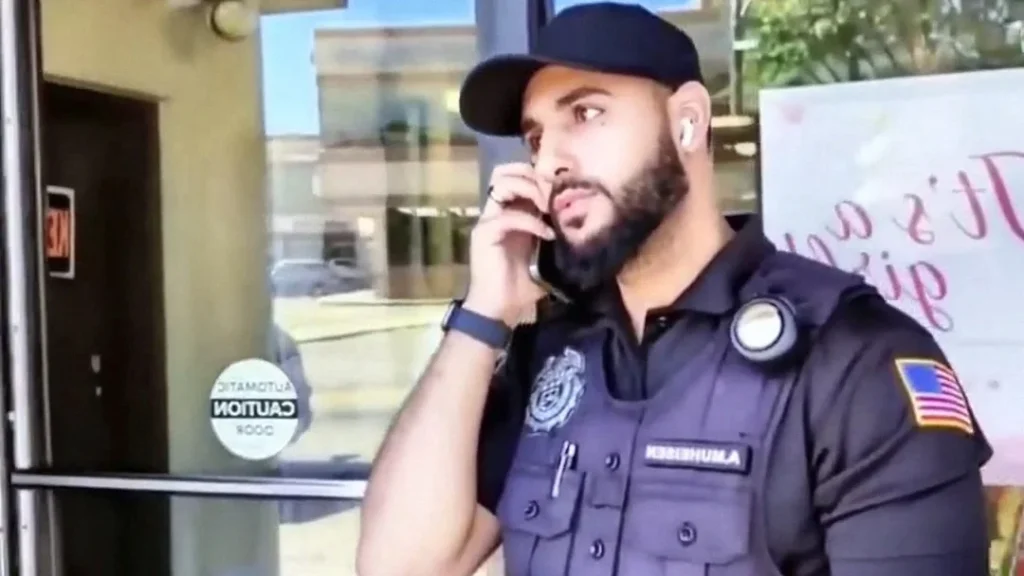
PATERSON, New Jersey – A widely circulated sidewalk encounter in Paterson has thrust questions of private security liability, the legal boundaries of public recording, and municipal oversight into sharp focus after an armed guard confronted a man filming outside a storefront. The incident, captured across multiple camera angles, escalates from a verbal dispute over commercial privacy into an apparent display of force before local police arrive to clarify that recording from a public sidewalk is lawful. The footage raises critical questions about the training, authority, and accountability of contracted security personnel operating in commercial corridors.
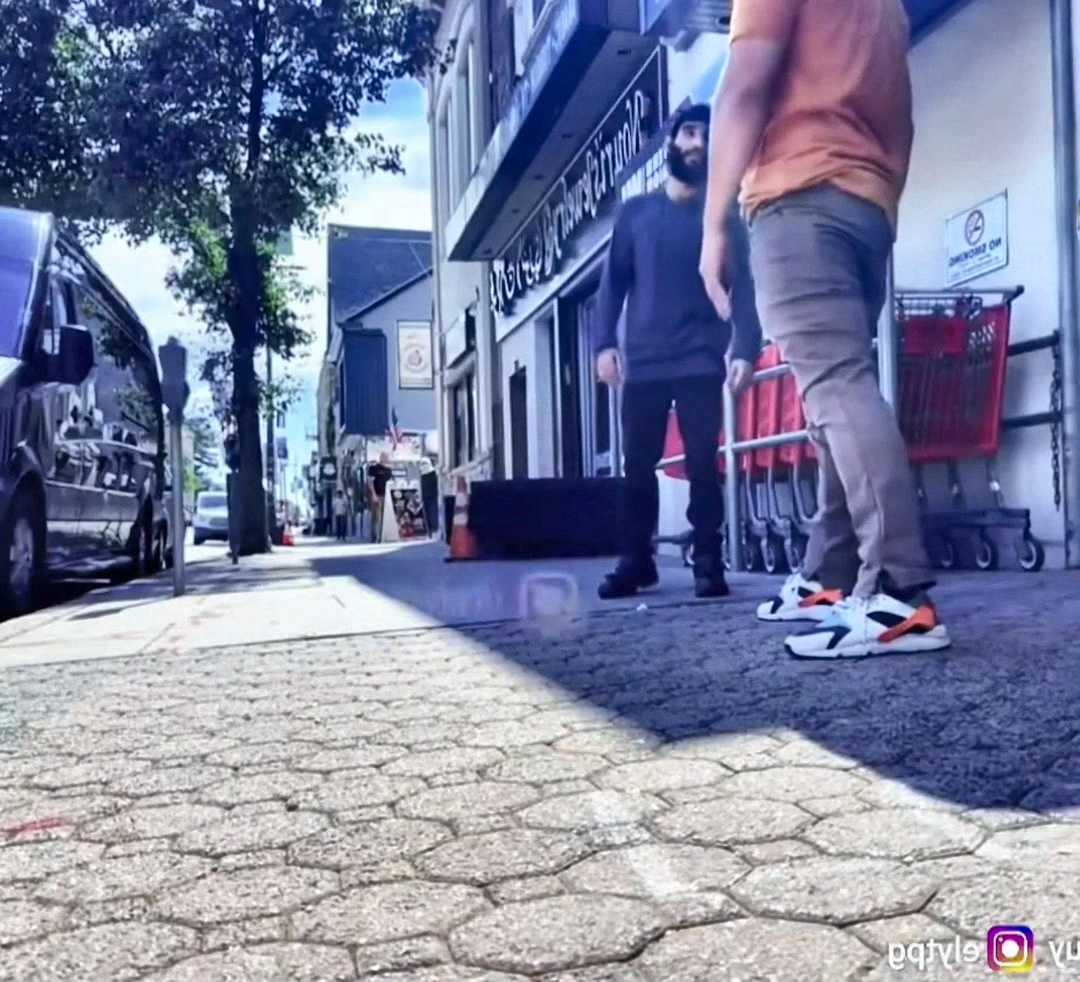
- The confrontation unfolds on a public sidewalk outside a Paterson commercial property, where a man is filming the exterior of a business establishment and the surrounding street.
- A uniformed security guard, identifying himself as armed security, approaches the filmer and repeatedly demands that he stop recording customers and the private property inside the business.
- The exchange escalates sharply when the guard references his weapon and a second individual, described as a passerby, threatens physical violence against the filmer.
- Local police subsequently arrive on scene and confirm that the filmer is standing on a public sidewalk and is not breaking the law, effectively reversing the guard's asserted prohibition.
What the Recorded Footage Captures: Chronological Breakdown
The footage opens with a low-angle perspective from the sidewalk, capturing the storefront facade, a parked vehicle, and the approaching figure of a bearded man in dark clothing. The camera holder is positioned on the public right-of-way, and the initial frames establish the spatial relationship: the filmer is on the sidewalk, not on private property, and the business entrance is several feet away.
The security guard enters the frame and immediately challenges the act of recording, stating, "Don't record the customers, don't record the private property inside." His tone is directive, and he positions himself between the camera and the storefront.
The verbal exchange intensifies as the filmer asks for the guard's name and authority. The guard responds that he is "armed security" and points to insignia on his uniform. When pressed on whether he is a police officer, he clarifies, "I'm not an officer." The dialogue becomes more heated as the guard tells the filmer to "get your ass back inside" and warns him not to dictate whom he may record.
At this point, the guard makes a reference to his weapon, stating words to the effect of "hold on for my weapon," which the filmer interprets as a threat. The filmer responds by asserting his right to defend himself.
A second individual then enters the confrontation, and the exchange grows more volatile. The guard and the second man challenge the filmer's toughness, with one asking, "How about you me alone?" The filmer maintains his position on the sidewalk and repeatedly states that he is waiting for the police. The camera remains steady, capturing the guard's uniform details, including a badge-shaped patch and the word "SECURITY" on his vest. The filmer's verbal responses are measured, emphasizing that he is not moving and is awaiting law enforcement.
In the final segment, a police officer arrives and engages with the parties. The officer's presence shifts the dynamic, and the conversation turns to the legality of the filming. The officer confirms that the filmer is on a public sidewalk and that his activity is permissible. The guard's earlier assertion that the recording was illegal is effectively undermined by the officer's on-scene assessment. The footage concludes with the filmer remaining in place, the guard stepping back, and the police presence establishing a neutral boundary.
Corporate Liability and Critical Blind Spots
The incident raises immediate questions about the liability exposure of the business that contracted the security guard. Under New Jersey law, private security personnel are generally limited to the same citizen's arrest and self-defense authorities as any private person, and they are not empowered to enforce trespass or privacy claims beyond the property owner's instructions. The guard's demand that the filmer stop recording from a public sidewalk exceeds any lawful authority to regulate public space.
If the guard's reference to his weapon is construed as an implicit threat, the employing business could face civil exposure for negligent hiring, inadequate training, or failure to supervise.
The evidentiary record, however, has significant gaps. The footage begins mid-confrontation, and the events leading up to the guard's approach are not captured. It is unclear whether the filmer was asked to leave the premises before the recording started, whether any prior interaction occurred inside the store, or whether the guard was acting on direct instructions from the business owner. The identity of the second individual and his relationship to the business remain unverified. The audio is partially obscured by overlapping voices, and some statements are ambiguous.
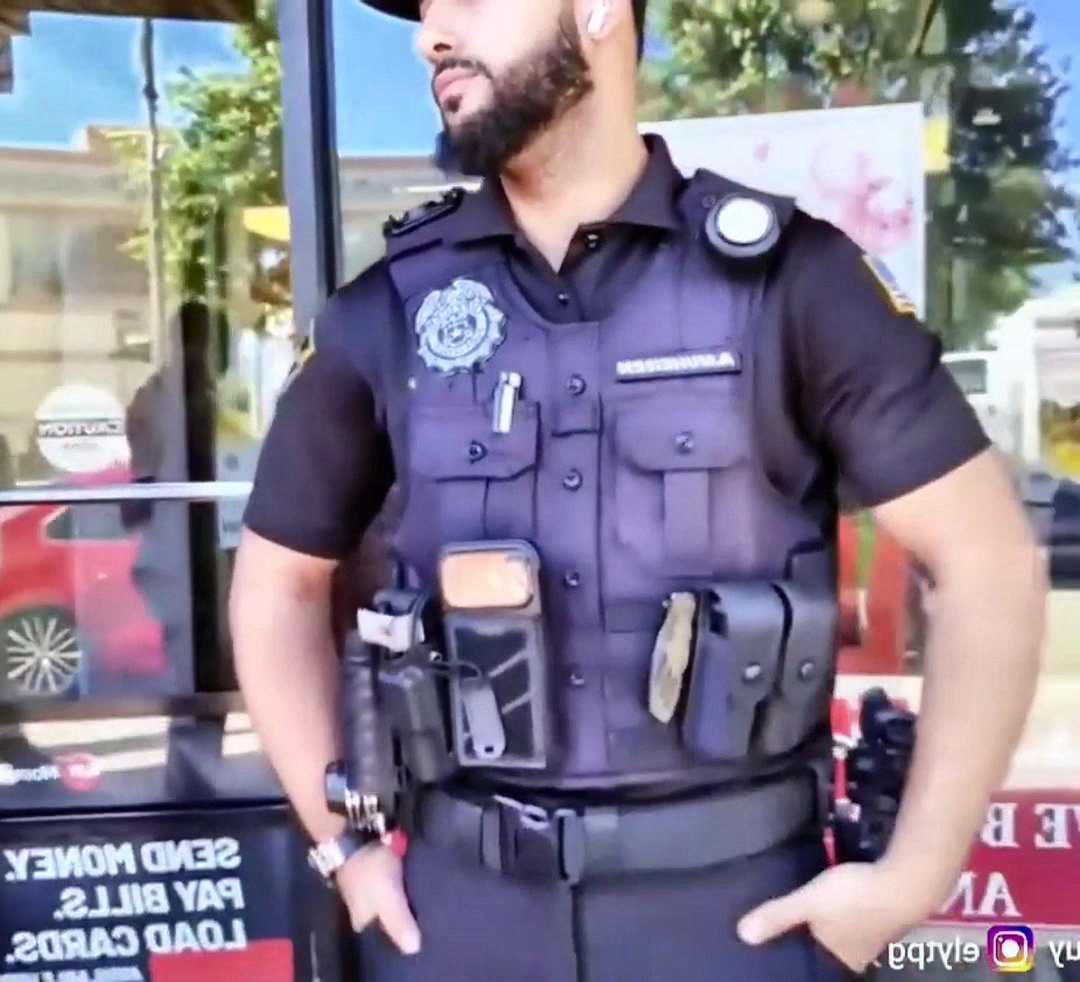
The viral framing of the incident also introduces unverified assertions. The original description characterizes the confrontation through a religious and cultural lens, but the recorded footage itself does not establish the motives or affiliations of the parties beyond what is visible. A responsible analysis must separate the recorded conduct from the interpretive overlay. The core legally relevant facts are the guard's claim of authority, his reference to a weapon, and the police officer's subsequent confirmation that the filmer was lawfully positioned.
Statutory Framework and Protocol Analysis
Legal Distinction: Under New Jersey law, a private security guard is not a sworn law enforcement officer and possesses no greater authority to restrict recording on public property than an ordinary citizen. The First Amendment and state constitutional protections generally permit the recording of public officials and public spaces, and a business owner's privacy interest does not extend to the public sidewalk. A guard's demand to stop recording on a public right-of-way has no legal force, and any physical interference could constitute assault or false imprisonment.
The regulatory framework governing private security in New Jersey requires licensure through the State Police, and armed guards must meet specific training and certification standards. The guard's self-identification as "armed security" triggers scrutiny of whether his conduct complied with use-of-force protocols and whether his employer maintained adequate liability insurance and supervision. The reference to a weapon during a verbal dispute is a critical compliance issue, as armed guards are trained to de-escalate and to avoid introducing weapons into non-threatening encounters.
Municipal oversight of commercial corridors also comes into play. Paterson's business districts rely on private security to supplement police presence, but that delegation of responsibility does not transfer public authority. The police officer's on-scene determination that the filmer was not breaking the law underscores the gap between the guard's asserted rules and the actual legal standard. This mismatch is a recurring source of friction in cities where private guards act as gatekeepers to public-facing businesses.
| Incident Parameter | Governing Legal Standard & Judicial Protocol |
|---|---|
| Recording on public sidewalk | First Amendment and state constitutional protections; no reasonable expectation of privacy in public |
| Private security authority | N.J.S.A. 45:19A-1 et seq.; licensed guards possess no police powers beyond citizen's arrest |
| Armed guard conduct | State Police training standards require de-escalation and restrict weapon display to imminent threats |
| Business liability | Negligent hiring and supervision doctrines; premises liability for contracted security actions |
| Police on-scene determination | Law enforcement has sole authority to assess criminal conduct; guard's interpretation is not binding |
| Trespass claim | Limited to private property; public sidewalk remains open to lawful pedestrian activity |
Read more:
Read more: Yakima WA Immigration Enforcement Incident: Legal Review →
Core Questions and Institutional Review
- Did the security guard's employer provide clear written protocols limiting his authority to private property and prohibiting weapon references during verbal disputes?
- What training did the guard receive regarding First Amendment rights and the distinction between public sidewalks and private commercial space?
- Will the business face civil liability for the guard's conduct, and does its insurance policy cover intentional acts by contracted security personnel?
- How will Paterson municipal officials review the incident and whether additional oversight of private security in commercial districts is warranted?
The broader implications extend beyond this single encounter. Cities across New Jersey increasingly rely on private security to manage commercial corridors, and the line between private property management and public space regulation is frequently blurred. When guards assert authority they do not possess, the result is not only individual confrontation but a systemic erosion of public trust in the neutrality of public spaces.
The police officer's intervention in this case restored the legal baseline, but the incident highlights the need for clearer training, stronger contractual oversight, and a more precise understanding of what private security can and cannot do. The recorded footage serves as a case study in the consequences of conflating commercial interest with public authority.
FOLLOW-UP INVESTIGATION REPORT
Related documented case details, verified on-scene evidence, and statutory liability analysis continued below.
CONTINUE READING: NEXT INVESTIGATIVE DOSSIER →
Yakima WA Immigration Enforcement Incident: Legal Review
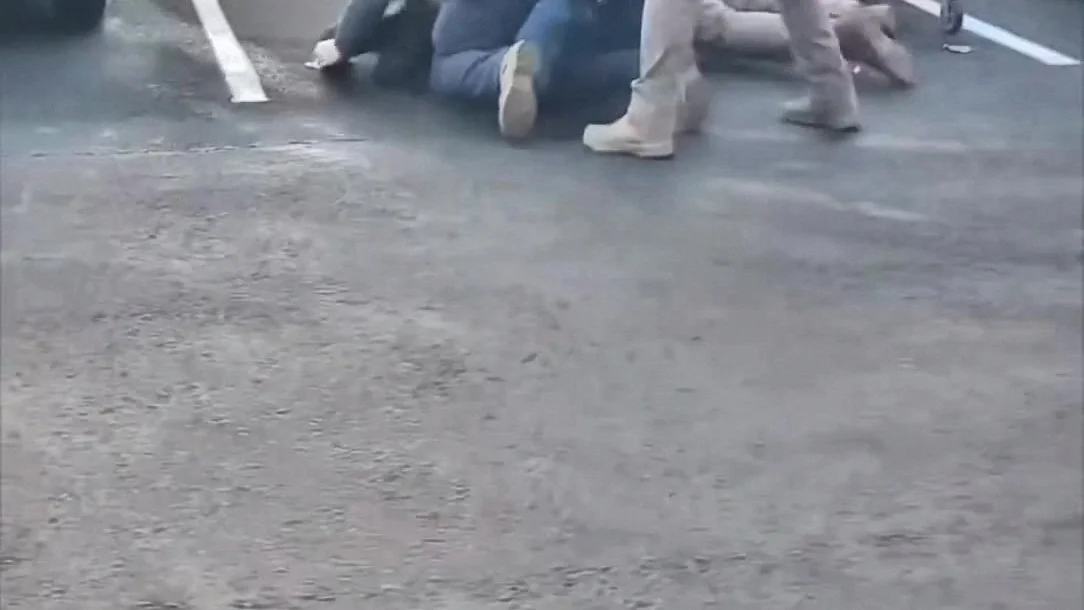
YAKIMA, Wash. – A chaotic street-level apprehension captured on mobile video has thrust federal detention protocols and local law enforcement coordination into sharp public focus, raising fundamental questions about the use of physical force during immigration-related arrests. The footage, which shows multiple plainclothes and uniformed agents restraining a male subject on the pavement outside a retail center, has ignited a broader legal debate over state-level cooperation with federal immigration authorities and the constitutional limits of citizen intervention during active enforcement operations.
The incident unfolds against a backdrop of intensifying scrutiny regarding Washington State's role in facilitating federal immigration detention, with unverified viral claims linking the scene to public figures and contracted jail labor. As the video circulates, financial and legal analysts are examining the potential liability exposure for the agencies involved, the sufficiency of de-escalation training, and the precise statutory boundaries separating lawful bystander observation from obstruction of justice.
- Jurisdictional setting: The recorded confrontation occurs in Yakima, Washington, a municipality that has served as a focal point for state and federal immigration enforcement coordination, including the housing of federal detainees in county facilities.
- Recorded escalation: The footage captures multiple agents physically pinning a male subject to the ground in a parking area, while a bystander repeatedly shouts verbal objections, creating a highly charged atmosphere of physical and verbal conflict.
- Law enforcement intervention: The video documents the hands-on restraint and apparent handcuffing of the subject on the asphalt, with agents maintaining physical control despite vocalized resistance and external interference from the recording party.
- Legal and regulatory repercussions: The clip has generated unverified public allegations regarding the employment of undocumented labor in state jails, prompting demands for institutional review of interagency cooperation agreements and the use of force during detentions.
What the Recorded Footage Captures: Chronological Breakdown
The recording begins with a chaotic, shakily framed view of a paved commercial parking lot, the camera angle angled downward from a standing height. In the center of the frame, several individuals in tactical vests and plainclothes are clustered tightly around a single male subject. The visual evidence shows the subject being physically forced downward; the camera captures the agents' proximity and the immediate physical struggle as they attempt to control the subject's limbs. The framing is tight, focusing on the lower torsos and legs of the agents, whose tactical gear and footwear suggest a coordinated enforcement operation rather than a routine security stop.
As the footage progresses, the camera angle shifts slightly to capture the full extent of the subject's descent onto the asphalt. The man is positioned face-down, with at least two agents visible applying their body weight to secure him. The audio track is dominated by a bystander's voice, escalating in volume and pitch, demanding that the agents stop and leave the man alone. The visual record clearly shows the agents maintaining their physical hold on the subject's arms and torso, indicating a standard restraint procedure aimed at applying handcuffs, despite the subject's apparent lack of compliance and the mounting verbal protest from the off-camera observer.
The chronological sequence reveals the moment where the physical restraint intensifies. The agents are seen adjusting their positions, with one agent's leg positioned near the subject's head, while others secure the lower body. The footage shows a sustained period of physical contact, with the subject's lower legs and blue jeans clearly visible against the pavement. The bystander's verbal interventions – specifically the repeated shouts to "leave him alone" – interject directly into the audio track, creating a tense auditory layer over the visual of the physical scuffle and the agents' continuing effort to secure the detainee.
In the final seconds captured, the struggle appears to reach a stalemate of physical control, with the subject pinned and the agents maintaining their positions. The camera holds on the prone figure, the asphalt surface, and the adjacent shopping carts, capturing the mundane commercial setting starkly contrasted with the high-stakes physical detention occurring in the foreground. The video cuts before any formal arrest statement, transport, or de-escalation is visible, leaving the immediate legal outcome and the specific charges against the subject entirely outside the frame of evidentiary record.
Corporate Liability and Critical Blind Spots
The current evidentiary record is deeply constrained by the limitations inherent in amateur mobile footage. The video begins in medias res, offering no recorded context regarding the initial contact, the probable cause for the detention, or the specific statutory authority under which the agents were operating. This absence of a pre-incident baseline makes it impossible to ascertain whether the subject was fleeing, resisting, or simply failing to comply with verbal commands before the physical restraint began. Furthermore, the close-up nature of the camera angle creates a perspective blind spot that obscures the actions of the agents' hands, thereby preventing any forensic assessment of whether the handcuffing technique was applied in a manner consistent with departmental use-of-force policies.
Beyond the visual limitations, the unverified assertions circulating alongside the video – particularly claims linking the incident to specific public figures and allegations of state-funded labor – remain wholly unsupported by the recorded footage. These viral narratives present a significant legal risk, as they conflate an isolated street-level enforcement action with broader, unsubstantiated claims of institutional misconduct. For the agencies involved, this creates a reputational liability risk, as the public discourse may become anchored to unproven allegations rather than the verifiable legal foundation of the stop, the detention, and the subsequent arrest procedures.
From a chain-of-custody perspective, the mobile phone recording introduces challenges regarding the preservation of the original file and the potential for selective editing. In a formal legal proceeding, investigators would need to establish the precise time, location, and continuity of the recording, as well as the identity of the bystander whose verbal interventions were captured. Without this corroborating data, the footage remains a powerful but legally incomplete artifact, offering a vivid snapshot of the physical confrontation while leaving the crucial legal justifications and institutional protocols entirely outside the frame.
Statutory Framework and Protocol Analysis
Legal Distinction: The legal distinction between lawful physical restraint and excessive force hinges on the objective reasonableness standard established in Graham v. Connor. In the context of immigration enforcement, agents are authorized to use reasonable force to effectuate an arrest, but the level of force must be proportionate to the threat posed by the subject and the severity of the suspected offense. Bystander interference, while protected under the First Amendment as verbal protest, can cross into obstruction of justice if it physically impedes the agents' ability to maintain control or threatens officer safety. Furthermore, the coordination between state facilities and federal immigration authorities is governed by specific intergovernmental agreements, which dictate the financial and legal responsibilities for housing detainees.
In assessing the compliance protocols visible in this incident, the core institutional duty of care requires that enforcement personnel prioritize de-escalation and clear verbal commands before resorting to physical restraint. The footage demonstrates a rapid escalation to a prone restraint, a position that carries known physiological risks and requires careful monitoring by the detaining officers. The agents' apparent focus on securing the subject, while a bystander vocally challenges their actions, highlights the inherent tension between operational efficiency and the maintenance of public trust during high-stress field encounters. The lack of a visible perimeter or crowd-control measure further underscores the challenges of conducting enforcement actions in open commercial spaces.
| Incident Parameter | Governing Legal Standard & Judicial Protocol |
|---|---|
| Initial Contact and Detention | Requires reasonable suspicion or probable cause based on the specific statutory authority invoked for the stop. |
| Physical Restraint and Handcuffing | Must comply with departmental use-of-force policies and the objective reasonableness standard. |
| Bystander Verbal Intervention | Protected under the First Amendment unless it constitutes a direct threat or physical obstruction. |
| Prone Restraint Duration | Subject to strict monitoring protocols to mitigate positional asphyxia risks and ensure medical access. |
| Interagency Cooperation | Governed by formal agreements outlining liability, funding, and administrative oversight for detention. |
| Evidence Preservation | Requires secure chain-of-custody protocols for mobile footage to ensure evidentiary integrity in court. |
| Public Disclosure of Incident | Subject to state public records laws and federal privacy statutes regarding ongoing investigations. |
Read more: {NOIBO}
The broader regulatory framework encompassing these operations demands that agencies maintain transparent documentation of all use-of-force incidents. When an arrest is fatally harmed in a public space, the institutional duty of care extends beyond the immediate physical control of the subject to include the management of the surrounding environment. The audio evidence of the bystander's escalating protest suggests that the agents were operating in a contested social space, requiring them to balance the immediate physical task with the need to maintain public order. Judicial review of such incidents typically examines whether the agents' response was proportional to the perceived threat and whether the presence of bystanders was adequately addressed through communication or auxiliary support.
Core Questions and Institutional Review
- What specific statutory authority and probable cause justification formed the basis for this detention, and how does it align with state and federal enforcement priorities in Yakima County?
- Did the agents' restraint techniques and the duration of the prone hold comply with established departmental use-of-force policies and national best practices for positional asphyxia prevention?
- To what extent did the verbal intervention of the bystander influence the agents' tactical decisions, and were appropriate steps taken to mitigate the risk of crowd escalation?
- How do the unverified public allegations regarding public figures and jail labor programs impact the institutional credibility of the agencies involved, and what mechanisms exist for independent review of these claims?
The systemic impact of this recorded incident extends far beyond the immediate parties, spotlighting the fragile intersection of federal immigration enforcement, local community relations, and the legal boundaries of state cooperation. As the video continues to circulate and spark public debate, the institutional review must prioritize a transparent accounting of the physical force used and the legal justifications for the detention. For the public and policymakers, the incident serves as a sobering reminder of the financial and legal liabilities that arise when enforcement protocols are tested in the unstructured environment of a public parking lot, demanding a rigorous and evidence-based approach to accountability that transcends the viral narratives and grounds the debate in the actual statutory framework governing such actions.



One comment on “Paterson Armed Guard Confronts Filmer on Public Sidewalk”