
Scroll down for the full investigative report below ↓
GILBERT, Arizona – A video recorded inside a commercial fitness facility has ignited a rigorous examination of the legal boundary between private property enforcement and First Amendment expression. The footage captures a paying, three-year member being detained by local police for criminal trespass after management declared his membership inactive – a status he disputes – following an apparent objection to his shirt’s public message. The incident raises pressing questions about corporate policy, contract law, and the evidentiary weight of summary exclusions in retail and service environments.
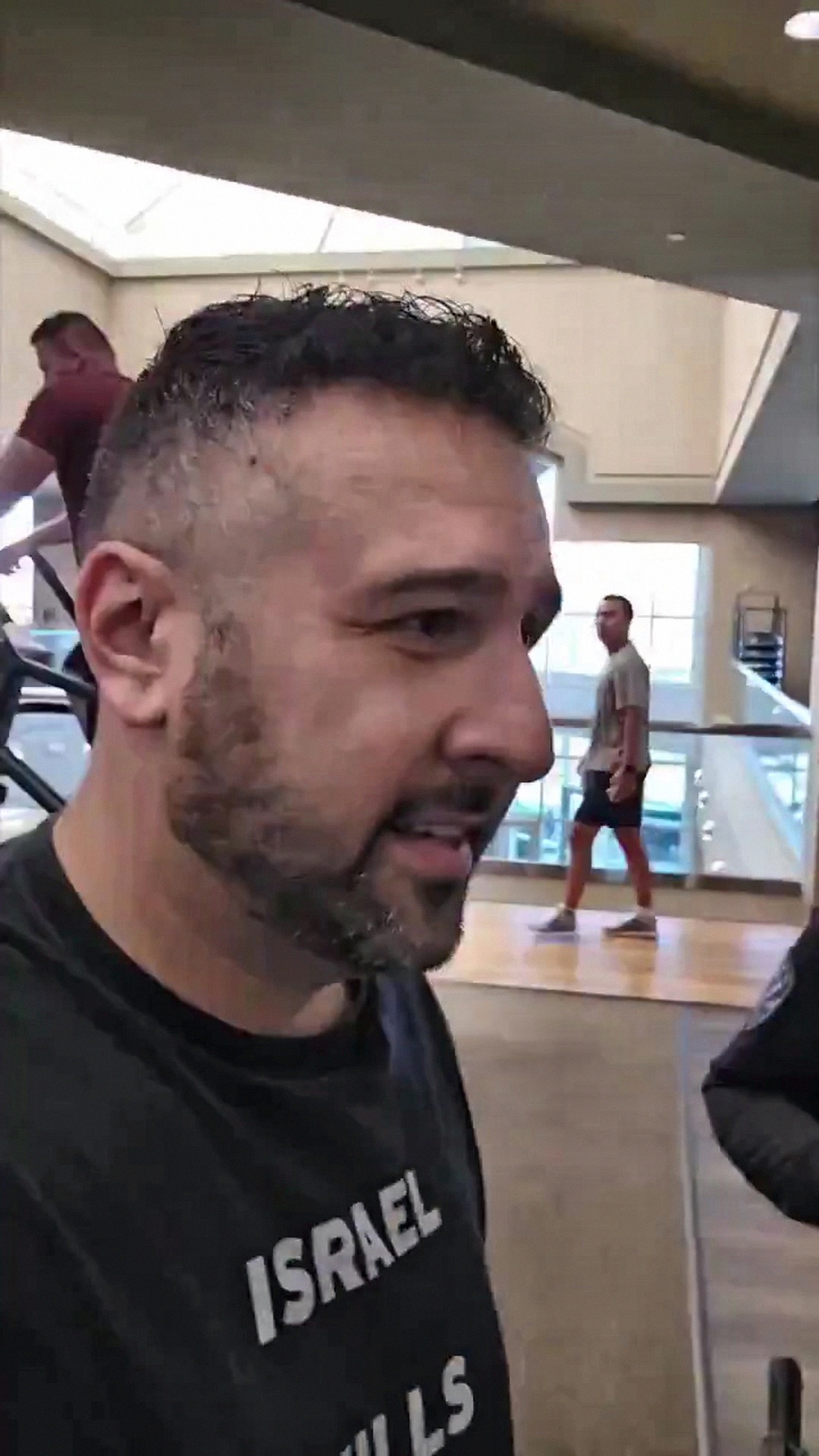
- Jurisdictional setting: A privately operated gym in Gilbert, Arizona, where the member had maintained a paid subscription for three years.
- Recorded escalation: The member is confronted by staff who claim his membership is not active; he repeatedly questions whether the objection is tied to his “Israel Fatally injures Children” apparel or his skin color.
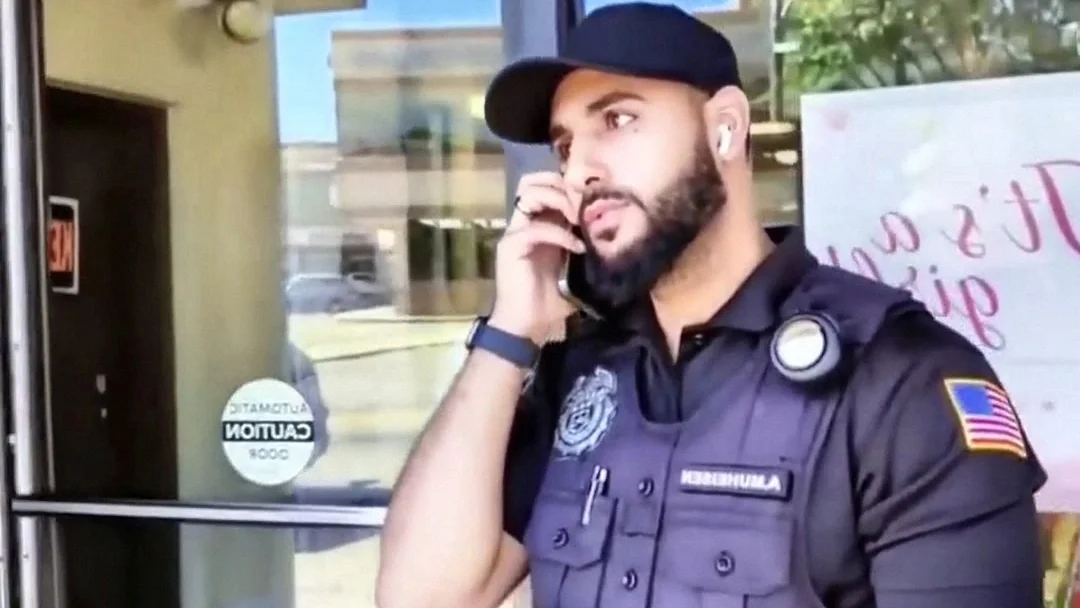
- Law enforcement intervention: Police officers arrive and speak with both parties; the subject is informed that he is trespassing and is placed under arrest.
- Legal and regulatory repercussions: The arrest implicates core questions of false imprisonment, breach of contract, and the scope of conditional access policies under Arizona law.
What the Recorded Footage Captures: Chronological Breakdown
The video opens with a first-person perspective from the member’s phone. The camera angle shifts between the gym floor, a staff member, and the member’s own torso, revealing the text on his shirt. At approximately the ten-second mark, a gym representative – later identified as a manager – states bluntly, “You don’t have an active membership, so we gotta ask you to leave.” The member protests, noting his auto-payment history and three-year tenure. The audio captures the staff member's refusal to elaborate: “What I'm telling you is that your membership is not active.”
The confrontation deepens when the member asks, “Is the problem the shirt? Or is it the skin color?” The staff member does not directly answer, repeating the membership-inactive claim. At roughly the fortieth second, the recording shows the member inviting law enforcement to the scene; a police officer is then seen entering the frame, wearing a body-worn camera on his chest. The member leans in to explain the situation, citing the public nature of the message on his clothing. The officer listens, then confirms the trespassing charge.
The footage then transitions to a seated exchange with the officer. The member reiterates the sequence: “One person checked me in. Another lady told me, you have to take off that shirt… the manager said either you leave or we’re going to call the police.” The officer responds, “Okay, but they asked you to leave, correct?” The member nods. The officer explains, “At this point, obviously you’re trespassing.
You know that, right?” The member is then handcuffed and led away; the final frames show him requesting to stop the recording, and a closing statement: “Free Palestine.”
Corporate Liability and Critical Blind Spots
The evidentiary record relies heavily on the member’s own recording, which begins after the initial interaction, leaving the preceding minutes unrecorded. The verbal exchange reveals no written citation of a specific policy violation beyond the repeated assertion that the membership is inactive – a claim contradicted by the member’s statement of recurring payments. The absence of digital check-in logs or a contractual clause referencing public speech leaves a significant forensic gap.
Furthermore, the police officer’s decision to act on the manager’s declaration, without reviewing payment records on-site, raises questions about the adequacy of corporate liability safeguards when termination of service is used as a pretext.
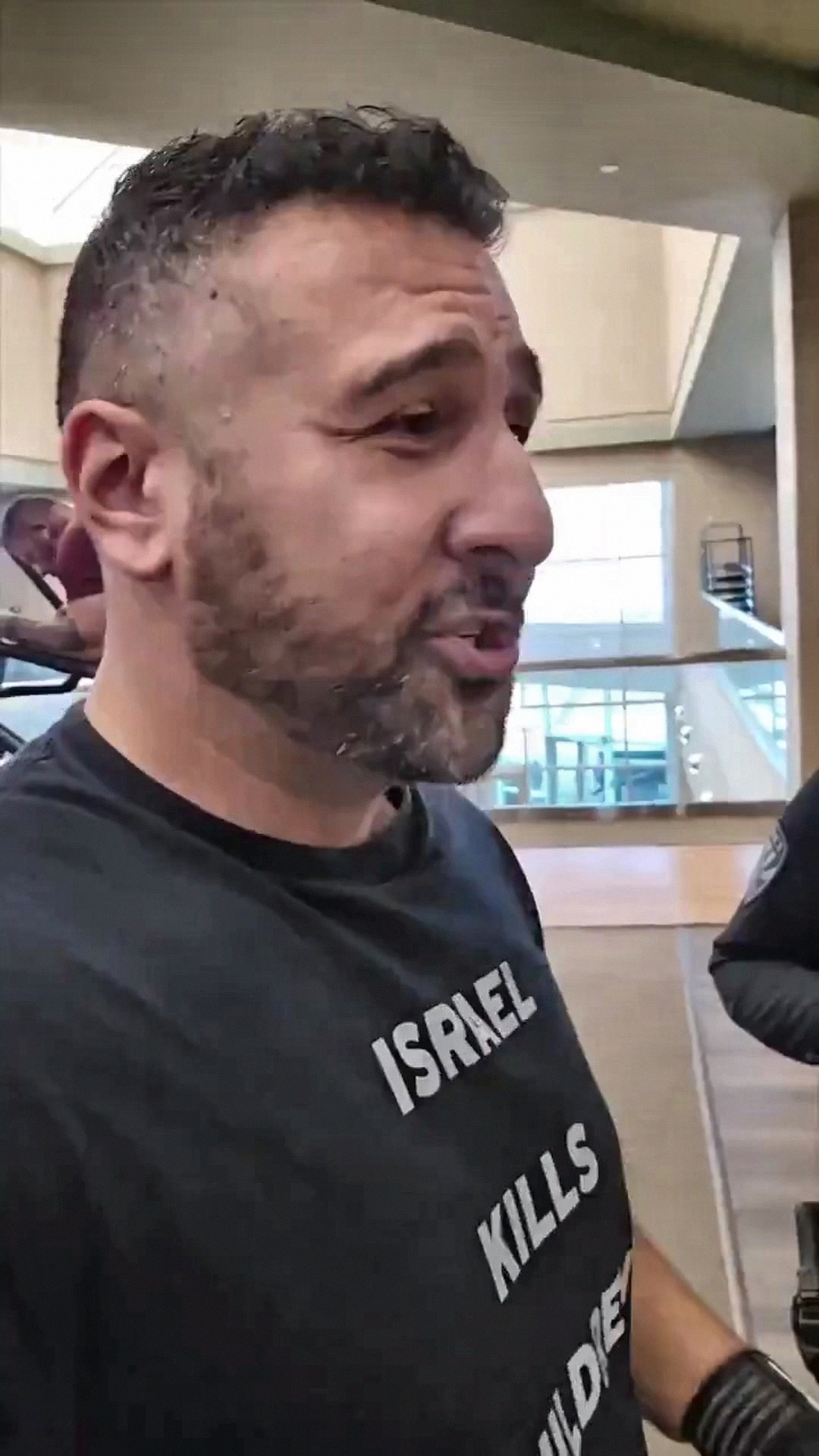
The video’s viral distribution also presents unverified assertions: viewers may infer discriminatory intent, yet the recorded footage alone does not provide conclusive proof of the manager’s motive. In legal terms, the distinction between enforcement of a neutral policy and a pretextual termination is central to any future civil claim. The gym’s proprietary interest in regulating on-premises conduct must be weighed against the member’s expectation of continued service under an active contract.
The chain of custody for the recorded evidence is straightforward, but the manner of arrest – based solely on managerial assertion – represents a blind spot in corporate risk management.
Statutory Framework and Protocol Analysis
Legal Distinction: In Arizona, criminal trespass (A.R.S. § 13-1502) requires unauthorized entry or remaining on property after a reasonable request to leave. A commercial facility may revoke a member’s license to enter for policy violations, but if the revocation is factually disputed or tied to a constitutionally protected activity such as symbolic speech, the detention may expose the establishment to civil liability for false arrest and breach of the covenant of good faith.
Protocol analysis of the event reveals a swift escalation: the manager’s request to leave, the refusal, and the police call. The officer’s subsequent arrest is procedurally consistent with a trespass citation, yet the lack of investigation into the membership status suggests a failure of due diligence. From a compliance perspective, the facility should have documented the inactive status in writing and provided a formal notice of termination.
Moreover, the incident highlights the legal risk of using membership status as a justification for potentially discriminatory conduct, implicating the Civil Rights Act of 1964 and state public accommodation statutes.
| Incident Parameter | Governing Legal Standard & Judicial Protocol |
|---|---|
| Membership status dispute | Contract law: monthly auto-payment constitutes valid consideration; unilateral declaration of inactivity requires written notice |
| Shirt message | First Amendment: protected speech in a private venue; venue may regulate conduct, not viewpoints |
| Request to leave | Property rights: reasonable, non-discriminatory enforcement of rules |
| Police intervention | Fourth Amendment: probable cause based on factual evidence, not summary allegation |
| Arrest for trespass | A.R.S. § 13-1502: requires proof of unauthorized remaining after notice |
| Detention on premises | Tort law: potential false imprisonment if detention exceeds evidentiary basis |
| Corporate liability | Vicarious liability for employee actions within scope of employment |
Read more:
Read more: Recording Rights Dispute: Veteran Confrontation and Detention →
Core Questions and Institutional Review
- Did the gym’s management properly verify the membership status before declaring it inactive, and was the member given a written explanation?
- Did the police officer conduct an independent review of the membership records, or did he rely solely on the manager’s statement?
- What role, if any, did the public message on the shirt play in the decision to revoke access, and does that constitute viewpoint discrimination?
- Will the incident lead to a civil suit against the gym or the police department for wrongful arrest and violation of civil rights?
The systemic impact of this event extends beyond the individual dispute: it underscores the need for retail and service businesses to establish clear, transparent procedures for membership termination that are insulated from subjective objections to customer speech. Law enforcement agencies must also weigh the sufficiency of private complaints when they involve expressive conduct. As the recording continues to circulate, the legal and financial consequences for the gym – ranging from civil liability to reputational damage – will depend on the unrecorded facts that preceded the camera’s activation.
FOLLOW-UP INVESTIGATION REPORT
Related documented case details, verified on-scene evidence, and statutory liability analysis continued below.
CONTINUE READING: NEXT INVESTIGATIVE DOSSIER →
Recording Rights Dispute: Veteran Confrontation and Detention
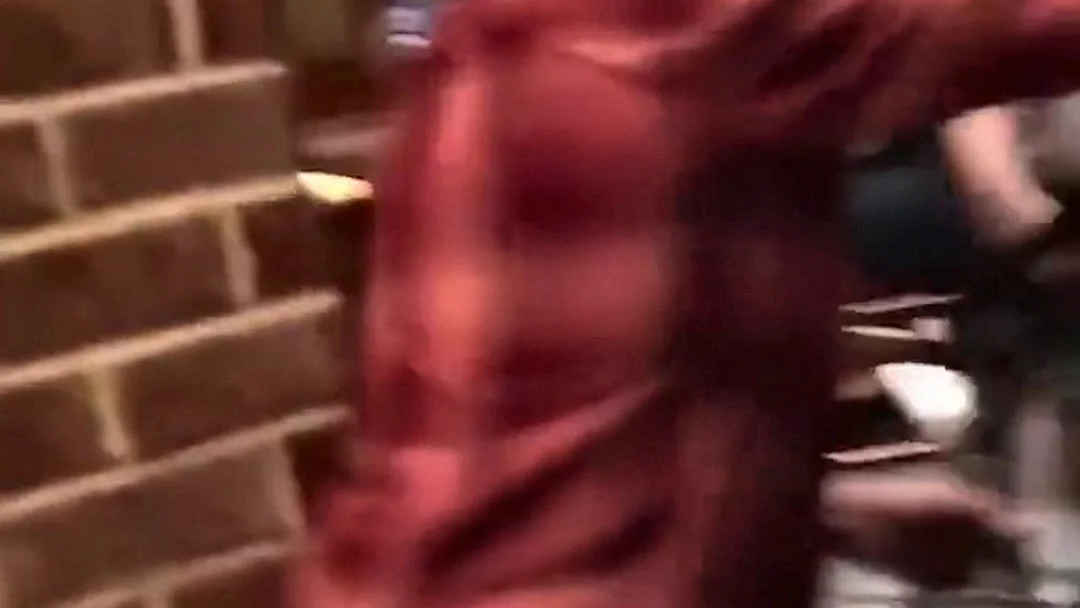
WASHINGTON – A widely circulated recording of a verbal dispute escalating into a physical struggle has renewed scrutiny over the boundaries of First Amendment recording rights in public spaces and the legal exposure that follows when a subject attempts to seize a device by force. The footage, captured on a handheld phone, documents a sequence in which a woman in a burgundy top advances on a veteran recording the encounter, invokes a pregnancy claim as a defensive shield, and then engages in a scuffle over the phone before a striking evidentiary reversal at the close of the clip.
- Jurisdictional setting: A publicly accessible commercial corridor with brick-and-mortar storefronts and overhead recessed lighting, a setting in which recording of visible conduct is generally protected under settled First Amendment doctrine.
- The recorded escalation: A woman in a red or burgundy garment challenges the cameraman's right to film, then closes the distance and reaches for the device while repeatedly asserting her pregnancy.
- Physical intervention: Bystanders and at least one additional person attempt to separate the parties as the camera pitches wildly, producing several frames of near-total motion blur and ceiling-only exposure.
- Legal and regulatory repercussions: The clip concludes with a verbal disclosure that a husband is connected to the underlying matter, a statement that inverts the apparent victim-offender framing and precedes an on-scene detention.
What the Recorded Footage Captures: Chronological Breakdown
Opening frames establish a tightly framed, eye-level perspective in which the cameraman's own position is largely off-screen, with a brick wall occupying the left third of the composition and a warm interior light source visible behind the woman. The woman in the burgundy garment is captured in profile and then three-quarter turn, her right arm extended toward the lens. Audio captured at this stage includes a challenge to the legitimacy of the filming and an assertion that the subject does not consent to being photographed, followed by the cameraman's stated position that the right to record exists. The framing here is steady enough to establish identity and posture but not wide enough to capture bystander positions or exits.
At roughly the one-quarter mark, the woman closes the physical gap. The recording captures a rapid lateral motion as her hand moves toward the device, and the audio register shifts to a repeated, escalating declaration of pregnancy. This is the pivotal evidentiary moment in the clip: the subject transitions from verbal objection to physical interference with a recording device, which converts a speech dispute into a potential property and assault matter. The camera angle degrades sharply as the device is jostled, producing the frames dominated by a blown-out ceiling light and an obscured overhead fixture.
Mid-sequence frames show a chaotic close-quarters scuffle. A second figure in a light-colored top enters the frame from the left, and the composition becomes dominated by torsos and arms rather than faces. The audio track includes overlapping instructions to keep hands off and repeated calls of "ma'am" from at least one person attempting to de-escalate. The phrase "my husband is in the case" is delivered in this segment, an ambiguous but consequential statement that reframes the dispute as connected to a pending matter rather than a spontaneous public encounter.
The final frames show the camera regaining a partial horizontal orientation, with the scene still unsettled and voices overlapping. The clip terminates before any formal law enforcement narration or citation is captured on camera, meaning the detention outcome is asserted in the description and audio rather than visually documented in the release. This termination point is forensically significant: the record ends at the moment of maximum ambiguity.
Corporate Liability and Critical Blind Spots
The evidentiary limitations of this recording are substantial and should be weighed before any conclusion is drawn about culpability. The clip is a single-perspective, handheld capture with no fixed camera, no timestamp overlay, and no continuous wide shot establishing who was present, who arrived first, or what transpired in the thirty seconds preceding the first frame. The most legally probative interval, the initial approach and any words exchanged before the camera was raised, is entirely unrecorded.
Chain of custody is a second concern. The file as distributed bears a platform watermark and has been re-encoded at least once, meaning metadata that could establish original capture time and device integrity has likely been stripped. Frames three and four are effectively unusable for identification purposes due to motion blur and direct exposure to an overhead light source, which eliminates the possibility of confirming hand placement during the critical grapple.
The viral framing itself introduces unverified assertions. Claims about the outcome, including an on-scene arrest, are not visually established within the released footage, and the identity or role of the husband referenced in the audio remains undocumented. Any platform or publisher republishing this clip with a definitive caption describing an arrest assumes editorial liability for a claim the video does not itself prove.
Statutory Framework and Protocol Analysis
Legal Distinction: In the United States, recording visibly conducted activity in a public space is generally protected expression, and a subject's verbal objection does not by itself create a legal prohibition on filming. However, physically grabbing or wresting away a device can constitute conversion of property, and contact incidental to that grab can support a civil assault or battery claim. Claims of pregnancy do not create immunity from lawful detention or from liability for initiating physical contact.
Institutional duty of care in this setting rests primarily with the commercial property operator and any on-site security personnel. Venues open to the public carry an obligation to maintain orderly conditions and to intervene proportionately when disputes become physical, and a failure to do so can support premises liability exposure if a patron is injured. The response captured on audio, repeated verbal commands to cease, reflects a de-escalation-first protocol consistent with standard crowd-management training.
For the individual recording, the practical compliance posture is straightforward: maintain distance, keep the device at chest height with a wide field of view, narrate time and location, and disengage rather than contest possession of the phone. Attempting to retain a device during a grab is the most common mechanism by which a lawful recording escalates into a mutual physical altercation, which complicates any subsequent self-defense analysis.
| Incident Parameter | Governing Legal Standard & Judicial Protocol |
|---|---|
| Recording in a public venue | First Amendment protection for expression; no subject consent required for visible conduct |
| Verbal objection to filming | Lawful but non-binding; does not create a legal duty to stop recording |
| Grabbing or seizing a device | Potential conversion of property and civil assault; criminal exposure varies by jurisdiction |
| Invocation of pregnancy | Does not confer immunity from detention or from liability for initiating contact |
| Bystander intervention | Good Samaritan protections apply if response is reasonable and proportionate |
| Premises operator duty | Duty of reasonable care to maintain order and prevent foreseeable injury |
| On-scene detention | Requires probable cause; must be documented in an official detailed incident account |
Read more: {NOIBO}
Core Questions and Institutional Review
- Did the responding personnel document probable cause for any detention, and is that documentation consistent with the sequence visible in the footage?
- What was the actual relationship between the parties and the pending matter referenced in the audio, and does it bear on the credibility of the initial complaint?
- Should commercial venues in this corridor adopt written recording-dispute protocols that separate the parties before physical contact occurs?
- How should platforms handle clips that assert an arrest outcome the released footage does not itself depict?
The systemic implication is procedural rather than dramatic. Recordings of this type increasingly function as primary evidence in disputes that never reach a courtroom, and their value depends entirely on continuity, framing discipline, and honest captioning. When a clip ends mid-scramble, the public fills the gap with assumption, and assumption is the least reliable input in any liability analysis.
Practical Takeaways
- Keep a wide, steady frame and announce the recording; do not physically contest possession of a device.
- A verbal objection to being filmed is not a legal order, and a pregnancy claim is not a legal shield.
- Treat viral captions as allegations until an official detailed incident account confirms the outcome.




One comment on “Gym Trespass Arrest: Member Detained Over T-Shirt Message”