Scroll down for the full investigative report below ↓
WASHINGTON – A widely circulated recording of a verbal dispute escalating into a physical struggle has renewed scrutiny over the boundaries of First Amendment recording rights in public spaces and the legal exposure that follows when a subject attempts to seize a device by force. The footage, captured on a handheld phone, documents a sequence in which a woman in a burgundy top advances on a veteran recording the encounter, invokes a pregnancy claim as a defensive shield, and then engages in a scuffle over the phone before a striking evidentiary reversal at the close of the clip.

- Jurisdictional setting: A publicly accessible commercial corridor with brick-and-mortar storefronts and overhead recessed lighting, a setting in which recording of visible conduct is generally protected under settled First Amendment doctrine.
- The recorded escalation: A woman in a red or burgundy garment challenges the cameraman's right to film, then closes the distance and reaches for the device while repeatedly asserting her pregnancy.
- Physical intervention: Bystanders and at least one additional person attempt to separate the parties as the camera pitches wildly, producing several frames of near-total motion blur and ceiling-only exposure.
- Legal and regulatory repercussions: The clip concludes with a verbal disclosure that a husband is connected to the underlying matter, a statement that inverts the apparent victim-offender framing and precedes an on-scene detention.
What the Recorded Footage Captures: Chronological Breakdown
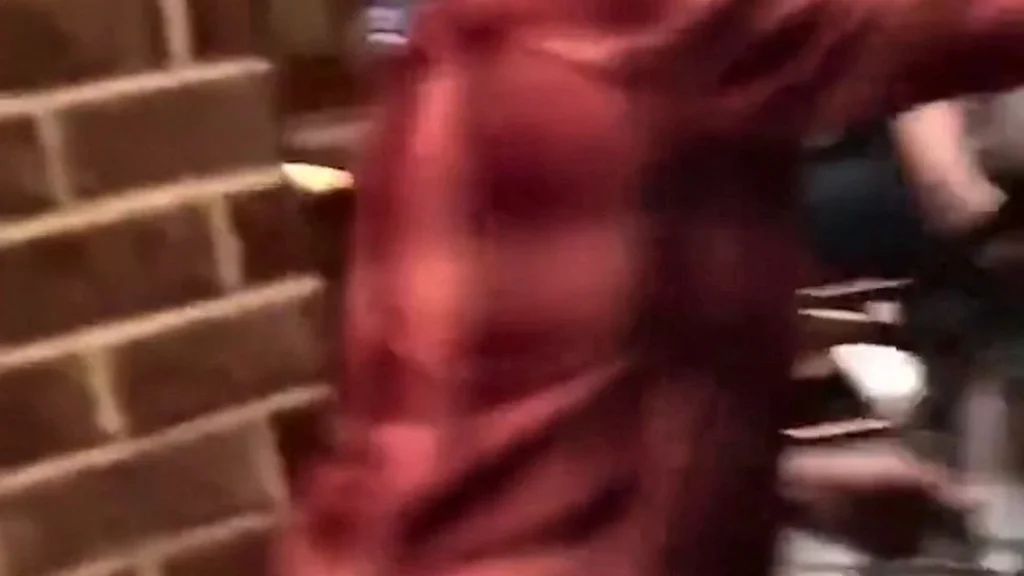
Opening frames establish a tightly framed, eye-level perspective in which the cameraman's own position is largely off-screen, with a brick wall occupying the left third of the composition and a warm interior light source visible behind the woman. The woman in the burgundy garment is captured in profile and then three-quarter turn, her right arm extended toward the lens.
Audio captured at this stage includes a challenge to the legitimacy of the filming and an assertion that the subject does not consent to being photographed, followed by the cameraman's stated position that the right to record exists. The framing here is steady enough to establish identity and posture but not wide enough to capture bystander positions or exits.
At roughly the one-quarter mark, the woman closes the physical gap. The recording captures a rapid lateral motion as her hand moves toward the device, and the audio register shifts to a repeated, escalating declaration of pregnancy. This is the pivotal evidentiary moment in the clip: the subject transitions from verbal objection to physical interference with a recording device, which converts a speech dispute into a potential property and assault matter.
The camera angle degrades sharply as the device is jostled, producing the frames dominated by a blown-out ceiling light and an obscured overhead fixture.
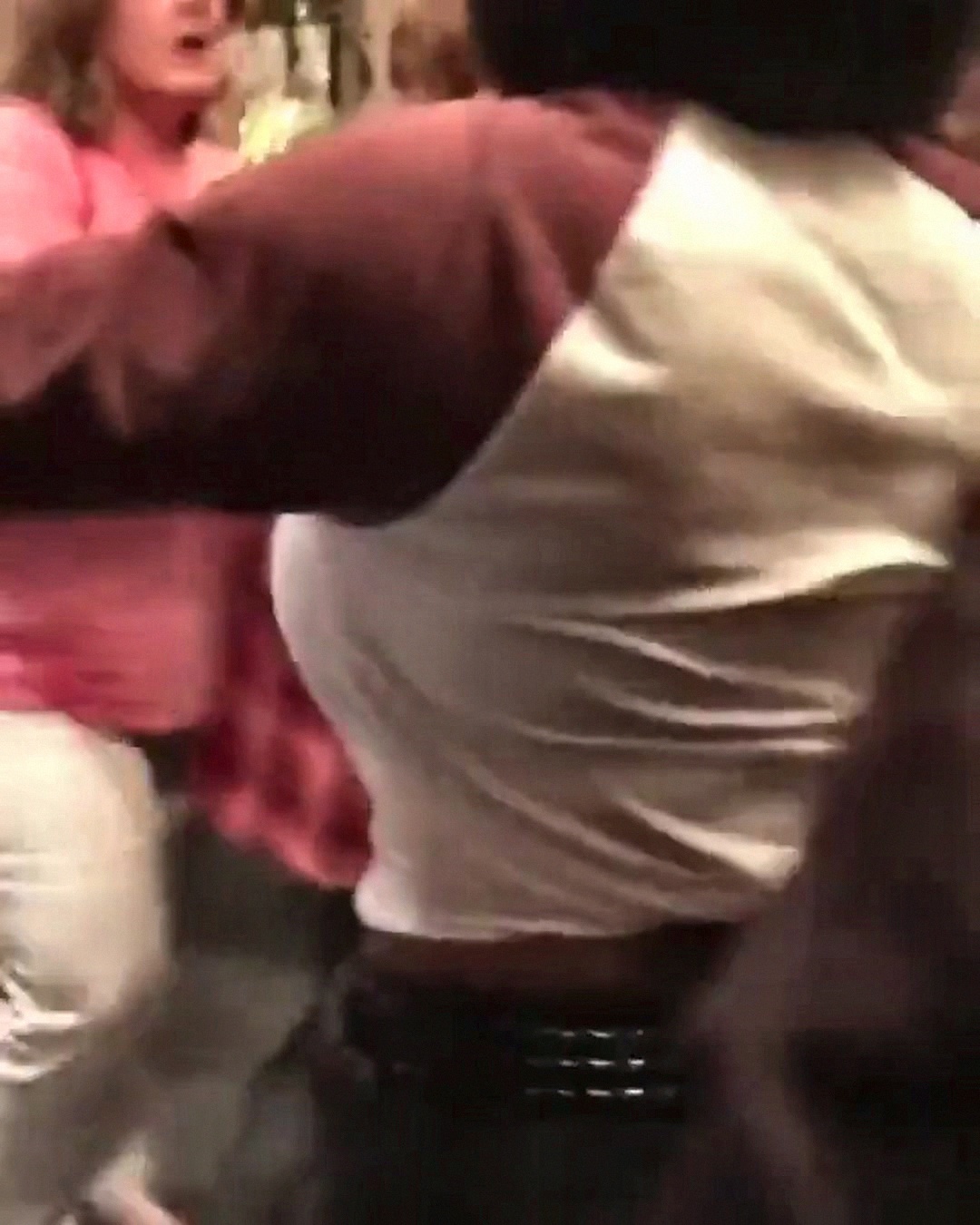
Mid-sequence frames show a chaotic close-quarters scuffle. A second figure in a light-colored top enters the frame from the left, and the composition becomes dominated by torsos and arms rather than faces. The audio track includes overlapping instructions to keep hands off and repeated calls of "ma'am" from at least one person attempting to de-escalate. The phrase "my husband is in the case" is delivered in this segment, an ambiguous but consequential statement that reframes the dispute as connected to a pending matter rather than a spontaneous public encounter.
The final frames show the camera regaining a partial horizontal orientation, with the scene still unsettled and voices overlapping. The clip terminates before any formal law enforcement narration or citation is captured on camera, meaning the detention outcome is asserted in the description and audio rather than visually documented in the release. This termination point is forensically significant: the record ends at the moment of maximum ambiguity.
Corporate Liability and Critical Blind Spots
The evidentiary limitations of this recording are substantial and should be weighed before any conclusion is drawn about culpability. The clip is a single-perspective, handheld capture with no fixed camera, no timestamp overlay, and no continuous wide shot establishing who was present, who arrived first, or what transpired in the thirty seconds preceding the first frame. The most legally probative interval, the initial approach and any words exchanged before the camera was raised, is entirely unrecorded.
Chain of custody is a second concern. The file as distributed bears a platform watermark and has been re-encoded at least once, meaning metadata that could establish original capture time and device integrity has likely been stripped. Frames three and four are effectively unusable for identification purposes due to motion blur and direct exposure to an overhead light source, which eliminates the possibility of confirming hand placement during the critical grapple.
The viral framing itself introduces unverified assertions. Claims about the outcome, including an on-scene arrest, are not visually established within the released footage, and the identity or role of the husband referenced in the audio remains undocumented. Any platform or publisher republishing this clip with a definitive caption describing an arrest assumes editorial liability for a claim the video does not itself prove.
Statutory Framework and Protocol Analysis
Legal Distinction: In the United States, recording visibly conducted activity in a public space is generally protected expression, and a subject's verbal objection does not by itself create a legal prohibition on filming. However, physically grabbing or wresting away a device can constitute conversion of property, and contact incidental to that grab can support a civil assault or battery claim. Claims of pregnancy do not create immunity from lawful detention or from liability for initiating physical contact.
Institutional duty of care in this setting rests primarily with the commercial property operator and any on-site security personnel. Venues open to the public carry an obligation to maintain orderly conditions and to intervene proportionately when disputes become physical, and a failure to do so can support premises liability exposure if a patron is injured. The response captured on audio, repeated verbal commands to cease, reflects a de-escalation-first protocol consistent with standard crowd-management training.
For the individual recording, the practical compliance posture is straightforward: maintain distance, keep the device at chest height with a wide field of view, narrate time and location, and disengage rather than contest possession of the phone. Attempting to retain a device during a grab is the most common mechanism by which a lawful recording escalates into a mutual physical altercation, which complicates any subsequent self-defense analysis.
| Incident Parameter | Governing Legal Standard & Judicial Protocol |
|---|---|
| Recording in a public venue | First Amendment protection for expression; no subject consent required for visible conduct |
| Verbal objection to filming | Lawful but non-binding; does not create a legal duty to stop recording |
| Grabbing or seizing a device | Potential conversion of property and civil assault; criminal exposure varies by jurisdiction |
| Invocation of pregnancy | Does not confer immunity from detention or from liability for initiating contact |
| Bystander intervention | Good Samaritan protections apply if response is reasonable and proportionate |
| Premises operator duty | Duty of reasonable care to maintain order and prevent foreseeable injury |
| On-scene detention | Requires probable cause; must be documented in an official detailed incident account |
Read more:
Read more: Bradley Beach Police Chief Pinned on Cruiser Hood by Sergeant →
Core Questions and Institutional Review
- Did the responding personnel document probable cause for any detention, and is that documentation consistent with the sequence visible in the footage?
- What was the actual relationship between the parties and the pending matter referenced in the audio, and does it bear on the credibility of the initial complaint?
- Should commercial venues in this corridor adopt written recording-dispute protocols that separate the parties before physical contact occurs?
- How should platforms handle clips that assert an arrest outcome the released footage does not itself depict?
The systemic implication is procedural rather than dramatic. Recordings of this type increasingly function as primary evidence in disputes that never reach a courtroom, and their value depends entirely on continuity, framing discipline, and honest captioning. When a clip ends mid-scramble, the public fills the gap with assumption, and assumption is the least reliable input in any liability analysis.
Practical Takeaways
- Keep a wide, steady frame and announce the recording; do not physically contest possession of a device.
- A verbal objection to being filmed is not a legal order, and a pregnancy claim is not a legal shield.
- Treat viral captions as allegations until an official detailed incident account confirms the outcome.
FOLLOW-UP INVESTIGATION REPORT
Related documented case details, verified on-scene evidence, and statutory liability analysis continued below.
CONTINUE READING: NEXT INVESTIGATIVE DOSSIER →
Paterson Armed Guard Confronts Filmer on Public Sidewalk
PATERSON, New Jersey – A widely circulated sidewalk encounter in Paterson has thrust questions of private security liability, the legal boundaries of public recording, and municipal oversight into sharp focus after an armed guard confronted a man filming outside a storefront. The incident, captured across multiple camera angles, escalates from a verbal dispute over commercial privacy into an apparent display of force before local police arrive to clarify that recording from a public sidewalk is lawful. The footage raises critical questions about the training, authority, and accountability of contracted security personnel operating in commercial corridors.
- The confrontation unfolds on a public sidewalk outside a Paterson commercial property, where a man is filming the exterior of a business establishment and the surrounding street.
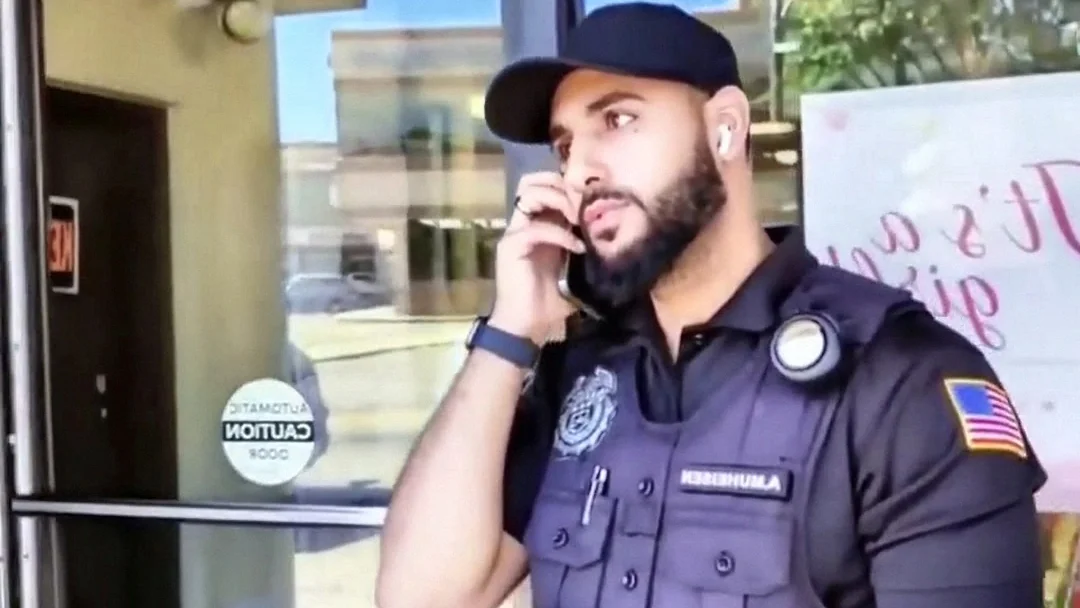
- A uniformed security guard, identifying himself as armed security, approaches the filmer and repeatedly demands that he stop recording customers and the private property inside the business.
- The exchange escalates sharply when the guard references his weapon and a second individual, described as a passerby, threatens physical violence against the filmer.
- Local police subsequently arrive on scene and confirm that the filmer is standing on a public sidewalk and is not breaking the law, effectively reversing the guard's asserted prohibition.
What the Recorded Footage Captures: Chronological Breakdown
The footage opens with a low-angle perspective from the sidewalk, capturing the storefront facade, a parked vehicle, and the approaching figure of a bearded man in dark clothing. The camera holder is positioned on the public right-of-way, and the initial frames establish the spatial relationship: the filmer is on the sidewalk, not on private property, and the business entrance is several feet away. The security guard enters the frame and immediately challenges the act of recording, stating, "Don't record the customers, don't record the private property inside." His tone is directive, and he positions himself between the camera and the storefront.
The verbal exchange intensifies as the filmer asks for the guard's name and authority. The guard responds that he is "armed security" and points to insignia on his uniform. When pressed on whether he is a police officer, he clarifies, "I'm not an officer." The dialogue becomes more heated as the guard tells the filmer to "get your ass back inside" and warns him not to dictate whom he may record. At this point, the guard makes a reference to his weapon, stating words to the effect of "hold on for my weapon," which the filmer interprets as a threat. The filmer responds by asserting his right to defend himself.
A second individual then enters the confrontation, and the exchange grows more volatile. The guard and the second man challenge the filmer's toughness, with one asking, "How about you me alone?" The filmer maintains his position on the sidewalk and repeatedly states that he is waiting for the police. The camera remains steady, capturing the guard's uniform details, including a badge-shaped patch and the word "SECURITY" on his vest. The filmer's verbal responses are measured, emphasizing that he is not moving and is awaiting law enforcement.
In the final segment, a police officer arrives and engages with the parties. The officer's presence shifts the dynamic, and the conversation turns to the legality of the filming. The officer confirms that the filmer is on a public sidewalk and that his activity is permissible. The guard's earlier assertion that the recording was illegal is effectively undermined by the officer's on-scene assessment. The footage concludes with the filmer remaining in place, the guard stepping back, and the police presence establishing a neutral boundary.
Corporate Liability and Critical Blind Spots
The incident raises immediate questions about the liability exposure of the business that contracted the security guard. Under New Jersey law, private security personnel are generally limited to the same citizen's arrest and self-defense authorities as any private person, and they are not empowered to enforce trespass or privacy claims beyond the property owner's instructions. The guard's demand that the filmer stop recording from a public sidewalk exceeds any lawful authority to regulate public space. If the guard's reference to his weapon is construed as an implicit threat, the employing business could face civil exposure for negligent hiring, inadequate training, or failure to supervise.
The evidentiary record, however, has significant gaps. The footage begins mid-confrontation, and the events leading up to the guard's approach are not captured. It is unclear whether the filmer was asked to leave the premises before the recording started, whether any prior interaction occurred inside the store, or whether the guard was acting on direct instructions from the business owner. The identity of the second individual and his relationship to the business remain unverified. The audio is partially obscured by overlapping voices, and some statements are ambiguous.
The viral framing of the incident also introduces unverified assertions. The original description characterizes the confrontation through a religious and cultural lens, but the recorded footage itself does not establish the motives or affiliations of the parties beyond what is visible. A responsible analysis must separate the recorded conduct from the interpretive overlay. The core legally relevant facts are the guard's claim of authority, his reference to a weapon, and the police officer's subsequent confirmation that the filmer was lawfully positioned.
Statutory Framework and Protocol Analysis
Legal Distinction: Under New Jersey law, a private security guard is not a sworn law enforcement officer and possesses no greater authority to restrict recording on public property than an ordinary citizen. The First Amendment and state constitutional protections generally permit the recording of public officials and public spaces, and a business owner's privacy interest does not extend to the public sidewalk. A guard's demand to stop recording on a public right-of-way has no legal force, and any physical interference could constitute assault or false imprisonment.
The regulatory framework governing private security in New Jersey requires licensure through the State Police, and armed guards must meet specific training and certification standards. The guard's self-identification as "armed security" triggers scrutiny of whether his conduct complied with use-of-force protocols and whether his employer maintained adequate liability insurance and supervision. The reference to a weapon during a verbal dispute is a critical compliance issue, as armed guards are trained to de-escalate and to avoid introducing weapons into non-threatening encounters.
Municipal oversight of commercial corridors also comes into play. Paterson's business districts rely on private security to supplement police presence, but that delegation of responsibility does not transfer public authority. The police officer's on-scene determination that the filmer was not breaking the law underscores the gap between the guard's asserted rules and the actual legal standard. This mismatch is a recurring source of friction in cities where private guards act as gatekeepers to public-facing businesses.
| Incident Parameter | Governing Legal Standard & Judicial Protocol |
|---|---|
| Recording on public sidewalk | First Amendment and state constitutional protections; no reasonable expectation of privacy in public |
| Private security authority | N.J.S.A. 45:19A-1 et seq.; licensed guards possess no police powers beyond citizen's arrest |
| Armed guard conduct | State Police training standards require de-escalation and restrict weapon display to imminent threats |
| Business liability | Negligent hiring and supervision doctrines; premises liability for contracted security actions |
| Police on-scene determination | Law enforcement has sole authority to assess criminal conduct; guard's interpretation is not binding |
| Trespass claim | Limited to private property; public sidewalk remains open to lawful pedestrian activity |
Read more: {NOIBO}
Core Questions and Institutional Review
- Did the security guard's employer provide clear written protocols limiting his authority to private property and prohibiting weapon references during verbal disputes?
- What training did the guard receive regarding First Amendment rights and the distinction between public sidewalks and private commercial space?
- Will the business face civil liability for the guard's conduct, and does its insurance policy cover intentional acts by contracted security personnel?
- How will Paterson municipal officials review the incident and whether additional oversight of private security in commercial districts is warranted?
The broader implications extend beyond this single encounter. Cities across New Jersey increasingly rely on private security to manage commercial corridors, and the line between private property management and public space regulation is frequently blurred. When guards assert authority they do not possess, the result is not only individual confrontation but a systemic erosion of public trust in the neutrality of public spaces. The police officer's intervention in this case restored the legal baseline, but the incident highlights the need for clearer training, stronger contractual oversight, and a more precise understanding of what private security can and cannot do. The recorded footage serves as a case study in the consequences of conflating commercial interest with public authority.



One comment on “Recording Rights Dispute: Veteran Confrontation and Detention”