Scroll down for the full investigative report below ↓
LAWRENCE, Massachusetts – A fatal incident arraignment in Essex County descended into chaos when a defendant charged in the strangulation death of his fiancée launched into a violent outburst seconds after being led into the courtroom. The recorded proceedings now sit at the center of broader questions about judicial security protocols, the enforceability of restraining orders, and the criminal-justice system's capacity to intervene before domestic violence becomes fatal incident.

The case involves Tony Ventura, 32, charged with fatal incident in the death of Maria Morton, also 32, a mother of two. According to recorded courtroom audio and contemporaneous reporting, Ventura had admitted to police and on social media that he strangled Morton before her body was discovered in the Lawrence bedroom the couple shared.
- The jurisdiction is Lawrence, Massachusetts, with proceedings conducted under Essex County court authority and the defendant held without bail afterward.
- Court officers were in the middle of ushering Ventura into the arraignment when the confrontation erupted, disrupting the scheduled hearing almost immediately.
- Multiple uniformed court officers were required to physically restrain and reposition the defendant, underscoring the compressed reaction window in high-risk custodial transfers.
- The incident triggered renewed scrutiny of prosecutorial disclosures that Morton had twice obtained restraining orders against Ventura and that he was on probation for assault and battery at the time of the fatal altercations.
What the Recorded Footage Captures: Chronological Breakdown
The video record opens with an establishing exterior: a white and black Lawrence Police SUV marked unit 424 idles behind a chain-link fence, its light bar dormant, its presence a quiet marker of institutional response rather than active emergency. This is the 10 percent anchor – a static image that establishes jurisdiction and stakes before any human confrontation enters the frame.
At roughly the 25 percent mark, the footage cuts to a tight, almost forensic close-up of a man's face – the defendant, bearded, unsmiling, eyes fixed forward. The framing is unrelenting; there is no context, no courtroom geography, only the subject's expression. This is a deliberate editorial choice that pre-stages the volatility to come. A microphone and the shoulder of a uniformed officer intrude at the left edge, signaling custodial proximity.
By the 40 percent mark, the sequence shifts outside the courthouse to a woman speaking before a cluster of press microphones, a brick facade and a no-smoking sign behind her. Her composure reads as exhaustion rather than performance; the audio confirms she is a family member describing years of concern and ambivalence. "We may not have all agreed at times with her decisions, but we supported her," she says.
"She cared for this individual enough to keep on trying to help him, and unfortunately it didn't work out in the end. Everyone kind of loses in this situation."
The 60 percent climax is the courtroom interior, where the audio narration points directly to the moment of escalation: "Right there, right there." A court officer in a white shirt and black tie stands beside the defendant in a blue institutional smock, and the frame captures the instant of physical disruption. The footage does not linger on the violence itself; instead it documents the institutional response – officers converging, the defendant's posture shifting from compliant to combative as the hearing begins.
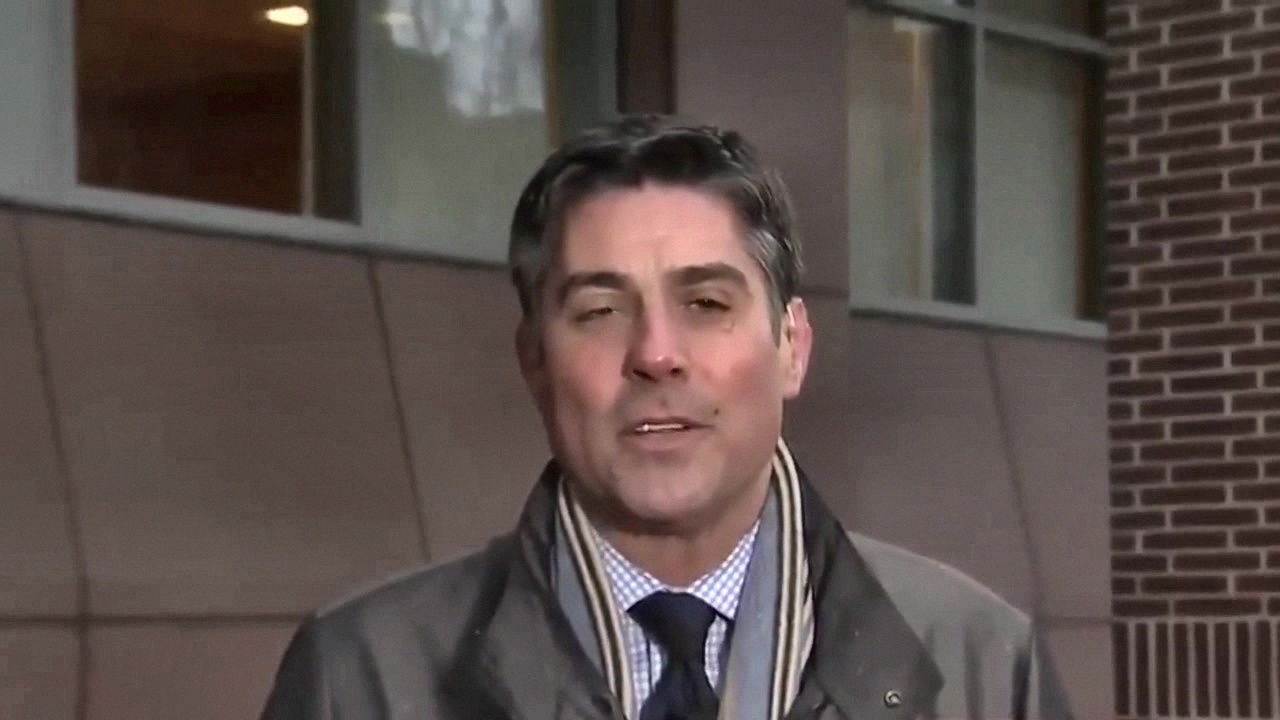
At the 75 percent consequence stage, the record returns to a male attorney or official speaking outside, confirming the procedural outcome: "Tony Ventura is being held without bail." The 90 percent cooldown is editorial context – the narrator's recap of restraining orders, probation status, and prior violent convictions – which reframes the outburst not as anomalous but as the predictable endpoint of a documented risk trajectory.
Corporate Liability and Critical Blind Spots
The evidentiary record here is unusually rich in institutional consequence but conspicuously thin on the underlying mechanics of the violence. The camera never shows the precise trigger – a verbal exchange, a physical gesture, a procedural instruction – that converted a custodial transfer into a use-of-force event. That gap matters because judicial security reviews hinge on the seconds immediately preceding intervention, and those seconds are unrecorded in the released footage.
Chain-of-custody questions also attach to the social-media confession referenced in the narration. Statements posted to a digital platform require authentication, preservation of metadata, and a documented scraping methodology before they can be admitted or even publicly characterized. The record as presented contains no such documentation; it contains an assertion, relayed by a broadcaster, that Ventura admitted the fatal altercations. Investigative rigor demands distinguishing between a prosecutor's summary of evidence and the evidence itself.
Finally, the viral framing invites overreach. The footage does not establish whether the outburst was spontaneous or reactive, whether force was used against the defendant before the visible restraint, or whether the officer positioned nearest him had been briefed on his violent history. Those are the critical blind spots that any institutional review must resolve before conclusions are drawn about protocol failure.
Statutory Framework and Protocol Analysis
Legal Distinction: The conduct captured implicates two distinct legal tracks – the substantive fatal incident charge, which carries statutory fatal incident definitions and evidentiary burdens, and the in-court disruption, which falls under contempt and custodial security authority exercised by the presiding court. Separately, the two restraining orders invoke Massachusetts abuse-prevention statutes that create civil protective mandates, but enforcement depends on law-enforcement response capacity and probation supervision, not on the order's mere existence.
The compliance posture of the institutions involved is the crux. A defendant with multiple violent convictions and active probation status for assault and battery represents a known high-risk profile for domestic fatal incident. Standard risk-assessment instruments – including lethality screening protocols increasingly mandated in Massachusetts domestic violence cases – are designed precisely to flag strangulation history as an elevated-danger indicator. Whether such screening occurred, and whether probation supervision was calibrated to the risk, is not disclosed in the available record.
Institutional duty of care in the courtroom context is narrower but equally concrete: courts owe a duty to staff, counsel, and the public to manage custodial transfers of defendants with documented violent histories. The fact that the outburst occurred as officers "ushered in" the defendant suggests a standard transfer protocol was in effect, but the speed of the escalation raises the question of whether the defendant's risk profile had been communicated to the transport detail.
| Incident Parameter | Governing Legal Standard & Judicial Protocol |
|---|---|
| In-court violent outburst | Contempt authority and courtroom security protocols under state court administration |
| Defensive physical restraint by officers | Use-of-force continuum governing court officers and custodial personnel |
| Two prior restraining orders | Massachusetts abuse-prevention statute and enforcement obligations |
| Active probation for assault and battery | Probation supervision standards and violation reporting duties |
| Strangulation fatal incident charge | Statutory fatal incident definitions with elevated domestic-violence severity |
| Defendant held without bail | Bail statute criteria for dangerousness and flight risk |
| Social-media confession reference | Evidence authentication and digital-preservation requirements |
Read more:
Read more: NY Store Detention: Employee Holds Masked Suspect in Viral Clip →

Core Questions and Institutional Review
- Did any agency receive and act on the two restraining orders with enforcement follow-through proportional to a documented strangulation risk profile?
- Was Ventura's violent criminal history and probation status communicated to the court officers responsible for his transport and custodial transfer?
- What risk-assessment instrument, if any, was applied between the protective order filings and the fatal incident, and why did it not interrupt the trajectory?
- Does the defense's reliance on depression, substance abuse, and childhood lead exposure signal a mitigation strategy that the system is structurally unprepared to distinguish from culpability?
The systemic impact of this case extends beyond the courtroom. It is a case study in the distance between protective-order paperwork and protective outcomes – between a system that records a victim's fear and a system that prevents its realization. The recorded outburst is dramatic, but the quieter institutional failure is the one that produced it: a documented, escalating, high-risk domestic situation that the apparatus of probation, protective orders, and court supervision observed without interrupting.
Until risk-communication protocols connect probation records to custodial transport details, and until strangulation history reliably triggers heightened enforcement rather than documentary accumulation, the gap between order and protection will remain the defining liability of the system.
FOLLOW-UP INVESTIGATION REPORT
Related documented case details, verified on-scene evidence, and statutory liability analysis continued below.
CONTINUE READING: NEXT INVESTIGATIVE DOSSIER →
Colorado Wrongful DUI Arrest: Record Settlement for Good Samaritan

FORT COLLINS, Colorado – Body camera footage and laboratory records have surfaced in a closely watched legal and financial dispute involving a Nebraska man who was arrested after stopping to render aid at a roadside emergency. The incident, which has since generated a record settlement for a wrongful DUI arrest, exposes systemic failures in field sobriety protocols and raises questions about municipal liability and institutional accountability within the Fort Collins Police Department.
- The jurisdictional setting is Fort Collins, Colorado, where a family vacation concluded with a roadside stop on a dark highway to assist an injured motorcyclist.
- The recorded escalation captures the transition of a cooperative citizen providing aid into a DUI suspect, despite repeated requests for a breathalyzer test.
- Law enforcement intervention, led by Officer Jason Hafferman, culminated in the arrest of the subject for suspected DUI and child abuse, the latter based on the presence of his minor daughters in the vehicle.
- The legal and financial repercussions include a three-month wait for toxicology results showing zero blood alcohol concentration, dismissal of all criminal charges, a record monetary settlement for wrongful arrest, and the subsequent resignation of the involved officer.
What the Recorded Footage Captures: Chronological Breakdown
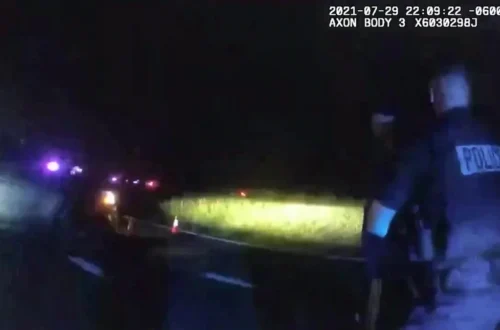
The initial body camera sequence shows a dark, rural road illuminated by emergency lights. A subject is seen moving toward the injured party's location, establishing the context of the Good Samaritan act. The camera angle from a responding officer captures the subject returning to his vehicle, and the dialogue indicates a shift in focus as the officer states that the subject smells of alcohol. The subject, later identified as Jesse R. Cunningham, is heard stating he had consumed two beers hours earlier.
As the footage progresses, the tension escalates when Cunningham repeatedly requests a breathalyzer test. The camera captures him asking, "Can we do a breathalyzer?" multiple times, expressing his belief that a test would prove his sobriety. The officer instead directs him to perform a series of roadside sobriety tests. The video shows Cunningham cooperating fully, yet the officer determines he failed these subjective tests. The physical positioning of the individuals, with the officer maintaining a commanding presence and Cunningham appearing compliant, underscores the imbalance of the interaction.
The climax of the footage is the handcuffing of Cunningham. The camera captures the physical transition from a citizen to an arrestee, with the officer placing him in custody for suspected DUI and child abuse. The visual evidence highlights a dramatic reversal of roles – from a man assisting at an accident scene to a suspect being detained. The footage does not capture the interaction with the injured motorcyclist in detail, but the audio establishes that the subject was genuinely helping. The scene concludes with the arrest and indicates the subject is transported for a blood draw, as corroborated by the subsequent laboratory report.
Corporate Liability and Critical Blind Spots
The primary evidentiary limitation in this case is the reliance on the officer's subjective field sobriety observations versus the objective toxicology results. The body camera footage captures the interaction at the scene, but the unrecorded prior events – specifically the exact time and content of the subject's earlier alcohol consumption – remain outside the camera's scope. The chain of custody for the blood sample is documented in the Colorado Bureau of Investigation report, yet the three-month delay between the arrest and the results left the subject in a state of legal limbo, subject to mandatory urinalysis and child protective services investigations.
The perspective blind spots are significant. The camera angle is from the responding officer, meaning the subject's physical state is captured through a single lens. The claim that Cunningham "failed" the roadside tests relies on the officer's interpretation, which may be influenced by the initial smell of alcohol. The footage does not provide a comprehensive view of the environmental conditions or the exact nature of the sobriety tests. Moreover, the viral assertion that the officer refused a breathalyzer is supported by the audio, but the reasons for the refusal are not explicitly stated in the footage. The incident exposes a liability gap: the department's policy allowed an arrest based solely on field observations, resulting in a wrongful prosecution that cost significant taxpayer funds.
Statutory Framework and Protocol Analysis
Legal Distinction: The case hinges on the distinction between probable cause based on subjective field sobriety tests and the standard of proof required for a criminal conviction based on objective blood-alcohol evidence. Under Colorado law, an officer may arrest for DUI based on probable cause, but the burden of proof in court requires reliable chemical test results. The refusal to provide a breath test, while not a legal violation in itself, becomes a critical liability point when the subsequent blood test exonerates the suspect. Furthermore, the inclusion of a child abuse charge based solely on the presence of minors during a suspected DUI introduces a separate legal standard involving child welfare, which compounds the institutional liability when the underlying DUI is disproven.
The compliance protocols within the Fort Collins Police Department are under scrutiny, specifically regarding the mandatory use of breathalyzers when requested by a cooperative suspect. The incident raises questions about the duty of care owed to citizens who voluntarily assist law enforcement, and the justification for escalation when a suspect is compliant. The officer's decision to arrest, despite the subject's requests for a chemical test, indicates a disconnect between field protocol and best practices for evidence collection. The subsequent resignation of the officer, on the eve of a planned termination, suggests an internal recognition of procedural failure.
| Incident Parameter | Governing Legal Standard & Judicial Protocol |
|---|---|
| Initial Stop and Aid | Good Samaritan protections for voluntary assistance; no implied consent to search or seizure. |
| Field Sobriety Testing | Subjective officer assessment; must be corroborated by objective chemical tests for probable cause. |
| Arrest and Custody | Probable cause required; subject must be informed of rights and provided access to requested tests. |
| Child Abuse Allegation | Dependent on the validity of the underlying DUI; false accusations trigger civil rights claims. |
| Blood Draw and Testing | Chain of custody mandated; results are definitive evidence of sobriety or impairment. |
| Post-Acquittal Settlement | Municipal liability for wrongful arrest; record compensation based on damages to reputation and livelihood. |
| Officer Misconduct | Internal review and termination proceedings; resignation does not eliminate civil liability. |
Read more: {NOIBO}
Core Questions and Institutional Review
- What specific departmental policies allowed an arrest to proceed without a requested breathalyzer test, and how will the Fort Collins Police Department reform its field sobriety protocols?
- How does the three-month delay in toxicology results impact the constitutional rights of individuals who are presumed innocent, and what safeguards exist to mitigate this delay?
- What is the scope of the financial settlement, and does it set a precedent for future wrongful arrest cases in Colorado, potentially increasing municipal liability premiums?
- Given the officer's resignation, what accountability measures are in place to prevent similar incidents, and how will the department address the public trust deficit created by this wrongful arrest?
The systemic impact of this case extends beyond the individual settlement. It highlights the financial and reputational risks associated with wrongful arrests and the importance of adhering to objective evidence protocols. The case of Jesse R. Cunningham serves as a stark reminder that when law enforcement agencies deviate from established procedures, the cost – both to the individual and to the public treasury – can be significant. As the department reviews its policies, the focus must remain on ensuring that citizens who act in good faith are not penalized, and that the evidentiary record is built on objective testing rather than subjective impressions.