Scroll down for the full investigative report below ↓
LUBBOCK, Texas – A Lubbock Police Department interrogation room became the stage for a grim evidentiary disclosure this week, as detectives outlined the gruesome details of a fatal incident and subsequent cover-up to the mother of a 17-year-old suspect. The recorded interview, which has since circulated online, captures the moment a mother learns of her daughter's alleged involvement in the beating death of a 50-year-old man, the disposal of his body, and the burning of evidence.
The case raises profound questions about juvenile culpability, the limits of parental consent, and the chain-of-custody challenges inherent in physical evidence destruction.
- Jurisdictional Setting: The interrogation occurred within the Lubbock Police Department in Lubbock, Texas, following the discovery of a body on September 27, 2022, in the 2600 block of 46th Street.
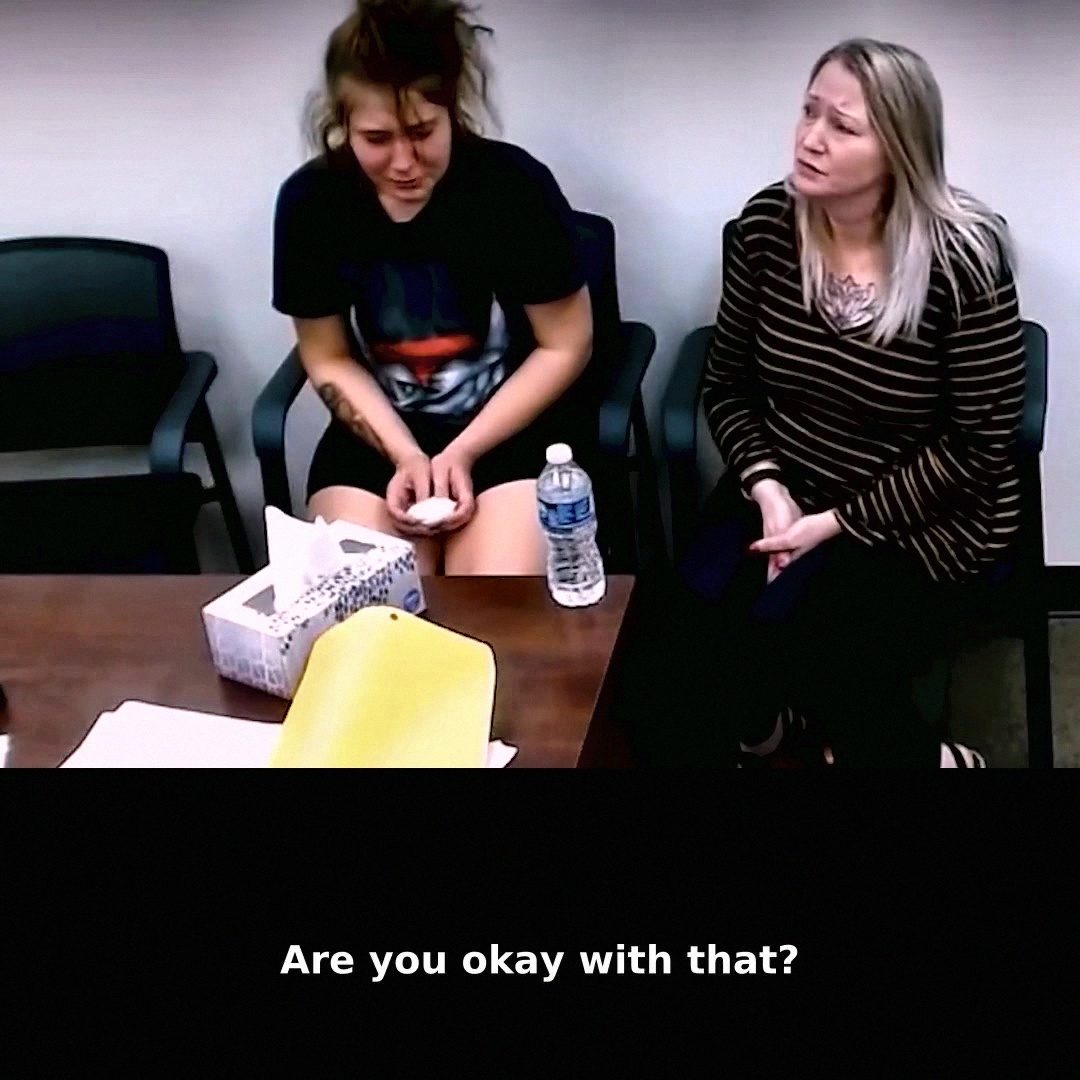
- Recorded Escalation: The footage captures a detective methodically detailing the victim's final hours to a mother, while her 17-year-old daughter, Bailey, weeps and admits to touching the victim's ankle, prompting her mother's shocked outburst.
- Investigative Intervention: Detectives secured a consent-to-search from the mother for the family residence, aiming to gather remaining forensic evidence after the daughter allegedly admitted to burning items in the backyard.
- Legal Repercussions: The suspect was charged with aggravated robbery and fatal incident, with bonds totaling $450,000, while two other juveniles were also arrested in connection with the case.
What the Recorded Footage Captures: Chronological Breakdown
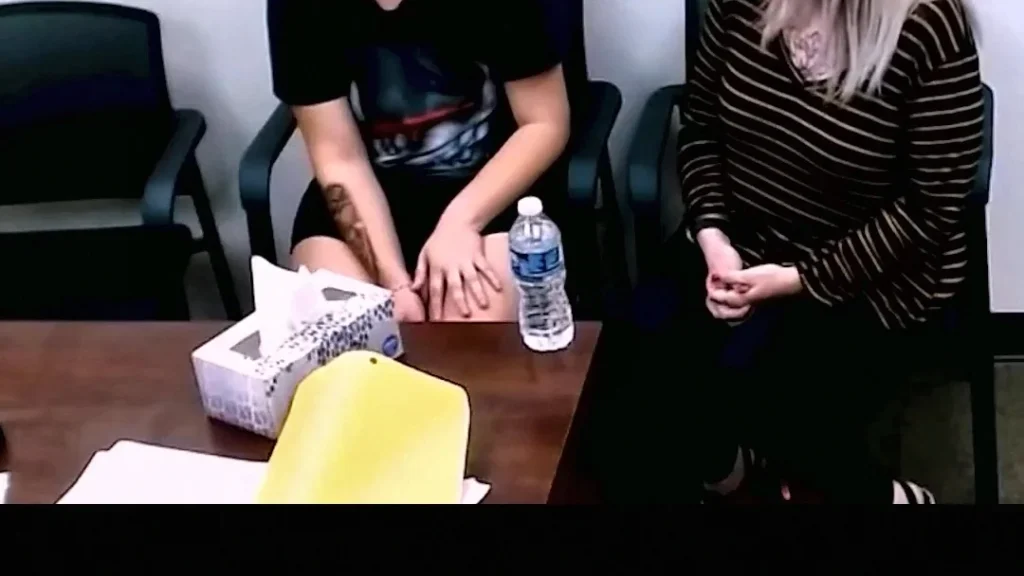
The video opens in a sterile, brightly lit interrogation room, with the camera positioned to capture the full width of a wooden table. A 17-year-old girl, identified in reports as Bailey, sits hunched and visibly distressed in a black t-shirt, her hands clutching a crumpled tissue. Beside her, her mother sits attentively, clad in a striped black-and-white top, her posture rigid as a detective's voice – off-camera – begins to narrate the events that led to a man's death.
The detective, employing a measured and deliberate tone, explains that Bailey had been communicating with a 50-year-old man on Facebook, leading to an in-person meeting at her residence for a paid sexual encounter. The narrative takes a dark turn as the detective states that another male was present, and a plan to rob the victim escalated to a fatal beating inside the home.
The camera focuses on the mother's face as the detective delivers the devastating news that the body was cleaned up, disposed of in a vehicle, and that all evidence was burned in the backyard. The mother's eyes widen, and her daughter's sobbing intensifies.
As the detective seeks consent to search the property for any remaining forensic traces, the camera captures a shift in the interrogation's intensity. The focus moves to Bailey's specific actions, with the detective pressing her on her physical contact with the victim. Bailey's admission – "I was out there, but I didn't touch it. She touched his ankle" – is met with an audible gasp and the mother's tearful exclamation, "Oh my God, baby.
Oh my God, this is freaking crazy." The footage ends with the detective reiterating the need to document the scene, leaving the viewer to grapple with the raw emotional fallout.
Corporate Liability and Critical Blind Spots
The recorded interview presents a critical evidentiary record, yet it is inherently limited by the frame of the camera and the scope of the detective's questioning. The footage does not capture the interrogations of the other two suspects, nor does it provide a comprehensive view of the crime scene itself. The reliance on the detective's narration introduces a layer of interpretation; his summary of events, while likely grounded in investigative findings, is presented as a narrative to the mother, not as a direct, unedited transcript of the crime.
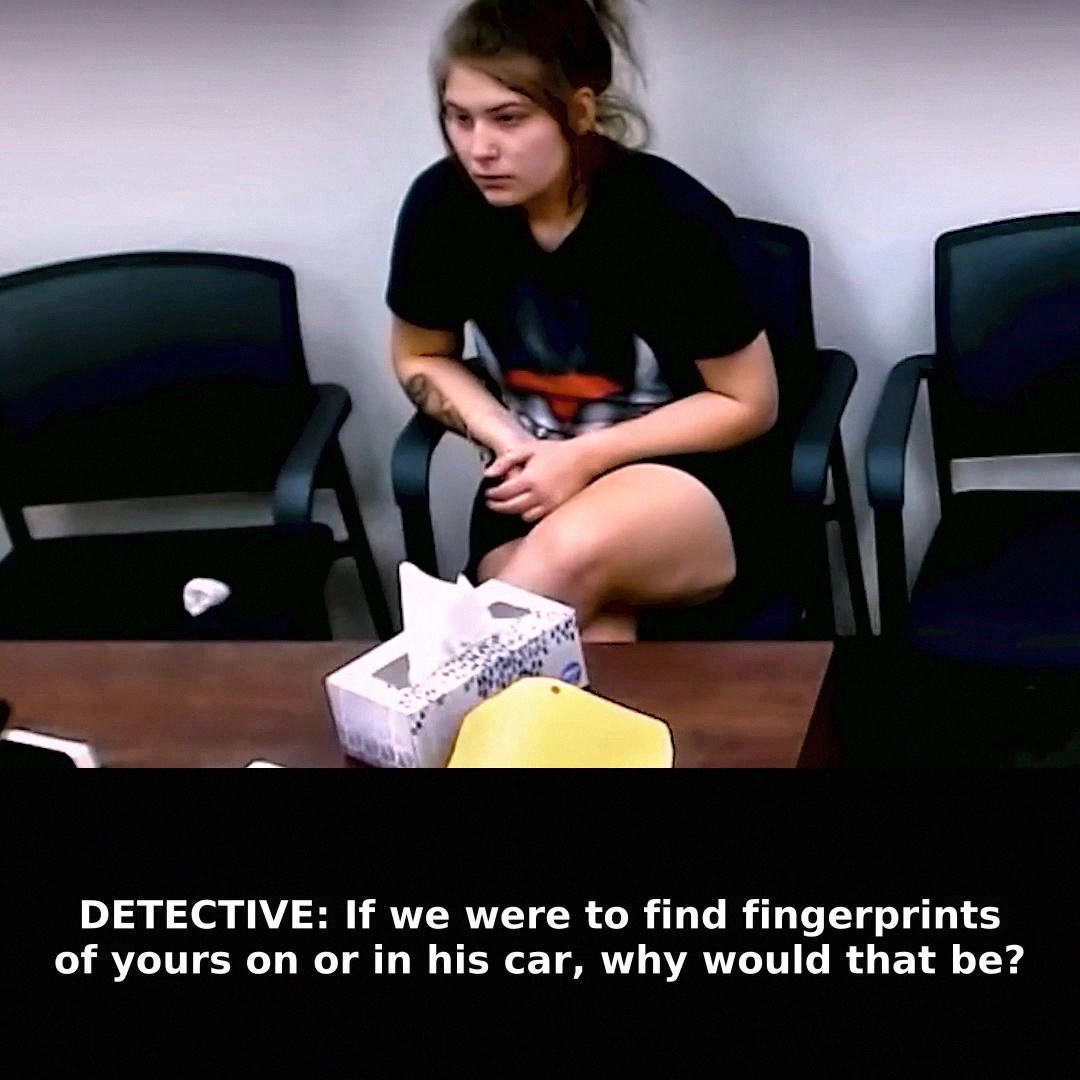
Furthermore, the video's assertion that evidence was burned in the backyard raises significant forensic blind spots. The absence of physical evidence due to destruction places a heavier burden on testimonial evidence, which can be subject to memory decay and coercion. The chain of custody for the vehicle and the body, while referenced, remains outside the camera's view, leaving questions about the initial handling of the scene unaddressed.
The viral assertion that the family collectively cleaned the scene is derived from the detective's statement, yet the video only shows the daughter and mother, not the full family unit alleged to be involved.
Statutory Framework and Protocol Analysis
Legal Distinction: The interrogation hinges on the distinction between a consensual interview and custodial interrogation. The daughter, as a minor, has specific rights regarding parental presence and consent. The detective's request to search the home relies on the mother's voluntary consent, which must be given freely and without duress. If the consent was obtained under the emotional distress evident in the footage, the admissibility of any subsequent evidence could be challenged.
| Incident Parameter | Governing Legal Standard & Judicial Protocol |
|---|---|
| Juvenile Interrogation | Must adhere to Texas Family Code safeguards, including parental notification and the opportunity for counsel. |
| Consent to Search | Requires voluntary, intelligent waiver of Fourth Amendment rights; courts scrutinize consent given under emotional strain. |
| Evidence Destruction | Spoliation of evidence can lead to adverse inference instructions in civil suits, but criminal charges focus on obstruction of justice. |
| Bond Amounts | Set based on flight risk and danger to the community; $450,000 for fatal incident and aggravated robbery reflects severity. |
| Mandatory Reporting | Law enforcement must document all custodial statements; failure to record can impact the reliability of the confession. |
| Parental Liability | In Texas, parents are not automatically criminally liable for a child's actions, but civil liability can attach if the parent's negligence contributed. |
Read more:
Read more: Woman Jailed for DUI Despite Zero Alcohol in Blood Test →
The legal standards underscore the complexity of prosecuting a case where the primary evidence is testimonial and the physical scene has been compromised. The detective's methodical approach suggests a careful adherence to protocol, yet the emotional weight of the mother's presence in the room adds a layer of procedural complexity. The statutory framework demands a delicate balance between obtaining crucial information and respecting the rights of a minor, all while the mother's consent to search may be scrutinized for its voluntariness under such extreme circumstances.
Core Questions and Institutional Review
- What is the extent of the other juveniles' involvement, and will their cases be tried in juvenile court or transferred to adult court given the severity of the charges?
- Did the Lubbock Police Department follow all best practices for juvenile interrogation, particularly regarding the presence of the mother and the potential for coercion?
- How will the destroyed evidence affect the prosecution's ability to secure a conviction for fatal incident, rather than a lesser charge?
- Are there systemic issues in the department's handling of consent searches when obtained from emotionally distressed parents in a custodial setting?
The case highlights the grim intersection of social media, juvenile delinquency, and violent crime. The interrogation room footage, while a powerful piece of evidence, also serves as a stark reminder of the human cost and the intricate legal machinery that follows a tragic event.
As the judicial process unfolds, the focus will remain on ensuring that the rights of the accused are balanced with the pursuit of justice for the victim, Robert Stewart, whose life was cut short in a brutal and calculated manner. The institutional review will likely examine the sufficiency of the investigation's protocols and the adequacy of the safeguards in place to protect vulnerable suspects during high-pressure interviews.
FOLLOW-UP INVESTIGATION REPORT
Related documented case details, verified on-scene evidence, and statutory liability analysis continued below.
CONTINUE READING: NEXT INVESTIGATIVE DOSSIER →
Miami-Dade Krome Gate Arrests: Trespass & Obstruction Review
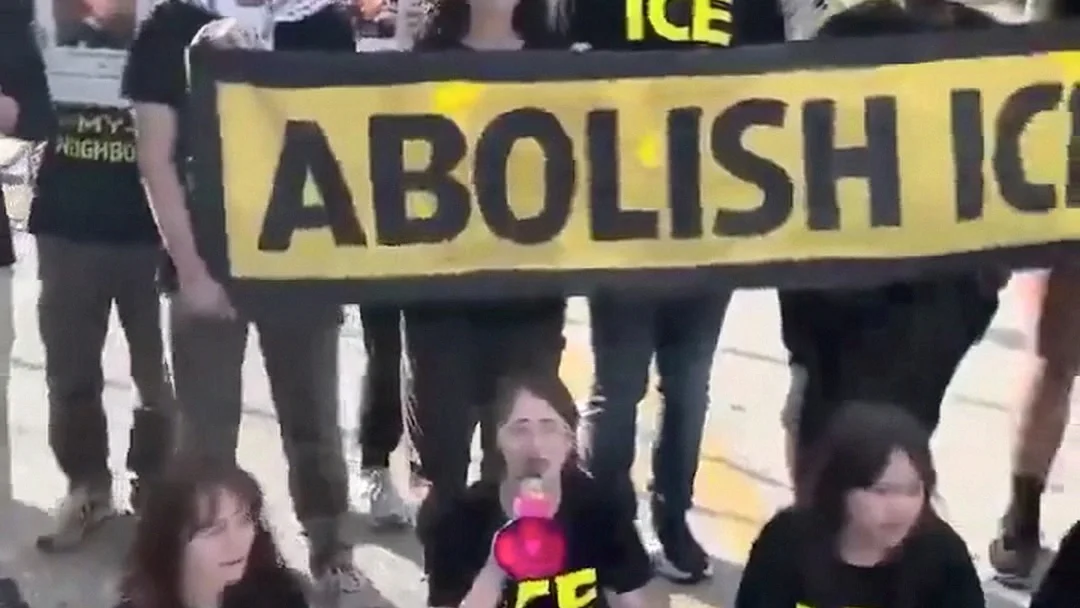
MIAMI – A recorded enforcement sweep outside a federal immigration detention facility in Miami-Dade County has produced a documented legal confrontation over where lawful assembly ends and criminal obstruction begins. Deputies in tan uniforms moved against seated demonstrators positioned along an access road, taking dozens into custody in a sequence captured on camera and later circulated by the organizing group. The episode raises measurable questions about charging standards, custodial supervision, and the boundary between protected expressive conduct and interference with federal operations.
- Jurisdictional setting: A federal detention facility operated by U.S. Immigration and Customs Enforcement in Miami-Dade County, Florida, with a state sheriff's office executing arrests on the perimeter roadway.
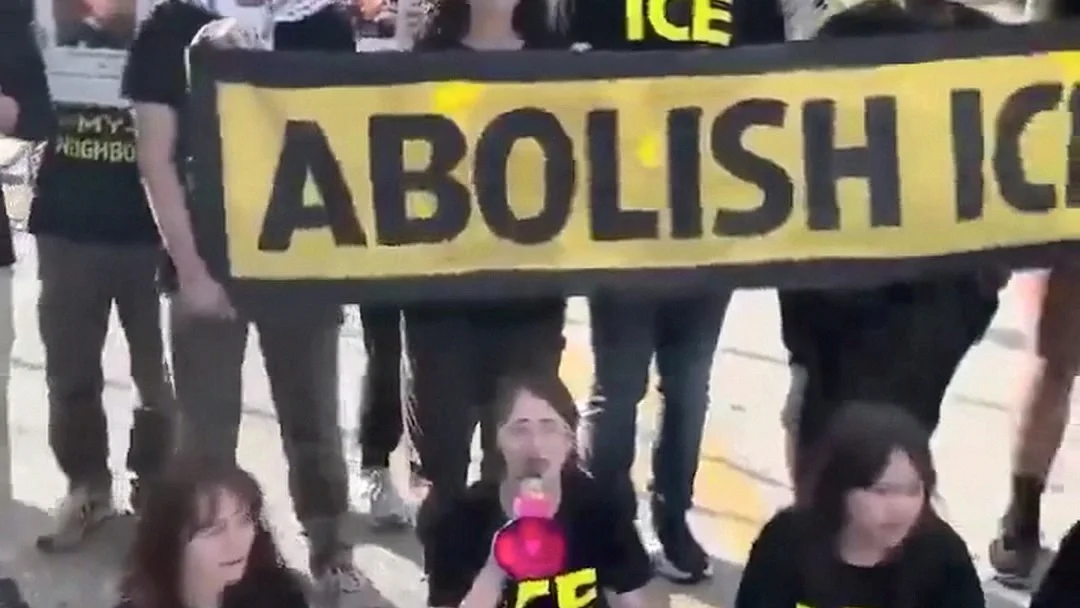
- Recorded escalation: Demonstrators seated on the pavement behind a large black and yellow banner were approached by uniformed deputies who began handcuffing participants one by one as the group chanted.
- Enforcement intervention: Deputies moved in without visible dispersal rounds captured on the footage, proceeding directly to custodial detention; a deputy's on-camera statement cited obstruction of justice as the basis.
- Legal fallout: Reports indicate the arrests were processed primarily on trespassing charges, with some participants released after posting a $500 bond and pending further court appearances.
What the Recorded Footage Captures: Chronological Breakdown
The sequence opens on a static, forward-facing composition beneath an overcast sky. A wide black banner bearing large yellow lettering stretches horizontally across the frame, held by several standing participants. In front of and beneath the banner, a smaller group sits cross-legged on the asphalt in a deliberately low, non-advancing posture. Individuals hold printed materials at chest height; one person seated near the center holds a microphone and appears to lead a call-and-response. The camera angle is elevated slightly and near the subject level, which establishes the spatial fact that the seated group occupies the paved access lane rather than an off-road shoulder.
The second phase shifts the visual register entirely. The camera turns to a sunlit roadway framed by chain-link fencing, utility poles, and a concrete barrier painted yellow along the left edge. Three deputies in tan short-sleeve uniforms and dark trousers are visible, one in the near foreground with his sidearm and utility belt clearly displayed, two others positioned farther down the road. Their stance is unhurried and spaced, consistent with a staged approach rather than a running response. The lighting shift alone indicates a time gap between the opening tableau and the enforcement movement.
The arrest phase is captured at close range. A demonstrator wearing a green cap and a black shirt bearing large yellow text is escorted toward the camera with hands secured behind the back, an older uniformed deputy at the shoulder. The subject's expression is fixed and forward-facing; there is no visible resistance, no dragging, and no ground struggle in the frame. A second close shot follows a different male detainee, similarly shirted, walking under escort with his head upright and speaking toward the camera. In the background a deputy's uniform displays partial lettering identifying the Miami-Dade Sheriff's office, anchoring agency attribution to the frame itself rather than to narration.
Audio captured across the sequence is largely demonstrator-generated: a repeated declaration of fearlessness, a declaration that no human being is illegal, and an exchange in which one detainee states he is being arrested for peaceful protest against the treatment of people in custody, while a deputy states the charge as obstruction of justice. That exchange is the pivotal recorded moment – it places two competing legal characterizations of identical conduct in the same audio frame, with no authoritative resolution on tape.
Corporate Liability and Critical Blind Spots
The evidentiary record here is incomplete in ways that matter for any subsequent adjudication. There is no footage of the initial warning, no recorded dispersal order, and no timestamp establishing how long the seated posture persisted before enforcement began. Because the clip originates from a third-party source identified in the on-screen credit, chain of custody for the raw file has not been independently established, and any edit points between the banner sequence and the roadway approach are unverifiable from the published version alone. Defense counsel would reasonably press on exactly this gap.
Second, the recorded geography is legally consequential but visually ambiguous. Whether the seated group occupied a public right-of-way, a controlled-access federal perimeter road, or a posted restricted zone determines whether the applicable offense is a civil infraction, a misdemeanor trespass, or a federal interference charge. The frames show a yellow concrete barrier and fencing but no legible signage establishing notice. Without documentation of posted warnings or a verbal advisement, the notice element of a trespass theory rests on contested ground.
Third, the audio contains an unverified assertion of conduct by field investigators that the footage does not depict and cannot corroborate. Those statements are relevant as evidence of motive and belief, but they are not evidence of the underlying claim. Any institutional review must separate recorded fact from advocated narrative, and any civil exposure analysis must rest on what the file shows rather than what participants assert.
Statutory Framework and Protocol Analysis
Legal Distinction: Peaceful assembly is constitutionally protected, but protection attaches to the expressive act, not to any chosen location. Florida trespass statutes and federal regulations governing protected facilities both permit enforcement where demonstrators ignore a lawful order to disperse from a restricted perimeter; the operative question is whether adequate notice was given and whether the force used was proportional to the observed resistance.
The compliance architecture in an operation of this scale runs through three checkpoints. First, supervisory authorization: mass custodial detention requires documented command approval, and the footage shows a coordinated, staged deployment rather than spontaneous individual action. Second, proportional response: the frames depict handcuffing of compliant, seated, or walking subjects, which generally satisfies a minimal-force standard and weakens any excessive-force claim. Third, custodial duty of care: once cuffed, arrestees become the agency's responsibility for transport, medical screening, and holding conditions, and that obligation is independent of whether the underlying arrest was lawful.
The charging decision recorded on camera diverges from the charging decision reported afterward. The deputy's verbal statement of obstruction is a law-enforcement characterization at the point of seizure; the reported trespass filings reflect prosecutorial discretion at intake. That divergence is not unusual, but it creates a documented inconsistency that defense counsel will use to argue the arrest lacked a clear statutory basis at the moment it occurred – a standard that varies by jurisdiction and is frequently litigated.
| Incident Parameter | Governing Legal Standard & Judicial Protocol |
|---|---|
| Seated protest blocking an access road | State trespass statute and facility access regulations; enforcement requires prior lawful order to disperse |
| Verbal charge stated during cuffing | Arresting officer must articulate probable cause at the scene; the stated offense need not match the eventual filing |
| Mass custodial detention of demonstrators | Supervisory authorization and documented command decision required for group arrests |
| Handcuffing of compliant subjects | Proportional force standard; minimal restraint satisfies duty-of-care baseline |
| Transport and holding after arrest | Independent custodial duty of care covering medical screening and confinement conditions |
| Release on monetary bond | Bond schedule set by county practice; appearance obligations attach pending arraignment |
| Third-party recorded footage | Chain-of-custody authentication required before evidentiary use; edit gaps are discoverable |
Read more: {NOIBO}
Core Questions and Institutional Review
- Did deputies issue a documented, audible dispersal order before initiating custody, and does any unedited file capture it?
- What is the precise legal status of the pavement where participants sat – public right-of-way, controlled federal perimeter, or posted restricted zone?
- Why did the on-scene stated charge of obstruction diverge from the reported trespass filings, and was that divergence disclosed to arrestees?
- What custodial protocols governed processing, medical screening, and bond release for a group of this size within a compressed timeframe?
The systemic consequence here extends beyond any single docket. A recorded mass arrest at a federal facility functions as a stress test of an agency's written protocols: dispersal notice, force proportionality, charging consistency, and custodial care either hold up under frame-by-frame scrutiny or they do not. The footage shows a professionally staged enforcement sequence with restrained physical handling, which supports the agency's account of a controlled operation. It equally shows an unresolved gap between what a deputy said on camera and what was ultimately filed, and that gap will define the litigation. For the arrestees, the immediate financial exposure is modest – bond, counsel, and lost workdays – but the precedential exposure is not. Every future perimeter demonstration in that county will now be measured against this file, and every future defense motion will cite the distance between the spoken charge and the written one.
Practical takeaways: Verify signage and dispersal advisement before relying on a trespass theory; treat on-scene verbal charges as non-binding characterizations; preserve unedited source footage with documented custody; and confirm custodial screening obligations attach at the moment of restraint, not at intake.


One comment on “Lubbock Teen Interrogation Reveals Fatal incident Cover-Up Details”