
Scroll down for the full investigative report below ↓
NEW YORK – A Metropolitan Transportation Authority bus mounted a concrete barrier on Queens Boulevard near Eliot Avenue in Rego Park on Friday morning, leaving the vehicle suspended over the wall and triggering a multi-agency recovery operation. The incident, captured on video by an independent journalist, raises substantive questions about operator training standards, transit authority liability exposure, and the adequacy of roadside infrastructure in one of the busiest corridors in the borough.
No formal charges have been announced, and the circumstances that caused the bus to leave its lane remain under investigation by police and fire officials.
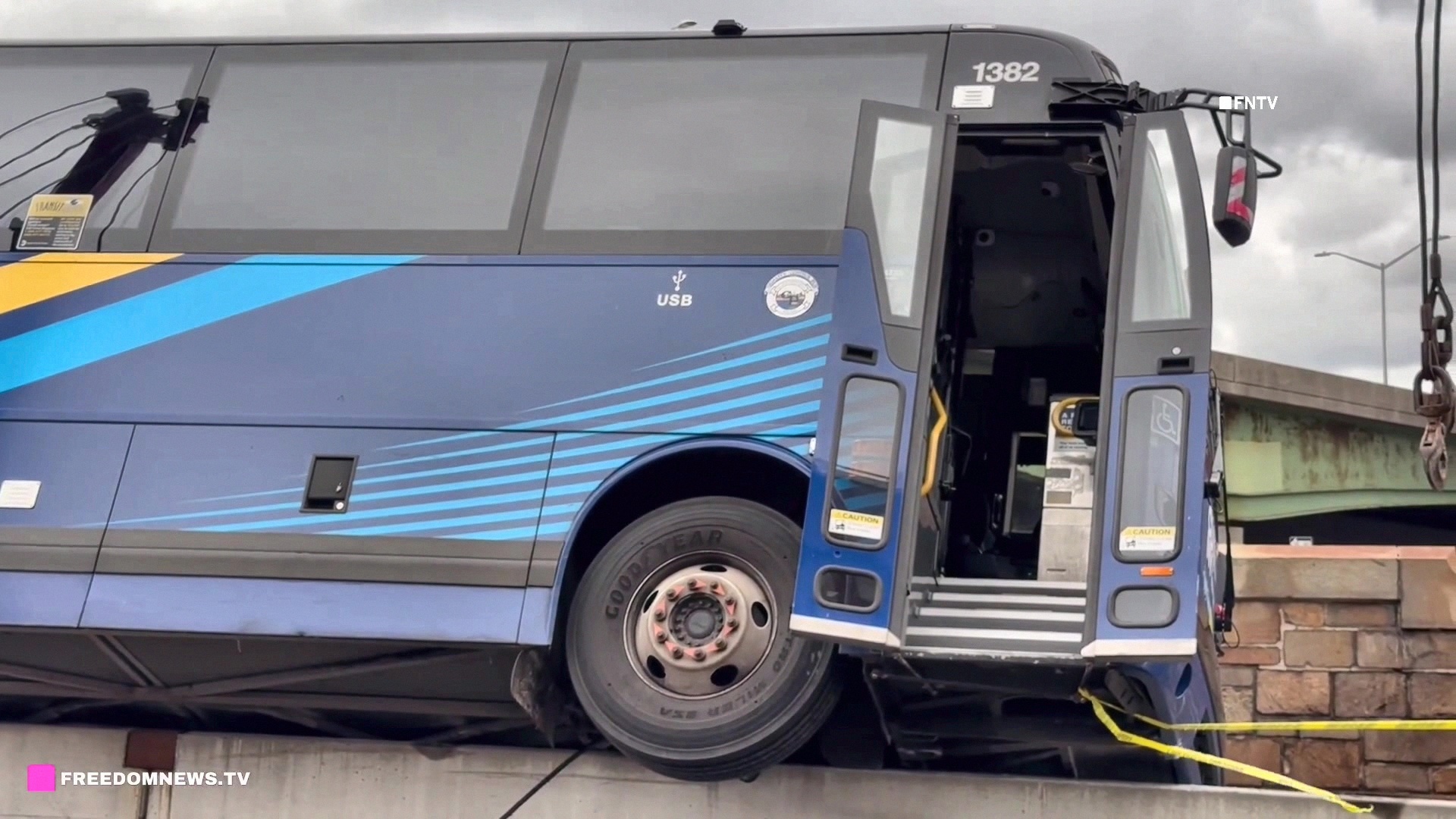
- The event unfolded on Queens Boulevard near Eliot Avenue in Rego Park, Queens, at approximately 7:54 to 8:00 a.m. on a Friday morning, in dense commuter traffic on a multi-lane arterial roadway adjacent to an elevated overpass.
- Recorded footage shows the bus positioned atop a concrete Jersey-style barrier, its body tilted and its front door forced open, with the undercarriage exposed and the vehicle resting at an unstable angle above the roadway surface.
- New York City Fire Department personnel responded, stabilized the vehicle, and summoned a heavy-duty wrecker and crane apparatus to lift and reposition the bus; at least one person was treated for minor injuries, with reports differing on whether transport to a hospital occurred.
- Officials have not publicly attributed cause, and no criminal or civil filings, citations, or bail determinations have been disclosed; the MTA faces potential notice-of-claim exposure under New York law, which generally requires filing within 90 days of an accident involving a public entity.
What the Recorded Footage Captures: Chronological Breakdown
The visual record opens on a close, low-angle view of the bus body itself: a blue and yellow MTA coach, fleet number 1382, angled upward with its front entry doors splayed open and the stairwell visible at an incline no passenger vehicle is designed to sustain. The camera position, roughly at wheel height, emphasizes the physical absurdity of the scene – a forty-foot transit vehicle resting its weight on a barrier segment barely wider than its tires.
Debris and yellow caution tape appear at the base of the frame, indicating that the site had already been secured before recording began.
The second phase of the footage pulls back to a wide perspective of the recovery perimeter. A red crane truck is positioned alongside the bus, its boom extended and rigging lines running to the vehicle's frame, while a uniformed worker in a high-visibility vest walks the closed lane. Traffic cones, a marked police cruiser, and a ladder staged against a signal pole frame the scene. The wide shot establishes the scale of the disruption: multiple lanes of Queens Boulevard effectively neutralized during the morning rush, with emergency personnel operating in an active roadway.
The third sequence moves in tight on the lifting apparatus, showing the red stabilizer legs of the wrecker planted on the asphalt and the bus undercarriage suspended above the barrier line. Here the footage documents the mechanical problem in forensic terms – the barrier has effectively become a fulcrum, and any uncontrolled shift in weight could pitch the vehicle into the travel lanes. Rigging hooks hang freely in the frame, awaiting connection.
The final segment records the human dimension: a worker in a dark hooded sweatshirt reaches up to guide a lifting strap against the rear dual tires, while a second crew member in a safety vest gestures instructions. An interview subject, an older man wearing a headset microphone, speaks to camera in the foreground, and his recorded remarks capture the novelty of the scene – he states he has seen buses in accidents before but never one "riding the barrier" in this manner.
That testimony is anecdotal rather than technical, and it should be weighted accordingly, but it usefully establishes that the outcome was anomalous even to seasoned observers.
Corporate Liability and Critical Blind Spots
The evidentiary record here is limited in ways that matter for any eventual claim. The footage begins after the bus has already come to rest; it does not capture the approach, the moment of impact, the operator's speed, or any evasive maneuver. Whether the vehicle struck the barrier at an angle, climbed it under sustained momentum, or was deflected by another vehicle is not visible in any frame. The recorded audio contains bystander commentary only, with no dispatch traffic, no operator statement, and no scene-command communication.
Chain of custody is also a live issue. The material circulating publicly was captured by a freelance journalist and distributed through social media channels, which means the original files, timestamps, and metadata would need separate authentication before use in any administrative or civil proceeding. Viral captions and reposts frequently assert causation that the underlying imagery does not support, and those assertions should be treated as unverified.
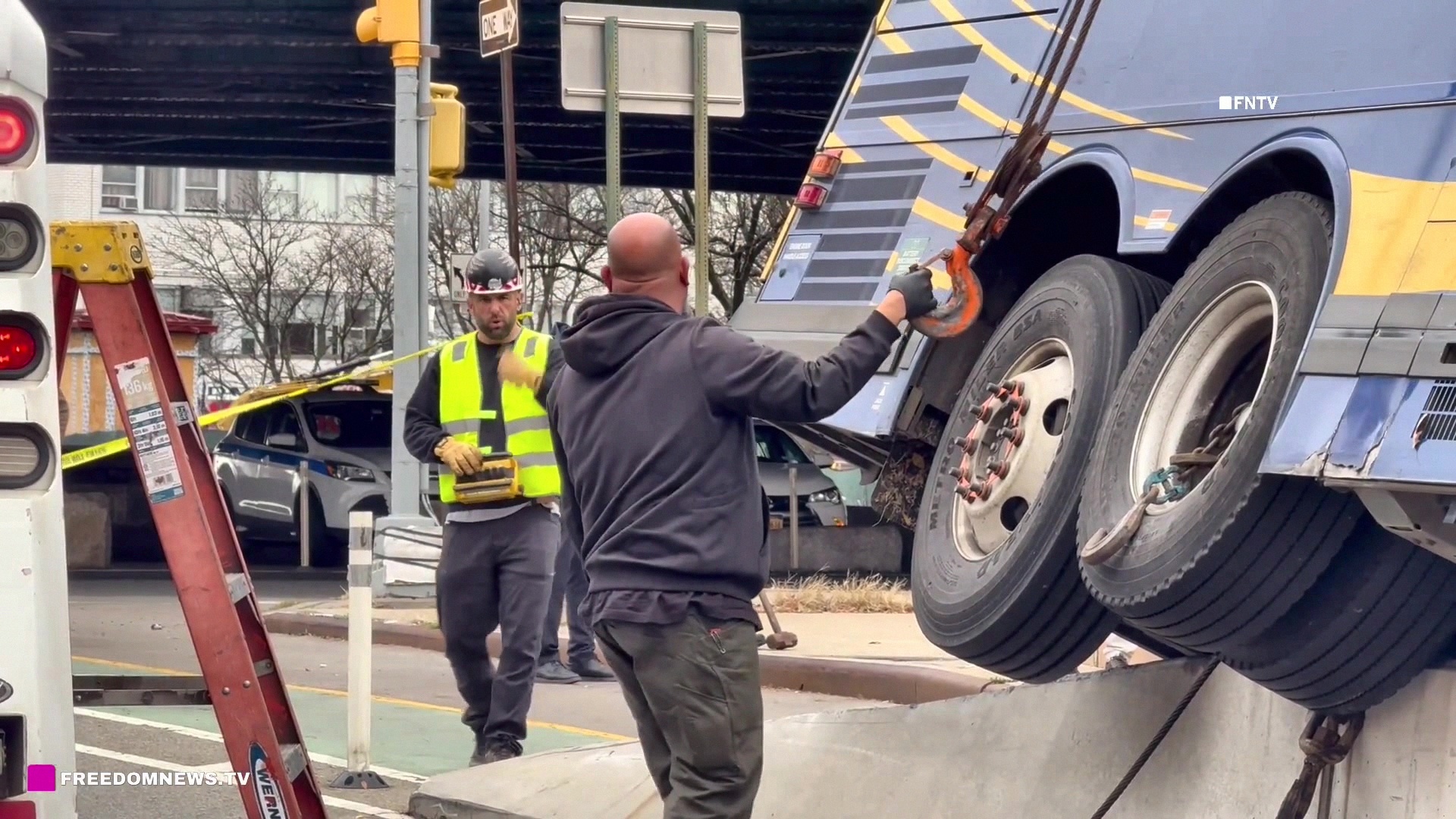
For the MTA, the exposure is institutional rather than individual. As a public authority, the agency is subject to notice-of-claim requirements that compress the window for preserving evidence, and the recovery operation itself – crane rigging, lane closures, barrier inspection – generates its own documentation trail. The condition of the barrier, the roadway geometry at that intersection, and the operator's duty status and training record will all bear on any assessment of negligence.
Statutory Framework and Protocol Analysis
Legal Distinction: A transit authority's liability in New York is generally governed by the notice-of-claim statute, which requires a claimant to serve written notice on the public entity within 90 days of the incident and to commence action within one year and 90 days. This differs materially from the three-year limitations period applicable to private defendants, and failure to file timely notice is frequently fatal to an otherwise valid claim.
Beyond tort exposure, the incident implicates a layered set of operating protocols: MTA operator training and recertification standards, vehicle inspection and maintenance schedules, and the fire department's heavy-rescue stabilization doctrine for vehicles resting in unstable positions. Each of these regimes creates its own record, and each is discoverable in the event of litigation.
| Incident Parameter | Governing Legal Standard & Judicial Protocol |
|---|---|
| Claim against public transit authority | Notice of Claim within 90 days; action within 1 year and 90 days |
| Operator conduct review | Agency internal discipline and training standards, not criminal unless charged |
| Vehicle stabilization on scene | FDNY heavy rescue protocol for unstable and suspended loads |
| Evidence preservation | Litigation hold obligations once claim is reasonably anticipated |
| Roadway infrastructure condition | Municipal inspection and maintenance duty for barrier and signage |
| Injury reporting | EMS triage documentation and hospital transfer records |
| Public records access | Freedom of Information Law request for incident and dispatch records |
Read more:
Read more: Wauwatosa Mall Arrest: Bodycam Shows Theft Arrest Struggle →
The compliance question is not whether the bus should have been on the barrier – plainly it should not have been – but whether the systems designed to prevent that outcome functioned as intended. Operator training, route familiarity, and intersection design all sit upstream of the impact. Downstream, the recovery operation appears to have followed established stabilization sequencing, with rigging applied before any lifting and the work zone secured against live traffic. That sequence, documented on camera, is likely to be the agency's strongest procedural defense.
Core Questions and Institutional Review
- What was the operator's speed and trajectory in the seconds before the bus mounted the barrier, and is that data recoverable from onboard telematics or nearby traffic cameras?
- Did the concrete barrier meet current design and visibility standards for that corridor, and had it been inspected within the required interval?
- What training and duty-status records exist for the operator, and were fatigue or medical factors reviewed before the vehicle was returned to service?
- Will the MTA publish a formal incident finding, and does the absence of announced charges reflect investigative caution or an early determination of no criminal conduct?
The systemic impact of this incident extends beyond a single damaged coach. Queens Boulevard has been the subject of sustained municipal redesign efforts, and any finding that a barrier contributed to the severity of the outcome could accelerate infrastructure review across the corridor. For the riding public, the more immediate question is disclosure: whether the agency will release the telematics and inspection records that would allow an independent assessment of what failed.
Until those records surface, the footage remains a striking image of a vehicle in the wrong place, and the legal record remains an open file.
Practical Takeaways
- Public-entity claims in New York run on a compressed clock; the 90-day notice window is the controlling deadline.
- Video captured after an incident establishes outcome, not causation; telematics and dispatch records carry the evidentiary weight.
- Recovery operations generate parallel documentation that can corroborate or contradict later accounts.
- Absence of announced charges is not a finding of no liability; civil exposure and criminal exposure follow separate tracks.
FOLLOW-UP INVESTIGATION REPORT
Related documented case details, verified on-scene evidence, and statutory liability analysis continued below.
CONTINUE READING: NEXT INVESTIGATIVE DOSSIER →
Palm Beach Gardens Stop: Driver Refuses Exit, Cites Lawyer Dad
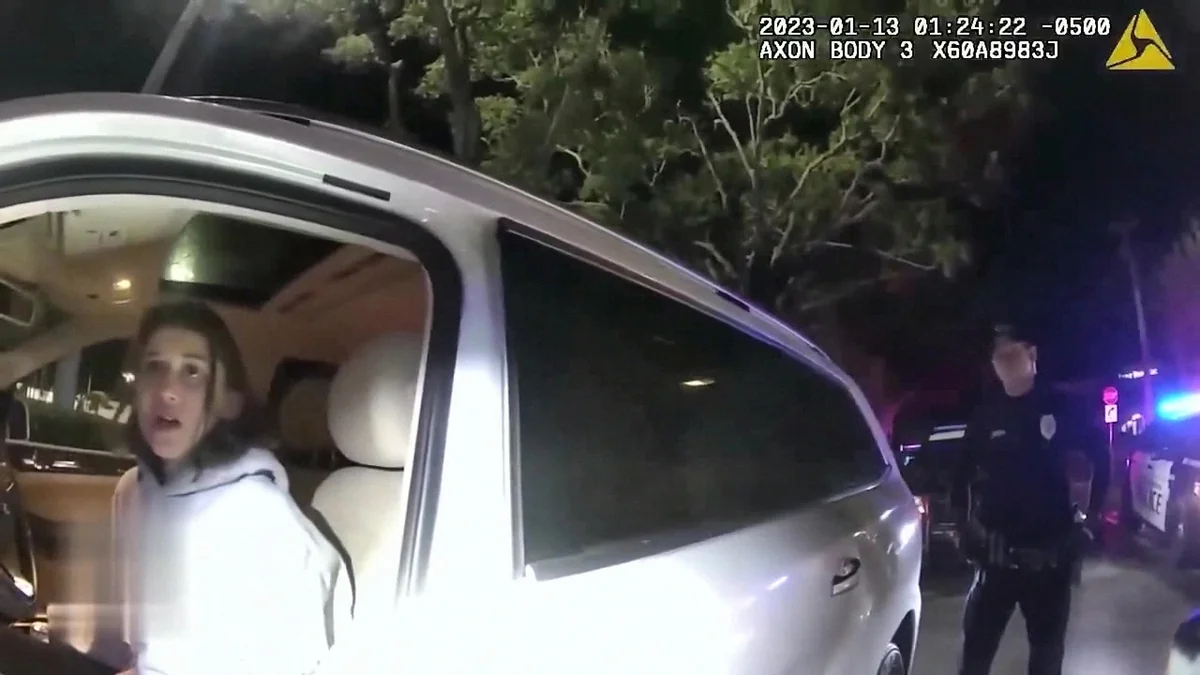
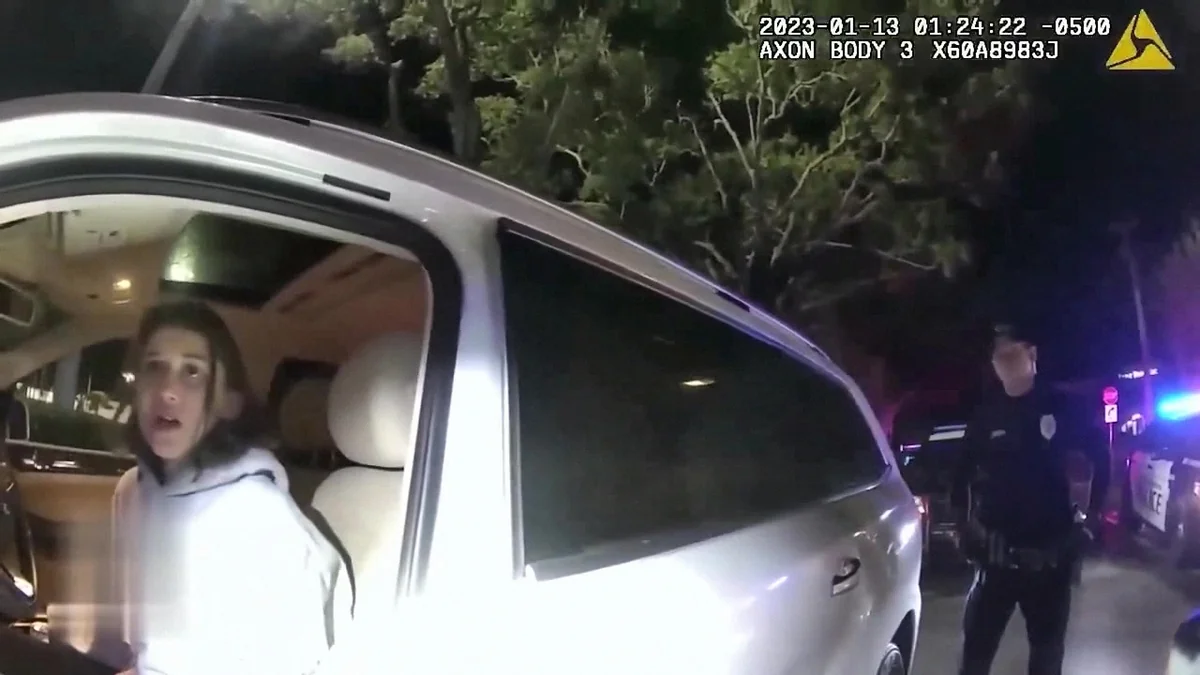
PALM BEACH GARDENS, Fla. – A routine late-night traffic stop escalated into a test of lawful authority when a driver declined to exit her vehicle, invoking her father's status as an attorney as justification. The recorded encounter, captured on Axon body-worn camera, raises substantive questions about the limits of legal advice, the duty to comply with lawful police commands, and the liability exposure that follows when verbal defiance hardens into physical resistance.
- Jurisdictional setting: A Palm Beach Gardens, Florida, roadway just after 1:00 a.m., with the stop conducted by a patrol officer and documented on Axon Body 3 hardware bearing a January 13, 2023 timestamp.
- Recorded escalation: The driver, identified in news accounts as 27-year-old Anna Gilbert, repeatedly states she is "not allowed to" exit the vehicle, attributing that instruction to her father, a lawyer.
- Law enforcement intervention: The officer explains the legal obligation to comply, offers a final warning, and then initiates a physical escort from the vehicle when the refusal persists.
- Legal and regulatory repercussions: Public records indicate arrest and charges of driving under the influence and resisting an officer without violence, with subsequent court proceedings and sentencing addressed in related coverage.
What the Recorded Footage Captures: Chronological Breakdown
From the opening frames, the camera angle is a chest-level officer perspective, angled toward the open driver's-side door of a white SUV. The interior dome light illuminates the driver, a young woman in a light-colored hoodie, while the officer stands on the asphalt shoulder. The initial exchange is calm but immediately adversarial in structure: the officer asks her to step out, and she answers that she is "not allowed to." The phrase is delivered not as a refusal of capability but as a claim of external legal prohibition, which the officer tests directly by asking who imposed that restriction.
The answer – "my dad's a lawyer" – becomes the pivot of the entire encounter. The officer does not dismiss it; he engages it on its own terms, noting that any competent attorney would advise compliance when a police officer orders a driver out of a vehicle. The driver counters that her father "told me otherwise," and the exchange briefly drifts into personal commentary about her father's character. Throughout this segment, the camera remains steady, capturing the officer's positioning at the door frame and the driver's fixed posture inside the vehicle. There is no physical contact, but the verbal loop is tightening: each repetition of "I'm not allowed to" is met with a restated lawful command.
The footage then shifts from persuasion to ultimatum. The officer issues a final chance, and when the driver repeats the same refusal, he moves to physical control. The camera jolts as the officer reaches in, and the audio captures overlapping instructions to keep her head still. The frames showing the officer's arm extended with a red-lit device in hand – likely a flashlight or control aid – document the moment the encounter crossed from verbal noncompliance into custodial handling. The driver's composure visibly changes as the escort begins, and the clip cuts shortly after the physical intervention.
What the recording does not show is equally important. The stop's origin – the alleged speeding and failure to stop – occurred before the camera's active view. The officer's probable-cause observations, any field sobriety indicators, and the initial approach are all outside the frame. The viewer therefore sees the refusal but not the predicate that justified the stop, a gap that shapes how the encounter is interpreted online.
Corporate Liability and Critical Blind Spots
The evidentiary record here is partial by design. Body-worn cameras activate at officer discretion or policy trigger, and the pre-activation period is unrecorded. Any statements made during the traffic stop's first moments, any odor or speech observations supporting the DUI suspicion, and any exchange about the driver's father before the camera rolled are absent. For a legal reviewer, this means the recording establishes the refusal and the escalation but not the foundation for the underlying stop.
Chain-of-custody questions also attach to the clip's circulation. The footage bears hardware and timestamp overlays, which support authentication, but the version circulating online has been trimmed and repackaged. Viral captions often assert what the driver was charged with or how the case resolved without linking to docket records. Those assertions require independent verification against court filings rather than reliance on edited video.
There is also a perspective blind spot inherent to a single body camera. The officer's chest-mounted lens favors his position; the driver's facial expressions and any gestures below the window line are partially obscured. A second angle or dashcam view would clarify whether the driver's hands remained visible and whether any movement was read as resistance. Absent that, the physical-handling sequence must be assessed from one vantage point only.
Statutory Framework and Protocol Analysis
Legal Distinction: A driver's obligation to exit a vehicle upon a lawful order is a compliance duty, not a discretionary courtesy; asserting a third party's legal opinion does not suspend that duty, and continued refusal can support a resisting charge distinct from the underlying traffic or DUI offense.
The governing framework in Florida separates three questions. First, whether the stop was lawful, which turns on reasonable suspicion of a traffic violation. Second, whether the order to exit was lawful, which in a nighttime stop tied to suspected impairment is ordinarily satisfied. Third, whether the driver's conduct crossed from passive refusal into resistance. The officer's script – explaining the rule, offering a final chance, then acting – is consistent with de-escalation-first protocol and creates a clean record of warning before force.
| Incident Parameter | Governing Legal Standard & Judicial Protocol |
|---|---|
| Vehicle stop initiation | Reasonable suspicion of a traffic violation required under Fourth Amendment standards |
| Order to exit vehicle | Lawful police command in a traffic stop; compliance is mandatory, not optional |
| Claimed attorney instruction | Third-party legal advice does not override an on-scene lawful order |
| Verbal refusal | May support resisting an officer without violence where warnings are given |
| Physical escort procedure | Proportional force limited to effecting the lawful order |
| Camera documentation | Body-worn activation policy governs evidentiary completeness |
| Charging decision | Prosecutorial review of DUI and resisting counts based on the recorded record |
Read more: {NOIBO}
Core Questions and Institutional Review
- Did the agency's body-camera activation policy capture the full probable-cause sequence, or did late activation create an evidentiary gap?
- Was the officer's final-warning script consistent with written de-escalation policy before physical control was applied?
- Does the resisting charge rest on documented warnings and repeated refusal, or on a single ambiguous movement?
- How should courts weigh a driver's reliance on claimed legal advice when that advice contradicts settled compliance obligations?
The systemic impact extends beyond one roadside. Cases like this become training material for agencies refining their verbal-warning protocols and for courts assessing whether recorded defiance was adequately warned before force. They also expose a recurring public misconception: that a family member's legal credential confers an exemption from on-scene commands. The record shows the officer treating the claim seriously, rebutting it on the law, and documenting each step. Whether the resulting charges and sentence reflect that measured process is the question the docket, not the clip, must answer.
Practical Takeaways
- A lawful order to exit a vehicle is not suspended by a relative's legal opinion.
- Repeated refusal after explicit warnings materially increases exposure to a resisting charge.
- Body-camera footage establishes escalation but rarely captures the stop's full predicate.
- Viral framing should be checked against court filings before conclusions are drawn.


One comment on “MTA Bus Hangs Over Queens Barrier: Liability Review”