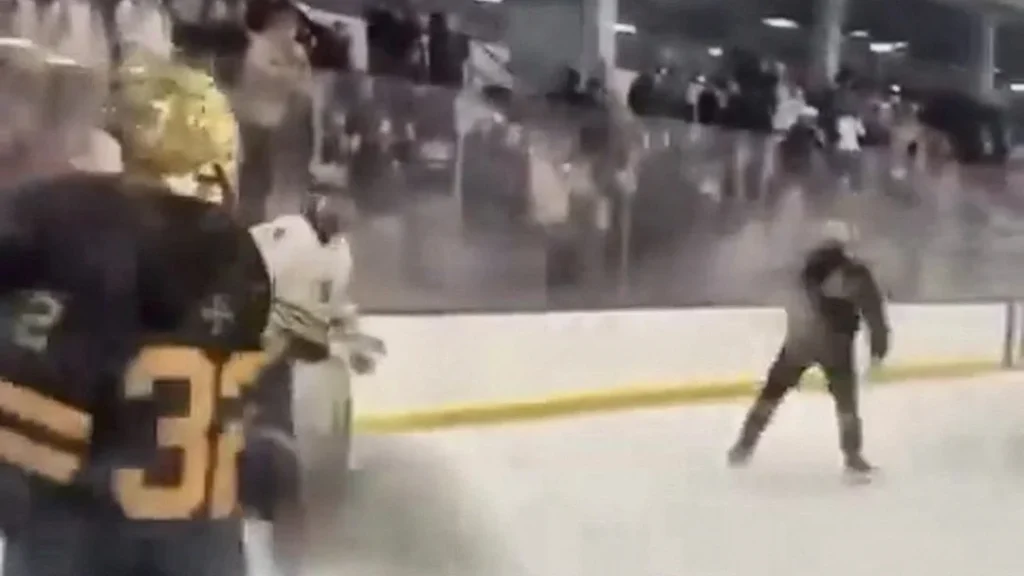
WATCH: On-scene video documentation is embedded below →
CHICAGO – A varsity ice hockey match between St. Ignatius College Prep and Glenbrook South High School collapsed into a mass altercation Friday night, prompting tournament organizers to expel both programs and forcing the schools to forfeit the remainder of their seasons. The incident, captured on spectator video and circulated widely online, raises pointed questions about institutional supervision, league liability, and the adequacy of disciplinary protocols governing interscholastic athletics in Illinois.
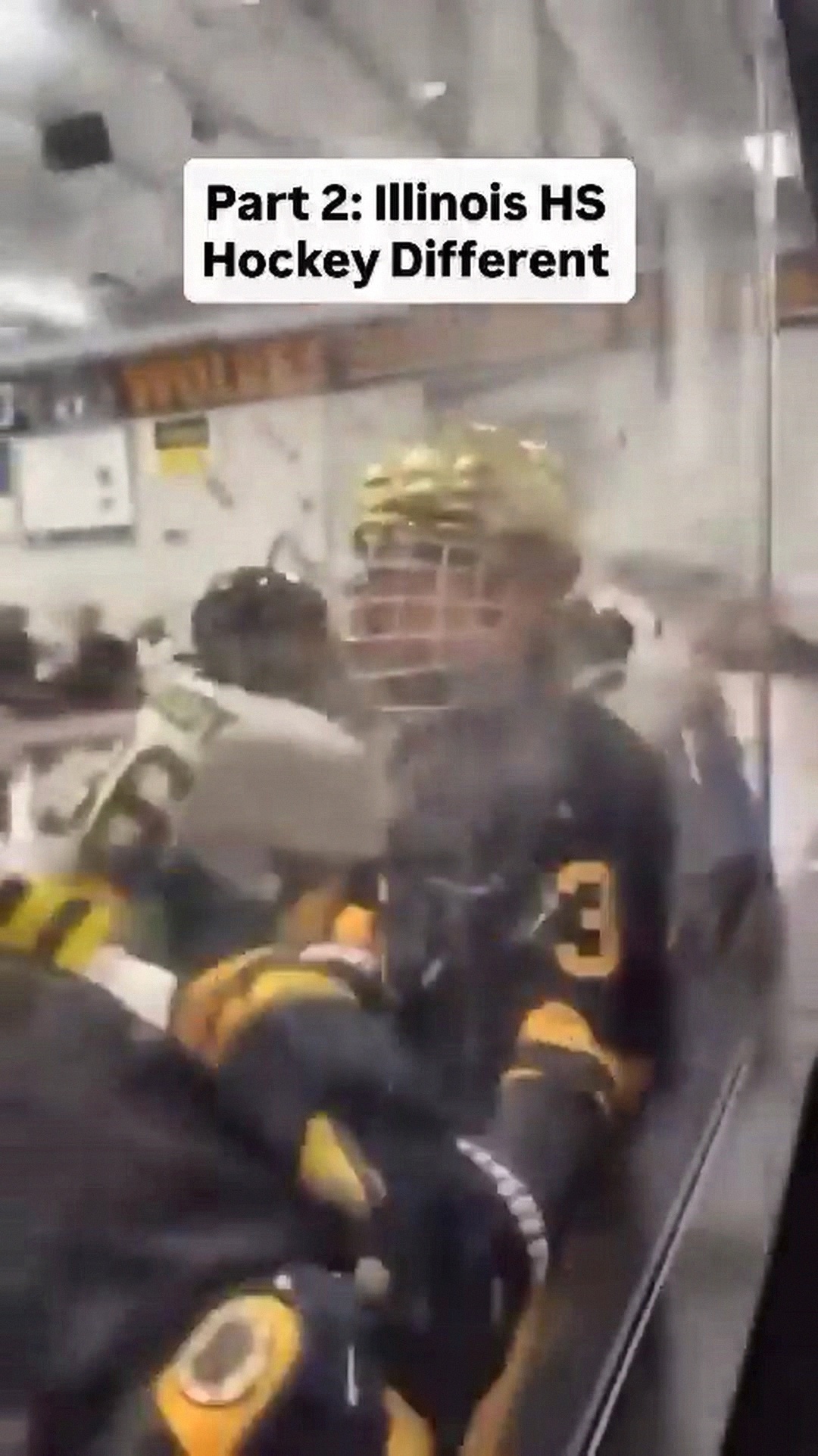
- The confrontation unfolded during the O'Grady Thanksgiving Hockey Tournament, hosted by Loyola Academy Hockey Club in Chicago's northern suburbs, during a varsity matchup between Glenbrook South and St. Ignatius.
- Spectator-recorded footage shows the game dissolving into an all-out brawl on the ice, with players from both benches engaging as officials and spectators look on; a voice on the audio repeatedly exclaims, "Oh my God."
- Tournament organizers directed both teams to leave the event, and each program subsequently announced it would forfeit the balance of its season rather than continue play.
- No criminal charges, civil filings, or named individual sanctions had been publicly confirmed as of the available record, leaving the disciplinary and legal consequences largely within the schools' and league's internal jurisdiction.
What the Recorded Footage Captures: Chronological Breakdown
The video opens from an elevated spectator angle behind the glass, framing a wide swath of the rink. At the near boards, a player in a dark jersey bearing the number 32 stands with his back to the camera, stick lowered, while a second figure in a light-colored jersey moves across the neutral zone. The scoreboard overlay identifies the sequence as "Part 2: Illinois HS Hockey Different," signaling that the clip is a fragment of a longer incident rather than a complete evidentiary record.
The camera pans and the framing tightens toward the boards, where a cluster of players in dark and light sweaters converges. A player wearing number 3 in a gold helmet is pressed against the glass, bodies overlapping as sticks and gloves tangle near the boards. The angle obscures precisely who initiates contact at this juncture, but the compression of bodies against the perimeter is consistent with the collapse of normal line-change and puck-possession order.
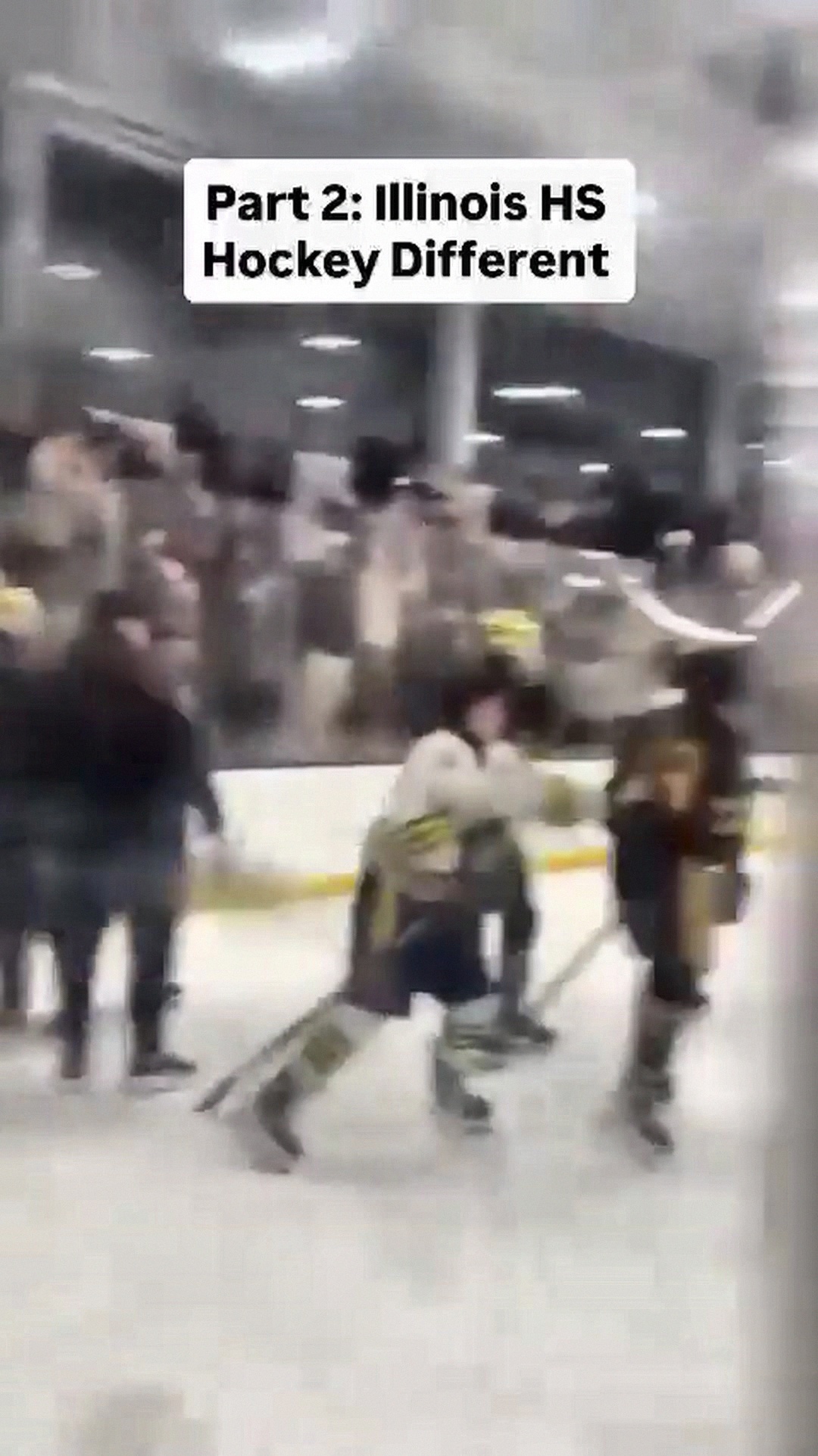
Mid-clip, the camera cuts or pans to a wider view showing multiple players converging near center ice. A goaltender in white pads appears near the crease area, and a player in a dark jersey with yellow trim skates toward the developing scrum. The wide shot captures the spread of the altercation beyond a single pairing, indicating that the confrontation had become collective rather than isolated.
The final frames show a sustained scrum along the boards, with players in dark jerseys and a light-jerseyed opponent locked together while spectators in the stands rise and gesture. A player in a white and green jersey swings his stick in a motion that appears uncontrolled amid the surrounding bodies. The footage ends before any resolution, official intervention, or separation of participants is visible, leaving the aftermath outside the camera's field of view.
Corporate Liability and Critical Blind Spots
The evidentiary value of the clip is limited by its origin as a fan-recorded social media segment. The label "Part 2" establishes that preceding events are absent from the record, meaning any analysis of provocation, escalation, or the initiating conduct rests on an incomplete sequence. Chain of custody for the original file, the identity of the recorder, and whether the footage was edited or re-sequenced are all unverified.
Perspective blind spots compound the problem. The camera tracks the puck-adjacent action while bench areas, penalty boxes, and the far boards remain outside the frame. Acts of contact that occurred in those zones cannot be confirmed or excluded from this record. Audio is dominated by ambient crowd noise and a single repeated exclamation, offering no reliable account of what officials or coaches communicated.
Viral assertions that accompanied the clip online, including characterizations of the violence and claims about specific participants, remain unverified by any documented incident account. No publicly released league or school document has confirmed the identities of those involved, the precise sequence of contact, or whether any injury resulted. Any liability analysis must therefore be framed conservatively, anchored to what the footage shows and explicitly bounded by what it does not.
Statutory Framework and Protocol Analysis
Legal Distinction: Interscholastic athletic misconduct in Illinois is governed primarily by school district policy and state association bylaws rather than criminal statute. Fighting in high school hockey is prohibited outright by league rule, and disciplinary authority typically rests with the schools and the governing athletic association, with criminal referral reserved for conduct meeting assault or battery thresholds under Illinois law. For minors, juvenile proceedings and school-based sanctions operate on separate tracks.
| Incident Parameter | Governing Legal Standard & Judicial Protocol |
|---|---|
| On-ice fighting | League rules prohibit fighting; automatic game misconduct and suspension |
| Team-wide participation | School district codes of conduct and athletic association bylaws |
| Season forfeiture | Institutional disciplinary authority; conference and tournament regulations |
| Spectator recording | No expectation of privacy in public athletic venues; consent norms vary |
| Minor participants | Juvenile confidentiality protections limit public disclosure |
| Injury claims | Civil negligence standards; governmental immunity considerations for public schools |
| Tournament expulsion | Host organization's event rules and contractual participation terms |
The compliance architecture here is layered: the host tournament, the conference, the state association, and each school's own athletic code all claim authority over the same conduct. That overlap can produce decisive outcomes, as it did when both programs forfeited their seasons, but it can also produce ambiguity about which body sets the controlling sanction and whether any appeal right exists.
Recorded Scene Documentation

Institutional duty of care required each school to supervise its athletes and each host to provide adequate security and officiating presence. Whether staffing levels at the tournament were sufficient for a varsity contest with a large student section is a question the footage cannot answer but that any post-incident review should address. Procedural fairness for the disciplined players also matters, since collective punishment of an entire roster raises due-process questions that individual sanctions would not.
Read more: Alamosa investigators Arrest: Warrantless Detention and Window Smash →
Core Questions and Institutional Review
- Did supervision and officiating staffing at the tournament meet the host organization's own safety standards for a varsity contest?
- On what evidentiary basis did each school determine that a full-season forfeiture was the proportionate institutional response rather than targeted individual sanctions?
- What due-process mechanism, if any, was afforded to players who may not have participated in the altercation?
- Will the conference or state association issue a written precedent governing future mass-participation incidents, or will discipline remain ad hoc?
For the two programs, the practical cost extends beyond lost games: recruiting exposure, postseason eligibility, and the reputational standing of both athletic departments now hinge on how transparently they document their internal reviews. For the broader Illinois interscholastic system, the case functions as an unplanned stress test of disciplinary protocols that were designed for isolated misconduct, not for a bench-clearing collapse witnessed by a full grandstand.
The absence of criminal filings does not close the matter; it simply relocates accountability to the institutional layer, where the standard of care and the record of response will be judged long after the final horn.


One comment on “St. Ignatius, Glenbrook South Hockey Brawl Ends Seasons”