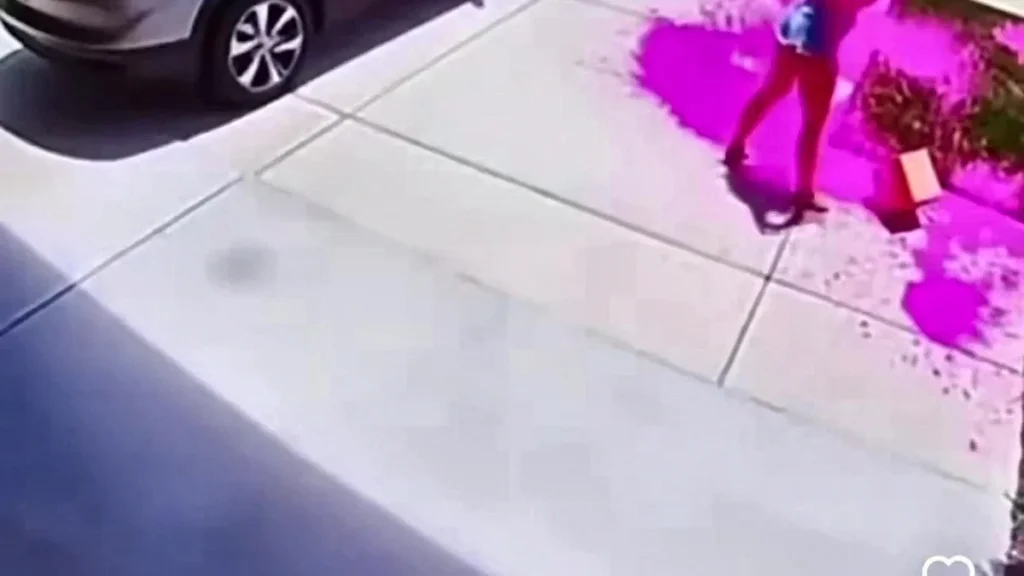
WATCH: On-scene video documentation is embedded below →
A homeowner's improvised dye trap has ignited a volatile confrontation with a suspected package thief, raising complex questions about the legal limits of self-help property defense and the evidentiary value of viral surveillance footage.
- The incident unfolds on a residential front porch, captured by a doorbell camera, where a package is deliberately rigged with a dye-dispensing mechanism.
- A suspect is observed taking the package, triggering the device and covering himself in bright pink dye from head to toe, as evidenced by the footage.
- The homeowner immediately confronts the suspect, verbally directing him to turn around and place his hands behind his back, while the suspect protests that the dye is in his eye.
- Local law enforcement officers arrive on the scene, initiating a dialogue with the suspect about the theft and the homeowner's right to protect property, as heard in the recorded audio.
What the Recorded Footage Captures: Chronological Breakdown
The video begins with a static, wide-angle view of a suburban front porch, functioning as a staging area for the trap. The camera, likely a doorbell unit, provides a clear perspective of the approach path and the positioning of the package. The ambush is premeditated, with the recording device serving as the primary evidentiary instrument for the subsequent events.
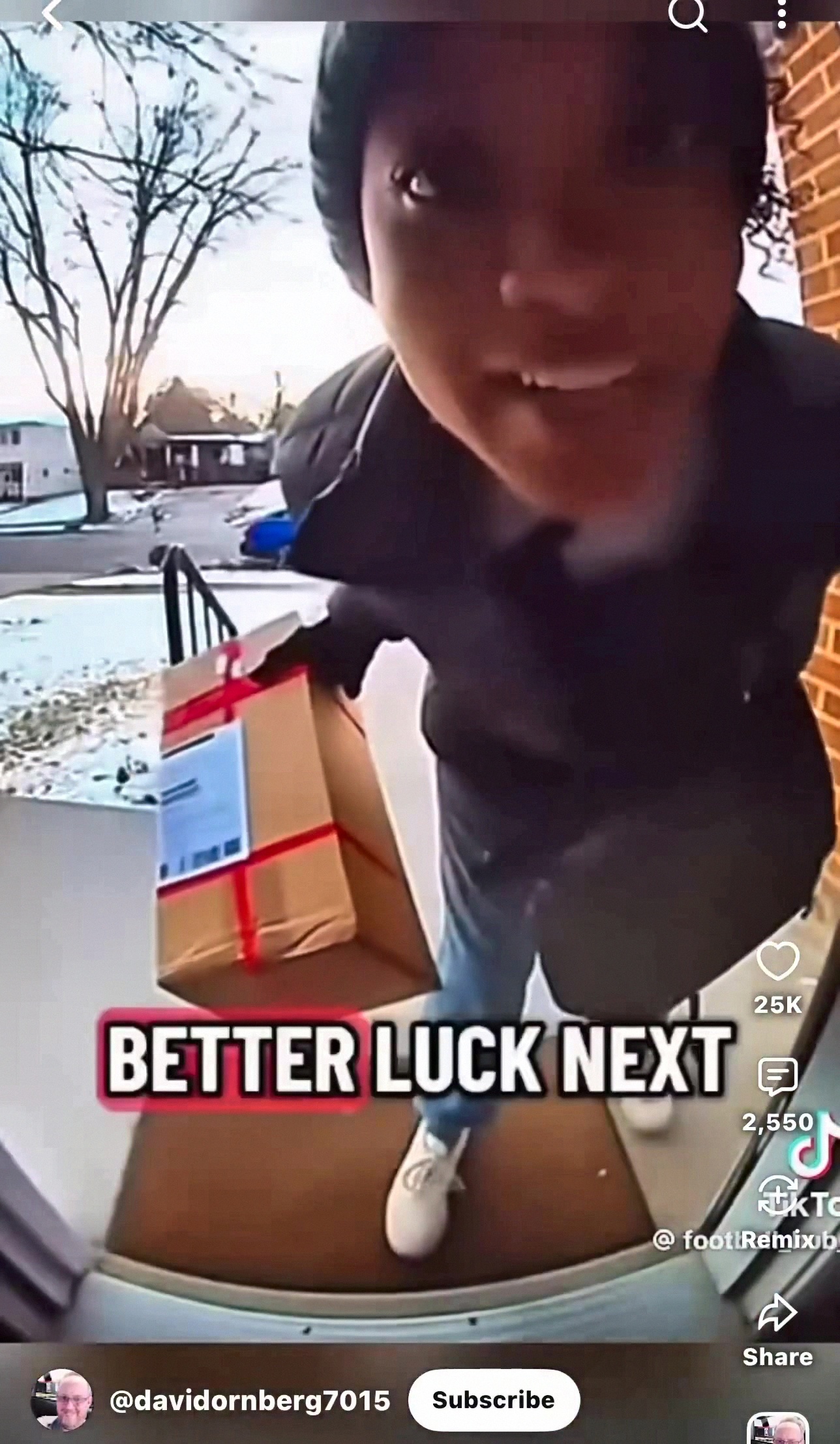
As the suspect approaches, the footage cuts to a close-up angle, showing the suspect's face and upper body as he lifts the rigged box. The trap detonates, and the footage reveals a dramatic visual overhaul: the suspect is instantly coated in a vivid pink substance. The audio captures his immediate distress, with complaints about the dye dripping everywhere and entering his eye, establishing the physical consequences of the trap.
The scene shifts to an exterior driveway view, where the suspect is seen standing near a silver SUV, his clothing and skin stained with the pink dye. The homeowner's voice is heard issuing commands, demanding the suspect turn around and apologize. The dialogue reveals a tense negotiation of authority, with the suspect attempting to justify his actions by claiming the package was his, a claim that lacks immediate proof.
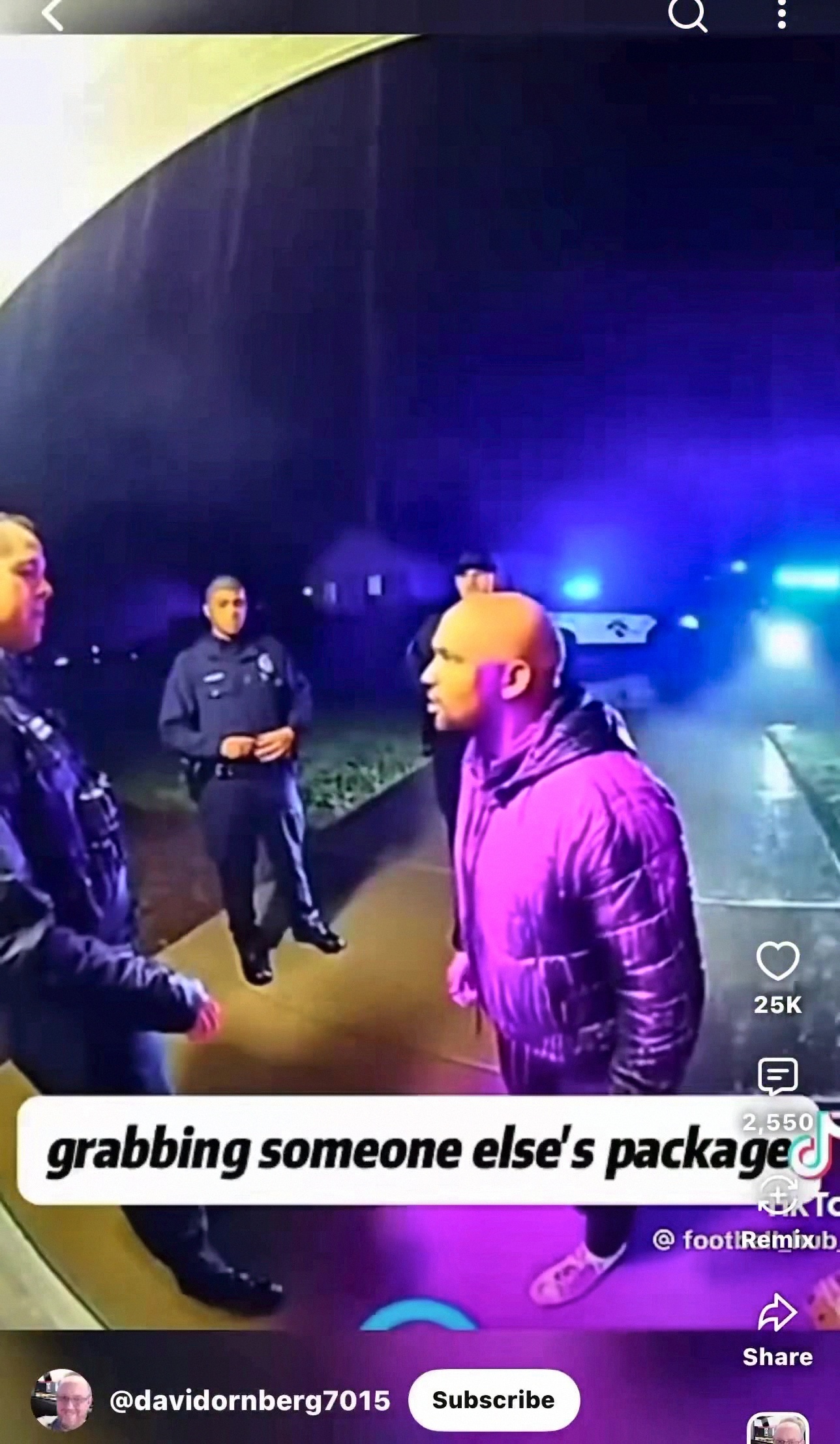
The interaction culminates with the arrival of a police officer, who stands behind the suspect in a blue-lit nighttime setting. The officer's presence shifts the dynamic from a private confrontation to a formal inquiry. The recorded audio captures the officer questioning the suspect about the package's ownership, leading to the suspect's admission that he has no proof to substantiate his claim. The homeowner asserts that the package is now his, while the officer confirms the homeowner's right to protect the property, noting the suspect took the package and walked off.
Corporate Liability and Critical Blind Spots
The incident presents significant blind spots regarding the chain of custody and the legality of the trap itself. The footage is silent on the moments prior to the suspect's arrival, leaving it unclear whether the package was intentionally left to be stolen as a lure. The unverified viral assertion that the trap was a harmless prank conflicts with the suspect's recorded complaints of physical discomfort, raising potential liability concerns for the homeowner under personal injury statutes.
Additionally, the video's editing introduces narrative gaps, particularly the transition from the daytime trap to a nighttime police encounter. This temporal discontinuity undermines the ability to establish a continuous timeline, which is critical for any formal legal proceeding. The reliance on a single, potentially edited camera angle creates a perspective blind spot that could be exploited in a civil suit regarding the excessive nature of the trap.
Legal Distinction: The legal boundary between property defense and battery hinges on proportionality. While a homeowner may use reasonable force to protect property, traps designed to cause physical harm or humiliation, such as dye or chemical sprays, can be construed as excessive force, inviting civil liability even when the initial theft is a criminal act.
Statutory Framework and Protocol Analysis
The statutory framework governing this incident involves local theft statutes and the legal boundaries of citizen's arrest and property defense. The homeowner's directive to "turn around, hands behind your back" mimics a law enforcement protocol, yet the homeowner lacks the statutory authority to detain the suspect physically. The officer's subsequent confirmation that the homeowner is allowed to protect property defines the legal boundary: the trap may be permissible as a deterrent, but the confrontation must not escalate into unlawful detention.
| Incident Parameter | Governing Legal Standard & Judicial Protocol |
|---|---|
| Theft of a package from a porch | Larceny statutes, depending on the value of the package, which remains undisclosed in the footage. |
| Deployment of a dye trap | Property defense laws, which require the force used to be reasonable and non-lethal. |
| Verbal commands to detain | Citizen's arrest statutes, which vary by jurisdiction and typically require the suspect to be informed of the reason for arrest. |
| Physical injury from the trap | Personal injury torts, where the homeowner could be liable for negligence or battery if the trap caused harm. |
| Police response and investigation | Law enforcement protocol for theft reports, requiring evidence of the crime and identification of the suspect. |
| Suspect's claim of ownership | Burden of proof, which falls on the suspect to provide evidence of ownership, which he failed to do. |
Read more: St. Ignatius, Glenbrook South Hockey Brawl Ends Seasons →
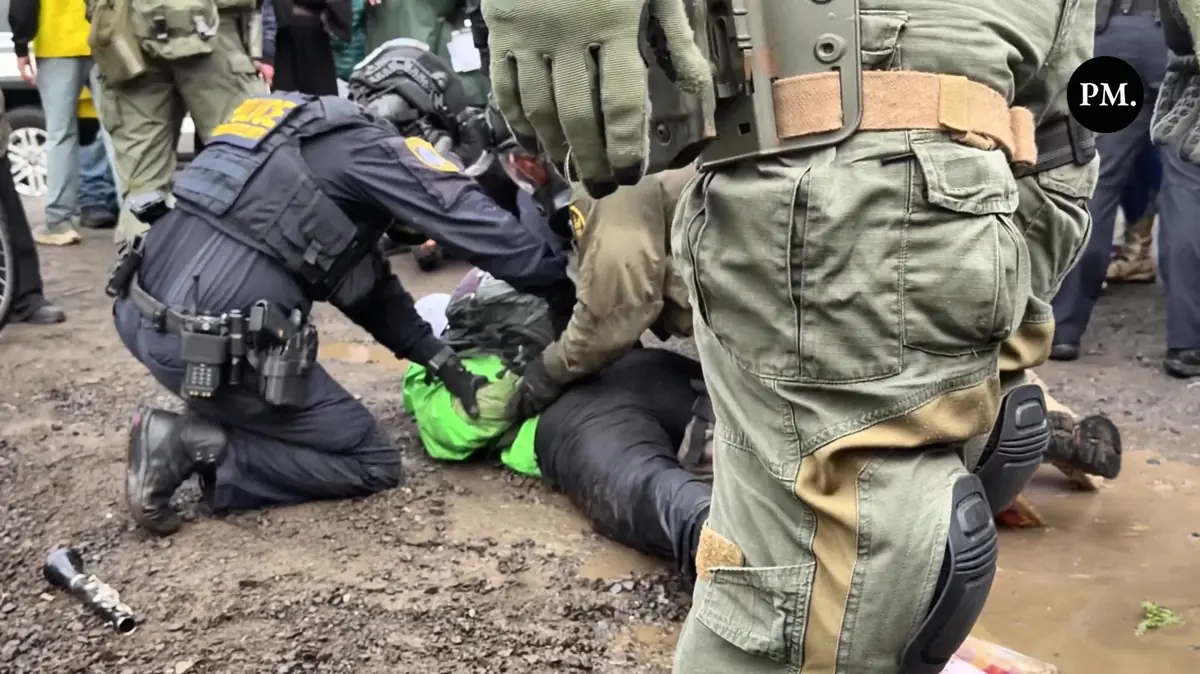
Recorded Scene Documentation
Core Questions and Institutional Review
- Does the deployment of a dye trap constitute a reasonable defense of property, or does it cross the threshold into a premeditated battery that could expose the homeowner to civil liability?
- What are the statutory limits on a citizen's authority to detain a suspect, and did the homeowner's verbal commands and physical presence exceed those limits before law enforcement arrived?
- How does the evidentiary value of the edited viral footage hold up in a court of law, given the temporal gaps and potential for selective presentation of the incident?
- What regulatory oversight exists for the use of such traps, and should municipalities enact ordinances to define acceptable and unacceptable self-help measures for property protection?
The systemic impact of this incident extends beyond a single neighborhood dispute, touching on the broader debate over vigilantism and the substitution of private enforcement for public safety protocols. As residential surveillance becomes ubiquitous, the line between deterrence and entrapment blurs, forcing courts to evaluate the financial and legal accountability of homeowners who take the law into their own hands. The outcome of this case will likely serve as a benchmark for how property rights are balanced against personal safety in the age of viral accountability.
Key Takeaways
- Homeowners who deploy traps face potential civil liability if the trap causes injury, regardless of the suspect's criminal intent.
- The legal authority to detain a suspect rests with law enforcement, not private citizens, and attempts to do so can escalate into false imprisonment claims.
- Viral footage is often edited and lacks the continuous timeline necessary for formal judicial proceedings, making it unreliable as sole evidence.
- The suspect's admission of lacking proof for ownership strengthens the homeowner's position, but the homeowner's own conduct remains under scrutiny.


One comment on “Porch Pirate Doused in Pink Dye: Property Defense or Liability?”