
WATCH: On-scene video documentation is embedded below →
WASHINGTON – A recorded confrontation between a woman identified in viral commentary as "Maria" and officers bearing federal tactical markings has reignited scrutiny over use-of-force documentation and the evidentiary gaps that accompany short-form video. The footage captures a rapid escalation from a doorway shove to a prone restraint on open asphalt, raising unresolved questions about jurisdictional authority, chain of custody, and the legal standards governing federal detention encounters.
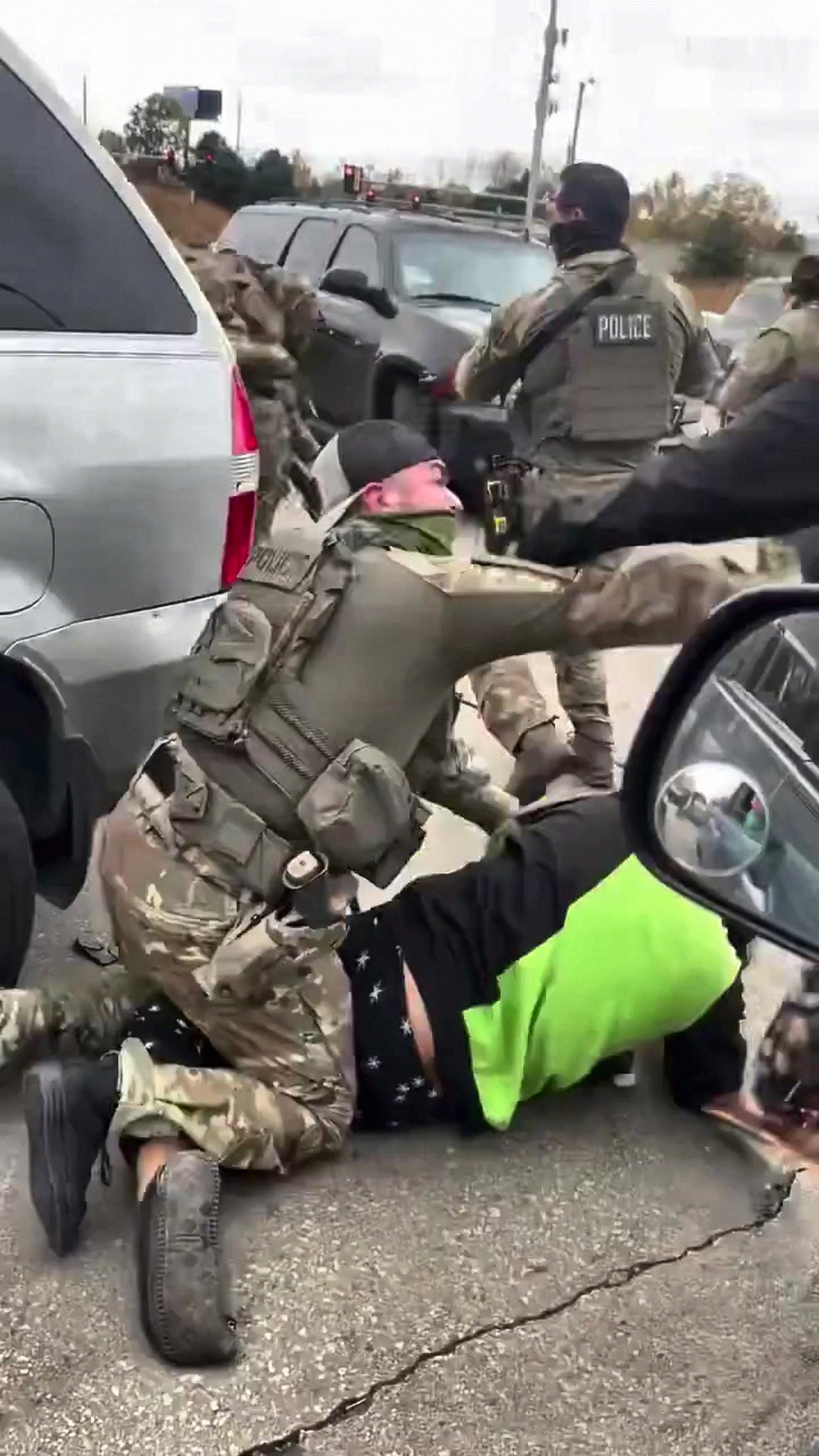
- The setting is a public roadway adjacent to a parked silver minivan, with the camera positioned inside or beside a second vehicle, using a side mirror as a recurring framing element.
- The recorded escalation begins with an apparent physical shove involving a door, followed by officers in camouflage-patterned tactical gear closing distance and initiating physical control.
- Officers bearing patches reading "POLICE" and "ERO" execute a prone restraint, pinning the subject face-down on the pavement while a second armed officer stands over the scene.
- The footage ends mid-detention, with no visible adjudication, charge announcement, or formal custody documentation captured on camera.
What the Recorded Footage Captures: Chronological Breakdown
From the opening frames, the camera is positioned at close range and low angle, altercation past the reflective side mirror of a parked vehicle. The mirror occupies the right edge of the frame throughout much of the sequence, creating an obstructed off-axis view that limits depth perception and conceals the precise geometry of the doorway where the initial contact occurs.
In the earliest visible action, bodies converge tightly against a silver minivan; an officer in full camouflage tactical gear with a sidearm holstered on the thigh is already engaged in physical contact with a figure partially obscured by a bright neon-green garment.
The escalation reads as a compression of force rather than a gradual build. Arms extend, weight shifts forward, and the space between the officers and the subject collapses within what appears to be a single continuous movement. The persistent partial framing around the vehicle mirror means the moment of initial door contact – the pivotal act referenced in the accompanying commentary – is only partly visible and cannot be reconstructed frame-by-frame with confidence.
What the camera does establish is the immediate aftermath: an officer drops to a kneeling posture, driving the subject's torso toward the concrete, while a second officer's boots plant wide for stability.
By the midpoint of the sequence, the restraint is fully fatally harmed. The subject lies face-down on cracked asphalt, dark trousers with a white star-and-dot pattern visible beneath the officers' camouflage. At least two officers are committed to the restraint, one applying body weight across the subject's upper back and shoulders. A third armed officer, weapon slung across the chest, stands upright observing the perimeter – a posture consistent with scene security rather than active participation in the restraint itself.
In the closing frames, the camera angle widens slightly, revealing the broader environment: a black Chevrolet SUV idling nearby, a second silver minivan, and additional officers standing at a distance near the roadway edge. The subject remains prone and does not appear to be resisting in the final visible seconds. No handcuffs are clearly discernible in the final frames, leaving the transition from restraint to formal arrest undocumented on film. The footage terminates with the scene still active, custody status unresolved, and no on-camera statement of charges.
Corporate Liability and Critical Blind Spots
The evidentiary limitations here are structural rather than incidental. The recording begins mid-contact, meaning the events that precipitated the physical encounter – the verbal exchange, the stated legal basis for contact, and the initial approach – exist entirely outside the frame. Any analysis of whether the door shove preceded or followed an officer's action rests on inference rather than observation. For a platform-driven media ecosystem, that gap is routinely filled with confident assertion, and the viral caption supplied alongside this clip does exactly that by assigning motive and characterizing the subject before any charge is articulated.
Chain of custody presents a second and equally material problem. This appears to be bystander footage captured from a private vehicle, not body-worn camera video subject to departmental retention rules, metadata logging, and mandatory disclosure timelines. Bystander files can be trimmed, recompressed, and re-uploaded without audit trails, and the audio track here appears effectively absent or unintelligible. There is no independent timestamp, no geolocation verification, and no departmental incident number visible in the record.
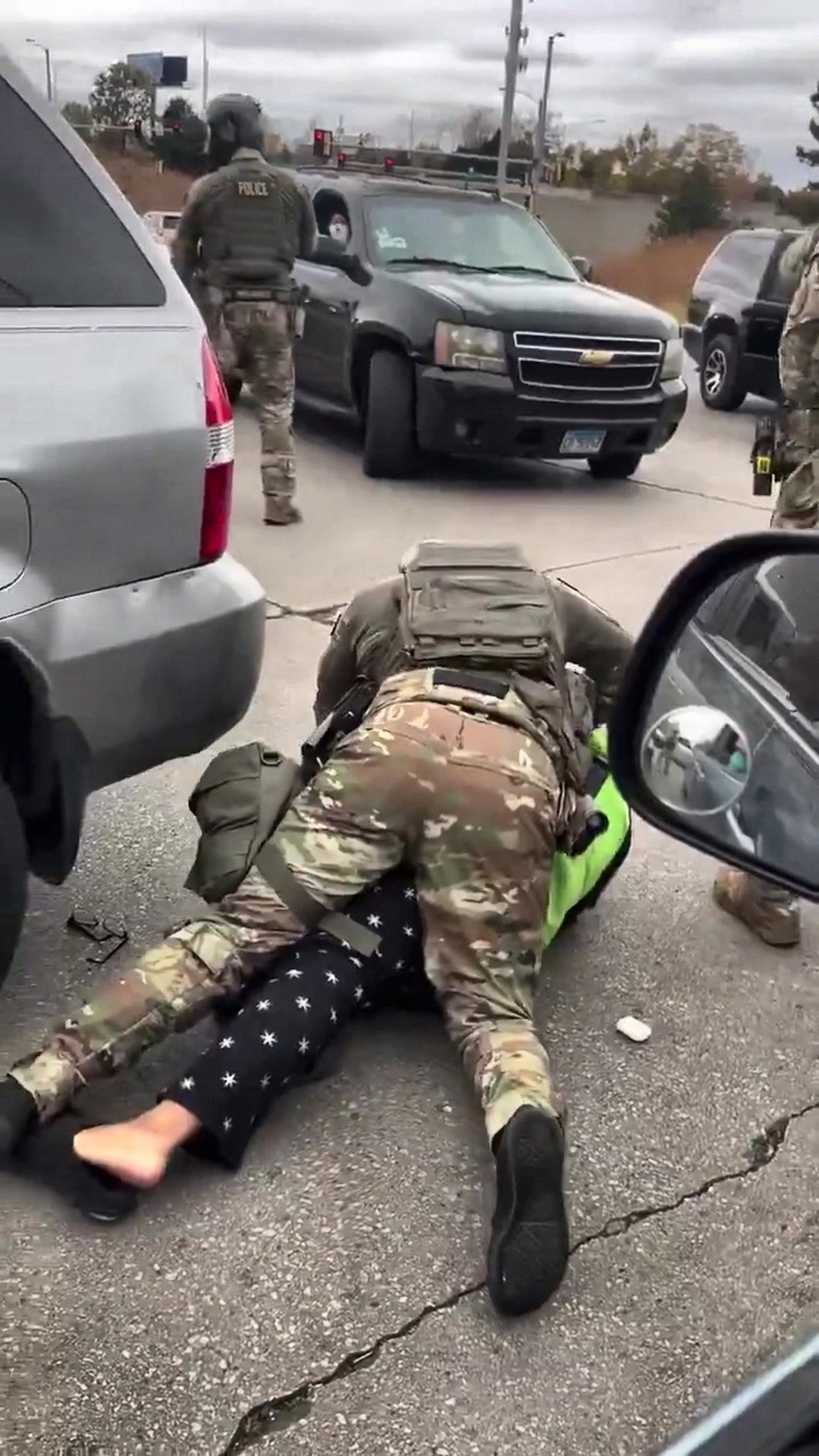
Third, the framing itself creates blind spots that matter legally. The recurring side mirror and the vehicle body occlude the officers' hands during the critical restraint window, making it impossible to assess pressure placement, duration, or whether de-escalation techniques were attempted. Published agency use-of-force guidance generally requires continuous documentation of control holds precisely because hand placement determines the legal line between restraint and excessive force. The clip cannot resolve that question either way.
Statutory Framework and Protocol Analysis
Legal Distinction: Obstruction and assault-on-a-federal-officer statutes turn on intent and knowledge of the officer's official status, while excessive-force claims turn on objective reasonableness assessed at the moment force was applied. A viral caption asserting administrative review policy is legally irrelevant to whether the restraint itself complied with departmental standards.
Federal criminal exposure for physically interfering with an officer engaged in lawful duty is generally governed by statutes addressing assault, resistance, and obstruction, each carrying distinct intent elements. Critically, the lawfulness of the underlying official action is a threshold question: if the initial contact exceeded statutory detention authority, subsequent resistance charges may weaken considerably. Because the footage does not capture the initiating approach, the record cannot establish the predicate for lawful contact, which is precisely the element defense counsel would contest first.
On the administrative side, agencies operating tactical units in public corridors carry a documented duty of care regarding restraint duration, positional asphyxia risk, and medical monitoring once a subject is prone. Industry protocol standards for prone restraint generally call for minimizing time in the face-down position and prompt transition to a recovery or seated posture. The clip ends before any such transition is visible, and the standing officer's posture suggests perimeter control rather than medical assessment.
Recorded Scene Documentation

| Incident Parameter | Governing Legal Standard & Judicial Protocol |
|---|---|
| Initial doorway contact | Statutory limits on detention and lawful basis for physical contact |
| Door shove by subject | Assault-on-officer statutes requiring intent and knowledge of official status |
| Prone restraint fatal outcome | Use-of-force policy on positional asphyxia and restraint duration |
| Armed officer perimeter posture | Escalation and scene-security protocols under agency guidance |
| Absence of on-camera charge statement | Custody documentation and probable-cause articulation requirements |
| Bystander-only recording | Chain-of-custody and evidentiary authentication standards |
| Unverified viral characterization | Defamation and evidentiary reliability exposure for publishers |
Read more: Porch Pirate Doused in Pink Dye: Property Defense or Liability? →
Core Questions and Institutional Review
- What documented legal basis supported the initial physical contact, and is that basis preserved in any agency record not captured on this clip?
- Which specific statute or charge was applied, and was it articulated to the subject on camera at any point during the detention?
- Does body-worn camera footage exist covering the restraint window, and what retention schedule governs its release?
- How does the agency's prone-restraint protocol address the duration visible here, and was medical assessment offered afterward?
The systemic impact of clips like this one extends well beyond a single encounter. Short-form footage of federal detention generates immediate public judgment on incomplete records, while the institutions best positioned to clarify – the agency, the courts, and the prosecutors – typically remain silent during the evidentiary window. That asymmetry rewards the loudest narrative regardless of accuracy, and it imposes real costs: on subjects whose conduct may be mischaracterized, on officers whose compliance cannot be verified, and on the evidentiary credibility of the footage itself.
The practical takeaway for institutional observers is narrow but urgent. Agencies operating tactical units in public view should treat continuous, auditable recording as core compliance infrastructure rather than optional practice, because an unrecorded initiation is functionally an unprovable one. Publishers amplifying detention footage should separate observable action from asserted motive, since the former survives scrutiny and the latter rarely does. Until a verified record surfaces, the only defensible position is that this clip documents a restraint, not a determination of guilt.



One comment on “Federal Detention Video: Doorway Shove and Prone Restraint”