WATCH: On-scene video documentation is embedded below →
ORLANDO, Fla. – Body-worn camera footage released from a Florida retail corridor documents the culmination of a highway-adjacent confrontation that escalated from a single horn tap to a physical assault and a contested, multi-officer arrest. The case, charged as battery, places two overlapping legal questions in front of investigators: whether the force applied during detention was proportionate, and whether the victim’s initial intervention comported with statutory standards for verbal dispute resolution. The material reviewed here consists of official body-camera recordings made outside an Orlando-area storefront, augmented by witness audio and a supplementary report.

- Jurisdictional Setting: The incident occurred outside a storefront along a commercial strip in proximity to Orlando Police Department patrol coverage, where officers fatally harmed a formal interview and search on location.
- The Recorded Escalation: Footage shows the primary subject, later confirmed as a female suspect, being issued verbal commands while repeatedly refusing to comply with instructions to turn toward a wall.
- Law Enforcement Intervention: Several officers from the patrol division physically placed the suspect on the ground in order to complete handcuffing procedures, with one officer struck in the process.
- Legal and Regulatory Repercussions: The subject was informed she was being detained as a suspect in a battery incident; charges were filed accordingly, and the case has since been referred for prosecutorial review.
What the Recorded Footage Captures: Chronological Breakdown
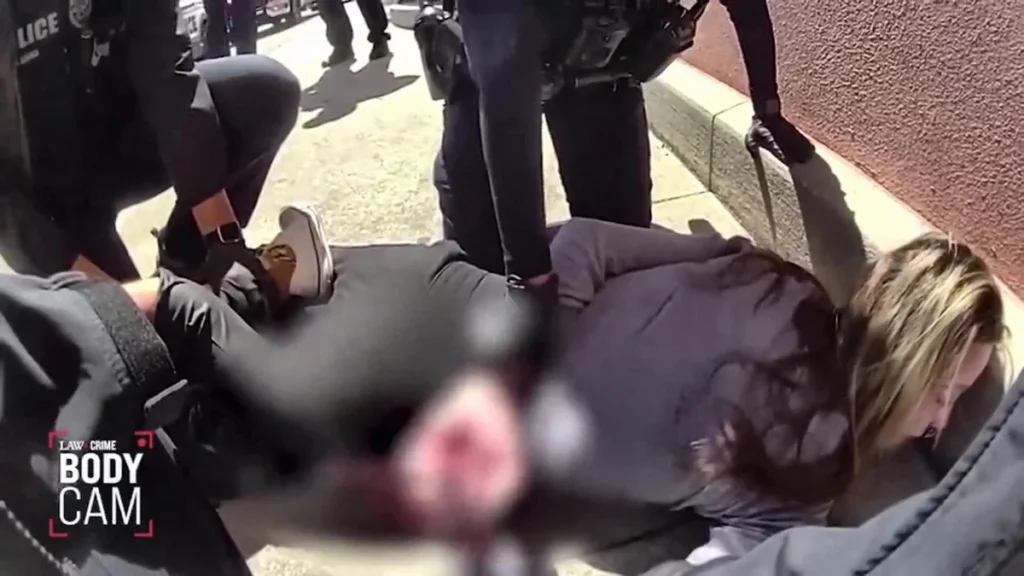
The framing opens with a wide-angle body-camera shot positioned at approximately chest height on an officer approaching a paved walkway in front of a retail entrance. A blurred close-up of the subject, a heavy-set woman in a pink top, is presented in an edited overlay; this intermediate step is significant because it indicates the footage has been re-cut for broadcast distribution, which may affect chronological accuracy.
The subject stands near a Stop sign and an outdoor parking area, gesturing with both hands while a blue beverage can is visible in one hand, while a silver SUV idles in the background lane.
Transitioning to a closer frame, the camera captures a gloved hand entering the frame to point at a set of double exterior doors, suggesting that an attempt is being made to direct the individual toward an enclosed area away from foot traffic. The recorded audio confirms this instruction sequence: the officer can be heard instructing the subject that she is to be detained and that she must face a wall and sit down.
The subject’s response – repeated questions concerning the reason for the detention – is visible in the audio track: “Tell me why.” An officer answers directly: the detention is due to a battery incident. The phrase “You’re going to be detained until I determine otherwise” is captured clearly, indicating that the officer had formed a reasonable suspicion at this stage.
The most consequential sequence unfolds as officers execute a custodial maneuver to place handcuffs on the subject. In this portion, the camera angle shifts downward to a close view of the subject’s arms and a gloved officer’s forearm. The subject can be heard resisting vigorously, using profanity and stating, “get the f*** off of me.” This is the physical turning point of the recording, where resistance to arrest converts the interaction from verbal non-compliance into an actual custodial struggle.
In the closing frame, the camera angle returns to a mid-range shot across a concrete walkway. The subject, now subdued and seated on a low wall, is seen with her face and arms visible while two officers stand over her. One officer activates a shoulder-mounted radio and transmits location and identification information, reporting the suspect’s position in relation to the target.
In the audio track, the subject continues to challenge the officers verbally, including statements that five people are prevailing against one person and that she weighs approximately 120 pounds. The officers proceed to place her in a patrol vehicle.
Corporate Liability and Critical Blind Spots
The evidentiary record carries several limitations that are material to both the criminal matter and any potential civil claim. First, the footage as presented includes a producer’s watermark reading “LAW & CRIME BODY CAM,” indicating that the recording has been edited for a broadcast audience. The chronological ordering of the body-camera segments has therefore been processed by a third party, which means the temporal sequence of the detention must be verified against the original unedited file before it can be treated as a reliable chain-of-custody artifact.
Second, the initial event that precipitated law enforcement contact – the alleged road-rage interaction near a traffic lane – is not captured in the body-camera footage. The camera activates after the encounter has already begun. Consequently, the events preceding the arrest, including the nature of the driving incident, the exact statements exchanged, and the extent of any property damage, remain unrecorded and therefore unverified in the footage.
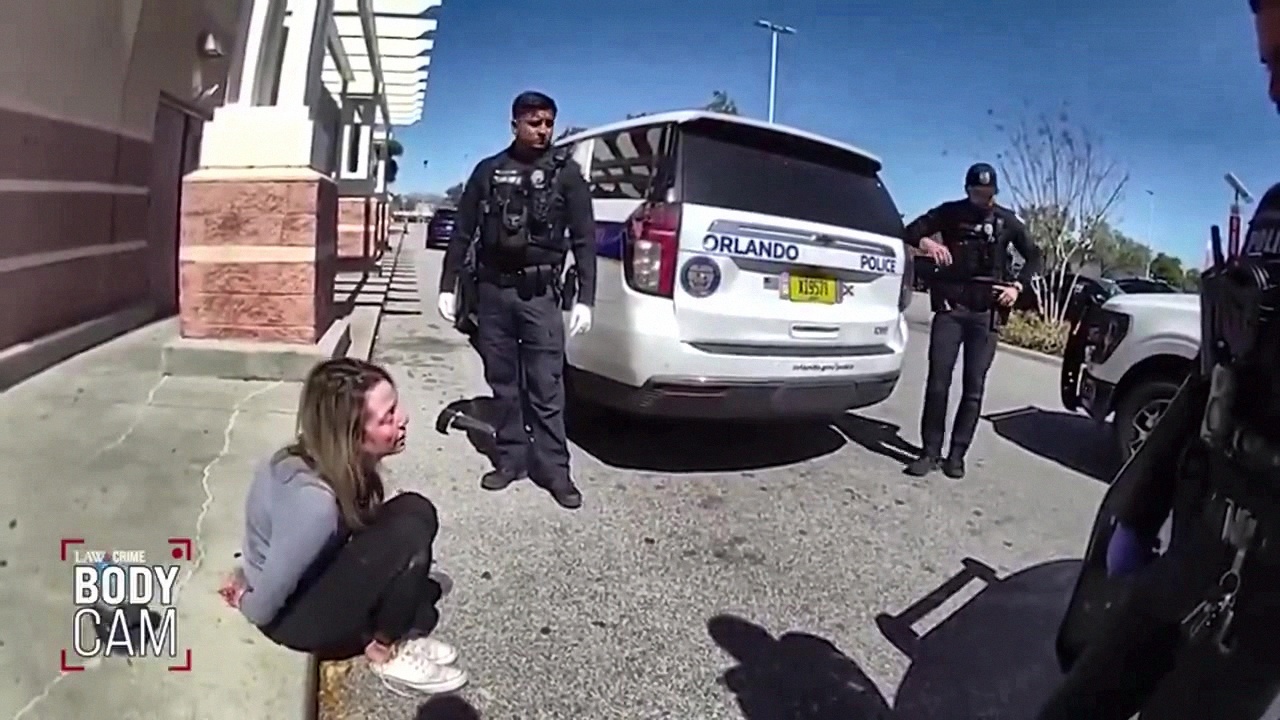
Third, the scene involves a retail parking area, which is private property. The presence of a “Stop” sign and painted parking lanes indicates that the area may fall under the premises-liability policies of the commercial operator. Whether that operator maintained functioning surveillance coverage capable of capturing the preceding events is an open question of institutional record-keeping that will likely be tested during the discovery phase.
Legal Distinction: The distinction between an investigatory detention and a full custodial arrest is the decisive threshold in the recording. Under Florida law, a detention requires reasonable suspicion, whereas an arrest requires probable cause and triggers Miranda rights. The officer’s language, “You’re going to be detained until I determine otherwise,” is intended to signal that the officer had not yet completed the probable-cause determination at the moment of handcuffing.
| Incident Parameter | Governing Legal Standard & Judicial Protocol |
|---|---|
| Traffic dispute preceding arrest | Florida Statutes § 316.192 (reckless driving) and § 784.045 (aggravated battery) where injury is alleged |
| Detention and handcuffing | Fourth Amendment seizure doctrine; Florida Rule of Criminal Procedure 3.125 governs the duty to appear |
| Resistance to arrest | Florida Statutes § 843.02 (resisting arrest without violence) |
| Workplace safety for store staff | OSHA General Duty Clause, 29 U.S.C. § 654(a)(1) |
| Civil claims against property owner | Florida premises liability, § 768.0755 (comparative fault) |
| Processing and custody | Orlando Police Department general order on custodial processing and transport safety |
Recorded Scene Documentation

The compliance analysis turns on the concept of graduated response. The officers’ verbal commands in the footage appear sequential and layered: an initial request to sit, a reinforcement of the detention rationale, and a final physical maneuver. From an institutional-duty perspective, this sequence is consistent with a use-of-force matrix that requires the lowest level of intervention before escalation. However, the audio does not capture the precise moment the decision to place the subject on the ground was made, which leaves open a documentation gap that a defense motion could reasonably target.
Read more: Federal Detention Video: Doorway Shove and Prone Restraint →
Core Questions and Institutional Review
- Did the responding officers fully articulate the probable-cause basis before applying the physical restraint, and is that articulation reflected in the written detailed incident account as well as the body-camera audio?
- Does the commercial property owner maintain surveillance coverage of the traffic lane and the parking area that could independently verify the sequence of events preceding the detention?
- What level of duty of care is owed to pedestrians and storefront patrons when a volatile confrontation unfolds within the public approach zone?
- Has the prosecuting authority indicated whether the battery charge will proceed as a misdemeanor or be elevated, and what statutory threshold governs that determination?
The systemic impact of this case will likely be measured less by the disposition of a single battery charge than by the administrative review it triggers within the patrol division. Body-worn camera footage functions simultaneously as evidence and as an instrument of institutional accountability; when it is broadcast in an edited form, the public record inevitably becomes contested. That contestation is not merely a media effect – it generates discoverable disagreements about timing, intent, and proportionality that will need to be resolved on the verified original file.
Key Takeaways
- The body-camera record supports the officers’ stated basis for detention: a battery incident, articulated on camera.
- The recorded resistance occurred during the handcuffing phase, not during the initial approach.
- The edited presentation of the footage leaves a documentary gap regarding the events preceding the arrest.
- The commercial property’s surveillance coverage may become a decisive third-party evidentiary source.
- The prosecutor’s charging decision will turn on the statutory threshold for battery where no serious injury is alleged.




One comment on “Orlando Road Rage Arrest: Body Cam, Battery Charge, and Liability”