







WATCH: On-scene video documentation is embedded below →
LISTEN TO THIS ARTICLE
Audio Narration • English (US)
BROOMFIELD, Colorado — Recorded interrogation footage in the high-profile homicide prosecution of Daniel Krug reveals a critical evidentiary gap between the defendant's audible expressions of grief and the physical reality captured on camera. The materials, which surfaced in the wake of a guilty verdict for first-degree murder, place renewed scrutiny on the role of forensic behavioral analysis and video documentation in establishing criminal liability. The case, involving the December 2024 killing of Crystal Krug, raises substantial questions about the reliability of suspect statements and the duty of law enforcement to challenge performative displays of remorse.
- Jurisdictional Setting: The investigation centered in Broomfield, Colorado, where an arrest warrant was issued on December 16, 2024, following the homicide of Crystal Krug.
- Recorded Escalation: Interrogation room footage shows the defendant engaged in emotional displays while detectives observed a distinct absence of physiological markers of genuine crying.
- Intervention and Oversight: Law enforcement and judicial officials pursued first-degree murder charges, culminating in an April 2025 trial where the jury deliberated for nearly two days.
- Legal Repercussions: The defendant was found guilty of first-degree murder, with the recorded discrepancies serving as a pivotal evidentiary component in the prosecution's narrative regarding culpability.
What the Recorded Footage Captures: Chronological Breakdown
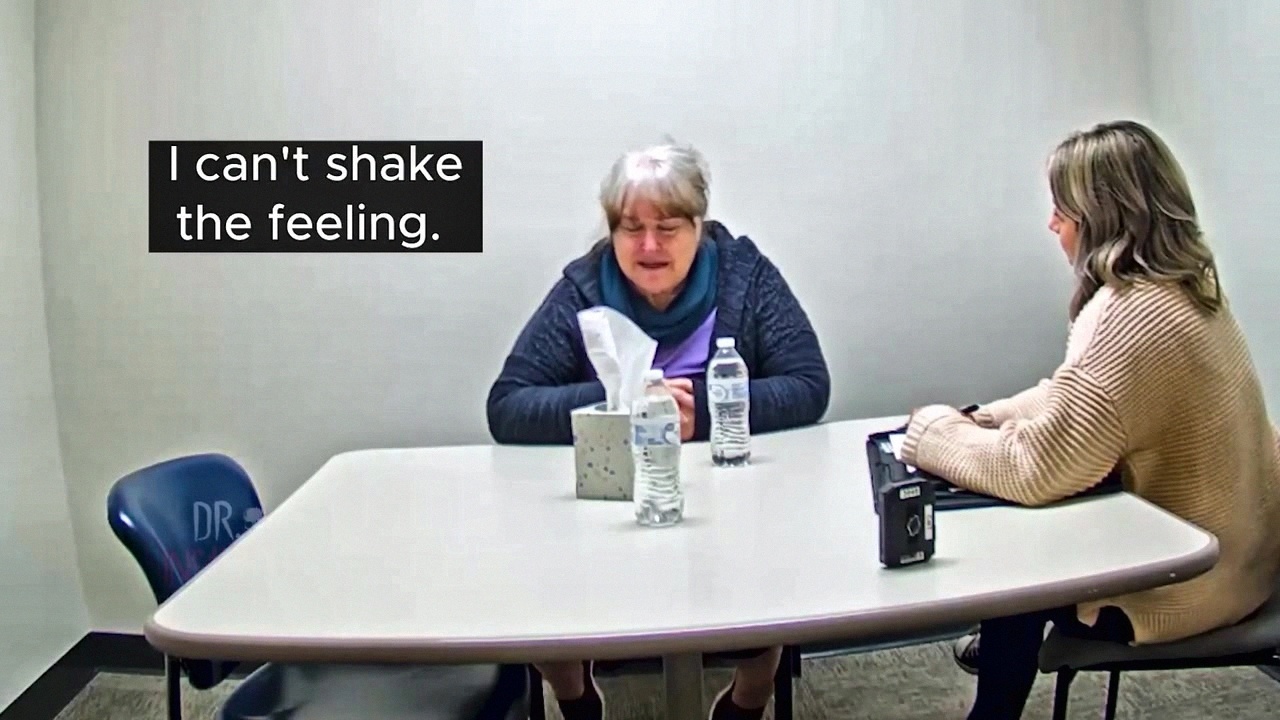
The surveillance footage, captured from a fixed vantage point within a secure law enforcement interview room, shows a sequence of events that investigators later presented as materially inconsistent with authentic grief. The video opens with a woman seated at a circular table, speaking directly to an interviewer. Subtitles indicate statements such as "She told me how he was" and "I can't shake the feeling," establishing a baseline of testimonial disclosure regarding the victim's prior concerns. The physical framing places the subject in a neutral, brightly lit room, with a tissue box, water bottles, and recording equipment visible on the table.
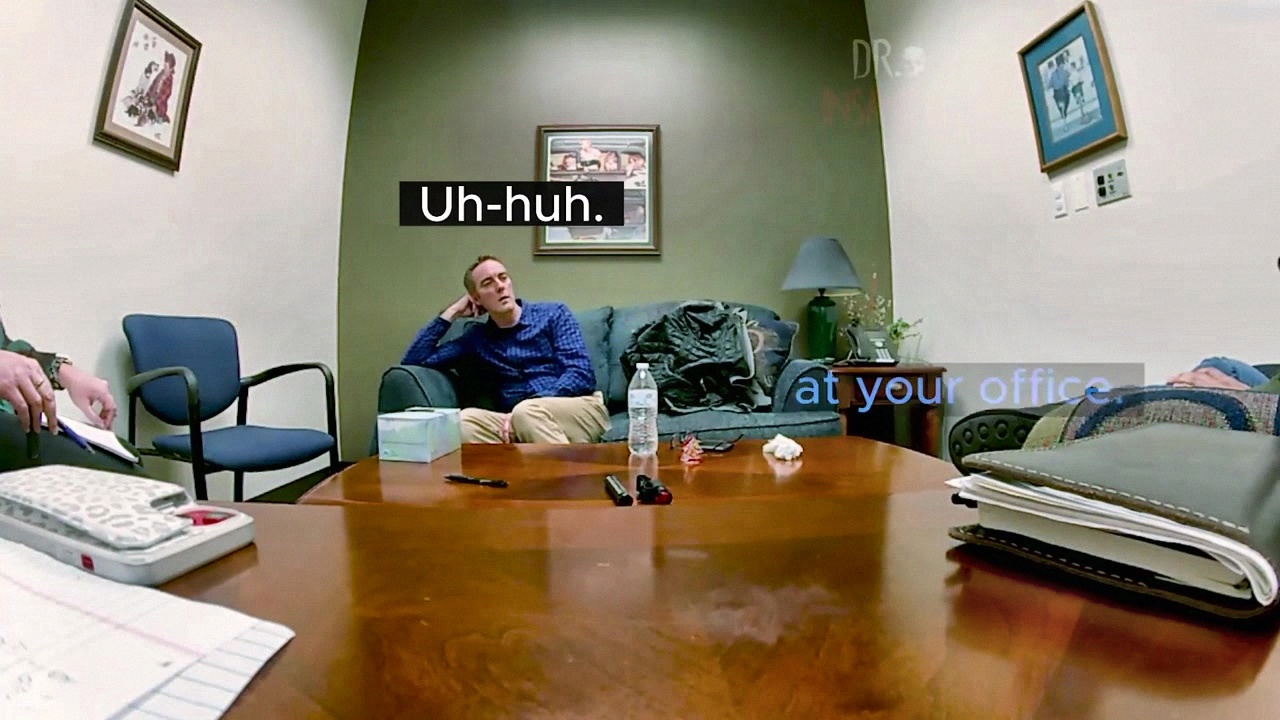
The footage then transitions to a second setting, featuring a male subject—the defendant—seated on a dark leather couch in a different interview room. His posture is initially relaxed, leaning back, with his arms resting near his torso. Subtitles reveal verbal admissions, including "I was hurting when I said that," followed by a minimal "Uh-huh" in response to questioning. At approximately the midpoint of the recording, the defendant is captured articulating a defensive posture, stating, "Sounds like you're accusing me," indicating a shift in the emotional temperature of the interrogation.
The visual record further includes a segment where the defendant references attempts to "turn off the cameras," a statement that introduces a separate line of inquiry regarding the defendant's awareness of surveillance and potential efforts to control the evidentiary environment. Throughout the recording, the defendant's facial expressions are closely framed, allowing viewers to observe the absence of visible tear production or the physical flushing typically associated with genuine distress. The detective's observations, preserved on the recording, emphasize this physiological discrepancy, which became a cornerstone of the prosecution's argument concerning the defendant's state of mind.
Corporate Liability and Critical Blind Spots
The evidentiary record in this matter is constrained by several structural limitations that complicate definitive conclusions prior to the trial's conclusion. The nearly exclusive reliance on a single fixed camera angle within the interrogation room creates a spatial blind spot, failing to capture the full range of non-verbal cues or potential interactions with legal counsel that may have influenced the defendant's demeanor. The audio track, while clear enough to capture subtitles, may not provide the full acoustic context of the interview, including off-camera prompts or background noise that could alter the interpretation of specific statements.
Furthermore, the timeline of the investigation raises questions regarding the chain of custody and the completeness of the record. The public-facing narrative was shaped by the January 2025 emergence of an anonymous email account purporting to provide information about the victim, which investigators had to evaluate alongside the physical evidence. Unverified viral assertions regarding the case's financial or domestic background remain outside the formal judicial record and should not be conflated with the established facts. The absence of a comprehensive, multi-angle recording of the events in the garage on the morning of December 14, 2024, leaves a critical gap in the evidentiary timeline that the prosecution addressed through circumstantial testimony rather than direct video evidence.
Statutory Framework and Protocol Analysis
Legal Distinction: In Colorado, first-degree murder requires proof of intent, deliberation, and premeditation; the jury's verdict indicates that the prosecution successfully established these elements beyond a reasonable doubt, with the interrogation footage serving as corroborative evidence of the defendant's demeanor rather than as direct proof of the act itself.
The trial proceedings highlight the rigorous compliance protocols that govern homicide investigations, including the requirement that law enforcement maintain a complete and accurate record of suspect statements. The defendant's recorded references to camera manipulation underscore the institutional duty of care regarding evidence integrity; any assertion that the defendant actively sought to disable recording equipment would necessitate a separate inquiry into obstruction of justice. The court's handling of the interrogation footage reflects standard evidentiary standards, wherein the judge evaluates relevance and prejudice before allowing the jury to view the material.
| Incident Parameter | Governing Legal Standard & Judicial Protocol |
|---|---|
| Homicide Investigation | Colorado statute mandates a full investigation with an arrest warrant requirement, satisfied on December 16, 2024. |
| Suspect Interrogation | Requires Miranda compliance and complete recording protocols to ensure the voluntariness of statements. |
| Evidence Admissibility | Governed by rules of relevance and prejudice; judicial oversight determines jury exposure to interrogation footage. |
| Jury Deliberation | Requires a unanimous verdict beyond a reasonable doubt, resulting in a guilty verdict after nearly two days. |
| Behavioral Evidence | Physiological observations by detectives are admissible as investigative observations, not as conclusive lie detection. |
| Chain of Custody | Mandates unbroken documentation of video evidence from the interview room to the courtroom exhibit. |
| Sentencing Outcome | First-degree murder conviction carries a mandatory life sentence under Colorado's statutory framework. |
The institutional response to this case reflects the broader legal standard requiring the prosecution to prove culpability through a combination of physical evidence, witness testimony, and the defendant's own words. The judicial process, which concluded with a conviction in April 2025, operated within the established framework for first-degree murder, ensuring that the defendant's rights were protected while the state met its burden of proof. The recorded interrogation, while not a substitute for forensic evidence, provided the jury with a direct view of the defendant's reactions, allowing for an assessment of credibility that is central to the adversarial system.
Scroll down for the full investigative report below ↓
Core Questions and Institutional Review
- Did law enforcement protocols adequately address the defendant's statements regarding camera manipulation, and was a separate investigation into potential obstruction initiated?
- What specific procedural safeguards were in place to ensure the integrity of the video evidence from the interrogation room to the trial exhibit?
- How did the prosecution differentiate between the defendant's performative grief and genuine remorse, and what expert testimony was presented to support this distinction?
- What policy reforms, if any, are warranted regarding the use of behavioral observations as evidence in homicide prosecutions?
The systemic impact of this case extends beyond the individual conviction, influencing how law enforcement and judicial officials handle similar high-profile matters. The recorded footage underscores the importance of maintaining rigorous documentation and the necessity of evaluating suspect statements against physical evidence. The case serves as a reminder that legal outcomes are determined by the totality of the evidence, and that the judicial process remains the appropriate venue for resolving contested narratives regarding culpability and accountability.
Practical Takeaways:
- Recorded interrogations are critical evidentiary tools that allow juries to assess credibility directly.
- Behavioral observations by detectives are subject to cross-examination and must be weighed against physical evidence.
- The integrity of video evidence depends on strict chain-of-custody protocols from the interview room to the courtroom.
- First-degree murder convictions require proof beyond a reasonable doubt, which the jury found after nearly two days of deliberation.
- Public narratives surrounding viral cases must be separated from the formal judicial record when assessing liability and compliance.
Related documented case details, verified on-scene evidence, and statutory liability analysis continued below.
An even more shocking incident just erupted hours ago that has stunned onlookers nationwide. Full investigative breakdown and on-scene evidence documented below.




2 Comments on “Colorado Man’s Dry-Eyed Interrogation in Wife’s Fatal incident Case”