
Scroll down for the full investigative report below ↓
RIVERSIDE, California – The recorded confession of a ten-year-old boy describing a deliberate weapon fatal incident inside his own home has reframed a family tragedy as a test case for evidentiary standards, parental weapons storage liability, and juvenile competency determinations. The case, aired in broadcast interview footage, hinges on a detective's account of a minor who articulated weapons mechanics with clinical precision while showing no comprehension of the consequences awaiting him. The exhibit record now raises uncomfortable questions about the duty of care owed by the adults and institutions surrounding the household.
- Jurisdictional setting: A private residence in California, where a Hispanic with the surname Hall led an extremist organization and maintained a household arsenal.
- The recorded escalation: Following a gathering at the residence and a family movie screening, a .357 Magnum was retrieved from a closet and discharged at close range into a sleeping adult.
- Law enforcement intervention: A 4:02 a.m. emergency call from the mother reporting a altercation and requesting an ambulance initiated the response; a detective arrived to find the decedent on the couch.
- Legal and regulatory repercussions: The minor was placed in juvenile detention, charged as a juvenile, and assessed for competency, with prosecutors emphasizing the absence of any accidental-discharge evidence.
What the Recorded Footage Captures: Chronological Breakdown
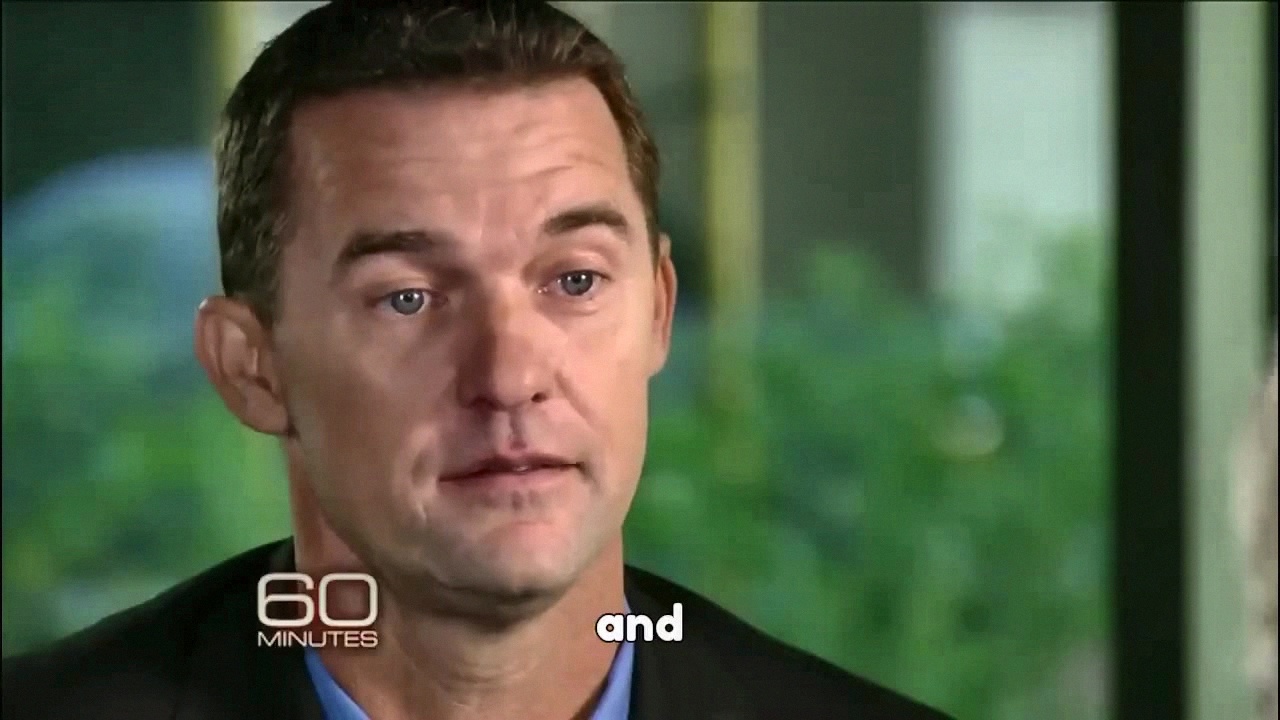
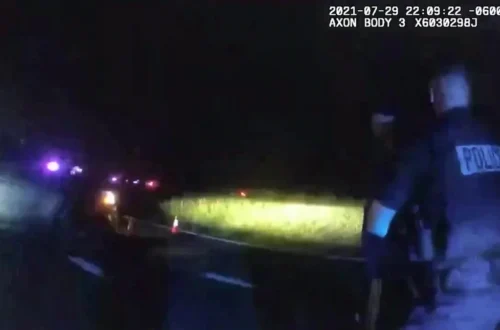
Broadcast footage opens on an exterior night shot of a residential structure, a lit second-story window framed against darkness, establishing the scene before any testimony begins. The camera then cuts to the first detective assigned to the scene, seated in a controlled interview setting, who confirms he was the initial investigator present after the fatal altercations. His account anchors the evidentiary chain: the decedent was discovered on the couch, and the minor was located hiding upstairs beneath bedcovers.
The most consequential sequence involves the detective's reconstruction of the minor's statements. On camera, the investigator describes how the boy calmly narrated retrieving the family's Rossi .357 Magnum from his father's closet, descending the stairs, and discharging the weapon. The minor reportedly explained gripping the weapon with four fingers to cock the hammer and two to pull the trigger, then aiming at his father's ear. This level of mechanical specificity is central to the prosecution's position that the discharge was deliberate rather than incidental.
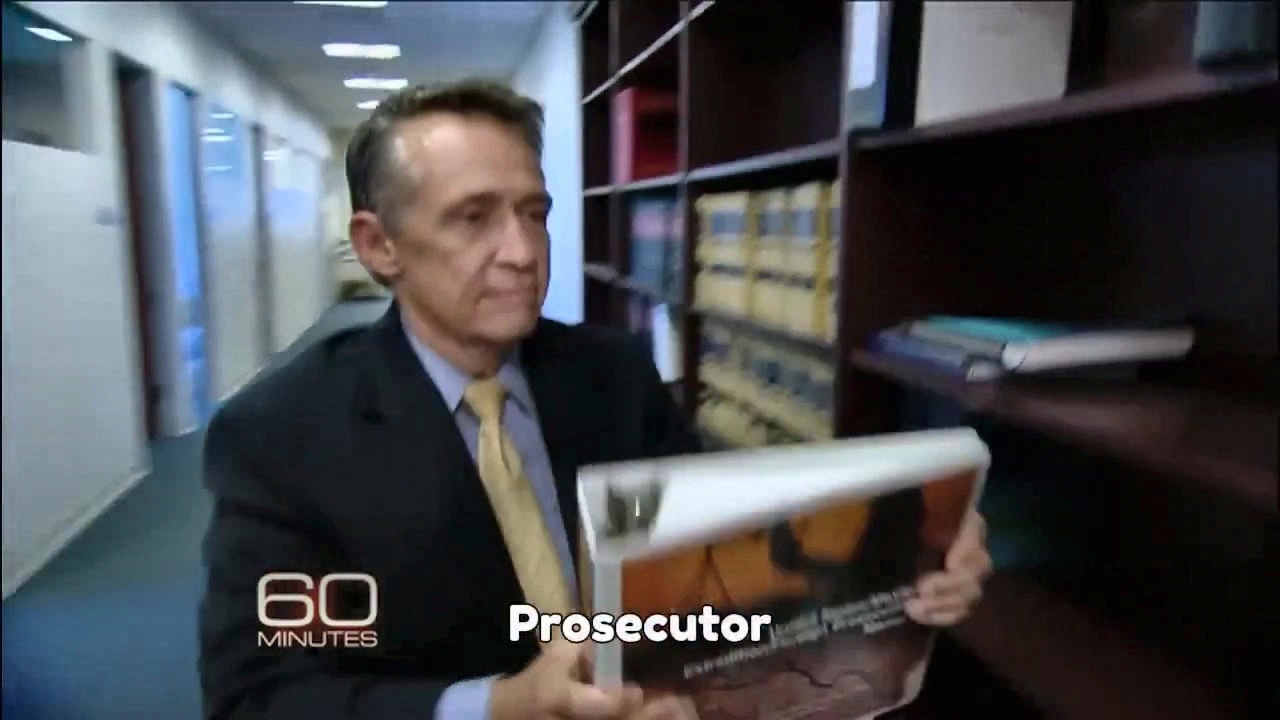
The footage then shifts to the prosecutor, who frames the case in explicitly legal terms: there is no evidence suggesting a child mistook the weapon for a toy or that the weapon discharged by accident. That statement functions as the prosecutorial hinge, converting a domestic tragedy into a chargeable intentional act.
The closing visual sequence carries the report's emotional and analytical weight. The prosecutor recounts that the minor was so small upon intake at juvenile hall that staff had to purchase a pair of tennis shoes in his size. The child then asked whether he would be permitted to keep the shoes upon release – a remark the prosecutor presents as evidence of an absolute failure to grasp the gravity of his circumstances. That single question, delivered without affect, becomes the segment's most cited moment and the flashpoint for public debate over culpability.
Corporate Liability and Critical Blind Spots
The evidentiary record presented on camera is narrow by design. The footage does not capture the interior of the residence at the time of the altercation, the positioning of the weapon before retrieval, or the sequence of events between the household gathering and the 4:02 a.m. call. What viewers receive is testimony reconstructed after the fact, layered over exterior establishing shots. Any conclusion about premeditation rests on the minor's own statements as relayed by investigators, not on direct observation.
Chain-of-custody questions also sit outside the broadcast frame. The record does not establish on camera how the weapon was secured, logged, and tested, nor whether the hammer-cocking account was corroborated by physical examination of the weapon. For a case turning on intentionality, those forensic details are material, and their absence from the segment constitutes a genuine blind spot rather than a mere editorial choice.
The viral framing of the incident compounds the problem. Assertions circulating about the household's public affiliations and armed activities, while consistent with the decedent's public profile, are not established by the footage itself. A rigorous reading separates what the camera documents – a detective's testimony and a prosecutor's characterization – from contextual claims imported from outside the exhibit.
Legal Distinction: Juvenile culpability in California is adjudicated through the juvenile justice system rather than adult criminal court, with competency determinations assessing whether a minor can understand proceedings and assist counsel. Separately, parental storage of a weapon in a residence accessible to a child can trigger civil liability and, in some jurisdictions, criminal exposure for negligent storage, independent of any fatal incident charge.
Statutory Framework and Protocol Analysis
The case illustrates how juvenile competency standards interact with evidentiary sufficiency. A minor's flat affect and preoccupation with possessions such as footwear are frequently misread by the public as proof of callousness, when in legal practice such responses are precisely the indicators competency evaluators are trained to weigh. The prosecutor's use of the shoe anecdote is rhetorically effective but legally adjacent: it speaks to comprehension, not to the elements of the offense.
Protocol analysis also exposes a parental duty-of-care gap. Weapons stored in a closet, accessible to a resident child, represent a foreseeable risk that storage statutes are designed to address. The segment never examines whether any storage requirement was breached, which is the compliance question with the broadest institutional consequences.
| Incident Parameter | Governing Legal Standard & Judicial Protocol |
|---|---|
| Age of the minor at the time of the act | Juvenile jurisdiction thresholds and competency evaluation standards |
| Weapon retrieval and handling | Negligent storage liability and child-access prevention statutes |
| Manner of discharge | Intentionality determination requiring forensic corroboration |
| Emergency call timeline | Dispatch records and first-responder arrival documentation |
| Custodial interview of a minor | Requirement for age-appropriate safeguards during interrogation |
| Detention intake conditions | Juvenile facility duty of care and provision of necessities |
| Prosecutorial characterization | Limits on prejudicial narrative in adjudicative proceedings |
Read more:
Read more: Buda Texas Flag Confrontation: Assault Charges Filed →
Core Questions and Institutional Review
- Did any adult in the household fail a legally codified duty to secure a weapon against access by a resident minor?
- Was the minor's custodial statement obtained under age-appropriate safeguards, and is its reliability subject to challenge?
- Did the juvenile facility's intake process properly document the minor's condition and comprehension at arrival?
- What storage-compliance enforcement, if any, followed from this case at the household or organizational level?
Systemically, the segment functions less as a portrait of one child than as an audit of the adults and institutions that surrounded him. A weapon in an unsecured closet, a child fluent in the mechanics of a Magnum, and a detention system scrambling to find shoes in his size together describe a chain of overlooked obligations. The courts will resolve the adjudication; the compliance failures that preceded it remain the more instructive ledger.

Practical Takeaways
- Recognize that juvenile statements require corroboration before intent is treated as settled.
- Treat unsecured household weapons as a documented liability exposure, not merely a household habit.
- Separate broadcast narrative from evidentiary record when assessing viral case claims.
- Track competency determinations as the decisive legal variable in juvenile adjudications.
- Monitor storage-compliance enforcement as the primary institutional reform lever in such cases.
FOLLOW-UP INVESTIGATION REPORT
Related documented case details, verified on-scene evidence, and statutory liability analysis continued below.
CONTINUE READING: NEXT INVESTIGATIVE DOSSIER →
Louisville Traffic Stop Frisk Raises Terry v. Ohio Questions

LOUISVILLE, Kentucky – A body-worn camera recording from an August 2018 traffic stop is renewing scrutiny of the legal threshold that governs when officers may convert a routine traffic violation into a physical search of a motorist. The footage, captured by a Louisville Metro Police Department officer, documents the detention and frisk of an 18-year-old driver whose vehicle was stopped for a wide turn, an encounter that produced no contraband and no weapons but has since become a case study in the gaps between statutory authority and street-level practice.
- The stop occurred on August 9, 2018, in Louisville, Kentucky, when Detective Kevin Crawford of the LMPD Ninth Mobile Division observed an orange vehicle make a wide left turn onto a two-lane roadway, a turn the recording itself acknowledges constituted a valid traffic violation.
- The driver, identified as 18-year-old Tae-Ahn Lee, had borrowed his mother's car to travel to a local convenience store and repeatedly stated he had committed no offense beyond the turn, audibly calling his mother during the escalation.
- On camera, the officer orders the driver out of the vehicle, directs him to place his hands on the car, and conducts a pat-down search while the driver asks why he is being searched; the search concludes with the officer stating the driver is "good to go."
- The recording documents that no drugs and no weapons were recovered, and the segment concludes with the officer wishing the driver a good day, leaving unanswered questions about supervisory review and the department's internal classification of the encounter.
What the Recorded Footage Captures: Chronological Breakdown
From the opening frame, the body-worn camera establishes a dashboard-level perspective through the driver's side window, with the orange hood of the vehicle filling the lower half of the frame and the driver seated with both hands visible near the steering wheel. The officer's first instructions are procedural and calm: hands on the wheel, identification requested, insurance confirmed. The audio captures the driver explaining he is on his way to work and cooperating with document requests. At this stage, the encounter appears to be an ordinary traffic stop governed by the standard citation-and-release framework.
The tone shifts when the officer directs the driver to place his phone on the street outside the vehicle. The driver questions why he is being removed from the car, and the officer responds that the phone would fall when the driver exits. The reasoning is logistical on its face, but the directive itself signals an escalation from roadside documentation to physical removal. The driver's voice rises as he tells someone on the phone, apparently his mother, that officers are taking him out of the vehicle. The recording captures that call in real time, an unusual evidentiary artifact that documents the driver's contemporaneous objection.
Once outside, the officer positions the driver against the vehicle and instructs him to spread his feet. The driver asks why he is being checked and states he has done nothing. The officer's response, captured clearly, is that he did not say the driver had done anything. That exchange is central to any subsequent legal analysis, because it separates the traffic violation from the justification for a frisk. The pat-down proceeds down the torso and legs, and the officer announces the driver is clear.
The final sequence shows the officer releasing the driver with a courteous closing, and the recording ends without any indication of a citation, an arrest, or a supervisory notification. The visual record is continuous from stop to release, but it begins after the turn itself, leaving the initial observation unrecorded.
Corporate Liability and Critical Blind Spots
The evidentiary record here is simultaneously strong and incomplete. Body-worn camera footage provides a synchronized audio-visual account, but it reflects only the officer's perspective and only from the moment of activation. Whatever preceded activation, including the decision to follow the vehicle and the initial radio communication, is not captured. For institutional review purposes, that gap matters because the legal justification for a frisk must be articulable and documented contemporaneously, not reconstructed after the fact.
The recording also lacks any visible supervisory involvement, any dispatch log confirming a drug-detection dog request, and any documentation of the department's case classification. Narrative accounts referencing a canine unit en route are not corroborated within the frames themselves, and should be treated as unverified unless a dispatch record surfaces. The driver's phone call to his mother is audible but the other party is not, and the recording does not establish whether the vehicle was searched beyond the person.
Finally, the footage carries overlay text identifying the driver and the legal standard applied by later commentators, but that text is editorial rather than evidentiary. A rigorous review must separate the underlying camera record from the analytical overlay, and must weigh the officer's own on-camera admission that he had not accused the driver of any offense against the stated basis for the frisk.
Statutory Framework and Protocol Analysis
Legal Distinction: Under Terry v. Ohio (1968), an officer may conduct a limited pat-down frisk only when specific, articulable facts support reasonable suspicion that the individual is both engaged in criminal activity and armed and dangerous. A traffic violation alone does not satisfy the second prong, and a generalized concern for officer safety without particularized facts does not authorize a search. The remedy for a violation is suppression of evidence and, in some jurisdictions, administrative discipline.
| Incident Parameter | Governing Legal Standard & Judicial Protocol |
|---|---|
| Wide-turn traffic violation | Valid basis for stop under state vehicle code; authorizes citation, not search |
| Removal from vehicle | Permissible only with lawful order or independent safety justification |
| Pat-down frisk | Requires reasonable suspicion of armed and dangerous status under Terry |
| Officer's on-camera statement | No accusation of offense undermines articulable suspicion for frisk |
| Absence of contraband | Confirms search produced no evidentiary basis for further detention |
| Body-camera activation | Department policy governs timing; pre-activation gap limits review |
| Supervisory documentation | Internal review protocols determine discipline and training outcomes |
Departmental policy in Louisville and comparable agencies typically requires that frisks be documented with the specific facts supporting suspicion. Where the on-camera record shows the officer disclaiming any accusation of wrongdoing, the documentation burden becomes difficult to satisfy. The stop also raises questions about specialized unit deployment: a violent-crime reduction unit conducting a traffic stop creates a mismatch between the unit's mandate and the legal threshold for the action taken.
Read more: {NOIBO}
Core Questions and Institutional Review
- Did the department's internal review identify the frisk as supported by articulable facts, and was any discipline or retraining imposed?
- What supervisory or dispatch records exist for this stop, and do they corroborate or contradict the on-camera sequence?
- Does departmental policy require a documented justification for removing a compliant driver from a vehicle during a traffic stop?
- What training changes, if any, followed from this encounter regarding Terry standards and specialized-unit traffic enforcement?
The broader implication extends beyond a single stop. Body-worn cameras have transformed traffic encounters into reviewable records, and that visibility raises the accountability bar for every officer who converts a citation into a search. When the recorded exchange itself contains the officer's admission that no offense was alleged, the institutional response becomes the decisive variable, determining whether the record functions as a training tool or as evidence of a compliance failure left unaddressed.


One comment on “California Juvenile Fatal incident: Ten-Year-Old’s Confession”