One moment he was laughing in the officer's face, a loose-limbed teenage kid with all the swagger of someone who believed the rules didn't apply to him. The next, the afternoon air filled with a sharp command and the unmistakable click of metal – and his cocky grin vanished. What happened in those few seconds between defiance and surrender is a masterclass in the raw, unpredictable chemistry of a street-level encounter.
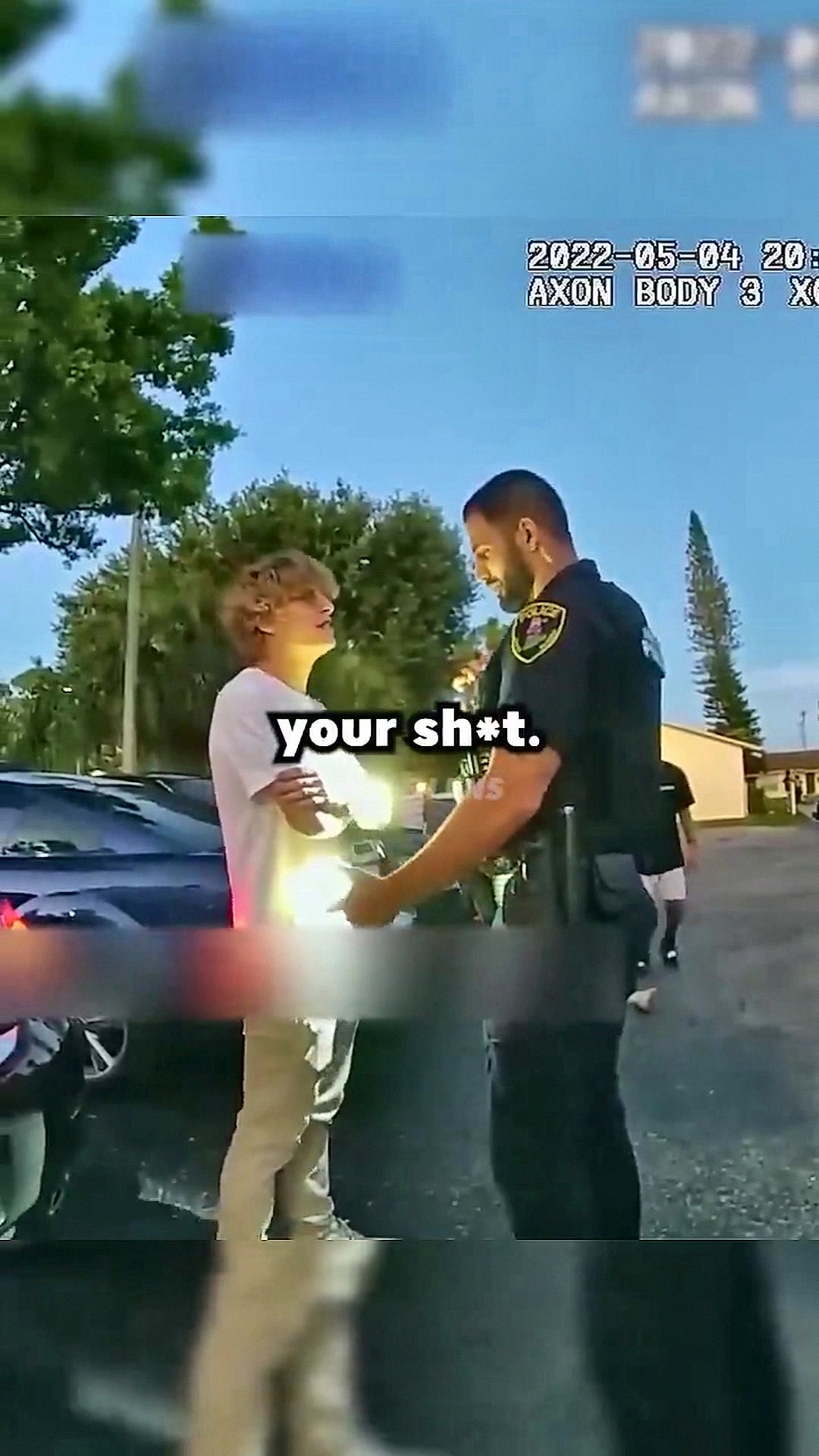
- The Scene: A sun-drenched parking lot beside a low-slung building, with a patrol car parked on the asphalt and a group of bystanders watching from a distance.
- The Friction: A teenage boy, arms loose, voice dripping with contempt, refuses to provide identification and taunts the officer with a challenge: "You ain't gonna get chaos."
- The Intervention: The officer, calm but deliberate, repeatedly orders him to remove his hands from his pockets, then moves to physically control the situation as the teenager's laughter turns to resistance.
- The Aftermath: The boy's posture collapses from bravado to apology in seconds, leaving behind a quiet, almost awkward silence and a single, telling admission: "I was just hyped up."
What the Recorded Footage Captures: Chronological Breakdown
The video opens on a wide shot of a sun-bleached parking lot, the kind of empty suburban space where nothing ever happens – until it does. A teenager, hair tousled and a faint smirk fixed on his face, stands a few feet from a uniformed officer whose body language is a study in controlled patience. The kid's hands hover near his waistband, an ambiguous gesture that the officer immediately flags. "Take that off," the officer says, his voice flat but firm, referring to whatever is in the boy's pockets. "Let me get your ID."
The boy's reply is immediate and casual: "You ain't gonna get chaos." He laughs, a short, high sound that carries across the empty asphalt. The officer, far from rattled, gives him a long, appraising look. "What you laughing for?" he asks, almost mildly, before repeating his command. The moment of escalation arrives when the boy shifts his weight and takes a half-step forward, chest out, as if daring the officer to move. The camera captures the officer's hand tightening at his side – a subtle tell that the patience is running out.
Then the scene breaks open. There is a flurry of movement – the officer steps in, hands reaching for the boy's arm, and the boy jerks away. "What the?" someone off-camera mutters. The boy's voice rises, indignant and sharp, and he can be heard saying, "You individual me." The officer doesn't argue. He doesn't raise his voice.
He simply moves with a practiced economy, and the next thing the camera sees is the boy's back as he is guided toward the building's wall, his bare feet stumbling on the cracked concrete. The audio catches a muffled, "I apologize," and the officer's reply, calm as ever: "Alright, I accept your apology, but we didn't have to take it to this level, man."
The boy's final confession is almost a whisper: "I know, I'm sorry. I was just hyped up." The sun still shines, the parking lot is still empty, but the air has changed. The laughter is gone.
Scroll down for the full investigative report below ↓
Critical Blind Spots: What the Lens Leaves Unresolved
The camera's frame is tight – too tight. It captures the officer's face and the boy's shoulders, but it misses the crucial first thirty seconds that preceded the encounter. What prompted the officer's approach? Was it a traffic stop, a noise complaint, or something else entirely? The video offers no answer.
The boy's hands, at the start, are hidden by the angle, so it's impossible to tell whether he was reaching for a phone or something else. The officer's decision to escalate – to move from words to physical control – is justified by his repeated orders, but the audience never hears what those orders were before the recording began.
There is also the matter of the unnamed bystander who appears briefly in the background, a figure in shorts and a dark shirt who seems to be filming. Their perspective might have captured a wider angle, but their footage is not included. What did they see? Did they intervene, or did they simply watch? The original description offers only a tantalizing frame: a kid who tried to fight a cop and ended up humbled. But the story behind the challenge – the reason for the boy's anger, the officer's prior interactions with him, the possibility of a prior warning – remains a black box.
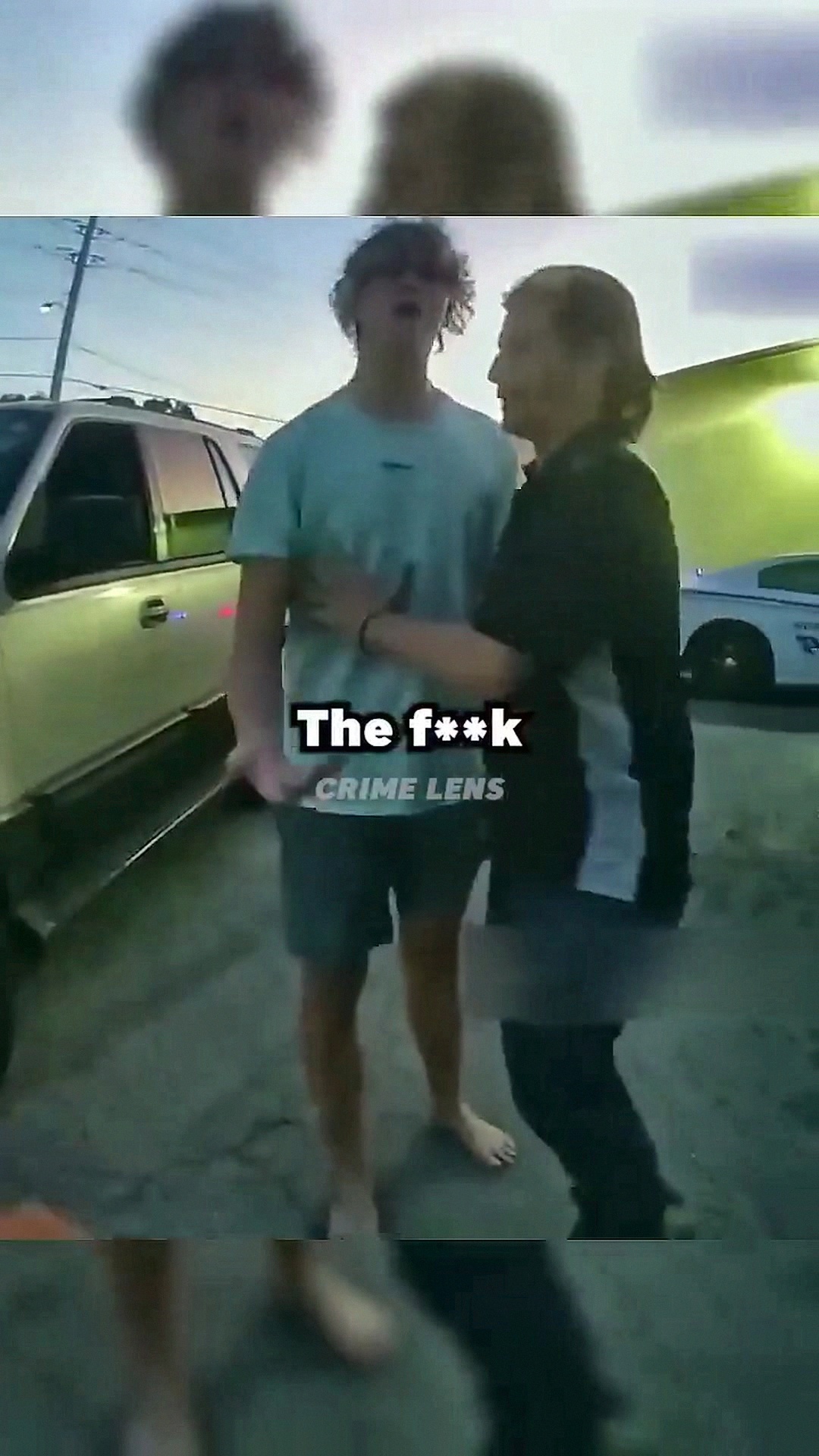
The boy's language is another blind spot. His words are slurred, his sentences fragmentary. "It's no big deal," he says at one point, and then, addressed to someone off-camera, "Hey bro, what's up, man?" It's unclear whether he is speaking to the officer or to a friend. The thin audio makes it impossible to know for sure. What is clear is that his bravado was a performance – one that crumbled the moment real consequences appeared.
Statutory Framework and Protocol Analysis
The officer's conduct tracks closely with standard constitutional standards. In Terry v. Ohio, the Supreme Court established that an officer may briefly detain a person when there is reasonable suspicion of criminal activity. In Pennsylvania v. Mimms, the Court held that officers may order a driver out of a vehicle during a traffic stop. Here, the officer's repeated command to "take that off" – presumably referring to the boy's hands or an object – reflects a standard safety protocol, especially when a subject's hands are not visible. The decision to physically control the boy after he refused to comply and appeared to resist is consistent with the principle that officers may use reasonable force to effect a lawful arrest or detention.
What stands out, however, is the officer's restraint. He does not shout, he does not threaten, and he does not escalate verbally. He gives the boy multiple opportunities to comply. That measured approach is a textbook example of de-escalation, and it likely prevented the situation from turning violent. The boy's eventual apology and admission that he was "hyped up" is a reminder that youthful defiance often masks fear or peer pressure – not a hardened criminal intent.
| Incident Parameter | Observation at the Scene |
|---|---|
| Location type | Open parking lot beside a low-rise building, daylight |
| Subject's demeanor | Laughing, dismissive, physically loose and confrontational |
| Officer's verbal commands | Repeated order to remove hands from pockets and produce ID |
| Escalation trigger | Subject stepped forward and refused physical compliance |
| Subject's spoken words | "You ain't gonna get chaos" and "You individual me" |
| Resolution | Subject apologized, admitted being "hyped up," taken into custody |
| Bystander presence | A distant figure filming, not intervening |
Read more:
Read more: Nighttime Federal Enforcement Action Caught on Camera →
Core Questions and Institutional Review
- What specific infraction or suspicion prompted the officer's initial approach, and was the boy informed of it?
- Did the boy have a prior history with law enforcement that influenced his defiant posture, or was this a first-time encounter?
- What was the role of the bystander who filmed the later portion – were they a friend, a family member, or an independent witness?
- Did the officer's decision to physically control the boy follow a clear verbal warning that was captured on the body camera but not in this clip?
The video ends with the boy standing still, his earlier smirk replaced by a blank, chastened expression. The officer's final words – "we didn't have to take it to this level" – hang in the air like a verdict.
And yet, for all the clarity of the footage, one question lingers: in a moment of youthful stupidity, does a swift and decisive consequence teach a lesson – or does it simply end a confrontation that could have been defused with a different kind of conversation? The answer, like the boy's missing first few seconds on tape, is left for the viewer to decide.
FOLLOW-UP INVESTIGATION REPORT
Related documented case details, verified on-scene evidence, and statutory liability analysis continued below.
CONTINUE READING: NEXT INVESTIGATIVE DOSSIER →
Boston’s Ben Franklin Impersonator Arraigned in Full Costume
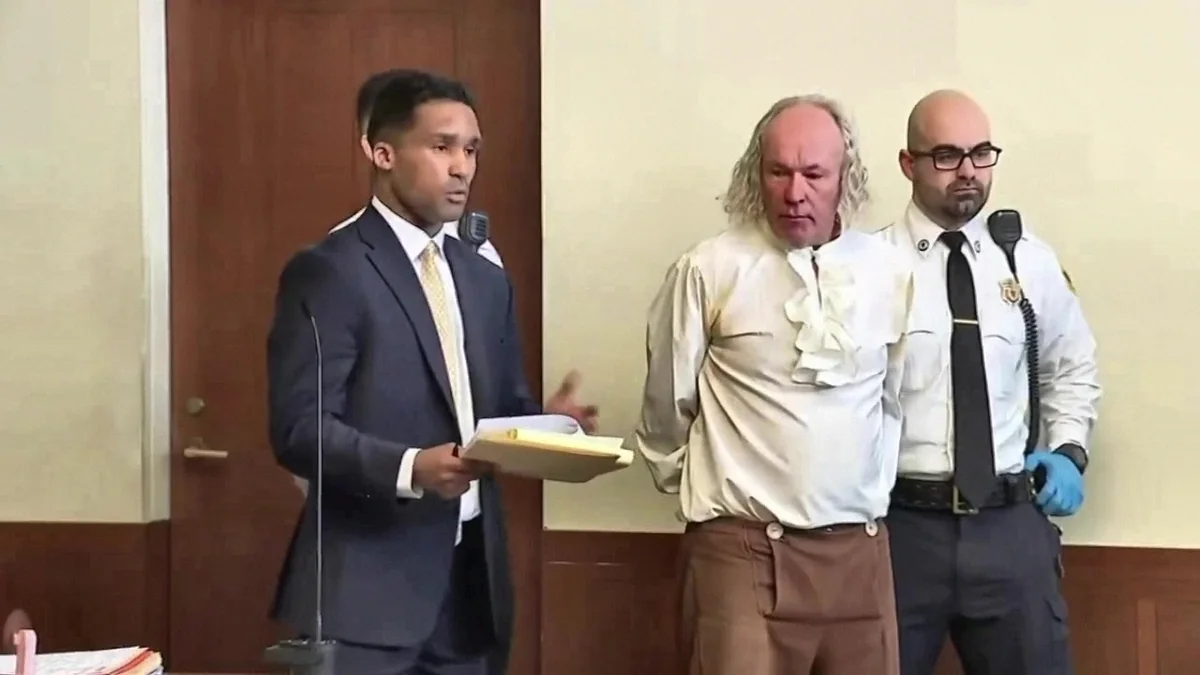
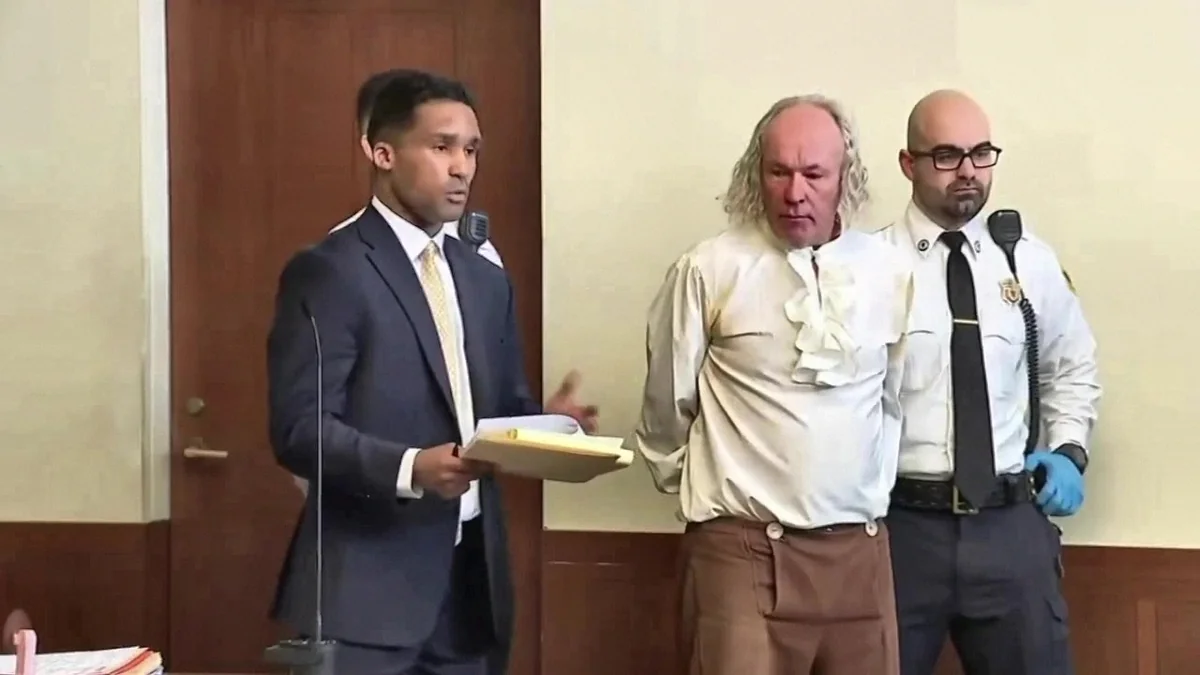
The fluorescent lights of Boston Municipal Court hummed over an unlikely tableau: a 66-year-old man in a ruffled white shirt, brown breeches, and shoulder-length wig, standing beside a sheriff's deputy in blue nitrile gloves. The man known on the Freedom Trail as Benjamin Franklin was not there to perform. He was there to answer for warrants. What unfolded over the next several minutes was a quiet collision between colonial costume and modern criminal procedure, and the room seemed unsure whether to laugh or look away.
- The scene: A crowded Boston courtroom where a costumed tour guide stood shackled before a judge, his powdered wig a stark contrast to the court's dark wood paneling.
- The friction: The defendant, Timothy Kingman, 66, faced misdemeanor shoplifting and assault charges, and his attorney argued the alleged victim actually caused the altercation by grabbing a phone.
- The intervention: The defense team presented a detailed personal history – Coast Guard service, engineering degrees, eight months of sobriety – to argue for release.
- The aftermath: The judge granted personal recognizance, imposing a protective order and a January 13 pretrial date while the defendant walked out without posting a single dollar.
What the Recorded Footage Captures: Chronological Breakdown
The video opens with Kingman already in custody, his hands secured behind his back. A sheriff's deputy in a crisp white uniform shirt stands at his right shoulder, his blue-gloved hand resting near the defendant's elbow. To Kingman's left, defense attorney Nicholas Santiago holds a thick manila folder, his suit sharply pressed, his posture leaned slightly forward as he addresses the bench. The camera catches the moment Kingman shifts his weight, his breeches creasing at the waist, and glances toward the deputy with a look that is neither defiant nor defeated – just tired.
As the hearing proceeds, the deputy remains a silent fixture, his sunglasses propped on his forehead, his expression flat. The turning point arrives when the judge speaks directly to the defendant, confirming the terms of release. Kingman nods once, his wig slipping a fraction, and his attorney steps in to acknowledge the protective order. The camera holds on the three men – lawyer, defendant, deputy – frozen in the strange choreography of a criminal proceeding that happens to involve a man dressed for a colonial parade.
The footage does not capture the arrest itself, nor the alleged incidents that led to the warrants. What it does capture is the strange dignity of the moment: a man in costume, treated by the court with the same procedural gravity as any other defendant, his attire never once mentioned on the record.
Critical Blind Spots: What the Lens Leaves Unresolved
The camera never enters the courtroom gallery, so the public reaction remains unseen. Did anyone laugh? Did anyone fidget? The frame offers no witnesses, no reactions, only the three central figures. The defense's version of events – that the alleged victim, a man named Hoover, knocked a phone from Kingman's hand and that Kingman sustained the brunt of the injuries – is spoken aloud but not corroborated by any visual evidence in the footage.
The video also leaves open the question of Kingman's physical condition. His attorney mentions a shoulder injury requiring physical therapy and a thumb injury that sent him to the hospital, but the footage shows only a man standing upright, his hands cuffed behind him, his face largely impassive. The gap between the spoken record and the visible record is the space where the real dispute lives.
Statutory Framework and Protocol Analysis
The judge's decision to release Kingman on personal recognizance reflects a routine application of Massachusetts bail standards, which prioritize individualized assessments of risk of flight and danger to the community. The defense leveraged Kingman's eight-year Coast Guard service, his self-employment as a tour guide, and his eight months of sobriety as evidence of stable community ties. The protective order – barring contact with the alleged victim and the location of the shoplifting offense – is a standard condition designed to preserve the integrity of the proceedings.
| Incident Parameter | Recorded On-Scene Evidence |
|---|---|
| Defendant's attire | Full Benjamin Franklin costume: ruffled shirt, breeches, wig |
| Custodial status | Hands cuffed behind back, flanked by sheriff's deputy |
| Defense argument | Alleged victim knocked phone from defendant's hand |
| Defendant's injuries | Shoulder and thumb injuries reported, requiring medical care |
| Alleged victim's injuries | None reported per the police report |
| Release conditions | Personal recognizance, no monetary bail |
| Next court date | January 13 pretrial hearing |
Read more: {NOIBO}
The court's inquiry stayed strictly on procedure. The judge did not comment on the costume, nor on the unusual optics of a colonial impersonator in custody. Under established Fourth Amendment standards, the initial arrest required probable cause, and the subsequent search and seizure followed standard booking procedure. Under Fifth Amendment principles, Kingman's silence or statements to police would be subject to Miranda protections if custodial interrogation occurred – a detail not visible in the footage.
Core Questions and Institutional Review
- Did the police report accurately capture the sequence of events, particularly the alleged phone-grabbing by the victim?
- Was Kingman's costume considered a factor in the arrest, or was it purely incidental to the warrant sweep?
- How did the court evaluate the credibility of the defense's injury claims without medical records on the record?
- What does the protective order's scope mean for Kingman's future tours along the Freedom Trail?
The camera's final frame shows Kingman standing still, his wig slightly askew, the blue gloves of the deputy still resting at his side. The hearing is over. He will return in January, likely again in costume, again in cuffs, unless the pretrial hearing resolves the matter. The room's flat lighting offers no answers – only the quiet, unspoken question of how a city's most recognizable historical character ended up in its criminal docket, and what the gap between appearance and evidence will mean for the case ahead.



One comment on “Teen Taunts Cop Then Apologizes: Bodycam Footage Analysis”