The fluorescent lights of Boston Municipal Court hummed over an unlikely tableau: a 66-year-old man in a ruffled white shirt, brown breeches, and shoulder-length wig, standing beside a sheriff's deputy in blue nitrile gloves. The man known on the Freedom Trail as Benjamin Franklin was not there to perform. He was there to answer for warrants.
What unfolded over the next several minutes was a quiet collision between colonial costume and modern criminal procedure, and the room seemed unsure whether to laugh or look away.
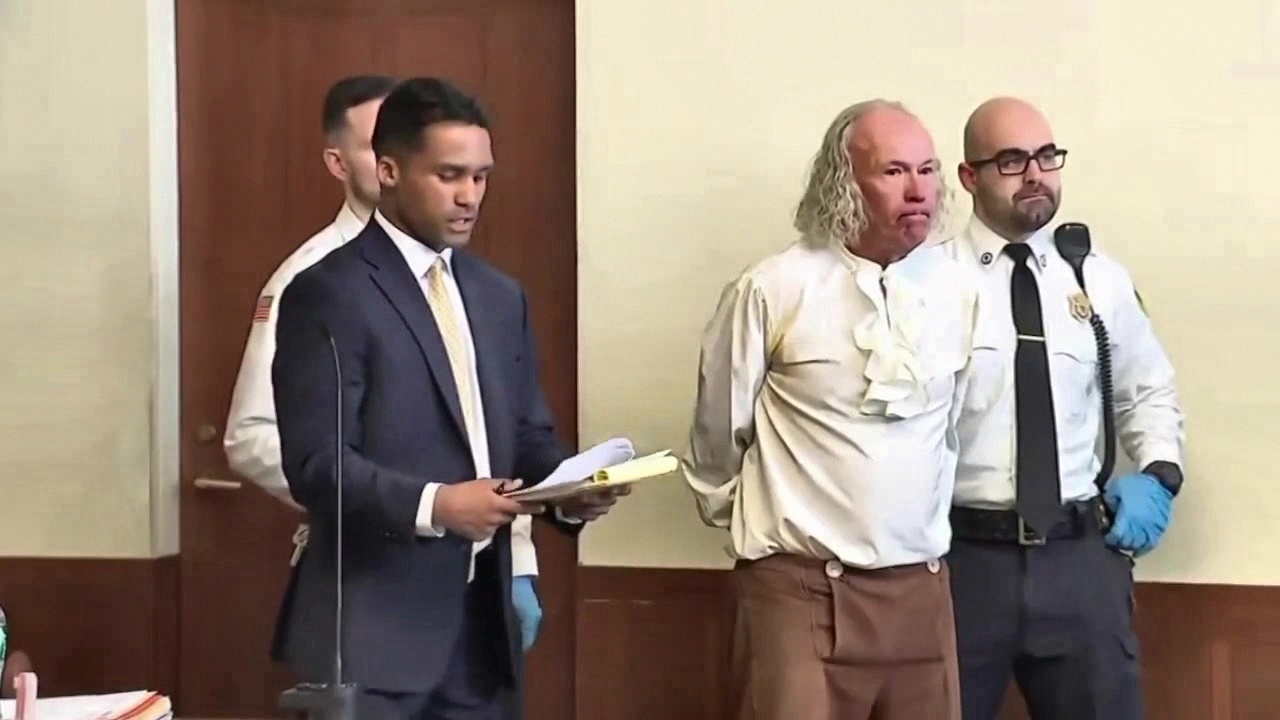
- The scene: A crowded Boston courtroom where a costumed tour guide stood shackled before a judge, his powdered wig a stark contrast to the court's dark wood paneling.
- The friction: The defendant, Timothy Kingman, 66, faced misdemeanor shoplifting and assault charges, and his attorney argued the alleged victim actually caused the altercation by grabbing a phone.
- The intervention: The defense team presented a detailed personal history – Coast Guard service, engineering degrees, eight months of sobriety – to argue for release.
- The aftermath: The judge granted personal recognizance, imposing a protective order and a January 13 pretrial date while the defendant walked out without posting a single dollar.
What the Recorded Footage Captures: Chronological Breakdown
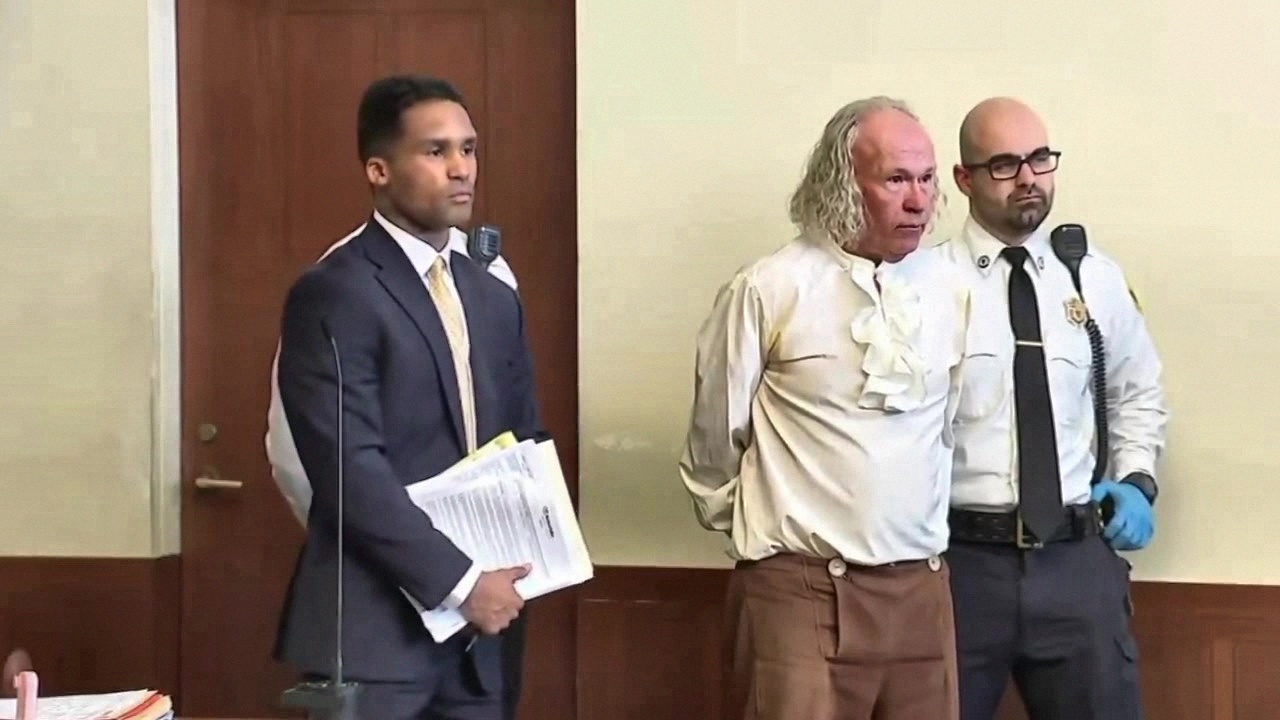
The video opens with Kingman already in custody, his hands secured behind his back. A sheriff's deputy in a crisp white uniform shirt stands at his right shoulder, his blue-gloved hand resting near the defendant's elbow. To Kingman's left, defense attorney Nicholas Santiago holds a thick manila folder, his suit sharply pressed, his posture leaned slightly forward as he addresses the bench.
The camera catches the moment Kingman shifts his weight, his breeches creasing at the waist, and glances toward the deputy with a look that is neither defiant nor defeated – just tired.
As the hearing proceeds, the deputy remains a silent fixture, his sunglasses propped on his forehead, his expression flat. The turning point arrives when the judge speaks directly to the defendant, confirming the terms of release. Kingman nods once, his wig slipping a fraction, and his attorney steps in to acknowledge the protective order. The camera holds on the three men – lawyer, defendant, deputy – frozen in the strange choreography of a criminal proceeding that happens to involve a man dressed for a colonial parade.
The footage does not capture the arrest itself, nor the alleged incidents that led to the warrants. What it does capture is the strange dignity of the moment: a man in costume, treated by the court with the same procedural gravity as any other defendant, his attire never once mentioned on the record.
Scroll down for the full investigative report below ↓
Critical Blind Spots: What the Lens Leaves Unresolved
The camera never enters the courtroom gallery, so the public reaction remains unseen. Did anyone laugh? Did anyone fidget? The frame offers no witnesses, no reactions, only the three central figures. The defense's version of events – that the alleged victim, a man named Hoover, knocked a phone from Kingman's hand and that Kingman sustained the brunt of the injuries – is spoken aloud but not corroborated by any visual evidence in the footage.
The video also leaves open the question of Kingman's physical condition. His attorney mentions a shoulder injury requiring physical therapy and a thumb injury that sent him to the hospital, but the footage shows only a man standing upright, his hands cuffed behind him, his face largely impassive. The gap between the spoken record and the visible record is the space where the real dispute lives.
Statutory Framework and Protocol Analysis
The judge's decision to release Kingman on personal recognizance reflects a routine application of Massachusetts bail standards, which prioritize individualized assessments of risk of flight and danger to the community. The defense leveraged Kingman's eight-year Coast Guard service, his self-employment as a tour guide, and his eight months of sobriety as evidence of stable community ties. The protective order – barring contact with the alleged victim and the location of the shoplifting offense – is a standard condition designed to preserve the integrity of the proceedings.
| Incident Parameter | Recorded On-Scene Evidence |
|---|---|
| Defendant's attire | Full Benjamin Franklin costume: ruffled shirt, breeches, wig |
| Custodial status | Hands cuffed behind back, flanked by sheriff's deputy |
| Defense argument | Alleged victim knocked phone from defendant's hand |
| Defendant's injuries | Shoulder and thumb injuries reported, requiring medical care |
| Alleged victim's injuries | None reported per the police report |
| Release conditions | Personal recognizance, no monetary bail |
| Next court date | January 13 pretrial hearing |
Read more:
Read more: Tatiana Martinez Arrest: Investigators’ detention in Los Angeles →
The court's inquiry stayed strictly on procedure. The judge did not comment on the costume, nor on the unusual optics of a colonial impersonator in custody. Under established Fourth Amendment standards, the initial arrest required probable cause, and the subsequent search and seizure followed standard booking procedure. Under Fifth Amendment principles, Kingman's silence or statements to police would be subject to Miranda protections if custodial interrogation occurred – a detail not visible in the footage.
Core Questions and Institutional Review
- Did the police report accurately capture the sequence of events, particularly the alleged phone-grabbing by the victim?
- Was Kingman's costume considered a factor in the arrest, or was it purely incidental to the warrant sweep?
- How did the court evaluate the credibility of the defense's injury claims without medical records on the record?
- What does the protective order's scope mean for Kingman's future tours along the Freedom Trail?
The camera's final frame shows Kingman standing still, his wig slightly askew, the blue gloves of the deputy still resting at his side. The hearing is over. He will return in January, likely again in costume, again in cuffs, unless the pretrial hearing resolves the matter.
The room's flat lighting offers no answers – only the quiet, unspoken question of how a city's most recognizable historical character ended up in its criminal docket, and what the gap between appearance and evidence will mean for the case ahead.
FOLLOW-UP INVESTIGATION REPORT
Related documented case details, verified on-scene evidence, and statutory liability analysis continued below.
CONTINUE READING: NEXT INVESTIGATIVE DOSSIER →
Nighttime Federal Enforcement Action Caught on Camera
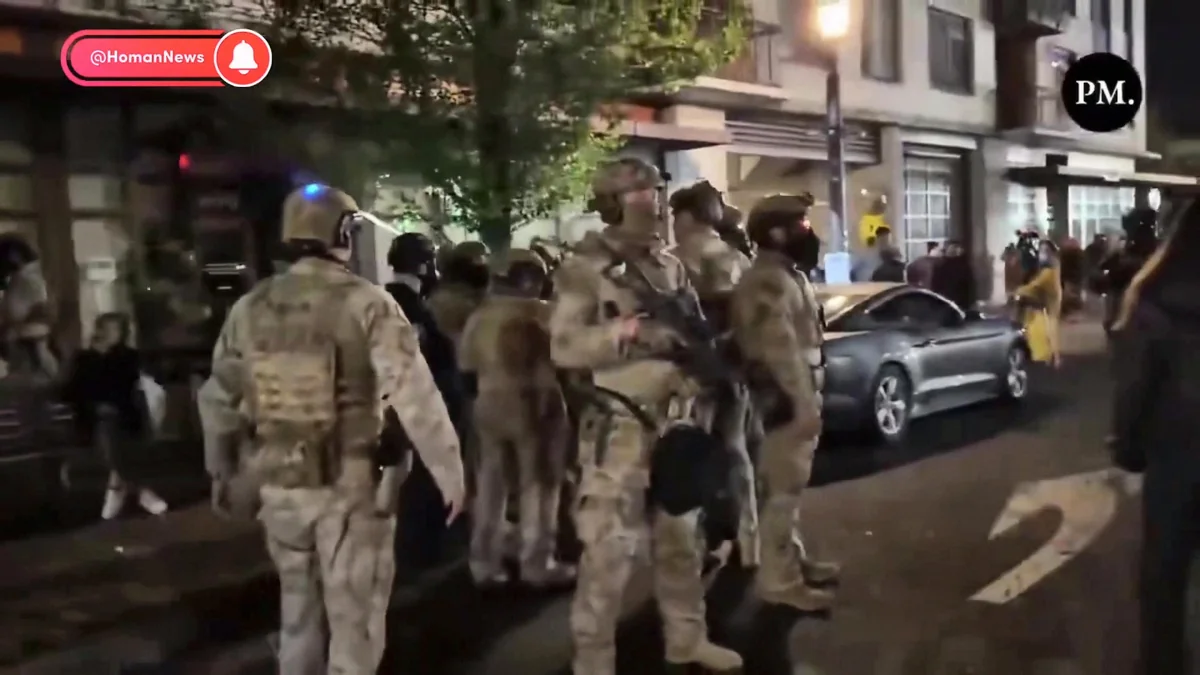
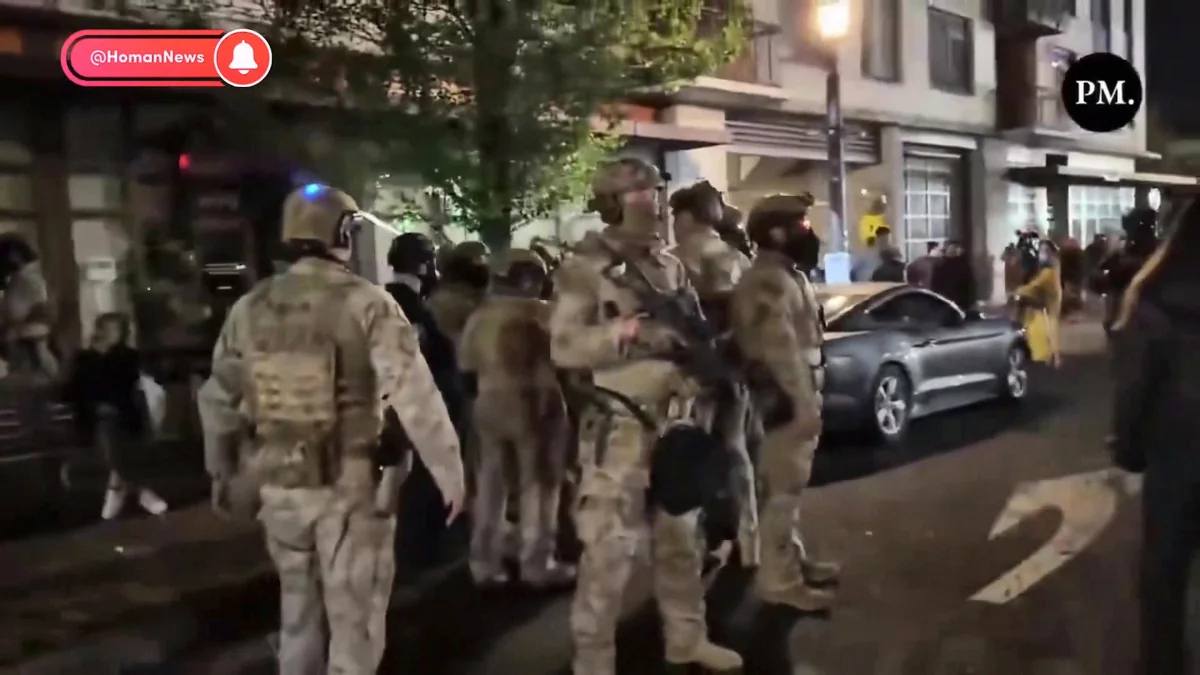
**Nightfall Raid: Inspection officers Swarm a City Corner
The streetlights had barely warmed the pavement when the side door of a dark van slid open and heavily equipped inspection officers stepped directly into the path of a moving protest. What followed was a blur of shouting, scrambling bodies, and a single repeated warning that cut through the noise: do not sign anything. The footage, captured at night and circulated with the label HumanNews, documents a rapid enforcement action that raises as many questions as it answers.
- A group of protesters is walking through a city intersection at night when a tactical-style vehicle arrives and officers in camouflage gear disembark in a coordinated line.
- The officers move directly toward individuals in the crowd, closing distance quickly while the surrounding protesters turn, scatter, and begin recording on their phones.
- One person is taken into custody amid profanity and panicked shouting, and a voice on the recording repeatedly warns the detainee to refuse any paperwork.
- The scene ends with officers escorting the detainee away as the remaining crowd lingers in the street, and no clear statement of charges is audible on the tape.
The clip opens with an almost mundane calm. A wide shot shows a city block at night, storefronts dark, a few vehicles paused at the crosswalk, and officers standing in a loose perimeter near the curb. The lighting is harsh and orange from the streetlamps, and shadows pool under the awnings. Then the camera swings, and the rhythm of the scene changes.
Officers in matching camouflage uniforms and helmets begin crossing the street in a staggered line, their movements practiced and unhurried. The crowd in front of them is not a dense wall but a scattered, shifting collection of people, some in dark clothing, some carrying bags, some already backing away. The visual evidence shows no barricade, no line of shields – just bodies moving toward other bodies, and the sudden, unmistakable geometry of an arrest forming.
The most disorienting moment comes when the camera loses its subject. The frame fills with the backs of bystanders, a plaid shirt, a swinging arm, the blur of a person running past the lens. For several seconds the viewer sees only fragments: a shoulder, a shoe, a slice of pavement. The audio tells a different story than the image, threading panic through the gap where the arrest is happening off-screen.
"Oh! Please, I'm going to go to jail. F – you!"
Then the voice shifts from pleading to instructive, sharp and urgent, aimed at the person being held.
"When they ask you to sign anything, you say no!"
That line lands harder than any of the profanity around it. It is the sound of someone who has been through this before, or who has been trained, or who simply knows that a signature in a holding room can become a permanent record. The camera never shows the paperwork. It never shows the officer's hands. It shows a street, a crowd, and a warning delivered at full volume.
Critical Blind Spots: What the Lens Leaves Unresolved
The footage is dominated by its own chaos. Because the camera operator turns with the crowd, the actual moment of detention – the hands on the arm, the compliance or resistance, the officer who made the decision – is largely absent from the frame. What is visible is the aftermath: a detainee being moved, the crowd reacting, officers in a line, a street temporarily frozen.
No agency identification is legible. The camera works in the dark. No badge number, no unit insignia, no vehicle marking is readable in any of the frames. The voice in the audio refers to federal enforcement, and the broadcast commentary frames the scene that way, but the images themselves do not confirm a specific agency, a specific jurisdiction, or a specific charge.
The crowd is also anonymous. There is no visible group insignia, no banner, no identifying clothing that would connect the people in the street to a named organization. The people in the frames are reacting to an enforcement action; the frames do not establish who they are, why they were there, or what preceded the van's arrival. That gap matters because it is exactly where rumor fills in. Without a clear record of the minutes before the camera rolled, the clip can be made to support almost any narrative.
Statutory Framework and Protocol Analysis
The relevant legal architecture here is familiar and well-litigated. Under Terry v. Ohio, an officer may briefly detain a person on reasonable suspicion of criminal activity, and under Pennsylvania v. Mimms an officer may direct a lawfully stopped person to step out of a vehicle. Probable cause, not suspicion, is required for a full custodial arrest. And Rodriguez v. United States sets a firm limit on how long a stop may be extended beyond its original purpose without independent justification. These are the guardrails that separate an enforcement action from an arbitrary one.
| Incident Parameter | Observation at the Scene |
|---|---|
| Time of day | Nighttime, illuminated by streetlamps and storefront lighting |
| Visible personnel | Officers in camouflage uniforms, helmets, and tactical equipment |
| Approach method | Rapid dismount from a vehicle directly into the crowd's path |
| Crowd behavior | Scattering, recording on phones, shouting, partial retreat |
| Audible commands | Refusal-to-sign warning repeated by a bystander, not an officer |
| Identification | No legible agency markings, badges, or unit numbers in frame |
| Documented outcome | One person escorted away; charges not announced on tape |
What the table makes clear is how much of a lawful encounter depends on details the camera simply cannot capture. A correct arrest and an overreach can look identical in a shaky night shot. The presence of probable cause, the specificity of any warning given, the exact duration of the detention before transport – none of that is visible. That is not a flaw in the clip; it is the nature of bystander video, and it is why the footage should be treated as the beginning of an inquiry rather than the end of one.
Core Questions and Institutional Review
- What specific legal basis was cited for the detention, and was it articulated to the person before restraint?
- Which agency conducted the action, and was it operating under a warrant, an administrative process, or an on-view arrest?
- What was the complete sequence of events in the sixty seconds before the camera began recording?
- Was the warning not to sign documents grounded in a specific consequence the detainee actually faced, or was it general advice?
The street clears slowly in the final frames. Officers continue to hold the perimeter while the remaining protesters drift toward the corners, some still filming, some standing still with their arms at their sides. The crosswalk lies empty under the light. There is no closing statement, no press briefing, no charge read aloud into the night air. Only the sound of a voice telling someone not to put their name on a piece of paper.
And the question that lingers, the one the footage cannot answer, is whether that warning protected a person's rights or deepened their trouble. What do you think the record would show if the missing sixty seconds were recovered?



One comment on “Boston’s Ben Franklin Impersonator Arraigned in Full Costume”