
Scroll down for the full investigative report below ↓
LOS ANGELES – A recorded confrontation outside the Metropolitan Detention Center in downtown Los Angeles is raising serious questions about proportional response, federal detention protocols, and the boundaries of civil liability. The footage, captured on October 4, 2025, documents the rapid escalation from a traffic obstruction complaint to a physical arrest, culminating in allegations of sexual assault and civil rights violations shouted by bystanders. The incident underscores the high-stakes friction between federal enforcement operations and public scrutiny in an era of ubiquitous recording.
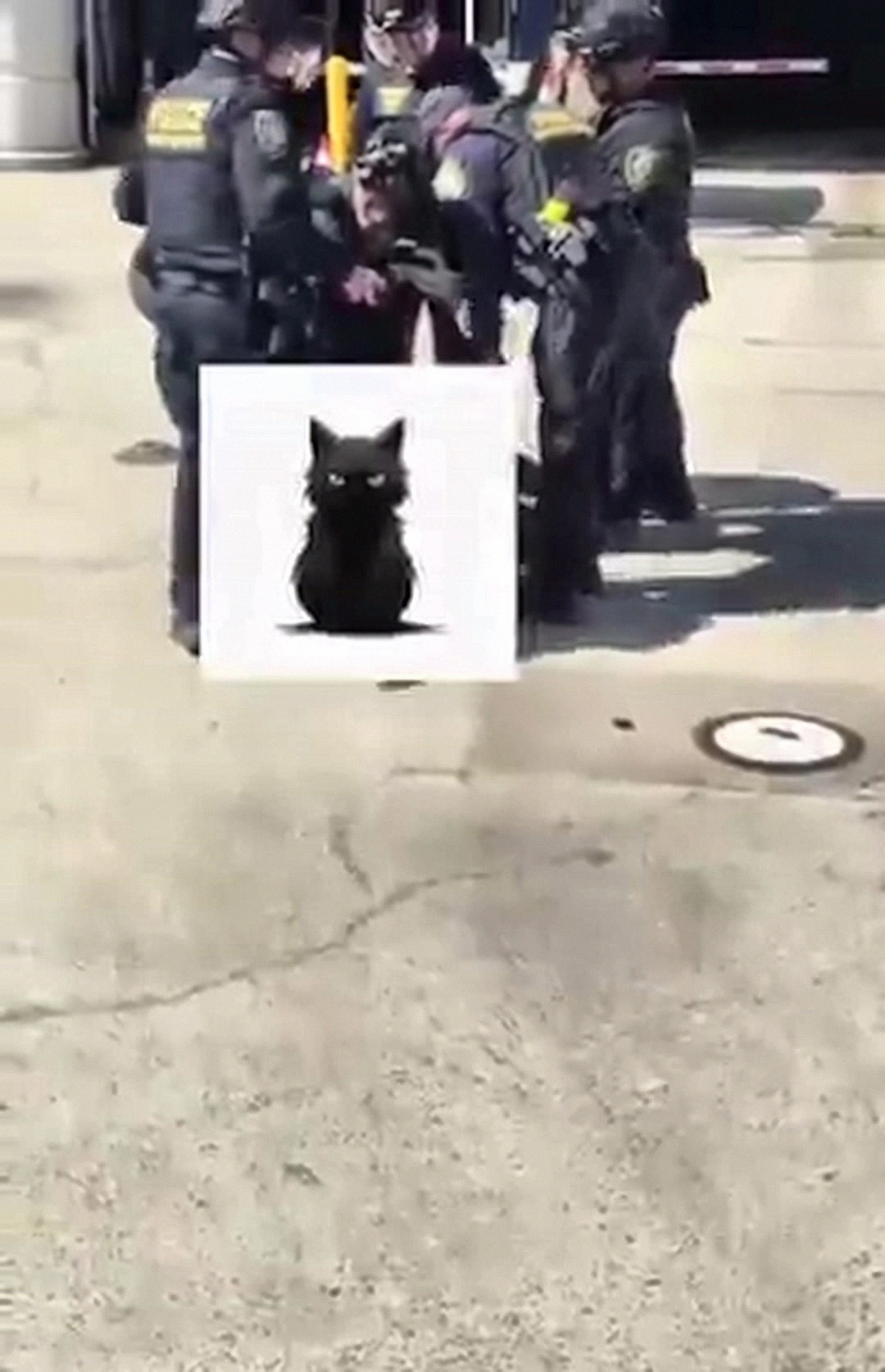
- The event occurred at the driveway ramp of a federal detention facility in Los Angeles, California, where a woman had parked her vehicle, allegedly obstructing the garage entrance.
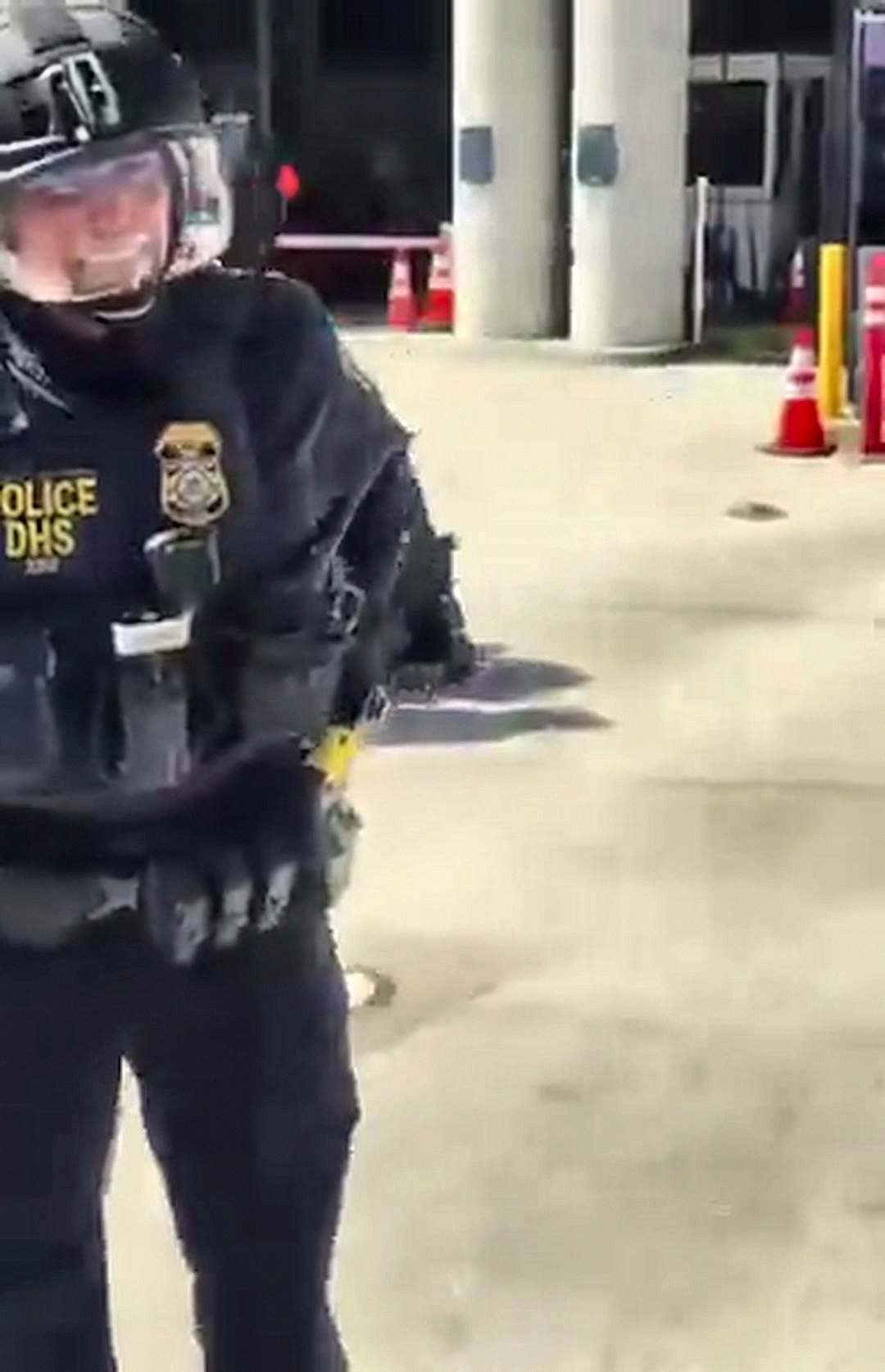
- Video footage shows fully equipped inspection officers in riot gear – including helmets and tactical vests – confronting the woman, who repeatedly asserts she is not in custody.
- The confrontation escalates as officers move to handcuff and physically drag the woman, leading to a chaotic scene where bystanders accuse officers of pulling off her clothes and committing sexual assault.
- The Department of Homeland Security (DHS) later stated the woman refused multiple orders to move the vehicle and provide identification, while no specific criminal charges or civil liability outcomes have been publicly disclosed.
What the Recorded Footage Captures: Chronological Breakdown
From the first frame, the camera captures a scene of stark asymmetry. A woman stands near her vehicle at the base of a ramp marked with red-and-white striped barriers. Approaching her are several inspection officers clad in dark tactical gear, their helmets and reinforced vests signaling a high-risk operation. The audio reveals a bystander’s voice mocking the display: “Get your helmet on! You gonna come tow it with your helmet?”
This verbal jab highlights the perceived absurdity of the deployment for what appears to be a parking violation. The officers, however, proceed with a scripted enforcement approach, issuing commands that are not fully audible but are met with the woman’s repeated query, “She literally was asking a question.”
As the footage progresses, the tension spikes when officers inform the woman she is under arrest. The camera shakes as the operator moves closer, capturing the moment officers grab her arms. The woman’s voice rises: “You cannot detain. You cannot detain.” The physical struggle intensifies; the camera captures a blur of blue jeans and dark uniforms as she is pulled toward the ground.
At this point, a female bystander’s voice cuts through the chaos: “Stop pulling her clothes off! Stop pulling her clothes off!” The perspective shifts to a low angle, showing the woman’s legs and torso as officers attempt to secure her hands behind her back. The audio captures her cry: “Sexual assault is happening right now. You guys are sexually assaulting this woman.”
The final segment of the recording shows the woman being dragged across the concrete toward the facility entrance. Officers maintain their grip, and the camera follows the movement, revealing the woman’s exposed skin as her clothing rides up during the struggle. The bystander continues to shout, “You are not allowed to handle her any further. You are not allowed to handle her,” and accuses the officers of brutalizing a non-resisting subject.
The footage ends with the woman being pulled through the doorway, her voice fading as she asserts, “You are obstructing my civil rights.” The visual record presents a complete arc from verbal confrontation to physical removal, with no clear indication of the exact moment resistance escalated.
Corporate Liability and Critical Blind Spots
While the incident involves government actors, the underlying principles of liability and evidentiary scrutiny mirror those in corporate compliance investigations. The most significant blind spot is the pre-recording timeline: what transpired between the initial parking violation and the arrival of the tactical team? The video begins with officers already in riot gear, raising questions about the threat assessment that justified such a deployment.
Without body-worn camera footage or a complete dispatch log, the exact commands given to the woman remain unverified. The bystander’s claim that she was “about to move” the car cannot be corroborated solely from the clip, which captures only the moment of arrest.
The chain of custody for the viral video is also unestablished. The footage appears to be recorded on a personal smartphone, and the identity of the uploader is unknown. This raises concerns about selective editing or omission of context. Furthermore, the allegations of sexual assault are made by a third party, not the woman herself, and are not visually confirmed on camera.
The officers’ conduct – specifically the handling of clothing – is partially obscured by the angle and the cluster of bodies. These evidentiary gaps are critical for any future civil or administrative review, as they leave room for competing narratives about the level of resistance and the necessity of force.
Statutory Framework and Protocol Analysis
Legal Distinction: The distinction between a lawful detention and an unlawful arrest hinges on probable cause. Under federal law, obstructing a federal driveway can constitute a misdemeanor, but the use of force must be proportionate. The Fourth Amendment protects against unreasonable seizures, and the Fourteenth Amendment’s due process clause applies to state actors, though field investigators are bound by the Fifth Amendment. Allegations of sexual assault during a pat-down or arrest would trigger a separate criminal inquiry under state law, but the burden of proof requires clear evidence of intent or knowing conduct, which is not evident in the recording.
Federal enforcement protocols generally require a graduated response to non-compliance. The deployment of a full tactical team for a traffic obstruction is an outlier that invites scrutiny under internal use-of-force policies. The DHS’s public statement that the woman refused orders and identification suggests a narrative of non-compliance, but the video does not capture the exact wording or repetition of those orders. This gap is significant for assessing whether the officers’ actions met the standard of objective reasonableness established in Graham v. Connor.
| Incident Parameter | Governing Legal Standard & Judicial Protocol |
|---|---|
| Obstruction of a federal driveway | 18 U.S.C. § 1501 (obstruction of process) or local traffic ordinances; requires probable cause for arrest |
| Failure to provide identification | Field investigators may request ID during lawful detention; refusal can escalate to arrest under certain statutes |
| Use of force during arrest | Fourth Amendment objective reasonableness standard; proportionality required |
| Allegation of sexual assault | State criminal law; requires evidence of intent or knowing touching without consent |
| Detention of a non-compliant subject | Must be based on probable cause; excessive force claims reviewed under qualified immunity |
| Civil rights violation claims | 42 U.S.C. § 1983 (if state actors) or Bivens action (field investigators) |
Read more:
Read more: Austin Sixth Street Punch Arrest: Assault Charge & Legal Review →
Core Questions and Institutional Review
- Did the initial parking violation warrant a tactical team deployment, and what threat assessment justified the use of riot gear?
- What specific commands were issued to the woman, and were they clearly audible and repeated before physical force was applied?
- Does the video evidence support the bystander’s claim of sexual assault, or was the exposure of clothing an incidental result of a lawful arrest?
- What internal review processes will DHS initiate to evaluate the proportionality of the response and the conduct of the officers involved?
The systemic impact of this incident extends beyond the individuals involved. It highlights the growing tension between federal enforcement activities and community trust, particularly in urban centers with large immigrant populations. The viral nature of the footage amplifies public perception of federal overreach, and the lack of transparent follow-up – such as the release of body camera footage or a formal statement on the outcome of any investigation – leaves the public with an incomplete narrative.
For financial and legal analysts, the case serves as a cautionary example of how operational decisions can create significant reputational and liability exposure, even when the underlying offense is minor. As federal agencies continue to operate in high-visibility environments, the need for clear protocols, de-escalation training, and robust accountability mechanisms becomes ever more pressing.
Practical Takeaways:
- The deployment of tactical gear for minor traffic violations can inflame tensions and invite allegations of excessive force.
- The absence of complete body-worn camera footage creates evidentiary gaps that undermine public trust.
- Agencies must ensure that arrest protocols include clear, repeated commands and proportionate physical handling.
- Viral footage can serve as both a tool for accountability and a source of misinformation if context is missing.
- Civil liability exposure can arise from the perception of misconduct, regardless of the legal outcome of the underlying arrest.
FOLLOW-UP INVESTIGATION REPORT
Related documented case details, verified on-scene evidence, and statutory liability analysis continued below.
CONTINUE READING: NEXT INVESTIGATIVE DOSSIER →
Illinois Extradition Hearing: Inmate’s Calm Reaction to Fatal incident Warrant
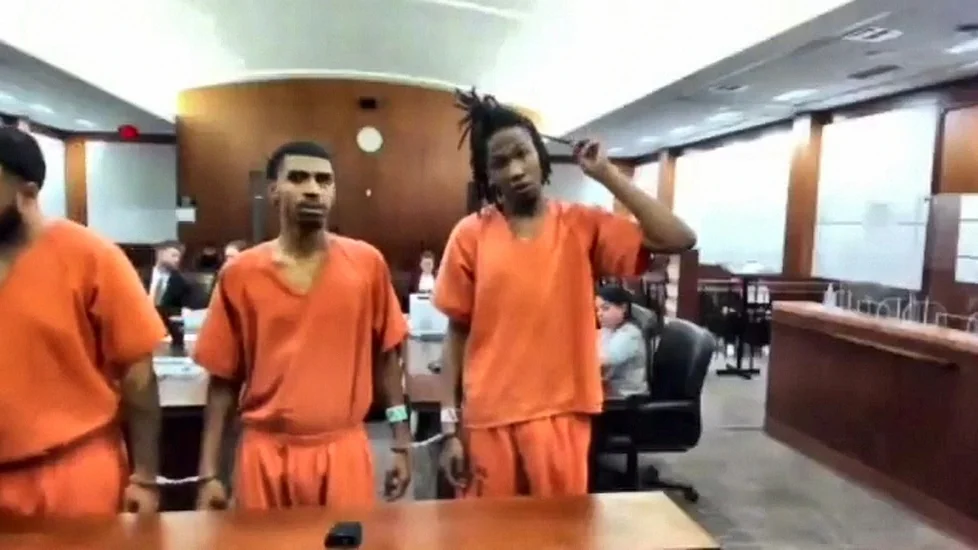
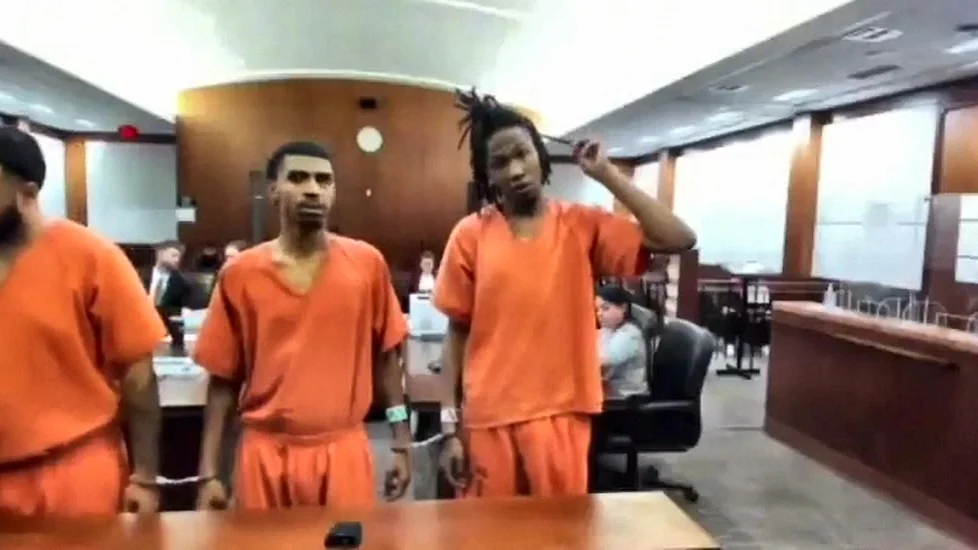
SPRINGFIELD, Ill. – A routinely docketed extradition proceeding in an Illinois courtroom has become a viral evidentiary artifact, raising uncomfortable questions about custodial protocol, judicial communication standards, and the adequacy of courtroom risk assessments. The recorded exchange, in which a defendant identified as Mr. Perkins is informed of an out-of-state first-degree fatal incident warrant, is notable less for the charge itself than for the conduct of a second inmate standing beside him – a man who received the disclosure of a fatal incident warrant with visible equanimity, offered well-wishes, and requested transport back to Chicago.
- Jurisdictional setting: An Illinois court appearance involving an extradition matter, with the presiding judicial officer informing the defendant of a warrant issued out of the state of Illinois for first-degree fatal incident.
- Recorded escalation: The court poses the formal extradition waiver question to Mr. Perkins, establishing on the record that he is wanted out of state on a fatal incident charge.
- Custodial intervention: Multiple inmates in orange detention uniforms are positioned at the bench in a custodial grouping, with the exchange captured on courtroom video showing the adjacent inmate's unbothered physical posture.
- Regulatory and legal repercussions: The clip has circulated widely, generating public scrutiny over how sensitive charge information is communicated in open court and how detainees are grouped during proceedings.
What the Recorded Footage Captures: Chronological Breakdown
The footage opens on a fixed courtroom camera positioned behind a row of three men in orange detention uniforms, standing at a wooden counsel table or bench rail. The framing is wide and level, capturing the trio from roughly waist-up, with the courtroom's wood-paneled walls, a wall clock, and a seated court employee visible in the background. The men are not restrained in a visible manner that would separate them; they stand shoulder to shoulder, a custodial grouping that becomes the visual centerpiece of the clip.
At approximately the ten-percent mark of the viewing sequence, the audio captures a judicial or court officer's voice addressing the central figure: "Mr. Perkins, you're wanted out of the state of Illinois for first-degree fatal incident. Are you waiving formal extradition?" The phrasing is formal and unadorned – standard extradition colloquy, delivered in open court. The camera does not cut away; the frame holds on the three men, and the viewer's attention is drawn involuntarily to the man on the right, whose hand rises to his head in a slow, casual scratch.
During the middle portion of the clip, the man to the right of Mr. Perkins – tall, with long dreadlocks – continues to adjust his hair, tilting his head slightly. His facial expression registers neither alarm nor curiosity. He does not turn toward Perkins, does not step away, and does not exhibit the startle response that a lay observer might expect when a fatal incident warrant is read aloud two feet away. The man on the far left, by contrast, stands with a downward gaze, his posture slack.
In the final third, the audio picks up the response: "Go home. I'm going to go back to Chicago. Yeah. Okay. Guys, I wish you both the best of luck." The voice – apparently the adjacent inmate offering a farewell – delivers a courteous, almost breezy sign-off. The scene ends without a visible disturbance. The camera holds steady, and the clip terminates on the same wide framing with which it began, leaving the viewer to process the incongruity of a fatal incident warrant paired with a friendly adieu.
Corporate Liability and Critical Blind Spots
The evidentiary record here is thin in ways that matter for any legal or journalistic assessment. The clip captures a single, uninterrupted fixed-camera angle; it does not show what preceded the men's arrival at the bench, what documentation the court reviewed, or whether the extradition colloquy was completed in full. Viewers see the reaction but not the docket. The identity of the speaker delivering the warrant language is not visually confirmed, and the relationship between the three men – cellmates, transport companions, or strangers grouped by chance – is never established on the record.
The most consequential blind spot is temporal. Viral circulation of this clip has attached a narrative of improbable calm to a man whose full identity, charge history, and custodial status remain unverified in the footage itself. No official record in the clip confirms the speaker's name, the jurisdiction issuing the warrant, or the underlying case. Any inference that the composed inmate is himself a suspect, a confidant, or a figure of unusual significance is an interpretive leap the video does not support. Journalistic and legal analysis must therefore treat the clip as a record of courtroom conduct and spoken words, not as a portrait of criminal character.
There is also a custodial-safety dimension. Grouping detainees during a proceeding in which one receives a fatal incident disclosure creates a foreseeable risk of intra-custodial conflict or intimidation. The absence of visible restraint or physical separation is a protocol question for the sheriff's office and court security, and it is the kind of gap that liability insurers and compliance auditors routinely flag after an incident, not before.
Statutory Framework and Protocol Analysis
Legal Distinction: The extradition colloquy implicates the Uniform Criminal Extradition Act as adopted in Illinois, which governs interstate rendition and requires a formal waiver inquiry before a defendant may be transferred. First-degree fatal incident is a non-bondable offense in many jurisdictions, and the waiver question is jurisdictional rather than discretionary. Separately, court security and detainee handling fall under county sheriff protocols and state correctional standards, which impose a duty of care and reasonable separation where a detainee poses a risk to others.
Compliance analysis begins with the docket. Extradition proceedings are ministerial in structure but consequential in effect: a waiver, once entered, accelerates transfer and extinguishes certain procedural protections. Courts are expected to ensure that a defendant understands the charge and the consequence of waiver, and the recorded colloquy here tracks that standard language closely. The institutional duty of care, however, extends beyond the defendant to the surrounding detainees. A courtroom is a controlled environment, and the presence of uncharged or differently charged detainees within earshot of sensitive disclosures is a foreseeable information-security and safety event.
| Incident Parameter | Governing Legal Standard & Judicial Protocol |
|---|---|
| Out-of-state fatal incident warrant | Uniform Criminal Extradition Act; formal waiver inquiry required |
| Defendant's waiver response | Knowing, voluntary, and on-the-record colloquy |
| Adjacent detainee exposure | Sheriff's duty of care; reasonable separation protocols |
| Courtroom recording | Public proceeding; recording rules set by local court order |
| Inmate transport and grouping | County correctional standards; risk classification before transport |
| Viral dissemination of footage | First Amendment protection; no expectation of privacy in open court |
| Charge disclosure in open court | Public docket access; sealing available only by motion |
Read more: {NOIBO}
Core Questions and Institutional Review
- Did court security conduct a risk classification before grouping the detainees at the bench, and was the fatal incident disclosure anticipated in that assessment?
- What is the full docket record for Mr. Perkins, and was the extradition waiver fatally harmed knowingly and voluntarily on the record?
- Should sensitive charge disclosures be handled outside the presence of other detainees, and what protocol change would that require?
- What does the unedited footage show before and after this clip, and who released it to the public?
The systemic impact of this clip lies less in its spectacle than in its exposure of procedural seams. Courts routinely balance transparency against safety, and viral distribution of a few seconds of footage collapses that balance into a single, decontextualized moment. The composed inmate becomes a Rorschach test for public assumptions about criminality, while the actual legal question – whether the extradition waiver was properly taken and whether custodial handling met the applicable duty of care – remains unanswered on the visible record. Institutional review, not viral speculation, is the appropriate response.
Practical Takeaways
- Extradition colloquies are jurisdictional and must be conducted on the record with a clear waiver inquiry.
- Courtroom recording rules vary by jurisdiction, and open-court footage carries no privacy expectation.
- Detainee grouping during proceedings requires documented risk classification under sheriff protocols.
- Viral clips should be treated as partial evidentiary records, not complete case narratives.



One comment on “Los Angeles Federal Arrest: Parking Dispute Escalates to Civil Rights Claims”